

Tsevis Studio
Research, Science and Technology at Tsevis Studio
Algorithmic mosaic research in matching, visual importance, Gestalt perception and geometry: how a studio handles visual complexity
A mosaic is a decision made thousands of times. Research is how those decisions become good ones.Tsevis Studio
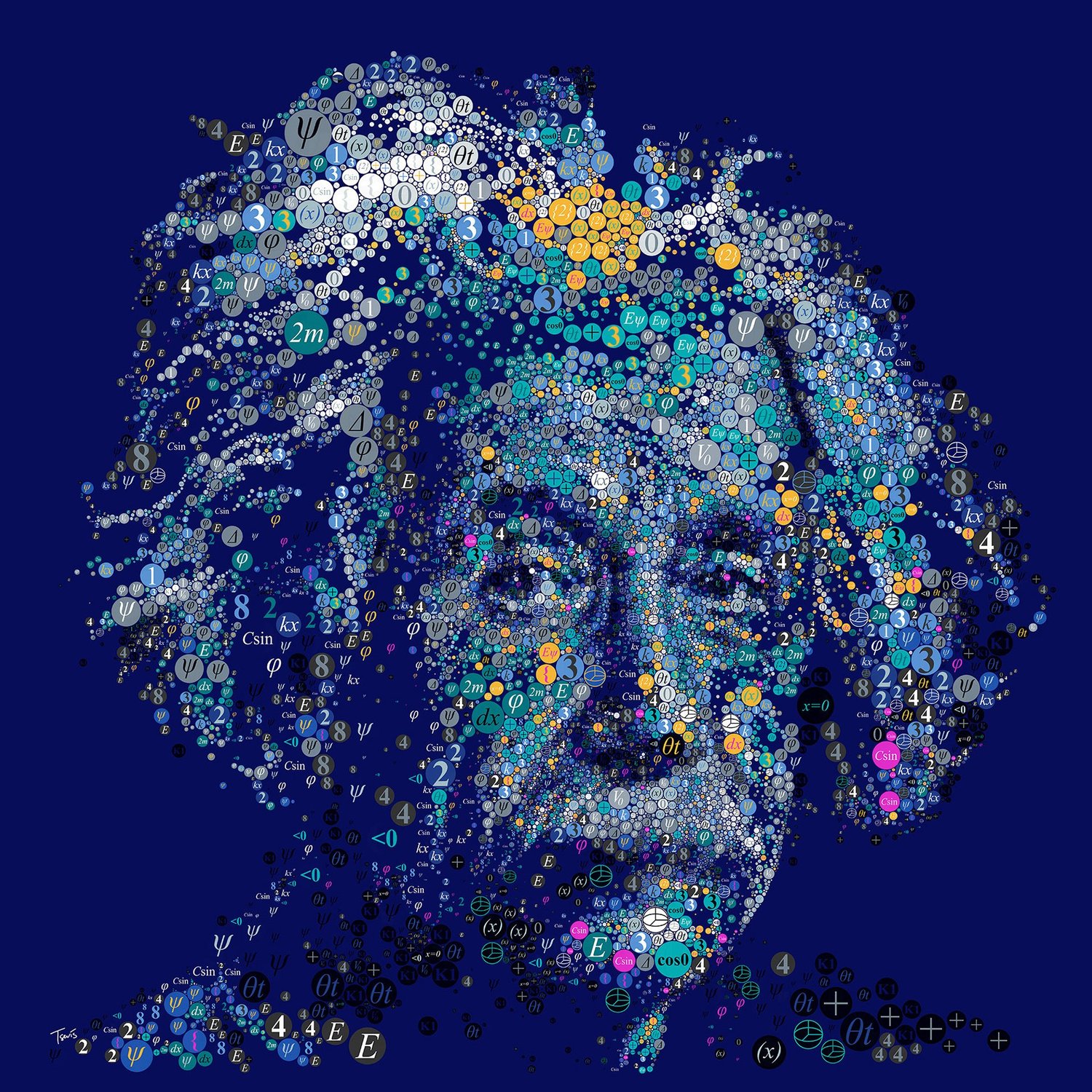
Opening image: Science magazine cover, 22 September 2023, Tsevis Studio.
Tsevis Studio is a research practice as well as a design studio. For thirty years it has built its own software for algorithmic mosaics and studied the science beneath it: how fragments are matched to an image, how the eye decides what matters, how geometry inherited from many cultures can carry a picture.
The studio owns its algorithms, its grid research and its archive, and it credits the scientists whose work it builds on. It does not claim that others cannot make mosaics. It claims that few treat the problem at this depth, and that the depth shows in the result.
What follows maps the directions of that research, names some of the people who opened them, and shows where the knowledge goes to work.
Directions of Research
Photomosaics and image mosaics
Building an image from other images: the question of which fragment goes where.
Classical and decorative mosaics
Simulating how mosaic makers place tiles along the lines of a form.
Halftoning and dithering
Turning continuous tone into discrete marks: the classic quantisation problem.
Visual attention and importance
Modelling where the eye goes, so that fine fragments fall where they matter.
Perception and Gestalt
The whole is perceived before its parts; see the references in The Tradition We Work In.
- Max Wertheimer, 1923; David Navon, 197715
- György Kepes, Language of Vision, 194416
- Rudolf Arnheim, Art and Visual Perception, 195417
- Bruno Munari, Design e comunicazione visiva, 196818
- Gaetano Kanizsa, Grammatica del vedere, 198019
- Nino Di Salvatore, “Teoria dello spazio”, Scuola Politecnica di Design, Milan, 199220
Geometry and pattern traditions
Pattern as knowledge: Islamic geometry, quasi-crystals, tilings of the plane.
Text and character mosaics
Images built from letters and symbols, from typewriter art to fast ASCII rendering.
- Nenad Markuš and colleagues, 201525
I. A Studio That Builds Its Own Instruments
The tradition described in The Tradition We Work In is a tradition of instruments as much as of images: the chisel, the cut tessera, the typewriter, the mainframe. A mosaic maker has always been someone who decides which fragment goes where, thousands of times, and the quality of the work depends on the quality of those decisions.
The idea these instruments serve is set out in Algorithmic Mosaic.
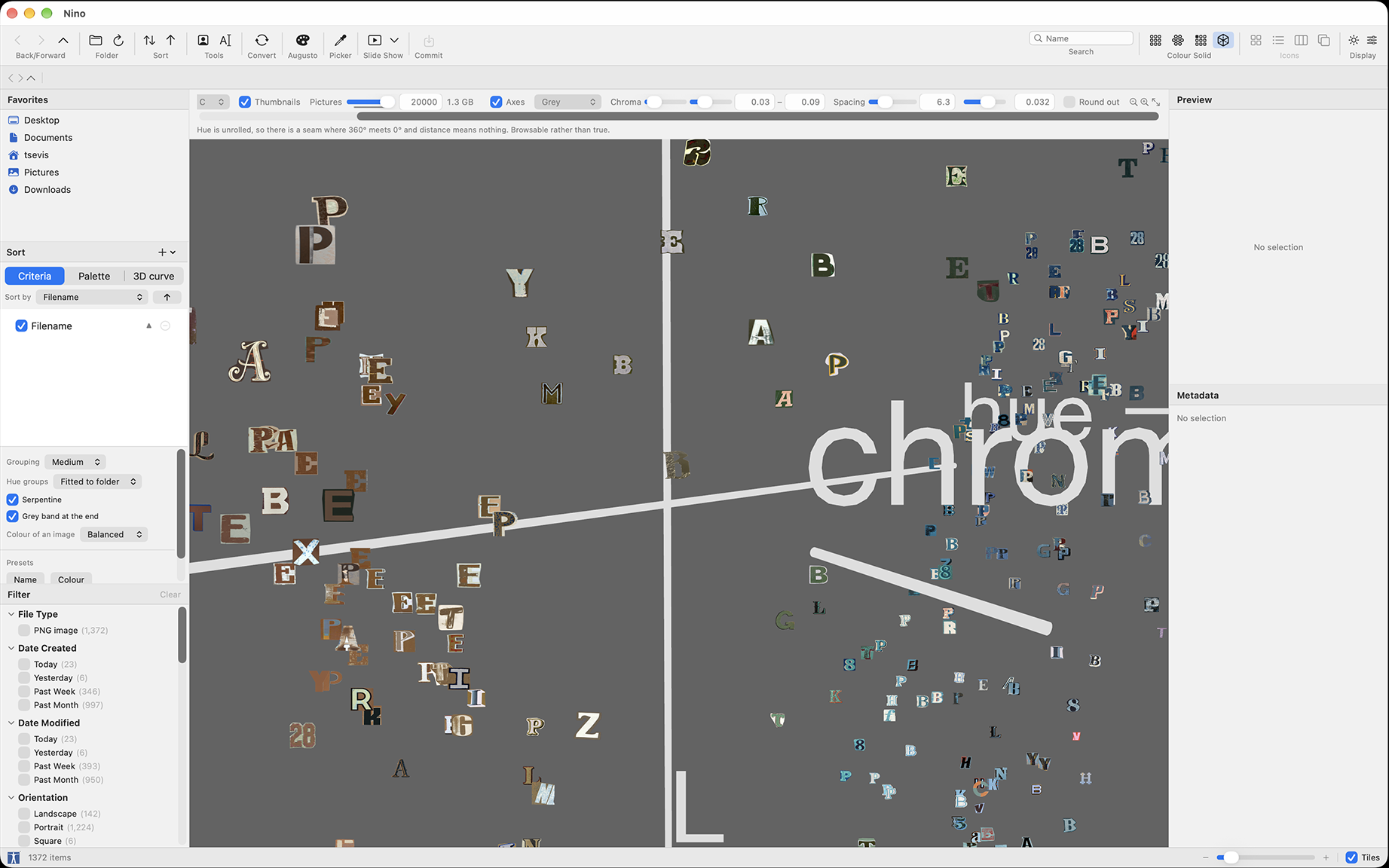
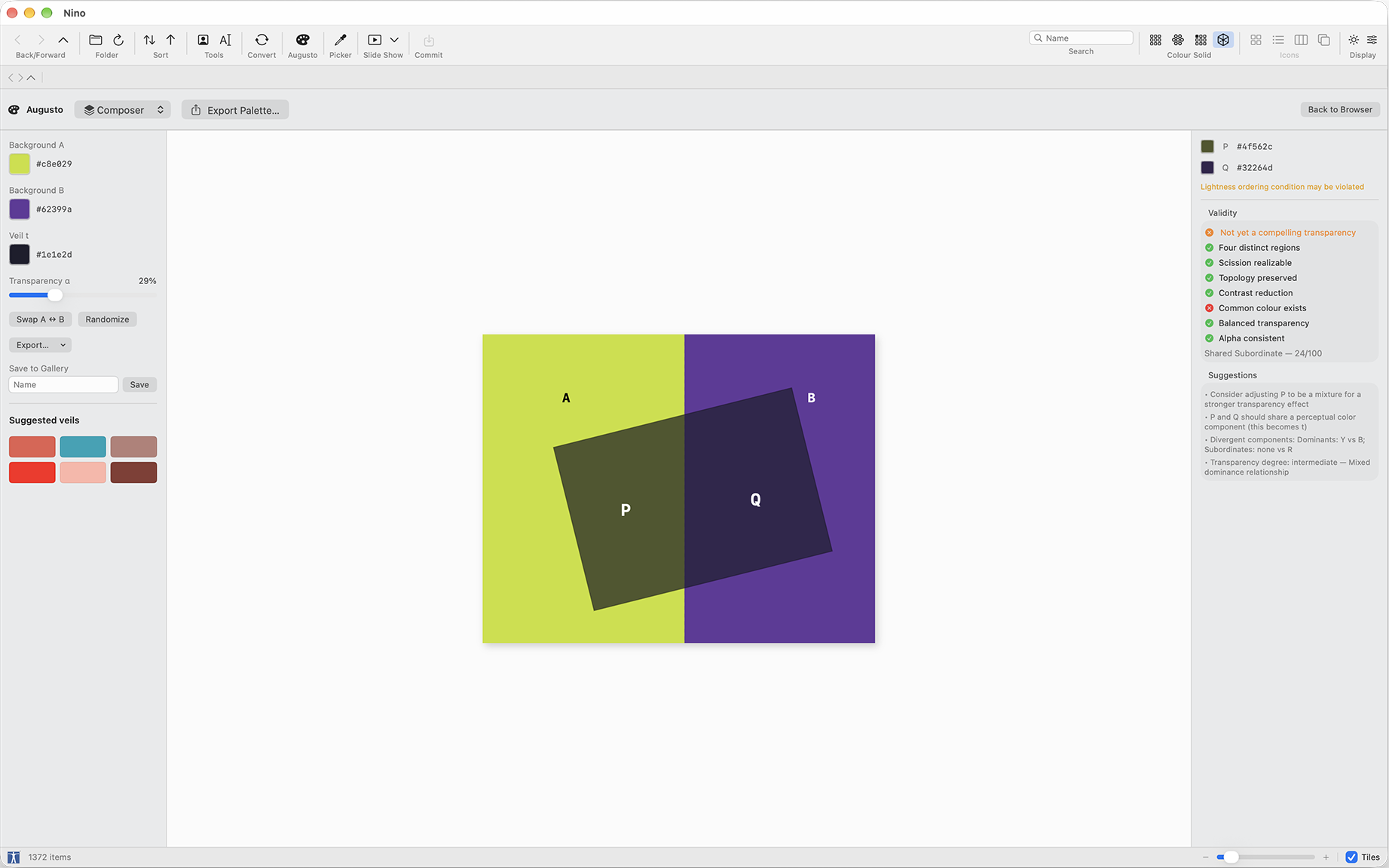
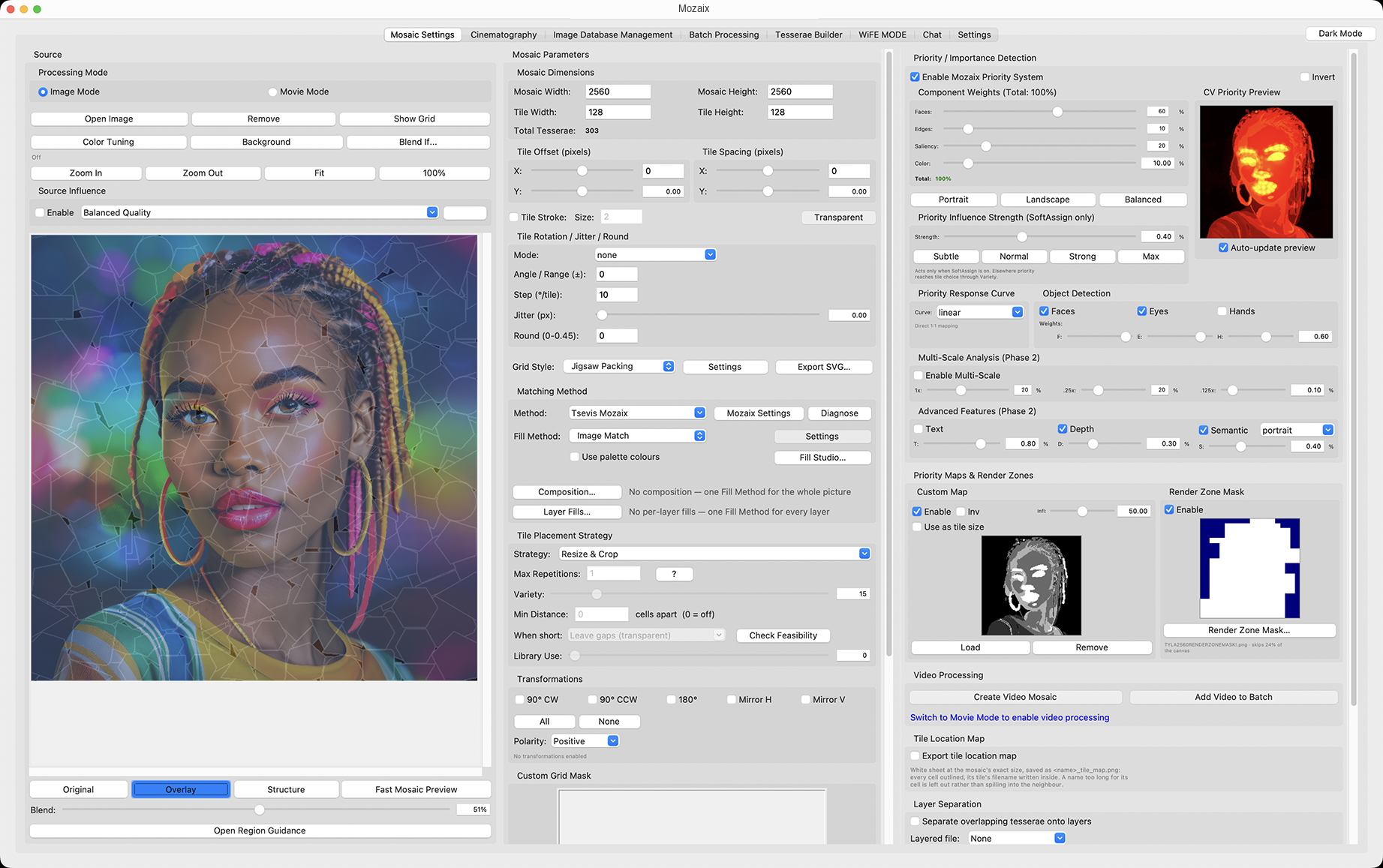
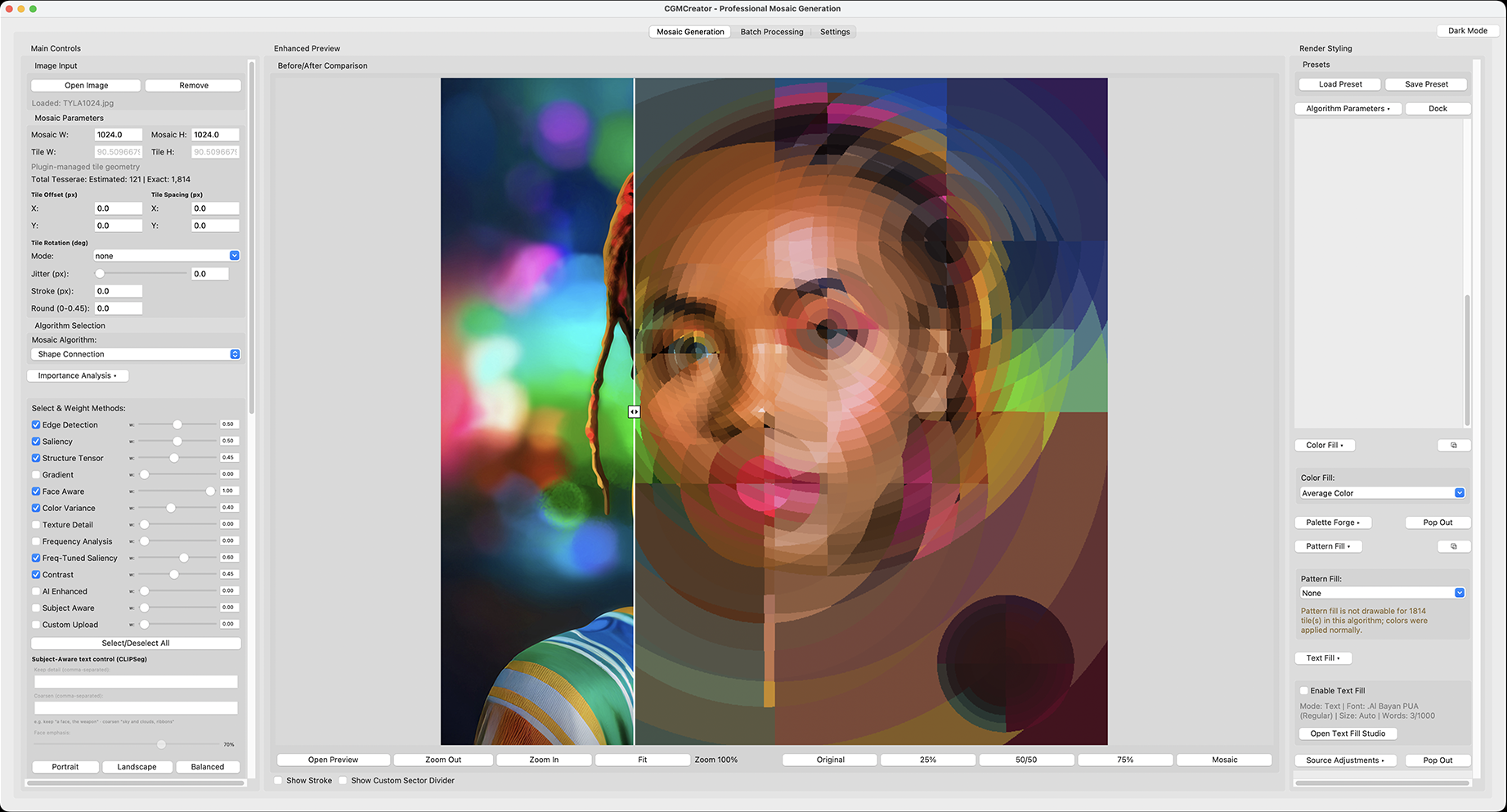
Tsevis Studio has spent thirty years improving them. It has built its own software for making algorithmic mosaics, and it studies the science that software rests on: how colour is matched, how the eye decides what matters, how a grid can carry the memory of a historical pattern. Two instruments carry this research today, Mozaix and CGMCreator. They hold more than a dozen matching algorithms and a large, growing family of grid architectures, and they are never finished, because the research is not.
We do not claim that others cannot make mosaics. We claim that few treat the problem at this depth, and that the depth can be seen in the result: an image that reads in a second and still rewards an hour.
II. Matching: Which Fragment Belongs Where
Every mosaic poses the same question. Given thousands of fragments and an image, which fragment goes into which place? The question has a research history of its own. Robert Silvers made it a practice in 1996, when he built photographs out of photographs;1 Adam Finkelstein and Marisa Range framed it as image mosaics two years later;2 Junhwan Kim and Fabio Pellacini let the pieces take their own shapes.3 More recently, researchers have asked how to stylise an image as a pebble mosaic,4 and how to render image mosaics and ASCII art quickly.25
The studio’s matching research asks the same question in several registers. Colour is compared in perceptual colour spaces, where distance on paper matches distance to the eye. Structure is compared as well as colour: where the lines run, how much ink a tile carries, what shape it makes. Edges receive their own priority. Where one fragment must be chosen from thousands, optimisation methods settle the competition between neighbouring cells, and neural features are available when a collection of fragments is too varied for hand-built measures.
Behind all of this stands a quieter ancestor. Placing a tile is a quantisation problem, and quantisation has a classic literature in halftoning: the error-diffusion method of Robert Floyd and Louis Steinberg,9 and the blue-noise theory of Robert Ulichney.10 The mosaic maker and the halftone engineer are solving the same puzzle at different scales.
III. Importance: Where the Eye Goes
A mosaic does not treat every part of an image equally, and neither does the eye. A face, a hand, a letter deserves finer fragments than a sky. Deciding which is which is a question of visual importance.
Research on visual attention gives us measures to work with. Laurent Itti, Christof Koch and Ernst Niebur modelled how scenes attract attention;12 Xiaodi Hou and Liqing Zhang found structure in what an image’s spectrum leaves unexplained;13 Radhakrishna Achanta and colleagues made salient regions fill out to the object rather than only its edges.14 The studio studies these methods and others, combines them where one signal alone would mislead, measures how each behaves on real images, and keeps the ones that earn their place.
Importance only becomes useful when it is joined to perception. This is the thread that runs from the Gestalt psychologists of the early twentieth century to the work of this studio: the whole is perceived before its parts, so a mosaic has to be designed for the whole first.15 Figure and ground, proximity, continuity and emergence are not decoration in this research. They are the parameters. Alejo Hausner’s work on placing tiles along the lines of an image shows how far a computer can go once it follows those lines;5 the studio’s own research on Algorithmic Gestalt, described in the Tradition essay, is about the step beyond.
The Gestalt tradition reached designers through teachers as much as through laboratories. György Kepes set out a Language of Vision in 1944;16 Rudolf Arnheim gave Art and Visual Perception a psychology of the creative eye;17 in Italy, Bruno Munari built a method for teaching visual communication,18 Gaetano Kanizsa wrote the Grammatica del vedere,19 and Nino Di Salvatore’s essay “Teoria dello spazio”, published in the catalogue of the Scuola Politecnica di Design in Milan in 1992, belongs to the same shelf.20 These books taught generations of designers to see before they made, and they sit beside the laboratory papers in the studio’s research.
IV. Grids and Geometry: Pattern Traditions as a Body of Knowledge
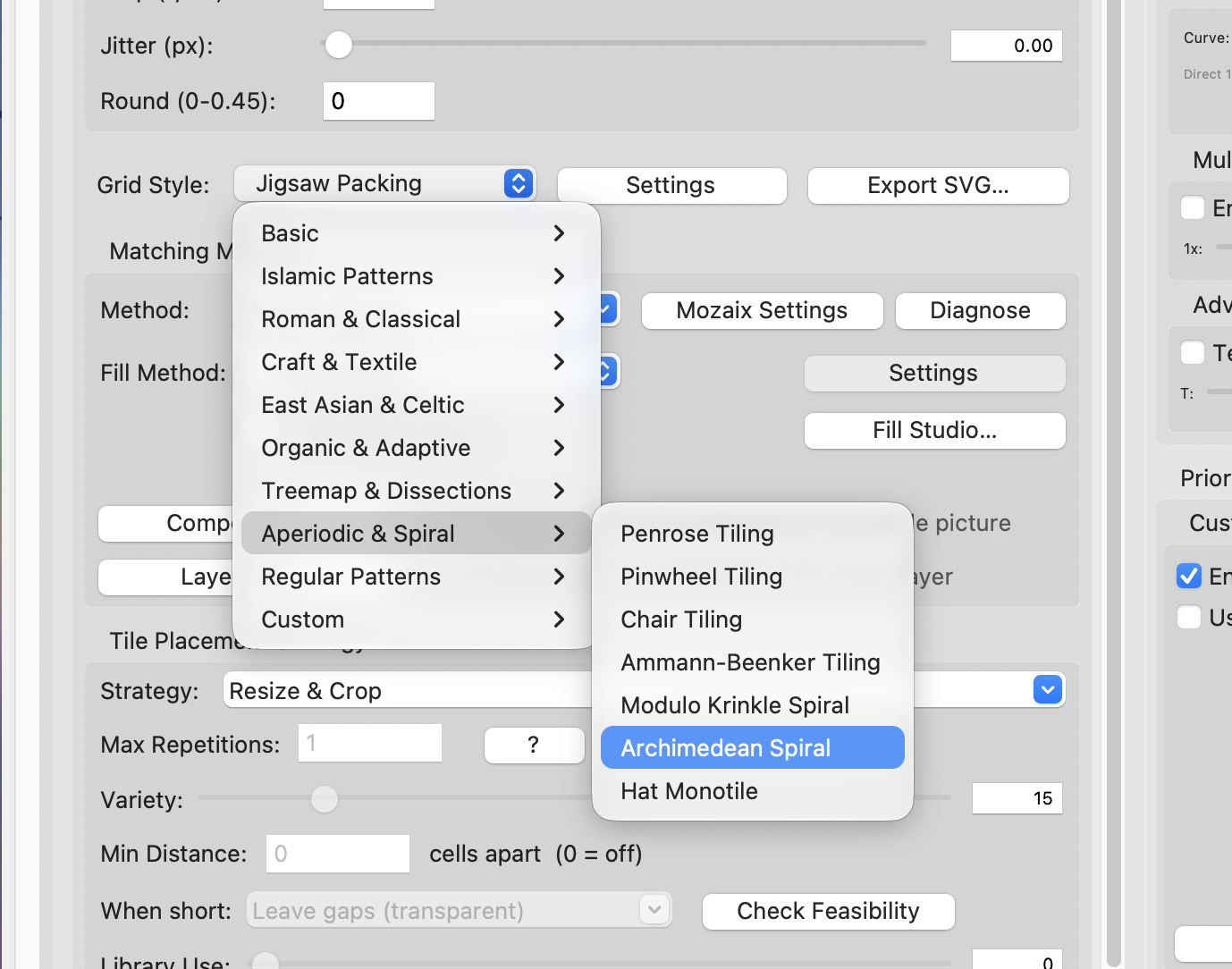
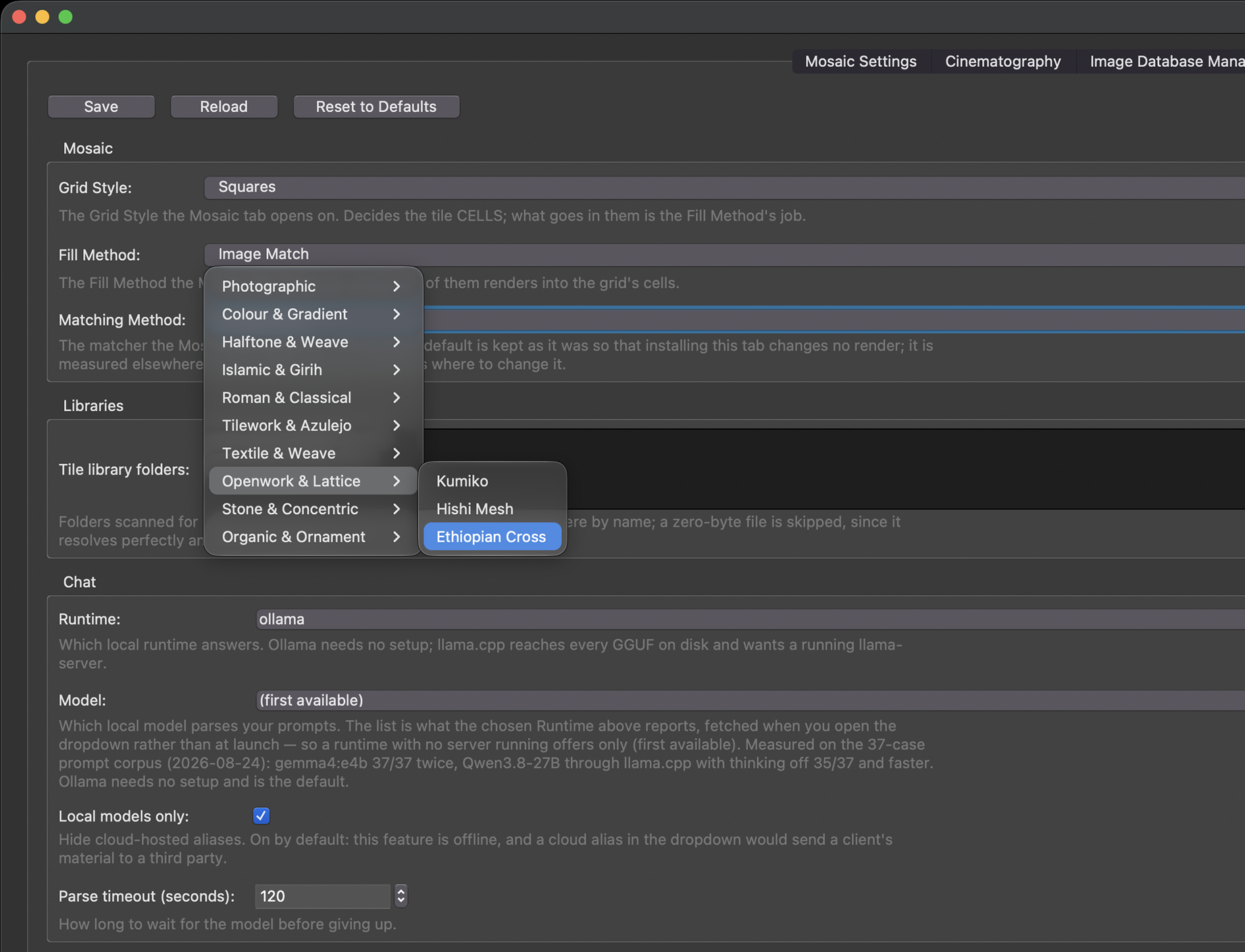
A grid is not neutral. A square grid, a hexagonal grid and a grid grown from an Islamic star pattern say different things about the same image, and each has its own mathematics.
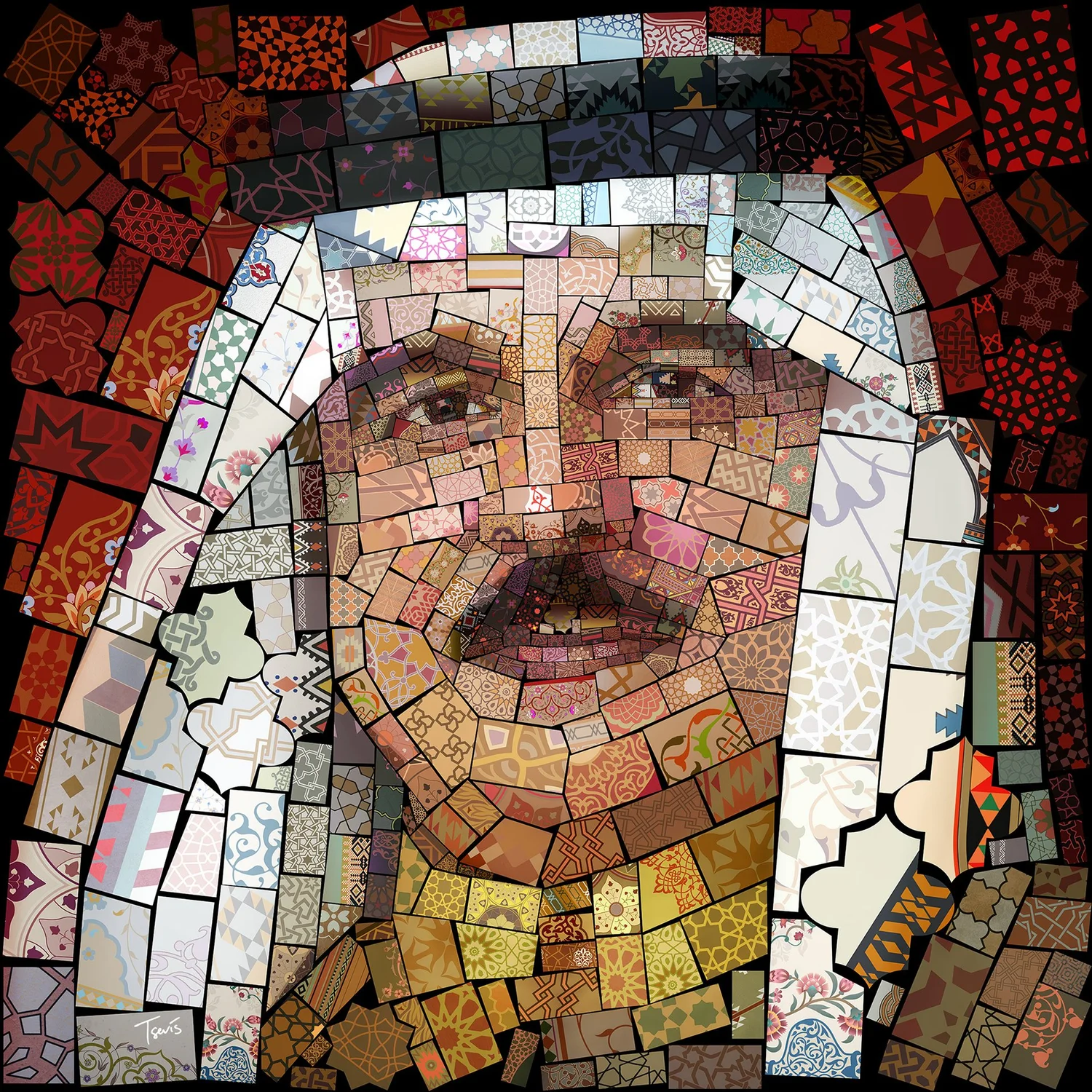
The geometric traditions of the past are a body of knowledge the studio treats with the seriousness of a research library. E. H. Hankin analysed how Islamic geometric patterns are constructed;21 Peter Lu and Paul Steinhardt showed in 2007 that fifteenth-century artisans had arrived at quasi-crystalline tilings centuries before Western mathematics described them;24 Branko Grünbaum and G. C. Shephard catalogued and classified the tilings of the plane;22 Michael Cohen and colleagues showed how a small set of Wang tiles can cover a plane without visible repetition.23 On the side of mosaic-making itself, Gershon Elber and George Wolberg worked out how to render traditional mosaics,6 and Y. Liu, O. Veksler and O. Juan how to generate classic mosaics with graph cuts.8 At the University of Catania, Sebastiano Battiato and his colleagues surveyed the whole field of digital mosaic frameworks,7 and devised a way to render the opus vermiculatum style, with tiles laid along the contours of the image as the ancient workshops laid them.[[battiato_opus]]
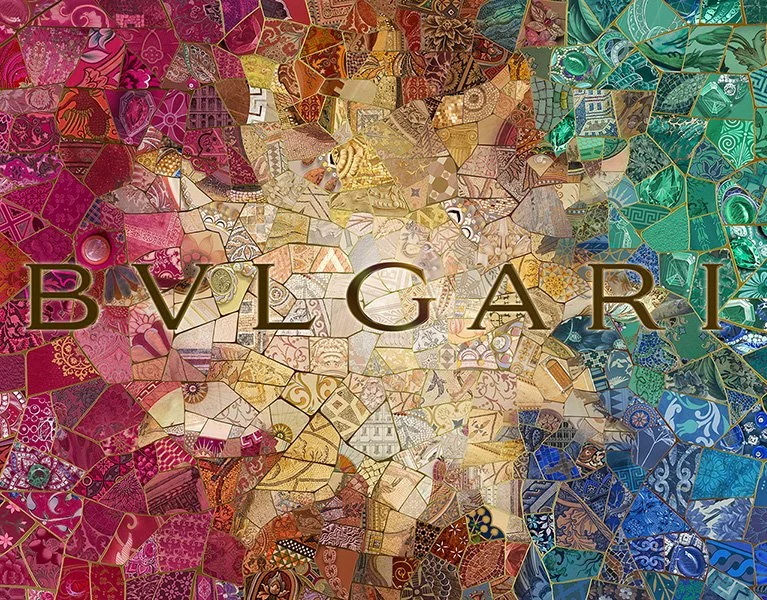
The studio’s grid research draws on this lineage and on the others that run through the tradition: Islamic geometry and the arabesque, Roman opus and Byzantine gold, the Portuguese azulejo, Gaudí’s trencadís, aperiodic tilings, circle packing, and the structures of nature, from leaf veins to soap foam. The question in each case is the same. What does this pattern know about how to carry an image, and how do we let it?
V. Method: Measured, Gated, Documented
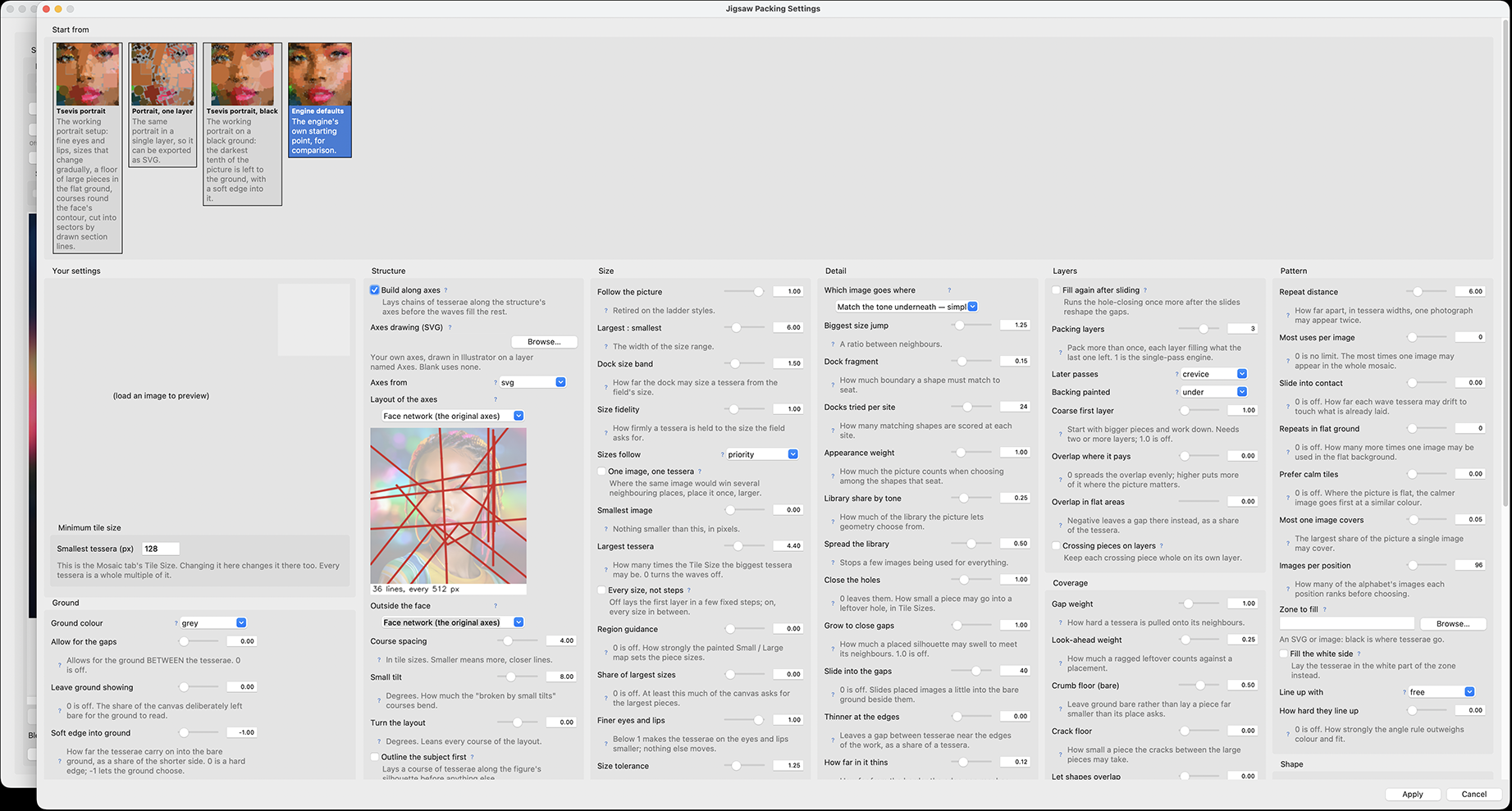
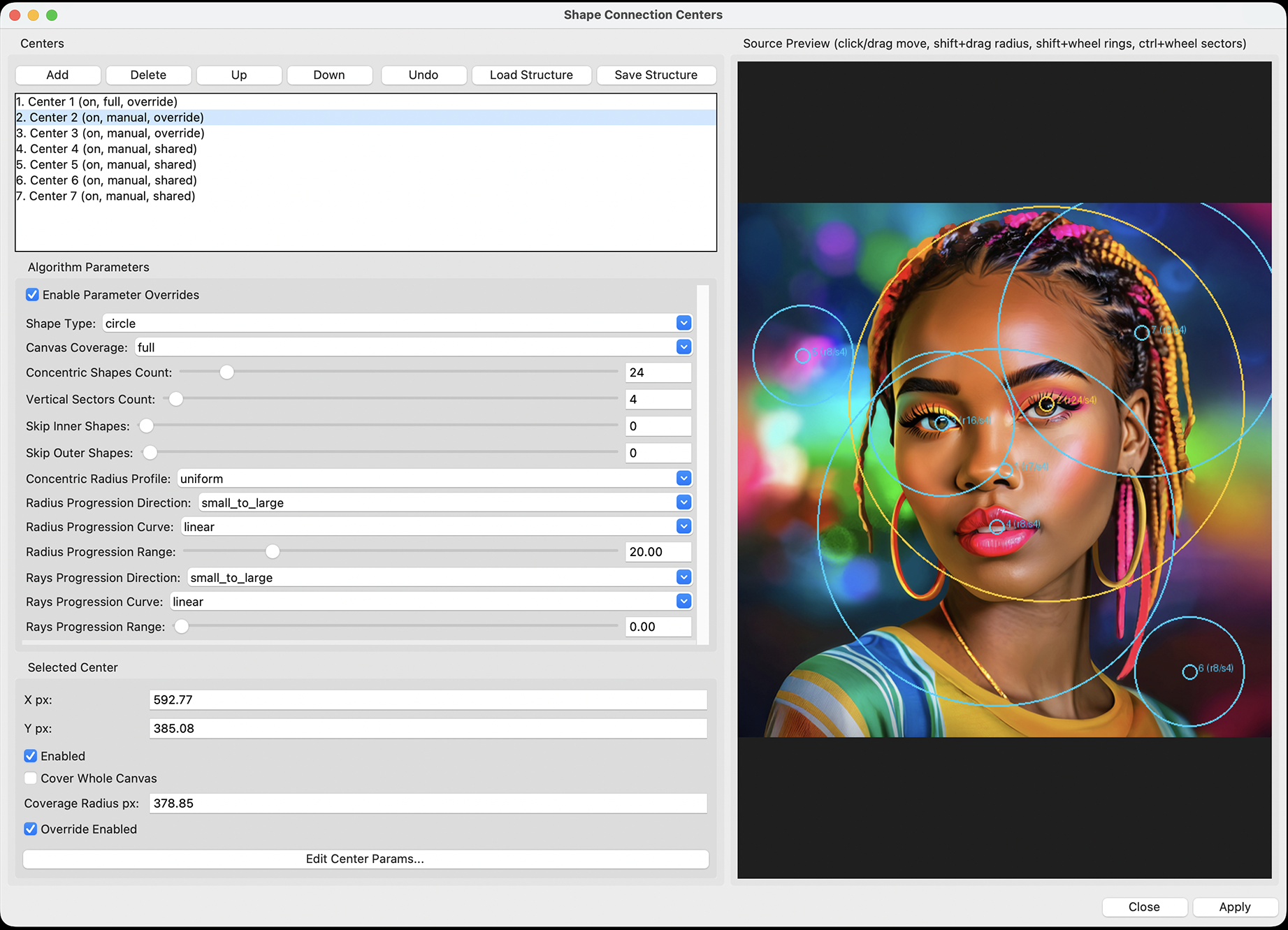
Research that is not measured is opinion. The studio’s tools are built with the habits of a laboratory: behaviour is measured on real images, not demonstrations; a method that collapses on difficult material is caught by a gate before it reaches a commission; and what is learned is written down, with its errors, so that the next piece of work starts from the previous one’s knowledge.
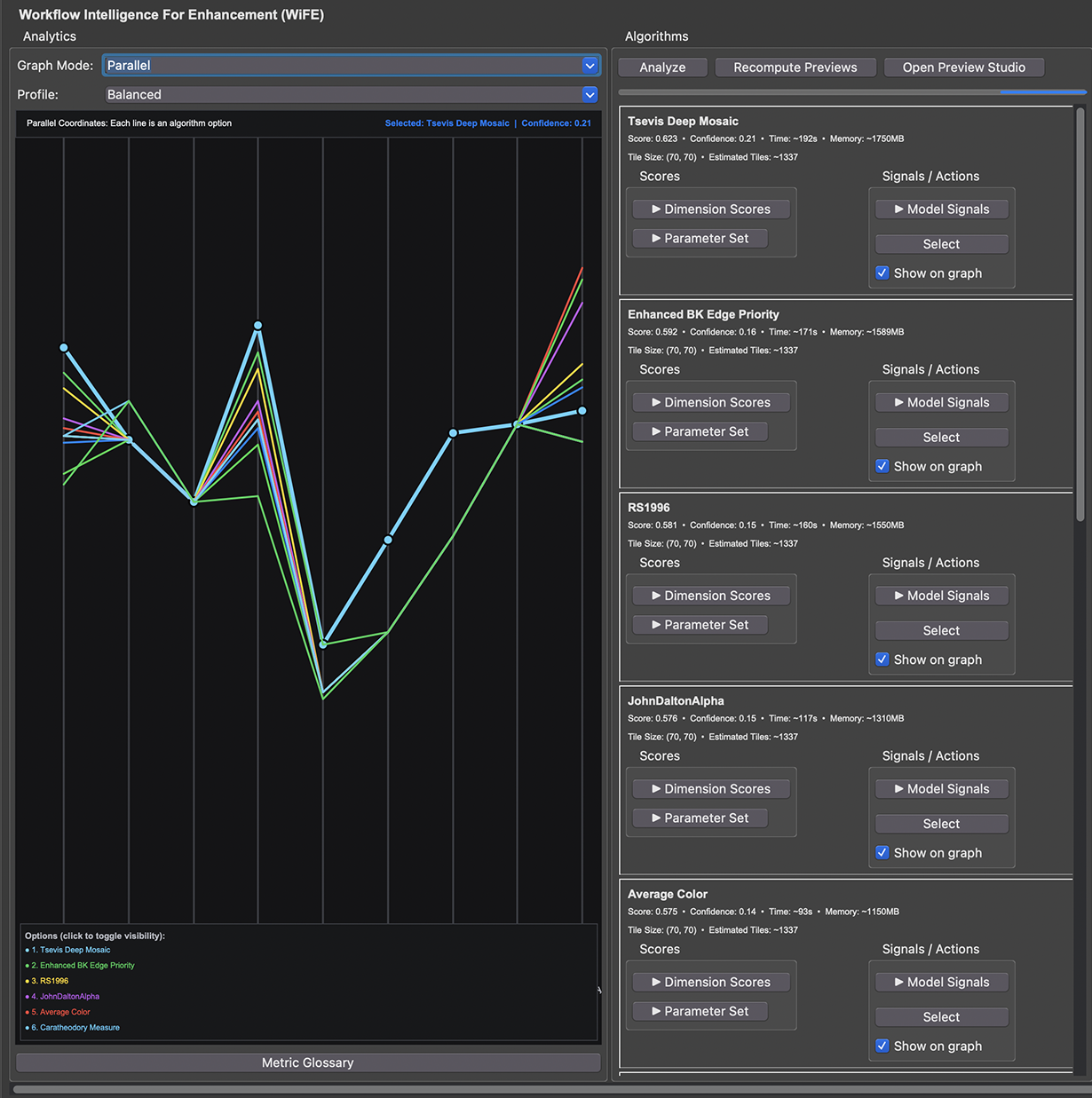
This is also why the instruments keep being rebuilt. Each commission asks a question the tools could not yet answer, and each production failure yields information. That discipline has produced something that cannot be bought as software: an accumulated understanding of why a mosaic works.
VI. Knowledge the Studio Owns, and the Science It Credits
The studio owns its algorithms, its grid generators and its research archive. They were built here, from a long familiarity with the problem, and they are not shared. Client material is processed on the studio’s own machines, with local pipelines, and does not leave them.
The studio does not claim the science. Every method it builds on has authors, and the studio’s practice is to name them. Where its tools use models or libraries made by others, they are used under their own licences and acknowledged. The studio’s contribution is the thing the tradition has always asked of a mosaic maker: knowing which fragment belongs where, and why.
VII. From Research to Commission
Research matters here because it reaches work. The same understanding of matching, importance and geometry shows up wherever a mosaic is asked to carry a brief:
- Public art and architecture: permanent walls and installations, where an image must read from across a concourse and from an arm’s length. See Public Art & Installations.
- Corporate and institutional commissions: entrance halls, anniversaries, identity work. See Corporate Art & Commissions.
- Advertising and campaigns: one idea that works at poster scale and at thumbnail scale. See Advertising & Campaigns.
- Editorial illustration: portraits and concepts for magazines, where the fragments themselves carry the story. See Editorial Illustration.
- Fine art, collectibles and gifts: works made to be kept, including the physical pieces of Singularis. See Fine Art & Collectibles.
A brief that cannot be simplified is a brief for research. The studio would be glad to hear it.
References
- Robert S. Silvers, Photomosaics: Putting Pictures in their Place, MS thesis, MIT Media Laboratory, 1996.
- Adam Finkelstein and Marisa Range, “Image Mosaics,” in Electronic Publishing, Artistic Imaging, and Digital Typography, Lecture Notes in Computer Science 1375 (Springer, 1998).
- Junhwan Kim and Fabio Pellacini, “Jigsaw Image Mosaics,” SIGGRAPH 2002.
- L. Doyle, D. Mould and colleagues, “Automated pebble mosaic stylization of images,” Computational Visual Media, 2019.
- Alejo Hausner, “Simulating Decorative Mosaics,” SIGGRAPH 2001.
- Gershon Elber and George Wolberg, “Rendering Traditional Mosaics,” The Visual Computer, 2003.
- Sebastiano Battiato, G. Di Blasi, G. M. Farinella and G. Gallo, “Digital Mosaic Frameworks: An Overview,” Computer Graphics Forum, 2007.
- Y. Liu, O. Veksler and O. Juan, “Generating Classic Mosaics with Graph Cuts,” Computer Graphics Forum 29(8), 2010.
- Robert W. Floyd and Louis Steinberg, “An Adaptive Algorithm for Spatial Greyscale,” Proceedings of the Society for Information Display 17(2), 1976.
- Robert A. Ulichney, “Dithering with Blue Noise,” Proceedings of the IEEE 76(1), 1988.
- Adrian Secord, “Weighted Voronoi Stippling,” NPAR 2002.
- Laurent Itti, Christof Koch and Ernst Niebur, “A Model of Saliency-Based Visual Attention for Rapid Scene Analysis,” IEEE Transactions on Pattern Analysis and Machine Intelligence, 1998.
- Xiaodi Hou and Liqing Zhang, “Saliency Detection: A Spectral Residual Approach,” CVPR 2007.
- Radhakrishna Achanta, Sheila Hemami, Francisco Estrada and Sabine Süsstrunk, “Frequency-Tuned Salient Region Detection,” CVPR 2009.
- Tsevis Studio, The Tradition We Work In, with the references on Gestalt psychology (Wertheimer, 1923; Navon, 1977).
- György Kepes, Language of Vision (Chicago: Paul Theobald, 1944).
- Rudolf Arnheim, Art and Visual Perception: A Psychology of the Creative Eye (Berkeley: University of California Press, 1954).
- Bruno Munari, Design e comunicazione visiva: contributo a una metodologia didattica (Bari: Laterza, 1968).
- Gaetano Kanizsa, Grammatica del vedere (Bologna: Il Mulino, 1980).
- Nino Di Salvatore, “Teoria dello spazio,” in the catalogue of the Scuola Politecnica di Design, Milan, 1992.
- E. H. Hankin, The Drawing of Geometric Patterns in Saracenic Art, Memoirs of the Archaeological Survey of India 15 (Calcutta, 1925).
- Branko Grünbaum and G. C. Shephard, Tilings and Patterns (New York: W. H. Freeman, 1987).
- Michael F. Cohen, Jonathan Shade, Stefan Hiller and Oliver Deussen, “Wang Tiles for Image and Texture Generation,” SIGGRAPH 2003.
- Peter J. Lu and Paul J. Steinhardt, “Decagonal and Quasi-Crystalline Tilings in Medieval Islamic Architecture,” Science 315, 2007.
- Nenad Markuš, Marco Fratarcangeli, Igor S. Pandžić and Jörgen Ahlberg, “Fast Rendering of Image Mosaics and ASCII Art,” Computer Graphics Forum 34(6), 2015.