
Tsevis Studio
Algorithmic Mosaic
Up close, the viewer reads the parts. From a distance, the whole. Both experiences are designed.Tsevis Studio
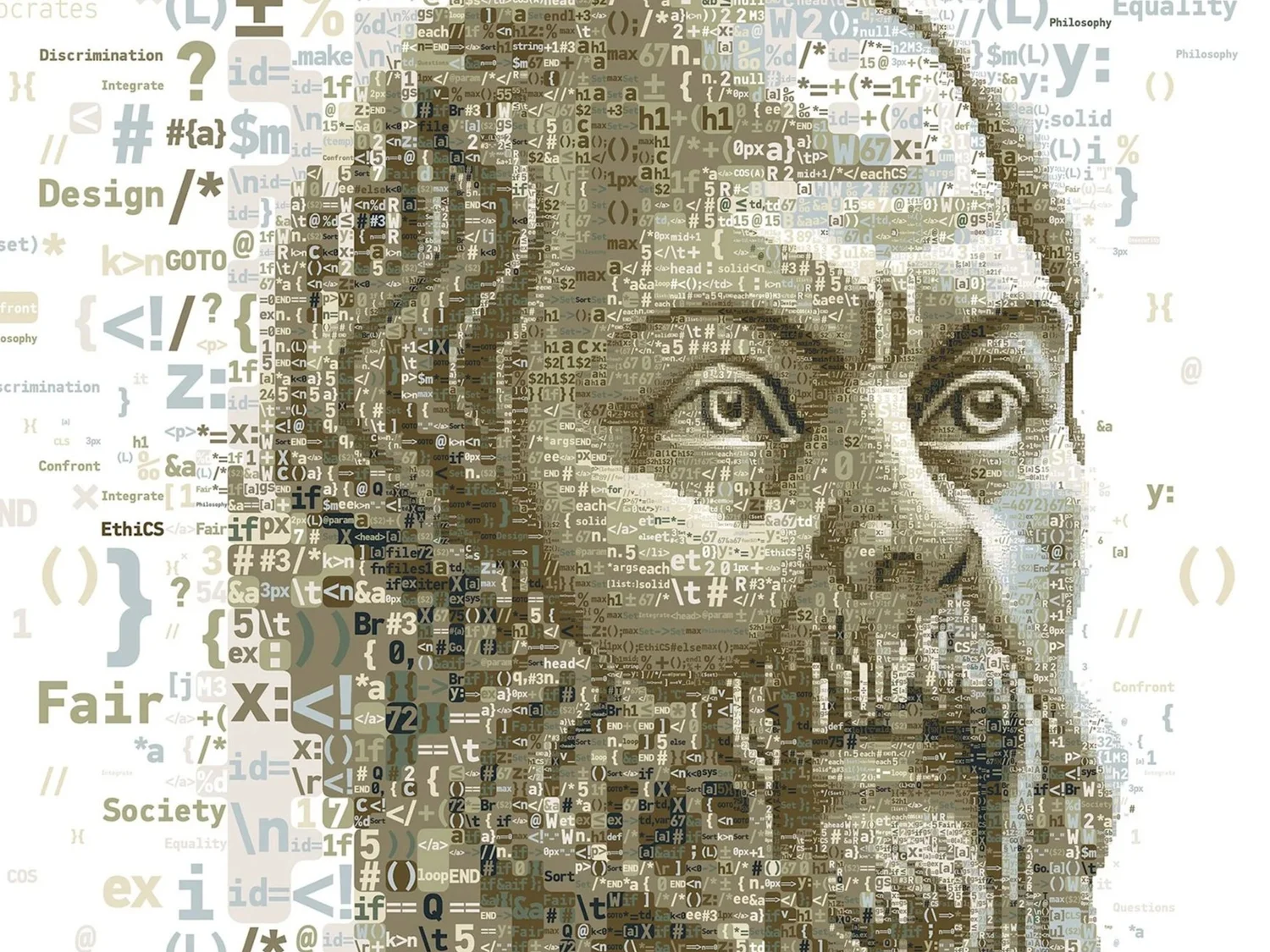
Opening image: Socrates, algorithmic mosaic for Communications of the ACM, Tsevis Studio.
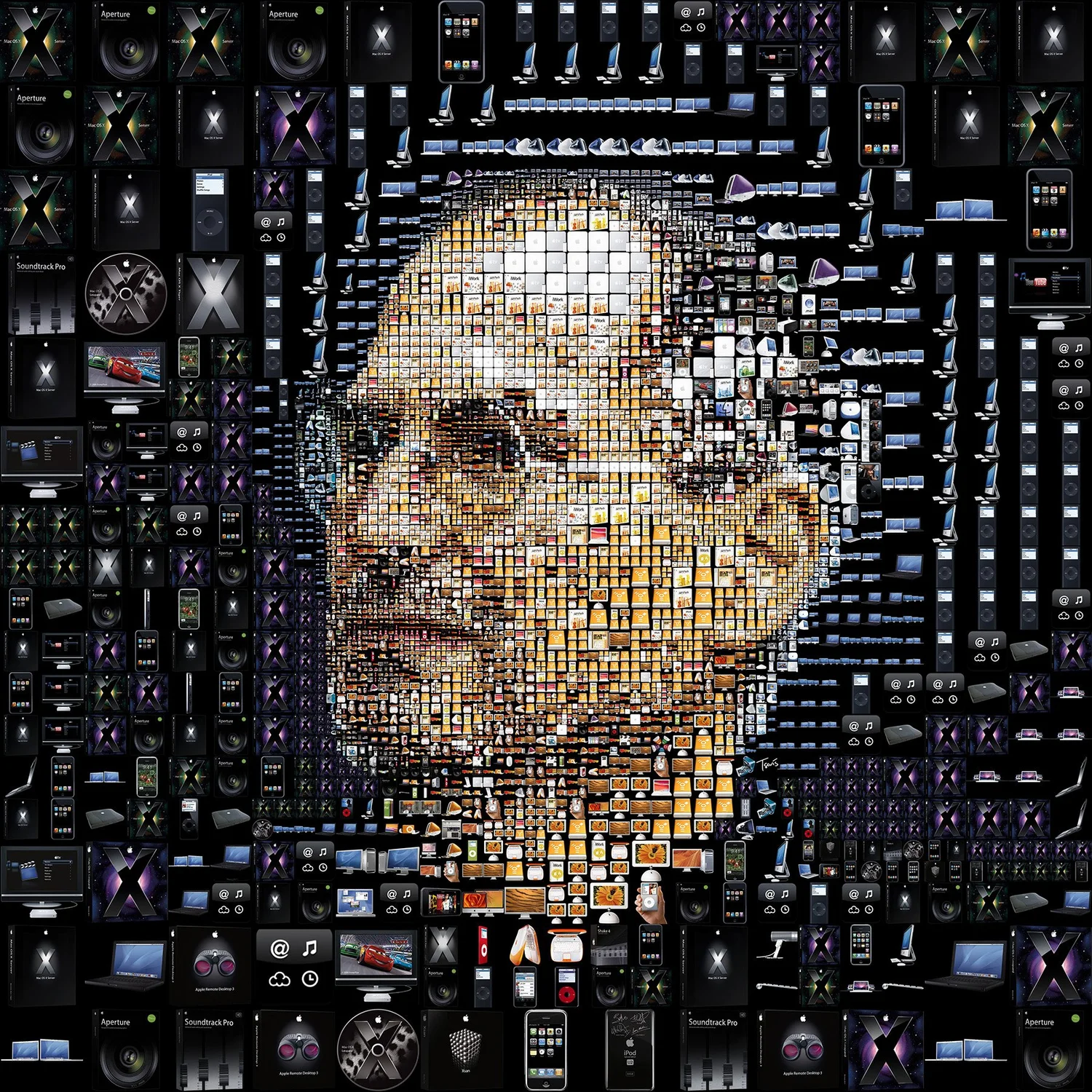
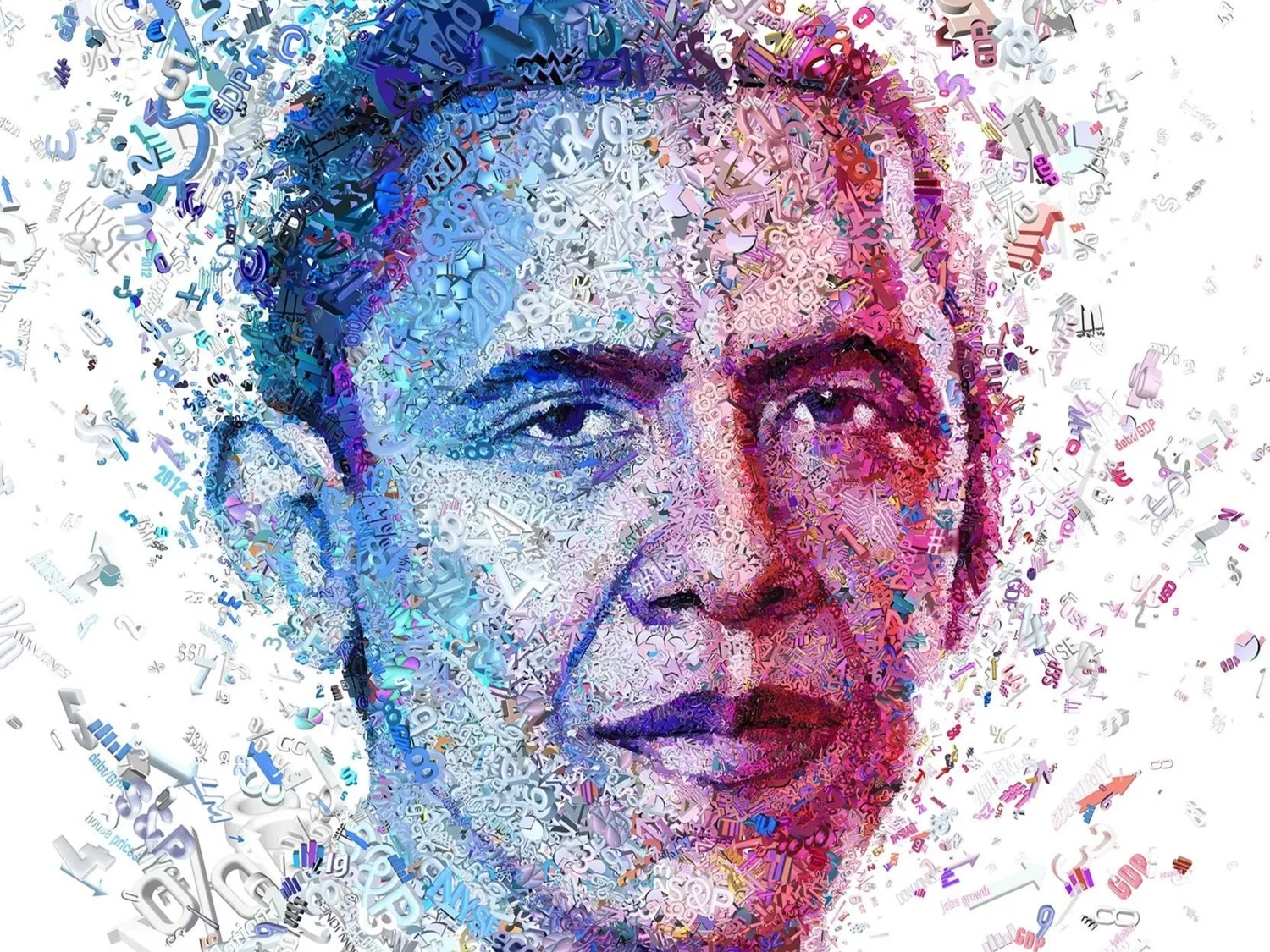
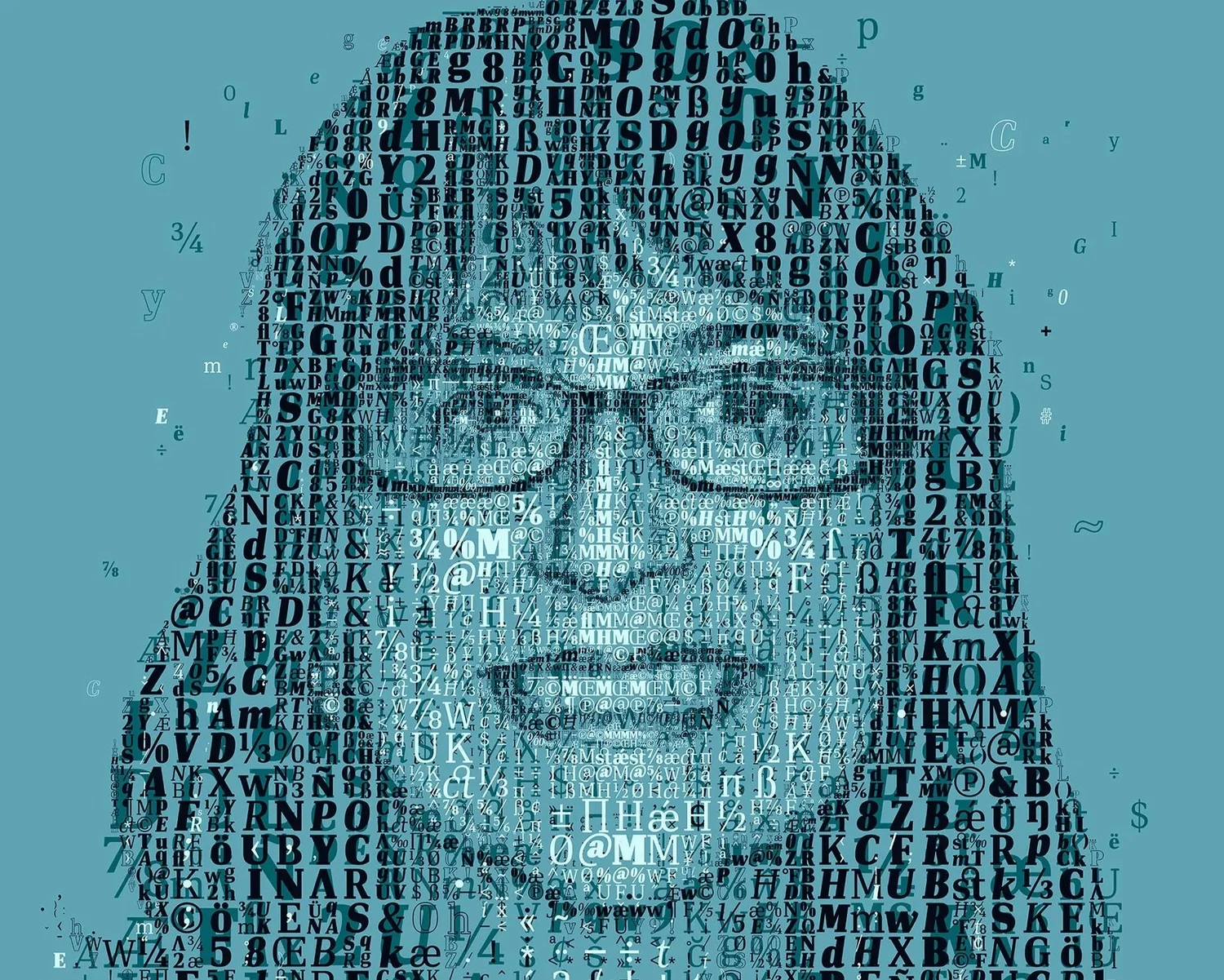
An algorithmic mosaic is an image built from thousands of smaller elements, placed by a computational method so that the whole can be read from a distance and every part keeps its own meaning up close. The elements can be photographs, symbols or typographic characters. The method decides which element goes where, so the result can be repeated, measured and refined.
Tsevis Studio, led by Charis Tsevis and Vira Konstanta, is the contemporary practitioner of Computer-Assisted Mosaic Tessellation, the tradition originated by Ken Knowlton at Bell Labs in 1966. We build algorithmic mosaics at institutional scale for sovereign commissions, global brands and permanent architectural installations, using proprietary engines developed over thirty years of studio practice. The same method serves a magazine cover, a campaign, a building entrance and a hand-finished work on paper.
What makes a mosaic algorithmic
A mosaic is algorithmic when a rule decides where each fragment goes. The rule can be a grid, a matching process, a map of where the eye looks, or all three. The fragments can be images, symbols or typographic characters. The result is not a filter laid over a photograph. A filter changes the pixels of one picture; an algorithmic mosaic replaces them with chosen elements, each of which can be read, and the choice of elements is as much a part of the work as the image they form. It is a structure with two designed experiences: the parts up close, the whole from afar. Because the rule is explicit, it can be changed: a different grid, a different matching method or a different map of importance gives a different mosaic from the same image.
The four layers
Every mosaic, ancient or digital, works on four layers at once. We design all four on every commission.
- The main image. What the viewer perceives at a distance: the face, figure or message.
- The tesserae. The individual units and what they carry. In our work they are images, symbols and characters chosen as cultural memory, not as texture.
- The constructing mechanism. The grid, algorithm or logic of assembly. Much of the thinking happens here, and it is often invisible in the finished work.
- The semantic layer. The meaning that binds the other three: why these fragments, for this image, for this client, at this moment.
The full argument is in The Tradition We Work In, section IV.
Algorithmic Gestalt and the Macro-Micro Narrative
Algorithmic Gestalt is our term for applying perceptual theory (emergence, figure and ground, proximity) to the computational design of mosaic systems. Its practical rule is the Macro-Micro Narrative: every scale of a work must carry and amplify its central message. See section X of the Tradition essay.
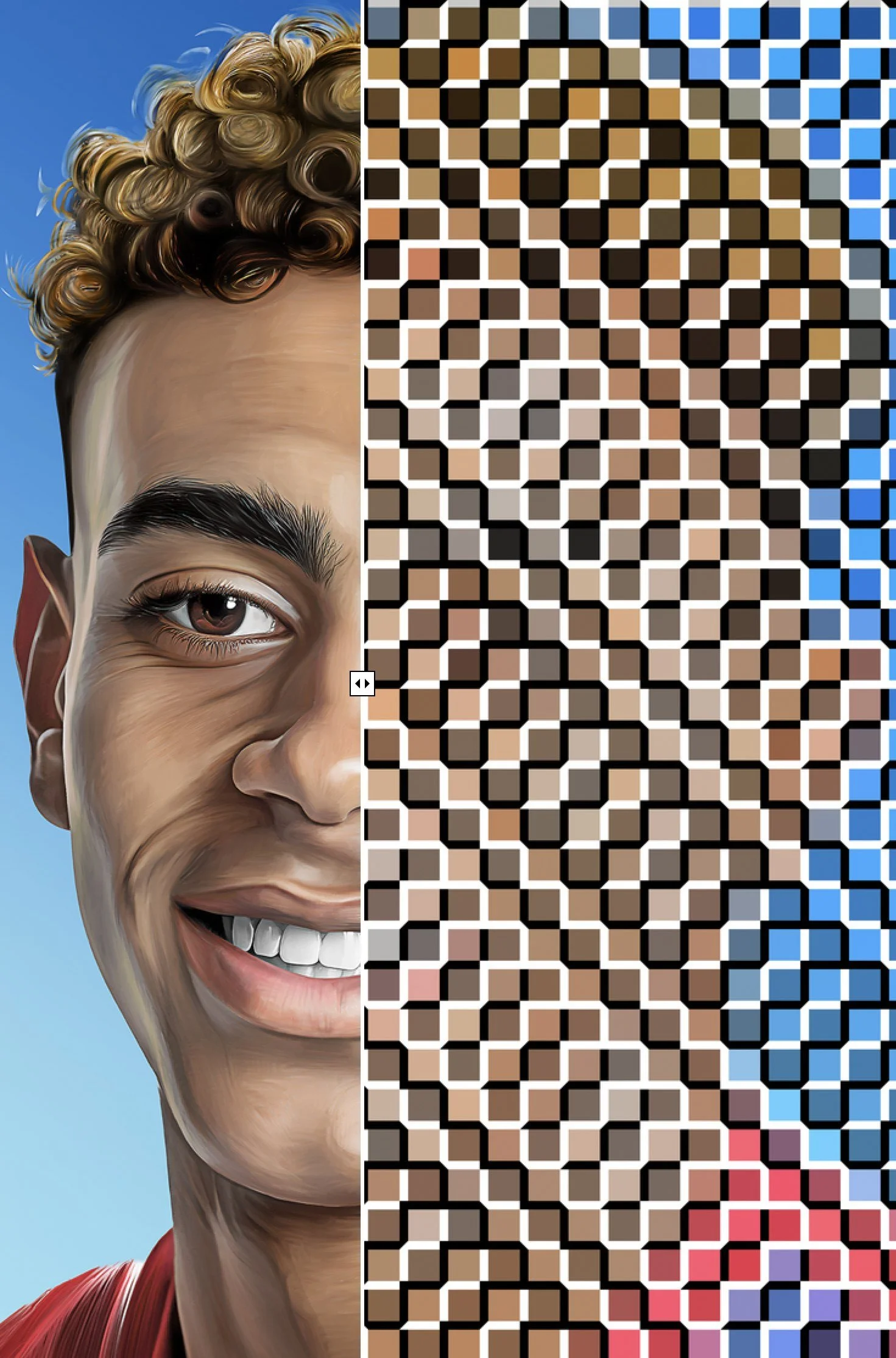
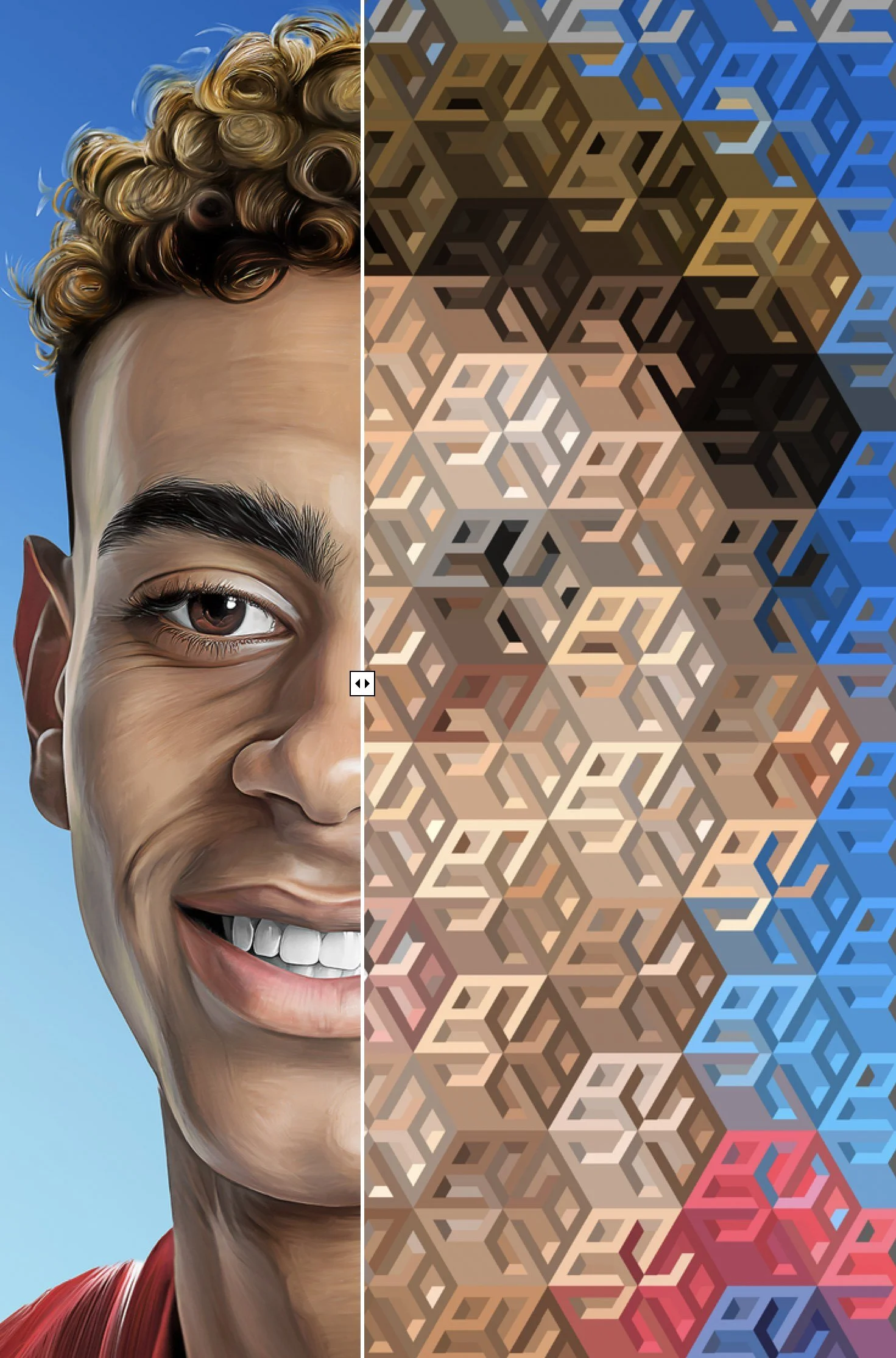
The same portrait, rebuilt on two different grids, shows the idea at work: the whole is read from afar, and each structure changes what the eye finds first.
A long tradition, not a trend
Mosaic is among the oldest ways humans have built images, from the clay-cone walls of Uruk and the pebble floors of Pella to Byzantine Ravenna, Futurism, typewriter art and Knowlton’s computer mosaics. We work inside that line, and we say so. Read the tradition.
How we build it
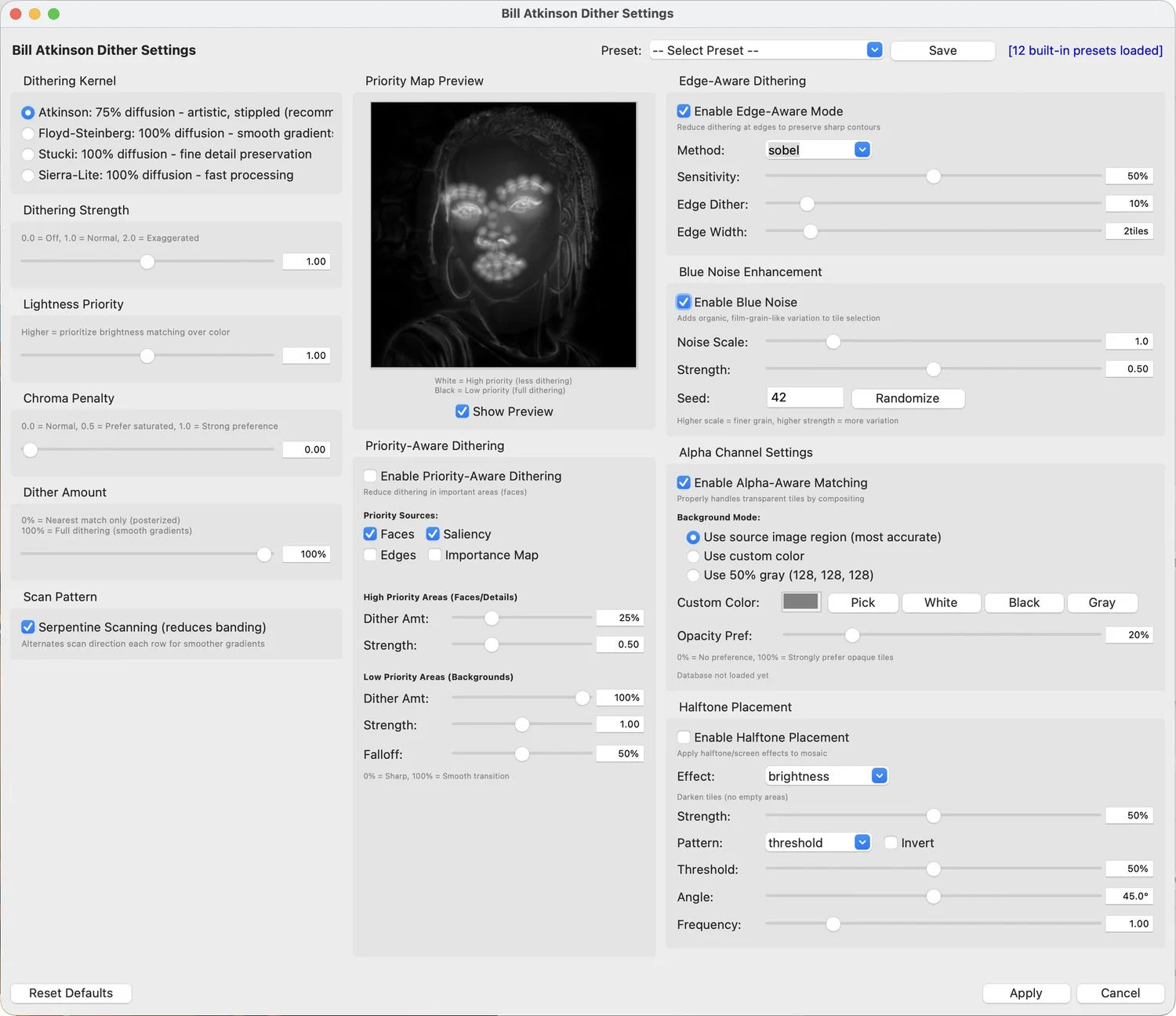
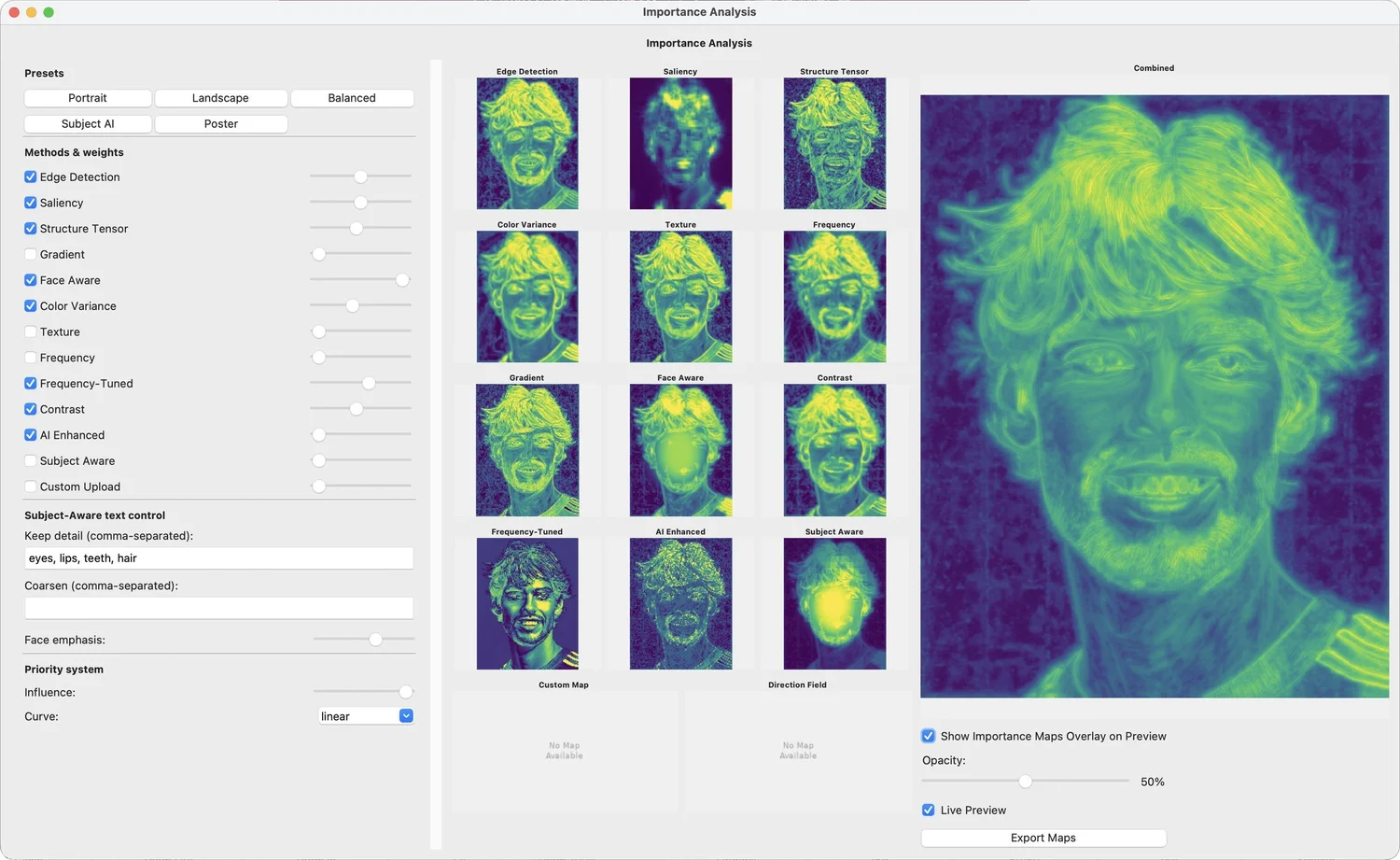
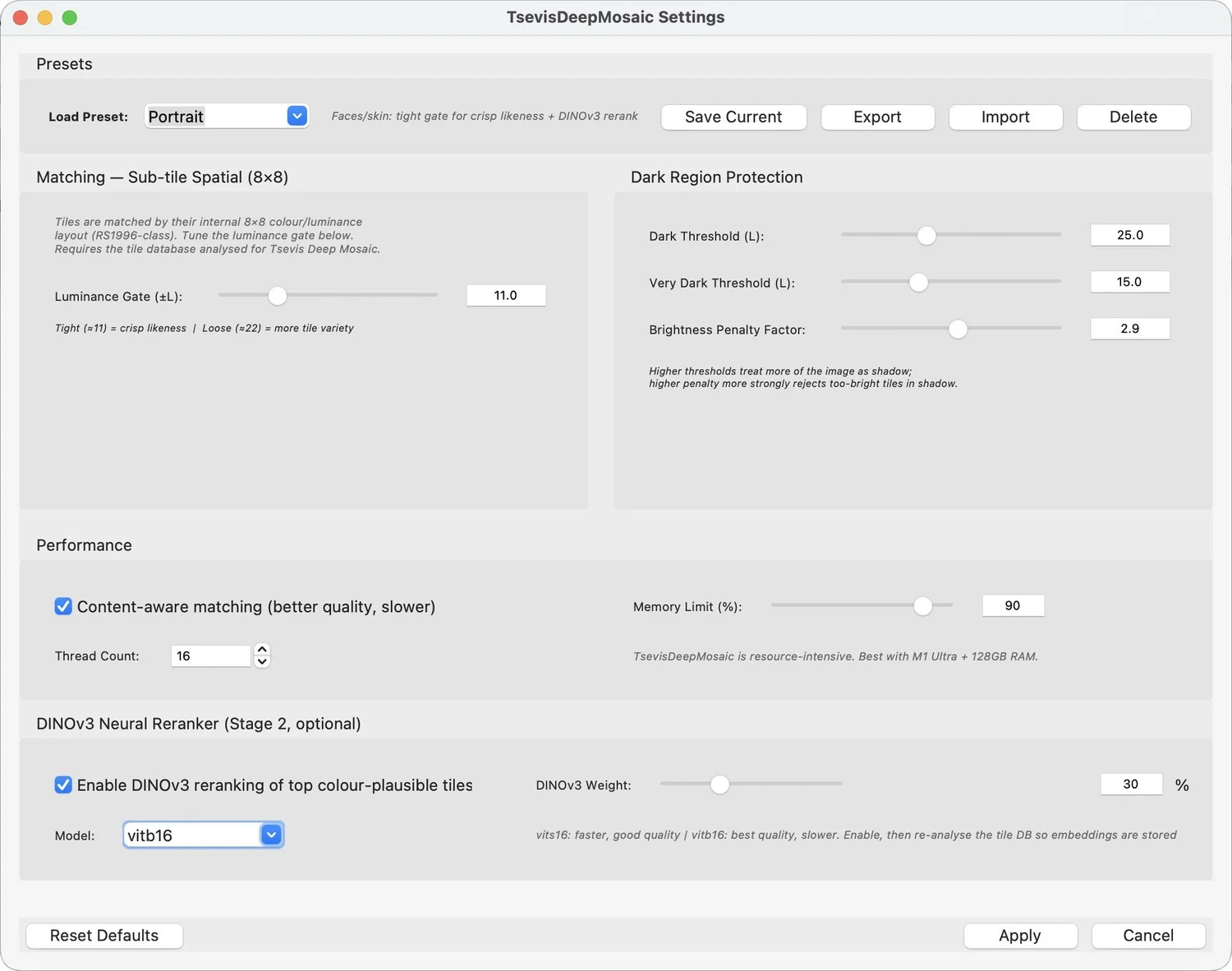
We build our own instruments, because existing software did not address the problem at the depth the work needs. They answer three questions: which fragment belongs where, where the eye goes, and which grids and pattern traditions give a mosaic its structure. We measure, gate and document the method. The full account, with the science we credit, is on the research page.
Three of those instruments are shown below as the studio’s own settings windows: how detail is protected in a face, how importance is measured, and how a single tile is chosen.
Where it is used
One method, many rooms: architecture and public art, corporate and institutional commissions, gifts and editions, advertising, editorial and science communication, sport and culture, healthcare. Clients include Nike, Bulgari, Delta Air Lines, the United States Olympic Committee and the Royal Mint. See the applications.
When the mosaic leaves the screen
Singularis is the work Vira Konstanta and Charis Tsevis make by hand: algorithmic mosaics rebuilt in relief paper, gold leaf and archival inks, each unrepeatable by design. See Singularis.
Who we are, and how to start
We are based in Europe and work with clients worldwide. About the studio · Start a brief.