
The Four Layers of a Mosaic
One Portrait, Twenty-Seven Mosaics
Every mosaic, in stone or in software, is made of four layers: a main image, the tesserae, a constructing mechanism and a meaning that binds them. The clearest way to see them is to hold three still and change the fourth. In three figures, one portrait is rebuilt twenty-seven times, one decision at a time; two more figures add eighteen further grids, and two videos set it in motion.
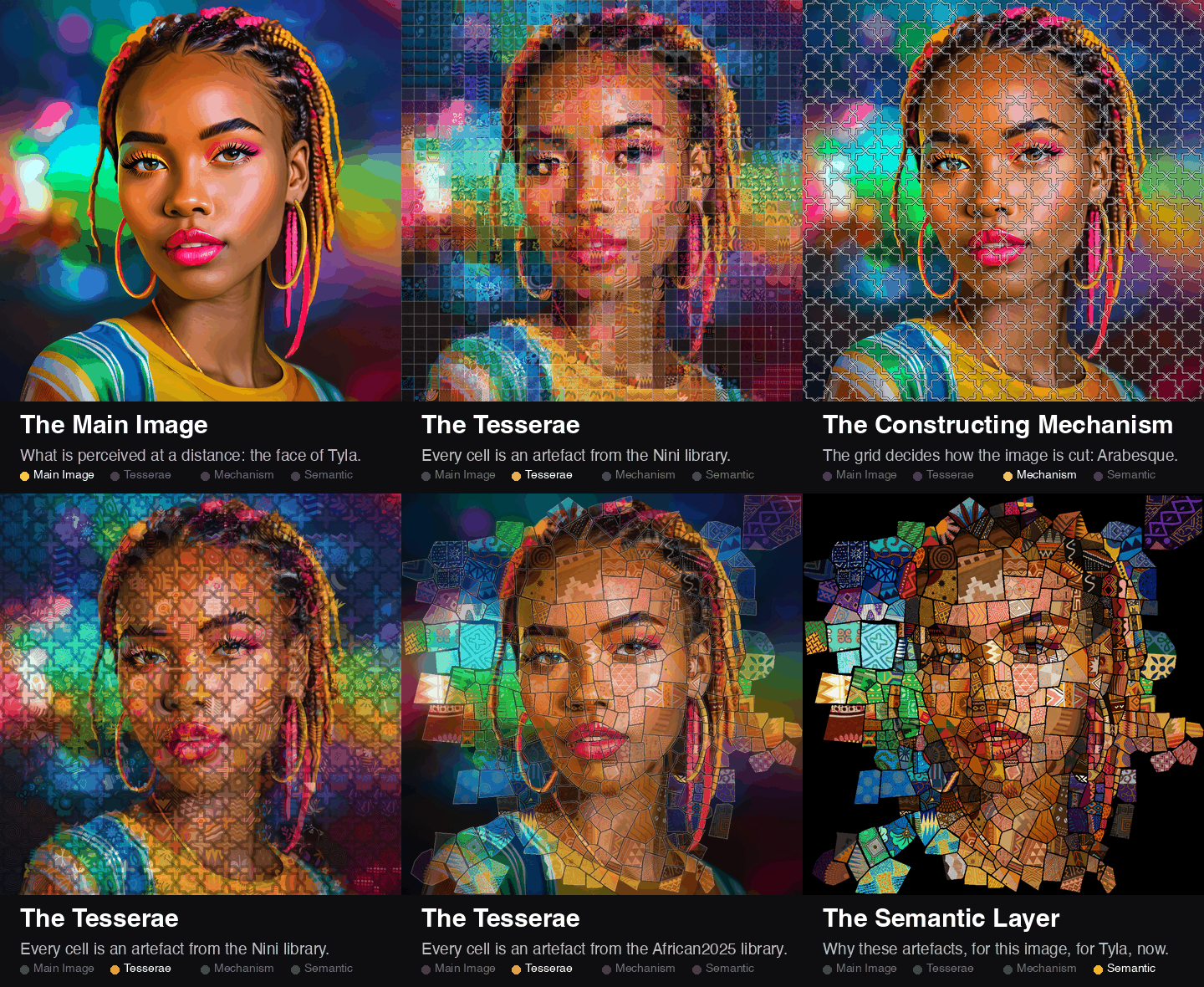
The four layers
When I explain a mosaic, to a client or to a class, I take it apart into four layers. Every mosaic has them, ancient or digital, stone or pixel. Naming them is the quickest way to see why one mosaic carries meaning and another remains decoration.1
The main image. What you see first: the face, figure, landscape or message.
The tesserae. The individual units and what they carry. River pebbles in a Greek floor at Pella. Gold glass in a Byzantine vault. In digital work, images, symbols or typographic characters, each with a meaning of its own.
The constructing mechanism. The grid, the method, the logic of assembly. In Ravenna, the hand of the craftsperson guided by the eye of the master; in a computational mosaic, an explicit rule that decides where each fragment goes. It is often invisible in the finished work. Much of the thinking happens here.
The semantic layer. The meaning that binds the other three: why these fragments, for this image, in this place, at this moment. This is where a mosaic stops being ornament and becomes a statement.
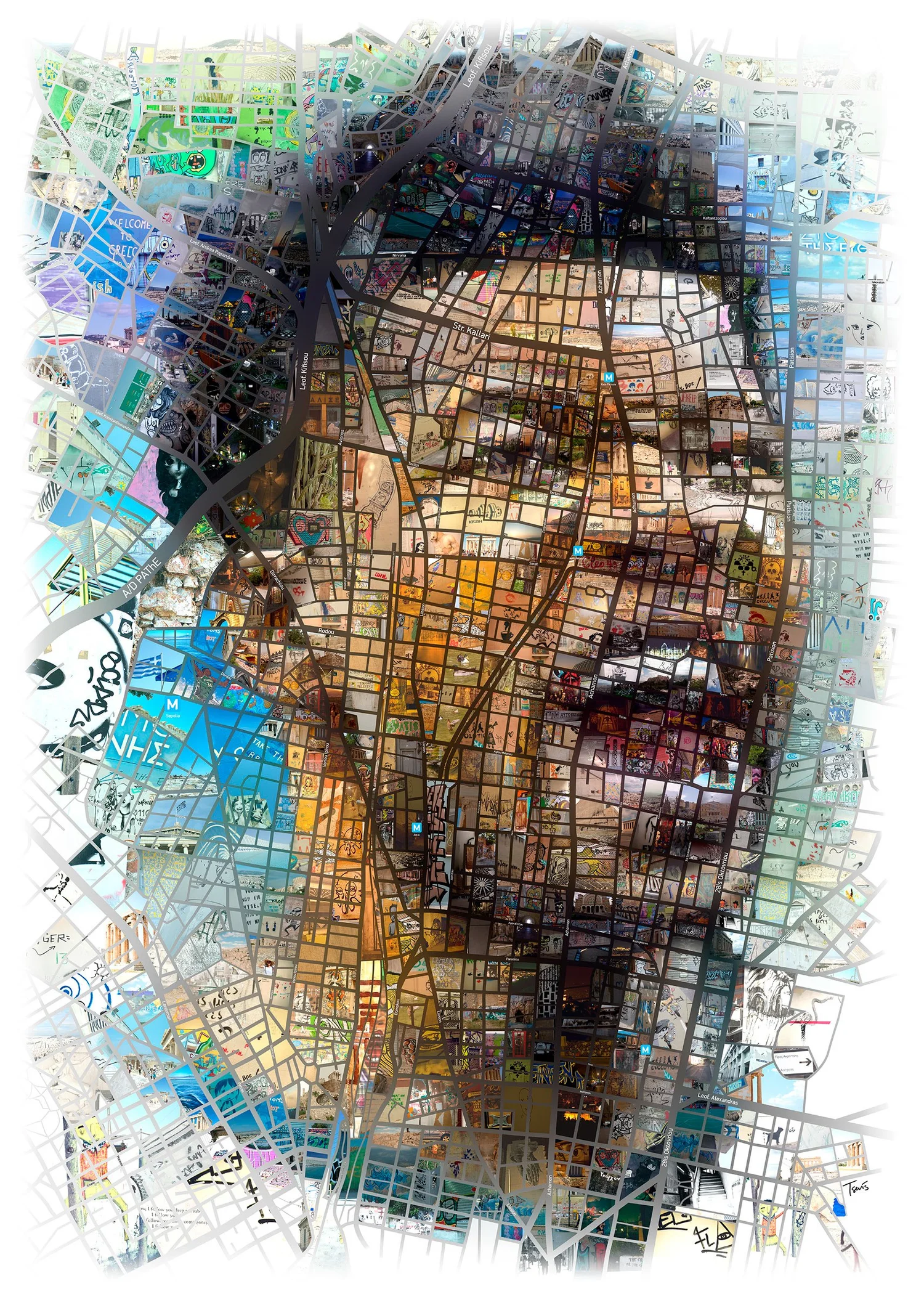


The four layers in one work: Giannis Antetokounmpo, a self-initiated portrait later installed by Nike in its Athens store. The face, the street photographs of Sepolia, the map of the neighbourhood as the grid, and the meaning: the place where he grew up builds his face. Tsevis Studio.
Each layer, then and now
The four layers are not a theory of digital mosaic. They are visible in ancient floors, and they are the decisions we make in every commission. Here is each one twice: once in history, once in our studio.
The main image
In the House of the Faun at Pompeii, the main image is a battle: Alexander the Great facing Darius III, very probably copied from an earlier Greek painting and set into the floor in opus vermiculatum.2, 3 The mosaicist very probably did not choose the subject. The skill was in carrying a painting’s light and movement into stone.
In our work the main image is often given in the same way: a portrait the client needs, a face the reader already knows. The decision that remains is how: the crop, the scale, and how much of the picture the pieces must carry before they can start to say something of their own.

The tesserae
In Ravenna and Constantinople, gold tesserae were set at angles so that the walls catch the light as the viewer moves.4 The material is already the message: gold says heaven and empire before any figure appears. Marshall McLuhan’s phrase fits it exactly: the medium is the message.5
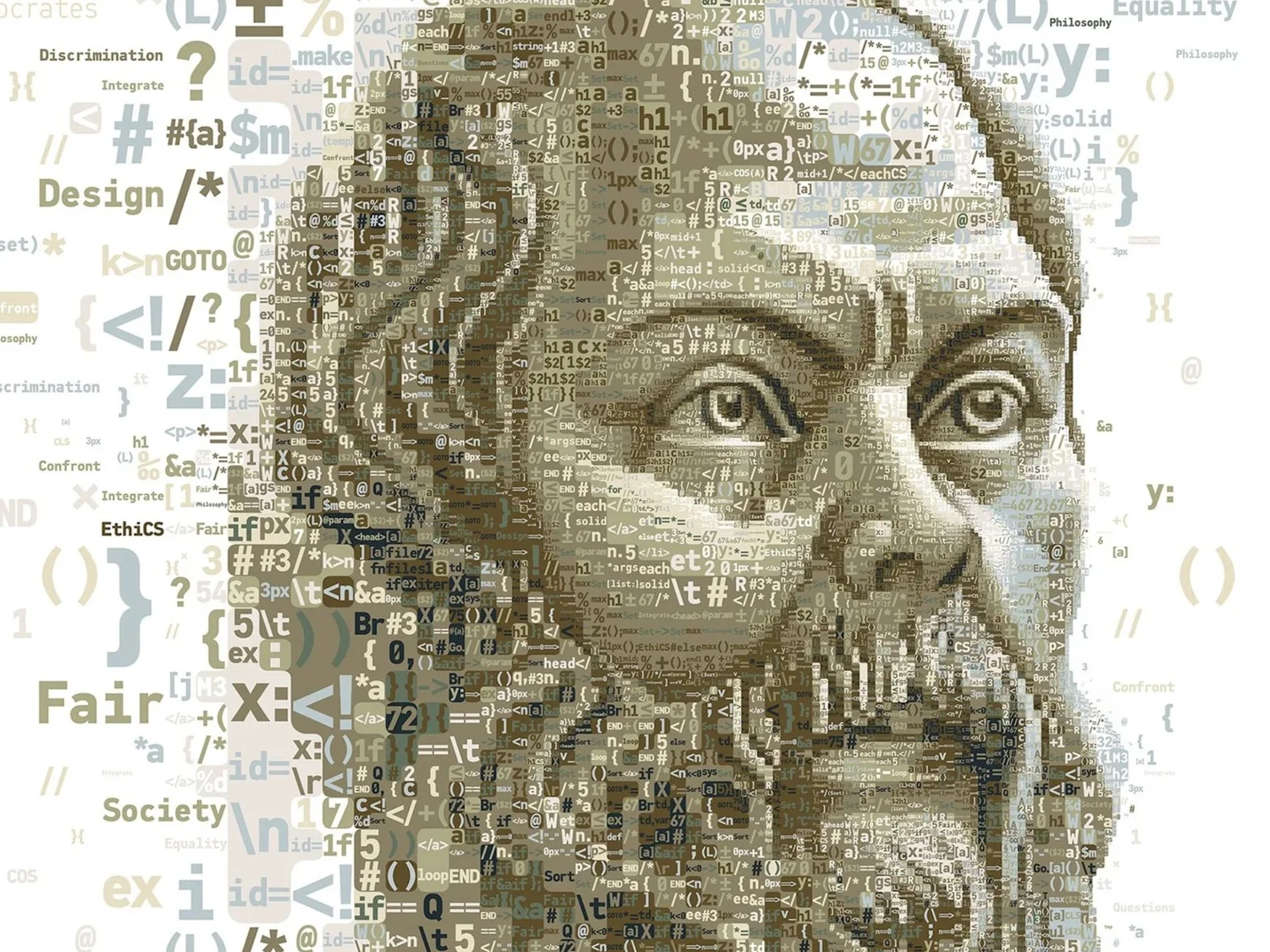
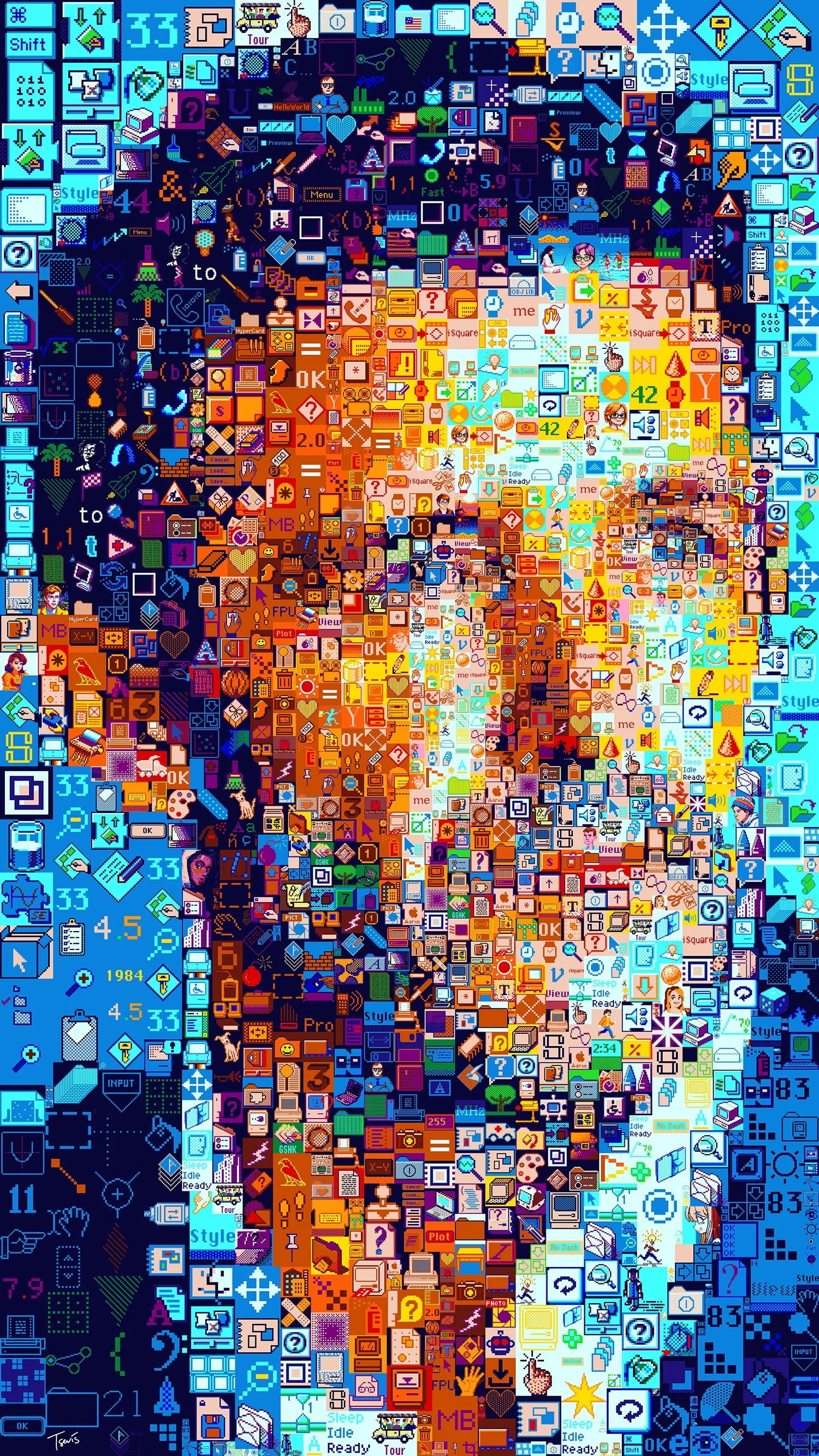
In digital work the tesserae can be anything that can be cut into small units and placed: photographs, symbols, numbers, typographic characters. A face made of code is about a way of thinking; a face made of the icons of computers is about a machine culture and its history. The image stays, and what it is made of changes what it says. I wrote more about this in Every Pixel Is a Tessera.
The constructing mechanism
At Pella, at the end of the fourth century BCE, the mosaicists added thin strips of lead or terracotta to their pebble floors to draw the contours of the figures.6 It is the constructing mechanism made visible: a technical decision that changes how the image reads.
In our studio the constructing mechanism is a grid chosen or designed for each work, and a map of importance that decides where the pieces grow small. We make these maps with Hipparchus, our own mapping application, and then edit each one by hand into the version the mosaic needs. In the portrait of Giannis Antetokounmpo above, the grid is the map of the neighbourhood itself.
The semantic layer
In San Vitale, completed in 547, Justinian stands among clergy and soldiers on a gold ground.7 Who stands where, in what dress and in what material, is a statement about power and faith; the mosaic is an argument, not only a picture.
In our work the semantic layer is the reason the commission exists. Moments Gate, for the Delta Sky Club at San Francisco International Airport, is a 41-foot relief mural of the Golden Gate Bridge built from photographs of the bridge and the city by day and night: the city’s emblem, made of many of its moments.
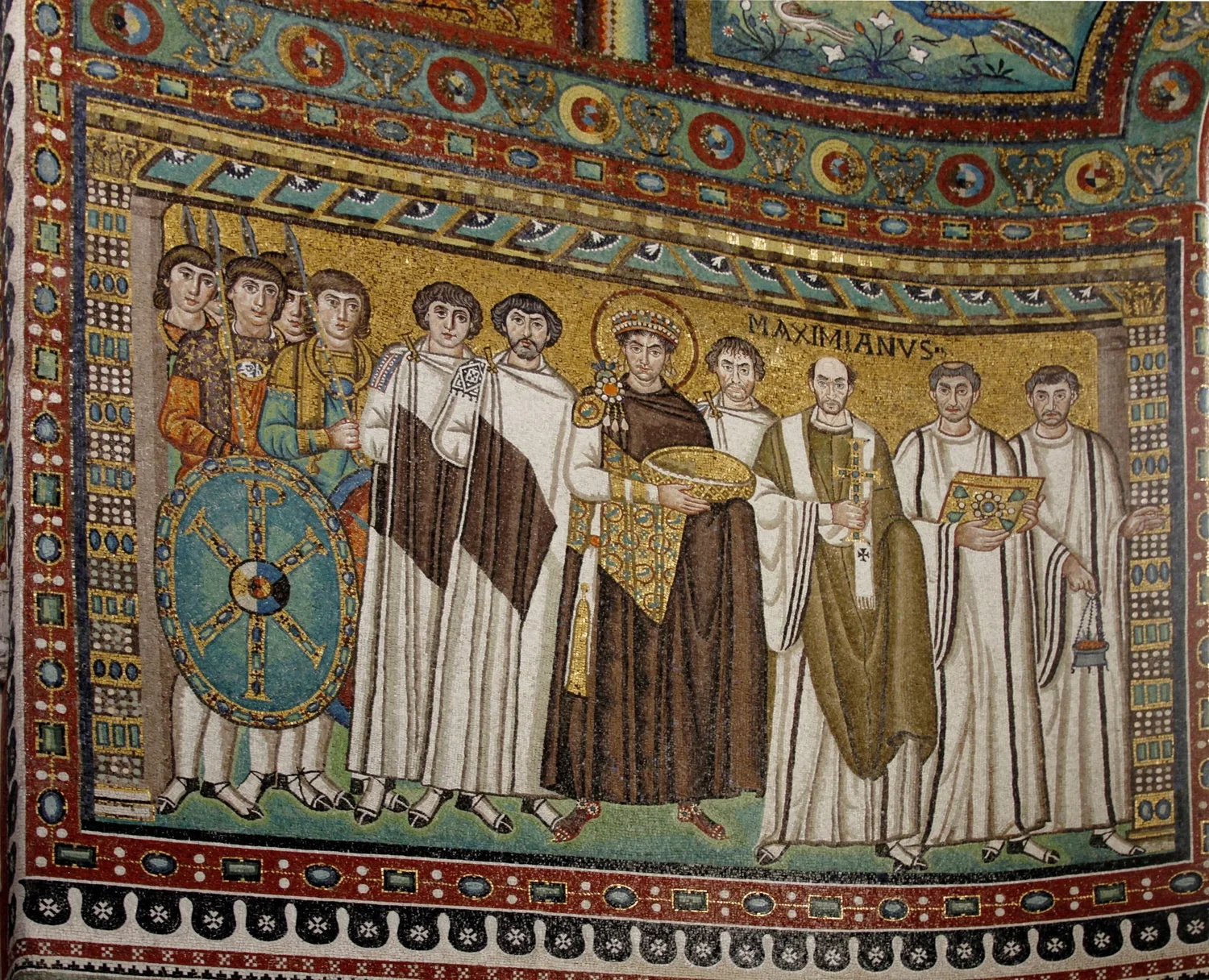


The semantic layer: where the power of a mosaic lies
Of the four layers, the semantic layer decides whether a mosaic is a mosaic at all, or only a picture that happens to be made of pieces. It is also difficult to describe, because it is not a thing in the work. It is a relationship between each piece and the whole, and it runs in both directions.
Two directions of meaning
Meaning travels up. Each piece brings something of its own: a face, a street, a date, a drawing. Together they give the main image a content that it could not have as a photograph. A portrait of an investor made of the logos of the companies he backed says something that his portrait alone cannot.
Meaning also travels down. Once a piece is part of the whole, it is no longer only itself. A photograph of one employee, on its own, is a photograph of one person. Placed in a portrait built from thousands of colleagues, it becomes part of the company: one of the people the company is made of. The whole gives each piece a place, a role and a reason. That return is the binding essence of a mosaic, and it is what decoration never has.
An early formulation is Greek. Heraclitus wrote of the one that comes out of all things, and of all things that come out of the one: ἐκ πάντων ἓν καὶ ἐξ ἑνὸς πάντα.8 More than two thousand years later Blaise Pascal turned the same two-way dependence into a problem of knowledge: he held it impossible to know the parts without knowing the whole, or the whole without knowing the parts in detail.9 Friedrich Schleiermacher made this movement between the two a rule of interpretation, later called the hermeneutic circle, and Hans-Georg Gadamer made it the centre of his account of understanding: we read each part in the light of the whole, and the whole in the light of its parts.10 Reading a mosaic is that circle made visible. Walking towards a wall and back again is how the viewer travels it.
The arch and the stones
In Italo Calvino’s Invisible Cities, Marco Polo describes a bridge to Kublai Khan, stone by stone. The Khan asks which stone holds the bridge up. None, Polo answers: the bridge is held by the line of the arch that the stones form. When the Khan says that only the arch matters to him, Polo replies: “Without stones there is no arch.”11 Every mosaic lives in that exchange. The figure is the arch, the tesserae are the stones, and neither exists without the other.
Arthur Koestler gave a name to things that are both at once. A holon, in The Ghost in the Machine, is something that is a whole in itself and a part of something larger, and faces both ways.12 The tesserae of a digital mosaic are holons in exactly this sense: each photograph, icon or drawing is complete, and each is a part. Ferdinand de Saussure made a related point about language: in a language there are only differences, and a sign means what it means through its relations to the signs around it.13 A tessera, too, takes its meaning from its neighbours. Moved to another place in the same image, the same piece can say something else.
Walter Benjamin put the relation between ideas and things in an image that every mosaicist will recognise: ideas are to objects as constellations are to stars.14 The stars are scattered points; the constellation is the figure we draw between them, and it gives each star its place in a story.
Many into one
Political thought has pictured a society as a body made of people for centuries. On the frontispiece of Thomas Hobbes’s Leviathan, published in 1651 and engraved by Abraham Bosse, the sovereign rises over the land with a body made of hundreds of small human figures.15 It is, in effect, a mosaic of citizens. The motto on the Great Seal of the United States, adopted in 1782, says the same in three words: E pluribus unum, out of many, one.16 The European Union chose its own in 2000: united in diversity.17
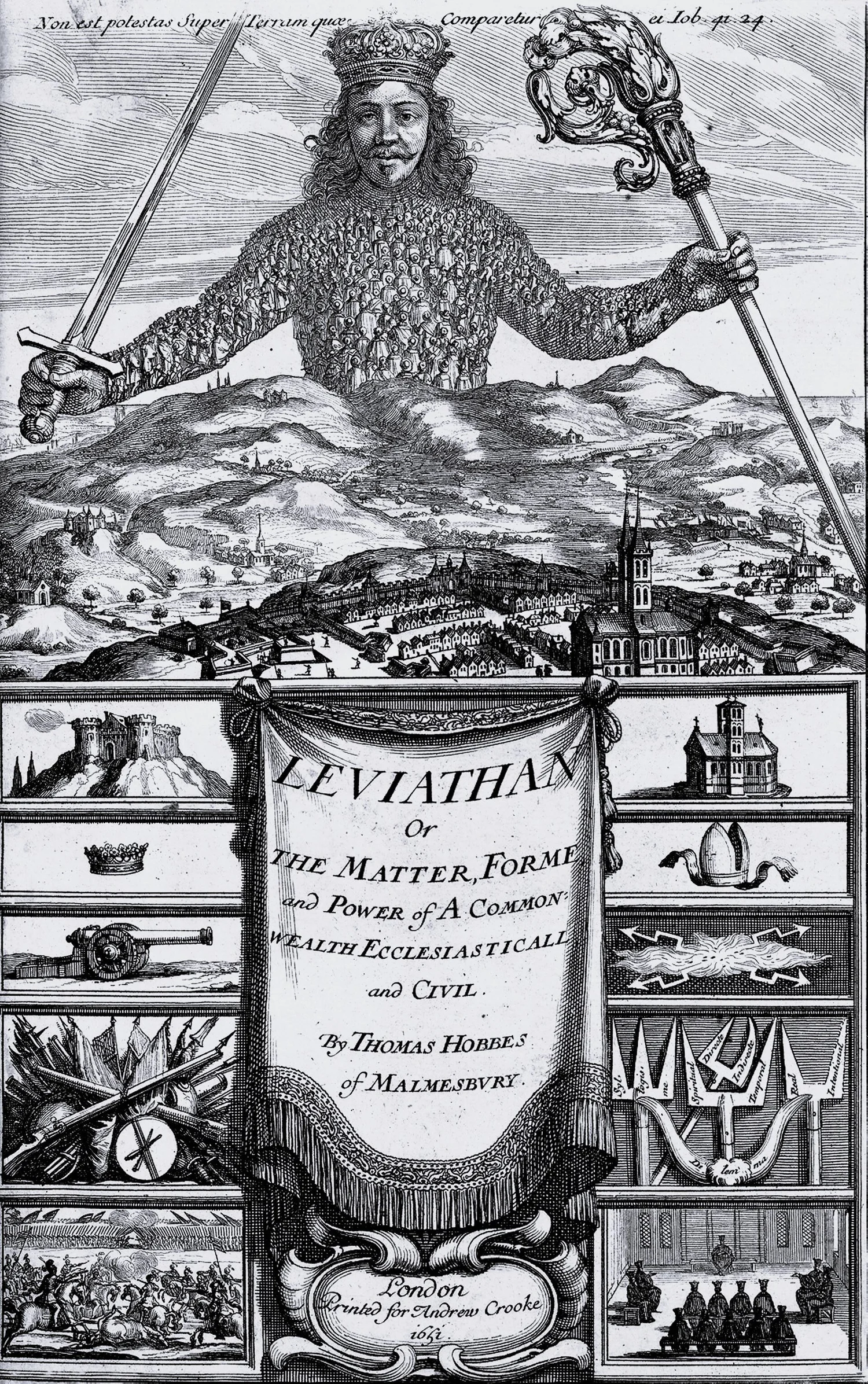

The difference between these models is the difference between kinds of mosaic. In the early twentieth century the United States was described as a melting pot, after Israel Zangwill’s play of 1908: a vessel in which origins dissolve into one alloy.18 Canada answered with the image of a mosaic. In John Murray Gibbon’s Canadian Mosaic of 1938, the parts keep their colour inside the whole.19 John Porter’s The Vertical Mosaic of 1965 added a warning that matters to artists too: a mosaic can also hide a hierarchy, with some pieces always placed above others.20 Hannah Arendt described the human condition as plurality: it is men, not Man, who live on the earth, each one distinct.21 A mosaic that respects its pieces is the visual form of that idea. A mosaic that dissolves them is a melting pot with a picture on top.
The piece as a story
Historians have learned to read the large through the small. In The Cheese and the Worms, of 1976, Carlo Ginzburg reconstructed the world of a sixteenth-century miller from Friuli, Menocchio, and through one life lit up a whole culture.22 Fernand Braudel wrote his history of the Mediterranean at three speeds at once: the almost motionless time of geography, the slow rhythms of economies and societies, and the fast time of events.23 A mosaic holds history in the same way. Each tessera can be a single life, a single game, a single day; the figure is the long time to which they belong.
From one thing comes another
Bruno Munari called his book on design method Da cosa nasce cosa, “from one thing comes another”, and showed how a project grows step by step from the problem to its solution.24 The semantic layer grows in the same way. It is not added at the end. The image suggests the pieces; the pieces suggest the grid; the grid changes what the image says, and the image asks again for other pieces. Each decision is born from the one before, and the meaning is built along the chain, not poured in afterwards.
In our work
In the works below, both directions of meaning are at work.
- Lhoist. Portraits built from photographs of the company’s employees around the world. Each face finds a place in the company’s face, and the company is shown to be its people.
- Smithsonian. Abraham Lincoln built from portraits of the hundred people the magazine named in its special edition “The 100 Most Significant Americans of All Time”. One face carries a nation’s history, and a hundred lives gain a common frame.
- Giannis Antetokounmpo. A self-initiated portrait built from the map and the street photographs of Sepolia, the Athens neighbourhood where he grew up, later installed by Nike in its Athens store. The place builds the man, and the man returns the place to the world’s attention.
- Hansaplast. A child’s smile made of thousands of children’s drawings, each one a donation to The Child’s Smile. Every drawing is a gift and a piece of the image at once.
- Healthy Seas. The dolphins of the Knossos fresco rebuilt from more than 1,500 photographs of the organisation’s own work cleaning the sea. A Bronze Age image of a living sea is made of the work of keeping the sea alive.
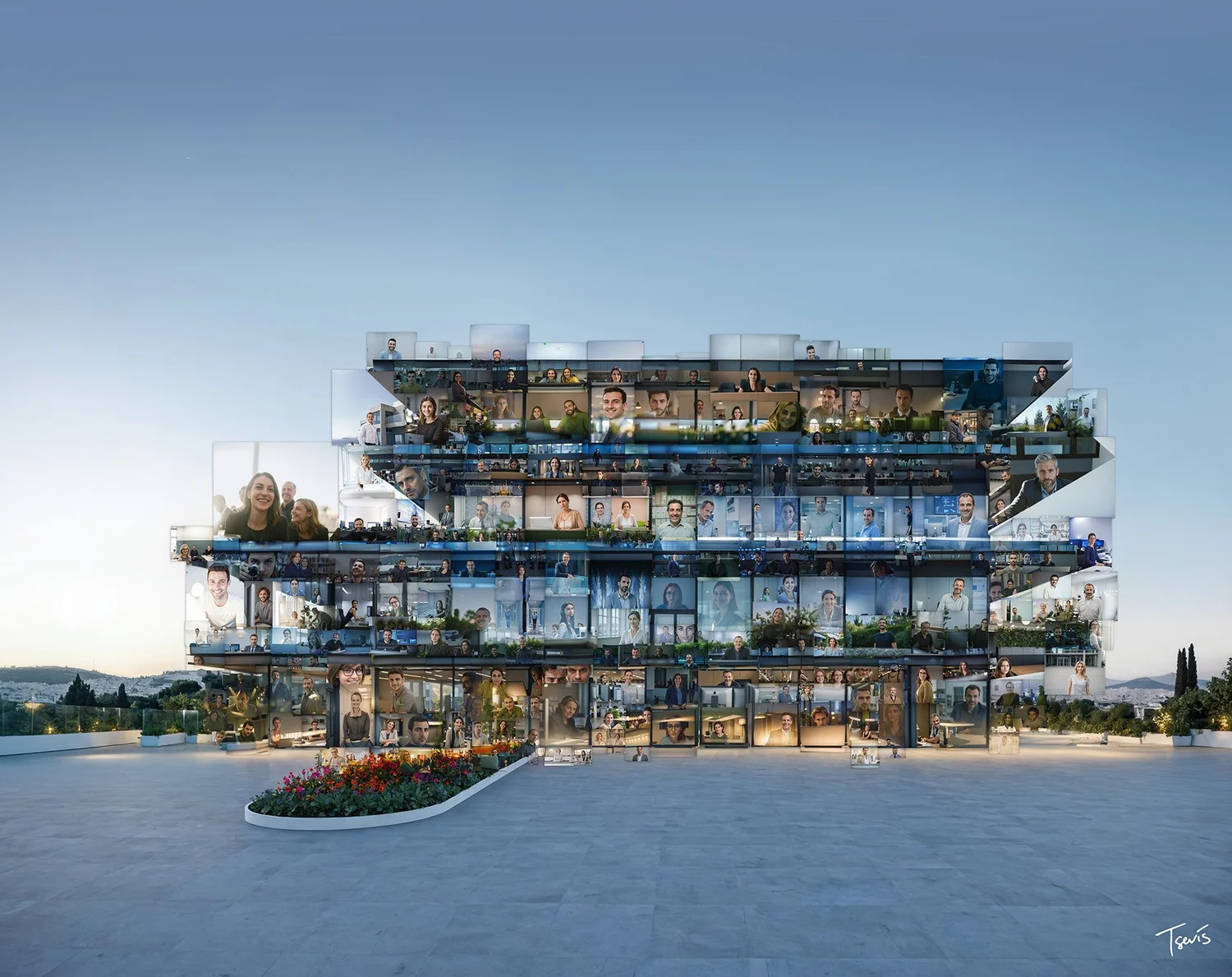
- Eurobank. A business facade built from more than 300 AI-generated portraits that represent the Greek workforce: a building made of the people who keep a business running.
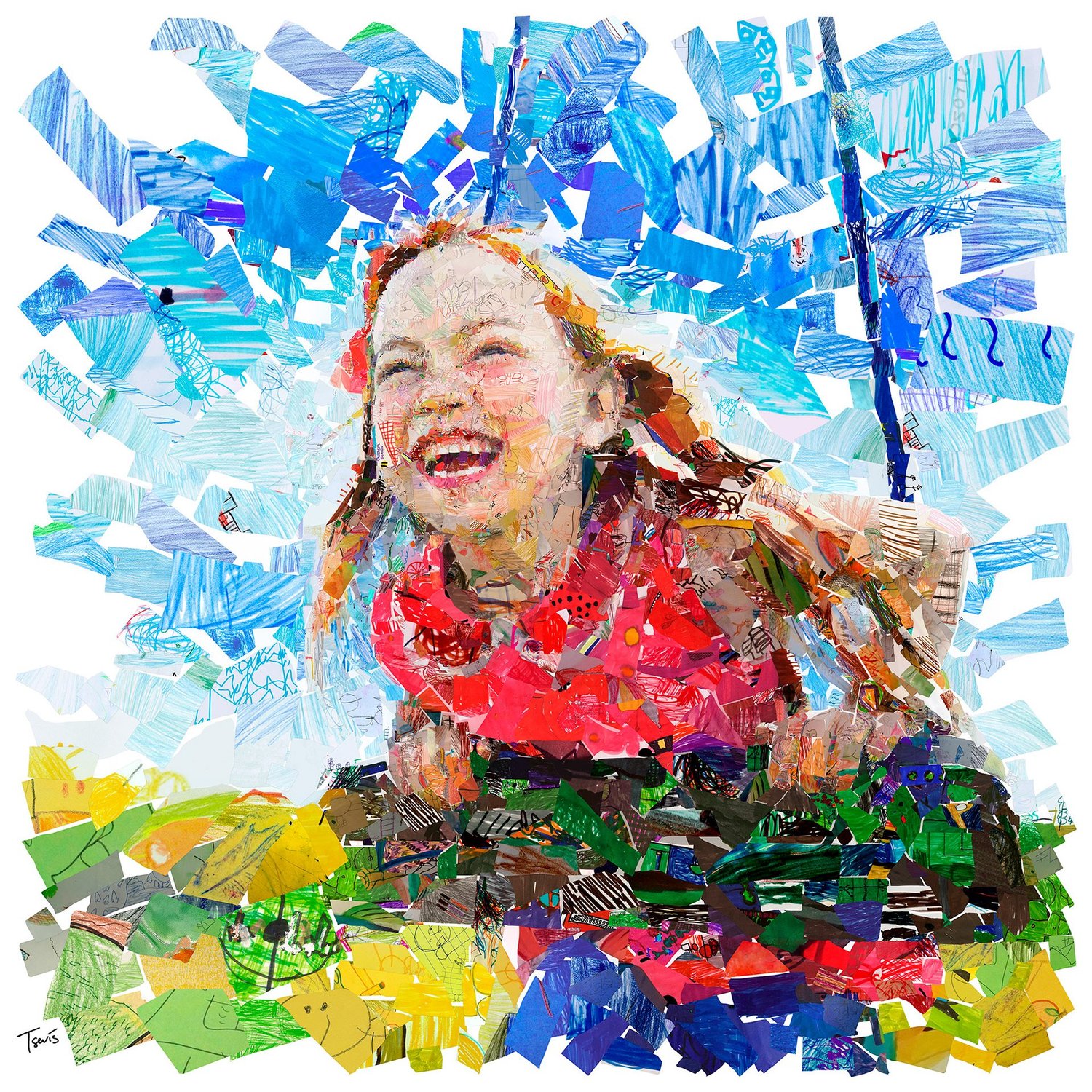
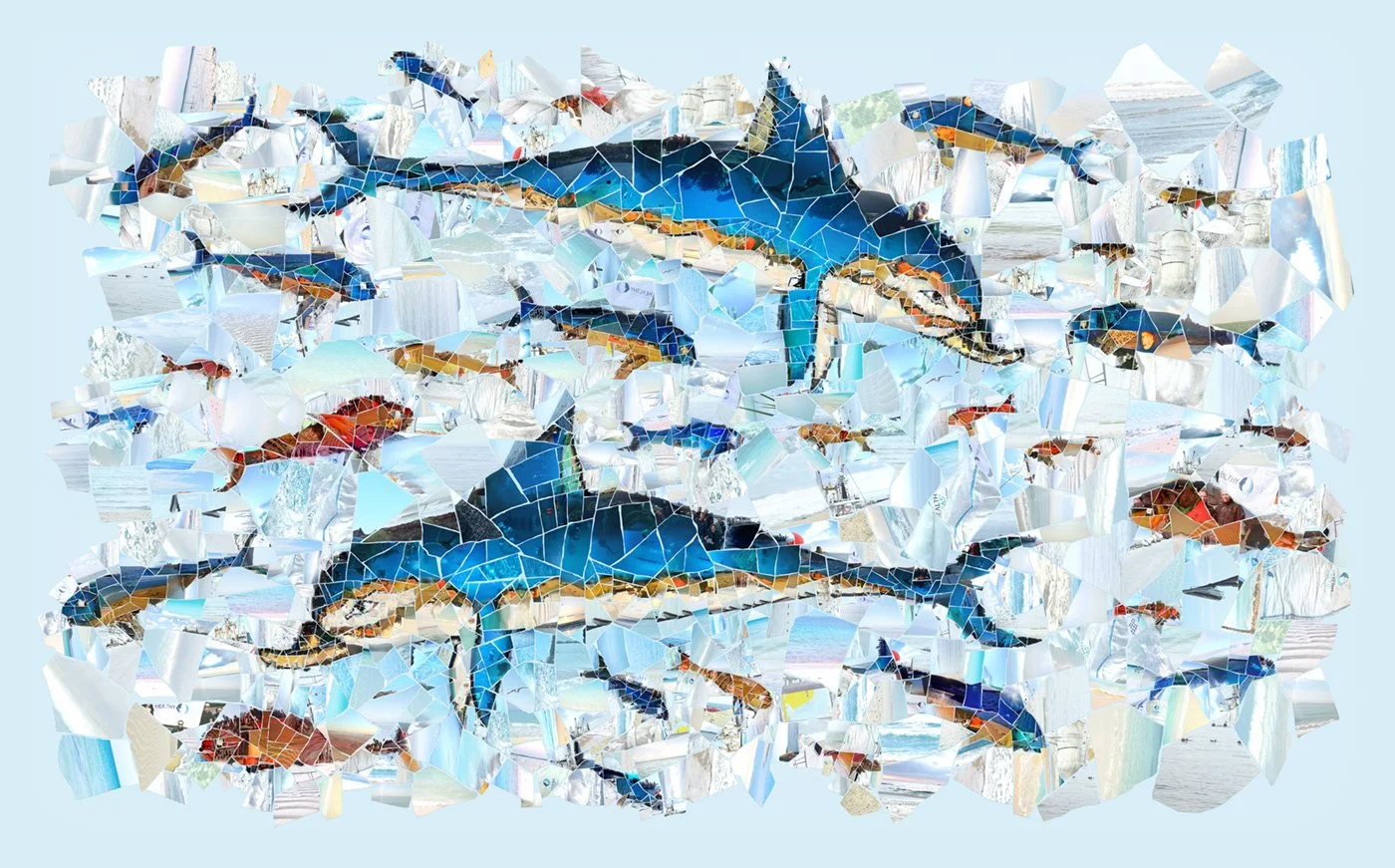
When the semantic layer is missing
A mosaic can be technically perfect and say nothing. If the pieces are chosen only for their colour, any set of pictures would do as well as any other, and the viewer who steps close finds a heap of unrelated images. That is the limit of the photographic mosaic as a method: it answers the matching problem and leaves the question of meaning open. It is why, even when the main image is given, the first question we ask is what its pieces should be, and why.
How to read a mosaic in four steps
The four layers also work the other way round, as a method for looking. The same four questions serve in a church in Ravenna and in front of a magazine cover.
- Step back. Find the main image. What do you see first, and from how far does it hold?
- Step close. Look at the pieces. What are they? Do they share a theme, a colour, a source? Would the image mean something else if it were made of other pieces?
- Follow the structure. Trace the rows or the cells. Are the pieces equal, or do they change size? Where are they smallest? That is where the maker wanted your eye to stay.
- Ask why. Why these pieces, for this image, in this place? The answer, or its absence, is the semantic layer.
The four layers in a commission
When a client comes to us, the work runs through the four layers in order, and then back again.
- The main image is agreed first: a portrait, a place or a symbol, often with its crop and size fixed by where the work will appear.
- The tesserae are gathered next: from the client’s own archive, or from photographs, drawings, data and symbols that carry the subject’s story. This is where much of the meaning is decided.
- The constructing mechanism follows: the grid, the importance maps and the matching rule.
- The semantic layer is then tested. We look at the work at the distances at which it will be seen, from far for the figure and from close for the pieces, and we change whatever does not carry the message.
Some works then leave the screen. In Singularis, unrepeatable works by Vira Konstanta and Charis Tsevis, a digital mosaic is finished by hand over weeks or months, in classic, contemporary and recycled materials, and our hand-embellished editions are finished by hand. The four layers stay the same; the material of the tesserae changes once more.
How the figures are made
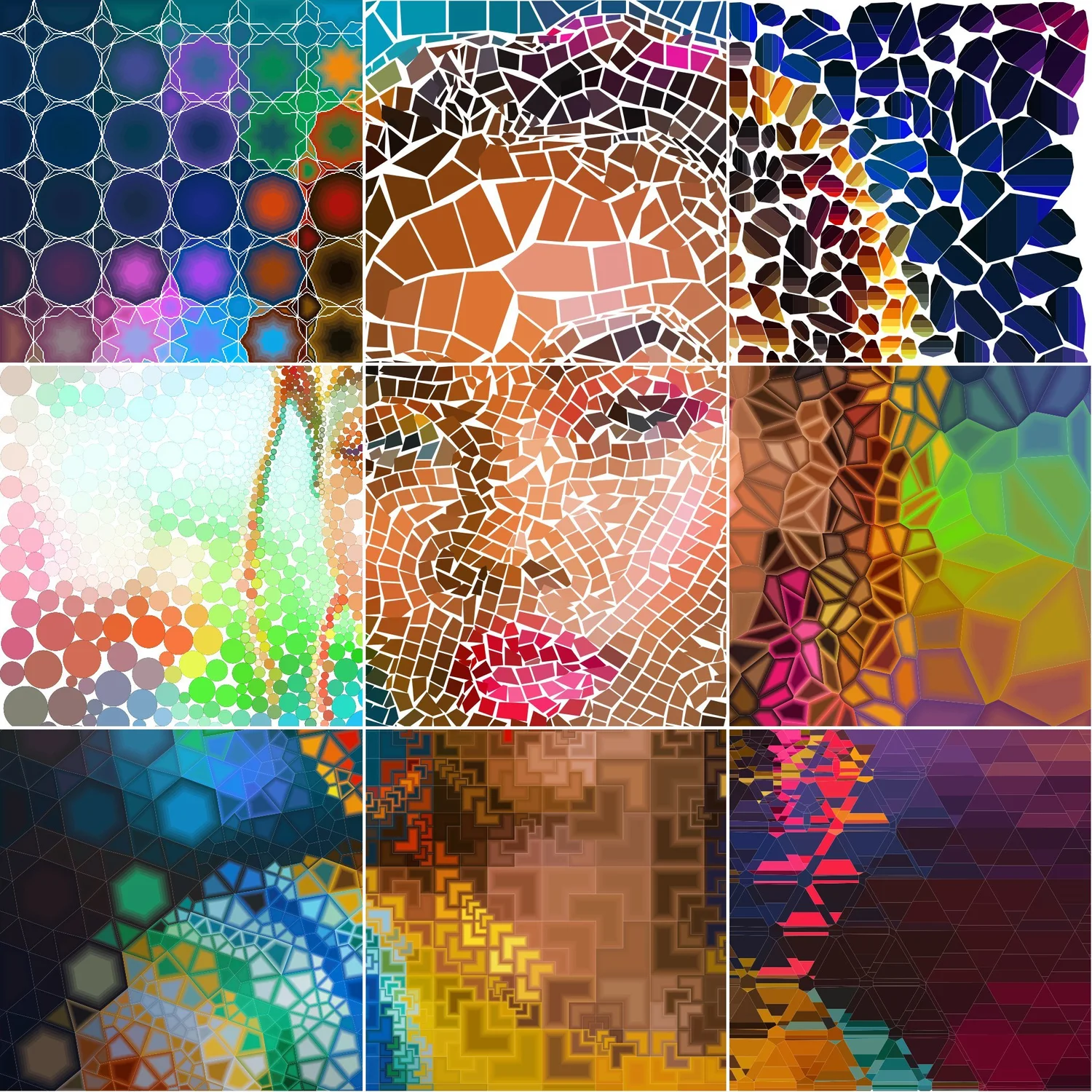
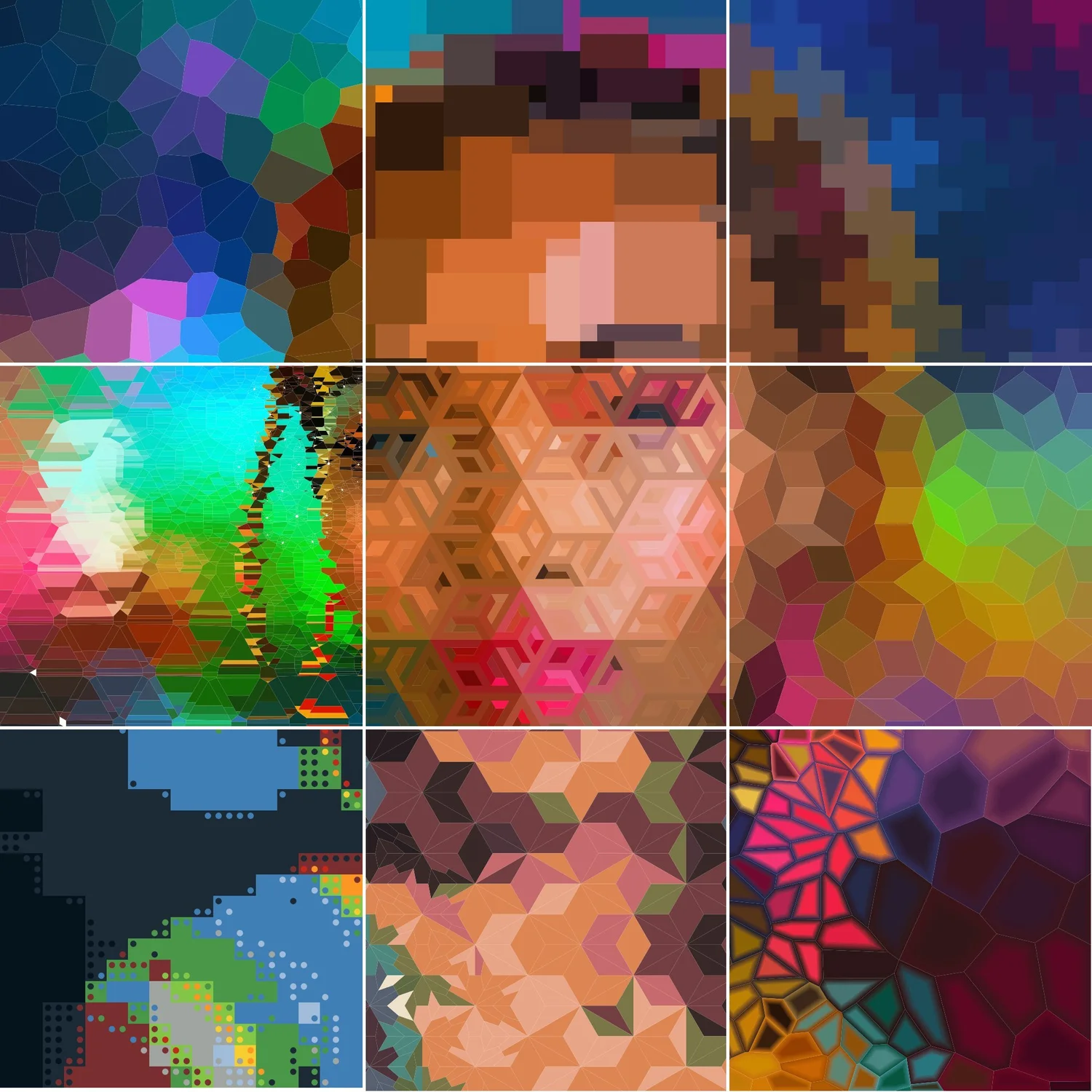
The figures below start from the same portrait of the singer Tyla. Each is made of nine separate mosaics; from each we kept one ninth of the picture, and the nine pieces, put back together, still form one face. In each figure, only one decision changes. Everything else stays fixed, so whatever changes in the picture is the work of that one decision.
The constructing mechanism: nine grids
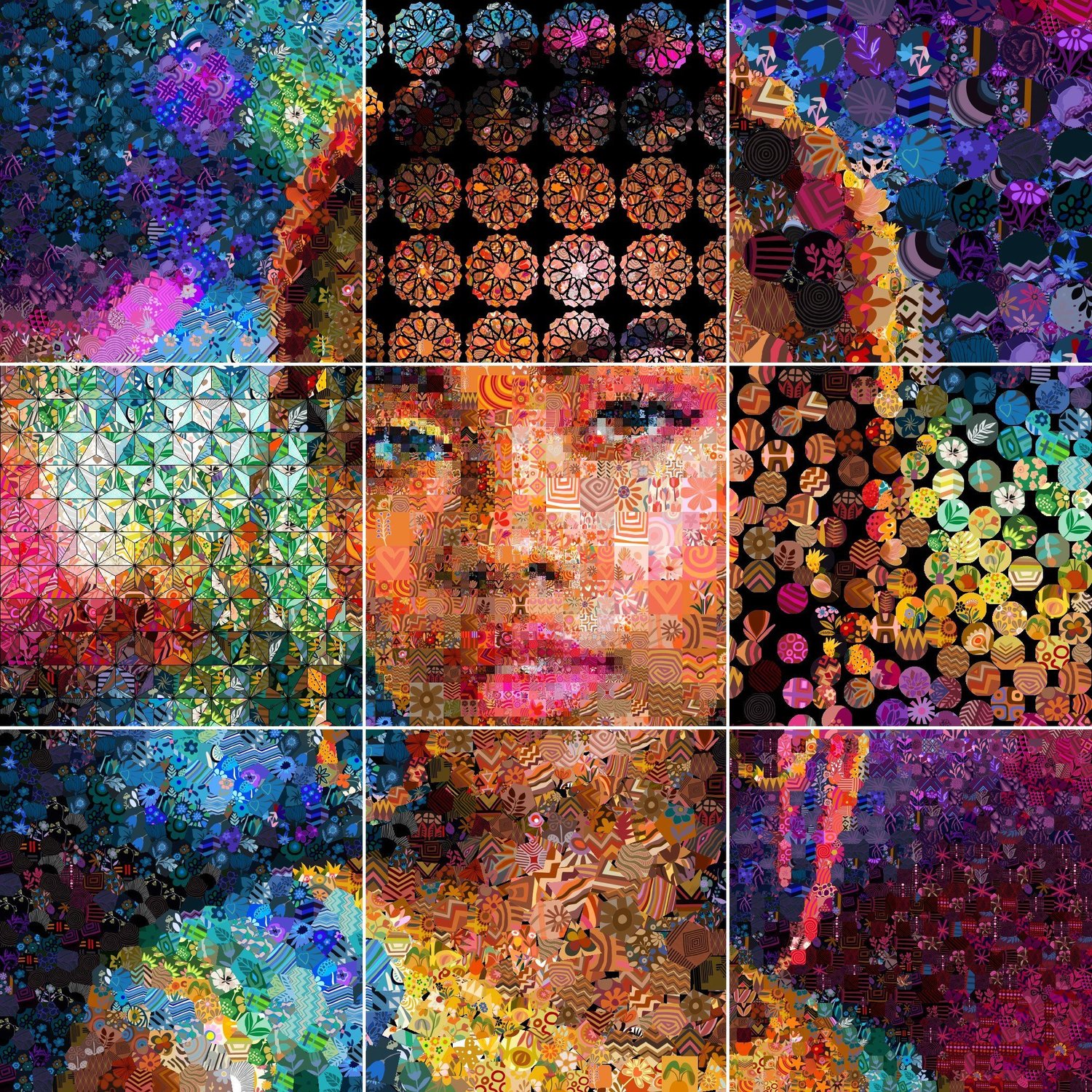
The same tiles and the same matching rule, on nine different grids: geometric traditions from the Islamic world and Japan, an Ethiopian cross pattern, the irregular cells of biological growth, circle packing, jigsaw pieces and the adaptive Tsevis Grid, which gives large pieces to quiet areas and small ones to detail.
The grid decides what the eye finds first. Kumiko reads as joinery; an arabesque reads as a carpet; Voronoi cells read as something that grew. The face survives every change, and that is the point: the grid is not there to carry the likeness, but to say what kind of object the likeness is made of. The mathematics behind several of these grids is on The Mathematics of the Mosaic.
The two figures that follow push the same idea further. Each square comes from a different mosaic made with CGMCreator, our system of grids drawn from historical patterns, design traditions and the visual languages of computer history.
The tesserae: nine libraries
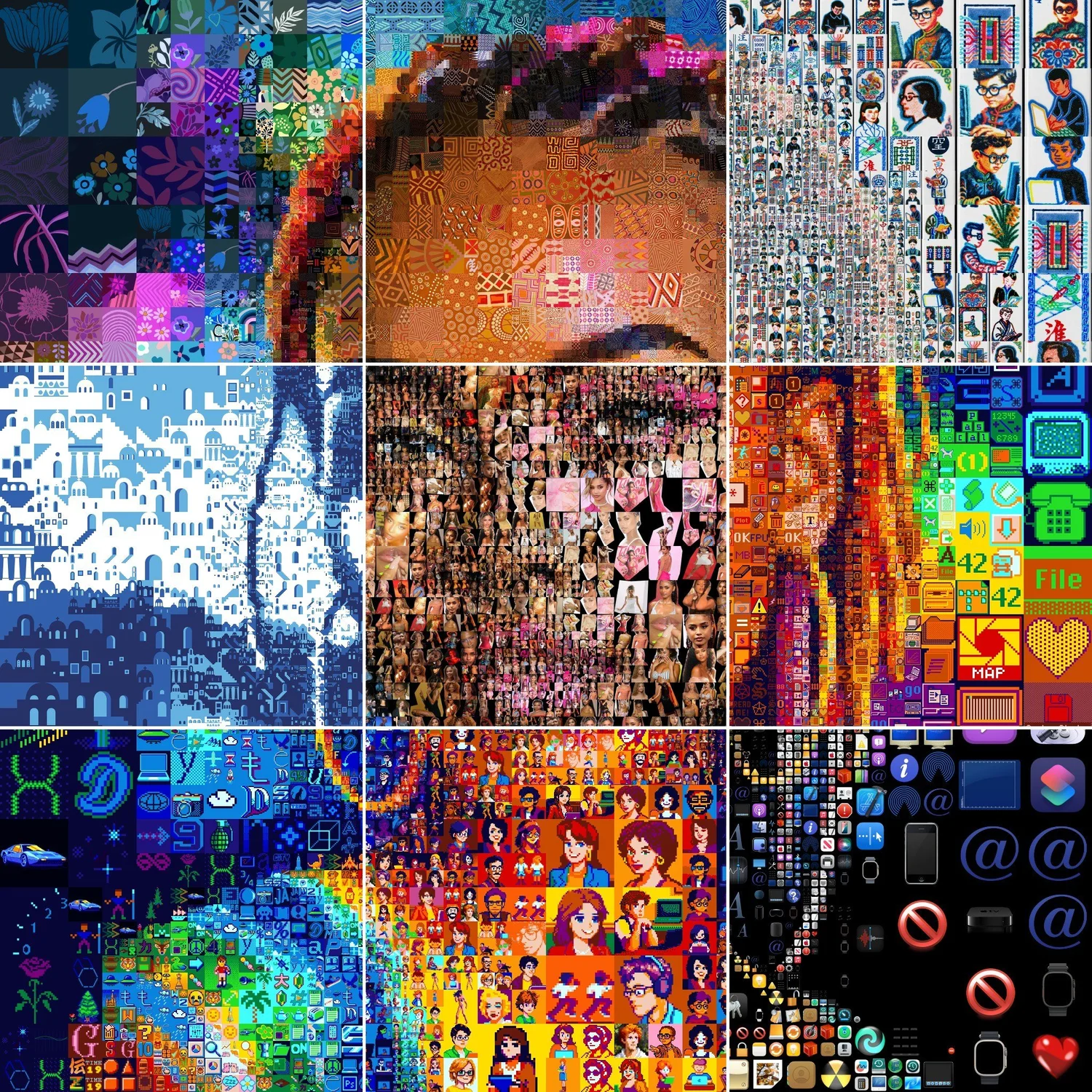
The same grid and the same matching rule, with nine different libraries of pieces: illustrated patterns, the material of our African Bricks series, illustrated Mahjong tiles, Cycladic architecture, photographs of the singer herself, computer icons and pixel portraits. The face stays. Its meaning moves with the material. This is where the semantic layer begins. Claude Lévi-Strauss called the maker who builds with what is at hand, giving old fragments a new order, a bricoleur.25 Every library of tiles is a bricoleur’s store.
Choosing the library is choosing what the portrait says. Photographs of the subject make a portrait about memory; computer icons make one about a machine culture; patterns from a tradition make one about belonging. I wrote about this conversation between materials in Every Pixel Is a Tessera.
The matching rule: nine ways to choose
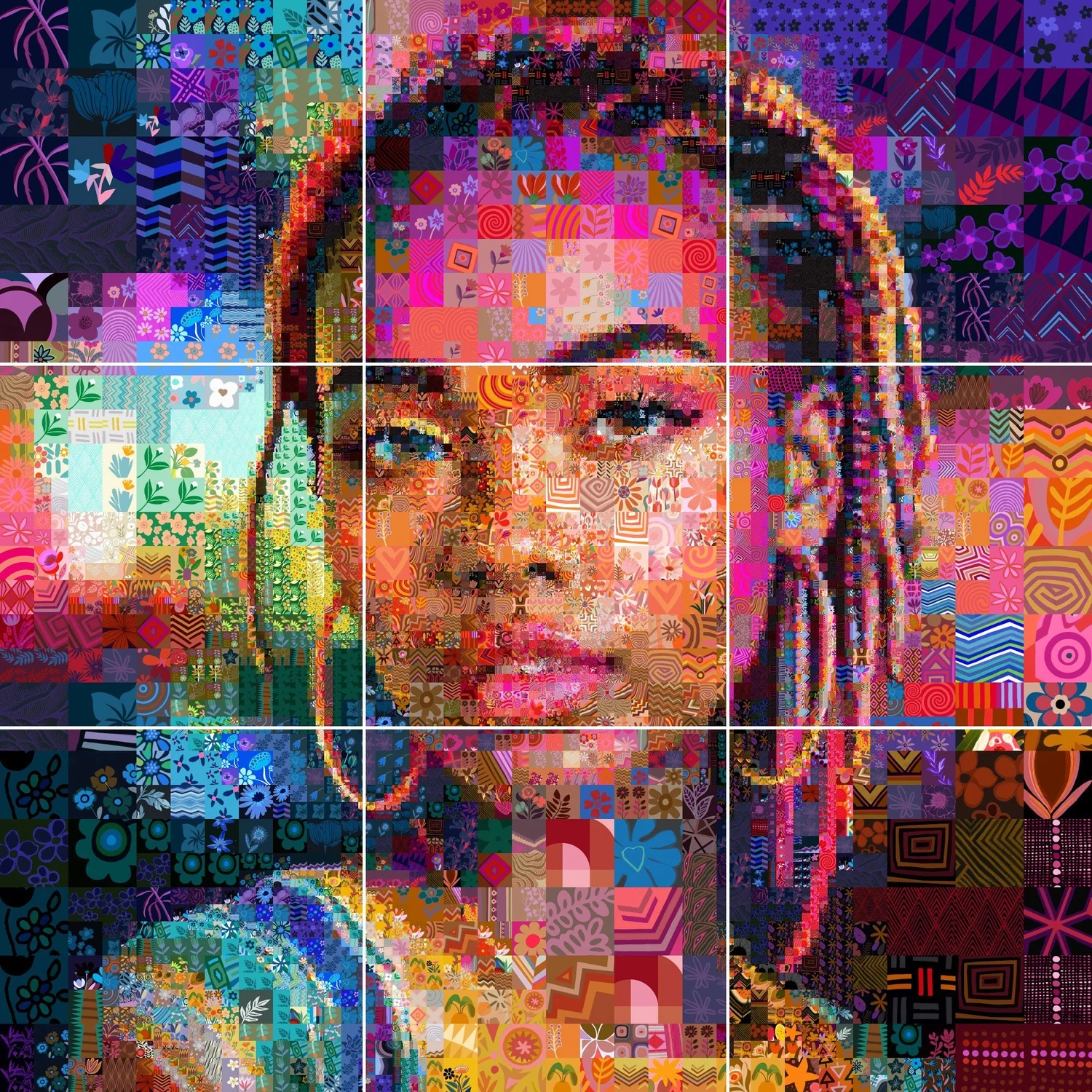
The same grid and the same library, with nine different ways of deciding which tile belongs where: average colour, brightness, the internal layout of colour and tone, the distribution of colours, edges, perceptual structure, features learned by a vision model, dithering. Each rule keeps something of the original and gives up something else.
The first rules compared average colour. In 1996 Robert Silvers began comparing a small grid of samples inside each tile.26 Later rules compare structure: where the edges run, how tone is laid out inside each cell, what a vision model recognises in it. A rule that follows edges keeps the drawing of a face; a rule that follows colour keeps its light. No rule keeps everything, so the choice of rule is a choice of what matters in this image. How these rules developed is told in Photographic Mosaics: How the Algorithms Developed, and the matching problem is written down as an equation on The Mathematics of the Mosaic.
In motion
A mosaic does not have to stand still. Here a short video of the same portrait is rebuilt with Mozaix, frame by frame, from small illustrated tiles of flowers, leaves, swirls, stripes and zigzags: small on the face, larger in the background. Every frame is a new mosaic, and the tiles change as she moves.
The same video can also become character art. Here it is rendered nine times with DIMITRIS, our proprietary system for ASCII, ANSI and other character art of historic and legacy machines, inspired by the electrical engineer and hacker Dimitris Tsevis, my father. The nine renders are cut and put back together in the same way. Each cell uses a different set of characters, a different rule for choosing them and a different size of character: the finest at the centre, the coarsest in the corners, the way a mosaicist keeps the smallest tesserae for the face. Every frame is a new mosaic of letters, symbols and blocks. Typewriter art and the Bell Labs experiments, now in time.27
What the twenty-seven mosaics show
Three things.
First, likeness is cheap. The face survives nine grids, nine libraries and nine rules. A recognisable mosaic is not an achievement in itself; it is the starting point.
Second, every layer speaks. Change the grid and the portrait changes its kind; change the library and it changes its subject; change the rule and it changes its emphasis. None of these is a technical detail. Each is a decision about meaning.
Third, the semantic layer is never automatic. No grid, library or rule chooses itself. Someone has to decide why these fragments, for this image, in this place. That decision is the work, and it is the part of the mosaic that has not changed since Pella.1
Questions
What are the four layers of a mosaic?
The main image (what you see first), the tesserae (the individual pieces and what they carry), the constructing mechanism (the grid and the logic of assembly) and the semantic layer (the meaning that binds the other three).
Do traditional mosaics have the same layers as digital ones?
Yes. A Roman floor has a main image, tesserae of stone, a constructing mechanism in the rows and their andamento, and a meaning tied to the house and its owner. A digital mosaic has the same four; only the instrument of the constructing mechanism changes.
Which layer decides the others?
The semantic layer. The grid, the pieces and the matching rule are chosen for what the work has to say.
What is a matching rule?
In a digital mosaic, the rule that decides which tile goes into which cell of the grid. It can compare average colour, brightness, edges, the internal structure of tone, or features learned by a vision model.
How do you read a mosaic?
In four steps: step back and find the main image; step close and look at what the pieces are; follow the structure of the rows or cells and see where the pieces are smallest; and ask why these pieces were chosen for this image in this place.
Where does the idea of the four layers come from?
Charis Tsevis uses it in teaching and in client work to explain why one mosaic carries meaning and another remains decoration. It is set out in The Tradition We Work In on this site.
Why does the semantic layer decide what a mosaic means?
Because it is where meaning runs in both directions: the pieces give the main image a content it could not have alone, and the image gives each piece a place and a reason. Without it, a mosaic is a picture that happens to be made of pieces.
Why use one portrait for all the figures?
So that only one decision changes at a time. When the image, the pieces and the rule stay fixed, every difference you see comes from the grid; and so on for each figure.
Further reading
- What Is a Mosaic?Meaning, materials, techniques, types and history: the answer, from pebbles to algorithms.
- Why a Mosaic WorksPerception, Gestalt and distance: why the eye finds the figure in the fragments.
- The Mathematics of the MosaicTessellation, Voronoi cells, matching and dithering, written down as equations.
- Mosaic GlossaryThe words of the mosaic, from tessera and andamento to matching rule.
- The Tradition We Work InThe history of the mosaic, from the clay cones of Uruk to Bell Labs.
- Research, Science and TechnologyMatching, importance, Gestalt and geometry: the knowledge behind our instruments.
- Algorithmic MosaicWhat an algorithmic mosaic is, and how we make one.
- ApplicationsWhere mosaics work today: campaigns, editorial, architecture, corporate art and gifts.
- Photographic Mosaics: How the Algorithms DevelopedSixty years of mosaic algorithms, from Bell Labs to diffusion models.
- Mosaic StylesThe styles of our digital work, from classic grids to maps and stained glass.
References
- Tsevis Studio, The Tradition We Work In, sections I, III, IV and XIII. tsevis.com
- Museo Archeologico Nazionale di Napoli (MANN), Alexander Mosaic from the House of the Faun, Pompeii, inv. 10020. museoarcheologiconapoli.it
- Smarthistory, “Alexander Mosaic from the House of the Faun, Pompeii.” smarthistory.org
- “Mosaic,” Encyclopaedia Britannica. britannica.com
- Marshall McLuhan, Understanding Media: The Extensions of Man (New York: McGraw-Hill, 1964).
- “Pebble mosaic,” Encyclopaedia Britannica. britannica.com
- UNESCO World Heritage Centre, Early Christian Monuments of Ravenna. whc.unesco.org
- Heraclitus, fragment B10 (Diels–Kranz), preserved in Pseudo-Aristotle, On the Cosmos 396b.
- Blaise Pascal, Pensées, fragment 199 (Lafuma), “Disproportion de l’homme” (1670).
- Hans-Georg Gadamer, Wahrheit und Methode (Tübingen: Mohr, 1960); Friedrich Schleiermacher, Hermeneutik und Kritik, ed. Friedrich Lücke (Berlin, 1838).
- Italo Calvino, Le città invisibili (Turin: Einaudi, 1972); English translation by William Weaver, Invisible Cities (1974).
- Arthur Koestler, The Ghost in the Machine (London: Hutchinson, 1967).
- Ferdinand de Saussure, Cours de linguistique générale, ed. Charles Bally and Albert Sechehaye (Paris: Payot, 1916).
- Walter Benjamin, Ursprung des deutschen Trauerspiels (Berlin: Rowohlt, 1928), “Erkenntniskritische Vorrede”.
- Thomas Hobbes, Leviathan (London: Andrew Crooke, 1651), frontispiece engraved by Abraham Bosse.
- Great Seal of the United States, adopted by the Continental Congress on 20 June 1782.
- European Union, motto “United in diversity” (In varietate concordia), adopted 2000.
- Israel Zangwill, The Melting Pot, play first staged in 1908.
- John Murray Gibbon, Canadian Mosaic: The Making of a Northern Nation (Toronto: McClelland & Stewart, 1938).
- John Porter, The Vertical Mosaic: An Analysis of Social Class and Power in Canada (Toronto: University of Toronto Press, 1965).
- Hannah Arendt, The Human Condition (Chicago: University of Chicago Press, 1958).
- Carlo Ginzburg, Il formaggio e i vermi (Turin: Einaudi, 1976).
- Fernand Braudel, La Méditerranée et le monde méditerranéen à l’époque de Philippe II (Paris: Armand Colin, 1949).
- Bruno Munari, Da cosa nasce cosa: appunti per una metodologia progettuale (Rome and Bari: Laterza, 1981).
- Claude Lévi-Strauss, La pensée sauvage (Paris: Plon, 1962).
- Robert S. Silvers, Photomosaics: Putting Pictures in Their Place, S.M. thesis, Massachusetts Institute of Technology, Program in Media Arts and Sciences, 1996. hdl.handle.net
- Victoria and Albert Museum, Kenneth C. Knowlton and Leon D. Harmon, Studies in Perception I, 1967, collection record. collections.vam.ac.uk
About the author
Charis Tsevis is a Greek visual designer and computational artist educated in Athens and Milan. A designer since the late 1980s, he has worked with mosaics for more than three decades and builds his own tools for them. He has taught design thinking, colour theory and Gestalt psychology at art colleges since 1996. With Vira Konstanta he runs Tsevis Studio. About the studio.
Version and how to cite
Version 1.0, 2026-10-20. Corrections are listed here with their dates.
Tsevis, Charis. “The Four Layers of a Mosaic.” Tsevis Studio, 2026-10-20. https://www.tsevis.com/four-layers-of-a-mosaic