
Tsevis Studio
The Tradition We Work In
The mosaic is not simply an artistic technique that mirrors how knowledge is assembled. It is a form of thinking.Tsevis Studio
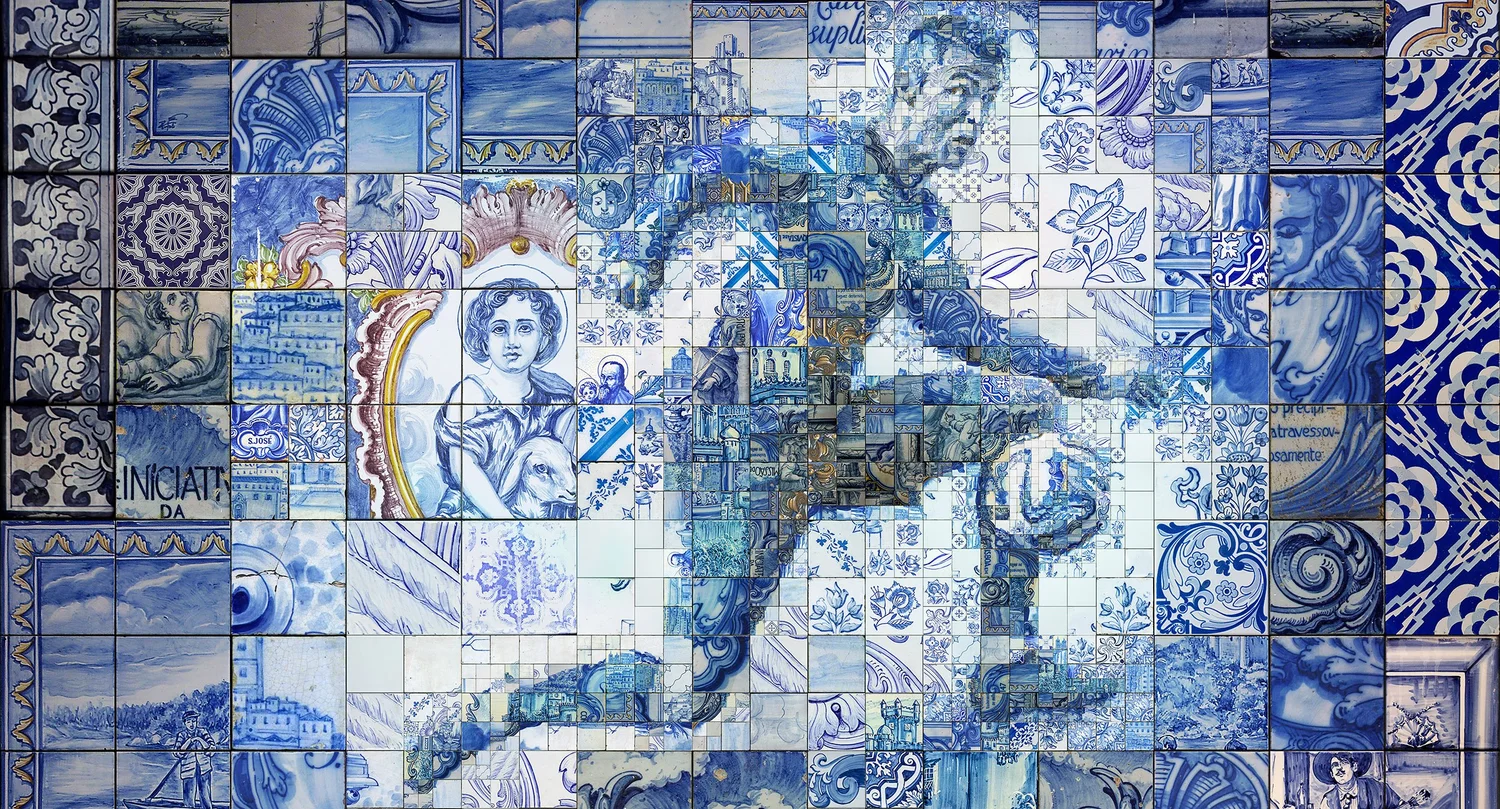
Opening image: Cristiano Ronaldo: O orgulho de Portugal, an azulejo mosaic by Tsevis Studio.
Tsevis Studio, led by Charis Tsevis, builds algorithmic mosaics: images made from thousands of individually meaningful fragments, assembled by proprietary software into compositions that work at several scales at once. The form has a five-thousand-year history, from the temple walls of Uruk and the Greek floors at Pella to the vaults of Hagia Sophia and the computational research of Bell Labs in 1967. The studio works in that tradition and has extended it.
The medium is not chosen only for its visual appeal. It is chosen because it is structurally honest about complexity. When a commission must hold the history of a civilisation, the identity of a nation, or the meaning of an Olympic moment, a single simplifying image will not do. The answer must be a system of relationships: one that speaks to a viewer in a second and continues to reveal itself to someone who stays for an hour.
Over thirty years of research, Charis Tsevis has developed three frameworks that define the studio’s contribution to the field: the Four Layers of mosaic analysis, the Macro-Micro Narrative principle, and Algorithmic Gestalt—the application of perceptual theory to the computational design of mosaic systems.
What follows is an account of where this tradition comes from, what it means, and how the studio has built upon it.
Five thousand years
I. A Principle Before a Practice
A mosaic is not only a technique. It expresses a structural principle that nature arrived at long before we did: coherent meaning can emerge from discrete units, each locally abstract. Zoom into a leaf and find cells. Zoom into skin and find a lattice. Step back far enough from a galaxy and it resolves into a shape. Every system in which the whole is more than the sum of its parts—every system whose meaning changes with distance—is, in this deeper sense, a mosaic system.
The term, defined in short: what an algorithmic mosaic is.
When humans began making mosaics, they were recognising something that was already there.
II. The Work Today
Tsevis Studio builds algorithmic mosaics at institutional scale: for a national mint and a royal court, global brand campaigns and permanent airport installations, editorial commissions and fine art. One project may call for the visual history of a Mediterranean civilisation. Another, the identity of an Olympic team. Another, the symbolic language of a national currency. The studio has worked across these contexts and others, with Nike, Bulgari, Delta Air Lines, the United States Olympic Committee, the Royal Mint, Harvard, the Smithsonian, and sovereign clients in the Gulf, among many more.
What makes each work a mosaic, in the precise sense, is its structural logic. Thousands of individual elements, each carrying meaning of its own, are assembled into an image that can be read at several scales. Up close, the viewer reads the parts. From a distance, the whole. Both experiences are designed. Neither is accidental.
The tools that make this possible—the Mozaix engine and CGMCreator—were built from scratch over thirty years. Existing software did not address the problem at the depth the work required. The tools are still being rebuilt. That, too, is part of the research.
III. Why Humans Think in Fragments
Before the history, an observation—and perhaps the central thesis of everything that follows.
Human beings do not experience the world as continuous data. We experience it in fragments: memories, faces, stories, symbols, gestures, traces left by the people and cultures before us. We navigate by recognising patterns, not by grasping a totality. A face comes together through features held in relationship, rather than through a complete inventory of skin and bone. A culture comes together through its myths, rituals, images, and fears.
The mosaic is particularly suited to storytelling because several narratives can coexist within the same image. A viewer can read the whole in a second or spend an hour among the parts, finding stories the first glance did not disclose. The work rewards both forms of attention. This is a structural property of the form. It is why institutions, brands, and sovereign clients turn to the medium when a brief is complex enough that simplifying it would mean losing something essential.
The mosaic is not simply an artistic technique that mirrors how knowledge is assembled. It is a form of thinking.
Why the eye can do this, finding a face in a field of fragments and losing it again up close, is the subject of Why a Mosaic Works.
IV. The Four Layers
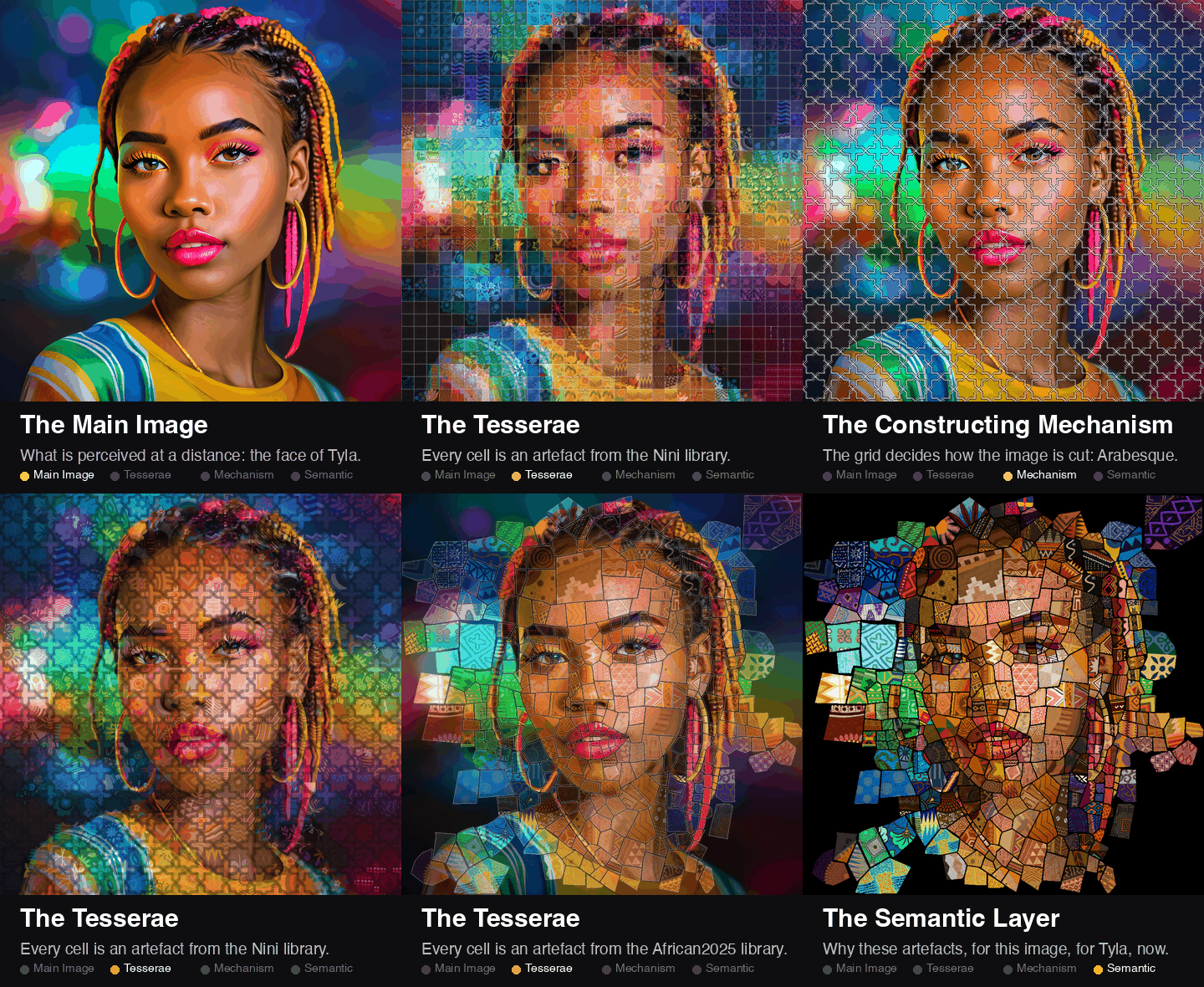
Any mosaic—ancient or digital, stone or pixel, architectural or editorial—operates across four layers of meaning at once. Understanding all four is what carries the work beyond craft and image-making into research.
The Main Image. What is perceived at a distance: the face, figure, landscape, or message. The composition at the scale of the whole.
The Tesserae. The individual units and what they carry. In a Greek floor at Pella, river pebbles.1 In a Byzantine vault, gold glass. In Tsevis Studio’s work, images, symbols, and typographic characters: fragments chosen for their visual weight and for their charge as cultural memory. An athlete’s face. A coin from a lost empire. A detail from a painting that a viewer may or may not consciously recognise. These are not merely image units. They are artefacts.
The Constructing Mechanism. The grid, algorithm, or logic of assembly. In Ravenna, the hand of the craftsperson guided by the eye of the master. In CGMCreator, a computer-vision importance map that reads the source image and determines tonal hierarchy, edge preservation, and adaptive tile sizing before an element is placed. The mechanism may be invisible in the finished work. Much of the thinking happens there.
The Semantic Layer. The meaning that binds the other three and cannot be reduced to any one of them. Why these artefacts, for this image, for this client, at this moment in history? This is where a mosaic becomes a statement rather than decoration. It is also where the Macro-Micro Narrative—the principle that every scale of the work must carry and amplify its central message—is achieved or lost.
Most digital mosaic tools address the first layer adequately. A few address the second. Few address the third in depth, and the fourth is rarely considered. Tsevis Studio works across all four, by design, on every commission.
V. The Ancient Human Record
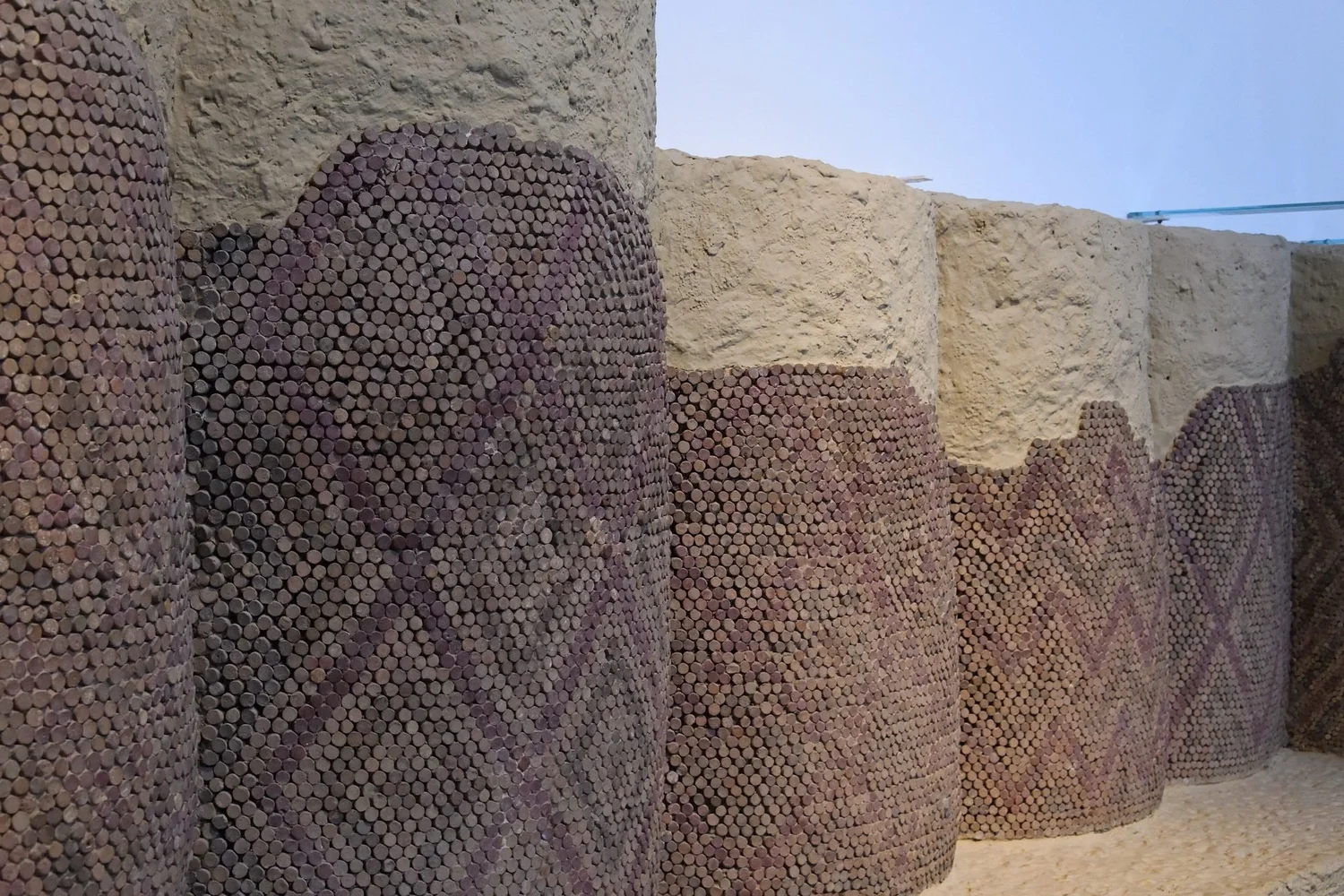
The oldest surviving mosaics predate Greece. At Uruk, in southern Mesopotamia, between 3300 and 3100 BCE, builders pressed thousands of painted clay cones into temple walls. Their black, red, and white ends formed lozenges and zigzags.2

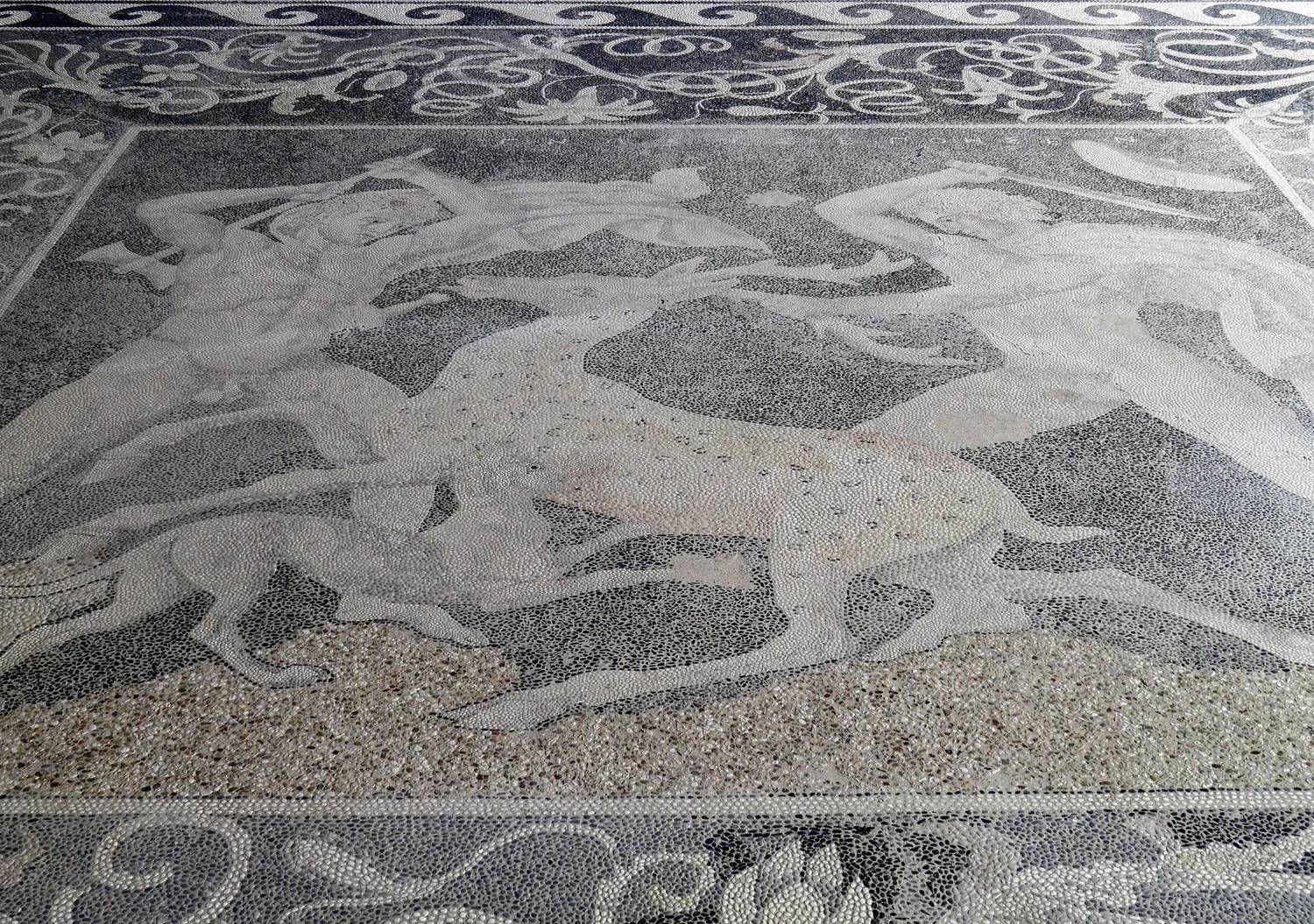
The Greeks built mosaic floors at Pella in the late fourth century BCE. One of them, the Stag Hunt, carries the first known signature of a mosaicist: Gnosis made it.1 What appears as decoration from a distance reveals, up close, a system of relationships: which pebble, at which angle, beside which neighbour. The image is not in the stones alone. It is in how the stones attend to one another.

Greek thought had already approached this as a philosophical question. The relationship between whole and parts, between appearance and the structure that produces it, between a symbol and the meaning it carries—these were foundational questions. The mosaic floor at Pella and the philosophical dialogues of its era were, in a sense, asking them through different materials.
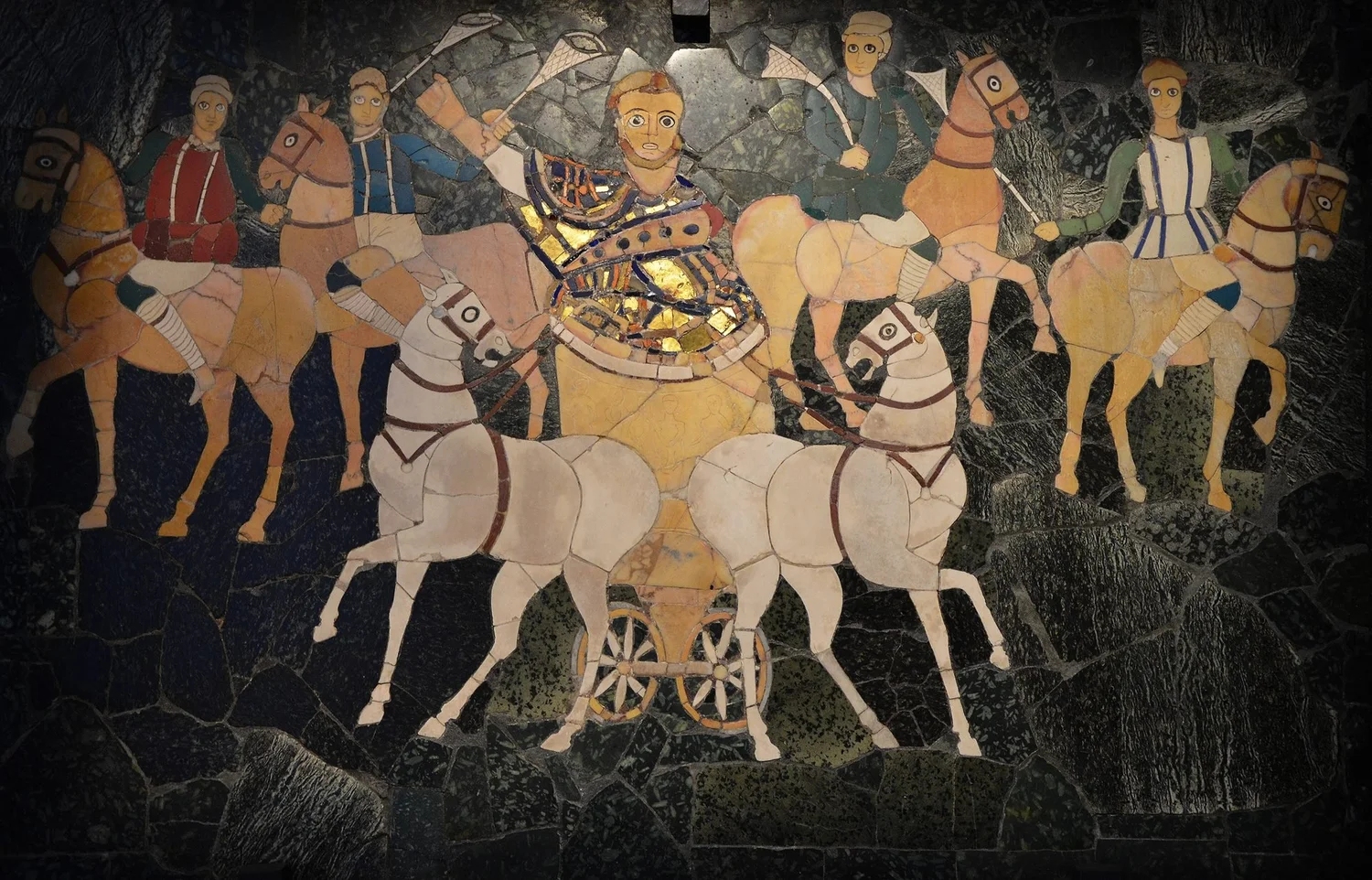
The Byzantine tradition brought this logic to architectural scale and theological ambition. In opus tessellatum, the great programmes of Ravenna, Constantinople, and Palermo used tesserae of glass and gold to construct a visual truth that emerged through accumulated distance.3 The tessera was a unit of meaning, not simply of mimicry. Sant’Apollinare Nuovo, Hagia Sophia, the Palatine Chapel:456 buildings that make arguments in light and fragment, asking the mind to hold many things in relation at once.
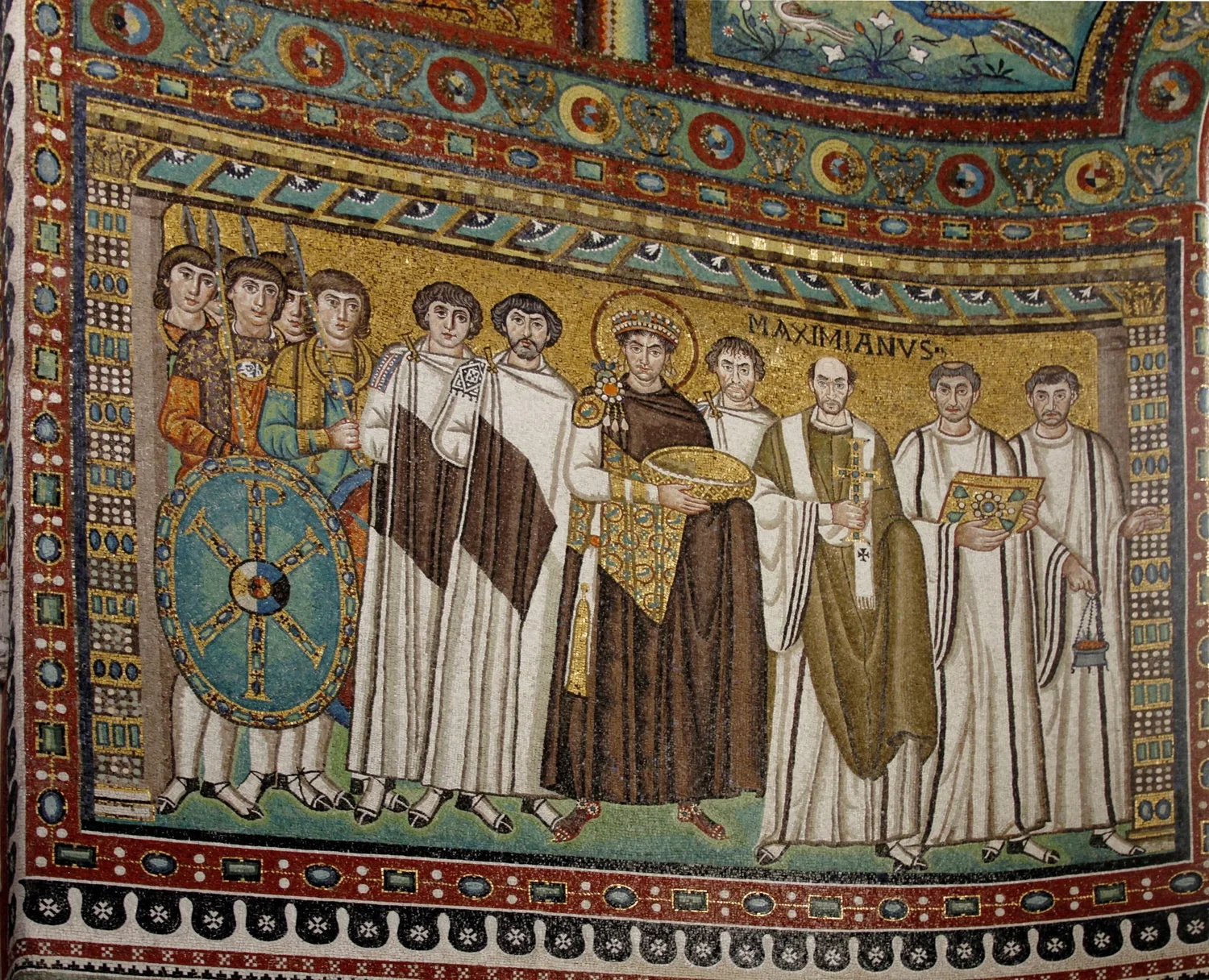

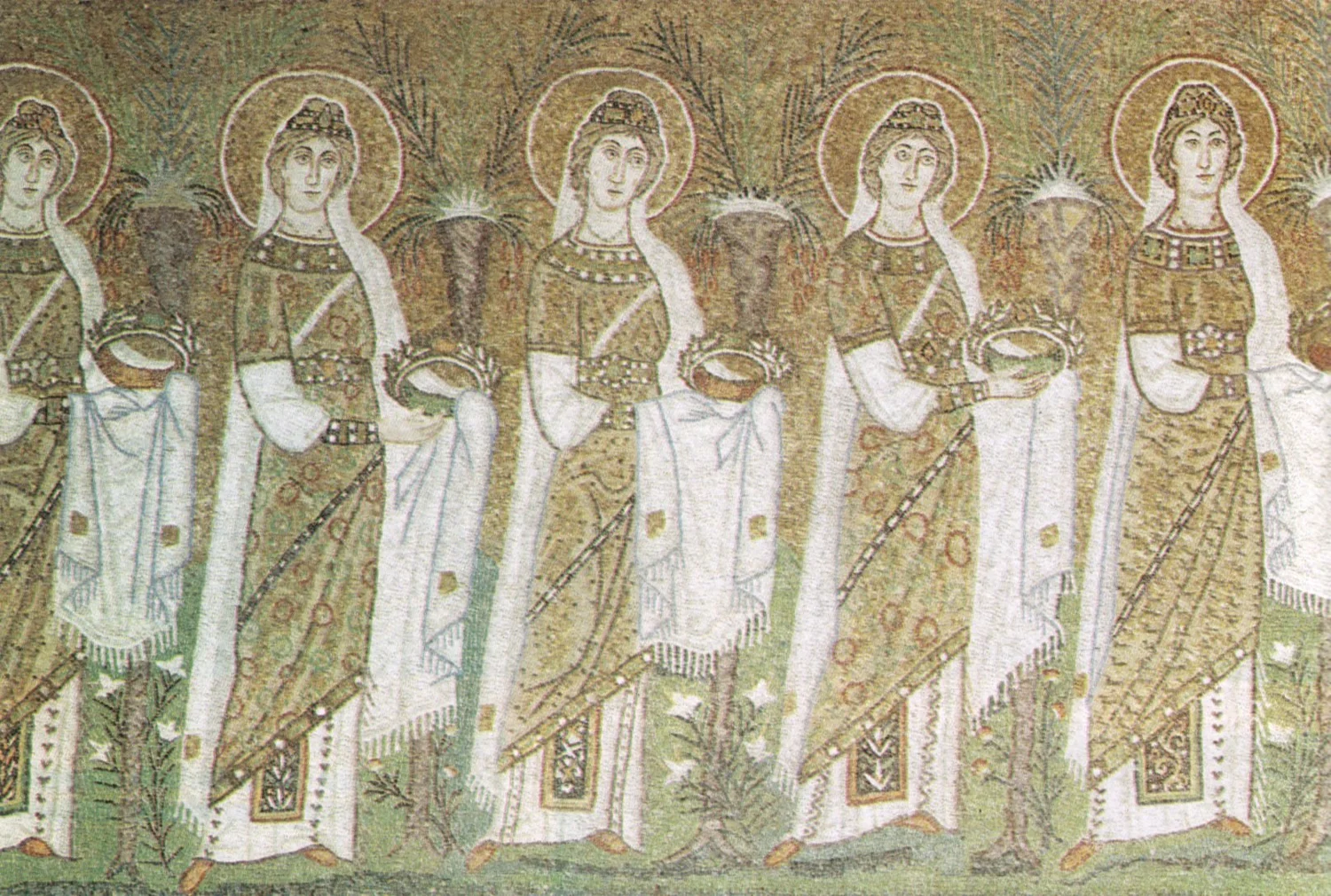

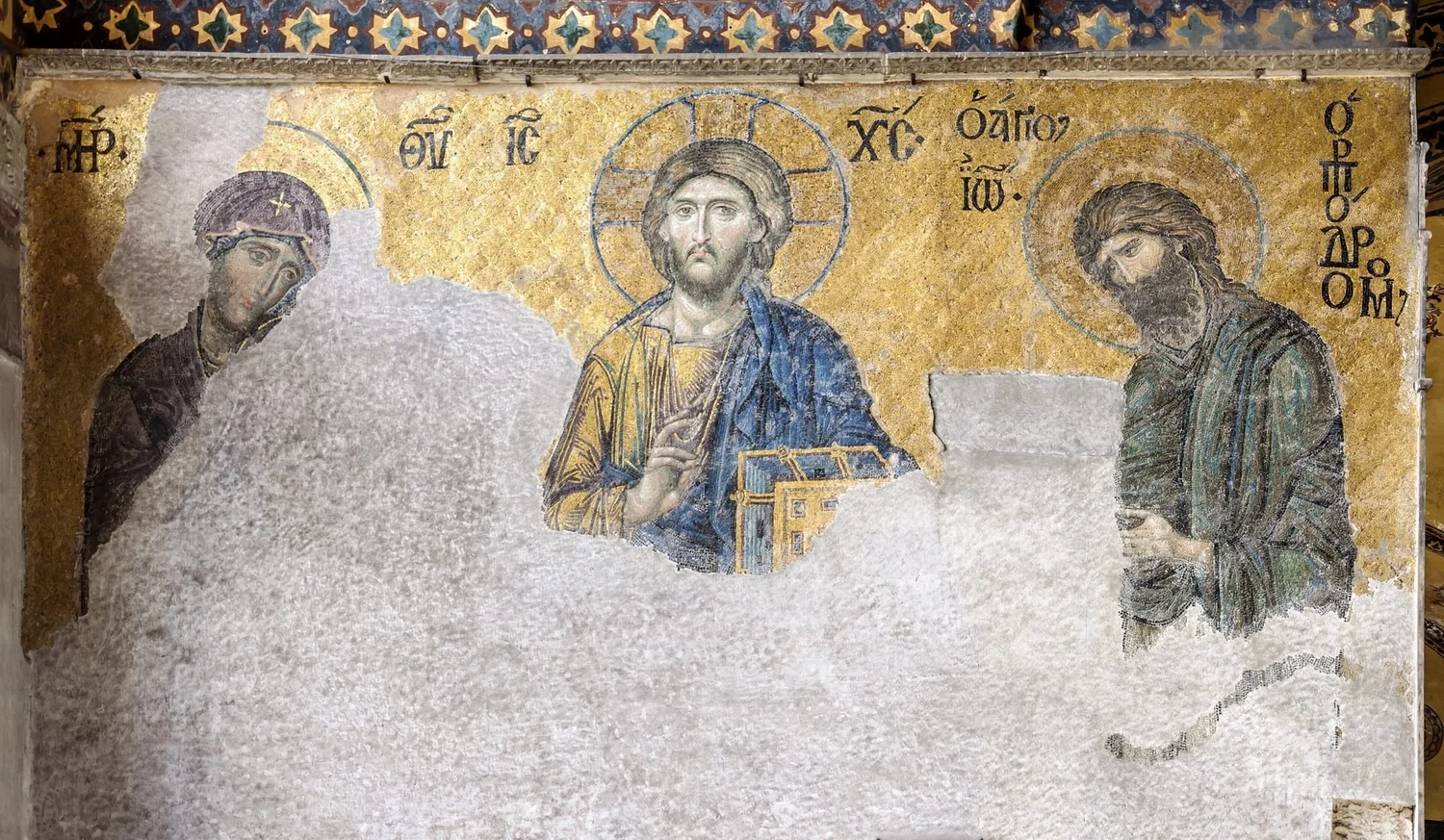

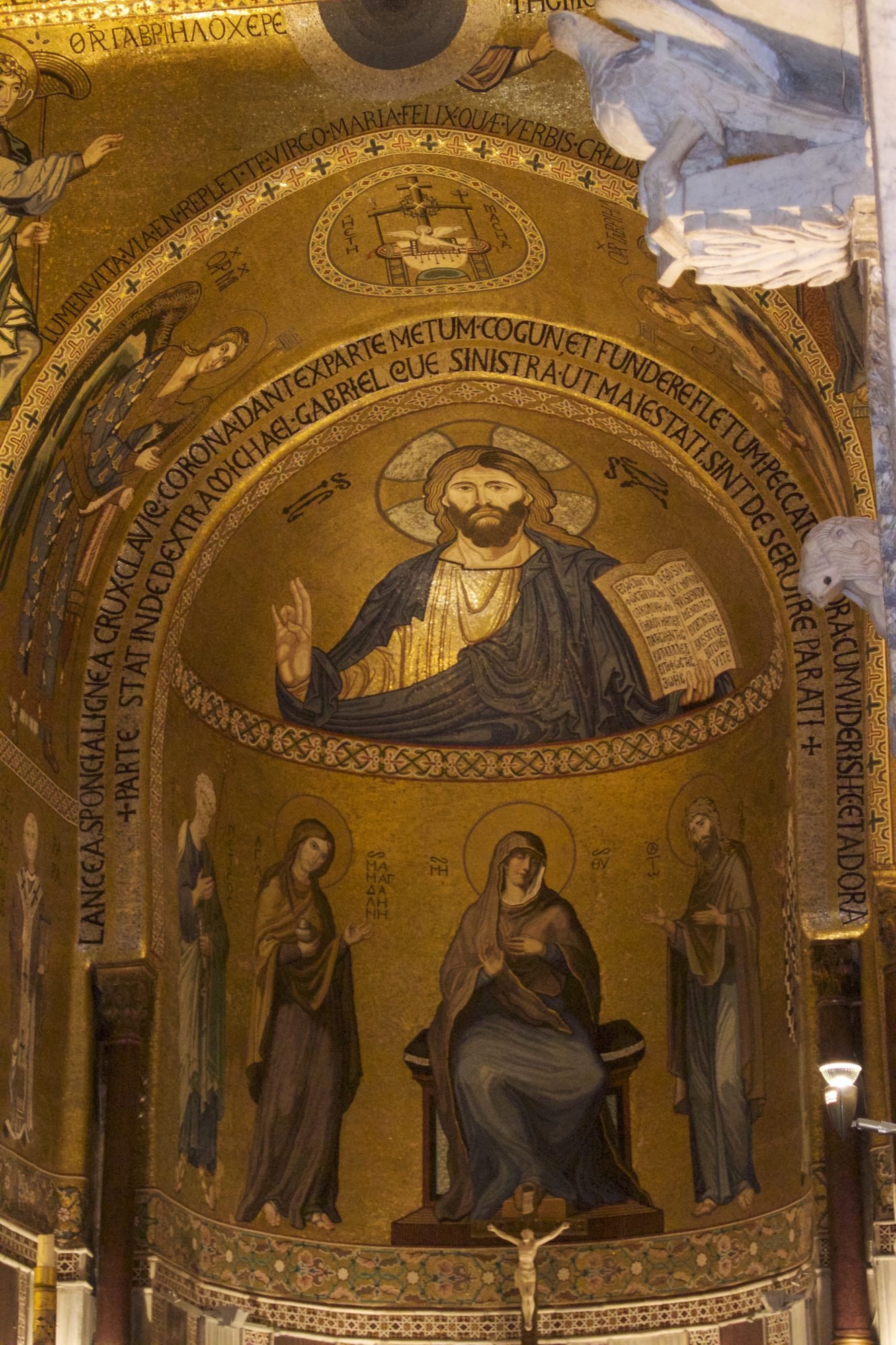

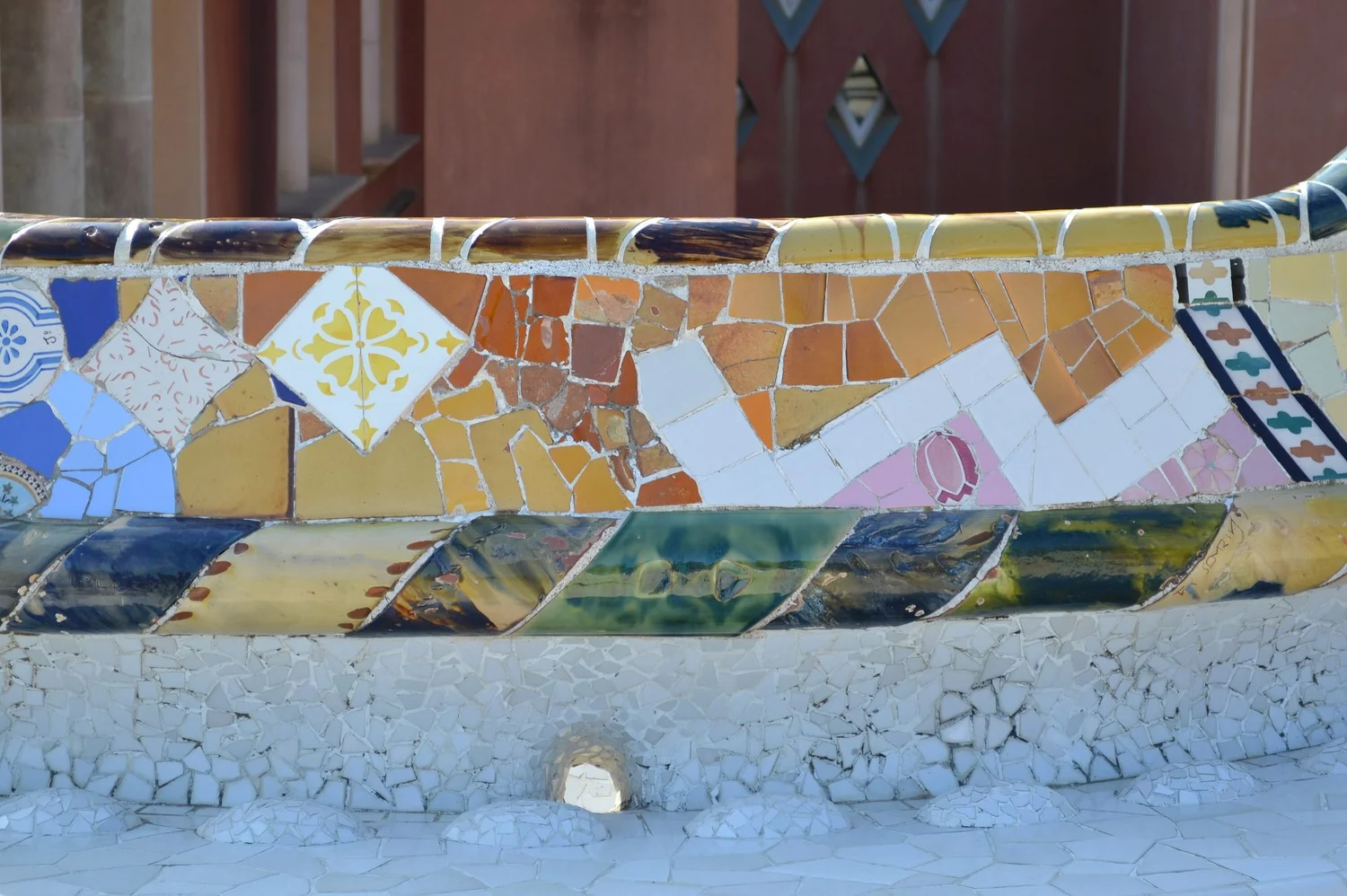
Opus sectile, practised alongside mosaic in Rome and Byzantium, took another route. Larger pieces of marble and glass were cut to the shapes of the design, allowing one piece to define an entire part of a figure.78 Antoni Gaudí and Josep Maria Jujol reached a related conclusion with trencadís. Broken tiles rejected by a nearby factory became the material of an expressive language.9 The irregular fragment was no longer something to conceal. Park Güell is not simply covered in mosaic. It is built from it.


VI. The Character-Based Underground
A parallel lineage runs through technology rather than art history. It connects directly to this studio’s formation.
Flora F. F. Stacey’s typewriter butterfly of 1898—made by selecting characters for their visual density rather than their linguistic meaning—is the earliest preserved work of typewriter art. It was published in Pitman’s Phonetic Journal on 15 October 1898.10 The impulse is familiar from Ravenna. The instrument is an office appliance.
That tradition found new life in communities that understood machines from the inside: PLATO bulletin boards in the 1970s,11 the ANSI art movement of the late 1980s and 1990s,12 and the BBS underground, whose artists produced monthly artpacks with a keyboard and a character set. A Byzantine mosaicist, a hacker on a 1990s bulletin board, and a machine-learning engineer have more in common than any of them might enjoy admitting. All three ask how coherent meaning can be built from a constrained set of units. All three discover that the constraint is the medium.
VII. Futurism — The Argument for Technology as Collaborator
Futurism, launched on the front page of Le Figaro on 20 February 1909,13 made an explicit argument for artistic engagement with industrial and technological change. Whatever the movement’s political failures, Boccioni, Marinetti, and Russolo established a proposition that remains relevant: a serious artist could engage with the machine as a collaborator in making meaning.
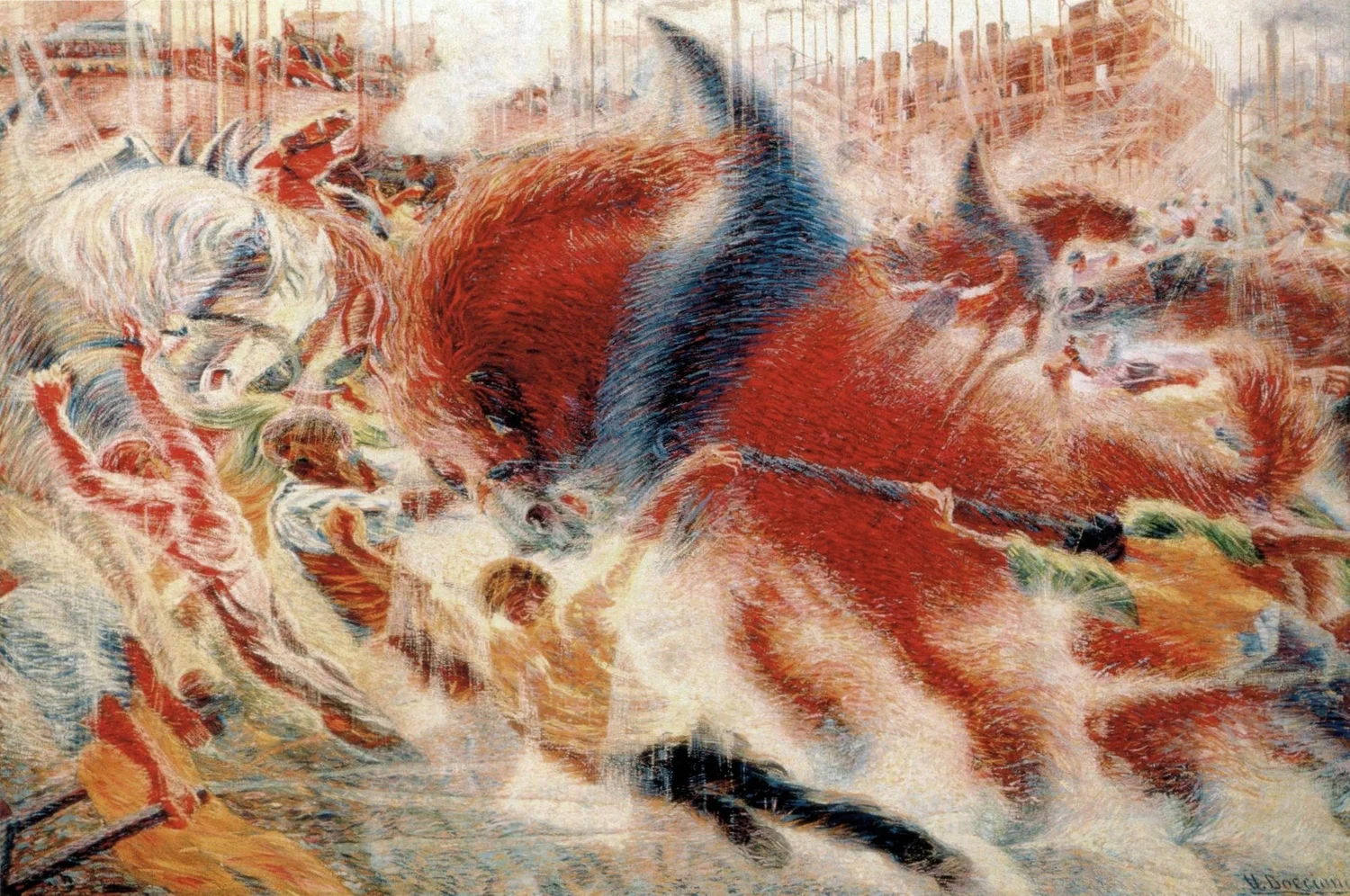

Every practitioner who builds their own tools—who finds that available software does not address the problem and writes software that does—is working in that tradition. Thinking alongside the machine.
VIII. Bell Labs and the Computational Rediscovery
In 1967, Kenneth Knowlton and Leon Harmon at Bell Telephone Laboratories built Studies in Perception I: a twelve-foot print of the dancer Deborah Hay, reconstructed from small mathematical and electronic-circuit symbols selected for their tonal weight.1415 They hung it in the office of their director, Ed David, while he was away. It stayed one day.14 In October 1967, it appeared in The New York Times; in November 1968, it hung at the Museum of Modern Art in The Machine as Seen at the End of the Mechanical Age.1617
Knowlton spent the rest of his life pursuing the idea. From around 1980, he made portraits from seashells, dominoes, dice, and pottery shards: images intended to be read differently at different distances. He later gave the practice a precise name: computer-assisted mosaic tessellation.1819 The phrase names a practice, not just a tool. Knowlton wrote the EXPLOR language for Lillian Schwartz, a resident visitor at Bell Labs from the late 1960s, because existing tools had been built for engineers rather than artists.2021 The principle was clear then and remains central to this studio: the instrument should serve creative intent, not define it.
In 1973, Harmon pushed the question further. A portrait of Abraham Lincoln, reduced to a few hundred grey blocks, remained instantly recognisable. He made it for his Scientific American article “The Recognition of Faces”. Three years later, Salvador Dalí built a painting on it.22
Experiments in Art and Technology gave this convergence an institutional frame. It grew out of 9 Evenings: Theatre and Engineering in 1966, when ten New York artists worked with engineers from Bell Labs. E.A.T. was launched in 1967 by the engineers Billy Klüver and Fred Waldhauer and the artists Robert Rauschenberg and Robert Whitman.23 Its artists and engineers approached related questions from different directions.
Knowlton represents one rediscovery of this principle. Not its origin.
The artists and researchers who carried the idea from Bell Labs to today are traced in Algorithmic Mosaic Artists, from Bell Labs to Today.
IX. Milan and the Science of Perception
Charis Tsevis encountered the theoretical foundations of this tradition formally at the Scuola Politecnica di Design in Milan, where communication design was grounded in Gestalt psychology and in structured inquiry into how images communicate before they are consciously decoded. He began working with mosaics around the end of the 1980s and the early 1990s, and has continued ever since.
The finding that the whole is perceived before its parts is more than a stylistic preference. It is a measured property of human vision. In 1977, the psychologist David Navon showed that people recognise a large letter made of small letters faster than they recognise the small letters themselves.24 The questions formalised by Gestalt research in the twentieth century—from Max Wertheimer’s laws of perceptual grouping in 1923 onward25—had also been encountered, without that vocabulary, in Byzantine mosaic programmes and in Greek thought before them. The connection is not necessarily one of historical influence. It is the same underlying problem, encountered anew by generations that take perception seriously.
For decades, Tsevis has taught these principles—visual design, typography, colour theory, and Gestalt psychology—at art colleges across Europe and in lectures at Adobe MAX, TEDx Athens, OFFF, and international design conferences. He has contributed essays and critical writing to design magazines and books. Teaching and publishing are part of the studio’s research. They are places where its assumptions meet other minds.
X. Algorithmic Gestalt — An Original Contribution
What the studio has added to the tradition it inherits is a framework as well as a set of tools.
Algorithmic Gestalt is Tsevis’s term for applying perceptual theory—particularly Gestalt principles of emergence, figure-ground relationship, and proximity—to the computational design of mosaic systems. It asks a question that Gestalt psychology and computer vision had not fully addressed together: how can a system produce an image that is perceived as a unified whole at several scales, while its parts retain independent meaning? In practice, this is the difference between a mosaic that resembles a face from a distance and one that remains coherent and expressive when the viewer comes close enough to see its fragments.
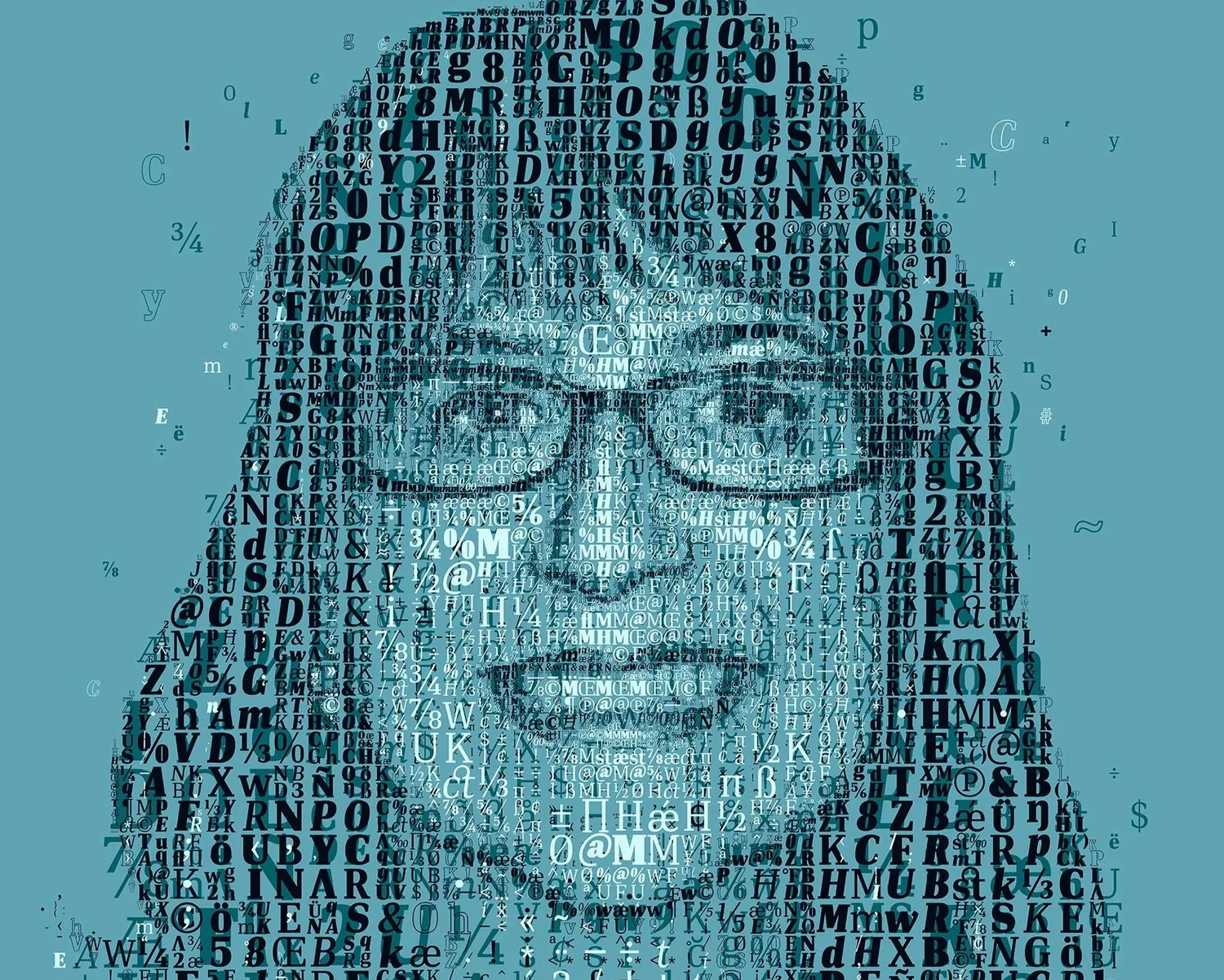
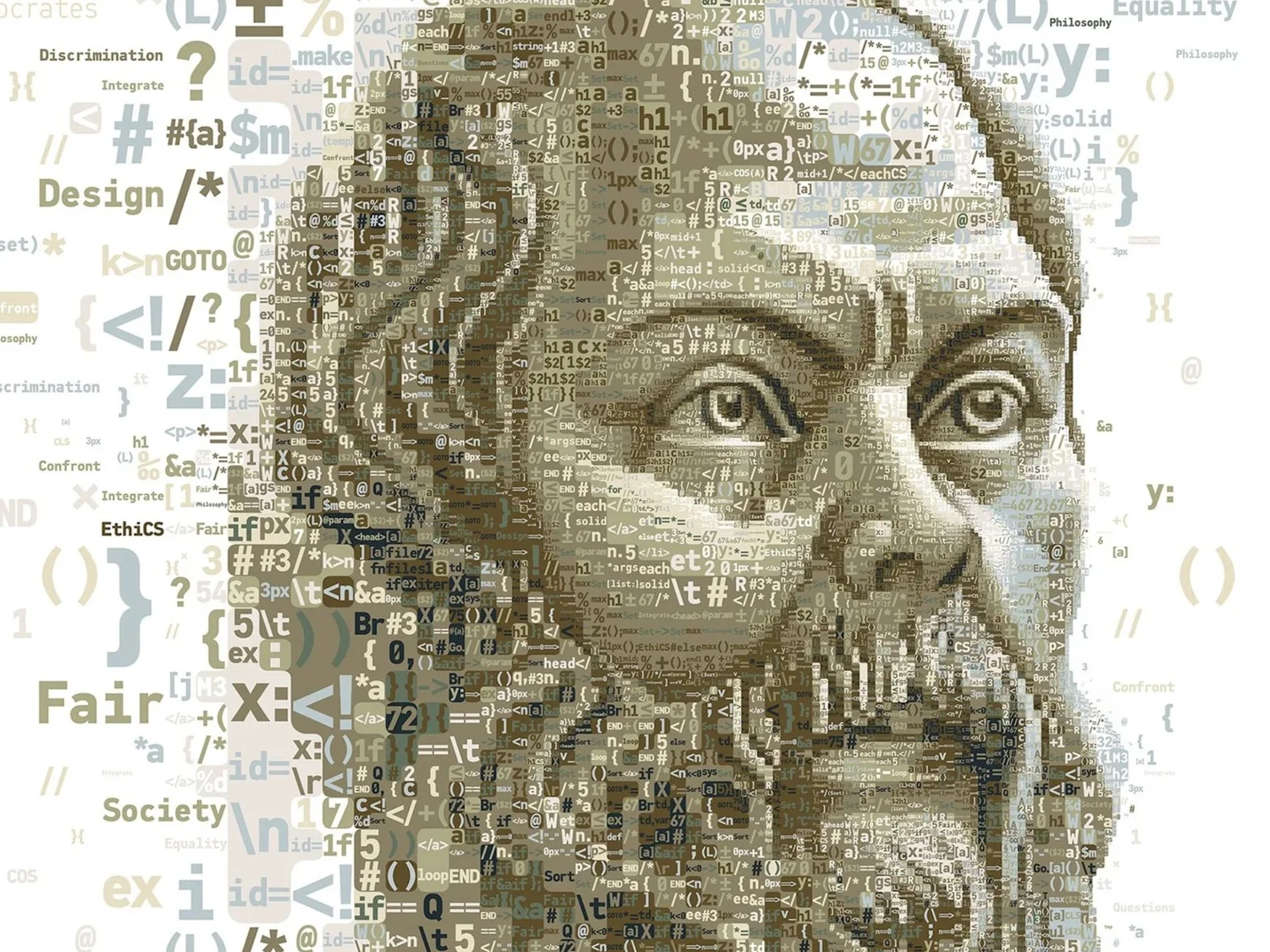
The Macro-Micro Narrative is the practical expression of this framework: every scale of a mosaic must carry and amplify its central message. The Four Layers provide the analytical framework through which that principle can be designed.
These concepts emerged through three decades of studio research and practice. They are the studio’s contribution to how the mosaic can be analysed, designed, and understood today: rooted in older traditions of perception and craft, but developed here, through this work.
XI. Thirty Years of Research in Practice
Between a theoretical framework and production software capable of delivering murals thirteen metres wide or a royal commission lie thirty years of sustained work.
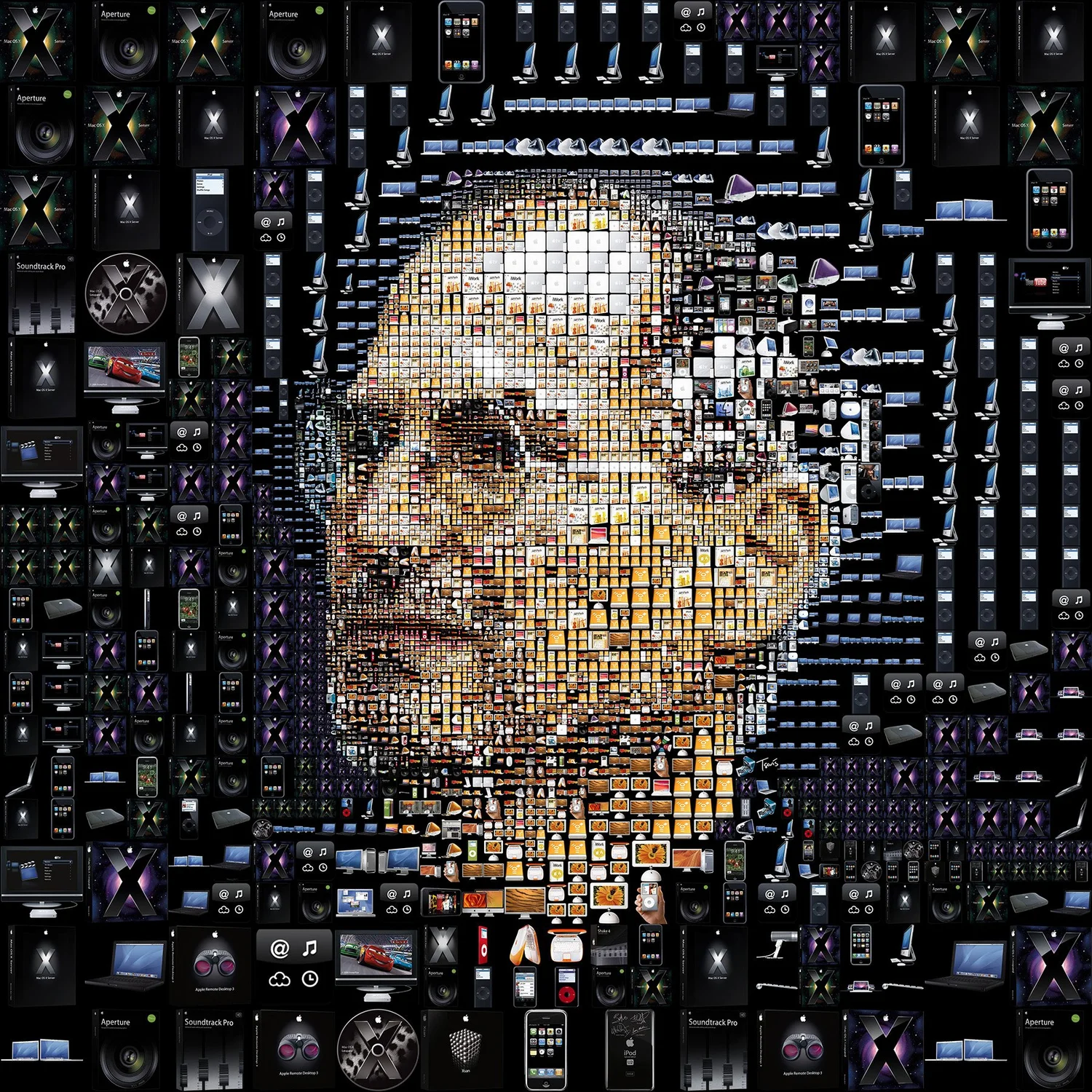
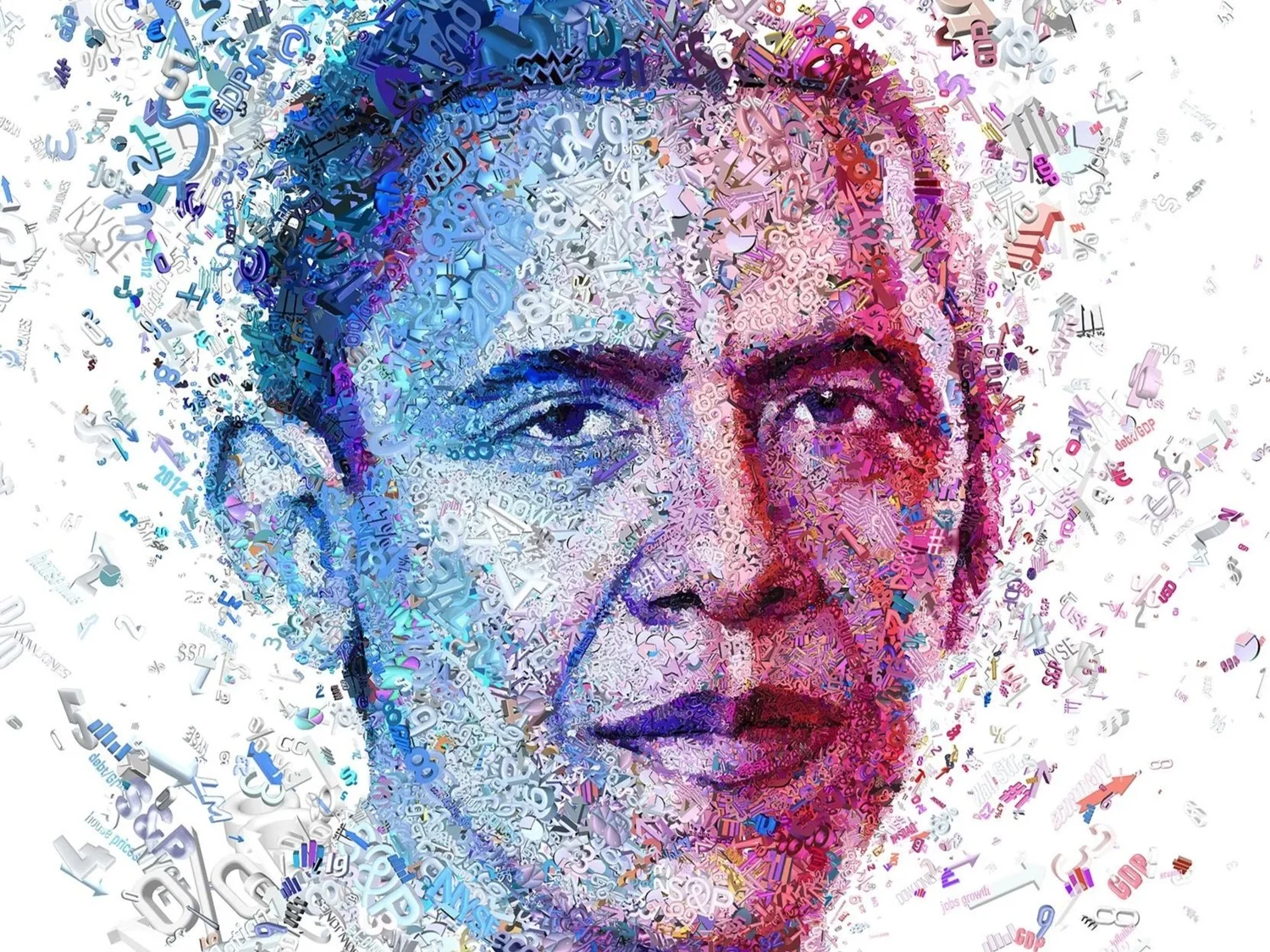
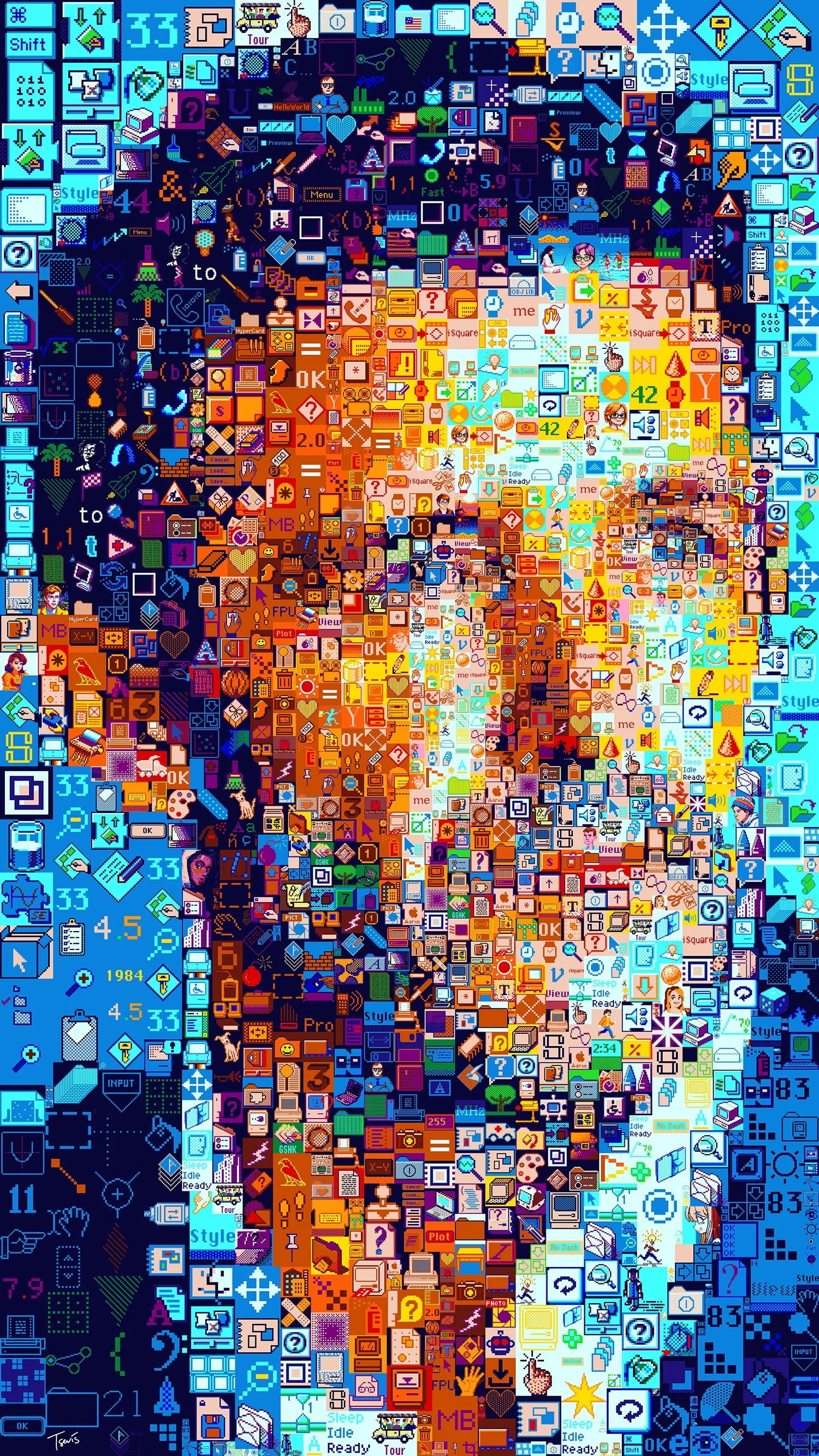
That work has passed through many tools. Synthetik Studio Artist, a generative painting system whose developers feature Charis Tsevis’s work in their gallery, was among them. So were custom scripts written for software never designed to do what the studio needed. Techniques developed for one project were rebuilt for the next. Hacks held long enough to become methods; methods were replaced when a better understanding made them inadequate.
The Mozaix engine and CGMCreator are the accumulated result. They were discovered through practice and rebuilt as understanding grew. Each commission has posed a research question. Each production failure has yielded information.
The studio’s commitment is to the problem its tools exist to solve. The tools are being rebuilt now.
XII. Singularis — When the Mosaic Leaves the Screen
The Singularis practice, led by Vira Konstanta, addresses a question digital production alone cannot answer: what does a mosaic become when it enters physical space—when it can be touched, when it ages, when the light around it changes over the course of a day?
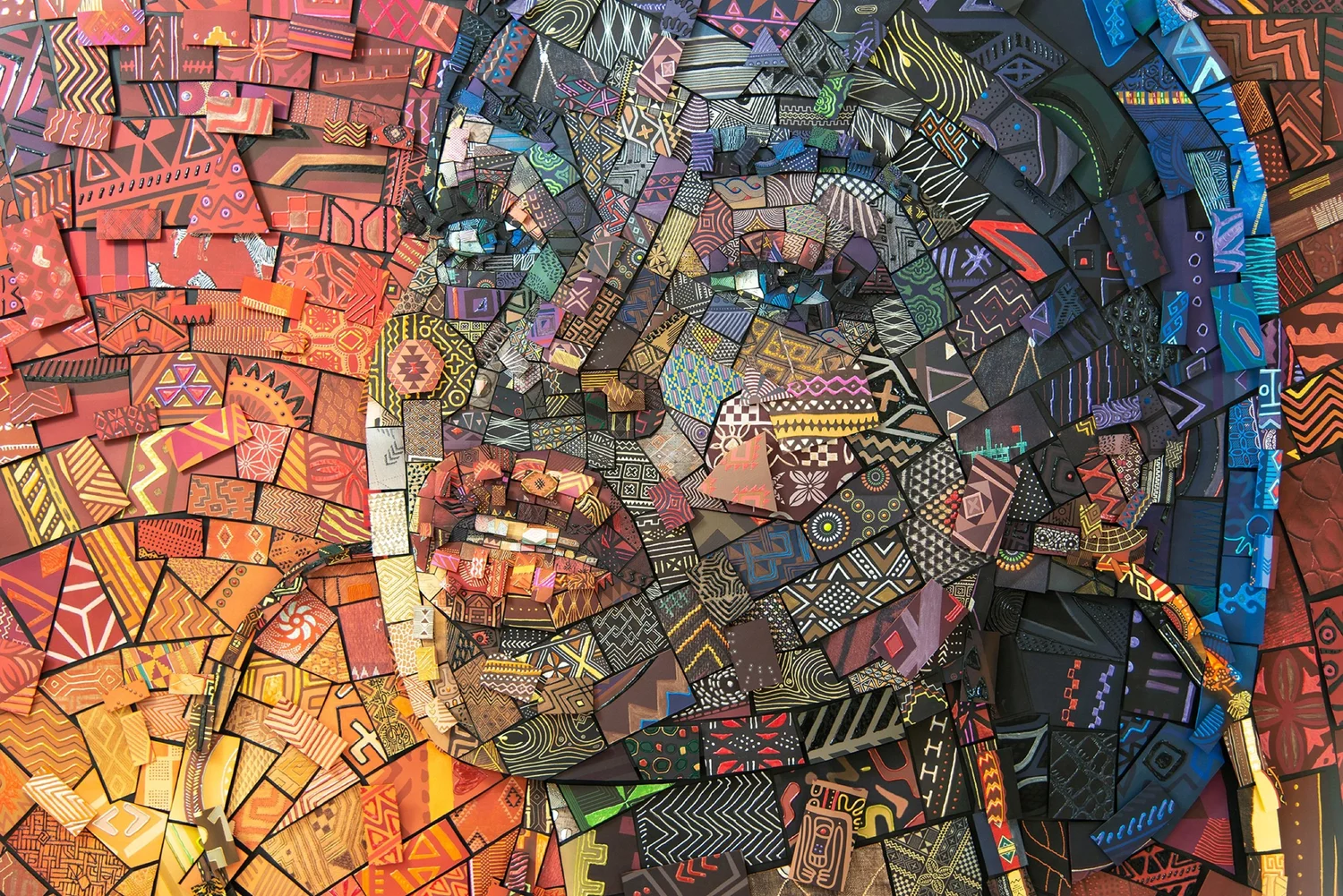
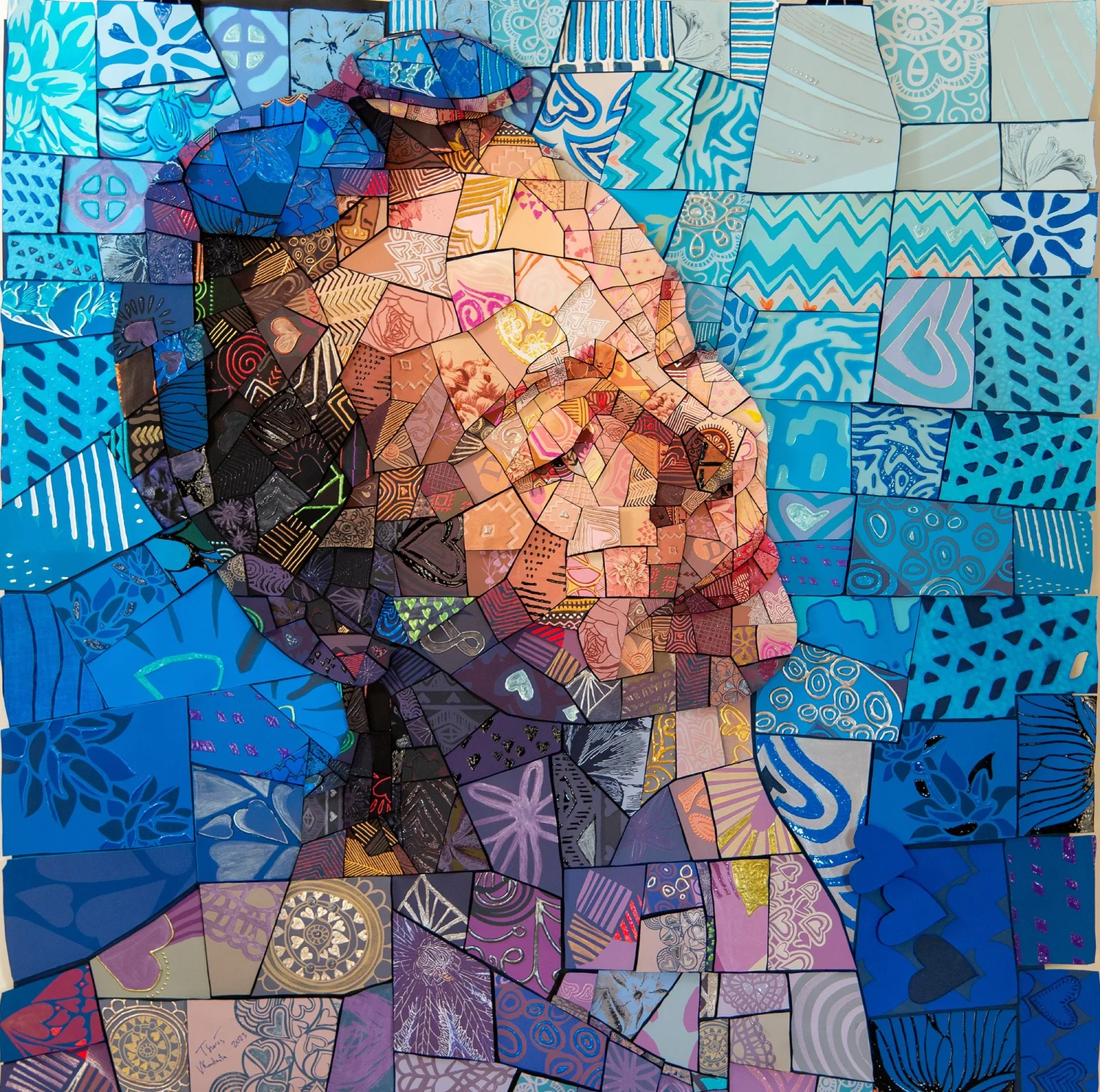
Singularis works begin as digital files and become physical objects, each conceived for a particular place. Paper sculpture, ceramic, mirror fragments, gold leaf, archival inks chosen with their ageing in mind. The material logic draws on trencadís: the irregular unit is both structural and expressive, and the nature of the material becomes part of the semantic layer. A Singularis work does not reproduce a digital mosaic. It continues a conversation begun in digital form, now in the language of matter.
Commissions have been made for a royal court in the Gulf, for corporate entrance halls, and for private collections, often in spaces where the brief was to make something that will still matter in fifty years. Each work is unrepeatable by design.
XIII. The Tradition, Extended
What connects Uruk to Pella, Ravenna, Bell Labs, and this studio is not an unbroken line of influence that can be traced through citations and correspondence. It is a structural insight, encountered across five thousand years and many cultures: meaning is made from fragments held in relationship. The art lies in understanding those relationships as deeply as the fragments themselves.
Tsevis Studio practises computer-assisted mosaic tessellation at institutional scale. Its work draws on Greek thought, Byzantine craft, the Futurist argument, the computational research of Bell Labs, and the perceptual studies encountered in Milan. It extends these traditions through Algorithmic Gestalt, the Macro-Micro Narrative, and the Four Layers: frameworks developed over thirty years of research and applied to the visual communication problems brought to the studio by institutions, brands, and sovereign clients.
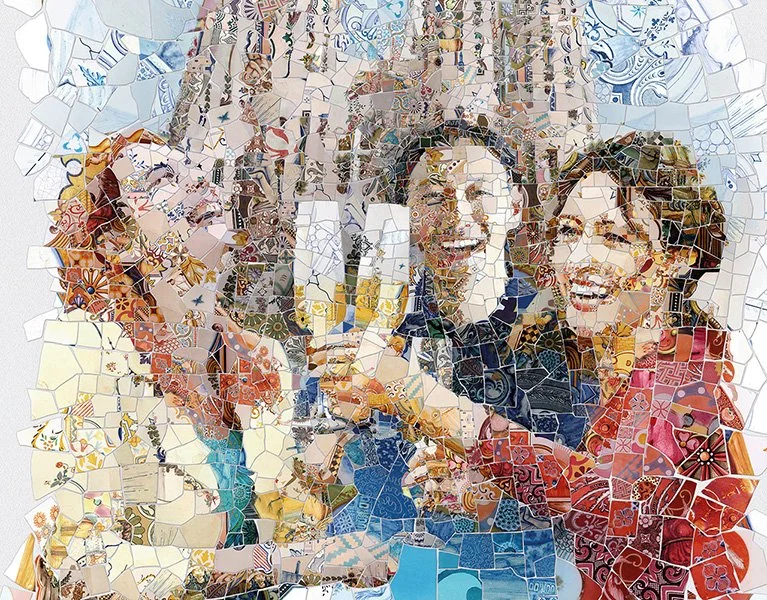
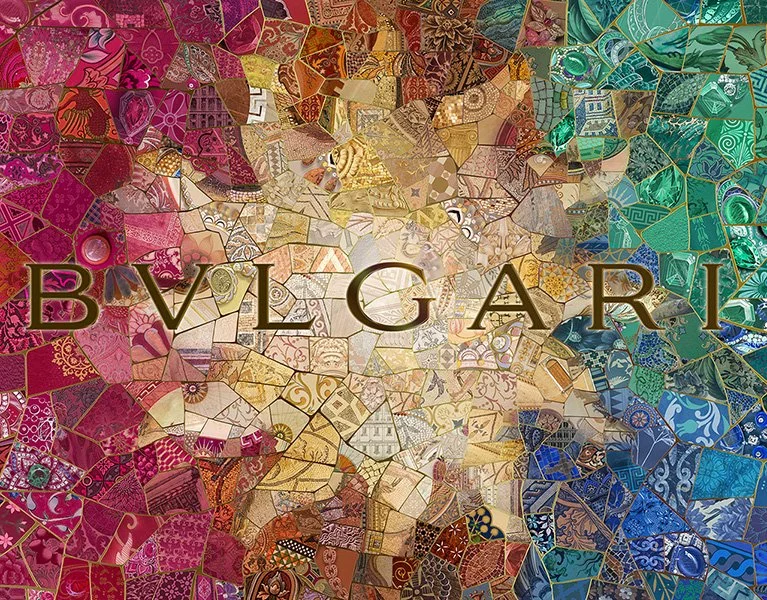
The tradition is being built upon. And, as with every good mosaic, what matters most is not the individual pieces but the relationships between them.
References
- Stag Hunt Mosaic, signed by Gnosis, c. 300 BCE, Archaeological Museum of Pella.
- Penn Museum, Wall Cone, 2003-46-2, from a Mesopotamian cone mosaic; cone mosaics at Uruk date to c. 3300–3100 BCE.
- “Opus tessellatum,” Encyclopaedia Britannica.
- UNESCO World Heritage Centre, Early Christian Monuments of Ravenna (inscribed 1996).
- UNESCO World Heritage Centre, Historic Areas of Istanbul (inscribed 1985).
- UNESCO World Heritage Centre, Arab-Norman Palermo and the Cathedral Churches of Cefalú and Monreale (inscribed 2015).
- “Opus sectile.”
- Basilica of Junius Bassus, Rome, 4th century CE: opus sectile panels.
- UNESCO World Heritage Centre, Works of Antoni Gaudí; the serpentine bench of Park Güell, trencadís designed by Josep Maria Jujol; Fundació Catalunya La Pedrera, Park Güell (1900–1914).
- Flora F. F. Stacey, typewriter butterfly, Pitman’s Phonetic Journal, 15 October 1898; see Barrie Tullett, Typewriter Art: A Modern Anthology (London: Laurence King, 2014).
- “PLATO (computer system).”
- “ANSI art”: Aces of ANSI Art (1989), ACiD Productions (1990); archive at 16colo.rs.
- F. T. Marinetti, “Manifeste du futurisme,” Le Figaro, 20 February 1909; Manifesto of Futurism.
- A. Michael Noll, “First-Hand: Harmon-Knowlton’s ‘The Nude’ Overshadows All”, IEEE Engineering and Technology History Wiki, 2022.
- Victoria and Albert Museum, Kenneth C. Knowlton and Leon D. Harmon, Studies in Perception I, collection record.
- “Art and Science Proclaim Alliance in Avant-Garde Loft,” The New York Times, 11 October 1967.
- The Museum of Modern Art, The Machine as Seen at the End of the Mechanical Age, 27 November 1968 – 9 February 1969, directed by K. G. Pontus Hultén; press release.
- Ken Knowlton, “Ken Knowlton, in brief” (including his 2001 talk “Computer Assisted Mosaic Tessellations” to the Society of American Mosaic Artists).
- “Ken Knowlton.”
- “Lillian Schwartz.”
- Computer History Museum, “Lillian F. Schwartz”.
- Leon D. Harmon, “The Recognition of Faces,” Scientific American 229, no. 5 (November 1973): 70–83; Leon Harmon.
- “Experiments in Art and Technology”; New York Public Library, “The 50th Anniversary of 9 Evenings”.
- David Navon, “Forest before trees: The precedence of global features in visual perception,” Cognitive Psychology 9 (1977): 353–383.
- Max Wertheimer, “Untersuchungen zur Lehre von der Gestalt II,” Psychologische Forschung 4 (1923): 301–350; English translation, “Laws of Organization in Perceptual Forms”.