The murals for the USA House in Rio 2016
Mosaic murals for the USA House at the 2016 Rio Summer Olympics.
Building a Bridge, Tile by Tile
If you’re in the business of branding nations on a global stage, you know one thing: it can’t be superficial. Flags and fireworks are easy. Meaningful visual identity is hard.
The USA House murals in Rio weren’t just about making a splash; they were about making a statement. Not just looking American in Brazil, but being understood, emotionally, historically, and culturally, by a global audience walking through that house.
So I turned to the stones. Literally.
Digging Deeper: Context Is the Canvas
This wasn’t just a design job. It was a cultural excavation.
Before I sketched a single tile, I dug into layers of Brazil, of America, of the Olympic movement itself. The goal wasn’t to illustrate, but to interpret. What does it mean to be an American athlete standing on Brazilian ground, representing your country while hosted by another? What visual grammar could hold all of that?
So I went where the stories live: to the streets, the sidewalks, the stairways. I studied Azulejos, those impossibly intricate blue-and-white Portuguese tiles that have been shouting stories from walls for centuries. I virtually visited the Selarón Steps, where art was made not by elite commissions, but by an immigrant artist and the neighborhood around him. I compared those rhythms to the public mosaic staircases in San Francisco, some built by community volunteers, others by unhoused artists crafting dignity into concrete. I connected that with the U.S. folk traditions: quilts in Georgia, barn murals in Iowa, bottle-cap mosaics in urban Philly. Every culture has a way of assembling pieces into meaning.
What I found was this: mosaic is a shared language, one that lives between places and people, a perfect medium for Olympic storytelling, where identity is always plural.
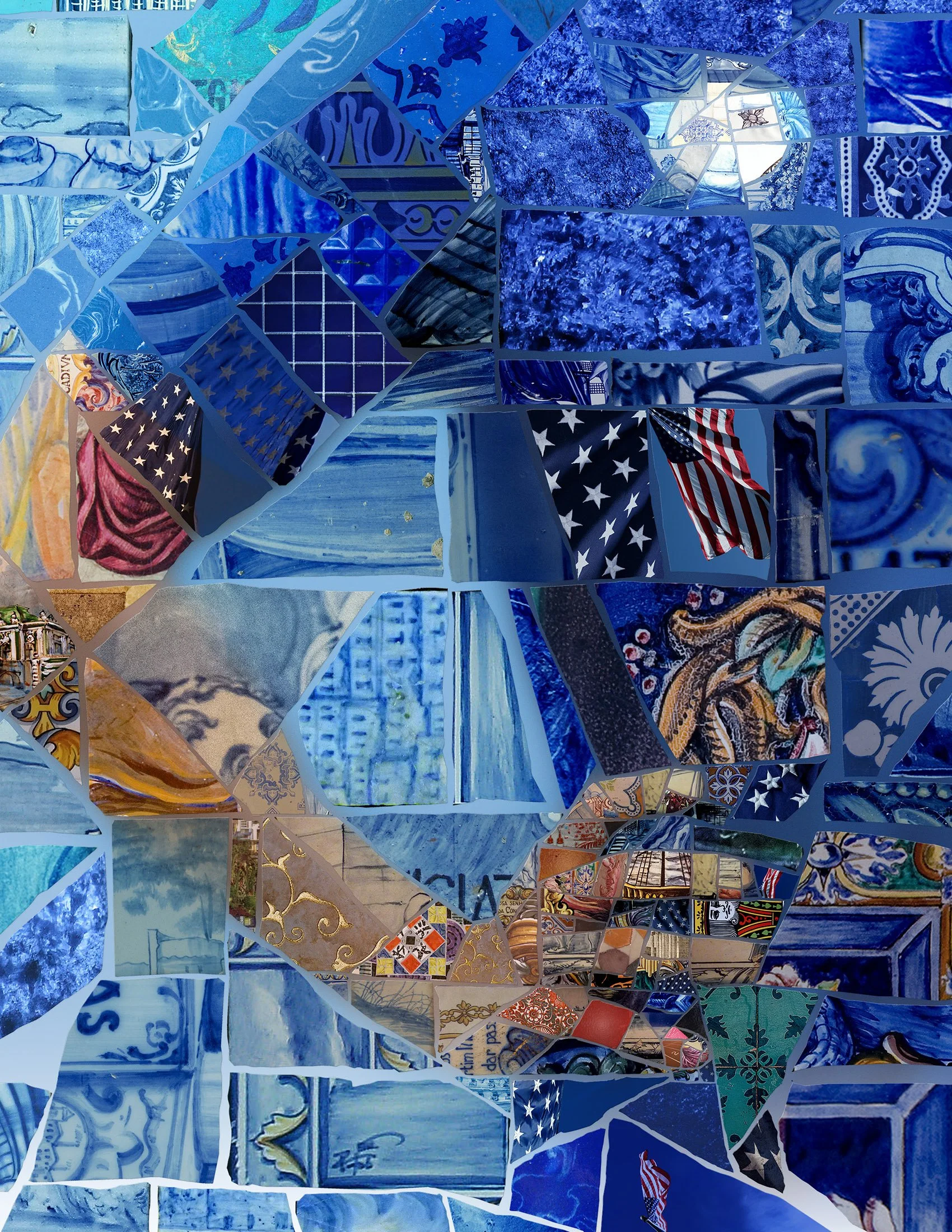
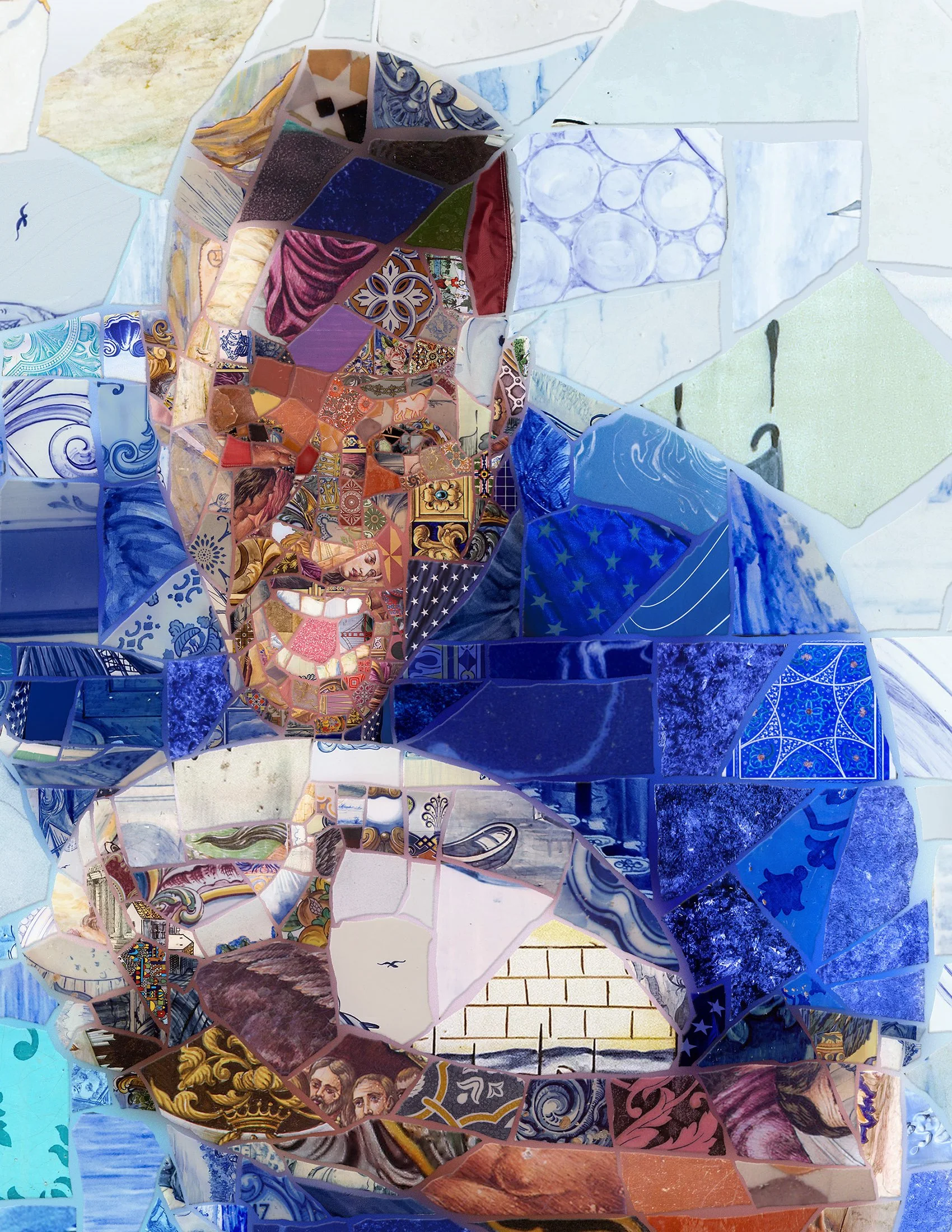
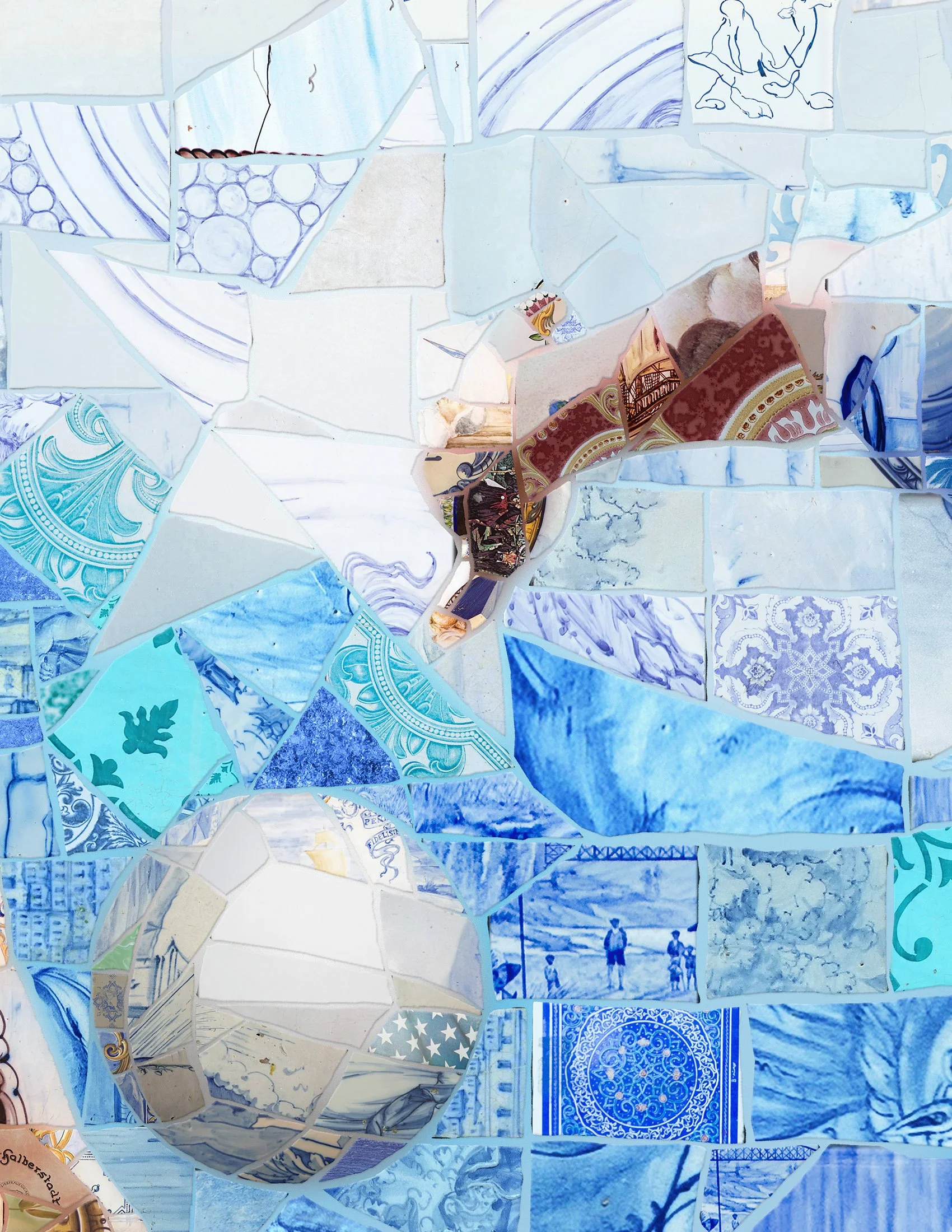
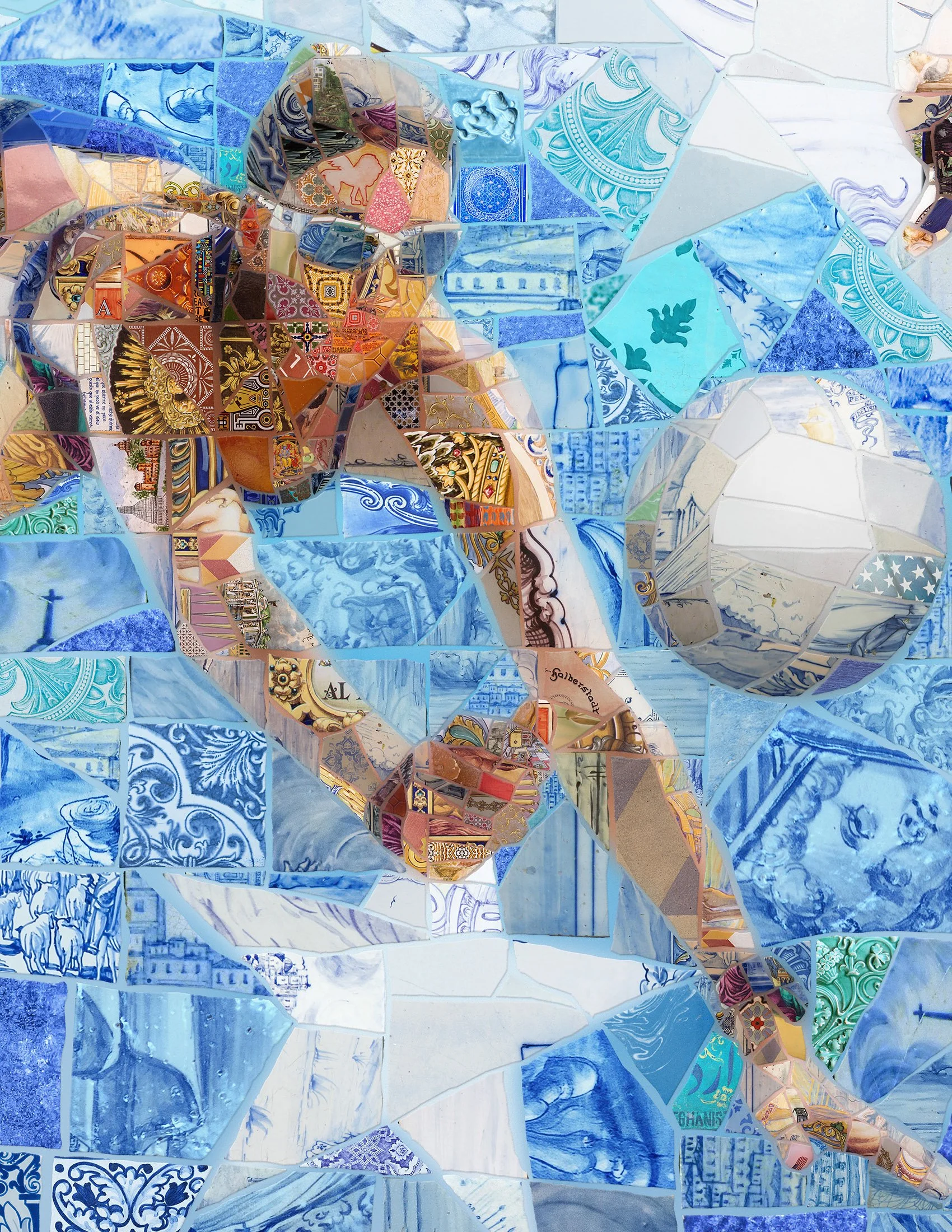
These are the 2 inside murals, showing 8 athletes in action. The length of the 2 combined murals is 13.6 m x 2.74 m (42' ft x 9' ft) and decorates the covered wall of the roof garden where the athletes relax, looking at the Ipanema beach:
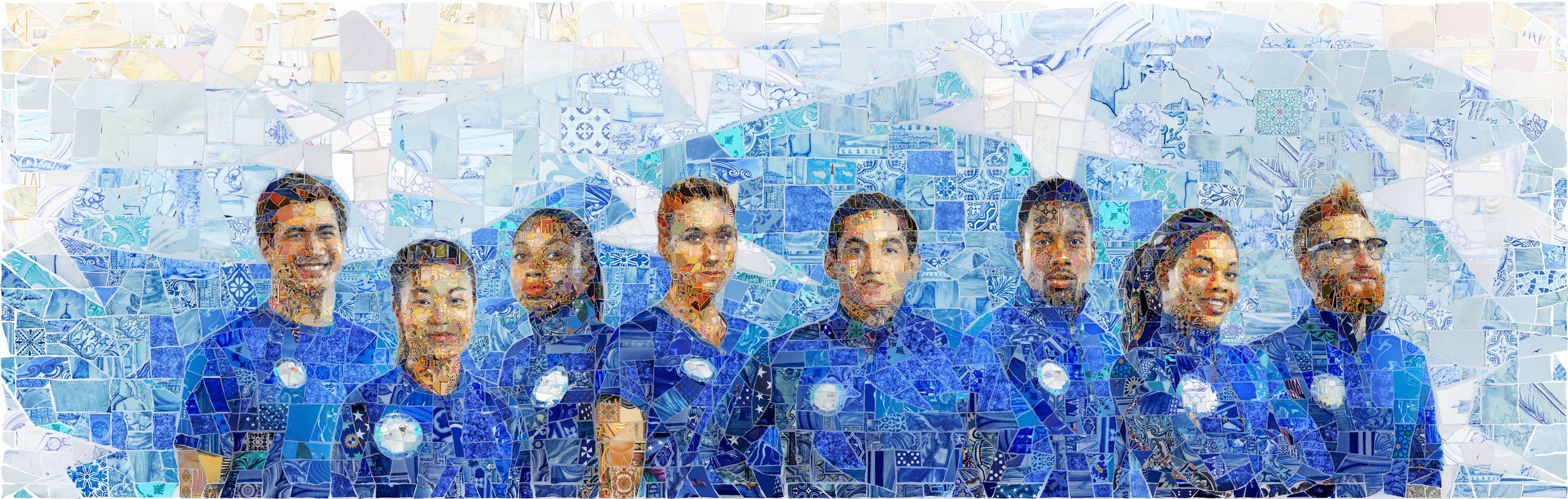
Team USA: A Mural of Motion and Meaning
From left to right: Nathan Adrian (swimming), Scout Bassett (Paralympic track), Gabby Douglas (gymnastics), Kerri Walsh Jennings (beach volleyball), Rudy Garcia-Tolson (Paralympic triathlon), Carlin Isles (rugby sevens), Allyson Felix (track & field), and Brad Snyder (Paralympic swimming). This expansive mosaic blends American athletic excellence with the rhythms of Rio, using Brazilian visual motifs and a layered tile technique to create more than a picture. It’s a portrait of identity, unity, and Olympic spirit.
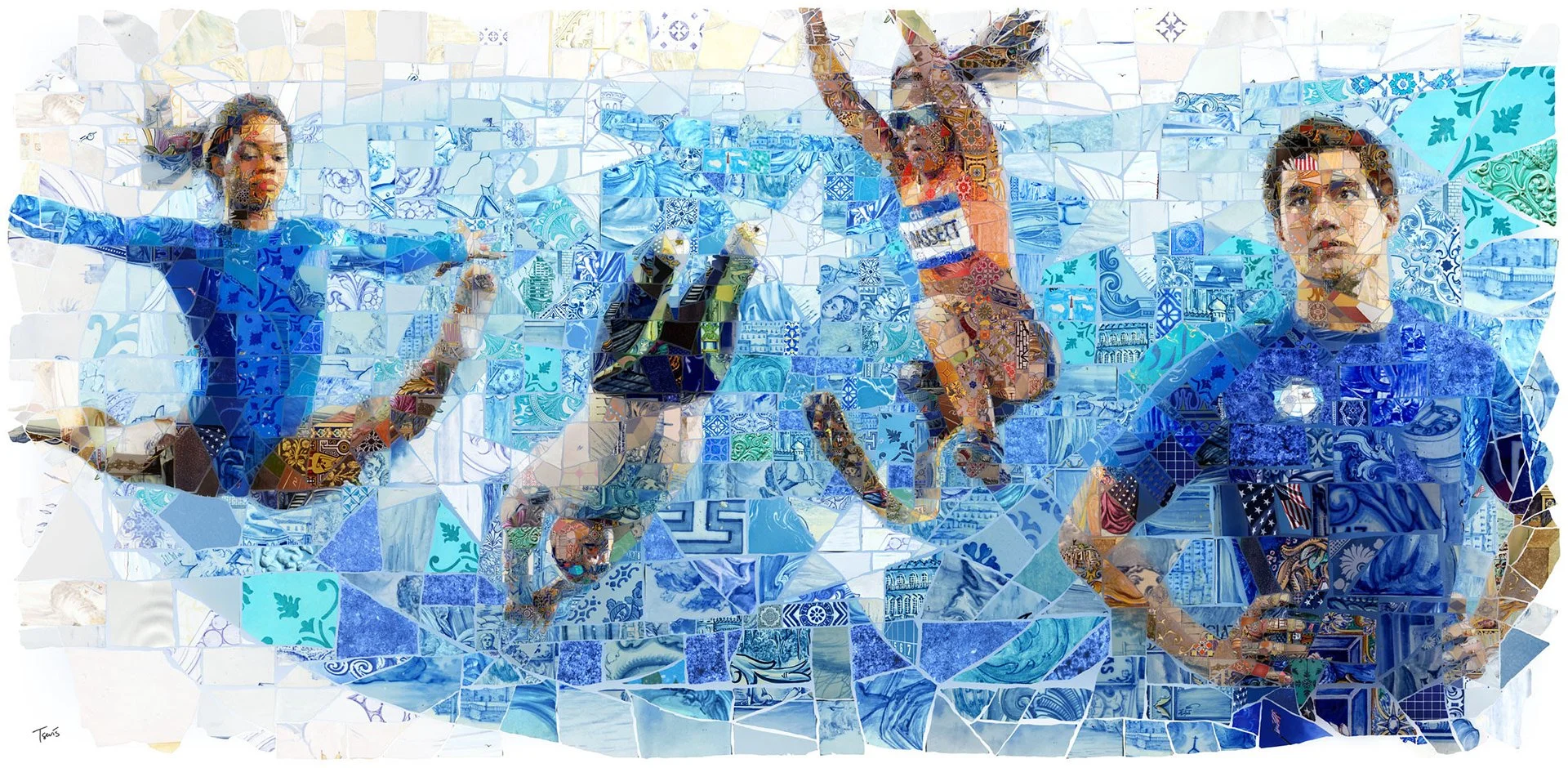
From grace to grit, this mural celebrates gymnast Gabby Douglas, Paralympic swimmer and triathlete Rudy Garcia-Tolson, sprinter Scout Bassett, and Olympic swimmer Nathan Adrian. Champions of movement, resilience, and Olympic spirit.
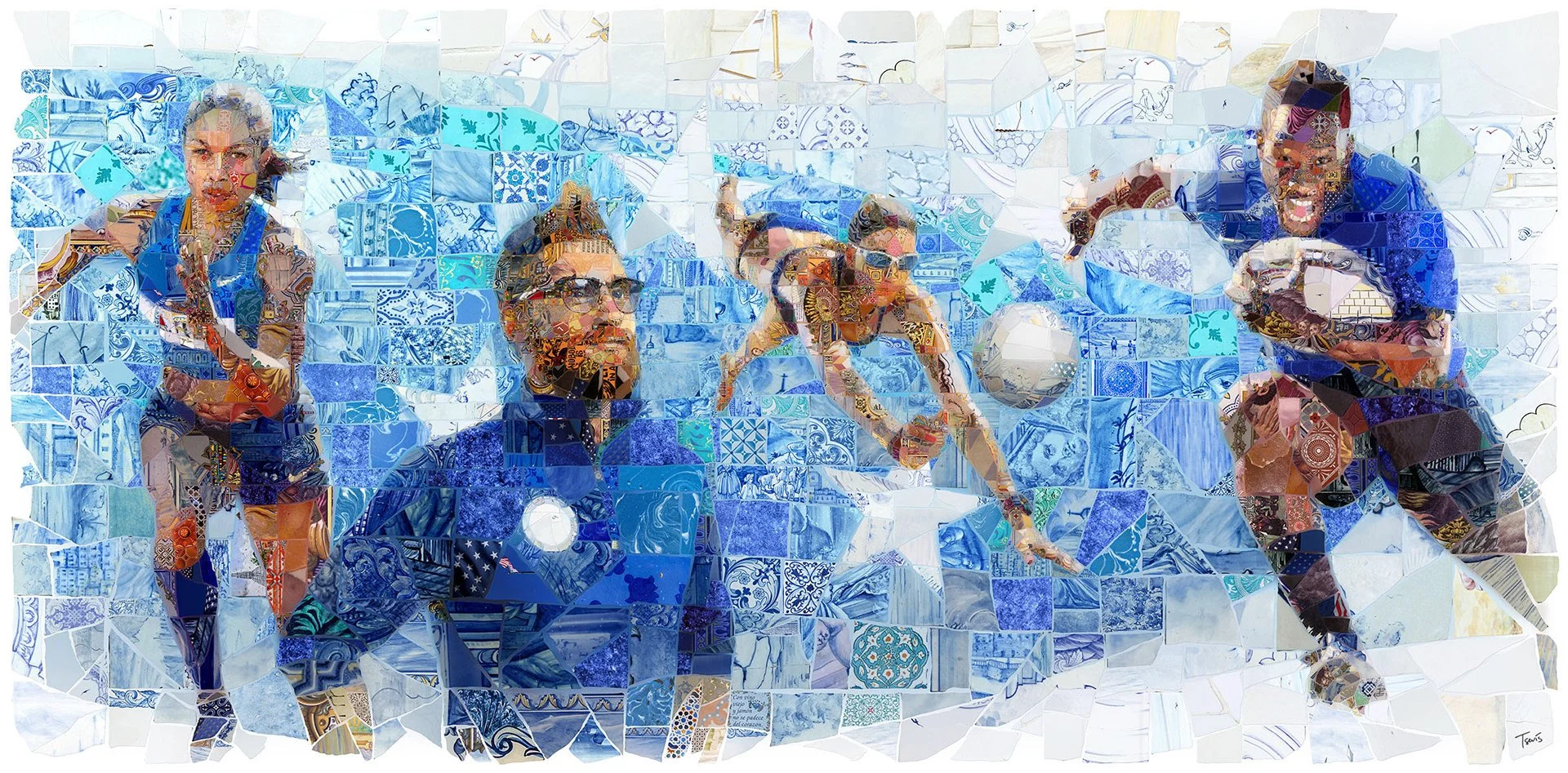
Speed, strength, vision, and flight, track legend Allyson Felix, Paralympic swimmer Brad Snyder, beach volleyball icon Kerri Walsh Jennings, and rugby sevens star Carlin Isles form a dynamic mosaic of American athletic excellence.
The Mosaic Method: Chaos with a Plan
Let’s talk tiles. Digital ones.
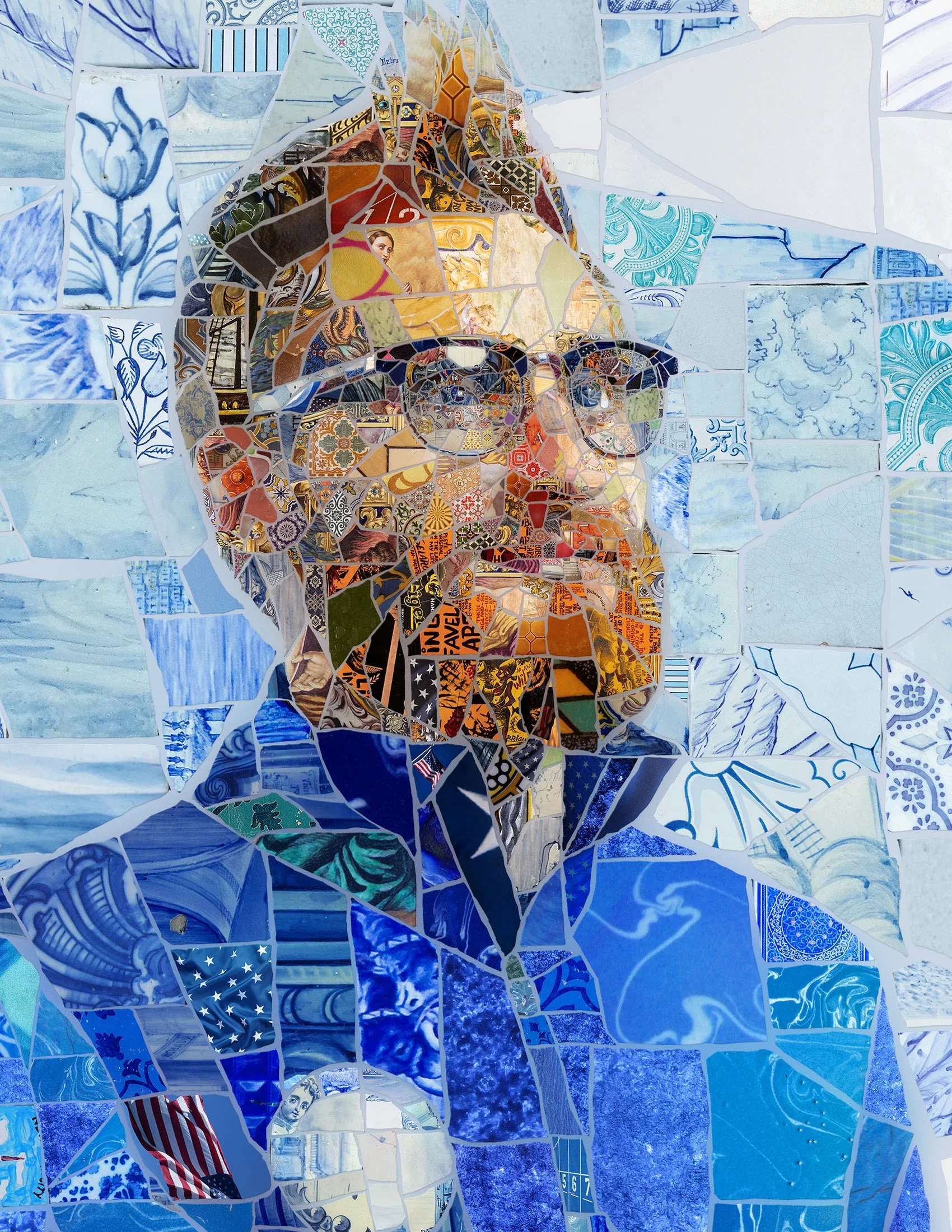
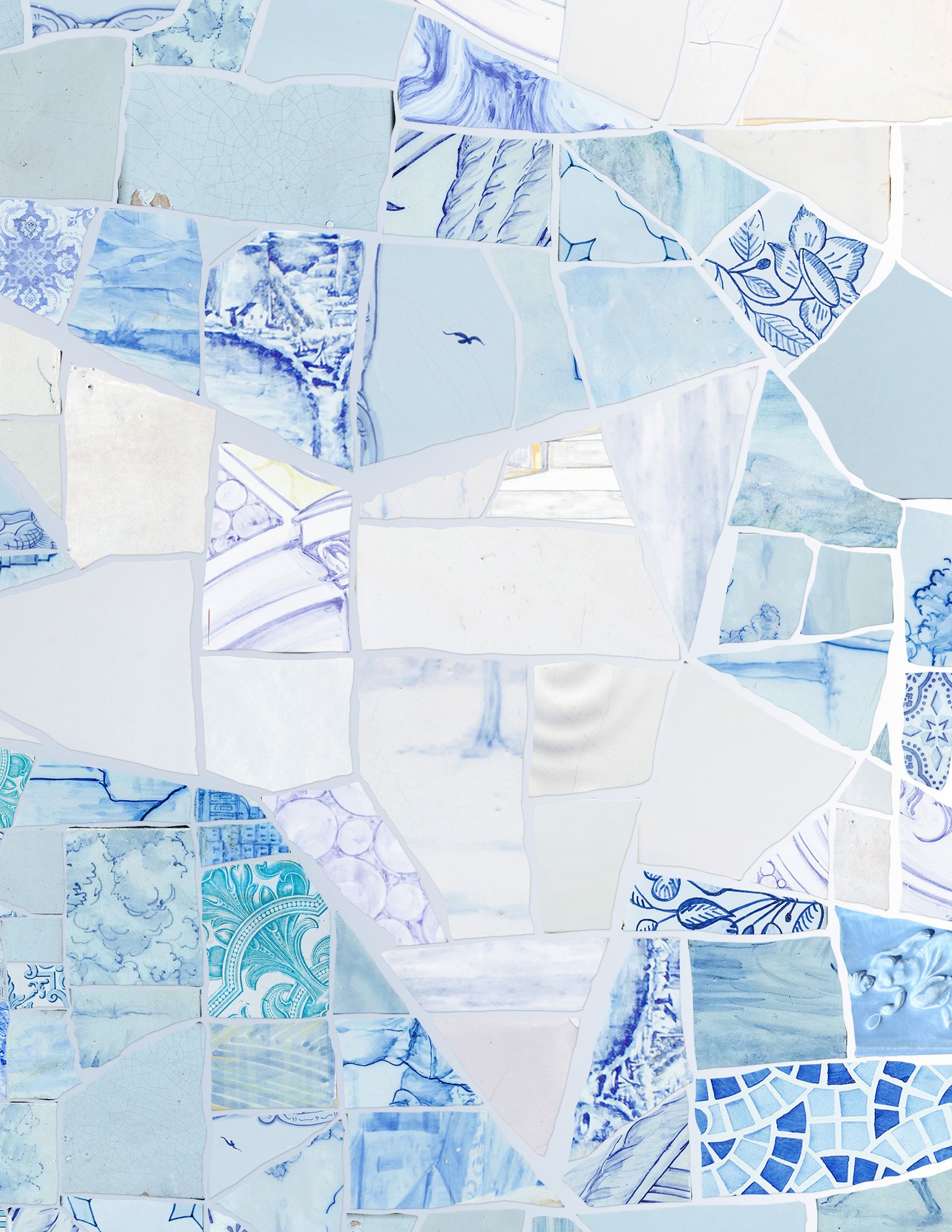
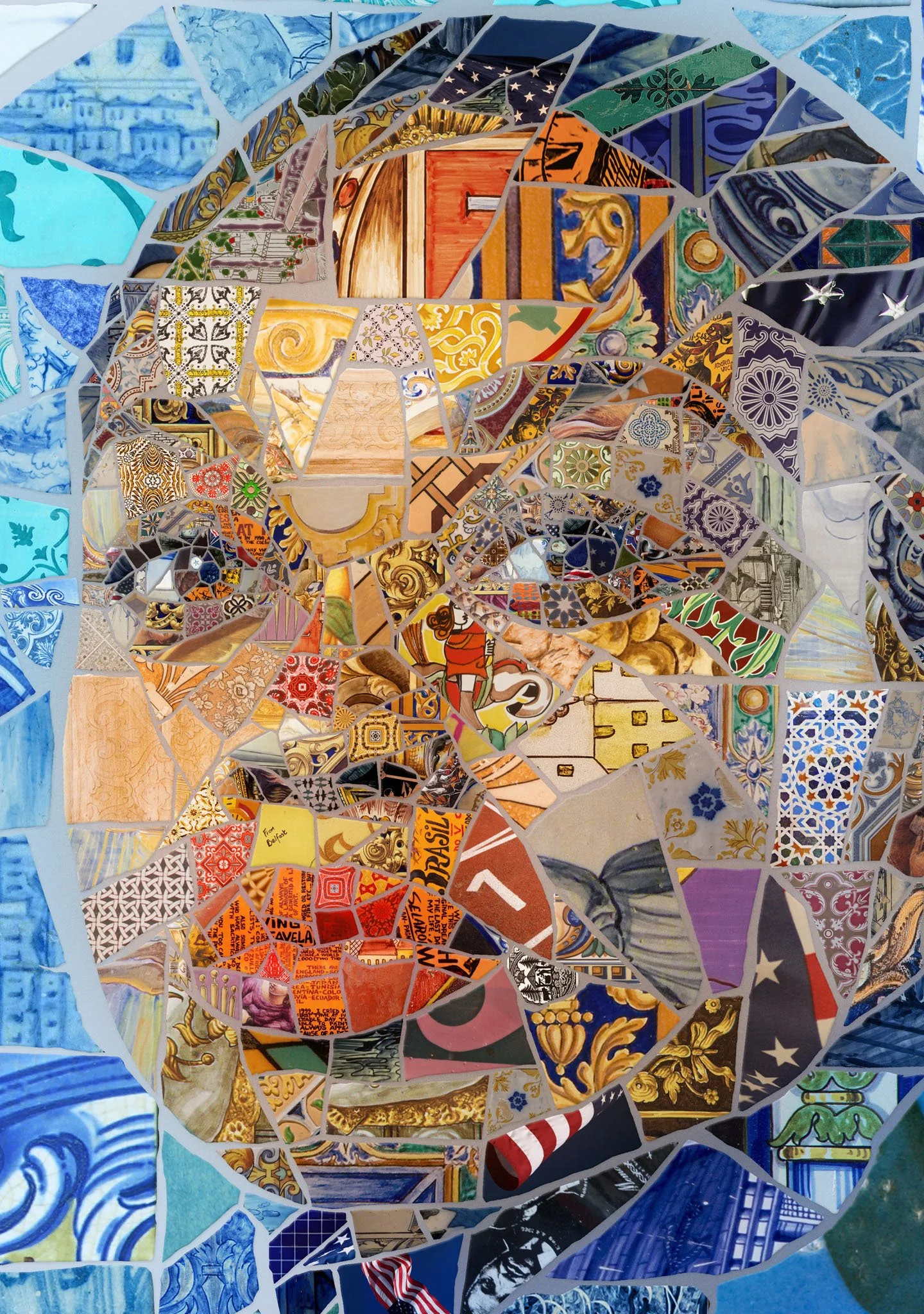
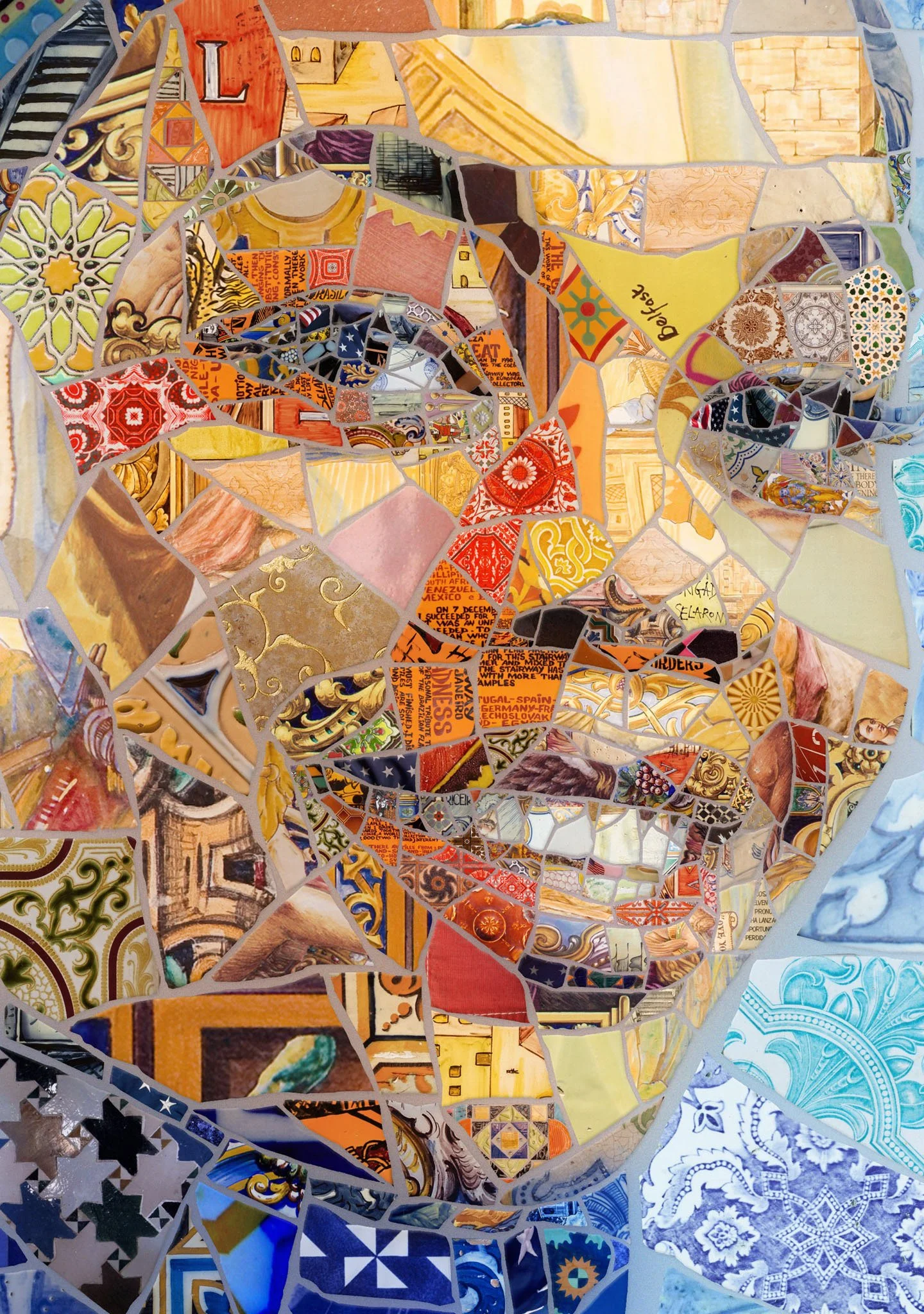
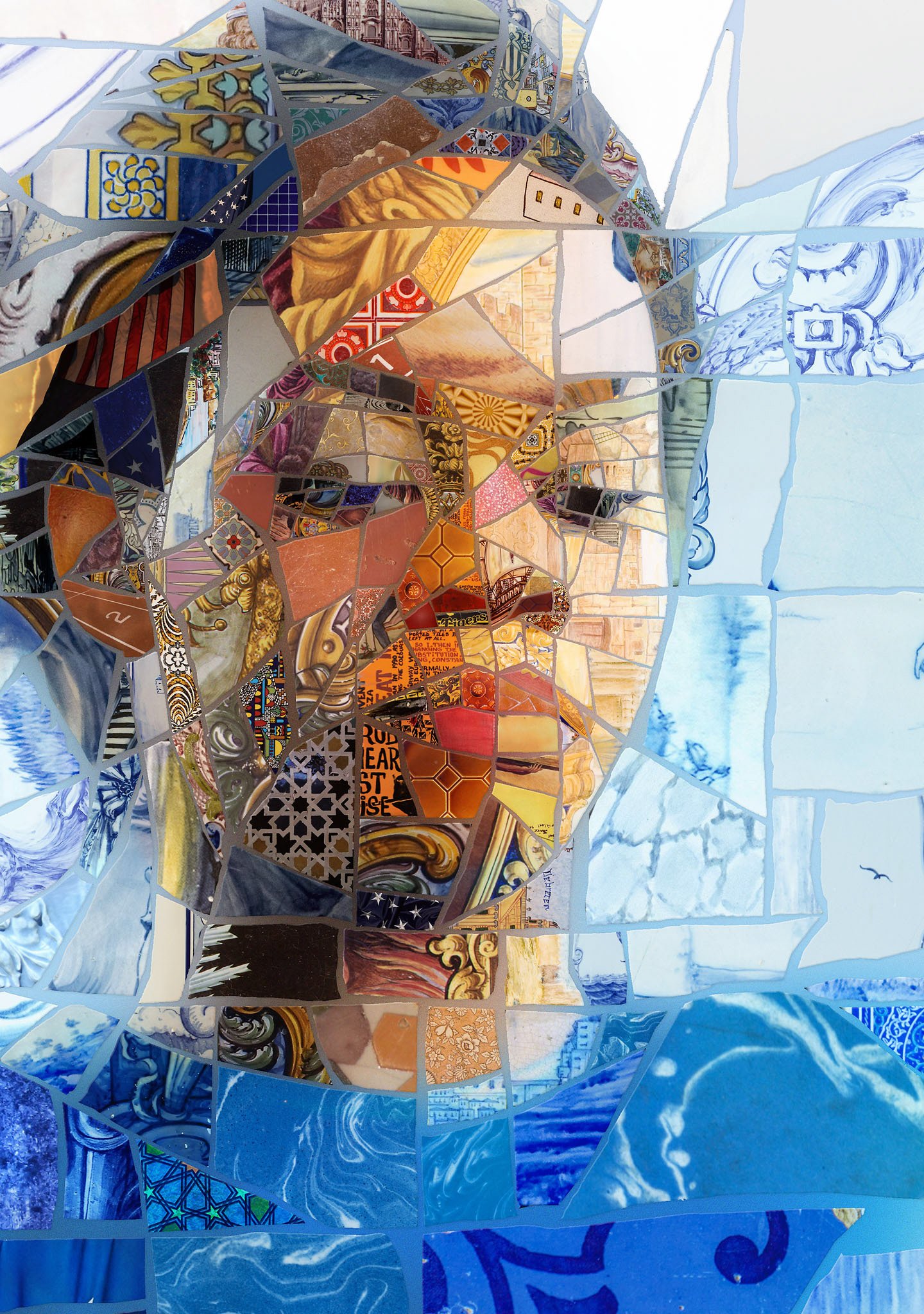
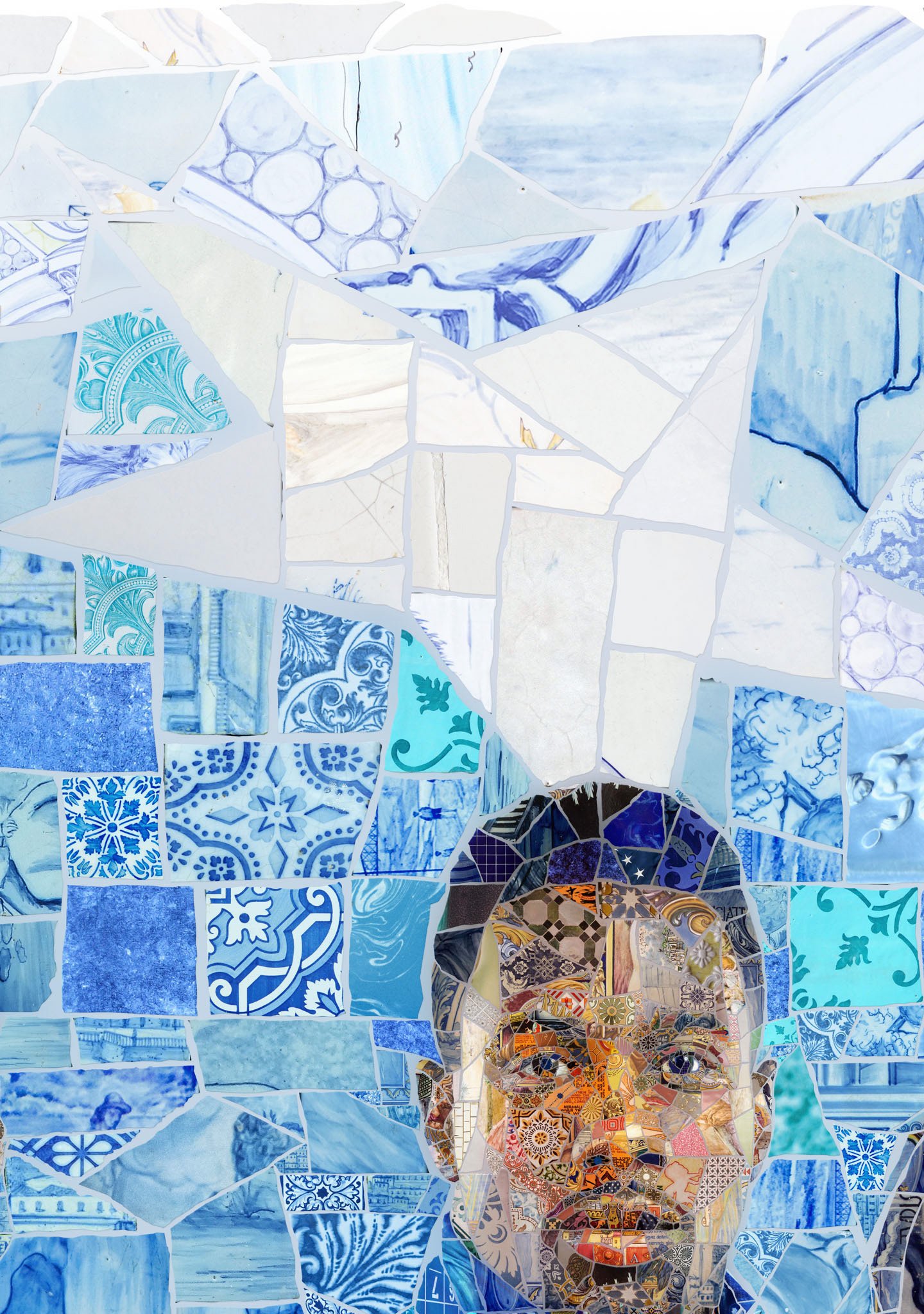
The style I used, “Ceramic Tiles and Stones,” may look handmade, but it’s a wild hybrid: part software, part sculpture, part sheer obsession. Every mural was built from thousands of individual visual fragments. Not just color blocks, but real photographic shards, digital textures, and type. Some tiles referenced American sports iconography; others echoed Brazilian textures, stone patterns, sand grains, and favela graffiti. Together, they created something both legible and layered. Something you could read from across the room, or get lost in up close.
Each piece was placed with precision, but also allowed to breathe, with intentional gaps, fractures, and overlaps. Like Gaudí’s architecture or a jazz solo, the imperfections made it human. The rhythm of visual noise and silence mirrored the Rio street textures: joyful, uneven, alive. It wasn’t just about image fidelity; it was about emotional fidelity. The surface had to feel lived in.
And the mural scale? Immersive. These weren’t posters. They were environments. Walk-in compositions. Visual habitats where identity, place, and performance could meet.
Design as Dialogue, Not Broadcast
Here’s the real alchemy: these murals didn’t just show Team USA. They translated it.
Designing in a mosaic style allowed the work to function as a cultural interface. American values, excellence, diversity, perseverance, weren’t just shouted through typography or flag motifs. They were whispered through texture. Echoed through craft. The design leaned into the host city’s language and visual traditions. It said, “We’re guests, but we’ve done our homework. And we’re bringing something honest.”
That’s what made it strategic. That’s what made it land.
When you respect your host and honor your own story, you create something rare: empathy. The murals weren’t for Americans. They were for everyone else who came through those doors, Brazilians, journalists, athletes, volunteers, anyone trying to read what Team USA stood for in that moment, in that place.
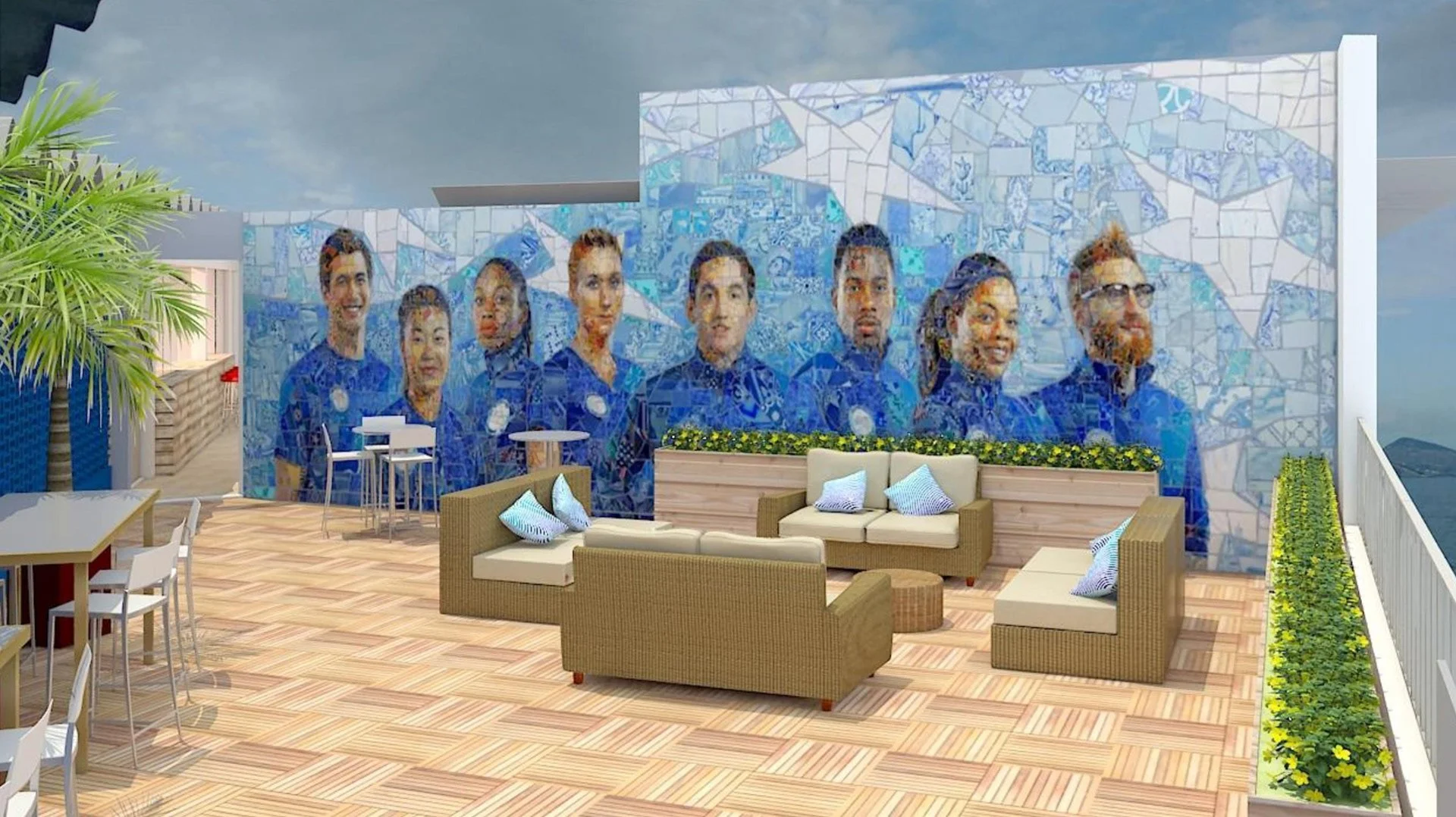
These are the 3D renderings of the actual spaces with the murals. (Courtesy by Publicis One Team). The Roof Garden.
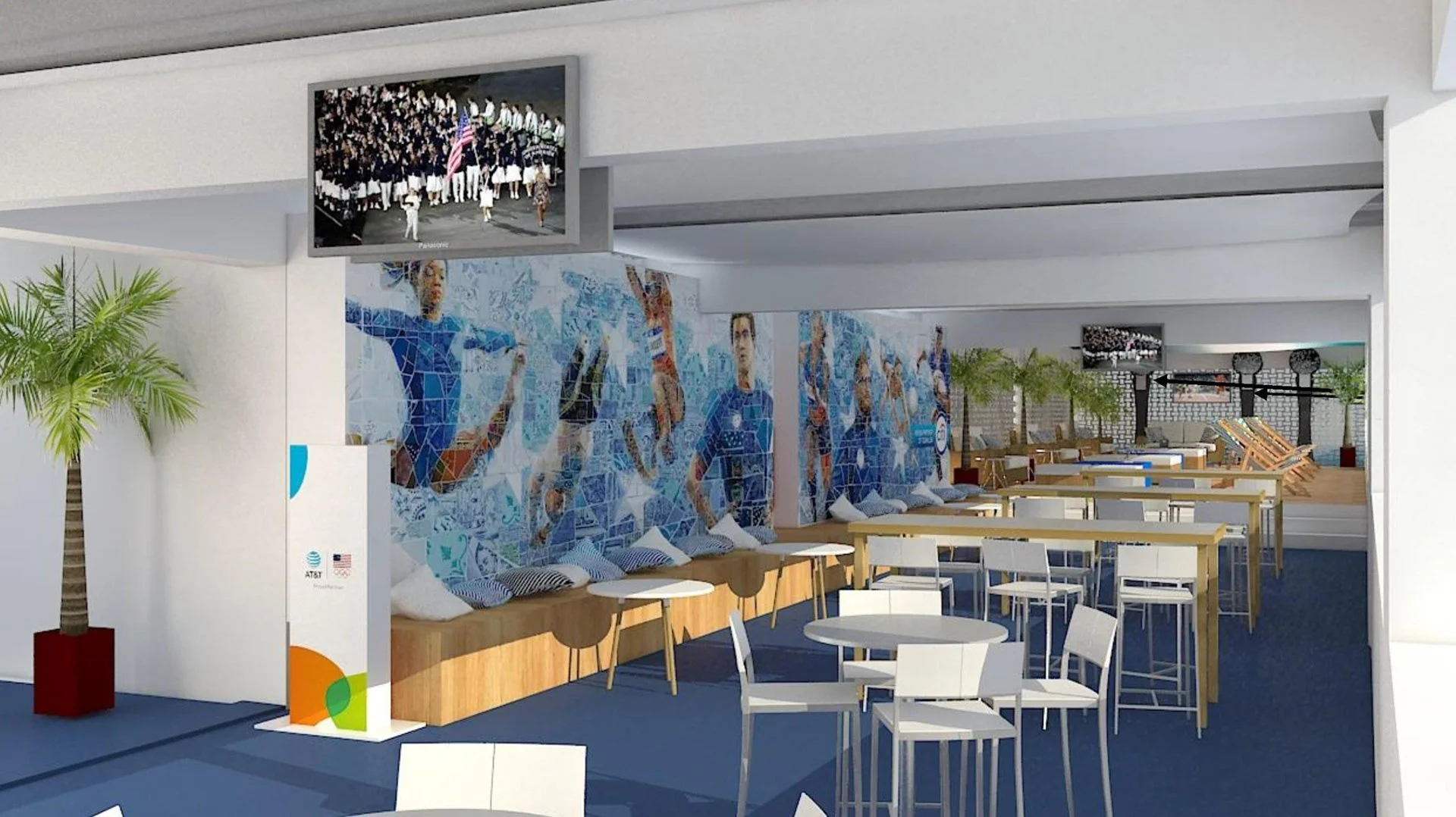
3D renderings of the actual spaces with the murals in the Restaurant (Courtesy by Publicis One Team).
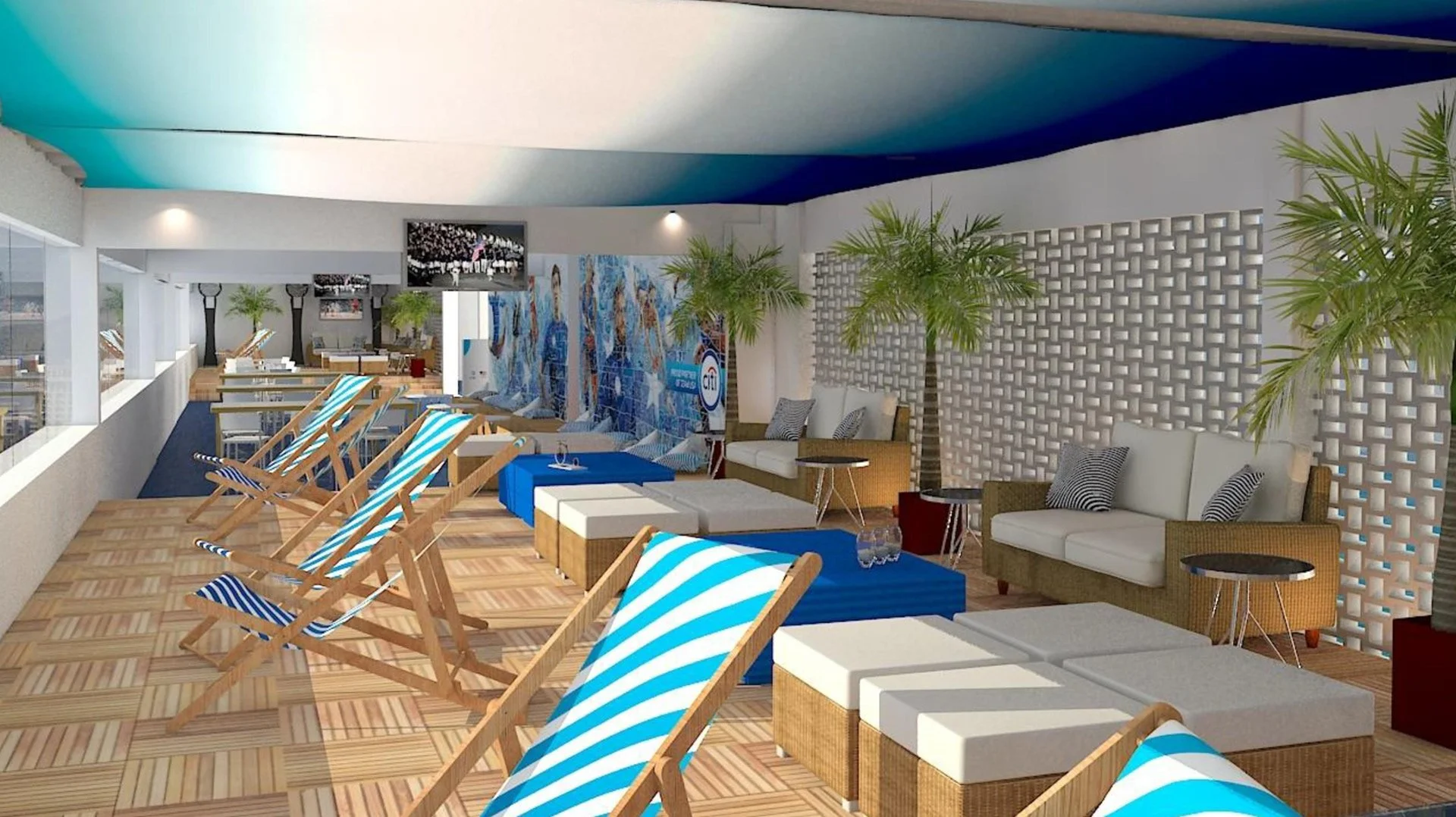
3D renderings of the actual spaces with the murals in the Living room (Courtesy by Publicis One Team).
The Greek in the Machine
I should mention: I’m Greek. Which means I live at the intersection of myth, logic, and sun-drenched geometry. Our ancestors gave the world the Olympics and the philosophy behind democratic identity. The American Republic, like the Olympic spirit itself, traces its roots to classical Athens. So for me, contributing to the visual identity of Team USA wasn’t just another commission. It was part of a long conversation between cultures that believe in human potential.
That’s why the work matters. Not because it’s pretty (though, yes, it is), but because it stands for something. It carries history. It reflects the best of who we are when we come together.
And it ties to a body of work I’ve developed across five Olympic cycles, from the elegance of Japanese Kintsugi in Tokyo 2020, to the “Shredded Pieces” reflecting resilience and struggle, to the fusion of British coin design and athleticism for Paris 2024. Each piece contributes to a broader mosaic: a visual narrative intertwining identity, craftsmanship, and storytelling on the global stage.
See more at: tsevis.com/olympic-art
For Those Who Need Design to Do Something
If you’re leading a brand, directing a campaign, or trying to align a nation’s image with global resonance, here’s the takeaway:
Don’t just chase trends. Find truths.
The USA House murals in Rio succeeded not because they looked Olympic, but because they felt Brazilian and meant something American. They stood for people. For place. For potential.
And for your next project? Maybe that’s the strategy that will actually stand out in a world still saturated with noise.
The Installation:
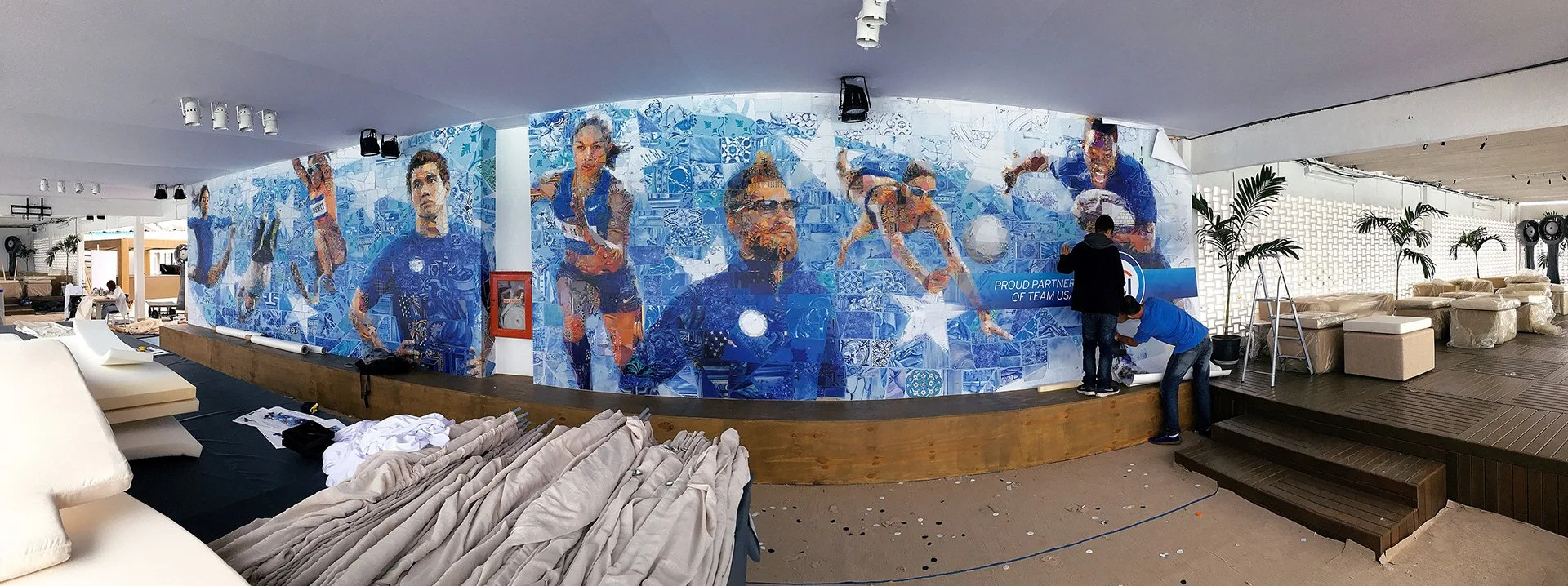
USA House Murals:
Commissioned by Citi, the outdoor wall mural spanned over 13 meters and depicted eight champions from USA’s Olympic and Paralympic teams. Inside, two more compositions showcased athletes in action, decorating the covered wall of the roof garden with views of Ipanema Beach.
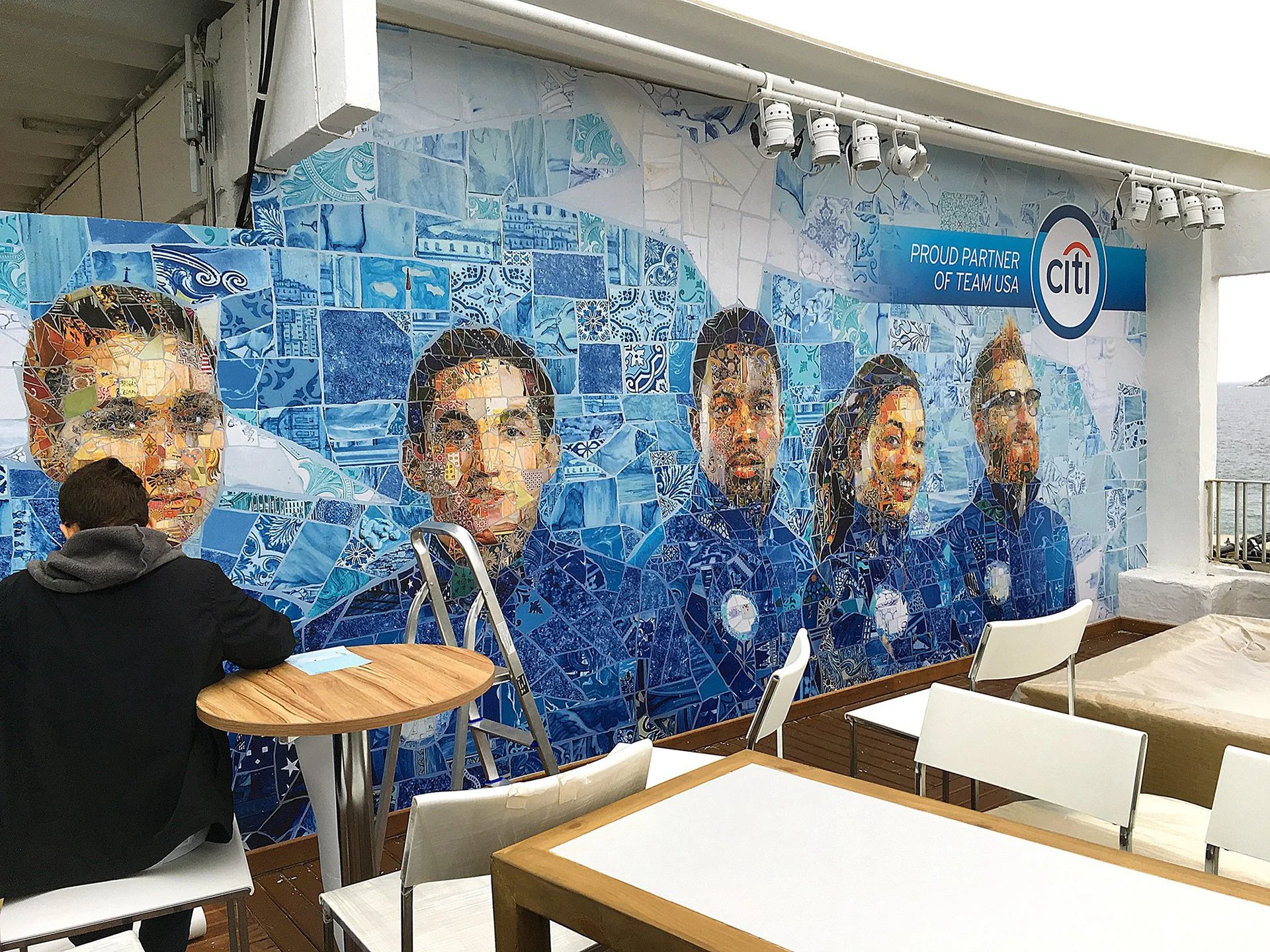
Up on the roof, mosaic portraits weren’t just hung, they were honored. Surrounded by palms, flags, and Olympic energy, this was design with altitude and attitude.
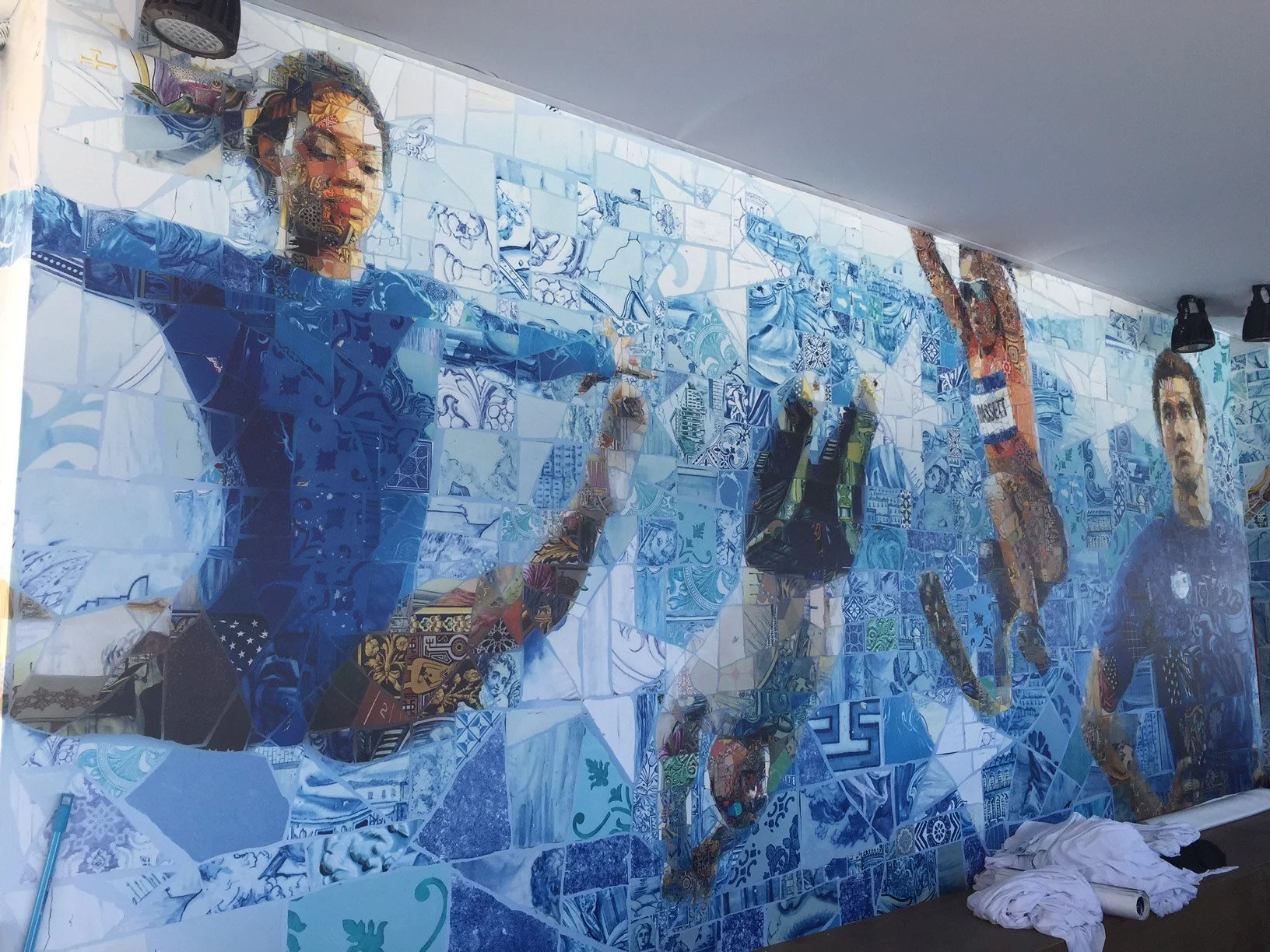
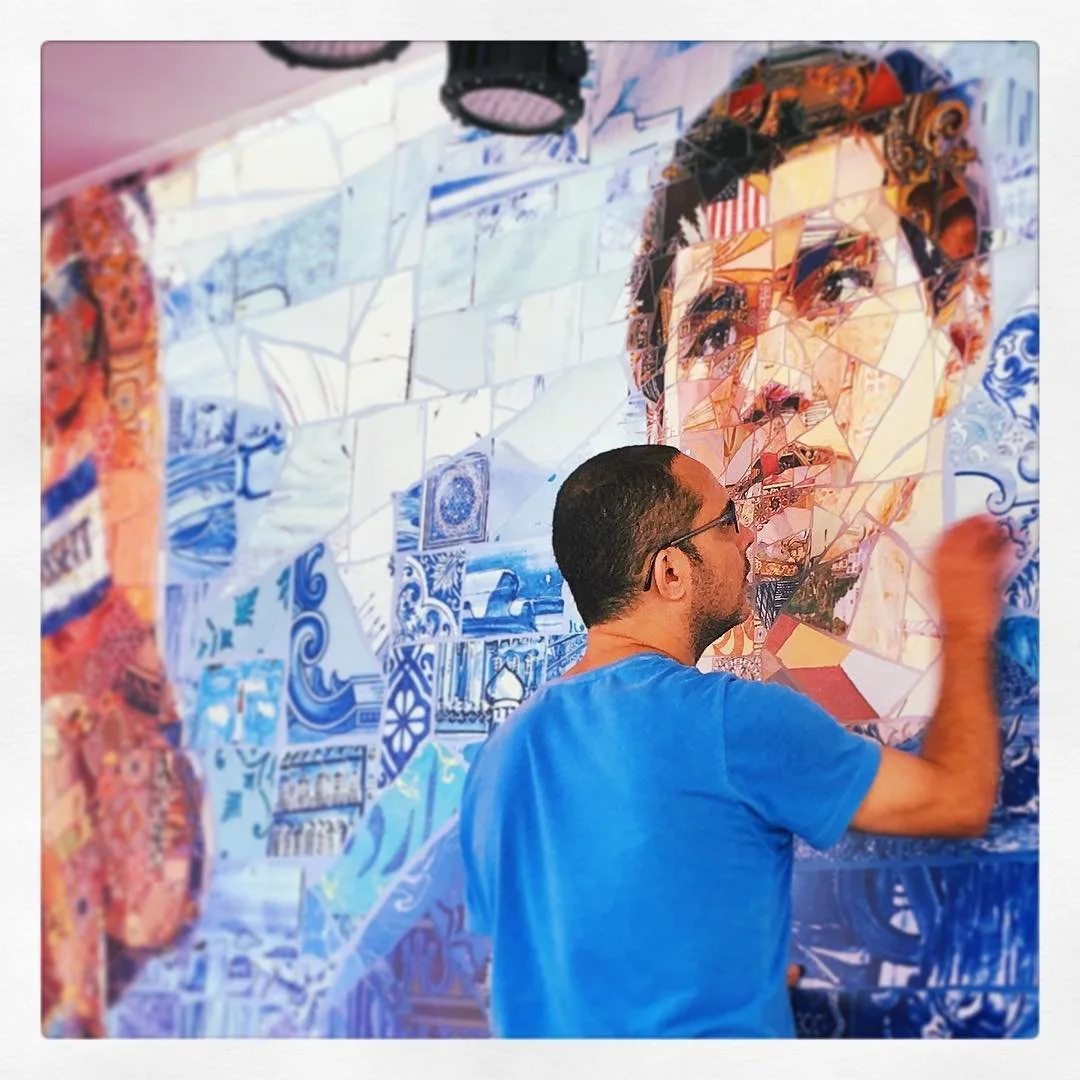
Final Touches: Artists apply the last pieces to the vibrant mural, capturing the spirit and diversity of American Olympians against the backdrop of Rio’s rich artistic heritage.”
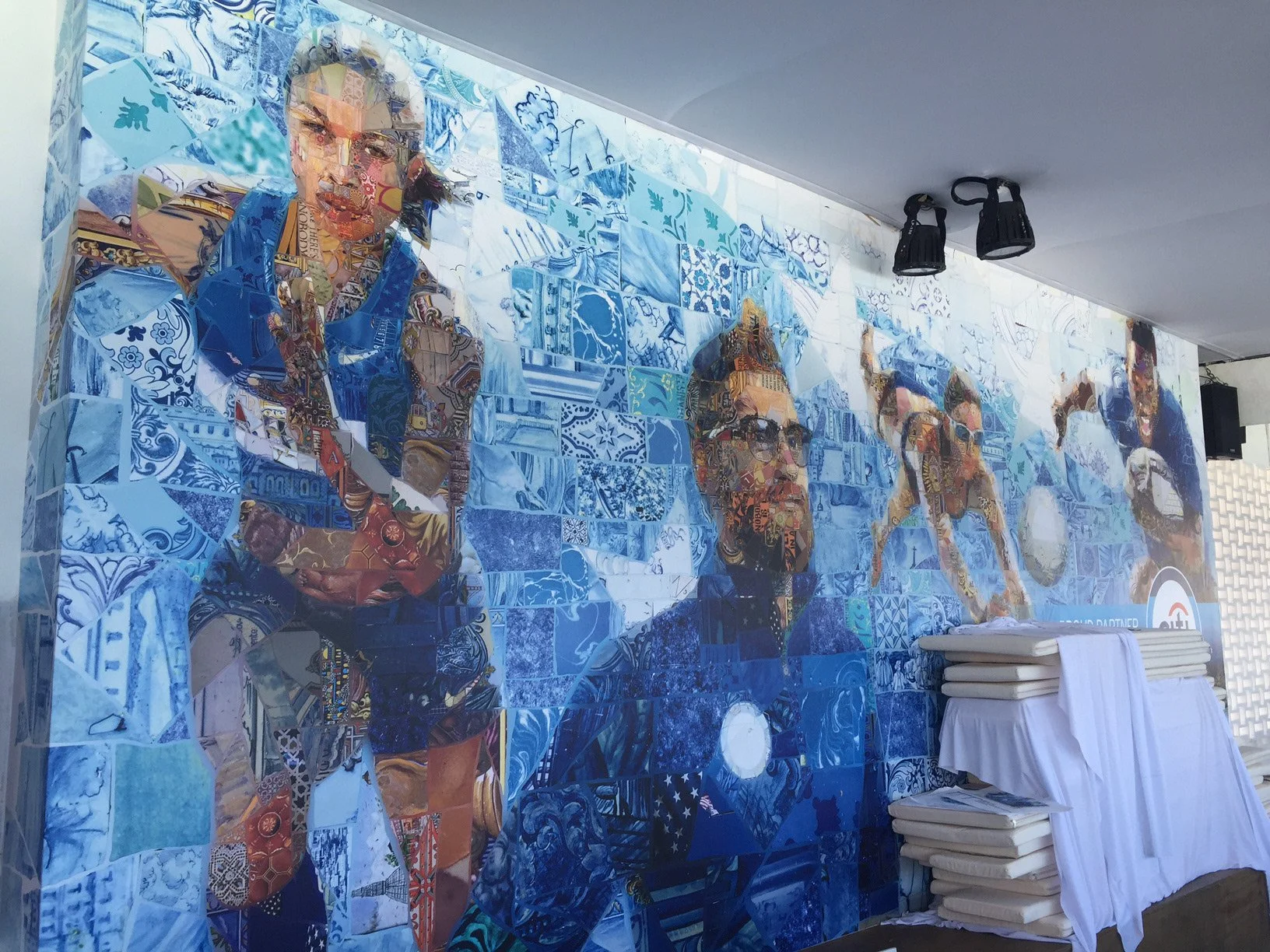
A glimpse into the creative process: The mosaic mural featuring Team USA athletes begins to take shape amidst the ongoing preparations of the USA House in Rio. The vibrant tiles stand out against the unfinished decor, symbolizing the fusion of artistry and athletic spirit.
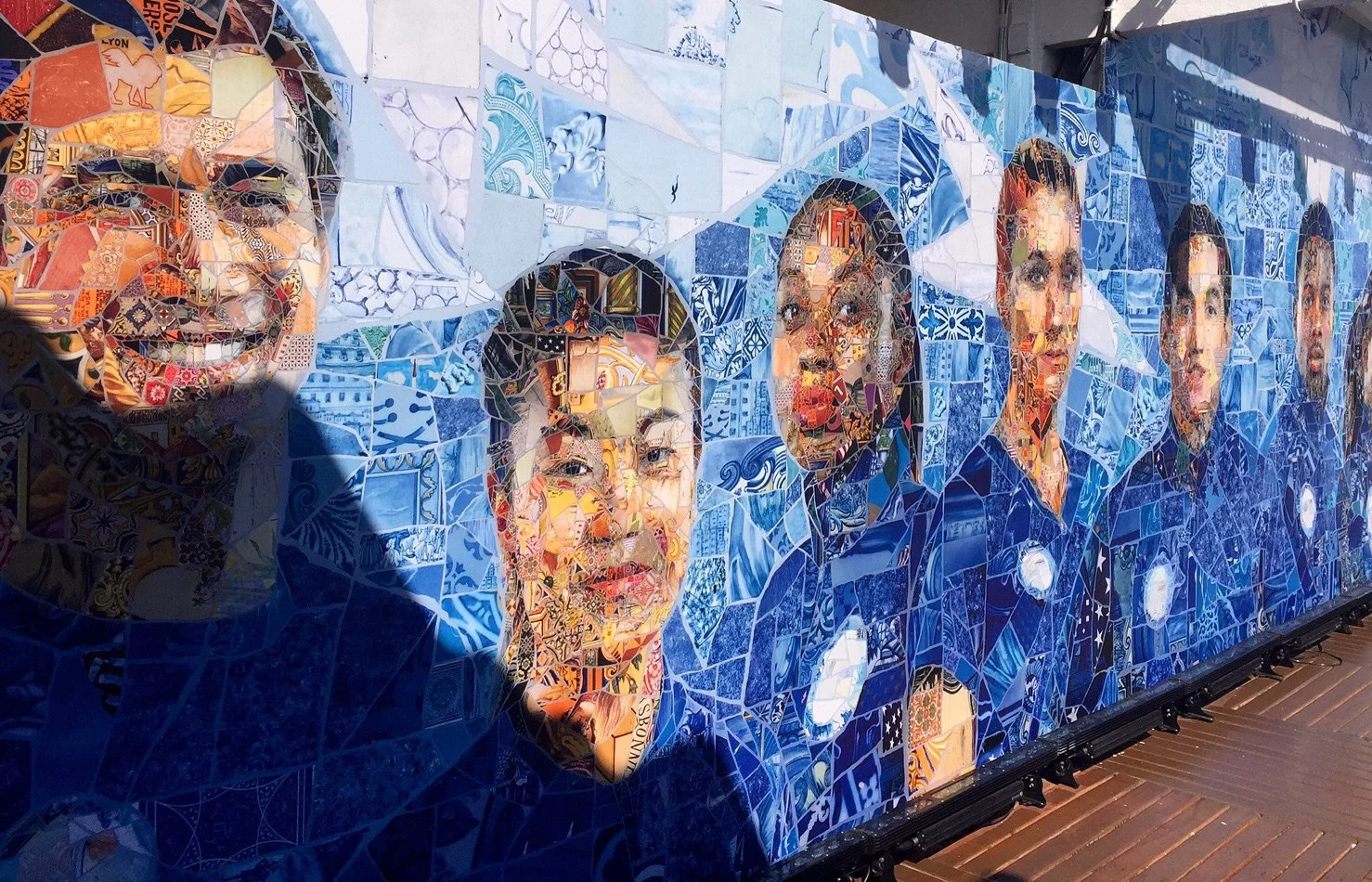
As the sun poured in, the rooftop mosaics came alive—catching the breeze, the light, and the spirit of Team USA in Rio’s open-air heart.
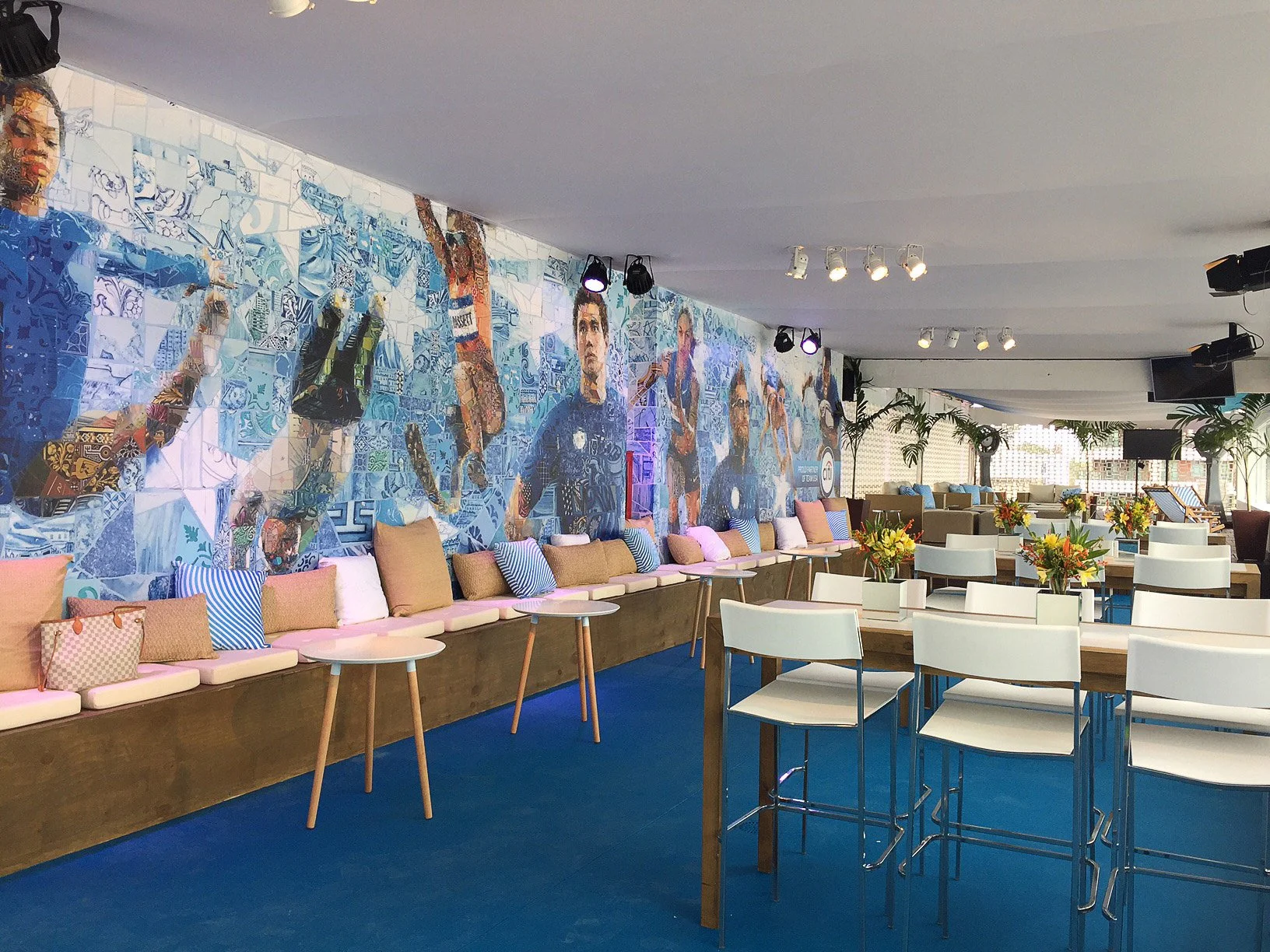
In the USA House restaurant, athletes refueled beside mosaics that celebrated their stories. This wasn’t just décor, it was dialogue.
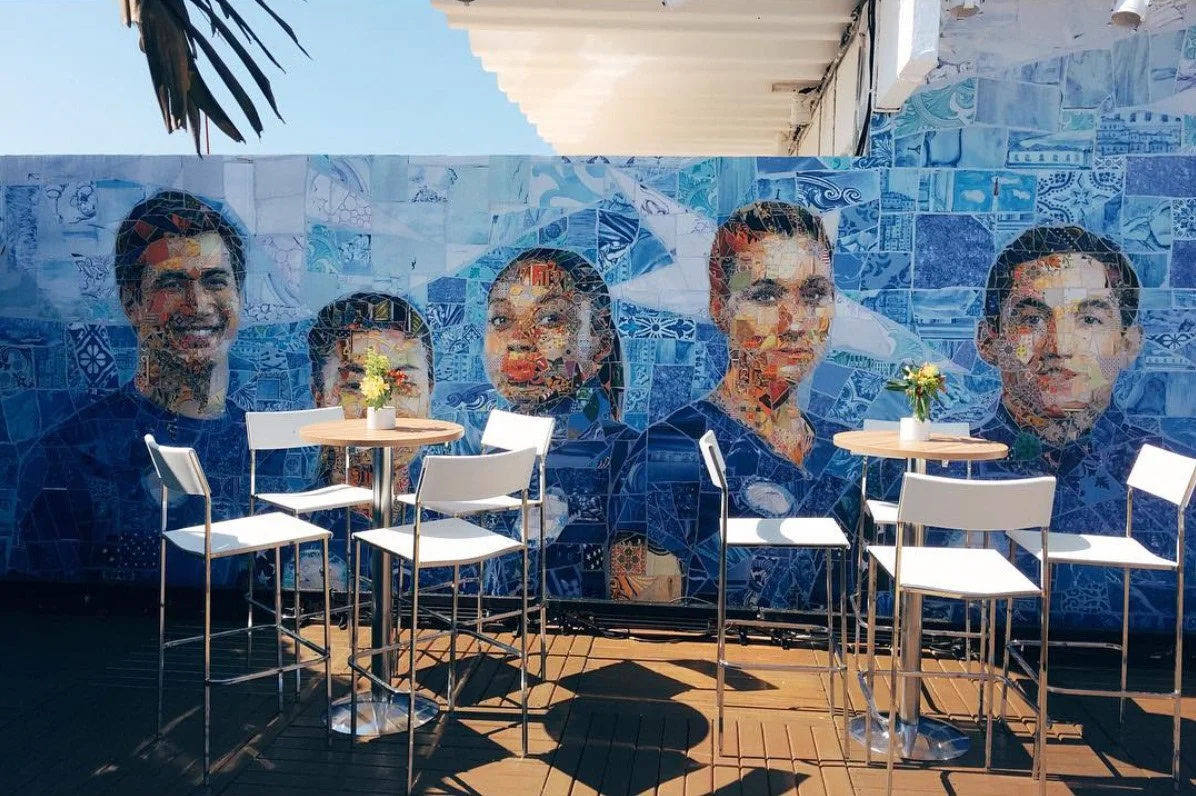
Out on the open-air salons, the tiles turned into textures of belonging, American grit rendered in Brazilian rhythm. Every panel is part of the view, every view is part of the message.
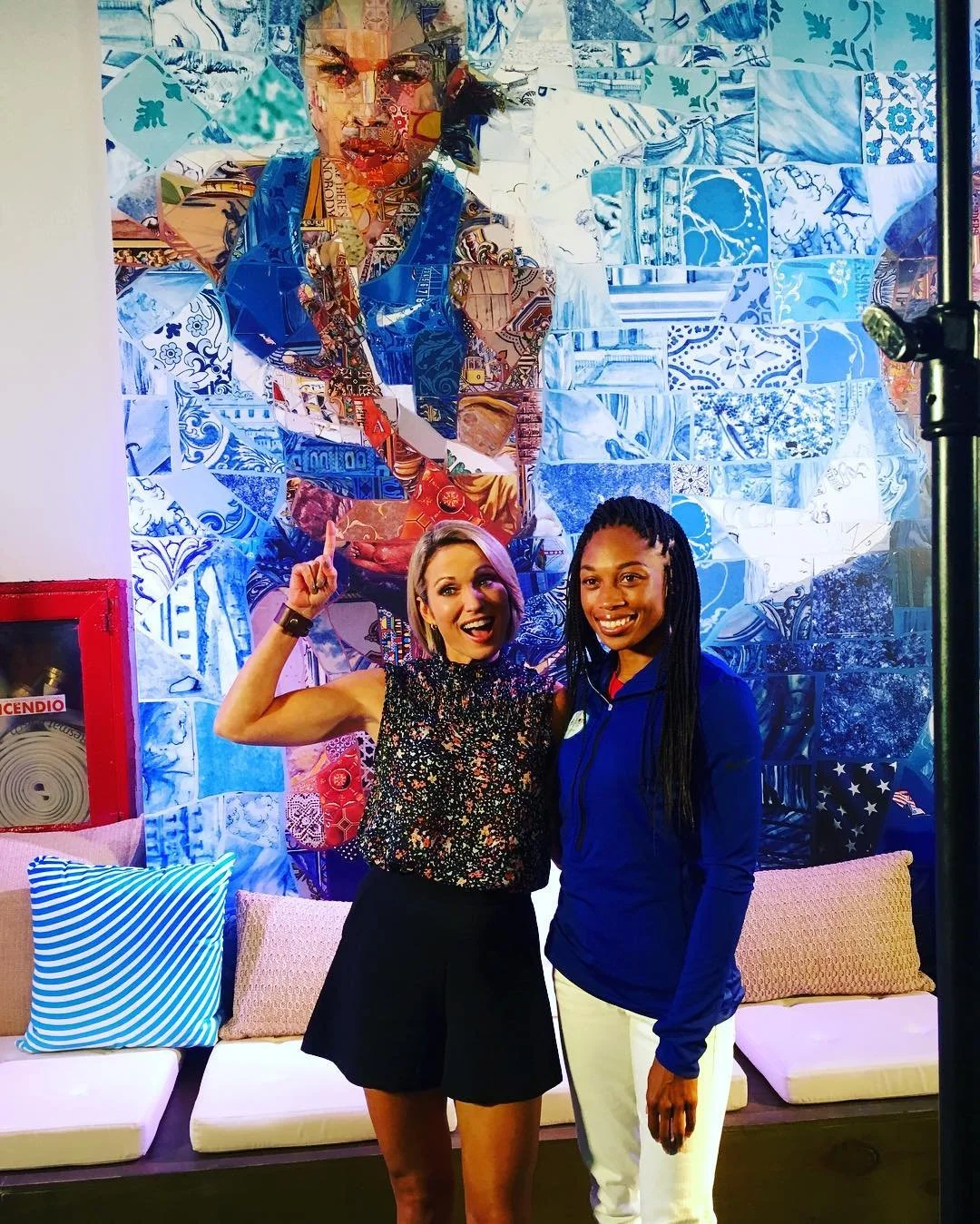
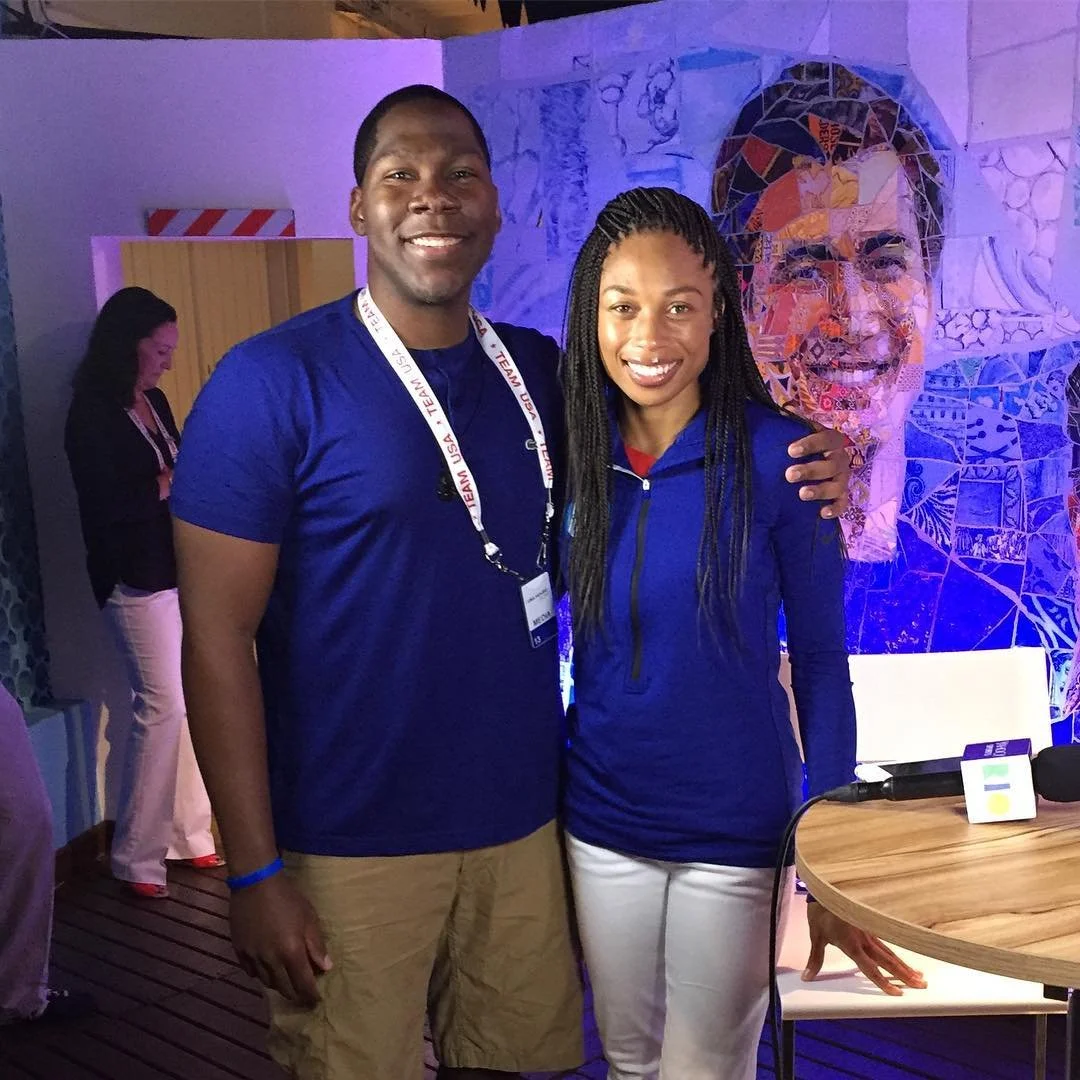
The Sources: The Selaron Stairway
Let’s start with one of Rio’s most beloved landmarks: the Escadaria Selarón. The late Jorge Selarón, a Chilean-born artist who made Brazil his home, spent over two decades transforming a run-down staircase in Lapa into a vibrant, ever-evolving mosaic. More than just public art, it was his living tribute to the Brazilian people, crafted tile by tile with contributions from over 60 countries. A personal obsession that became a collective celebration.
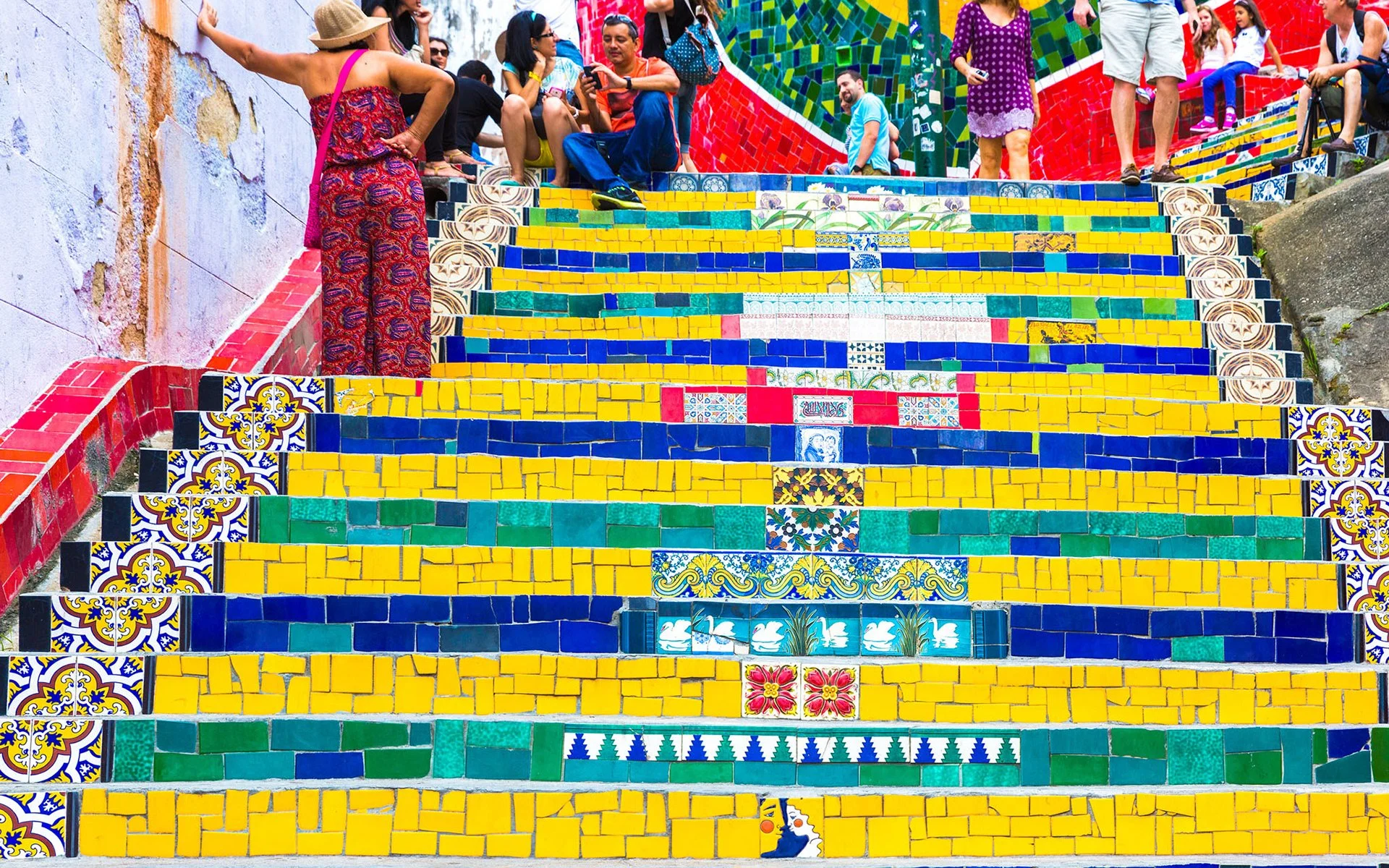
Where color meets culture: The Escadaria Selarón, a landmark built from passion, tiles, and a global chorus of stories.
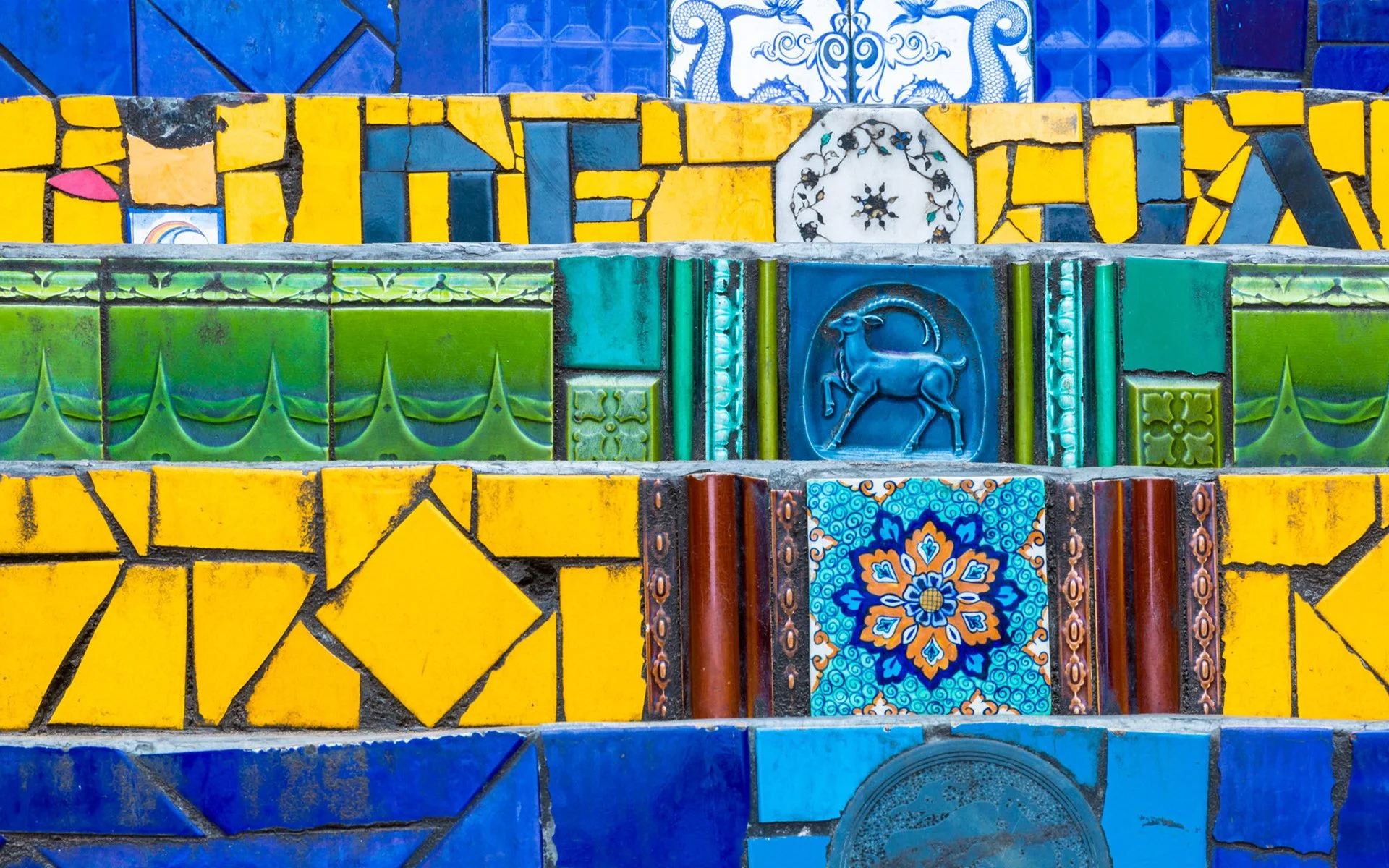
Brazil, one step at a time: A tribute in green, blue, and yellow, Selarón’s love letter to a nation, in its own colors.
The Sources: Copacabana promenade
Another profound source of inspiration: the iconic Copacabana promenade. Stretching along Rio’s Avenida Atlântica, this 4-kilometer mosaic of black and white waves is more than a sidewalk; it’s a cultural tapestry. Originally designed in the 19th century by Portuguese engineer Pinheiro Furtado for Lisbon’s Rossio Square, the “Mar Largo” pattern symbolizes the meeting of the Tagus River and the Atlantic Ocean. Imported to Brazil in the early 20th century, the design was reimagined in the 1970s by Brazilian landscape architect Roberto Burle Marx. He transformed the waves to run parallel to the shoreline, integrating them into a broader modernist vision that harmonized with Rio’s natural beauty. This evolution from colonial homage to contemporary masterpiece exemplifies how design can bridge histories and geographies.
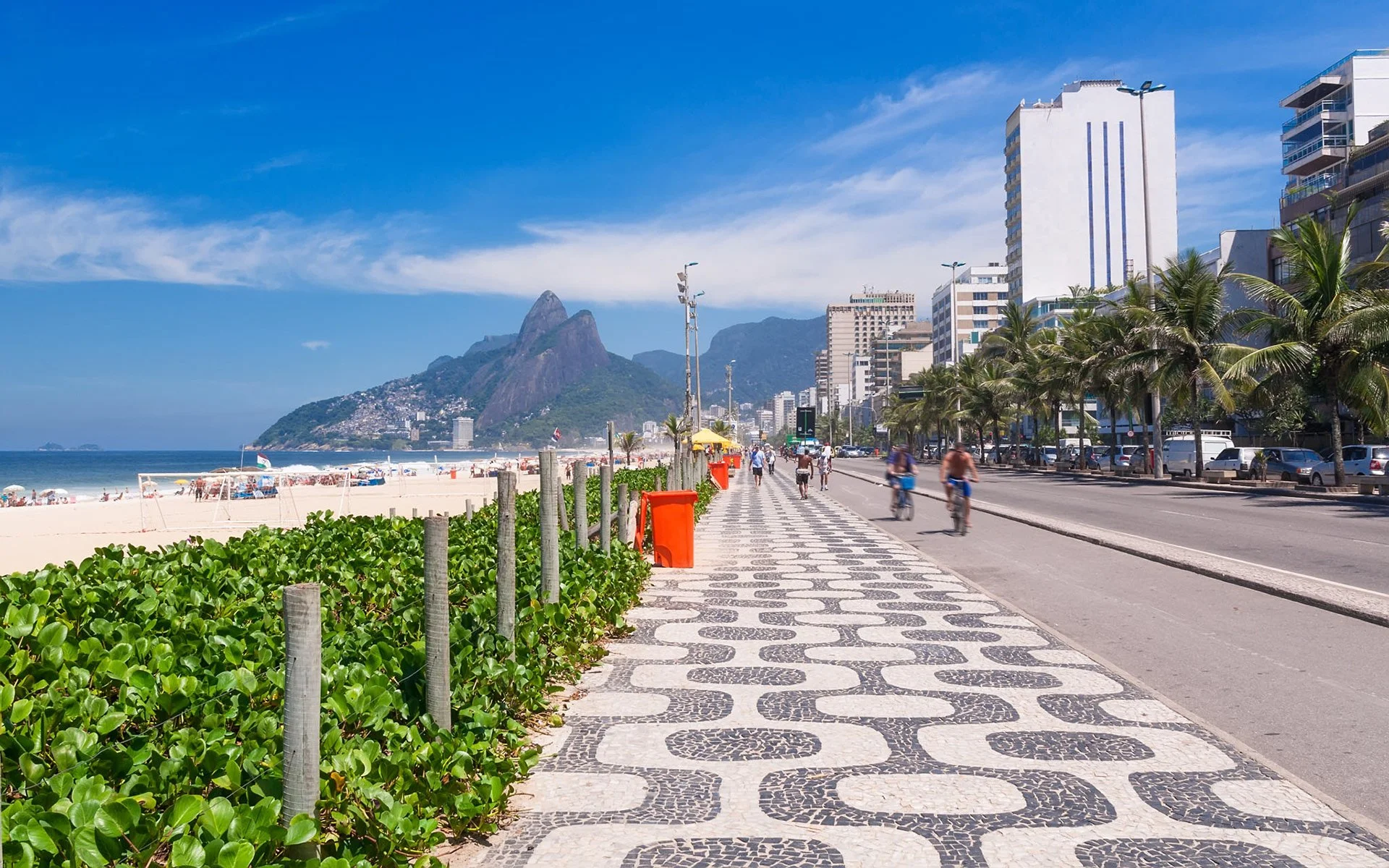
Where the Ocean Meets the Stone: The sweeping black-and-white curves of Copacabana’s promenade echo the waves just meters away, a rhythmic dance of nature and design that defines Rio’s coastal identity.
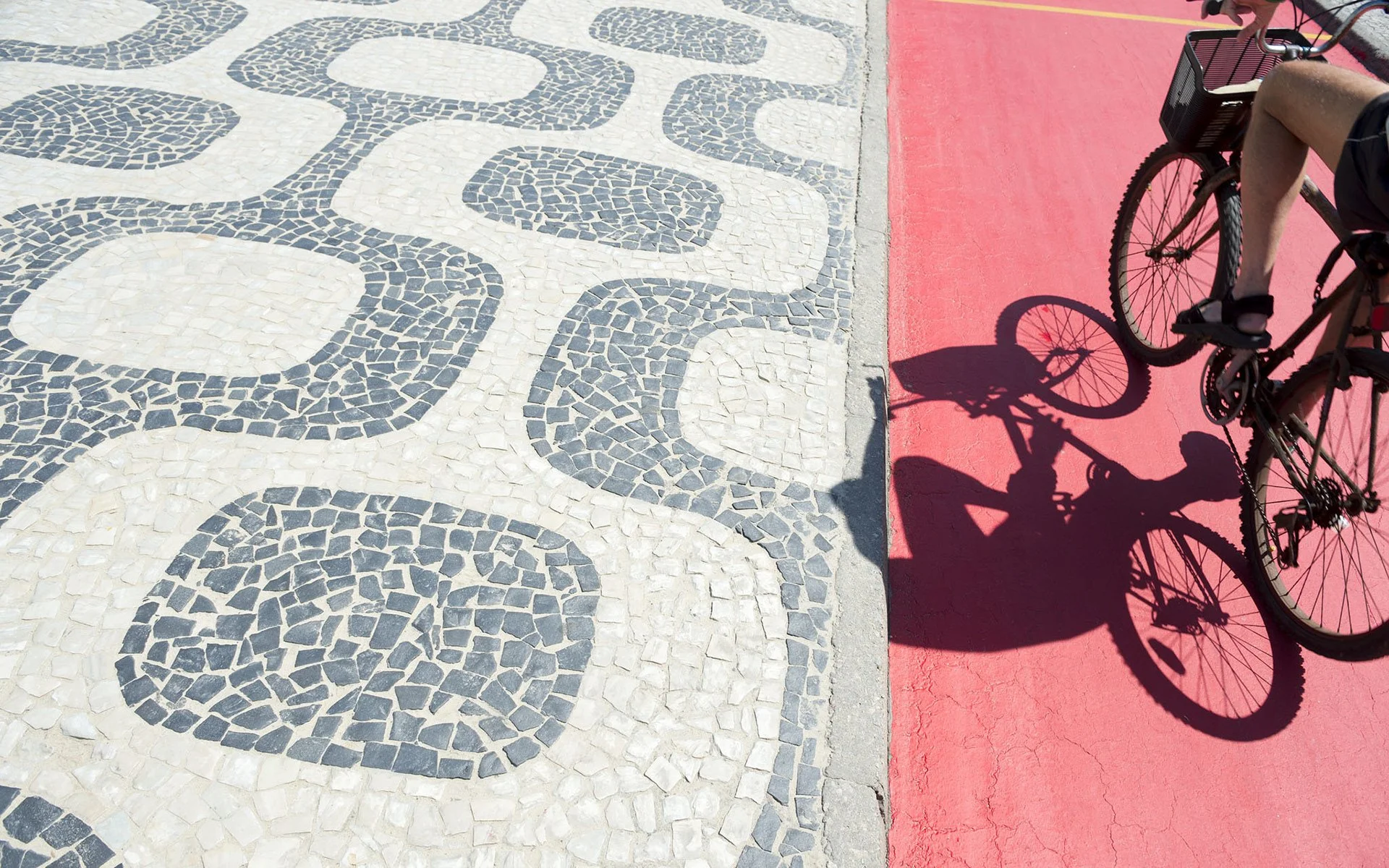
Details in Motion: Crafted from basalt and limestone, this iconic wave pattern underfoot isn’t just decorative; it’s historical choreography, inherited from Portugal and transformed by Brazil.
The sources: The Azilejos
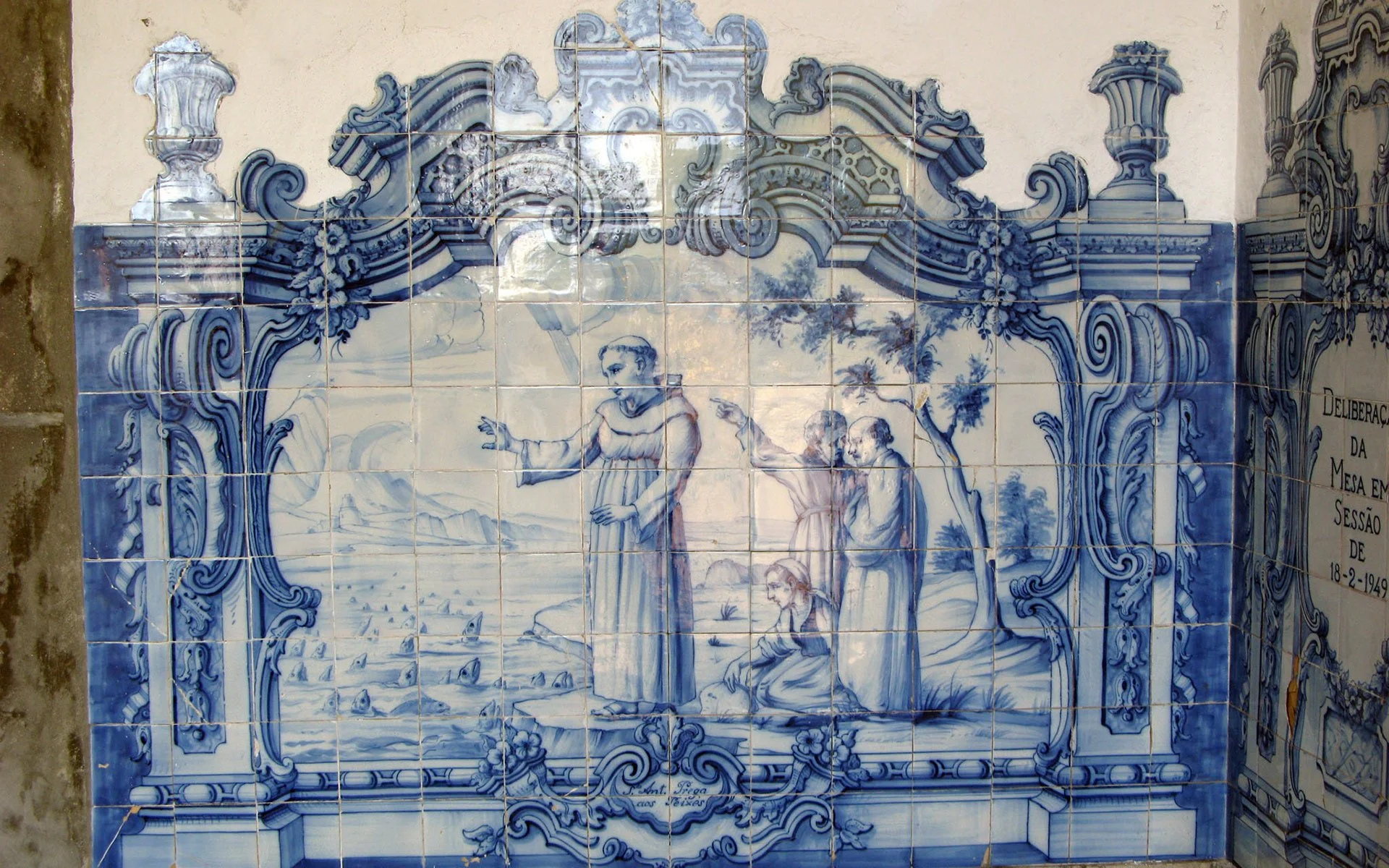
And then there’s the Azulejo — Portugal’s signature ceramic voice. These hand-painted tiles, often in blue and white, have told stories across centuries: saints preaching to fish, boats braving rivers, and entire communities etched into fired clay. Originally brought by the Moors and refined in Iberian workshops, Azulejos blend Islamic pattern, European narrative, and everyday life into a single surface. In places like Pinhão’s railway station, they document the Douro Valley’s winemaking legacy. Elsewhere, they depict religious legends such as Saint Anthony addressing sea creatures, fables frozen in glaze. These weren’t just decorative. They were public memory, community books for the illiterate, visual sermons for the streets, a mosaic language with deep echoes, and a perfect ancestor to Olympic storytelling.
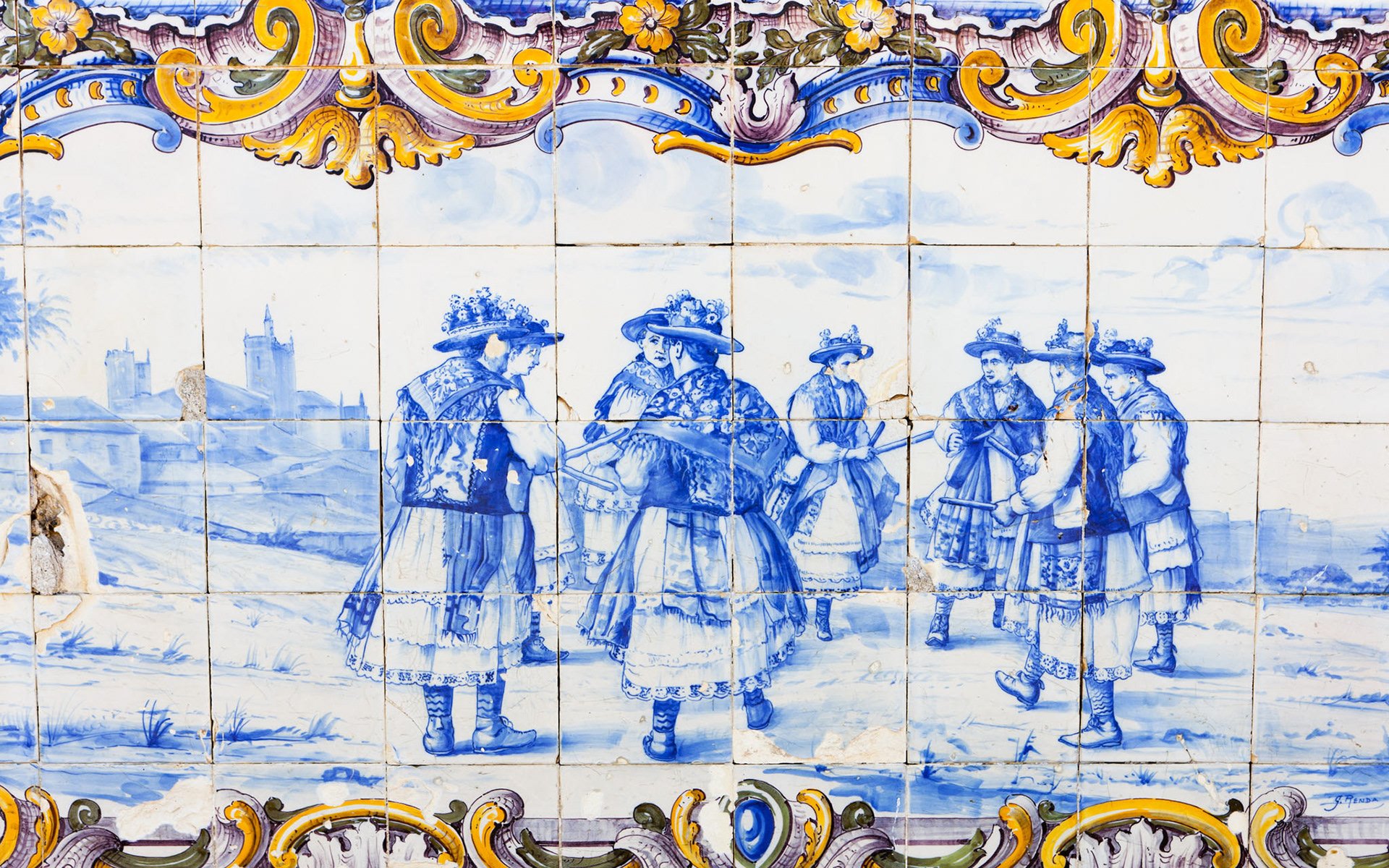
Azulejos at Pinhão: Telling the story of Oporto wine’s journey, not with words, but with ceramic brushstrokes along the Douro tracks.
The sources: 16th Avenue Tiled Steps, San Francisco
Across the equator from Selarón’s staircase lies a kindred spirit: the 16th Avenue Tiled Steps in San Francisco. Created by artists Aileen Barr and Colette Crutcher and brought to life by over 300 community volunteers, this landmark exemplifies how public art can rise from collective hands. Its 163 risers are covered in mosaic panels that flow from sea to sky, a vertical tapestry of dreams and roots. Like Selarón’s work, it turns a utilitarian passageway into a shared cultural offering. It also speaks to something deeply American: the mosaic as a metaphor for pluralism. Local, grassroots, beautiful, it’s another proof that storytelling can be built one tile at a time, by the people and for the people.
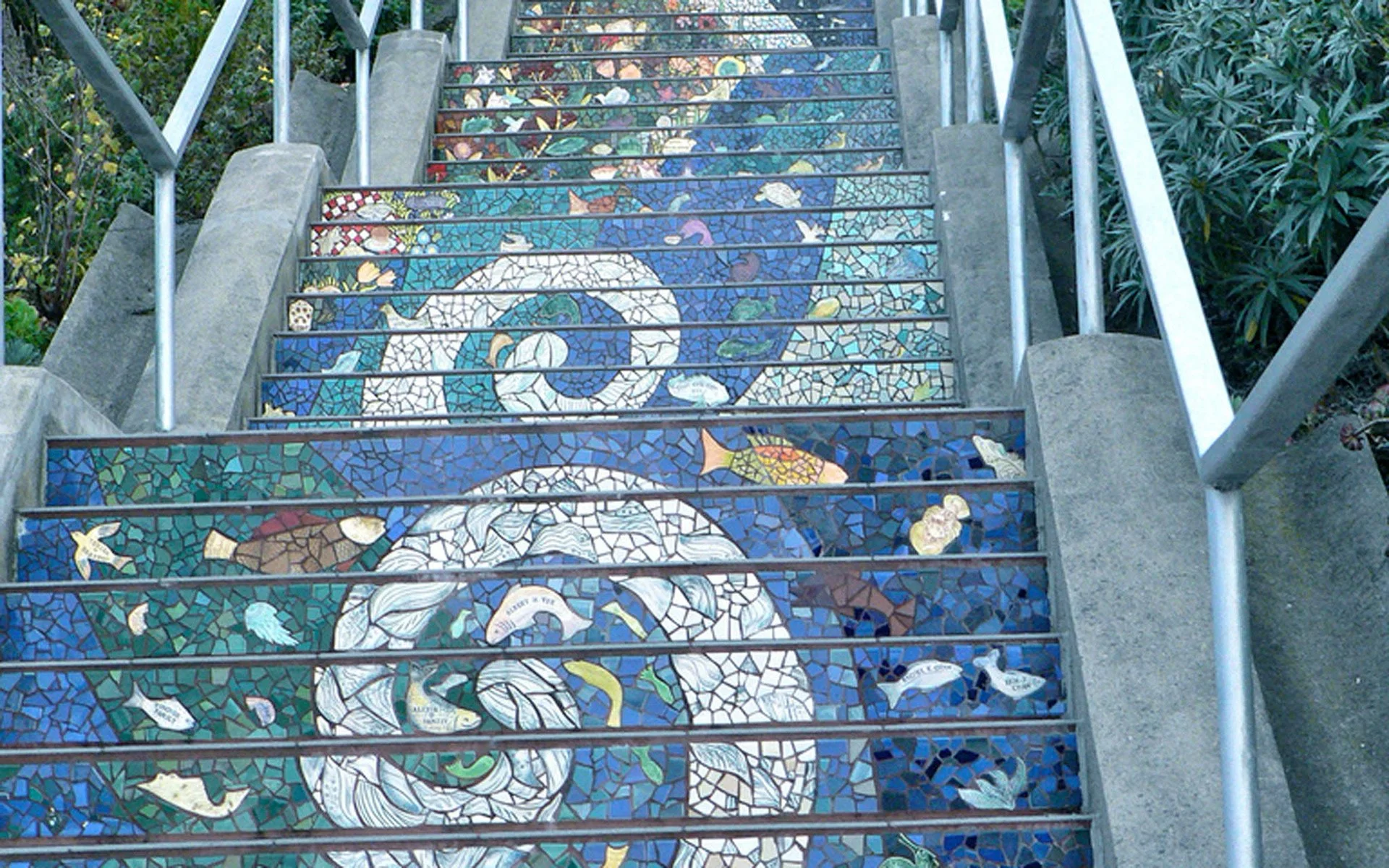
From ocean depths to mosaic heights, a section of San Francisco’s 16th Avenue Tiled Steps channels marine life and celestial spirals, echoing the unity of nature and community spirit.
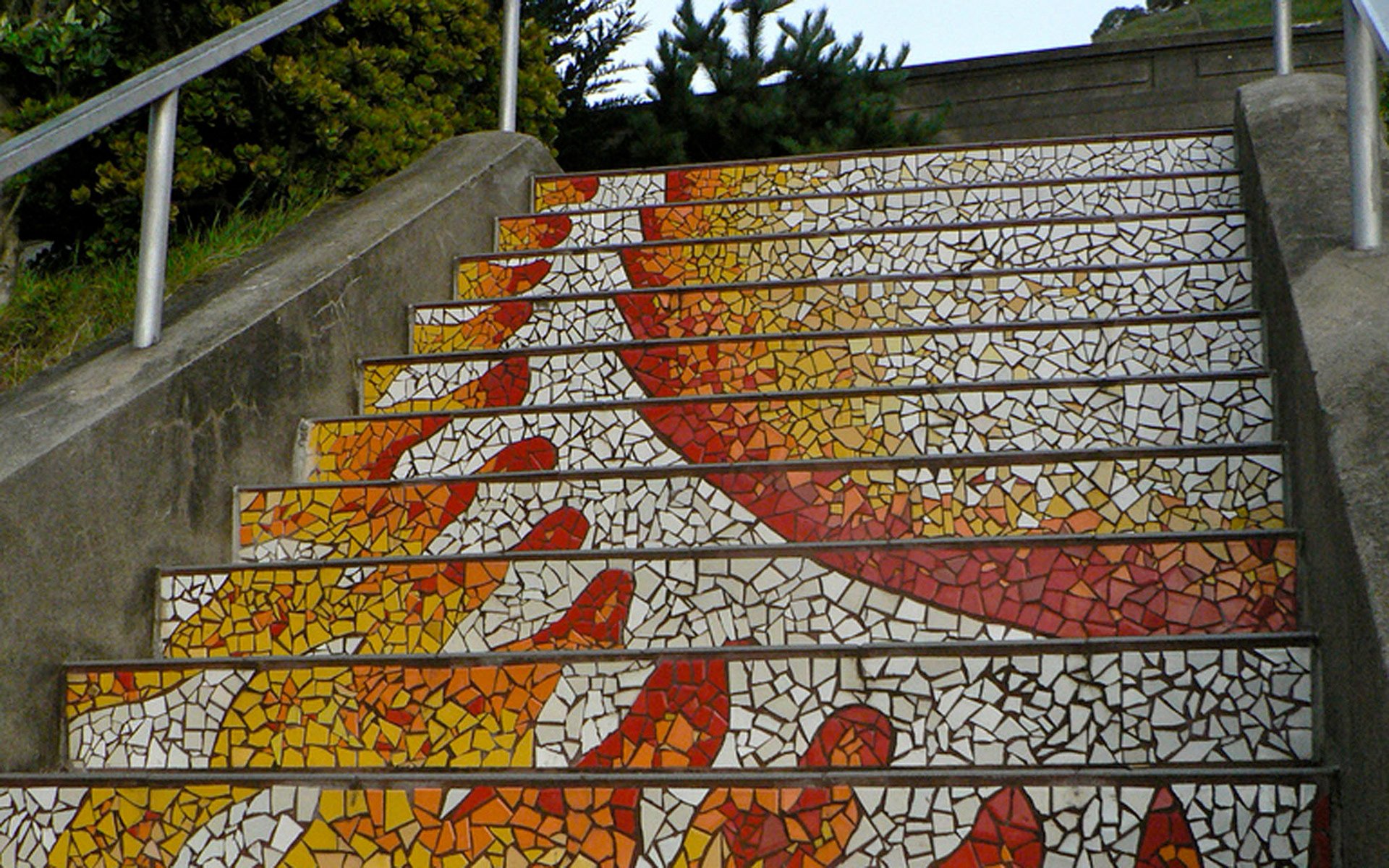
A radiant mosaic sun rises over San Francisco’s 16th Avenue, casting warmth across hand-placed tiles. A communal artwork built on light, color, and collective care.
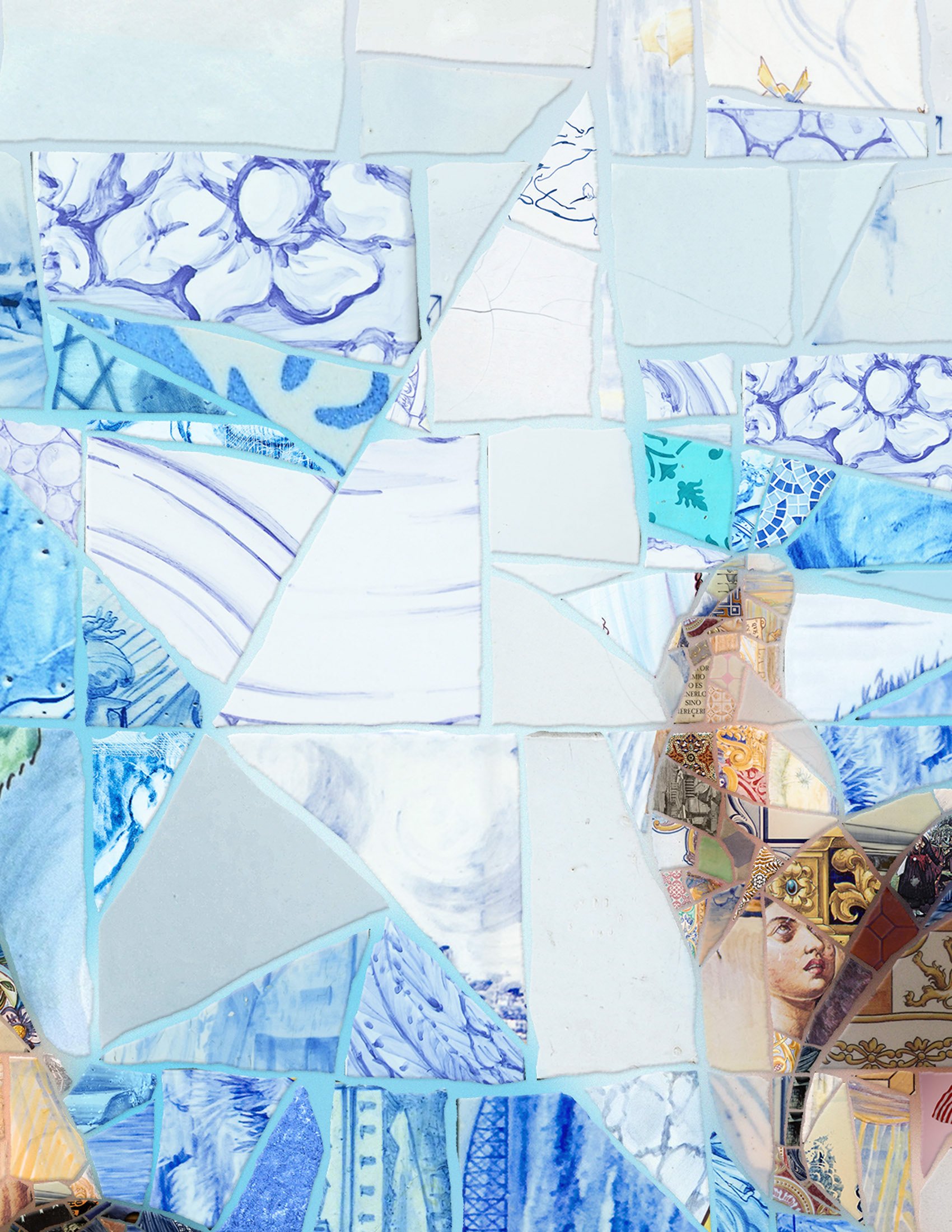
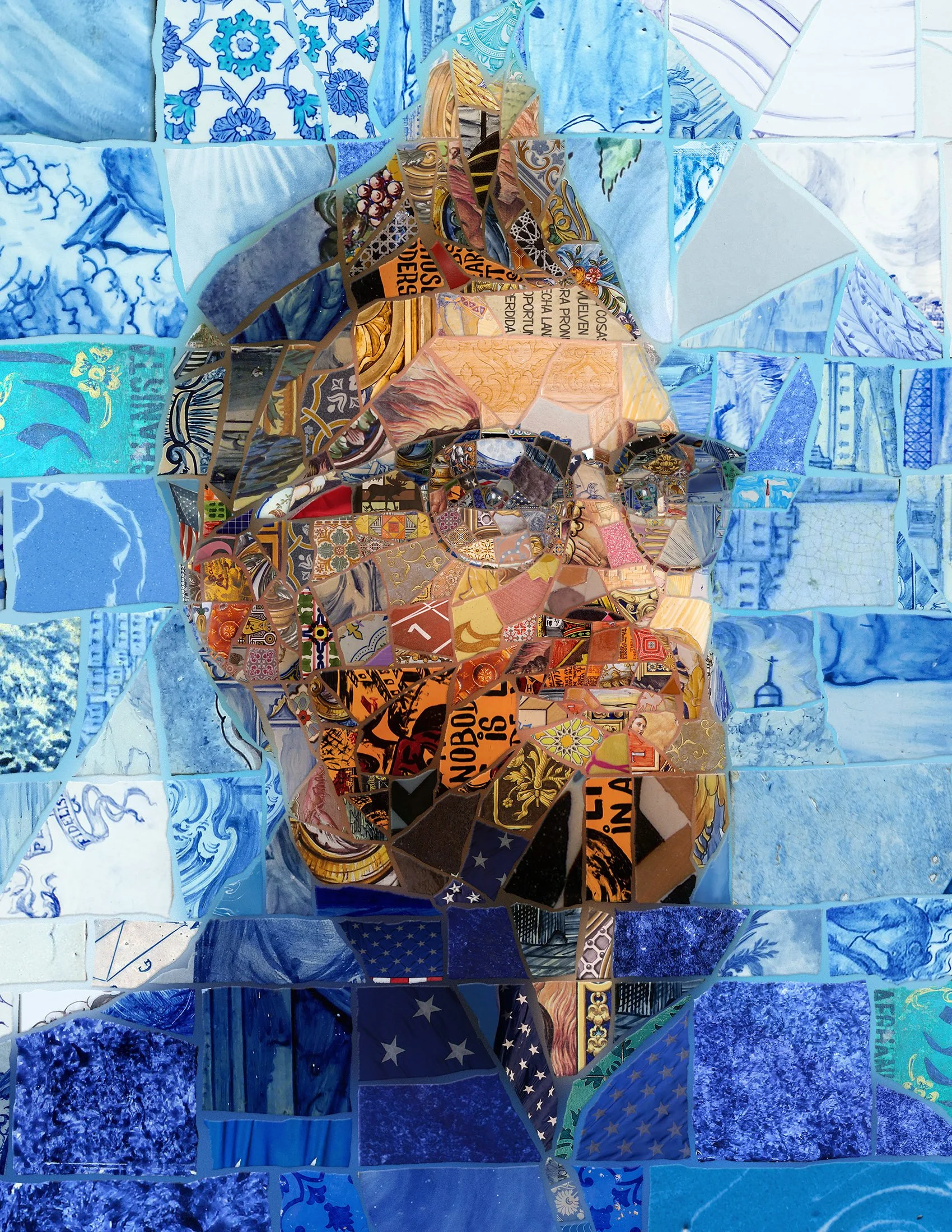
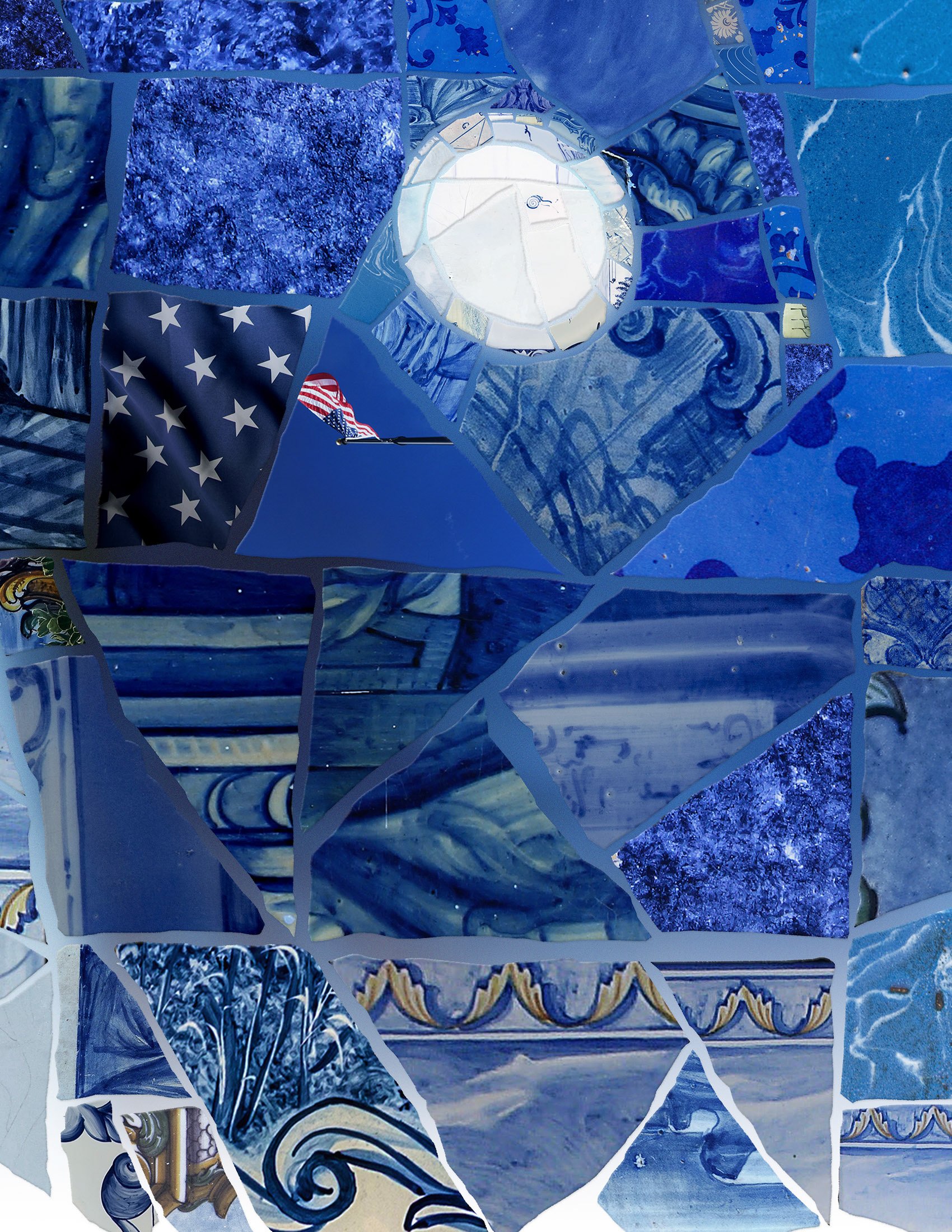
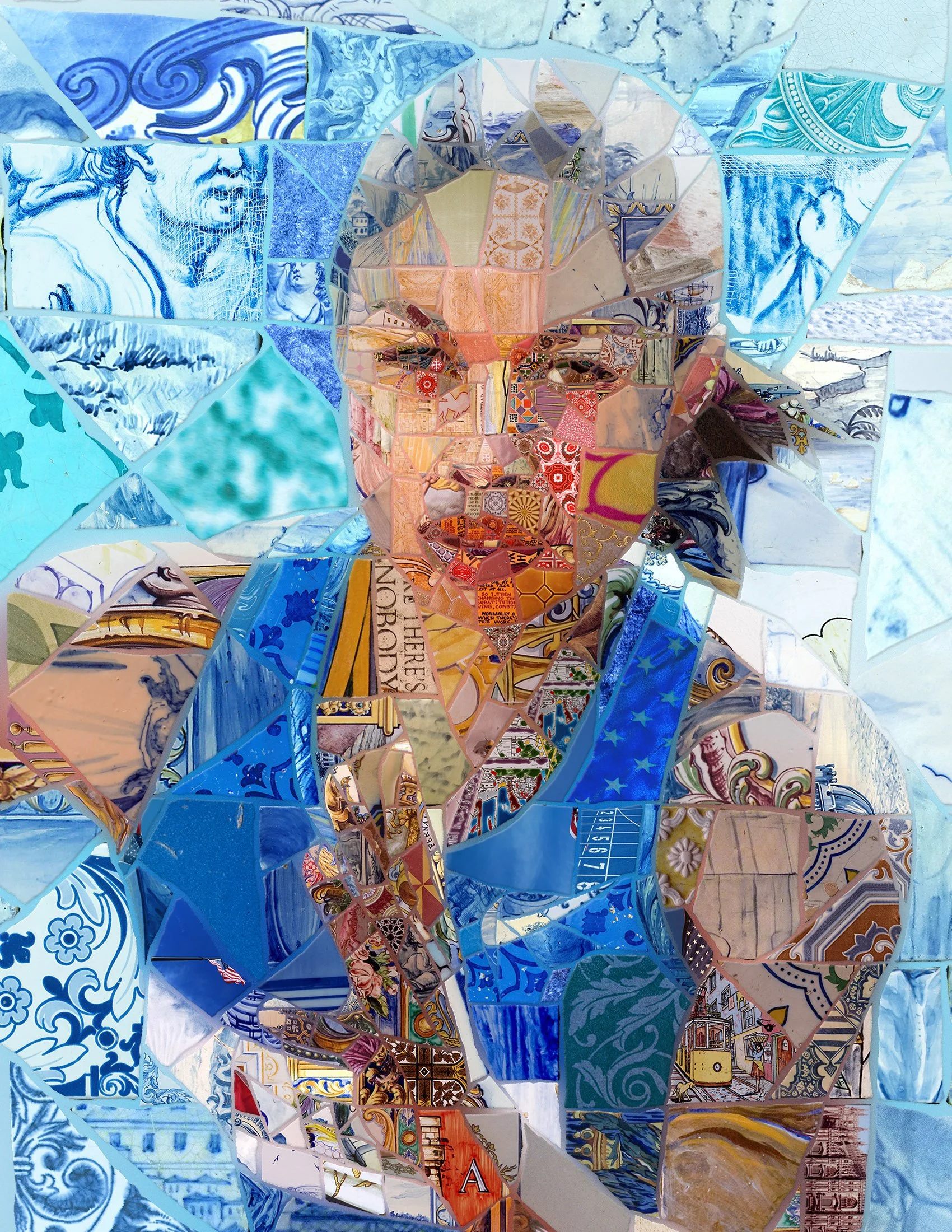
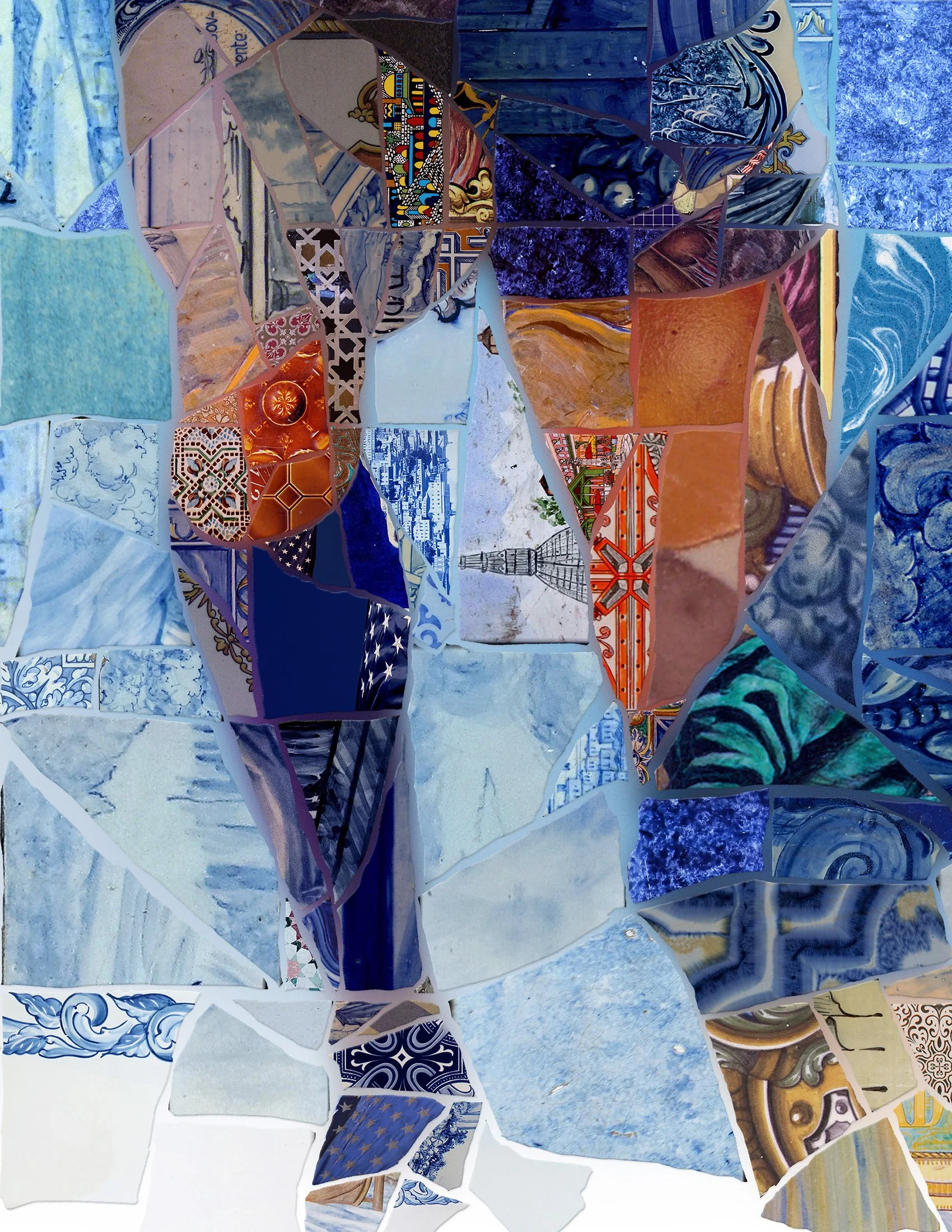
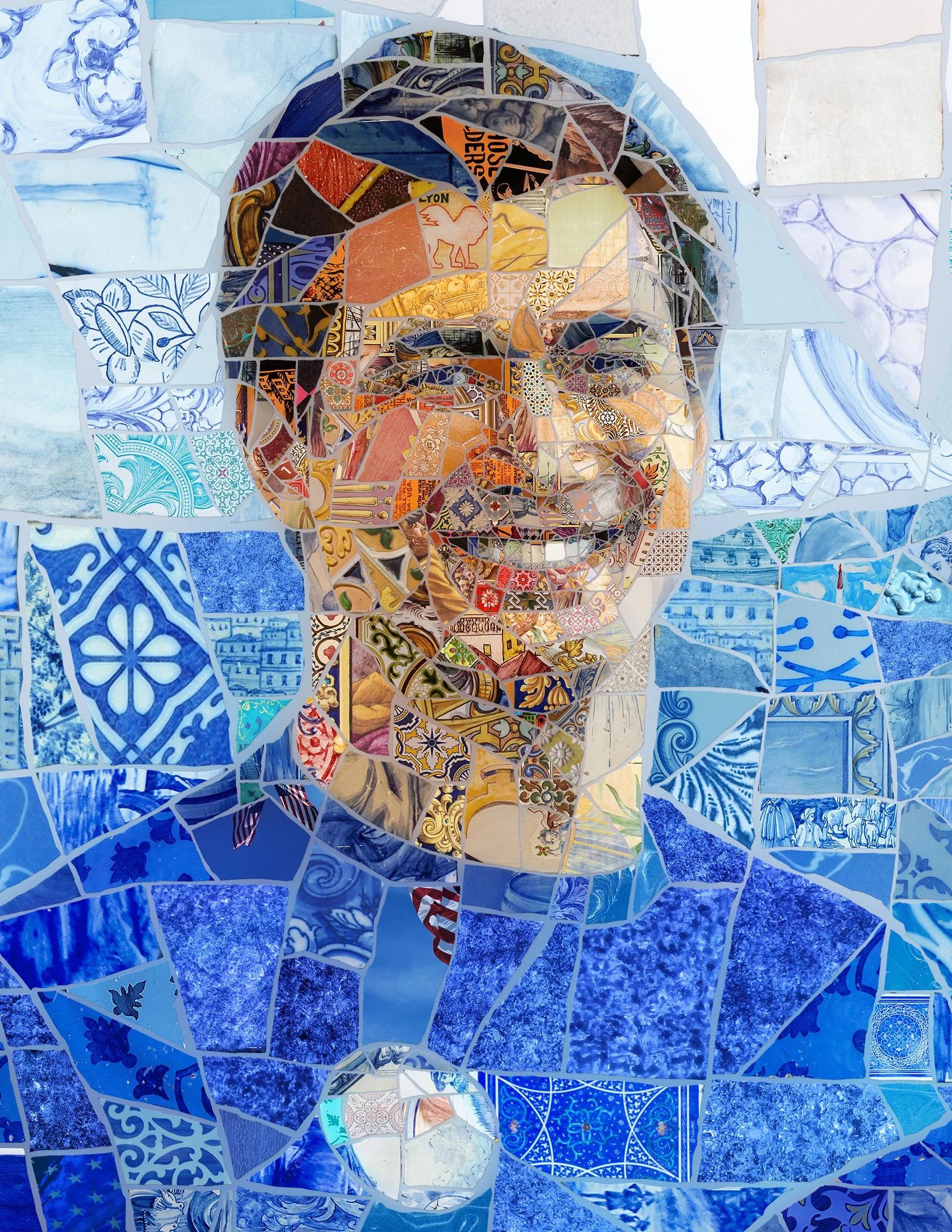
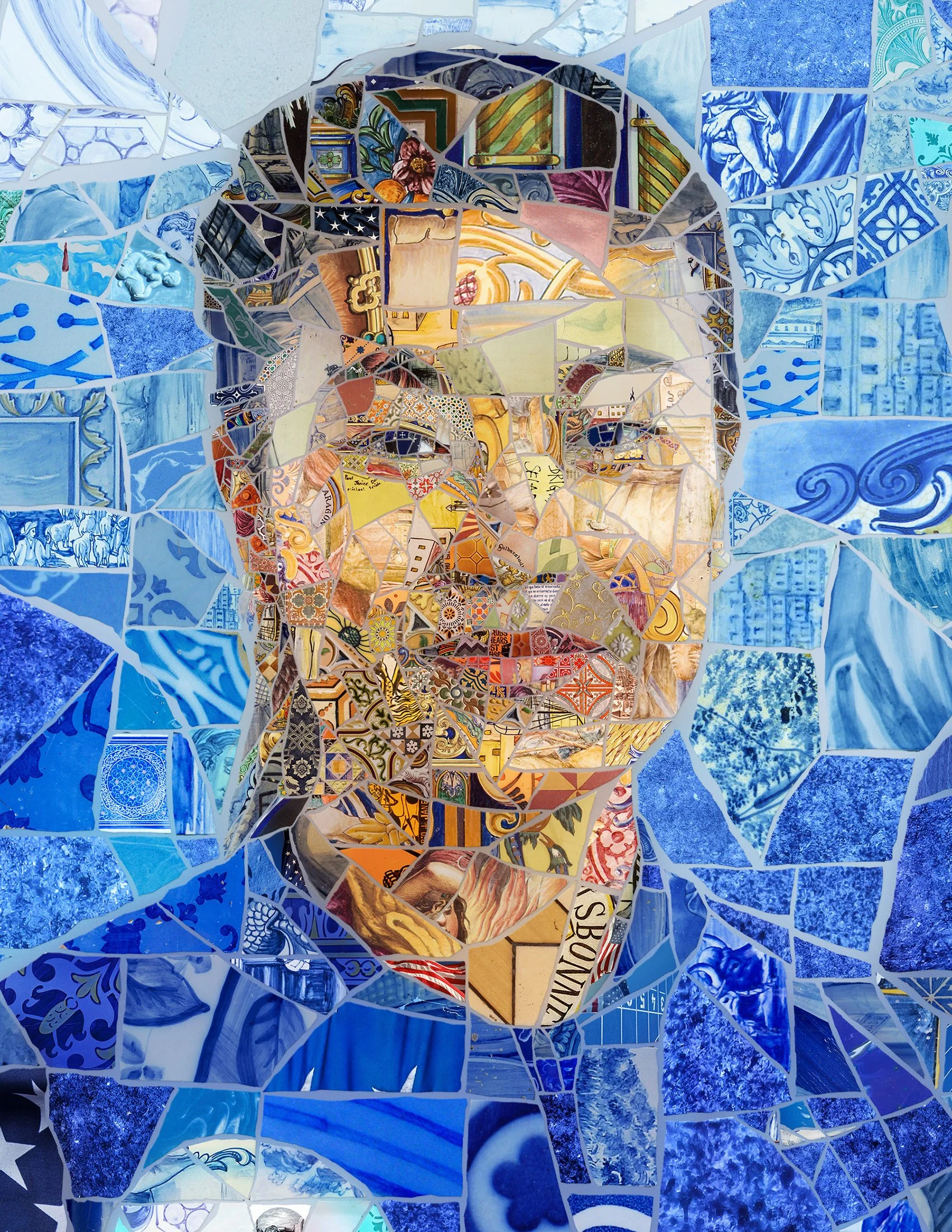
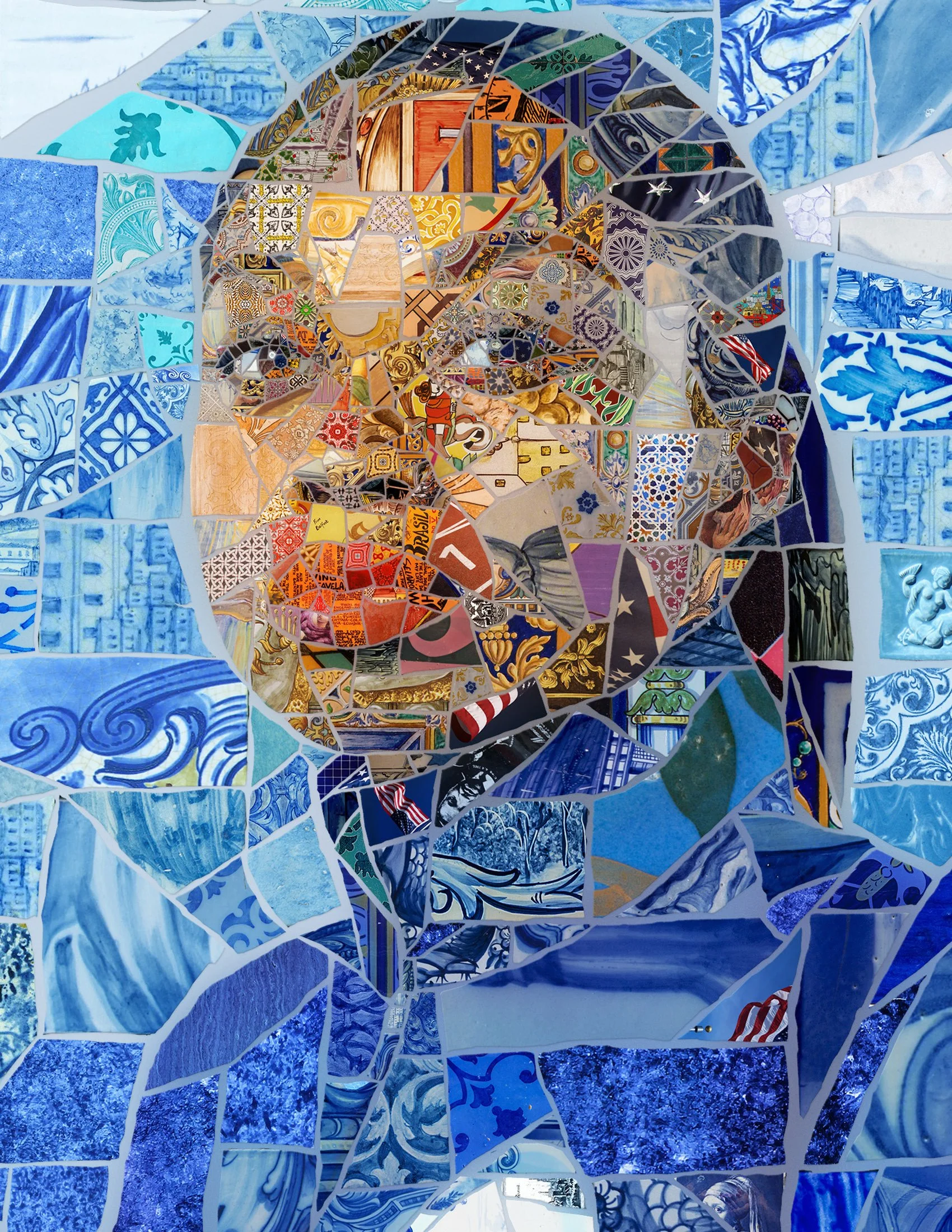
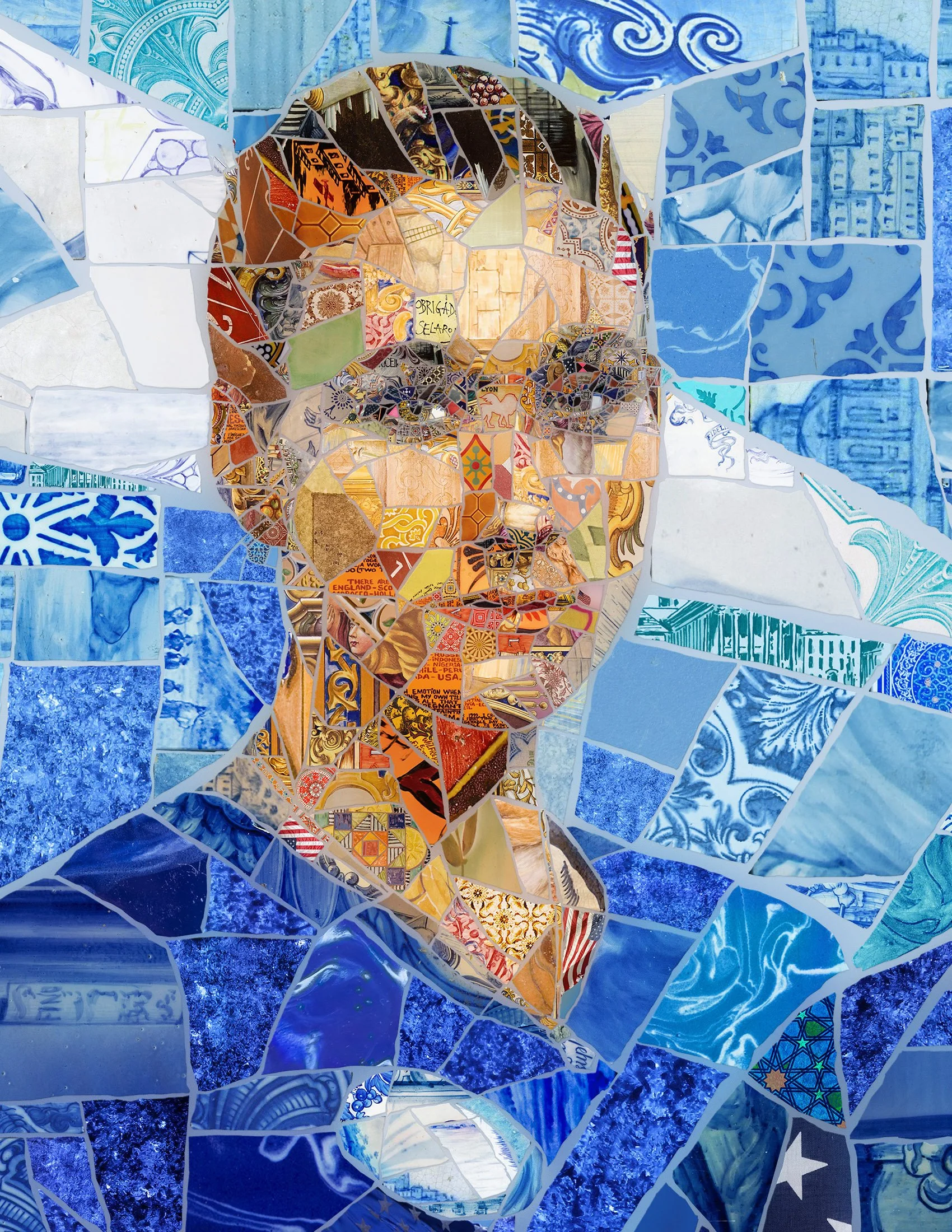
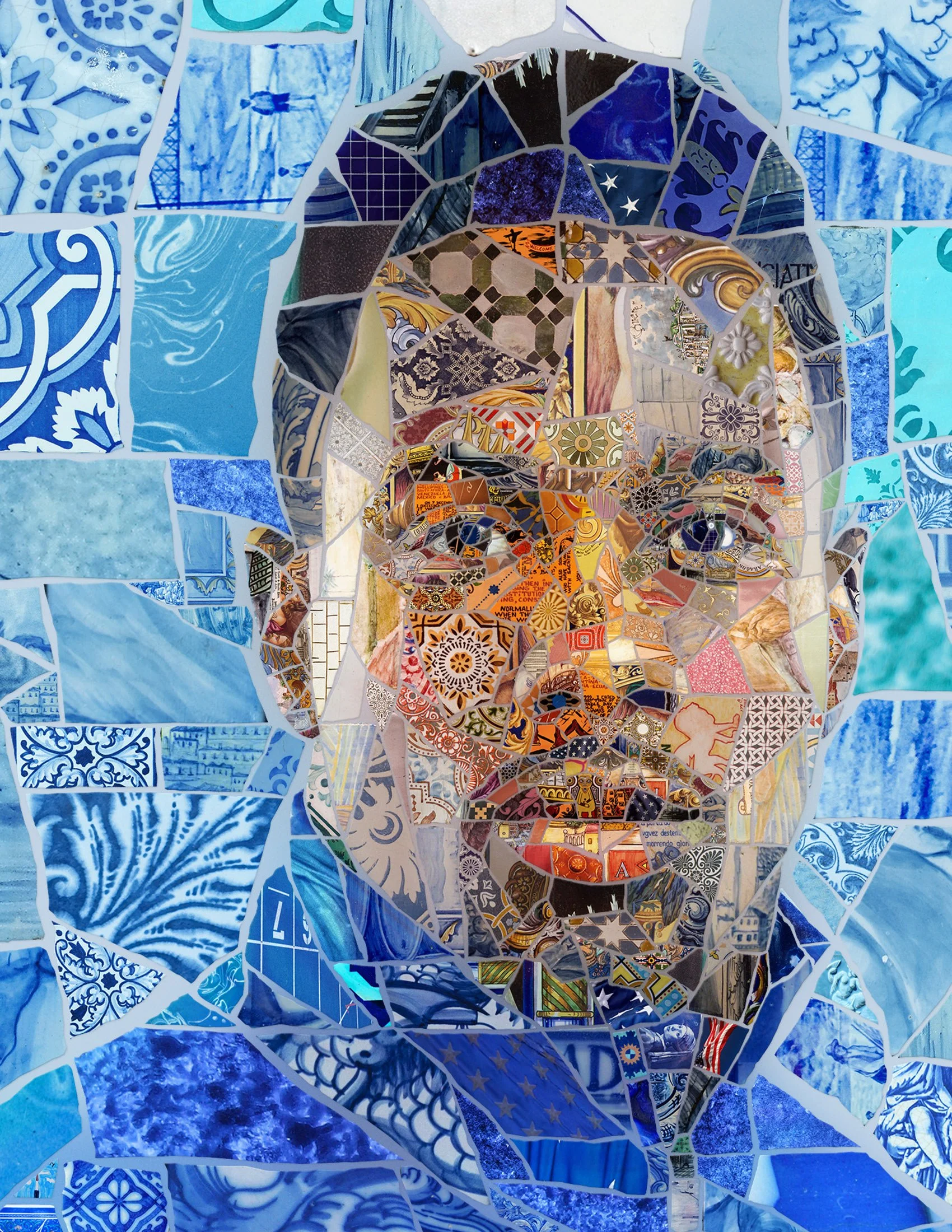
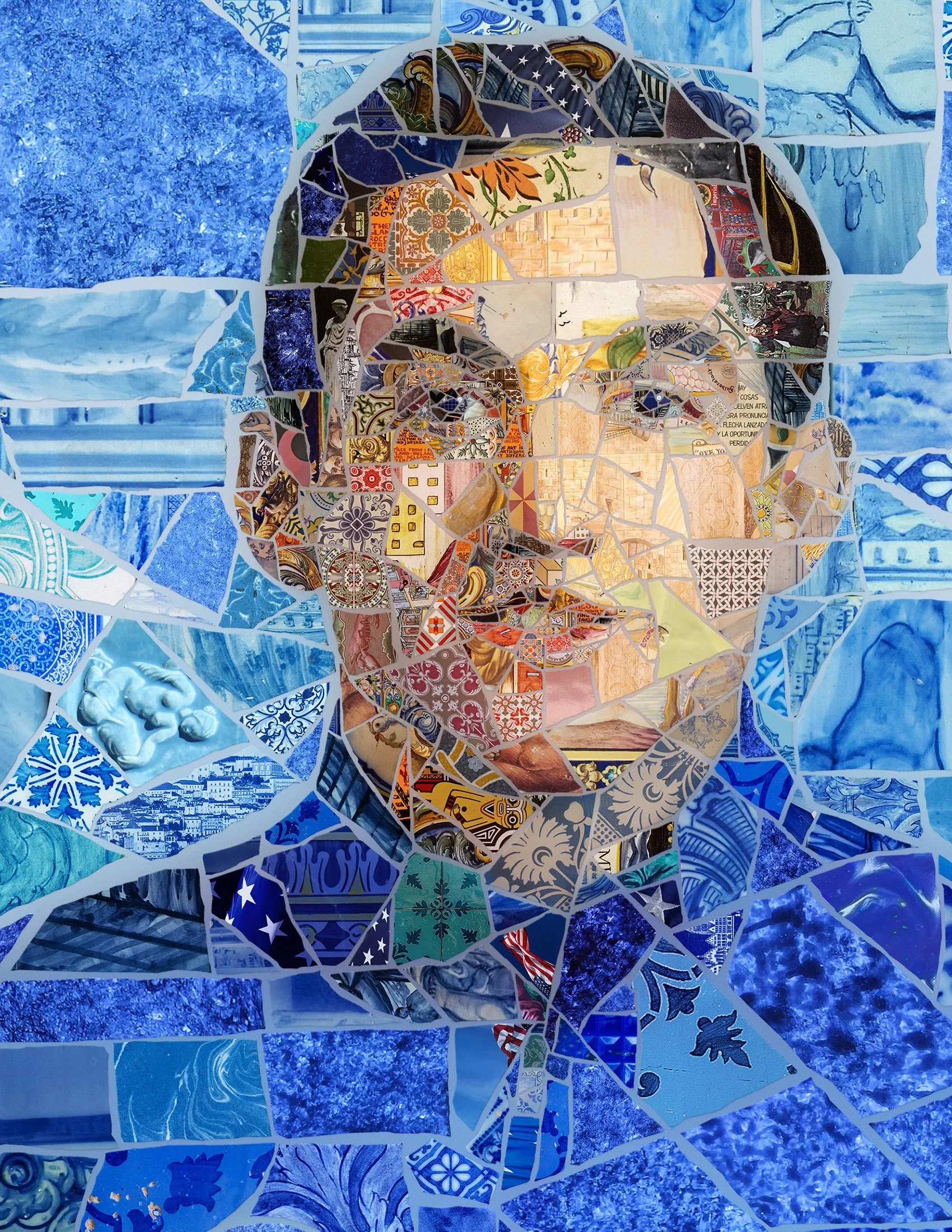
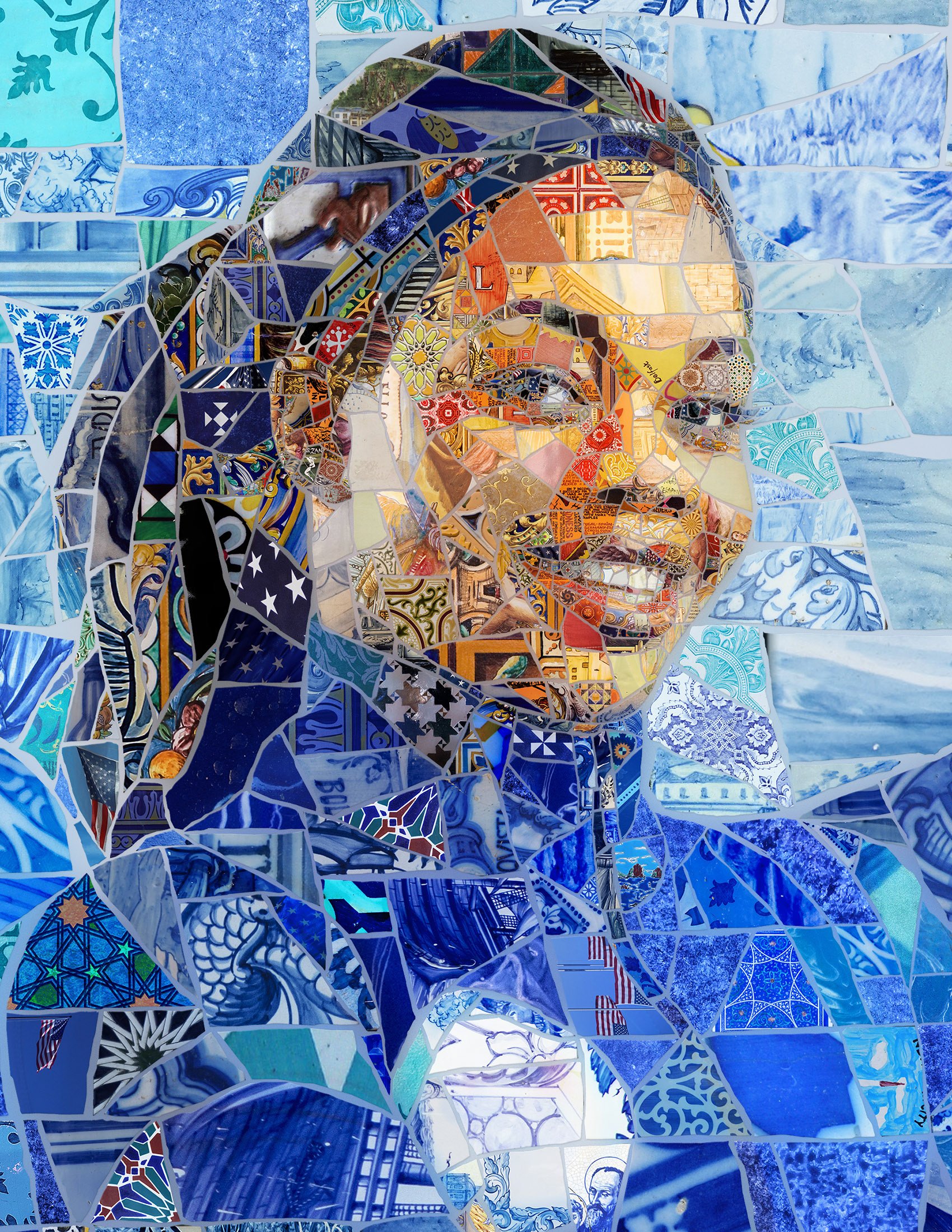
You can see some details of the mosaic murals:
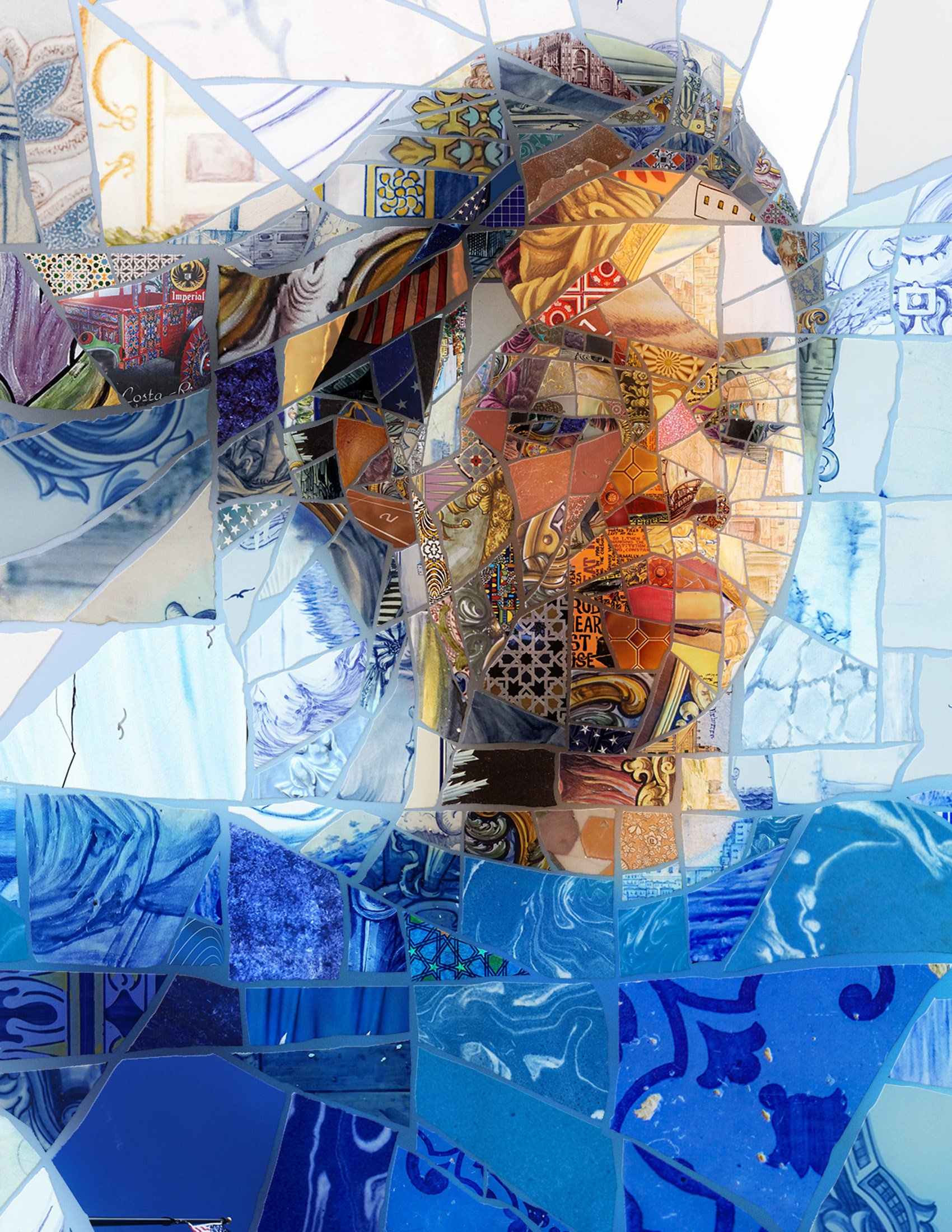
My message is to never quit, never give up. When you have a little trouble here and there, just keep fighting. In the end, it will pay off.
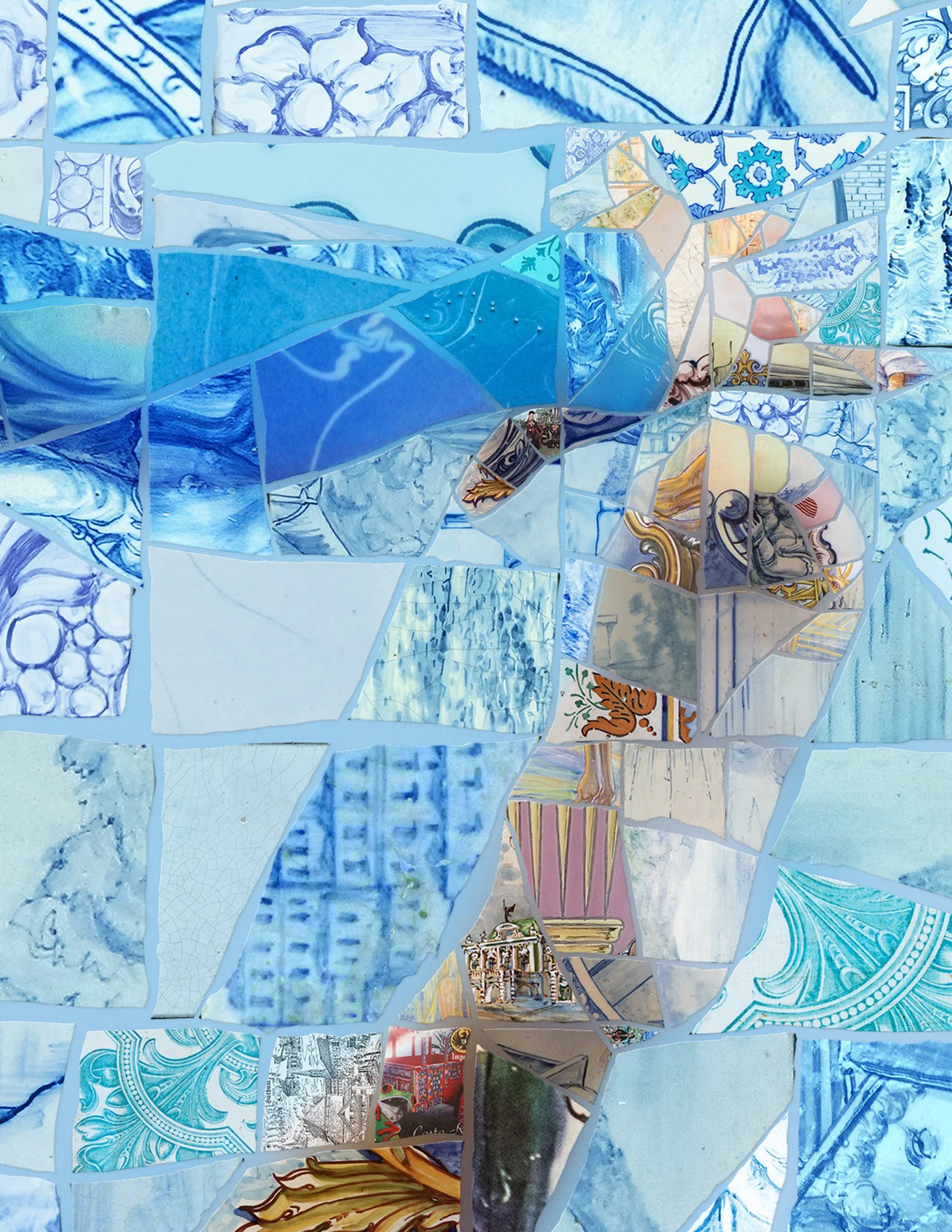
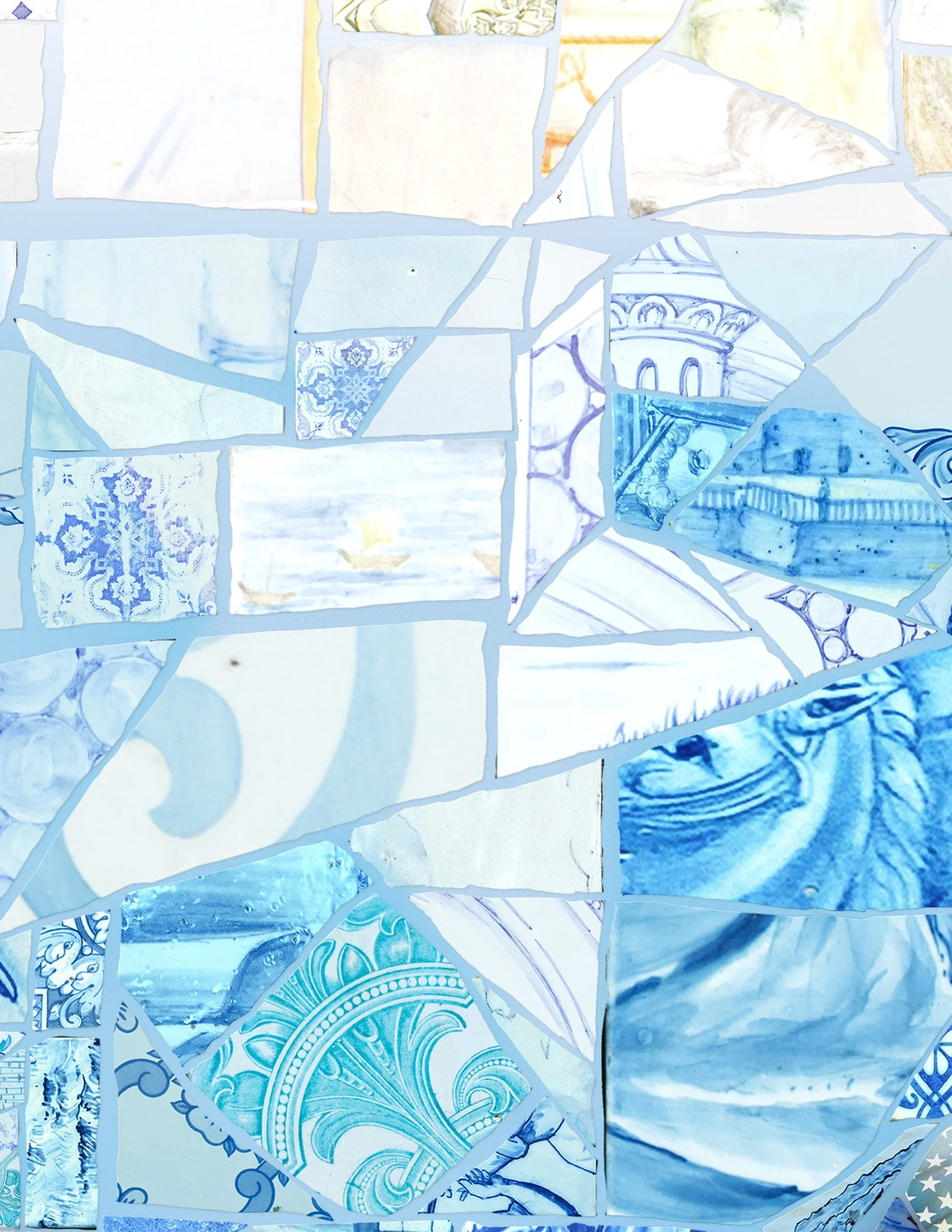
“It’s not who’s put up the fastest time in the world that year, or who’s put up the fastest time in the previous four years, but who can get their hand on the wall first today.”
— Nathan Adrian
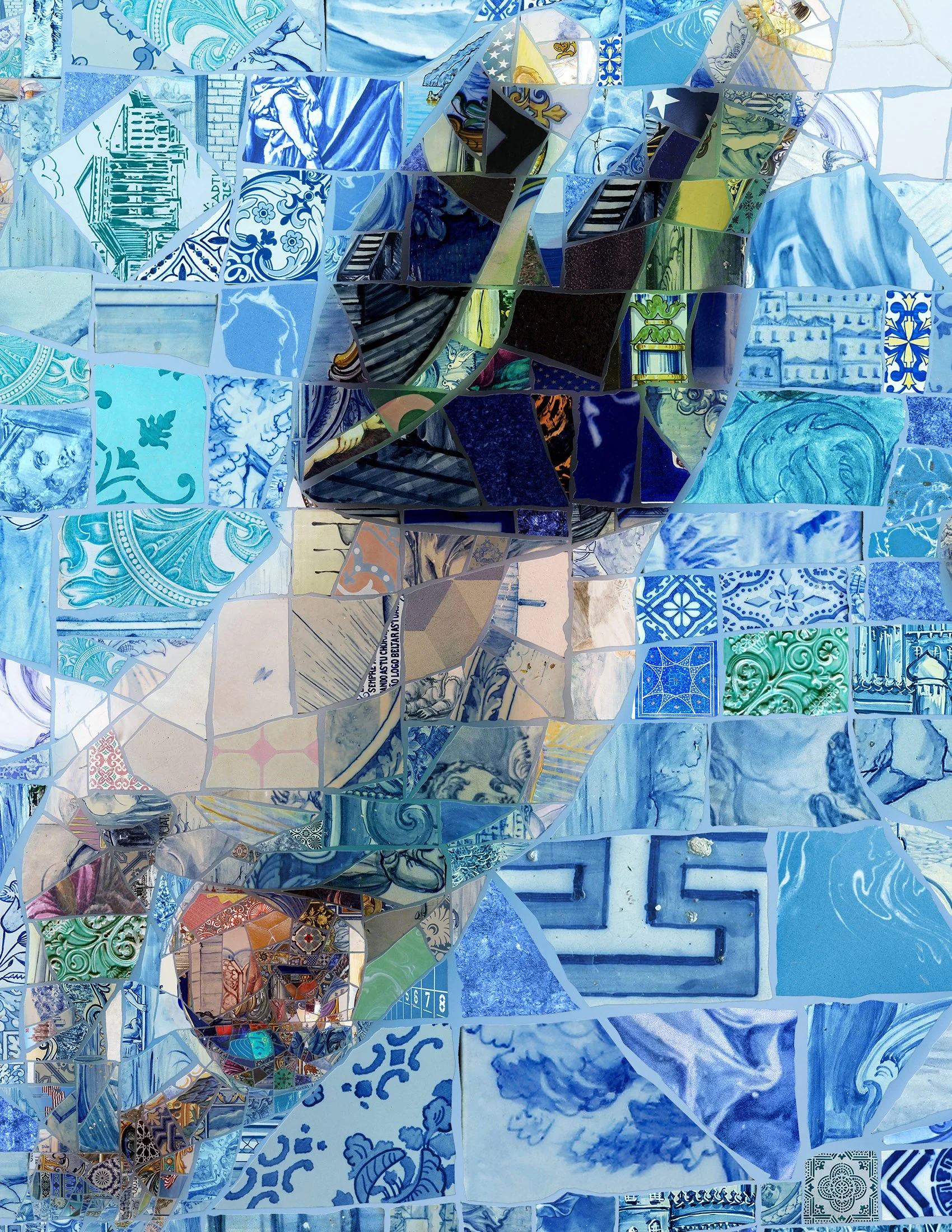
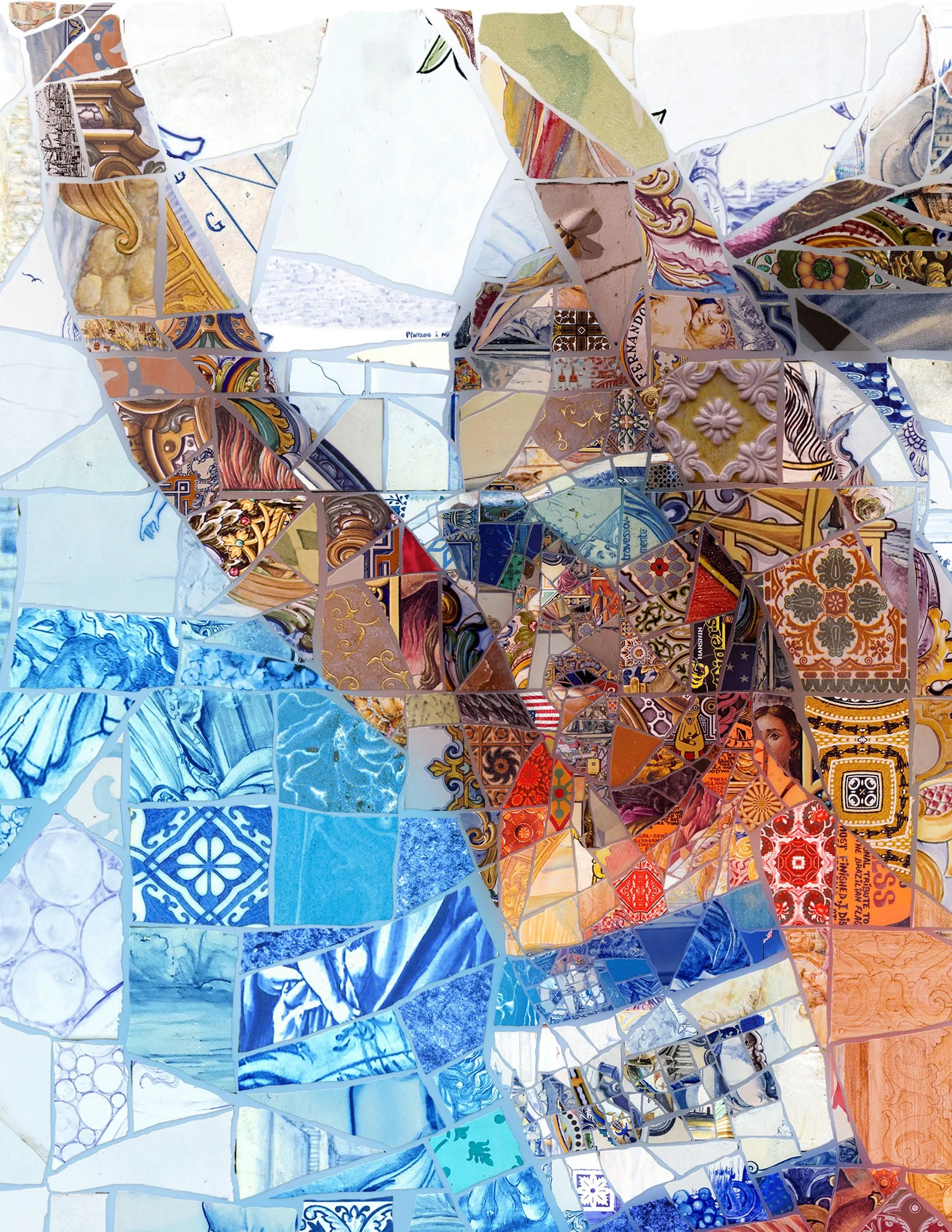
Obstacles and setbacks are things we all face, no matter what path we’re on. One of the most profound things I was ever told was from a mentor of mine, and she said, ‘You never know if your story, your struggles, your hardships, the pain, the trauma, the loss, if those things might be somebody else’s survival guide.
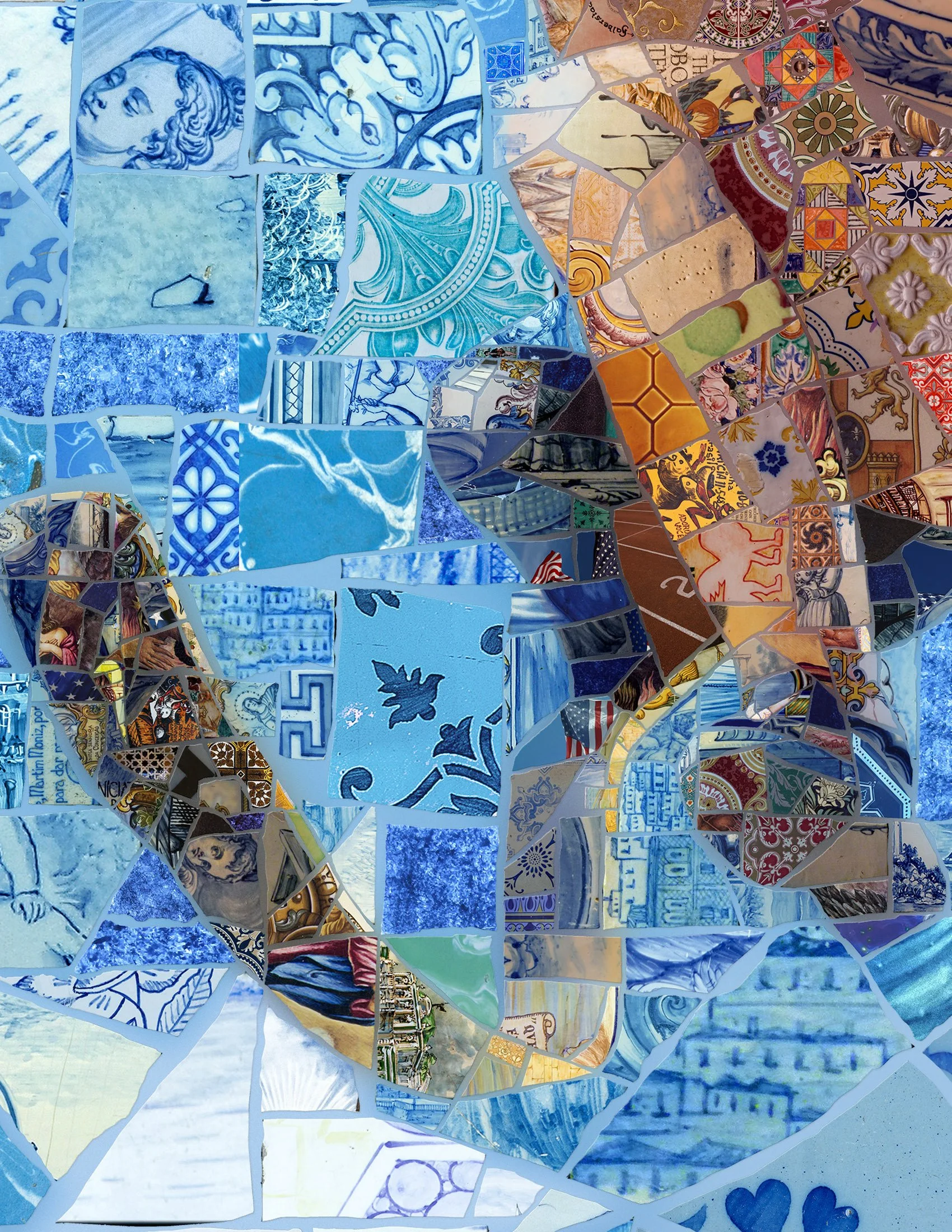
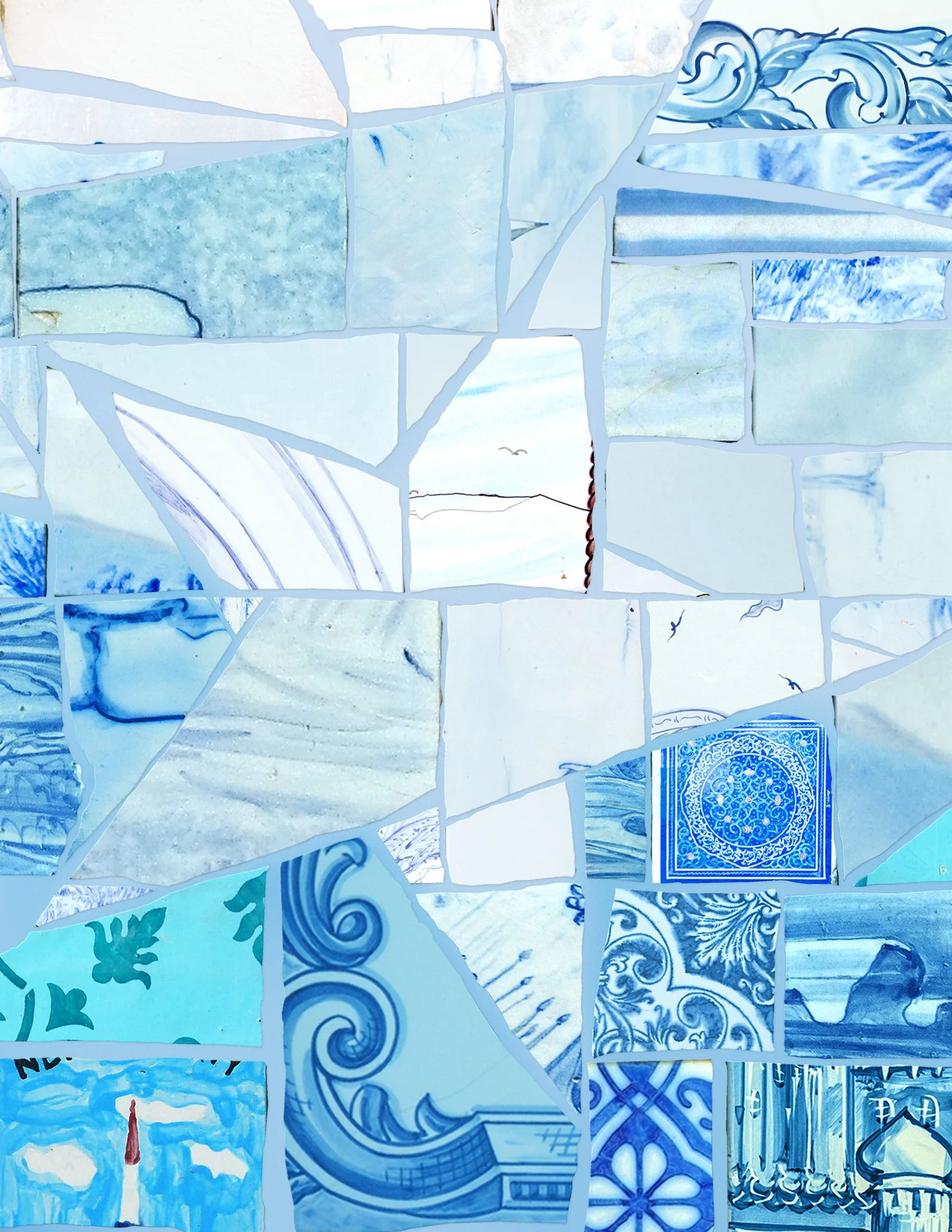
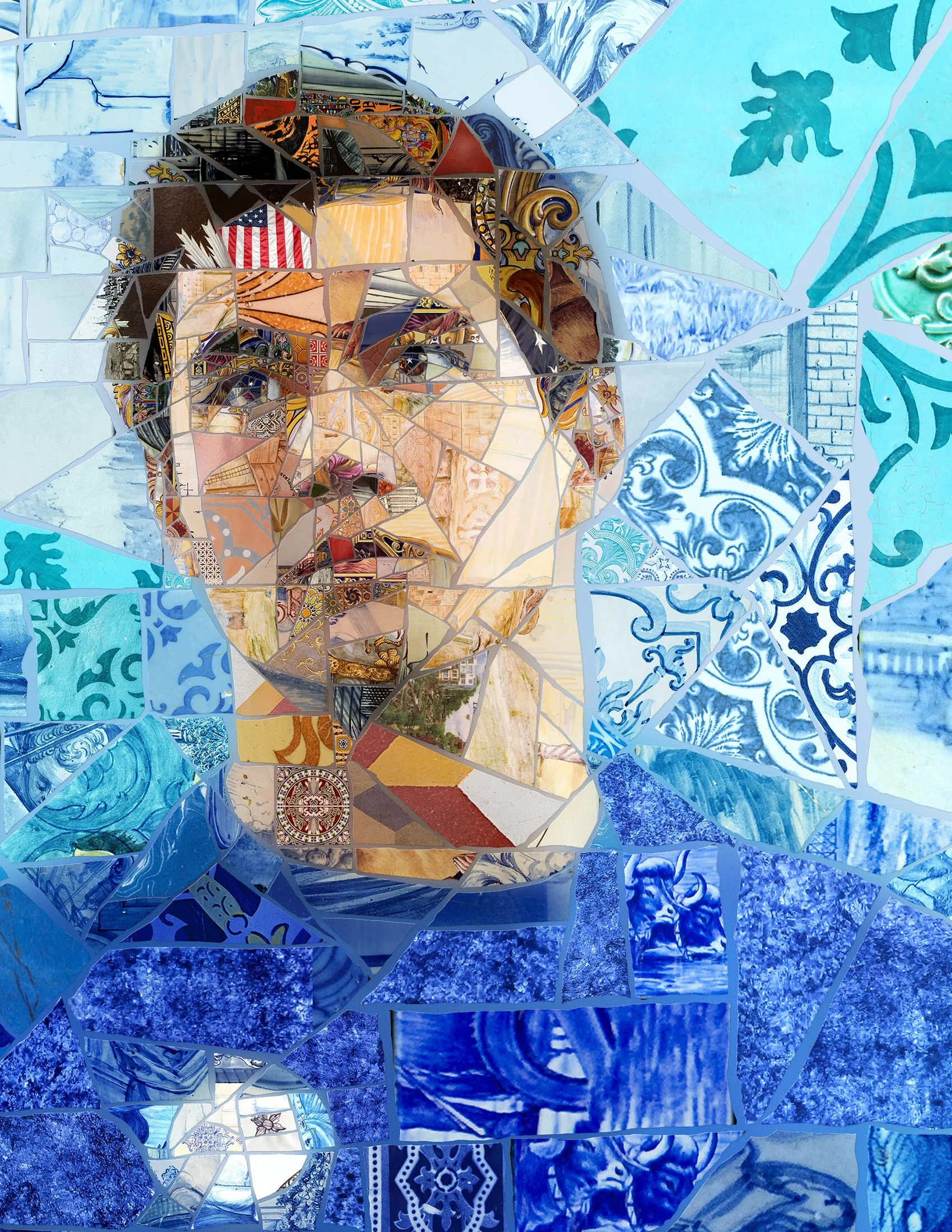
Focus on progress, not perfection. Every small step forward is a victory.
Dream big. You don’t know what is possible for you until you try.
My speed is a gift from God, and I run for His glory. Whatever I do, it all comes from Him.
— Allyson Felix
There’s no shame in a bronze medal. I used to think that, and I’m so ashamed of thinking that because there’s so much joy and hard work and love in this.
There is no way I should be where I am. There was no chance. There was no light. But God made the impossible possible. If you believe that, anything can happen.
I love to lead by example. My mission is to show people the real disability in life is a negative attitude.
Hard work outweighs talent every day, but when you combine the two, it’s unstoppable.
The most important thing in the Olympic Games is not winning but taking part; the essential thing in life is not conquering but fighting well.
Focus, discipline, hard work, goal setting, and, of course, the thrill of finally achieving your goals.
These are all lessons in life.
The Olympics are a wonderful metaphor for world cooperation, the kind of international competition that’s wholesome and healthy, an interplay between countries that represents the best in all of us.
Αρχαίο Πνεύμα αθάνατο, αγνέ πατέρα του ωραίου, του μεγάλου και του αληθινού,
Κατέβα, φανερώσου κι άστραψε εδώ πέρα στη δόξα της δικής σου γης και τ' ουρανού.
O Ancient immortal Spirit, pure father of beauty, of greatness and of truth,
Descend, reveal yourself and flash like lightning here, within the glory of your own earth and sky.
— Kostis Palamas
I hope this work resonated with you. It represents not just countless hours of effort, research, and creative exploration, but a deep respect for the cultures, stories, and people it draws from.
My heartfelt thanks to the incredible team at Publicis One Team, Bob, Veronica, Alice, Elaine, and so many others, for their trust, collaboration, and vision.
Gratitude also goes to Citi, Nike, and the esteemed sponsors of Team USA, whose support made this creative journey possible.
And a special, timeless thank-you to the global lineage of mosaic artists, Brazilian, Portuguese, Chilean, Spanish, American, Greek, Roman, Ottoman, Persian, and beyond, who shaped this medium over centuries. Their talent, wisdom, and spirit are the foundation I was privileged to build upon.
To be part of that continuum, to carry the torch, tile by tile, is an honor beyond words.
Enjoy Rio. Enjoy the Games. Celebrate the beauty of coming together.
— Charis