Dancing with circles
Banco Bradesco Prime: Visual Counterpoint for a Cultural Campaign
What happens when a high-end bank decides to speak the language of art, not through sponsorship clichés or corporate platitudes, but through richly textured, algorithmically composed visual storytelling?
In 2008, Bradesco Prime, the premium banking division of Banco Bradesco, partnered with Neogama BBH to support a series of cultural events in Brazil. Chief among them: the iconic Festival de Inverno de Campos do Jordão, the largest classical music festival in Latin America.
My role? To build a visual identity that wouldn’t just decorate the campaign, but perform alongside it. These weren’t illustrations to be glanced at. They were visual orchestrations. Mosaics composed like sonatas. Portraits built from rhythm and resolution. At the heart of it all was a tool unlike any other, and a creative journey that merged digital experimentation with cultural reverence.
Prelude in Pixels: The Experimentation Phase
This project didn’t begin with a brief. It began with a Flickr album.
Neogama BBH’s creative team had been following my digital mosaic experiments online, especially the posts from my “Mosaics + Synthetix Passion” set, a running visual journal of my explorations in photomosaics and synthetic imagery dating back to the late 1990s. Among the grids and patterns, one series caught their eye: my experiments with concentric circles tesserae, contemporary versions of arabesque, kaleidoscopic symmetries, and other mosaics I have called New Digital Romanticism.
These were works born of equal parts mathematical curiosity, cyberculture ideology, and nostalgic affection for the plastic, pop geometry of the 1970s. They carried the DNA of pioneers like Ken Knowlton and Leon Harmon, merged with the optical rigor of Victor Vasarely and the intimate systems of Chuck Close. Add to that the poetic order of Carlo Nangeroni, a former beloved professor of mine, and the result was something technical, tactile, and just a little bit psychedelic.
Neogama asked for two proof-of-concept pieces: a ballerina and a guitarist. Two figures, each tied to the classical spirit of the festival. The work spoke for itself. Not long after, the full project was greenlit, and what followed was a rich, two-year collaboration that I remember with great fondness, not just for the creative freedom, but for the mutual trust that powered every visual decision.
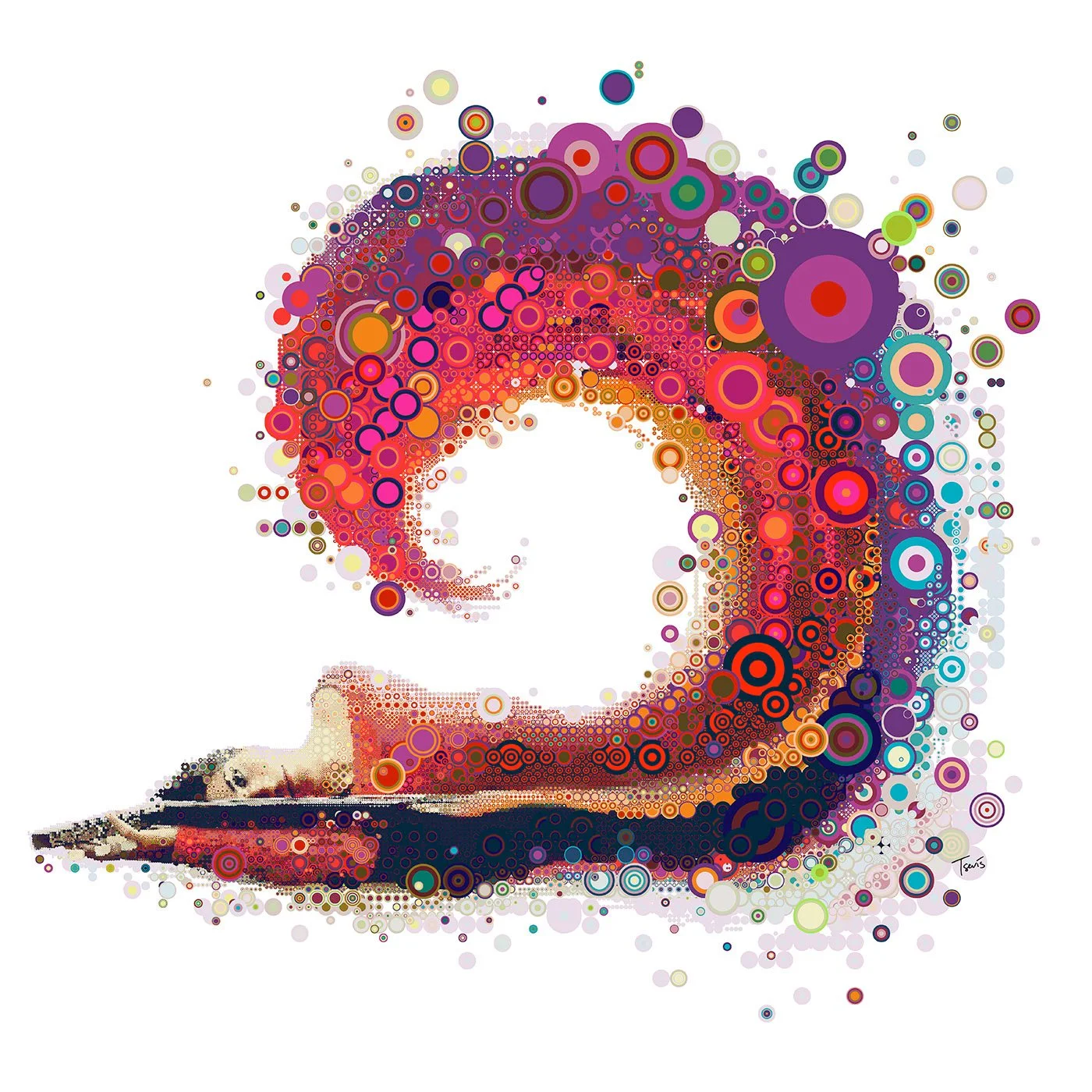
Musical wave (illustration study): Study for an illustration for a Brazilian music festival.
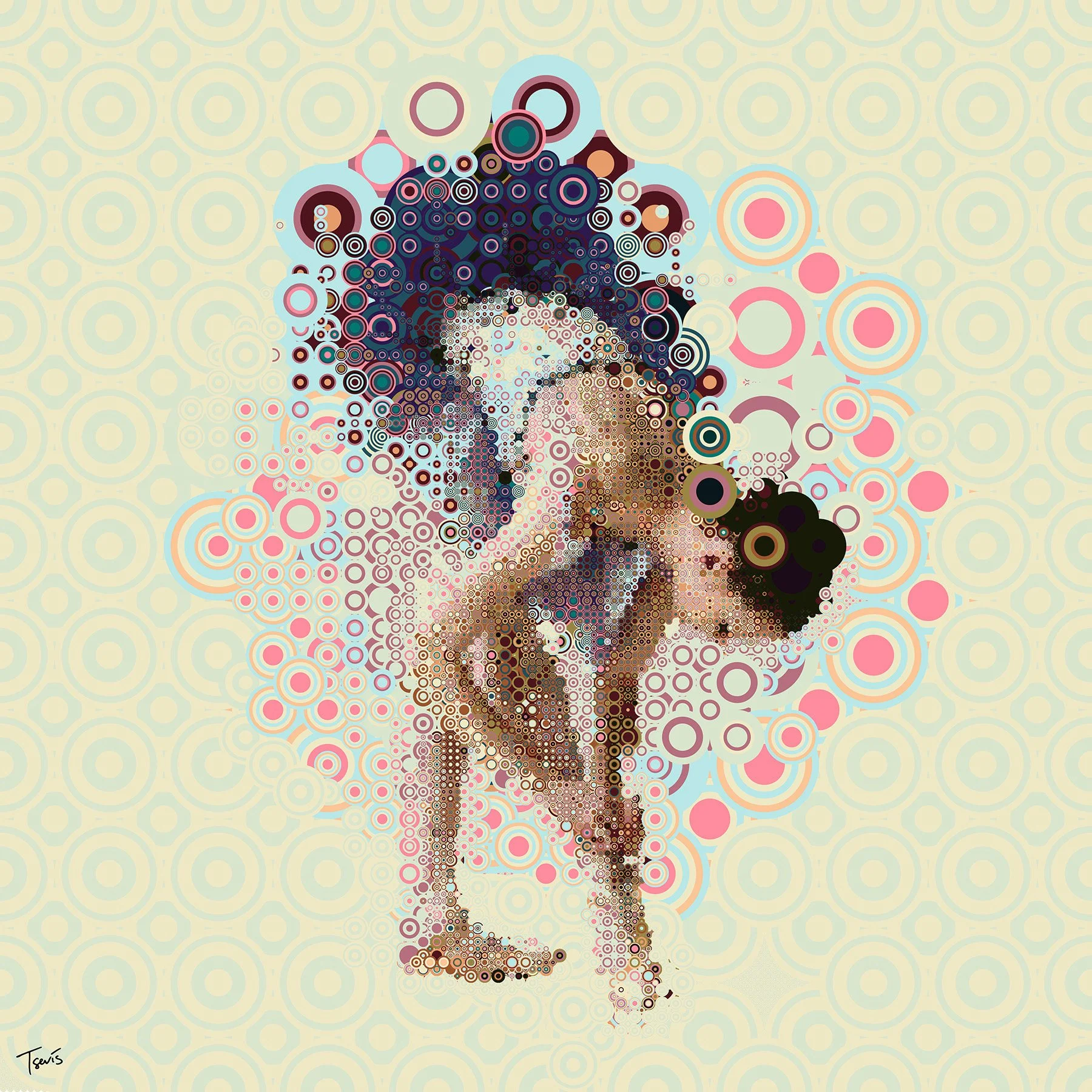
Dancing with circles: La Ballerina (Study for an illustration for a Brazilian music festival).
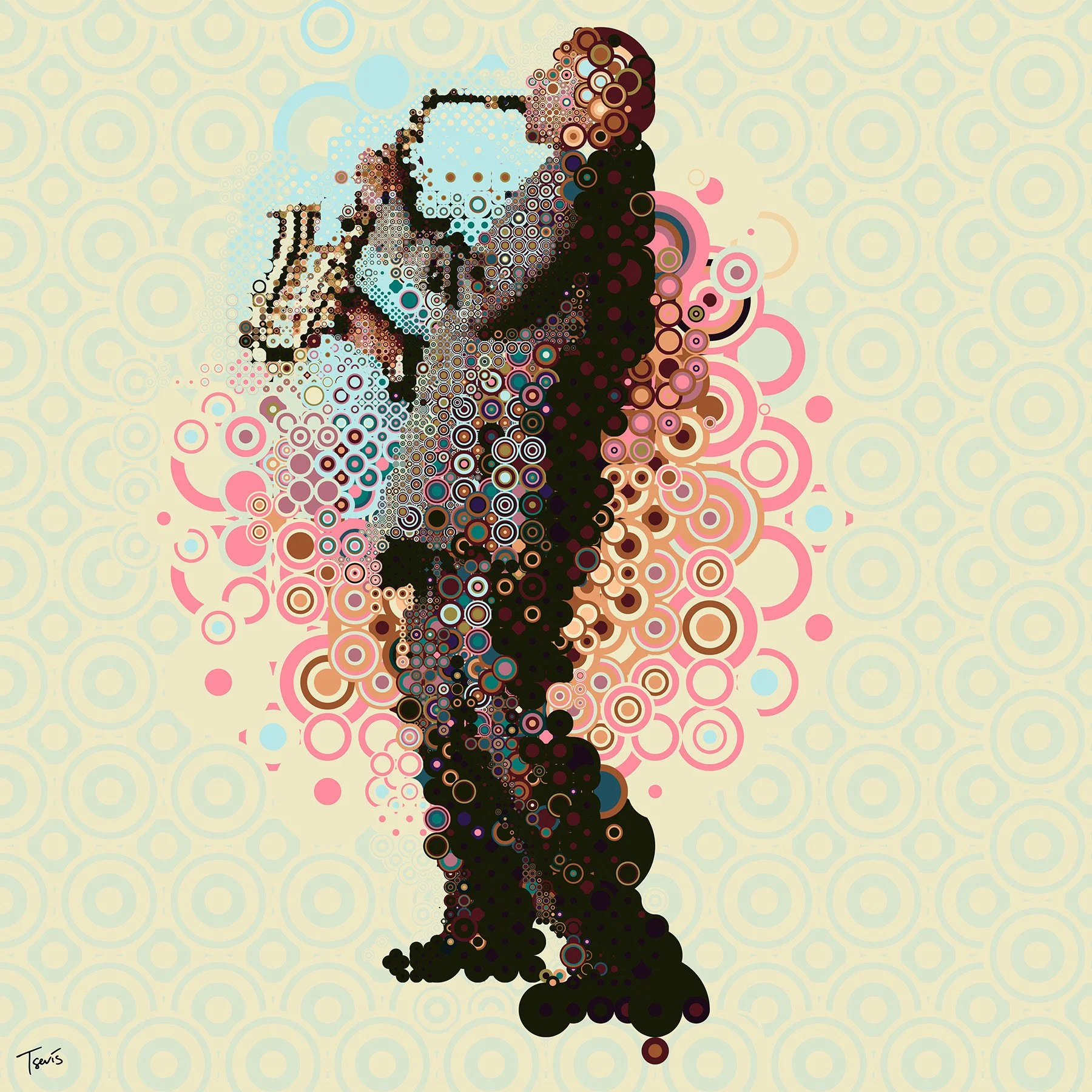
Dancing with circles: The Saxophone player (Study for an illustration for a Brazilian music festival).
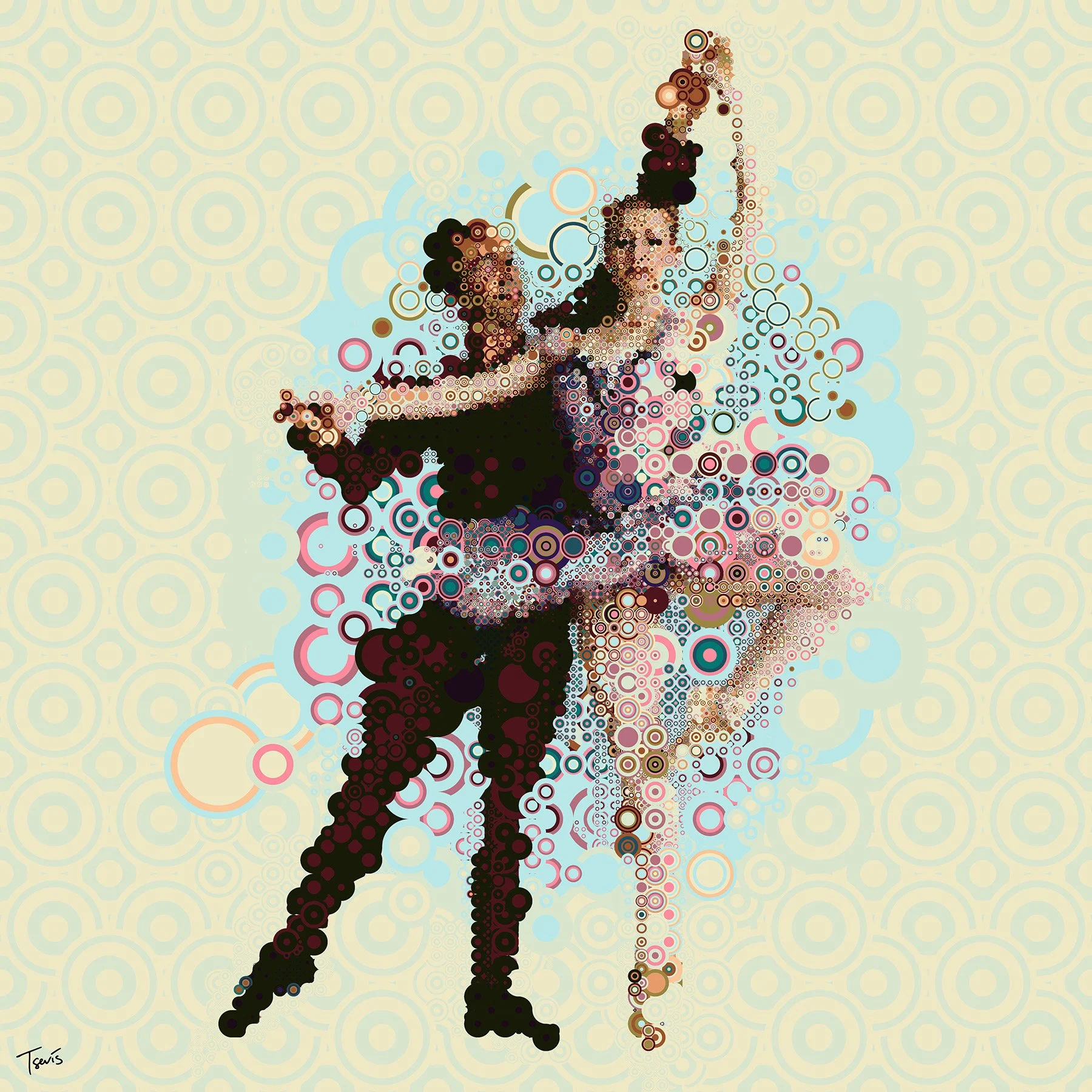
Dancing with circles: The ballet dancers (Study for an illustration for a Brazilian music festival).
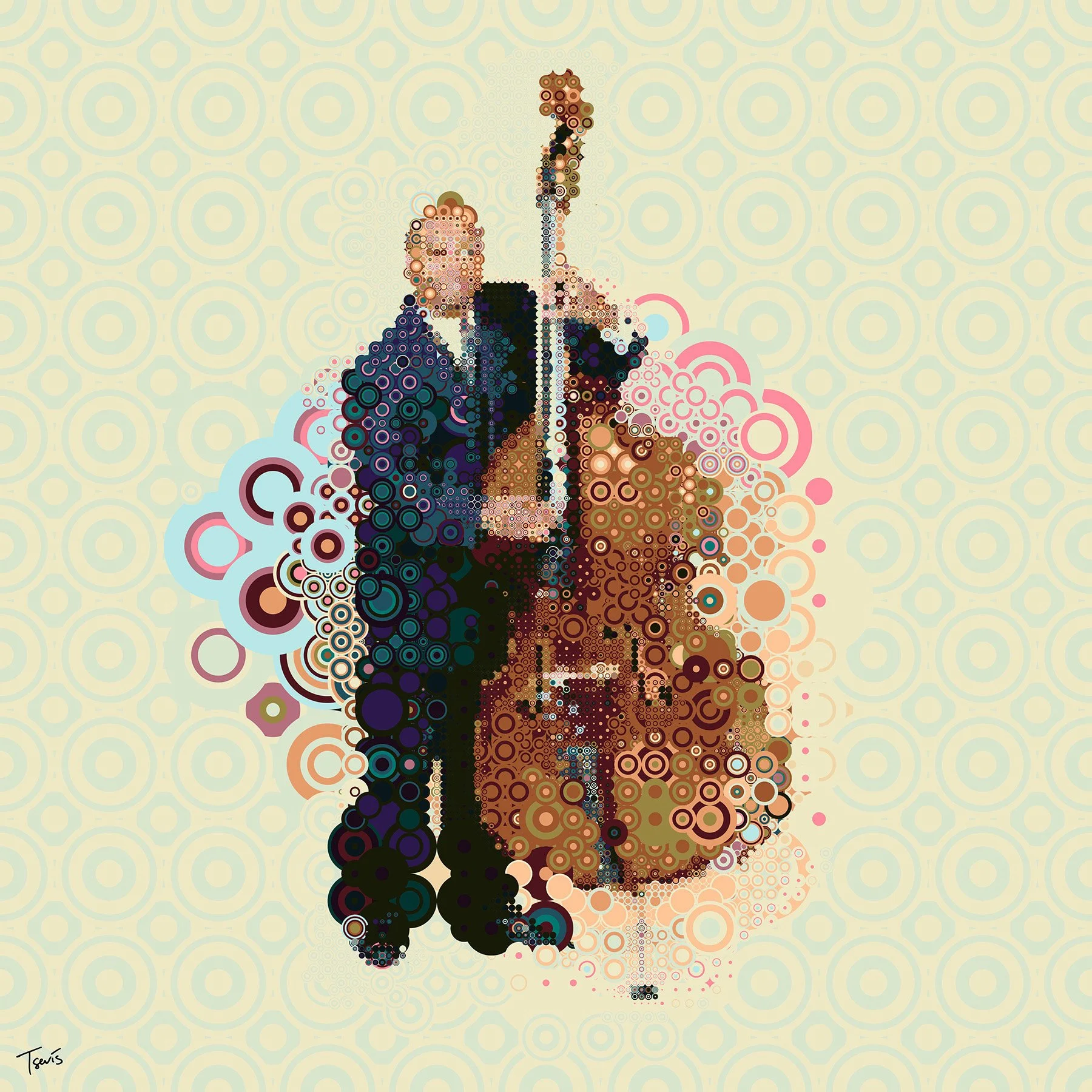
Dancing with circles: The contrabasso player (Study for an illustration for a Brazilian music festival).
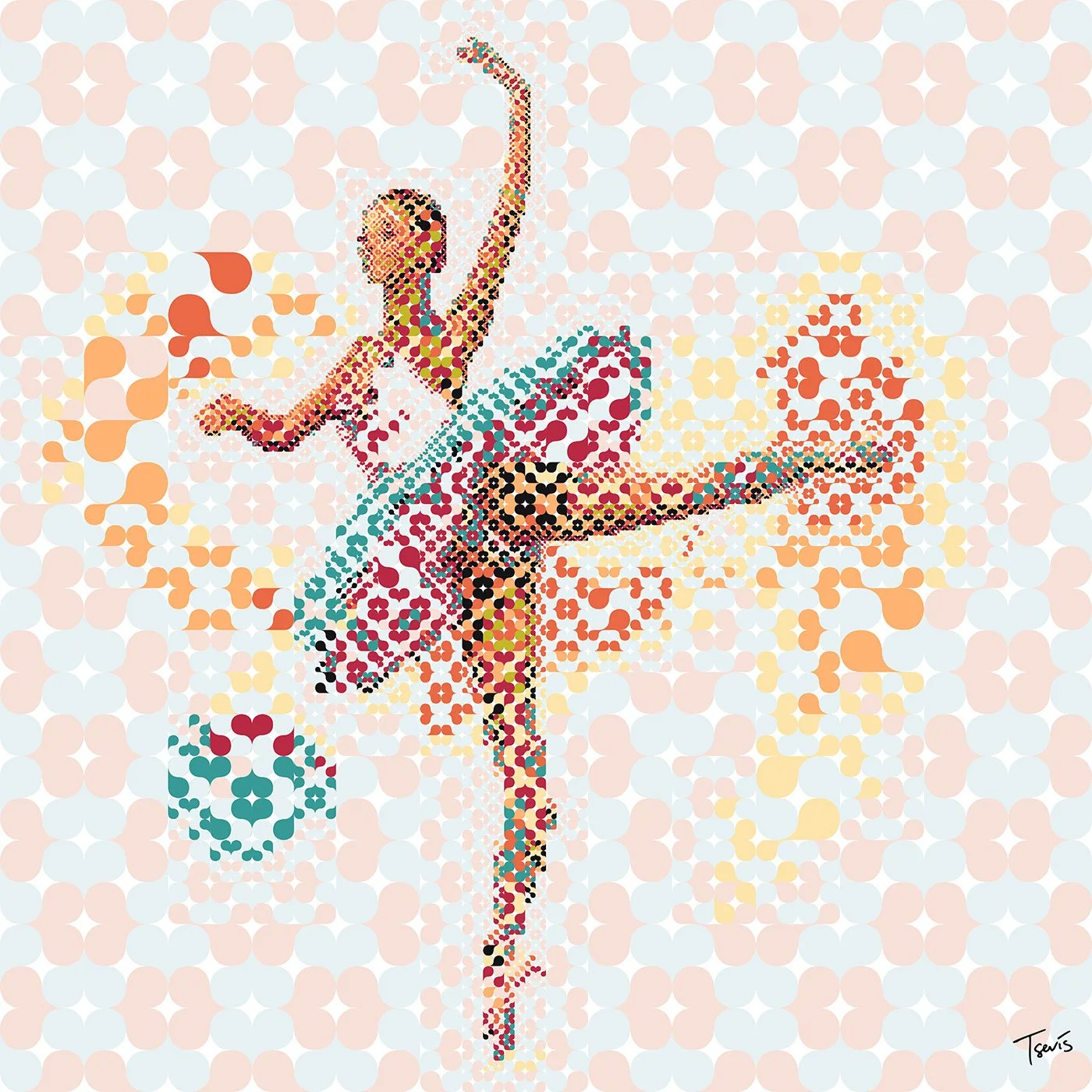
New digital romanticism: La Ballerina (Experiments on Digital Mosaics and Op Art)
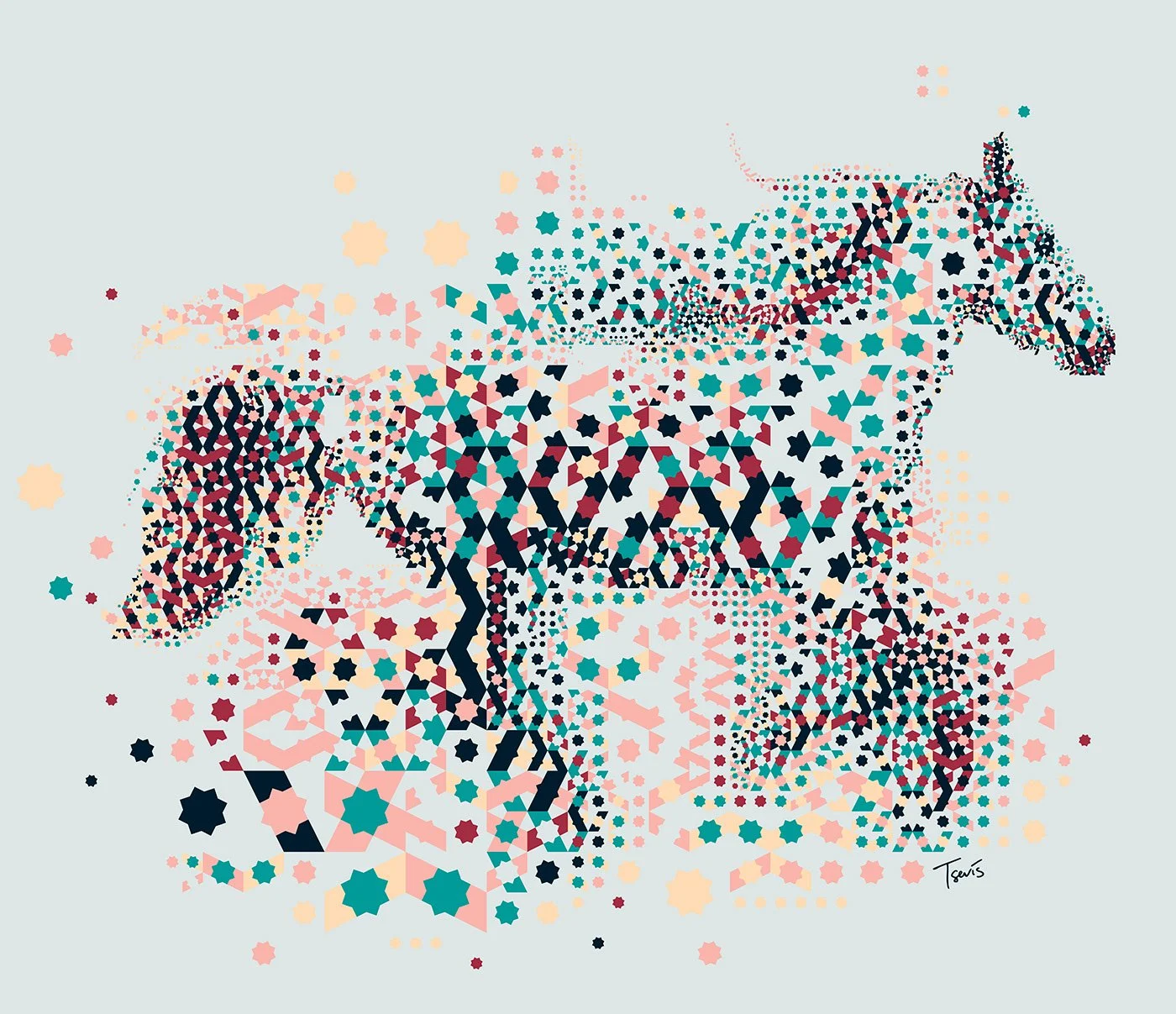
New digital romanticism: Alhambresque horse (Experiments on Digital Mosaics, Arabesque and Op Art)
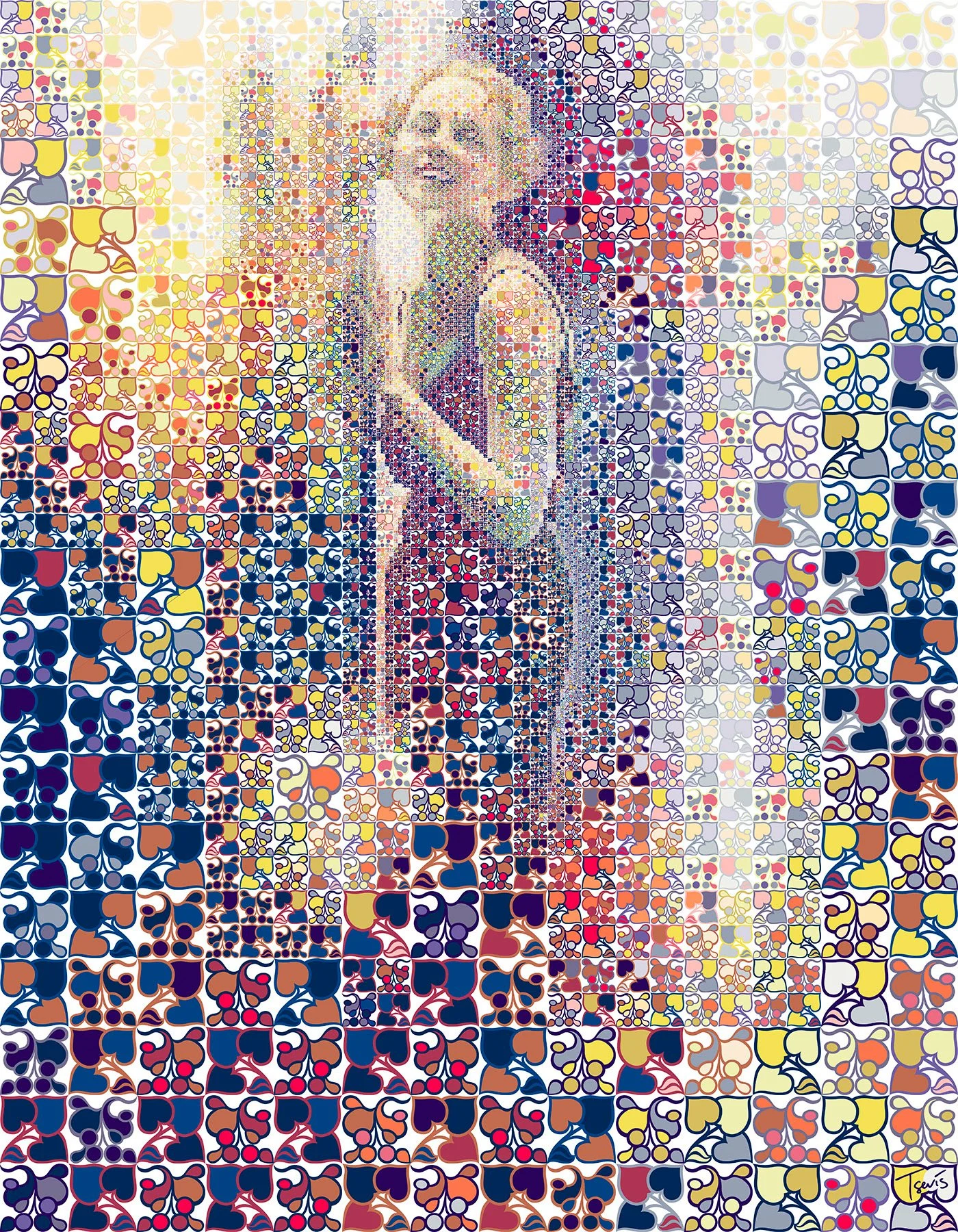
New digital romanticism: Belle epoque: Colorful, sinful... (Experiments on Digital Mosaics and kaleidoscopic symmetries)
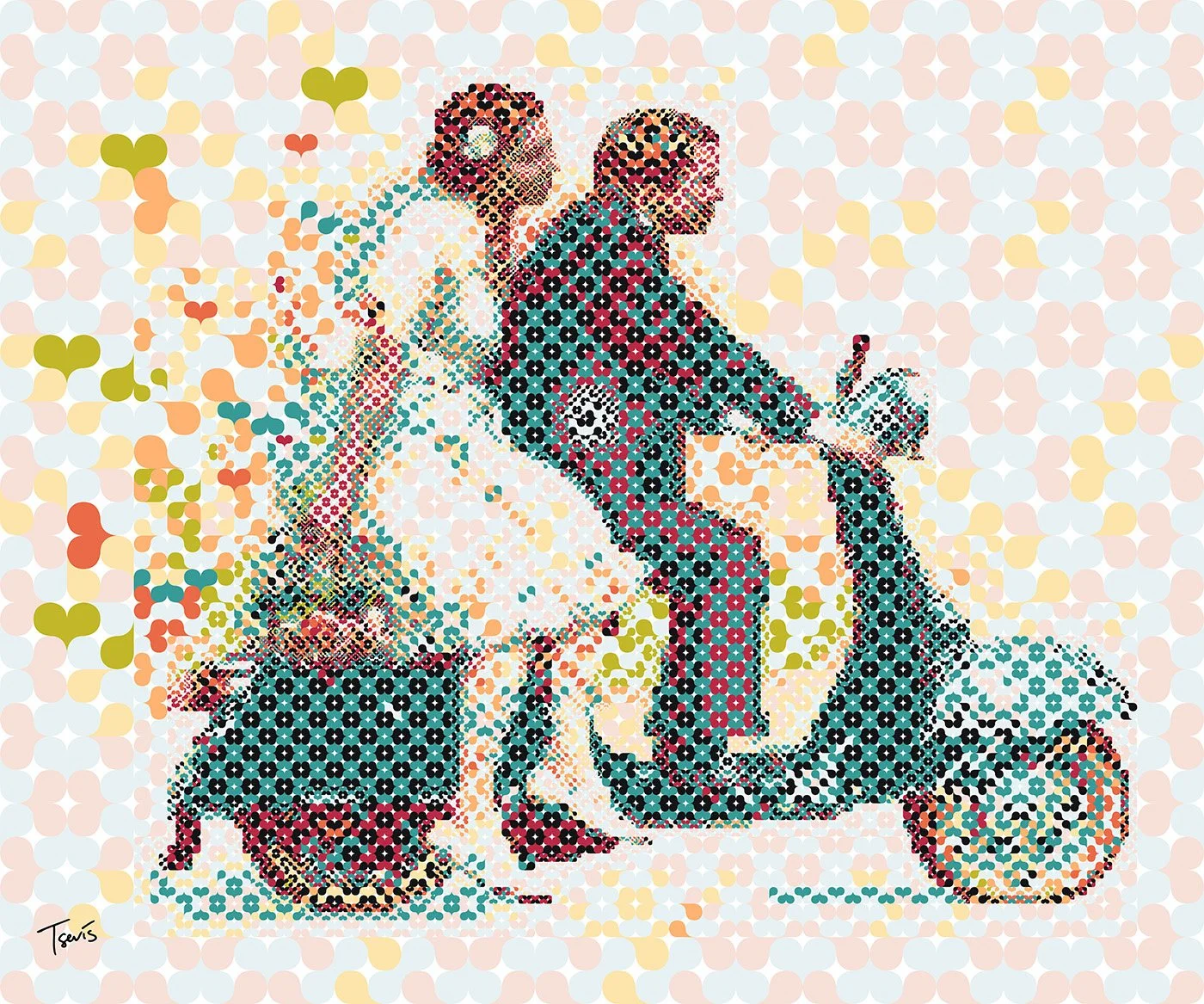
New digital romanticism: Vespa Love (Experiments on Digital Mosaics and Op Art)
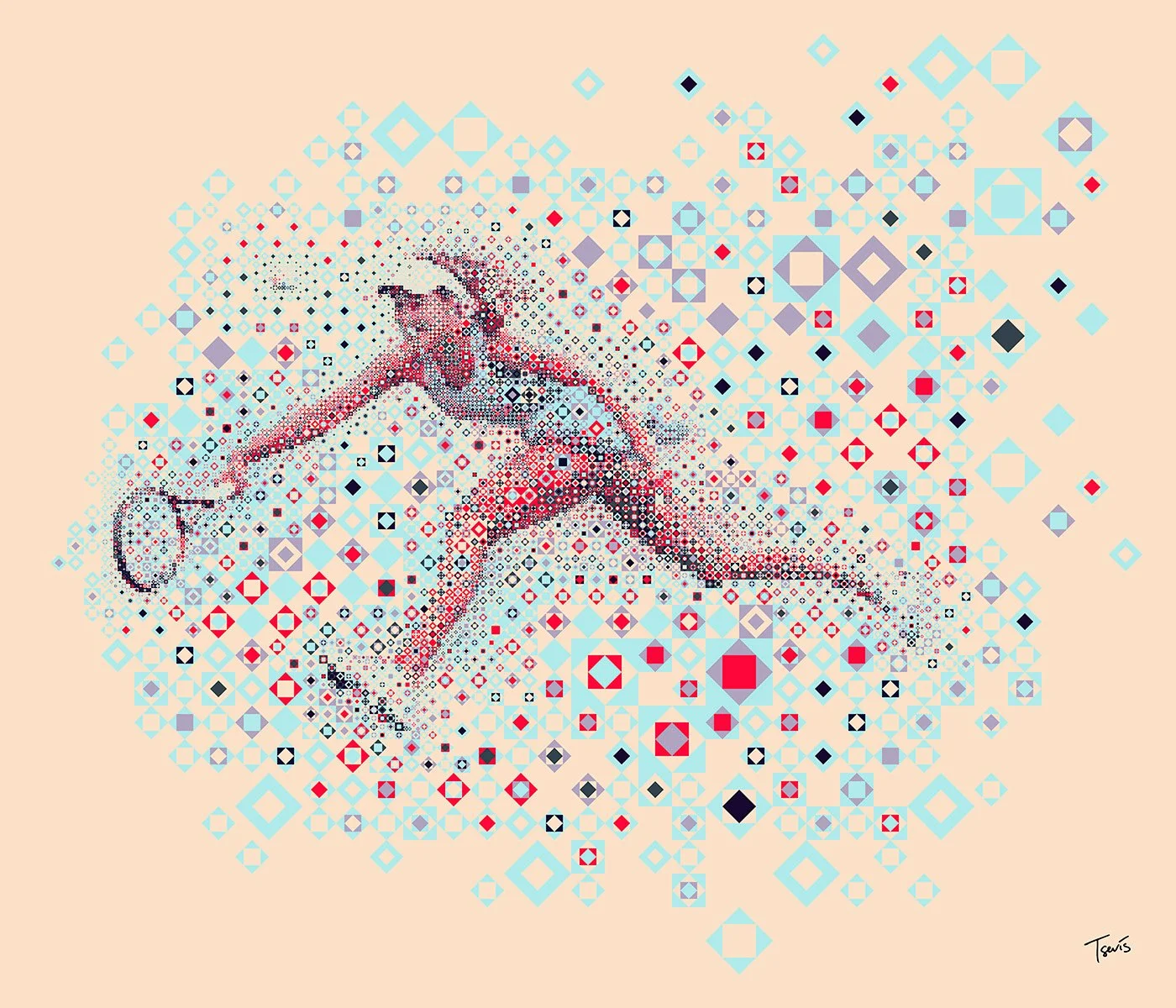
New digital romanticism: Ana Ivanovic (Experiments on Digital Mosaics and Op Art)
The Machine, the Muse: A Technical Interlude
None of this work would have been possible without Studio Artist, a groundbreaking visual synthesis tool created by Hawaiian developer and conceptual visionary Joe Dalton. Synthetik's founder was a principal of OSC, the first company to bring digital audio multi-tracking to the desktop computer with Deck. Deck was also the first audio software ever to combine audio, MIDI, and video. Deck literally provided the foundation code for ProTools and later Final Cut Pro. Pretty cool, right?
More than a software, Studio Artist was a generative partner. It allowed me to compose images the way a musician writes jazz: through adaptive iteration, algorithmic improvisation, and deep stylistic layering.
I was deeply inspired by Dalton’s “graphic synthesizer” philosophy, a radically different way of thinking about image-making. Rather than treating design as something built layer by layer, Studio Artist approached visuals as living systems, reactive, expressive, and constantly in flux. It offered a freedom I hadn’t found anywhere else.
But tools are only part of the story. The real magic often lies in the community around them, and for me, that included David Nagel, one of the unsung heroes of digital artistry. Through his invaluable column on CreativeMac.com (now sadly lost to time), David published hundreds of brilliant Photoshop add-ons and was, for a while, the go-to source for quality Studio Artist content outside the official channels. His tutorials, presets, and brushes, painstakingly developed and generously shared, became essential to my creative workflow during those early years. He helped shape an entire generation of experimental digital creators, myself included.
While his original work is difficult to find today, fragments of it live on through the efforts of artists and archivists who have tried to preserve his brushes and legacy online, a testament to the quiet but powerful influence he had on the digital arts movement.
Read more from Synthetik:
Photo Mosaic ART by Charis Tsevis | Charis Tsevis’ Digital Styling | Creating Photo Mosaic Effects with Studio Artist | Generating Adaptive Photo Mosaic Effects