If it can be made with a prompt, it says nothing about your company.
Anyone can generate an image in seconds now. So an image alone means little, and a leader who shows one to the board, the staff or the press is showing something anyone could have made.
The legends of Greek basketball, for HWBF
We are not against generative AI
Tsevis Studio has been devoted to technology for thirty years. Today we use hundreds of models, automations and algorithms, some of them built in our own studio, to raise the quality of our work and to work faster. But technology needs a direction. On its own, it says nothing.
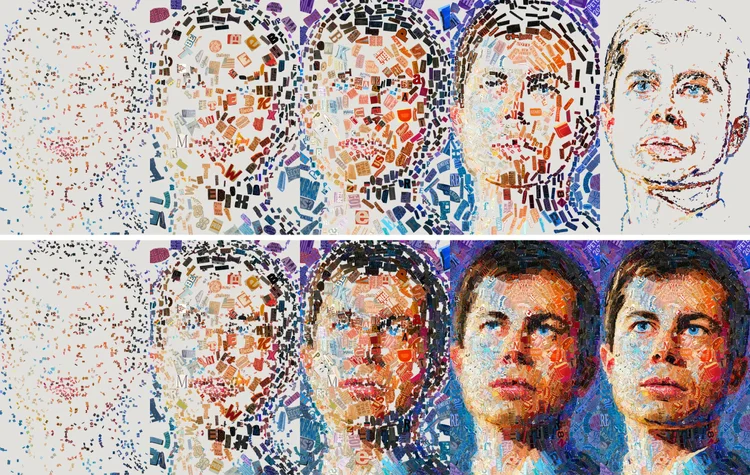
Pete Buttigieg, Mosaic of Messages: one portrait, five layers
The original and the imitation
There is a great difference between a work built from original sources and an imitation of one. An imitation is useful only when the original does not exist. And there is AI and AI: an image made with a quick prompt, and a work built on deep research and study, where every tool serves a decision someone made.
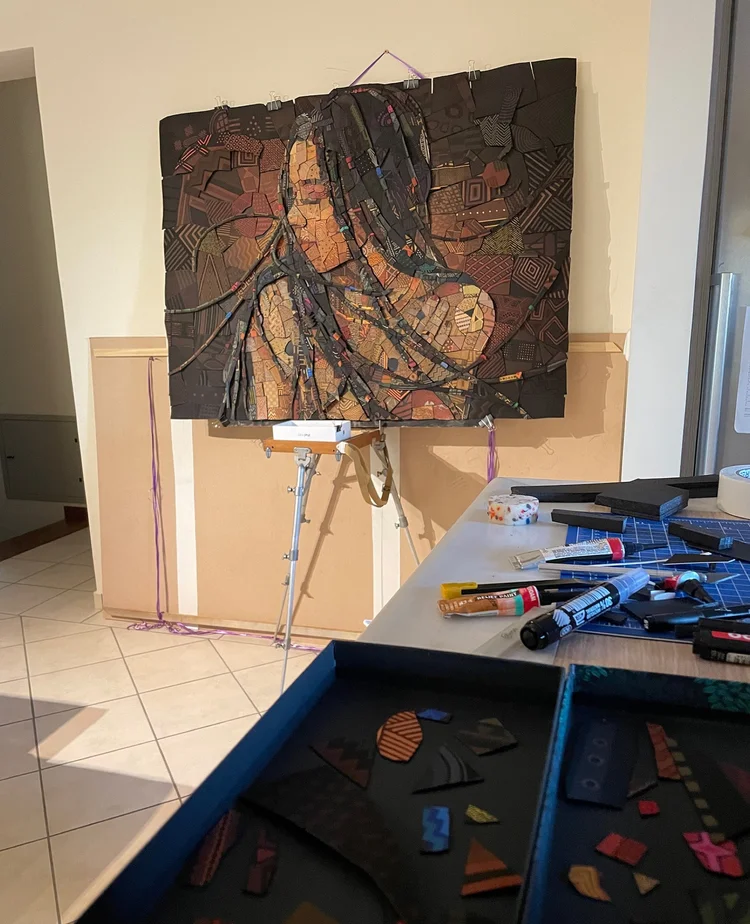
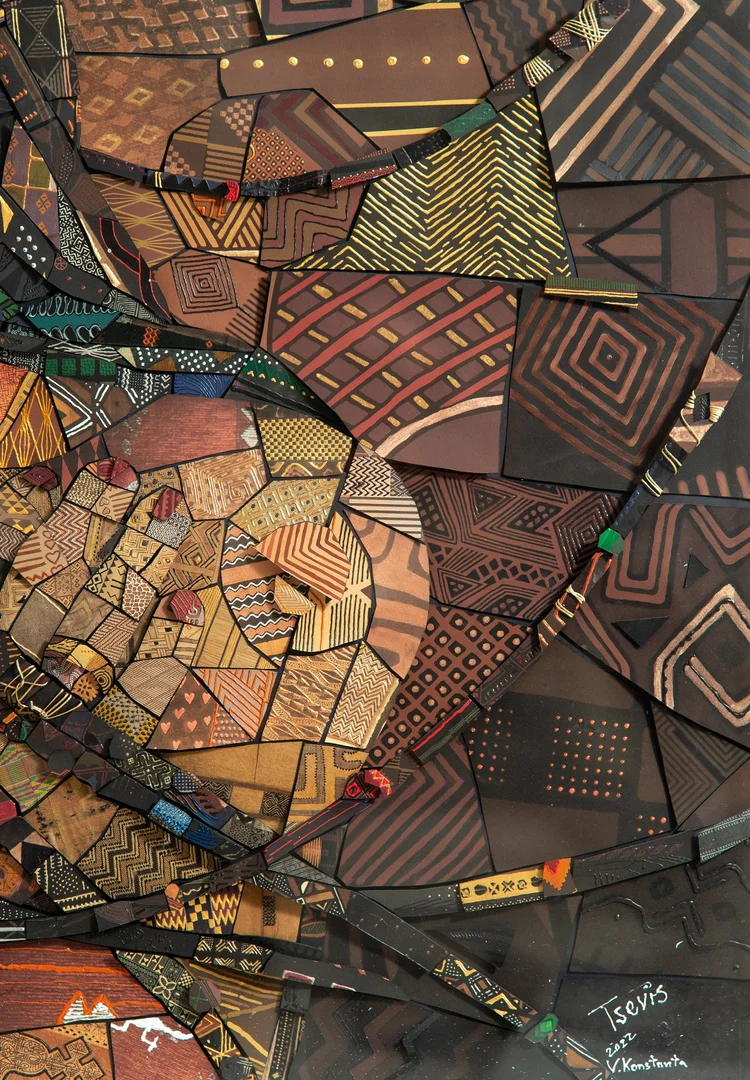
Singularis: an original, made by hand in our studio
What a prompt cannot give you
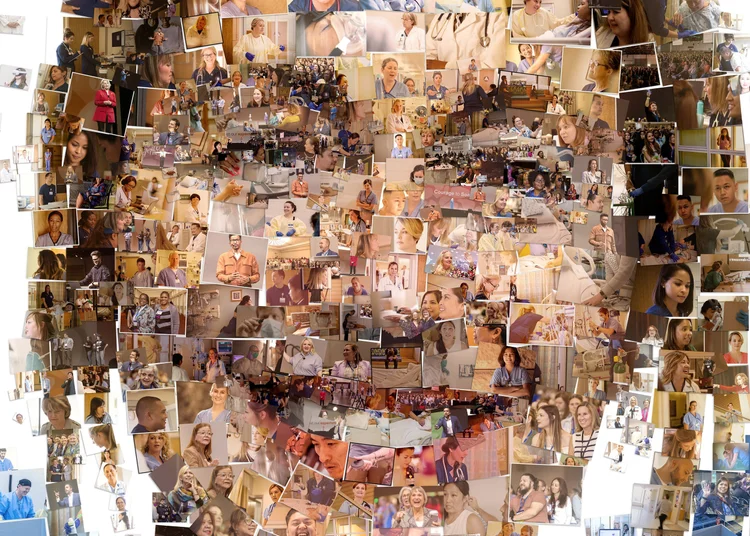
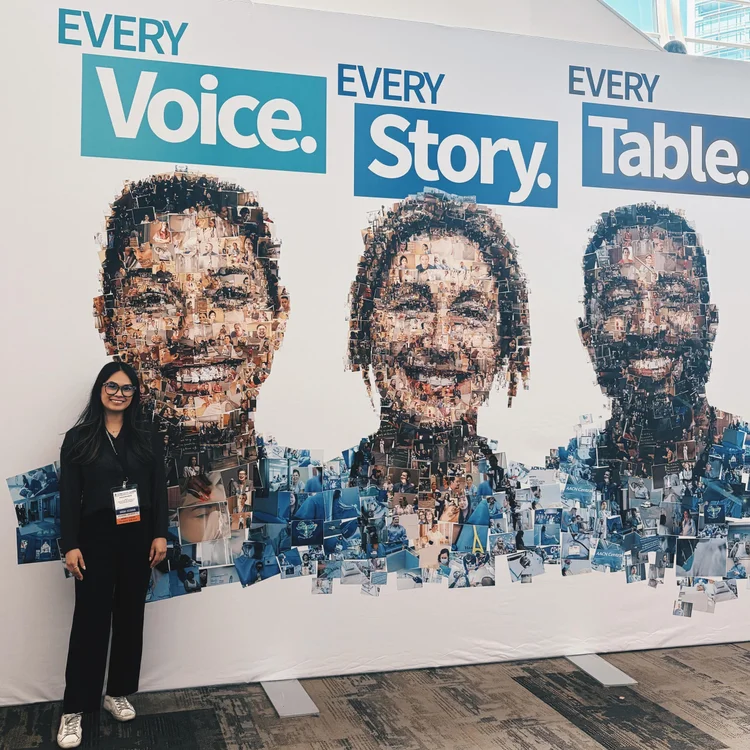
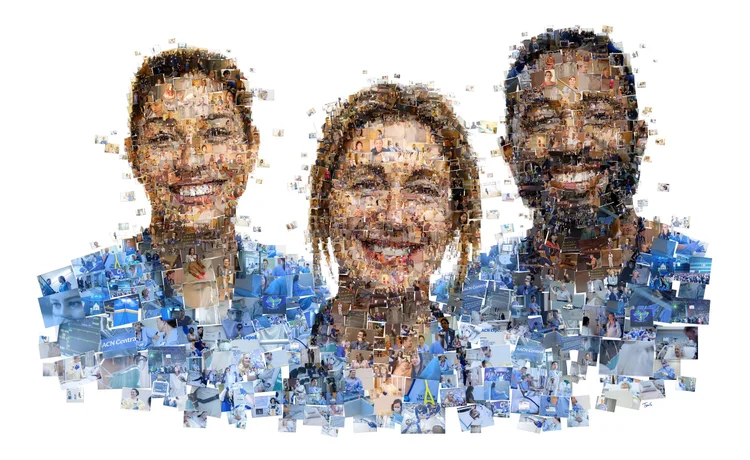
Every Voice, Every Story, Every Table, for AACNYour own materialA generated image is made from everybody’s pictures. Ours is made from yours: your people, your archive, your products, your data. Your company is inside the work, not just its subject.
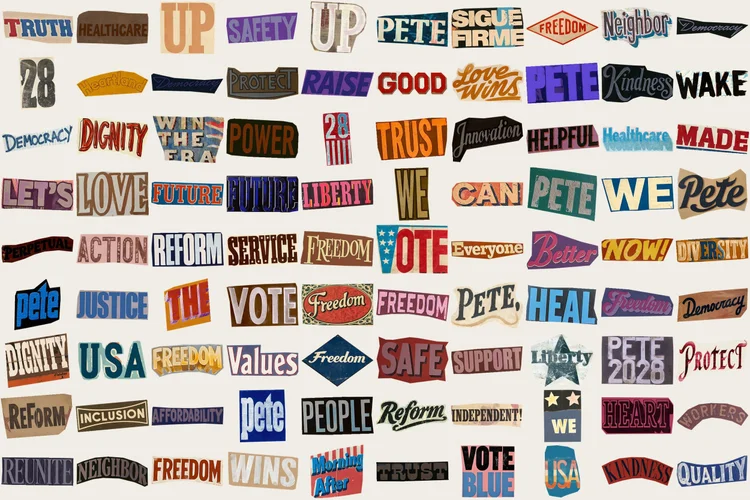
Pete Buttigieg, Mosaic of Messages: every word chosenA human eye on every choiceA diffusion model learns what images usually look like, and it returns the most probable answer: an average of ideas and of aesthetics. A study of more than four million artworks by over 50,000 users of an art-sharing platform found that after they adopted these tools, the visual novelty of their work fell over time (Zhou and Lee, PNAS Nexus, 2024). The unexpected and the fresh rarely come from the centre of a distribution. Art direction, and the curation of every aesthetic choice, stays with people.
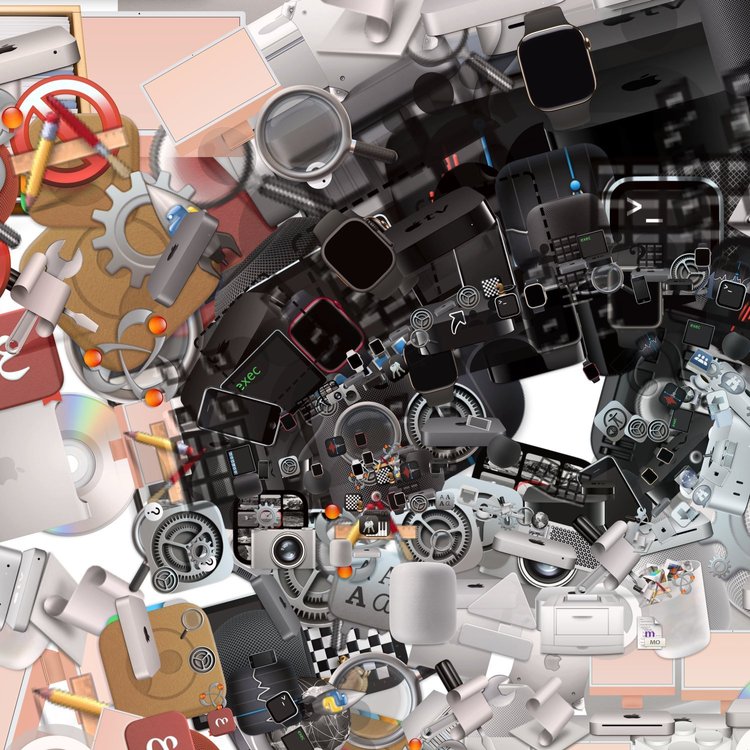
Handoff: the eye of Steve Jobs in macOS iconsDetail that is intendedIn a generated image, every pixel is a statistical guess. In ours, every piece is placed for a reason: its tone, its edge, its meaning in the whole. Clarity and care for detail are decisions, not probabilities.
AACN, the key art as a wall at the conferenceResolution that scalesA generator delivers an image at a fixed size. Anything larger is upscaled, and upscaling guesses the missing detail. Our mosaics are built from real material and rendered at the size the place needs, from a screen to a lobby wall, and they still hold up when people stand close.
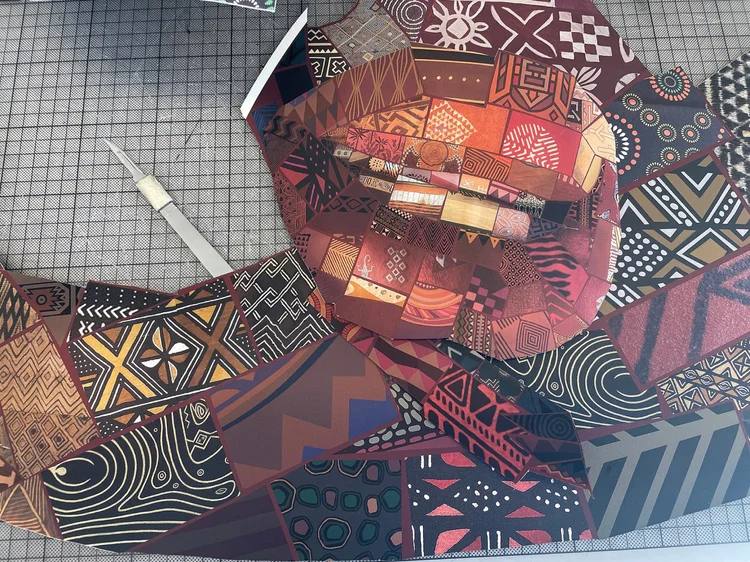
Singularis: cut and placed by handProvenanceTsevis Studio was founded by Charis Tsevis in 1996: three decades of computational art, from long before generative AI. Our algorithms do the heavy lifting. Every final decision is made by hand, and much of the work is finished by hand by Vira Konstanta. The tradition we work in is two thousand years older than any of it.
Your material stays with usNo client data, no corporate assets, no sensitive material ever leaves our machines.
Where generative models belong
We use generative models every day, where they do their work well: repairing a damaged archive photograph, removing a scratch, extending a background, separating a figure from its ground. They sit among dozens of computer vision models in our studio that help us read images: faces, edges, depth, the structure of a scene. We describe them in our article on computer vision models.
The Royal Mosaics of Bahrain: tiles made with a generative model
The same work: an edge map, one of the ways a machine reads a face
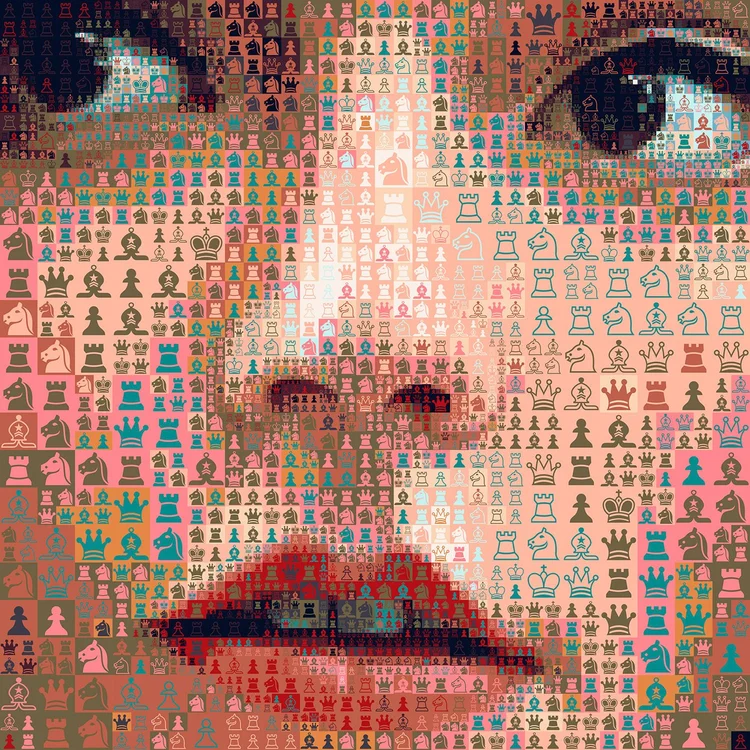
The centaur
Garry Kasparov gave the name to a chess player who works together with a machine. In 2005 an open freestyle chess tournament was won not by a grandmaster and not by a supercomputer, but by two amateur players guiding three ordinary computers. A person and a machine together are stronger than a machine alone. And chess is a closed, finite system with clear rules. Art and life are not, and there the human half of the centaur matters even more. That is how we work: the algorithms see, and we decide.