Paris 2024: The Olympic Hopefuls
Visual storytelling at the intersection of culture, motion, and ambition
What if a portrait could capture not just a face, but a fight? Not just a body in motion, but a century of meaning?
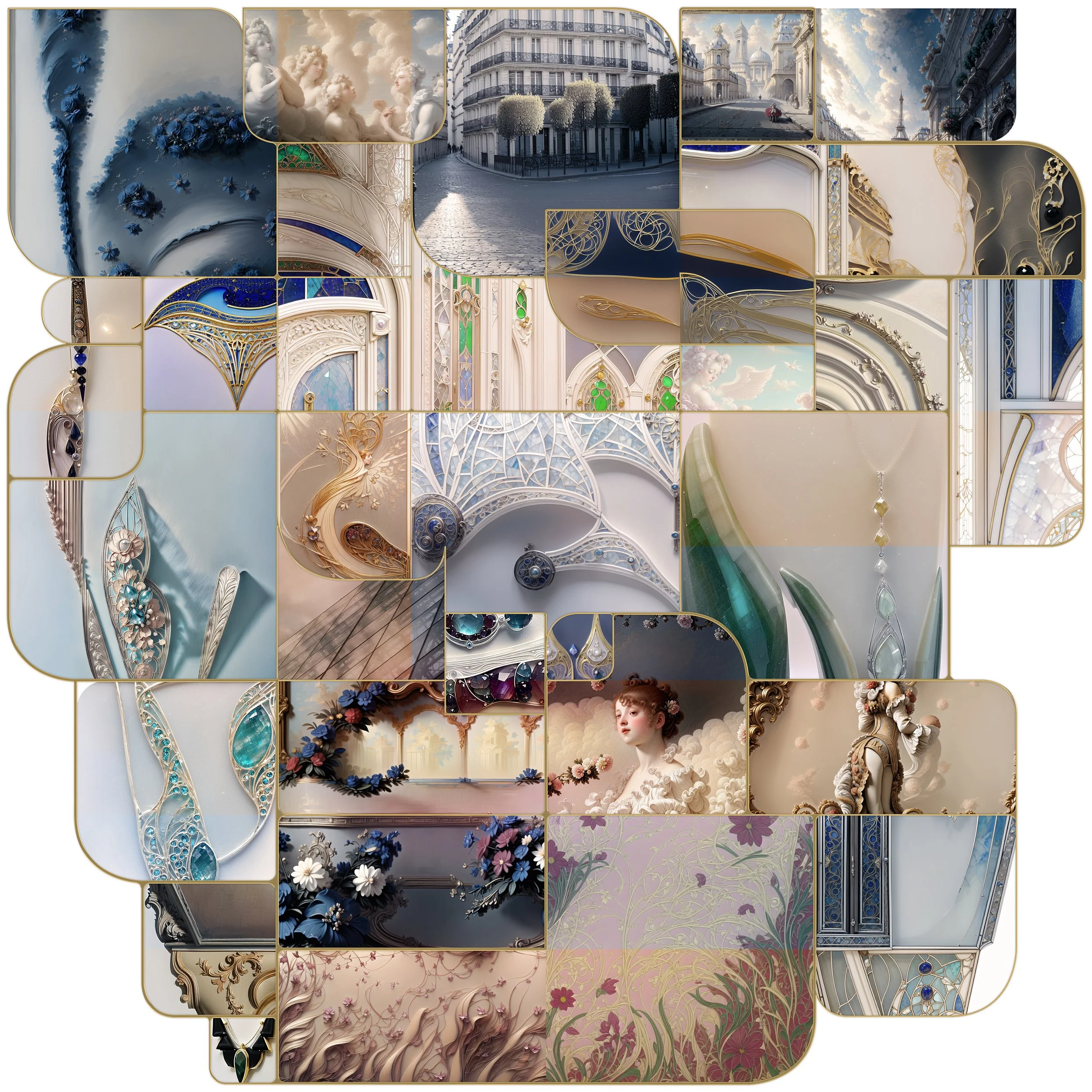
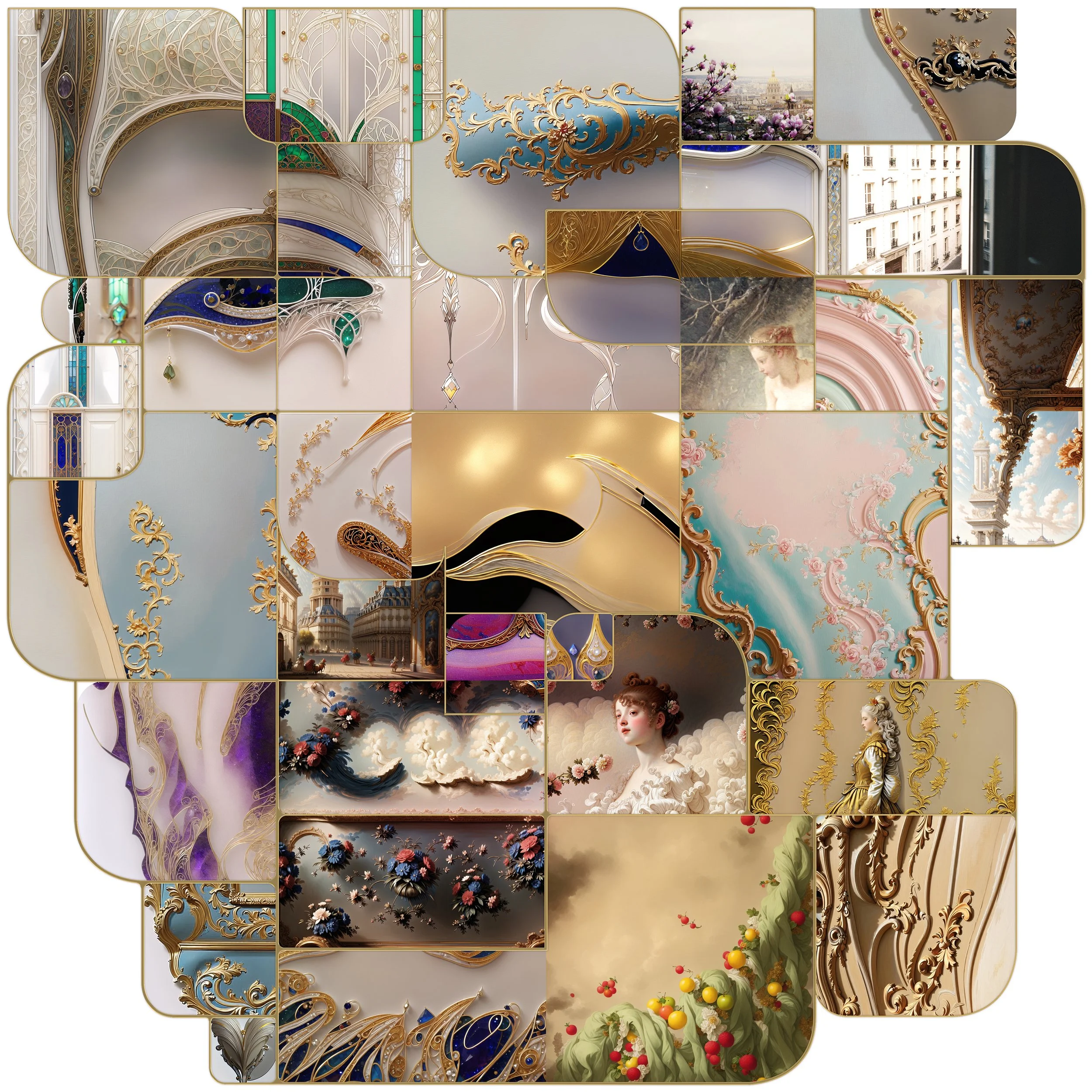
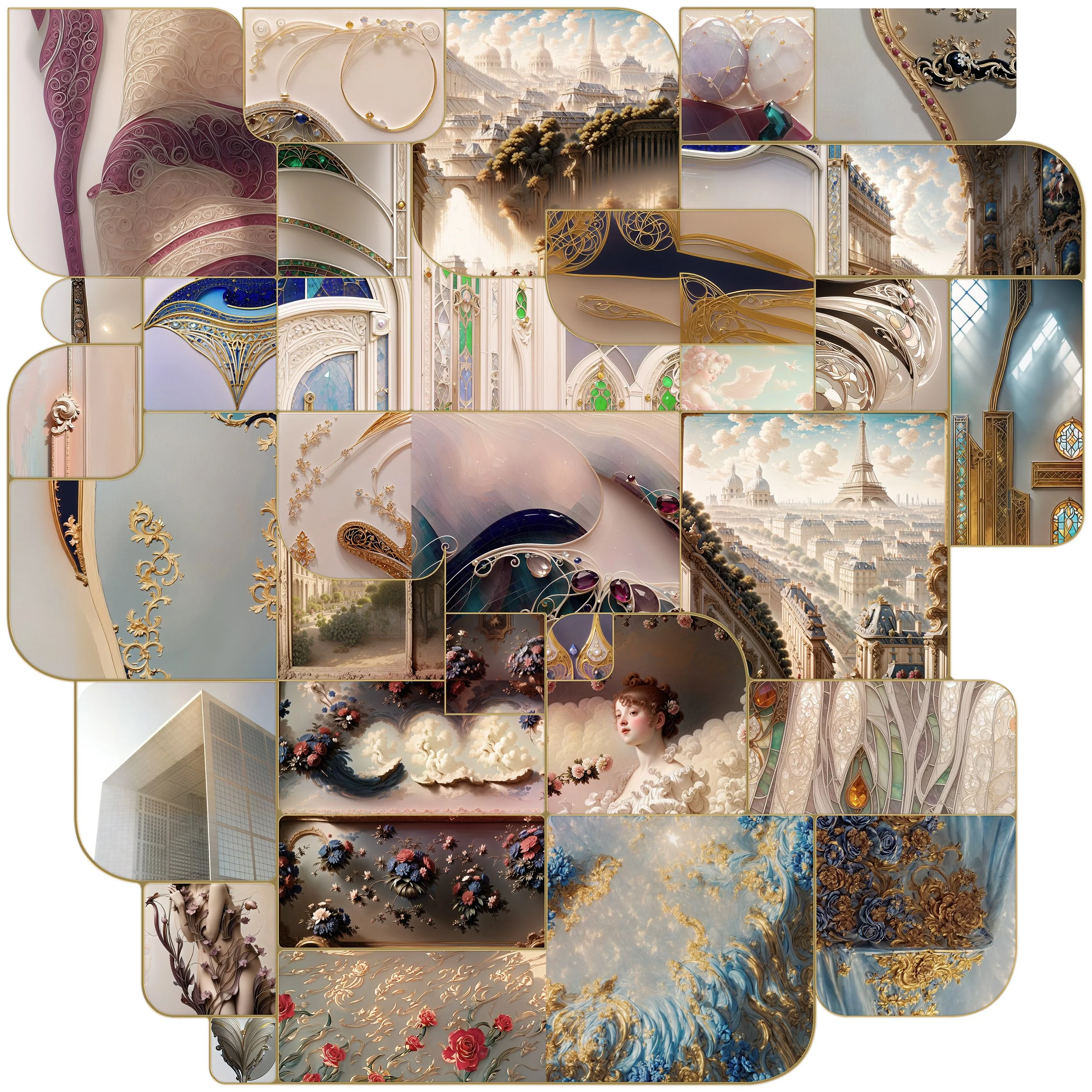
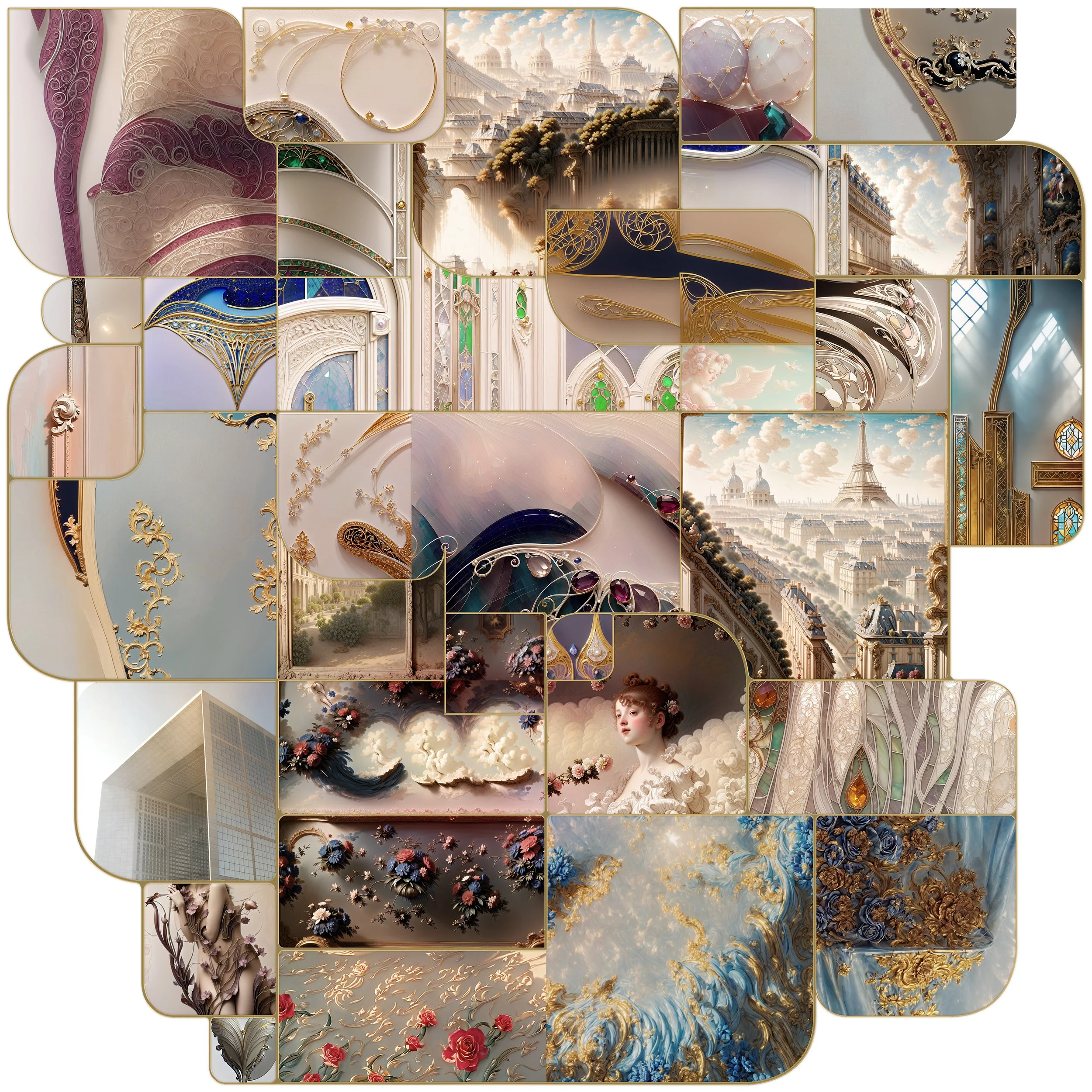
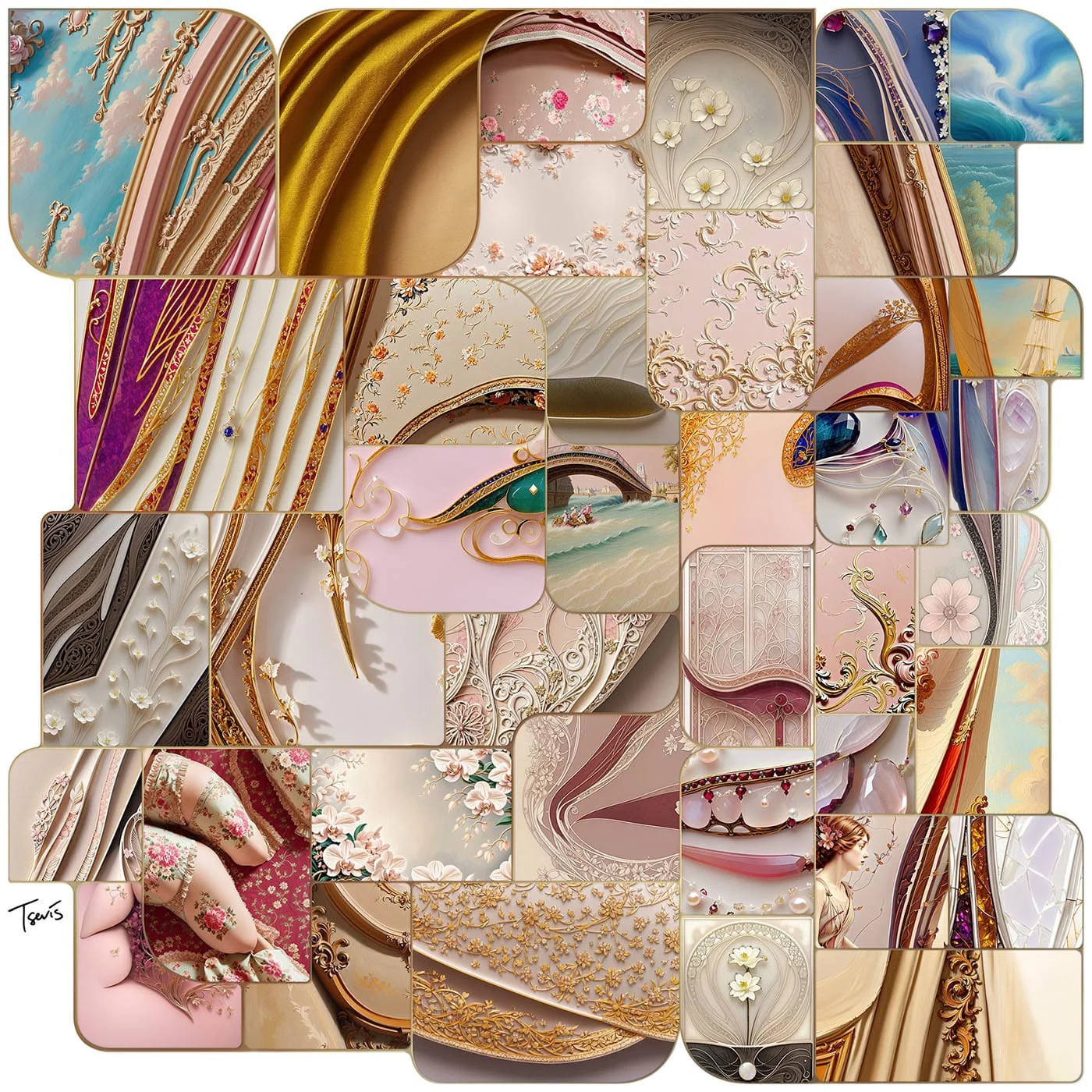
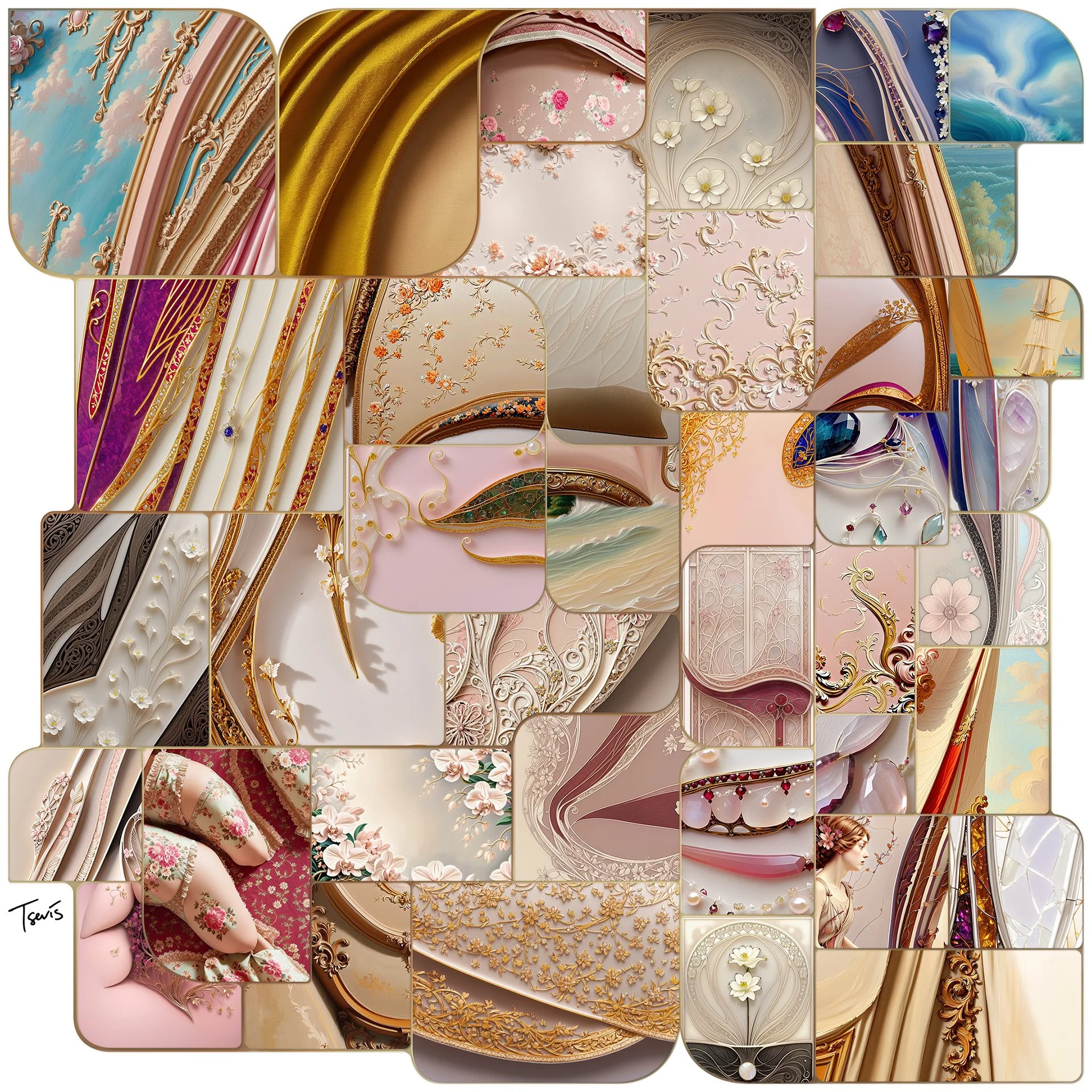
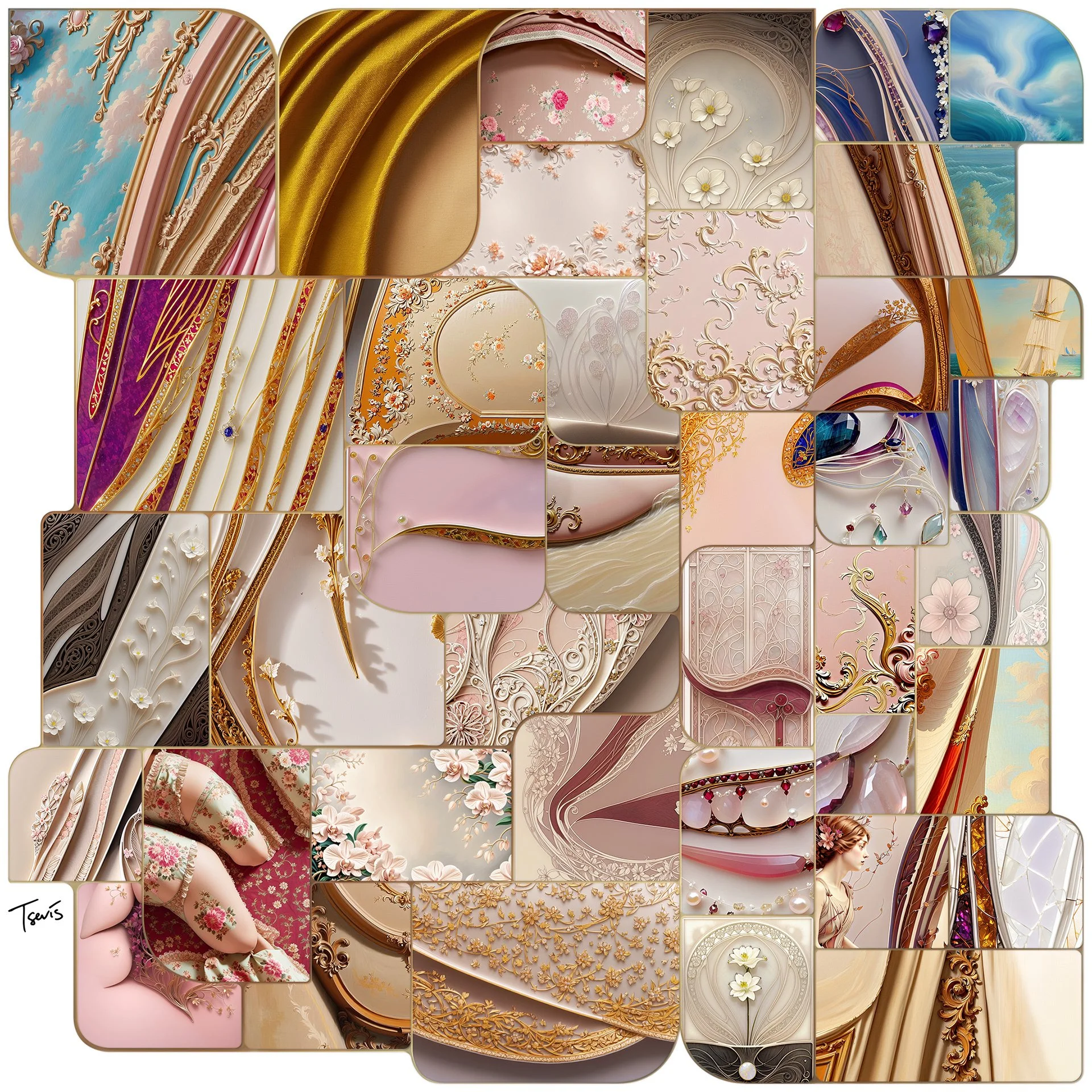
This is the idea behind The Olympic Hopefuls, a digital mosaic series dedicated to the athletes preparing for the Paris 2024 Games — and to the deeper symbolic systems that make the Olympics a cultural force far beyond the arena.
Building on the foundation laid in my earlier project, Paris 2024, this new series continues my exploration of Olympic, World Cup, and other major sporting events through the cultural and historical narratives of their host cities and nations. By delving into the unique artistic and societal contexts of each locale, I aim to create visual stories that honor both the athletes and the rich tapestries of the civilizations they represent.
This isn’t just art. It’s a form of visual ethnography.
Each piece in The Olympic Hopefuls is a layered composition, created with AI-assisted tools trained on custom datasets and fine-tuned LORAs — not to mimic art history, but to dialogue with it. The goal: to offer a forward-thinking yet deeply respectful tribute to both the athlete and the host nation's aesthetic heritage.
The Project in Brief
Series Title: Paris 2024: The Olympic Hopefuls
Medium: Digital mosaic portraits
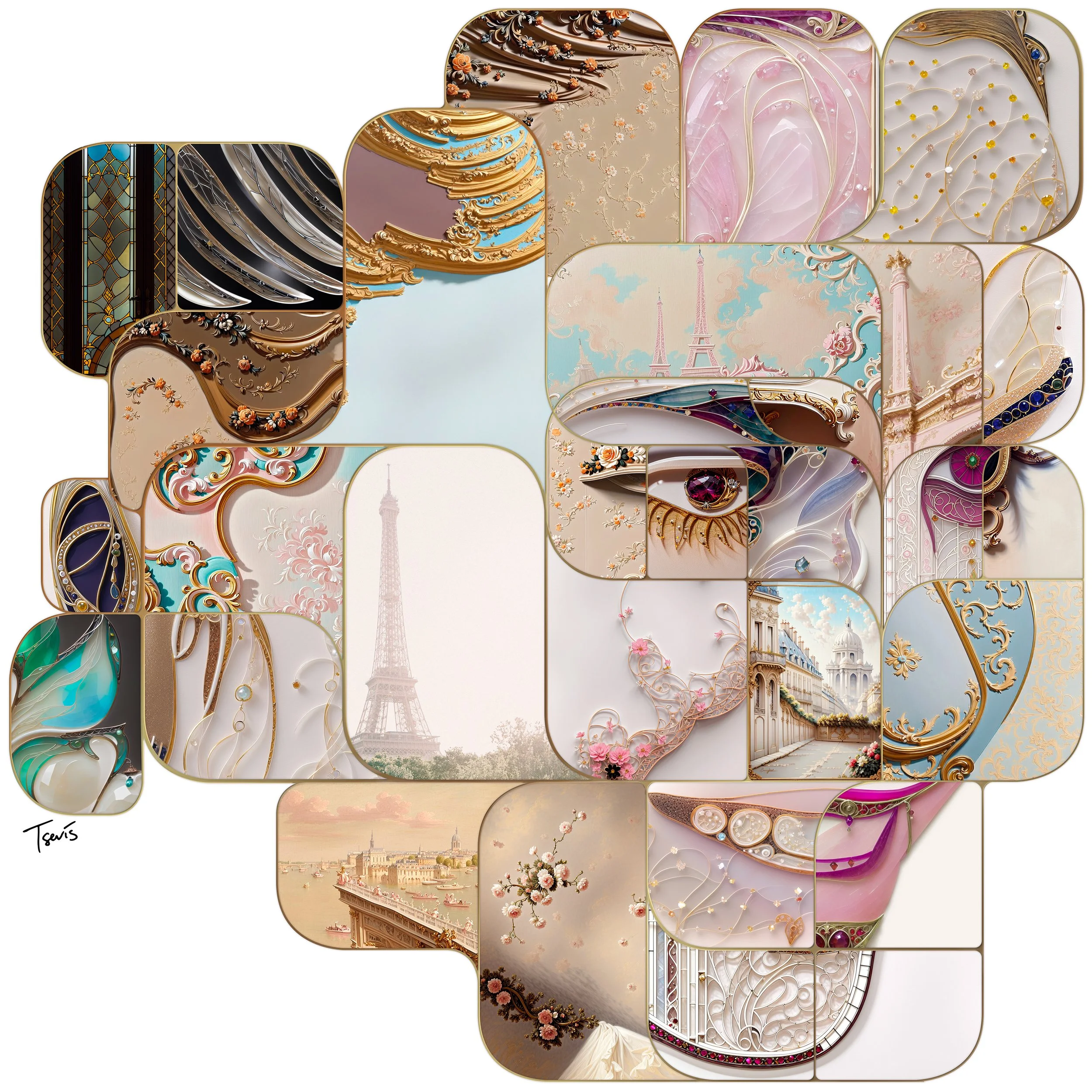
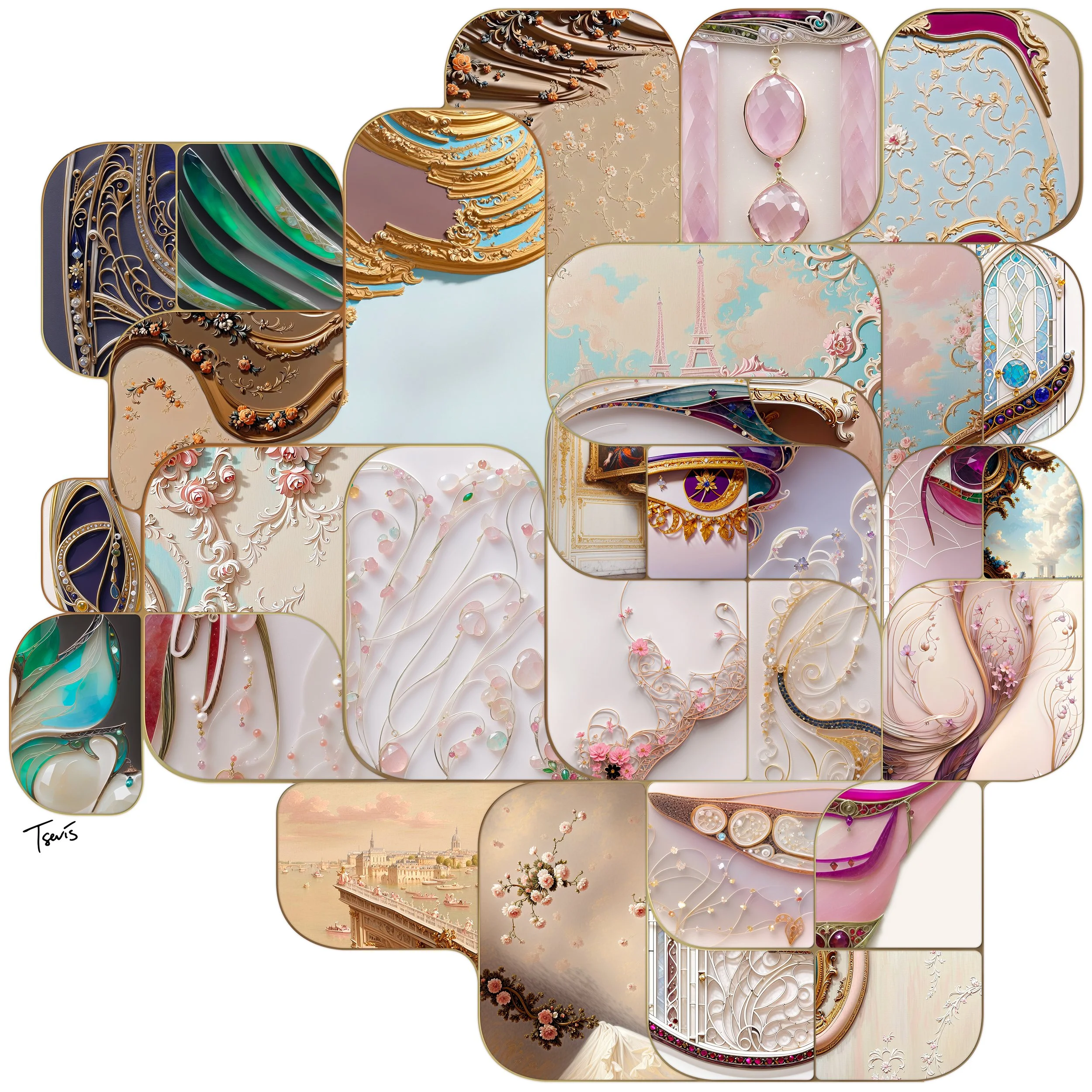
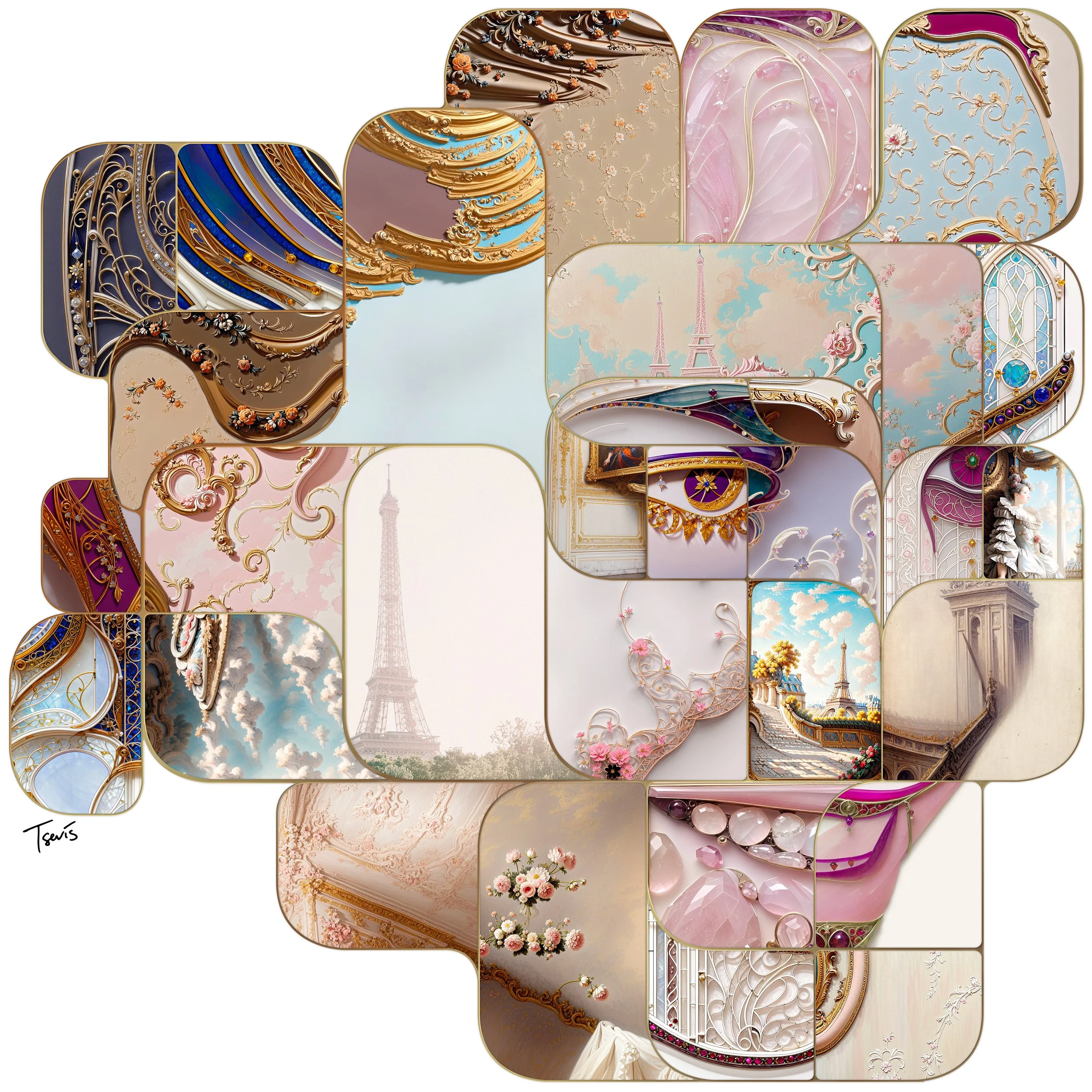
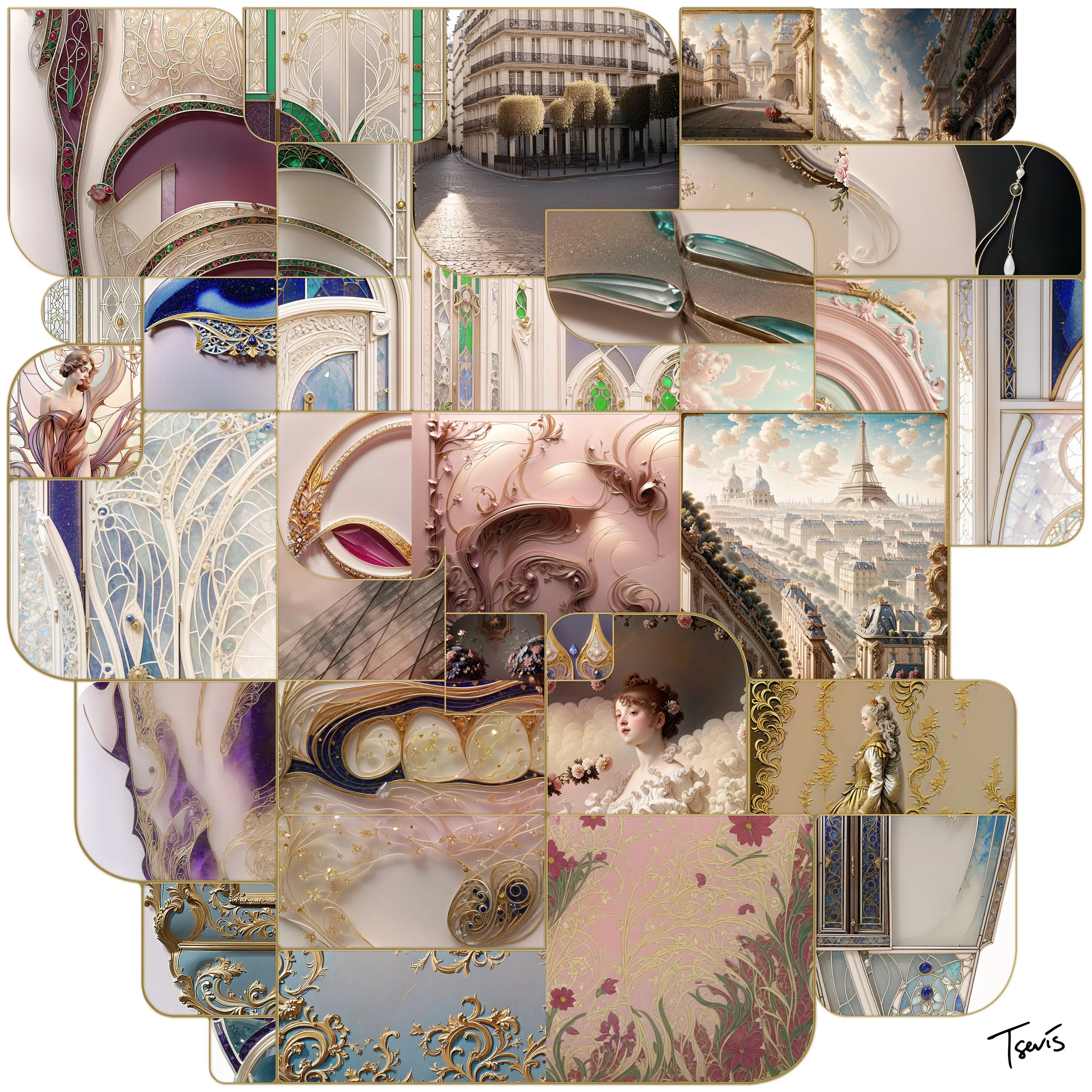
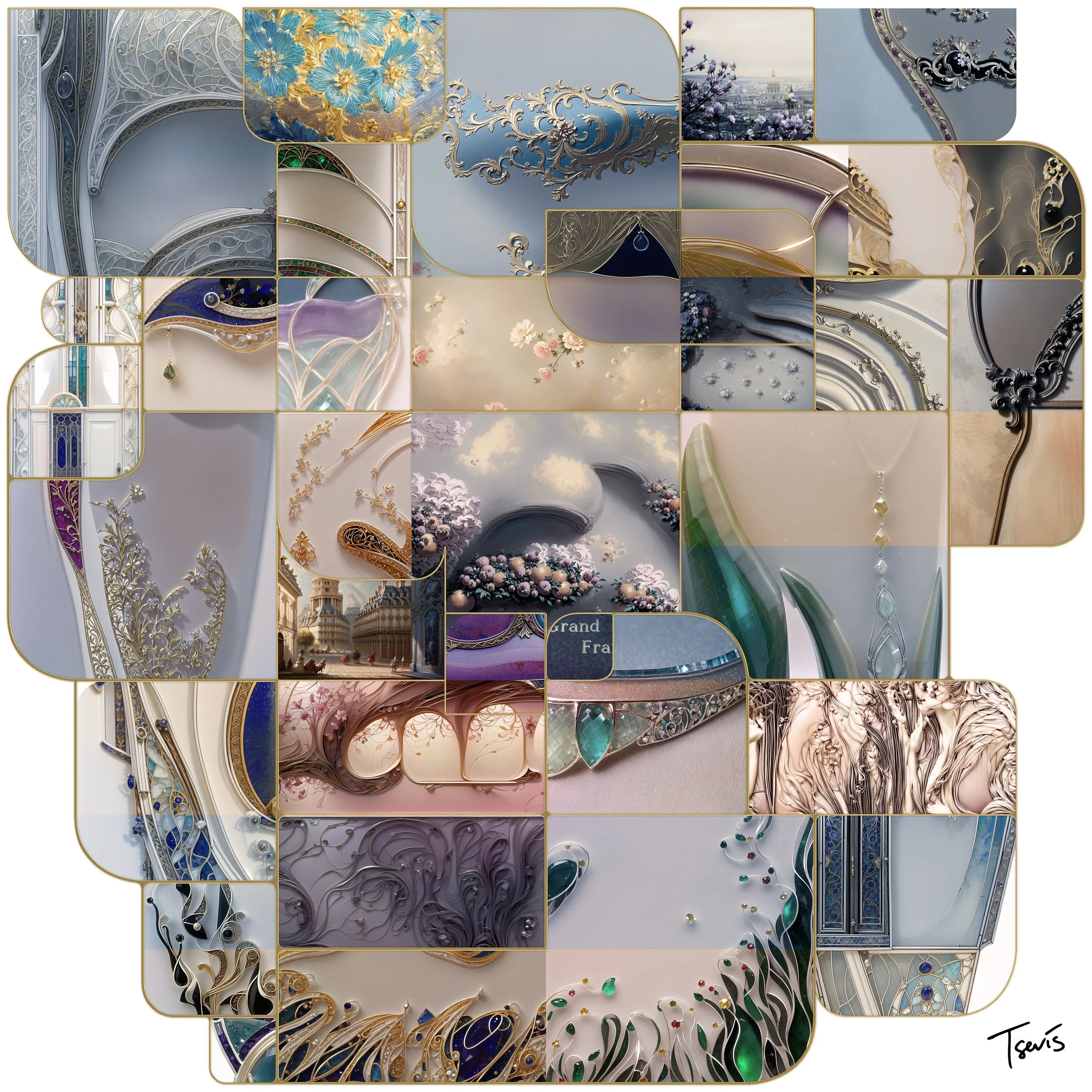
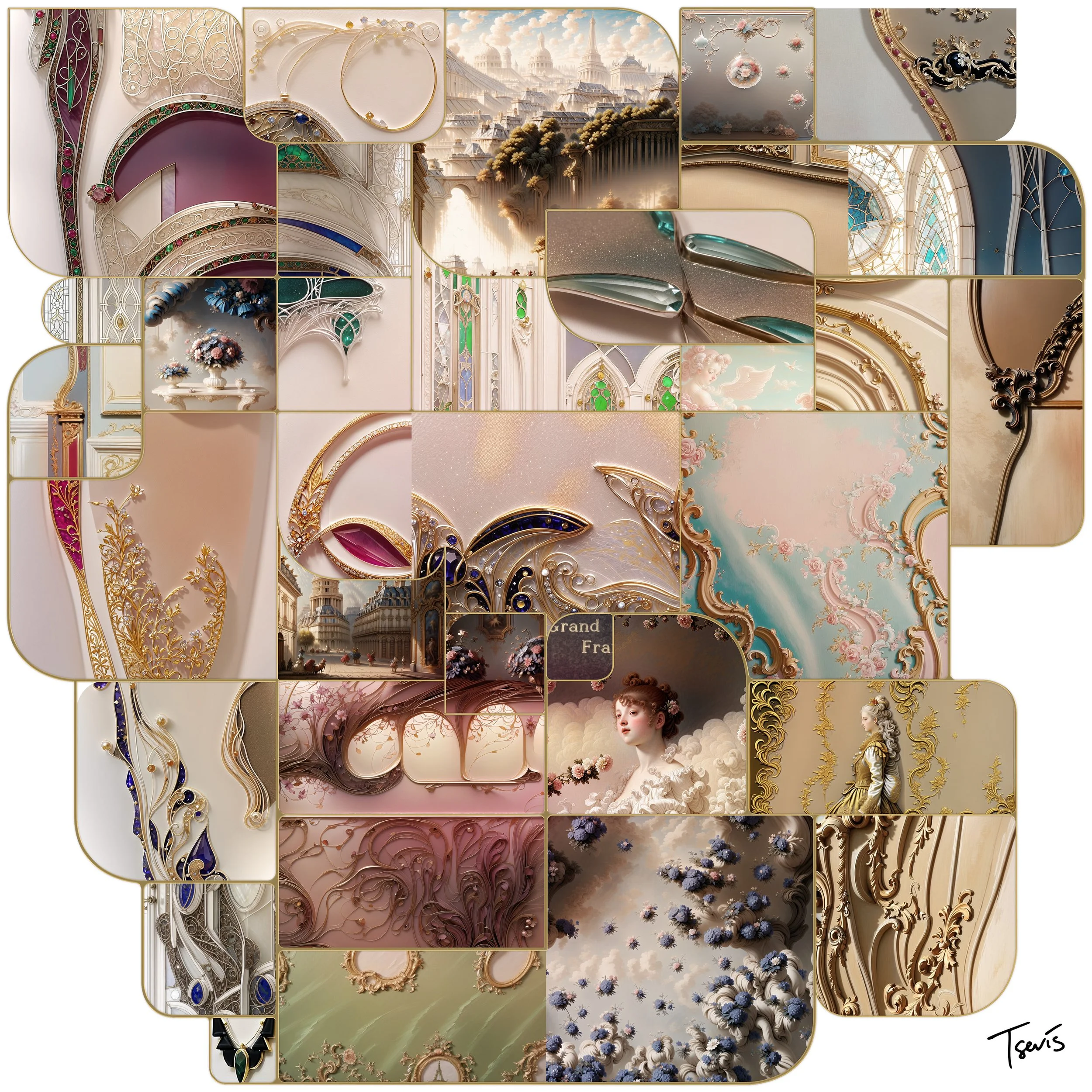
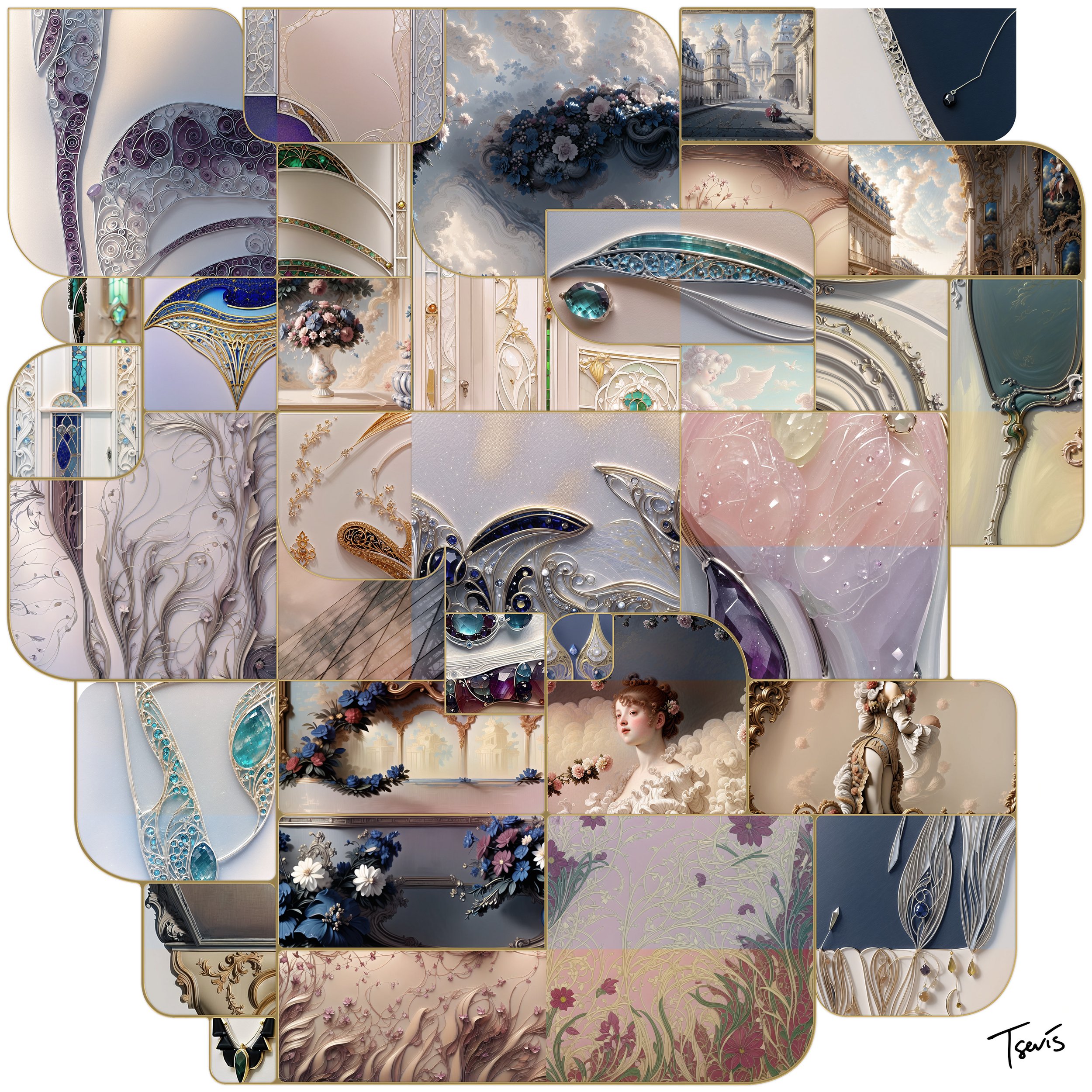
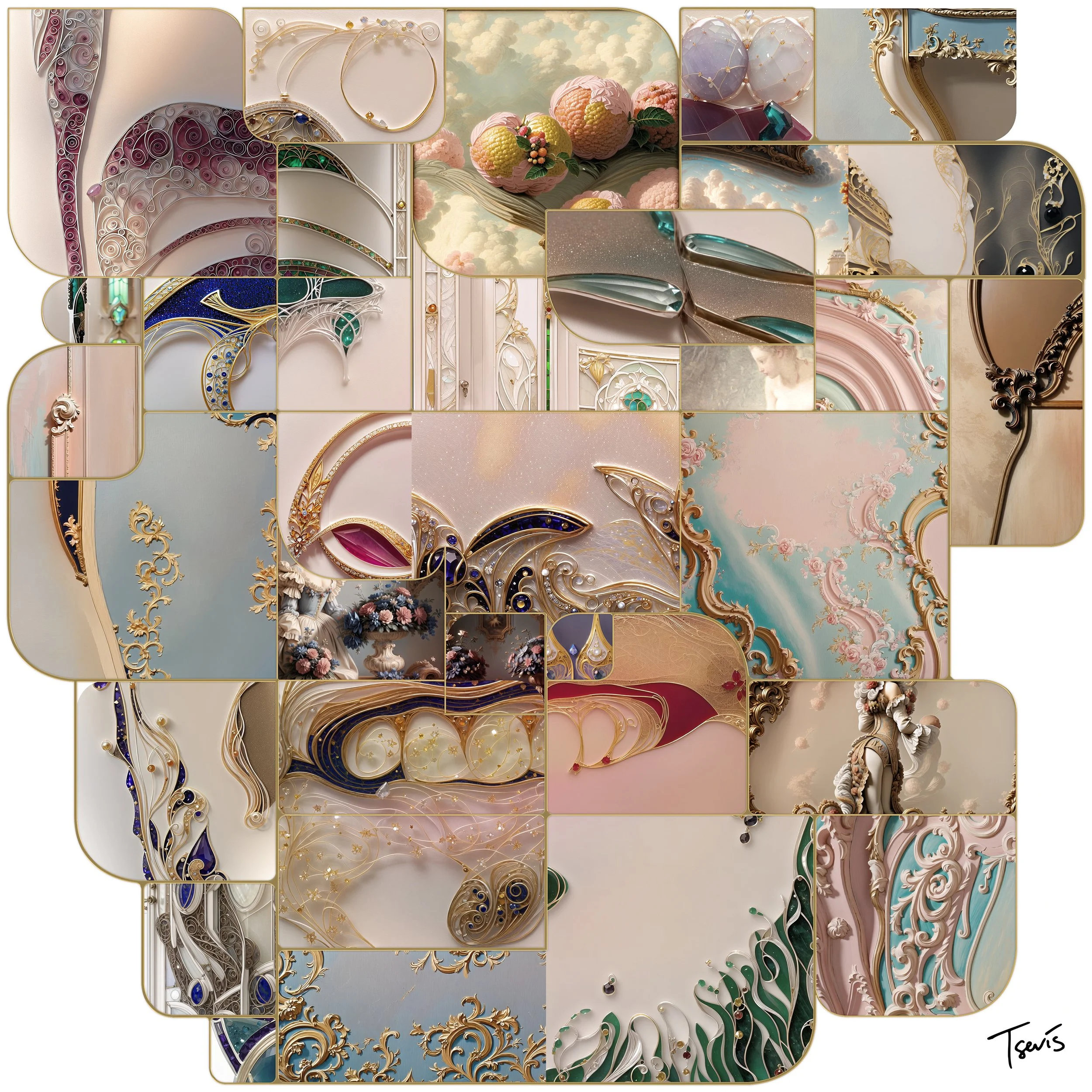
Athletes Featured: Jordan Chiles, Miltos Tentoglou, Milly Tanner, Oriane Bertone, Noah Lyles, Fan Zhendong, Karolina Pelendritou
Visual Language: French decorative arts — Rococo flourishes, Art Nouveau rhythms, Art Deco geometry
Technology: AI-supported generation with custom-trained models and LORAs; Adobe Photoshop and Illustrator montage; Variable-size mosaic techniques using custom-built software tools, scripts, and creative hacks.
Core Focus: Cross-cultural art, creative mosaic technique, and Olympic storytelling.
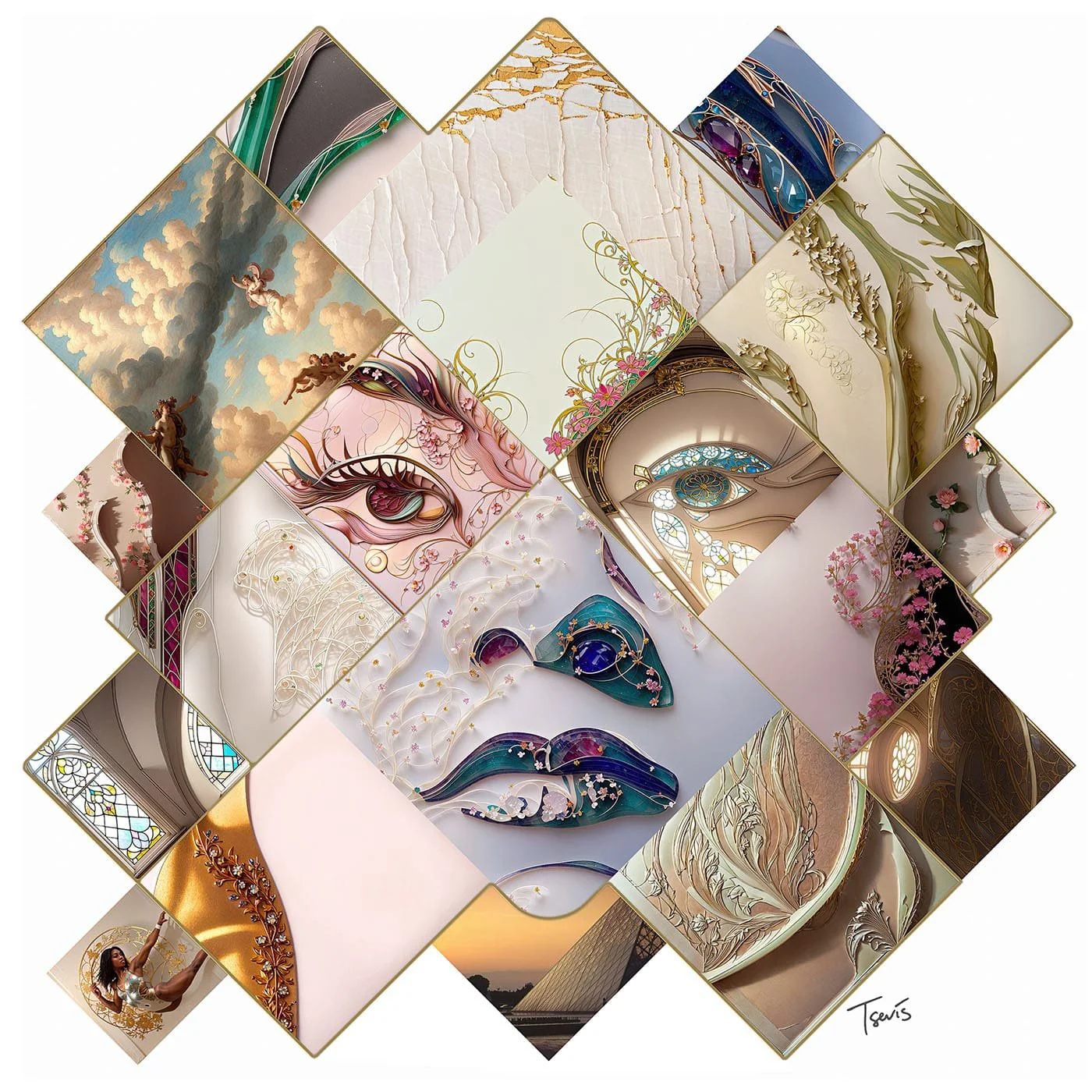
Jordan Chiles: Soaring to Paris 2024 🤸♀️
Why it Matters (To You)
Whether you’re a sport federation’s brand team, a cultural events producer, or an architect designing public spaces, the power of visual identity can’t be overstated. This series demonstrates how digital portraiture — when rooted in concept and culture — becomes a tool for deeper narrative engagement:
For Sport Marketers: These artworks act as “emotionally intelligent” brand extensions — rich with symbolic meaning, ready for use in campaigns, merchandise, environmental graphics, and content.
For Creative Directors: They offer a proof-of-concept in media art for large-scale formats, combining editorial illustration with the energy of custom studied mosaic design.
For Cultural Producers: The portraits echo the Olympic charter’s own ideals — excellence, diversity, friendship — while honoring the host city’s artistic tradition.
For Architects & Placemakers: The compositions scale beautifully. Designed with public installations in mind, they offer opportunities for immersive mural applications, digital activations, or hybrid physical-digital environments.
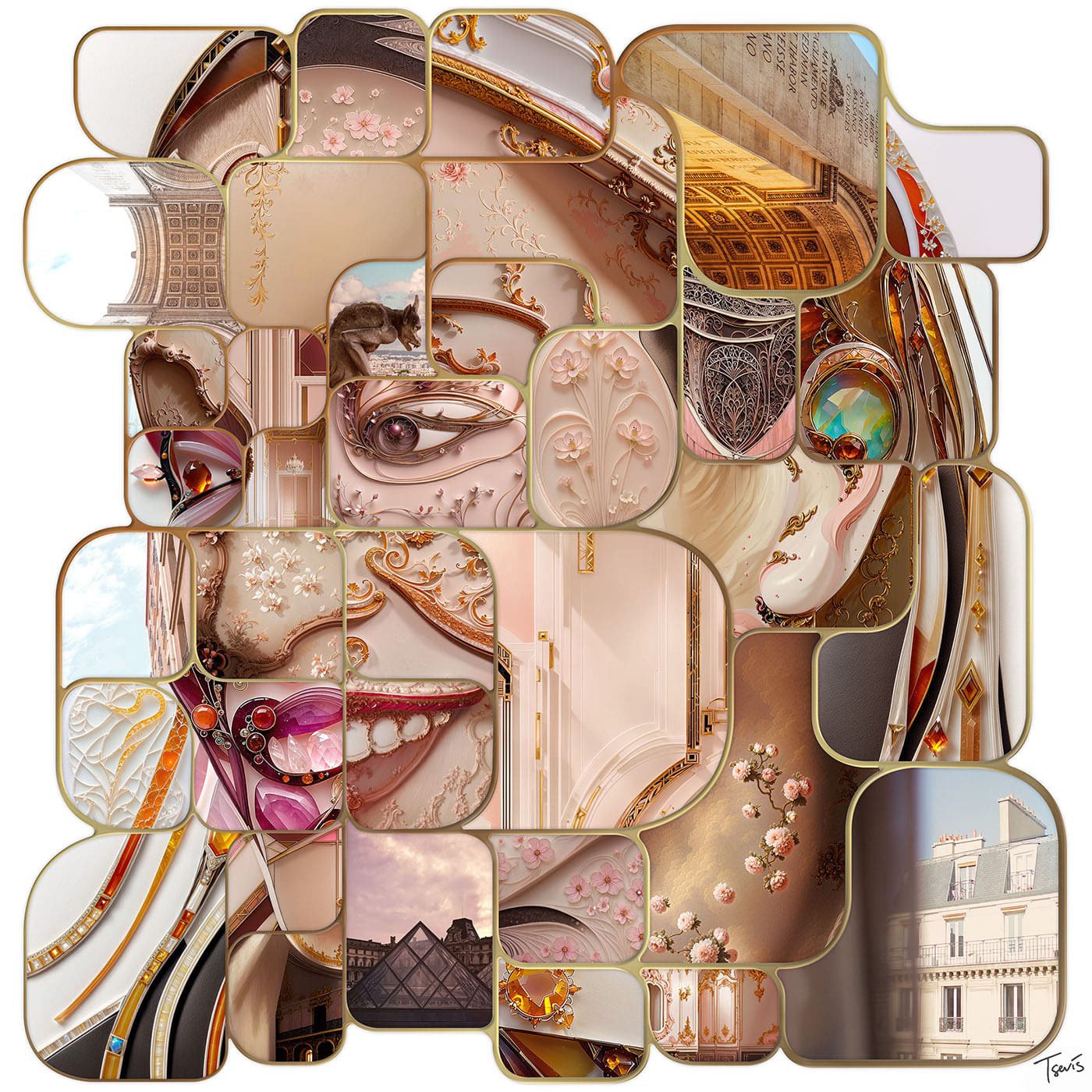
Karolina Pelendritou: Swimming towards Paris 2024 🏊♀️
What’s Under the Surface
The digital mosaic method used here is not merely a visual flourish. It’s a conceptual strategy grounded in Gestalt psychology: the whole emerges from parts. Each portrait consists of hundreds, sometimes thousands, of visual elements, layered, weighted, and arranged according to principles that echo both perceptual science and ancient art traditions.
We draw on academic research from visual cognition (e.g., Palmer’s work on perceptual grouping) and digital semiotics to inform composition. The AI models, trained using curated image sets from the artist’s own archives, allow the art to be as authentic in source as it is complex in structure.
This isn’t “style transfer.” It’s cultural storytelling through intentional synthesis.
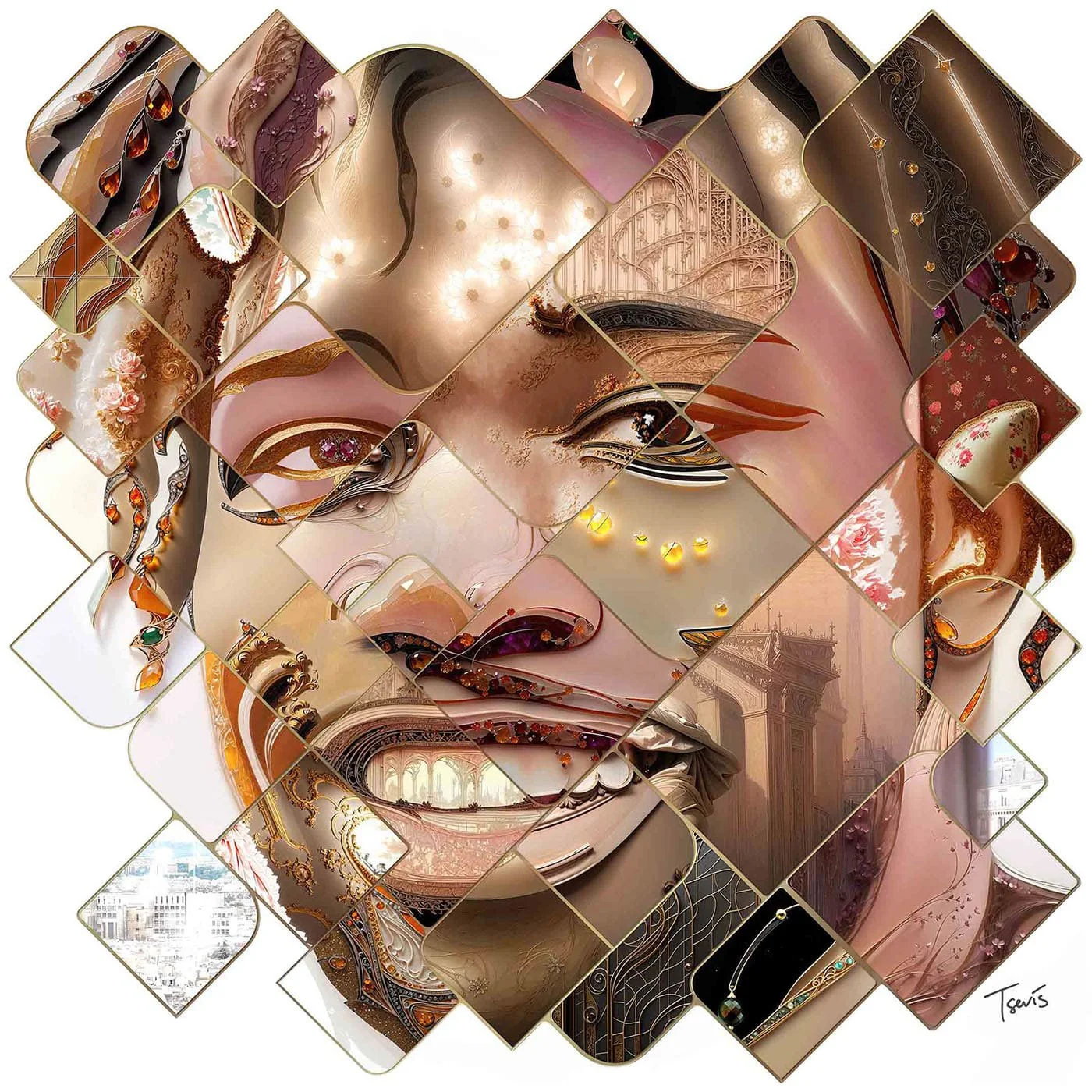
Noah Lyles: Sprinting into Paris 2024 🏃♂️
The Role of Technology: Assisted, Assembled, and Engineered
These portraits are not off-the-shelf AI outputs. They are the result of a layered, hybrid workflow combining machine learning with deliberate, manual design:
AI-supported sketching uses custom-trained models and Low-Rank Adaptation (LORA) techniques, drawing from curated references in French visual history and Olympic iconography.
Digital montage work is completed in Adobe Photoshop and Illustrator, where compositional balance, symbolic motifs, and structural refinements are refined by hand.
The final transformation into a mosaic is achieved through my proprietary tools: a suite of custom-built software scripts and hacks developed over decades. These tools support variable-size mosaic construction, allowing fine-tuned control over image density, perceptual flow, and emphasis of detail.
This multi-phase process preserves originality at every level: in the source material, in the visual architecture, and in the conceptual framing. AI here acts as collaborator, not creator — a studio assistant guided by cultural intent and human decisions.
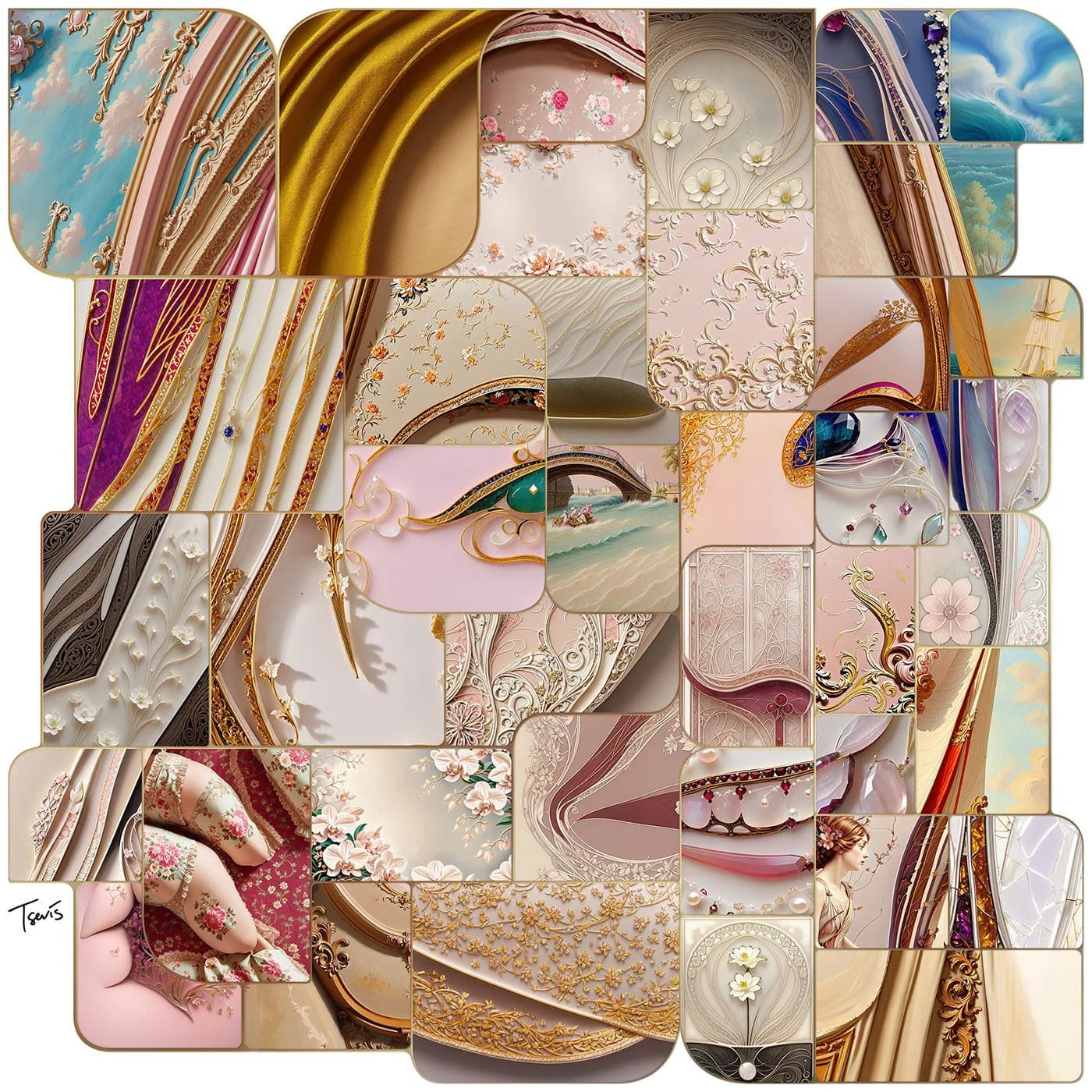
Milly Tanner: Onward to Paris 2024 🚴♀️
A Case Study in Olympic Art
Take, for example, the portrait of Miltos Tentoglou, a Greek long jumper, Olympic gold medalist, and breakdancer. His body is rendered in classical form, but surrounded by motifs drawn from Parisian metro ironwork. The contrast is intentional: the athlete’s kinetic form is framed by history, echoing not only Olympic athleticism but the duality of motion and structure found in Art Nouveau design.
Or Fan Zhendong, Chinese table tennis champion, depicted amid Deco-inspired bursts that evoke both speed and serenity, an aesthetic metaphor for the mental acuity of his sport.
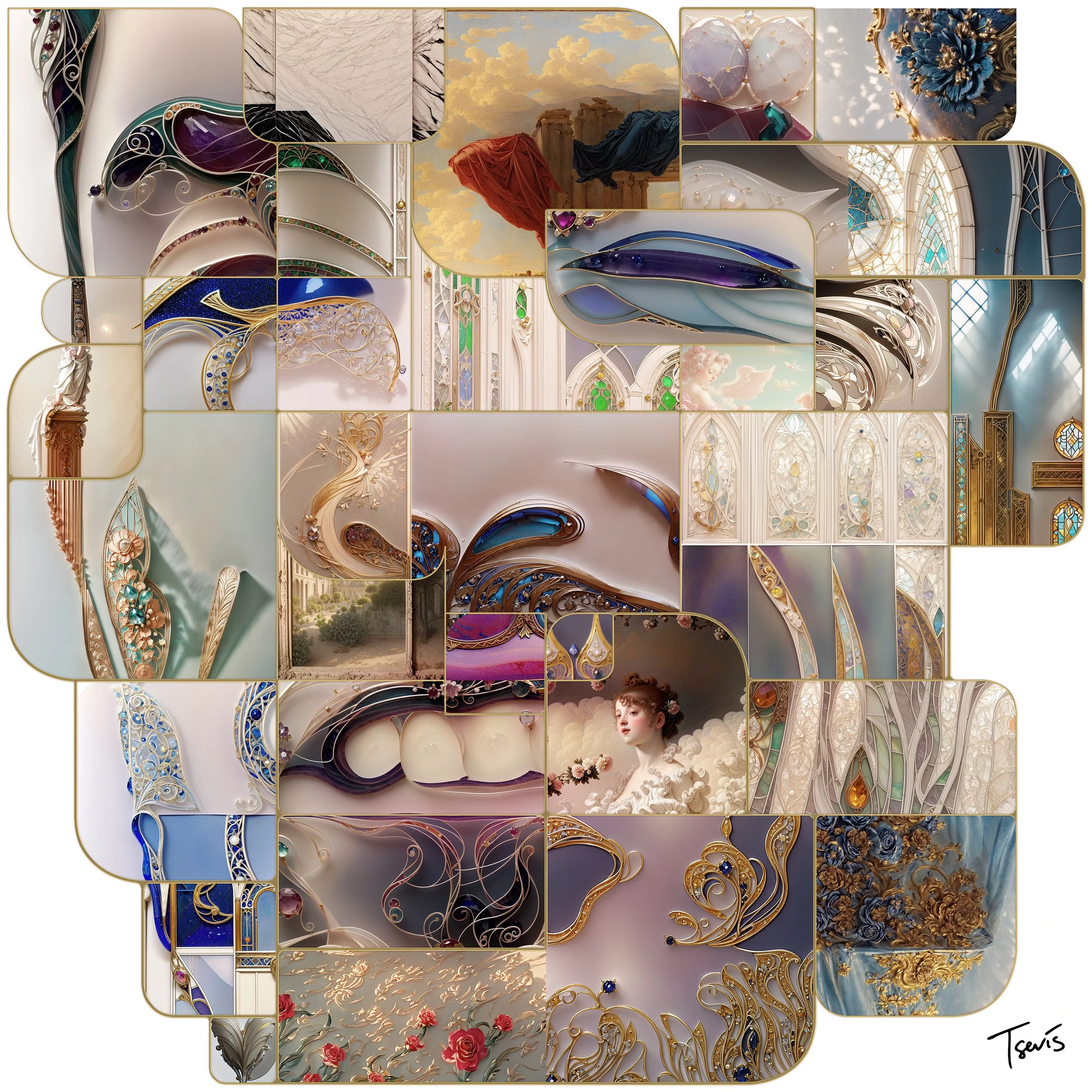
Miltos Tendoglou: Navigating Towards Paris 2024 🥇
Conclusion: Toward a New Iconography of Sport
The Olympic Hopefuls series is a proof of what sport-inspired art can be in the 21st century: respectful, research-informed, and resonant across cultures. It is visual communication built for context-rich environments, campaigns, exhibitions, museums, commemorative branding, or just quiet inspiration on a public wall.
As we move forward, the Olympic Games will continue to be a convergence point of bodies and nations, of tradition and tech. These portraits aim to honor that moment of convergence, in a language that is at once ancient and entirely new.
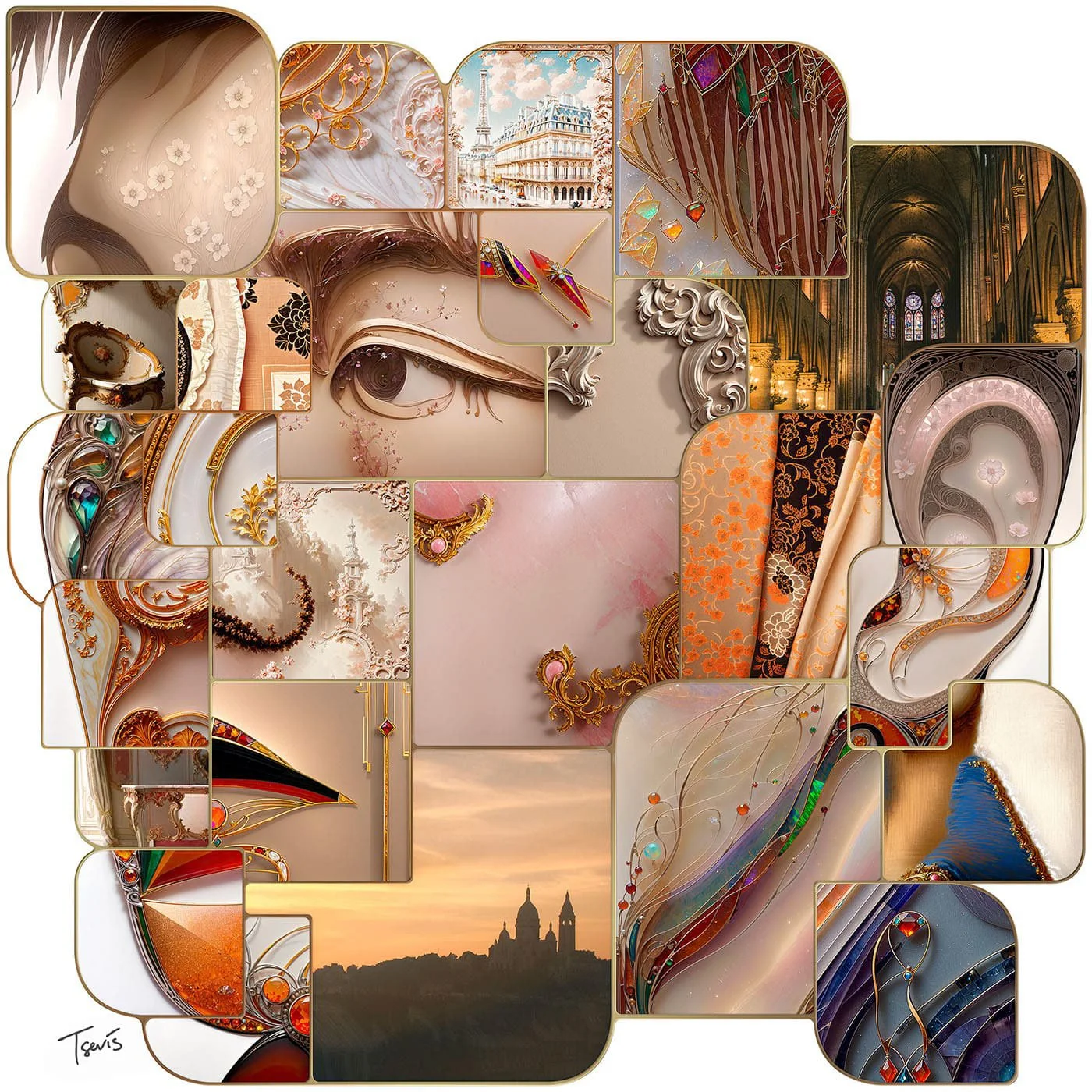
Fan Zhendong: En Route to Paris 2024 🏓
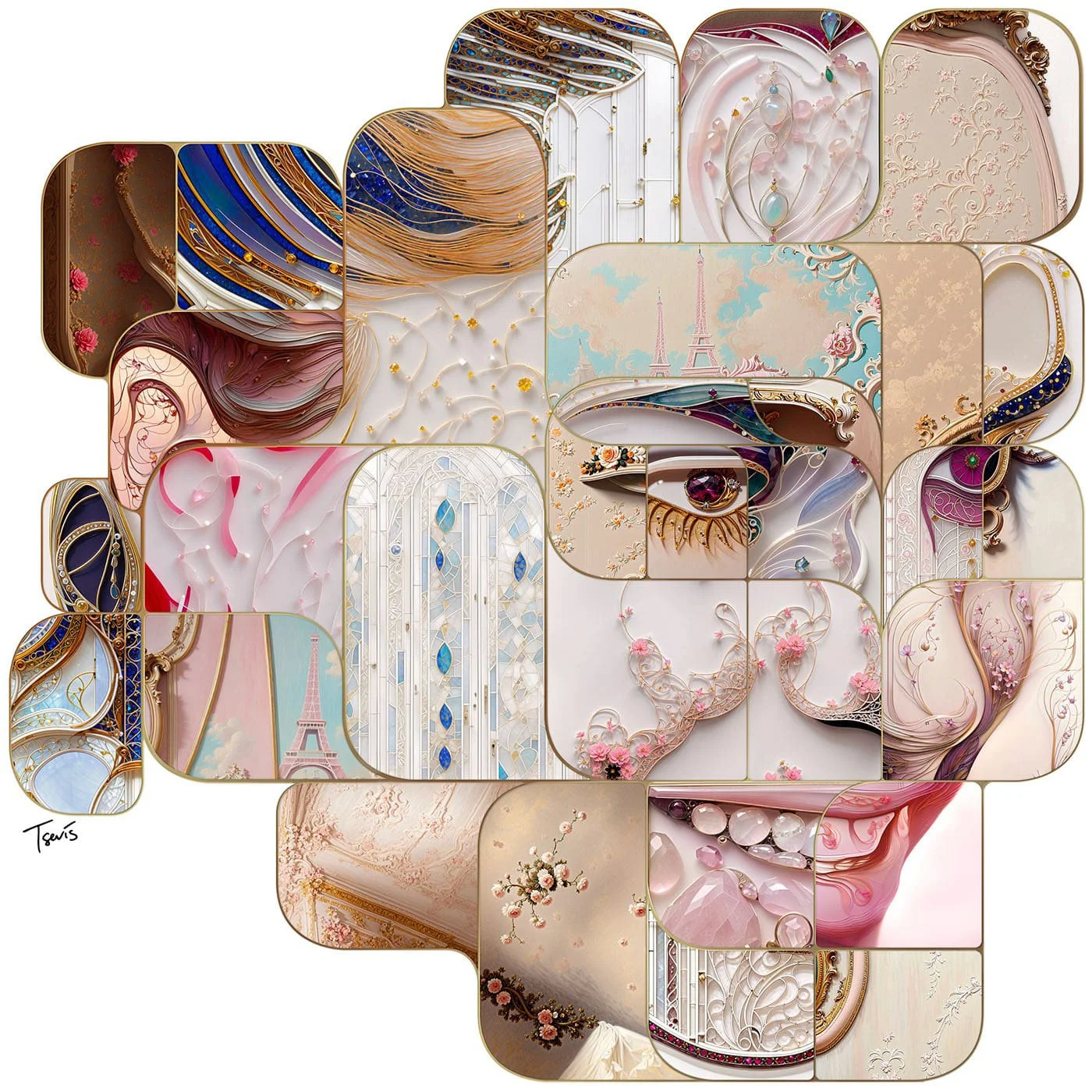
Oriane Bertone: Ascending to Paris 2024 🧗♀️
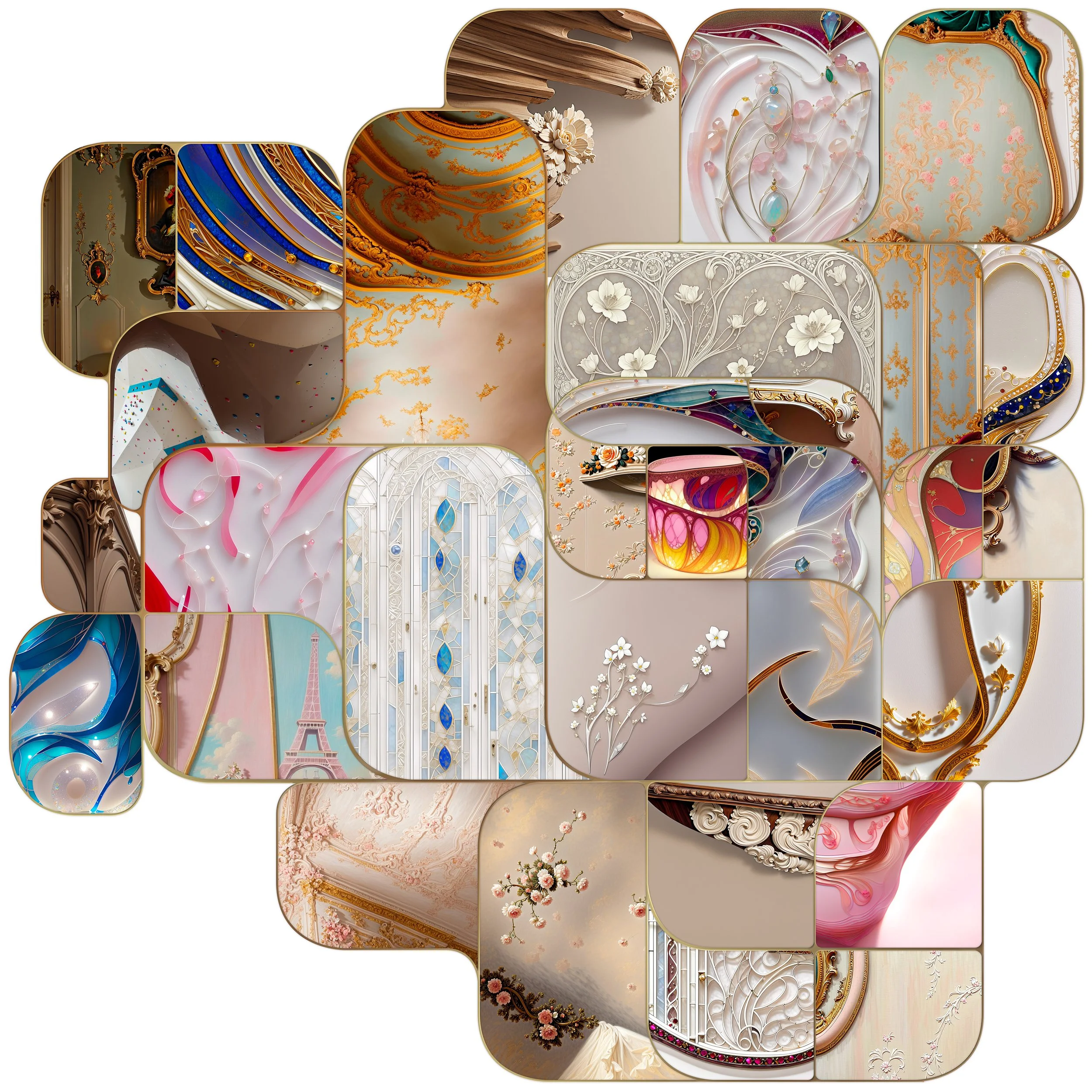
I sincerely appreciate your engagement with the Paris 2024 project. Your interest and support mean a lot to us. Together, we celebrate the harmonious blend of art, history, and the Olympic Games, fostering a sense of unity through the Olympic spirit across the globe.
You can see some more Olympics related works of mine:
The murals for the House of USA in Rio 2016