A picture is worth a thousand words?
Portraits made of the words that made them
Handwriting is the most personal trace a person leaves. It keeps the pressure of a hand, the speed of a thought, the pause before a word. Before anyone reads it, it is already a portrait.
Each face here is made of writing that belonged to that life. Some of it is testimony of the soul: Cavafy’s manuscripts, Bach’s scores, the notebooks in which Beethoven’s friends spoke to him once he could no longer hear. Some is testimony of courage: thousands of names under petitions against slavery in Massachusetts and for women’s vote in New Zealand, signed when putting your name to a cause was a public act. And some is testimony of ideas, like the newspaper Kallirroi Parren founded to argue for the education and work of women.
From across the room each portrait is a likeness. From twenty centimetres it comes apart into notes, words and names that can still be read. Sometimes a person is drawn in their own hand; sometimes the many who wrote together form the face of the one who moved them.
That is the idea behind the series: our words make who we are and trace the road we take. It is still being written, and these seven faces are only its first pages.
The soul · his manuscripts
C. P. Cavafy 1863–1933
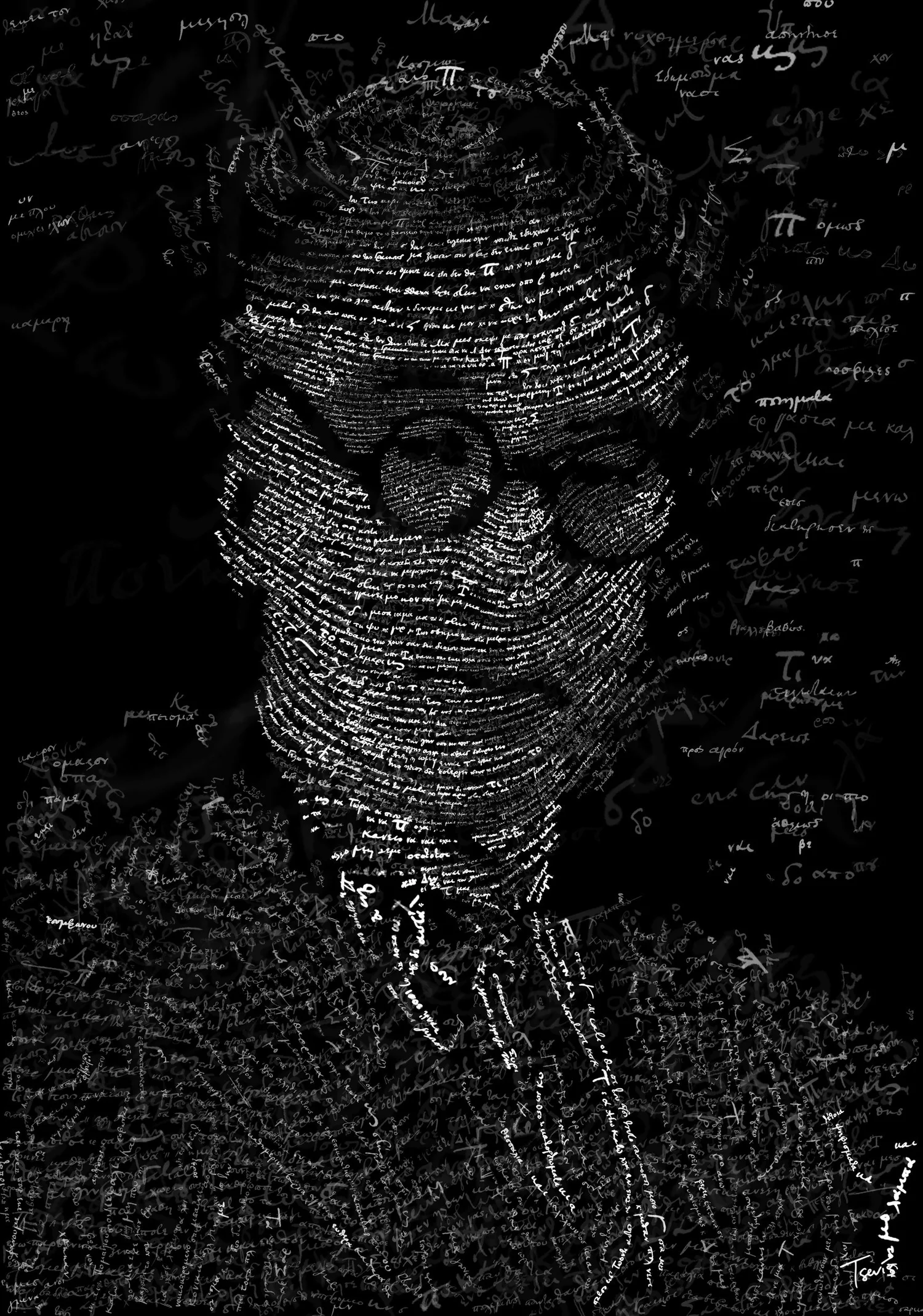
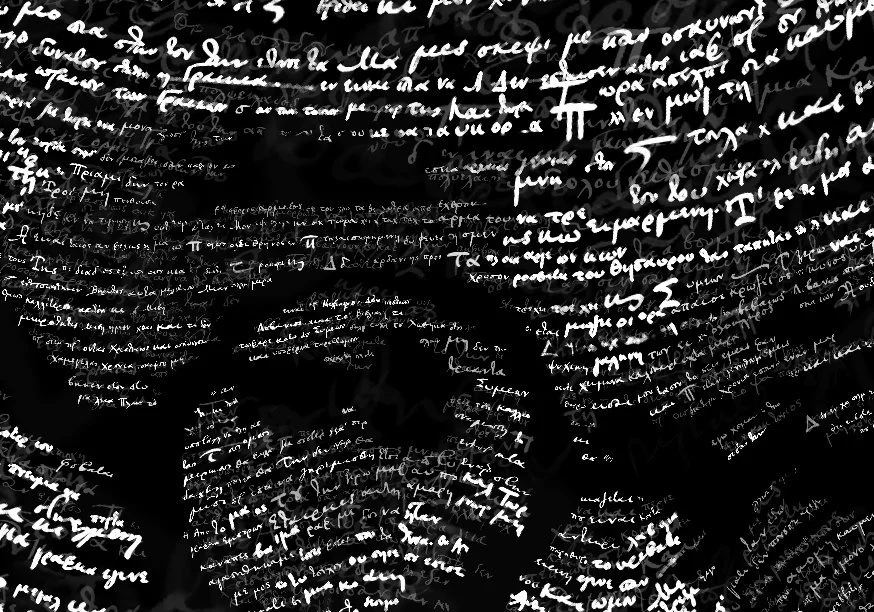
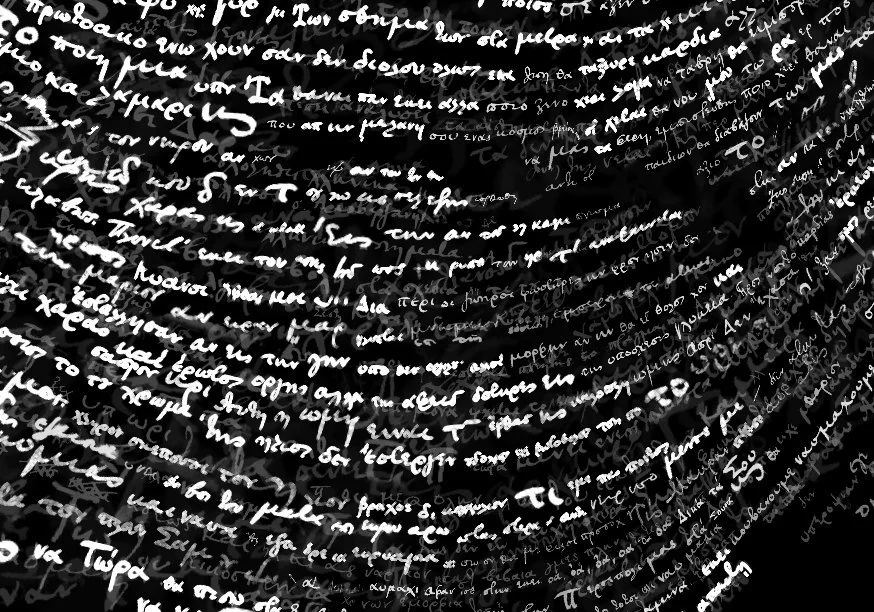
The Alexandrian poet wrote, revised and copied his poems by hand, and for most of his life shared them only on loose sheets and in small private collections. His face is made of his own handwriting, cut from manuscript pages in dark ink: drafts and fair copies of poems such as Waiting for the Barbarians and Days of 1900.
The film builds him to Elli Lambeti’s reading of «Έτσι πολύ ατένισα» (1917), a poem about looking at beauty for so long that it fills the sight.
From twenty centimetres:
Manuscripts: Cavafy Archive, Onassis Foundation (CC BY-SA 4.0). Voice in the film: Elli Lambeti, from the LP «Η Έλλη Λαμπέτη διαβάζει Καβάφη» (Dionysos, 1983).
This portrait, its close-ups and the film’s images are licensed CC BY-SA 4.0, as the manuscripts’ licence requires.
Courage · signatures against slavery
Frederick Douglass 1818–1895
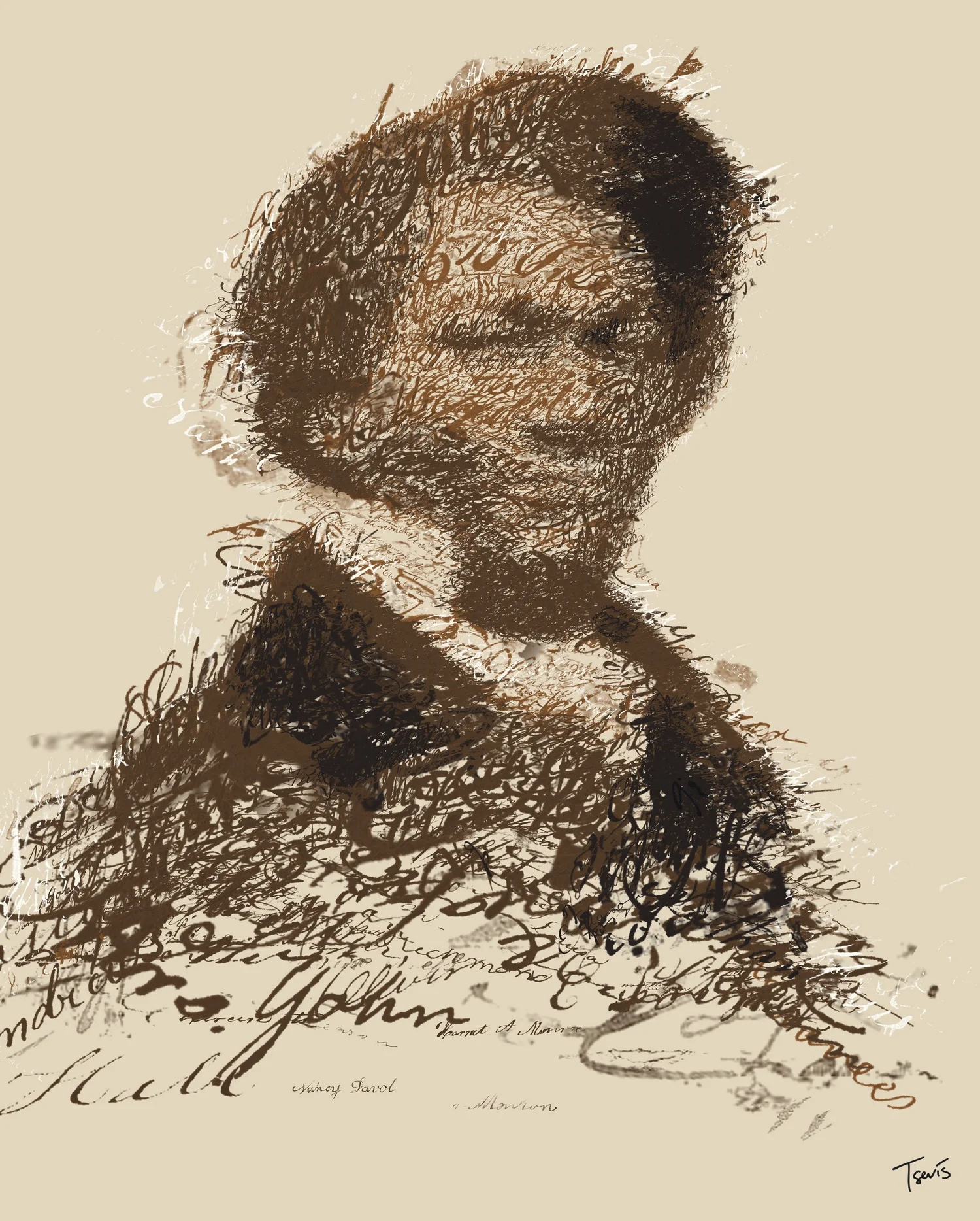
Frederick Douglass escaped slavery in 1838 and became the most powerful voice for its abolition. In the same years thousands of people in Massachusetts, many of them women who could not vote, signed petitions to end it.
His face, after a daguerreotype of about 1855, is made of 2,903 of their signatures, cut from 194 pages of four petitions dated 1839 to 1849. Every mark in it is a name.
From twenty centimetres:
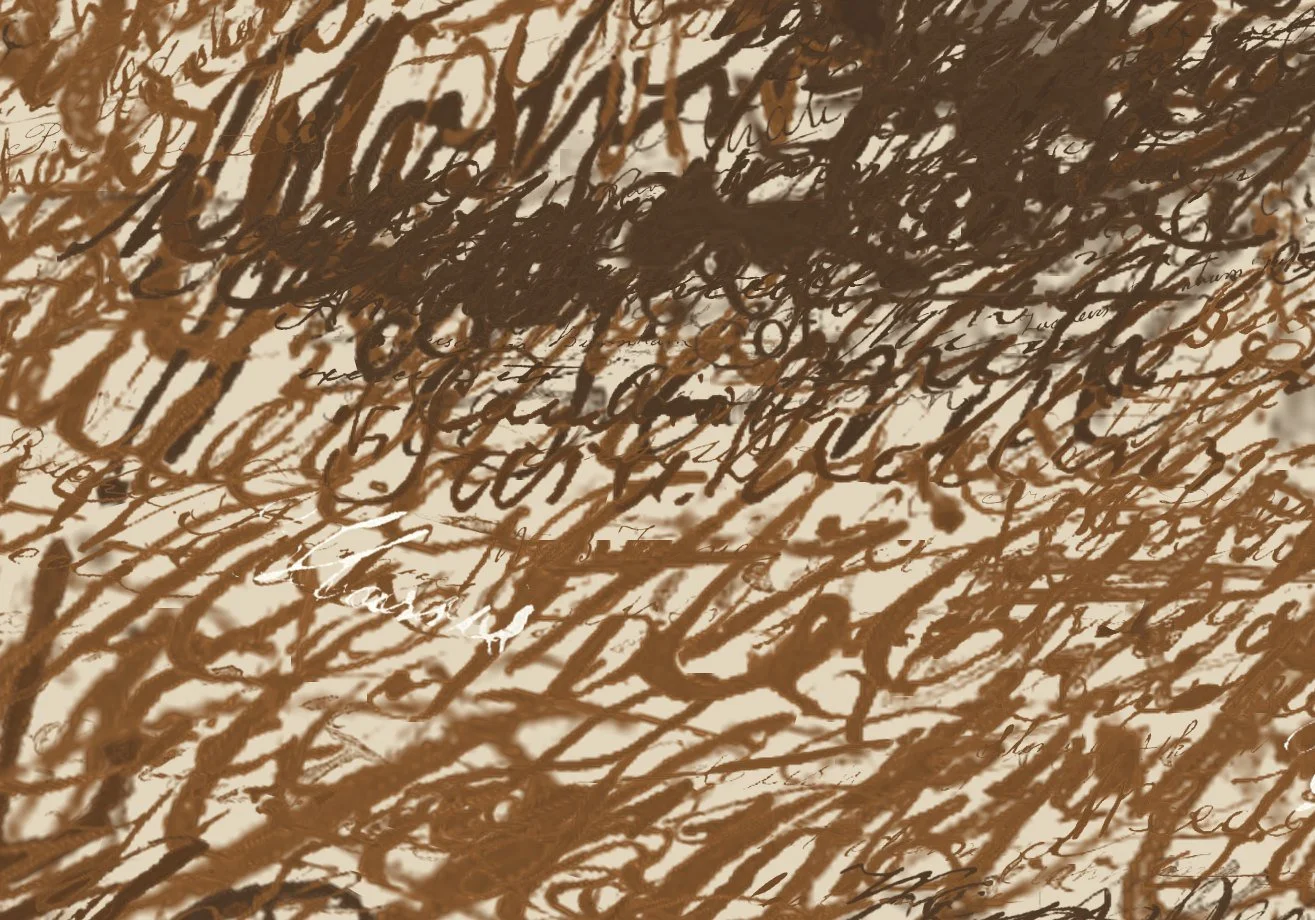
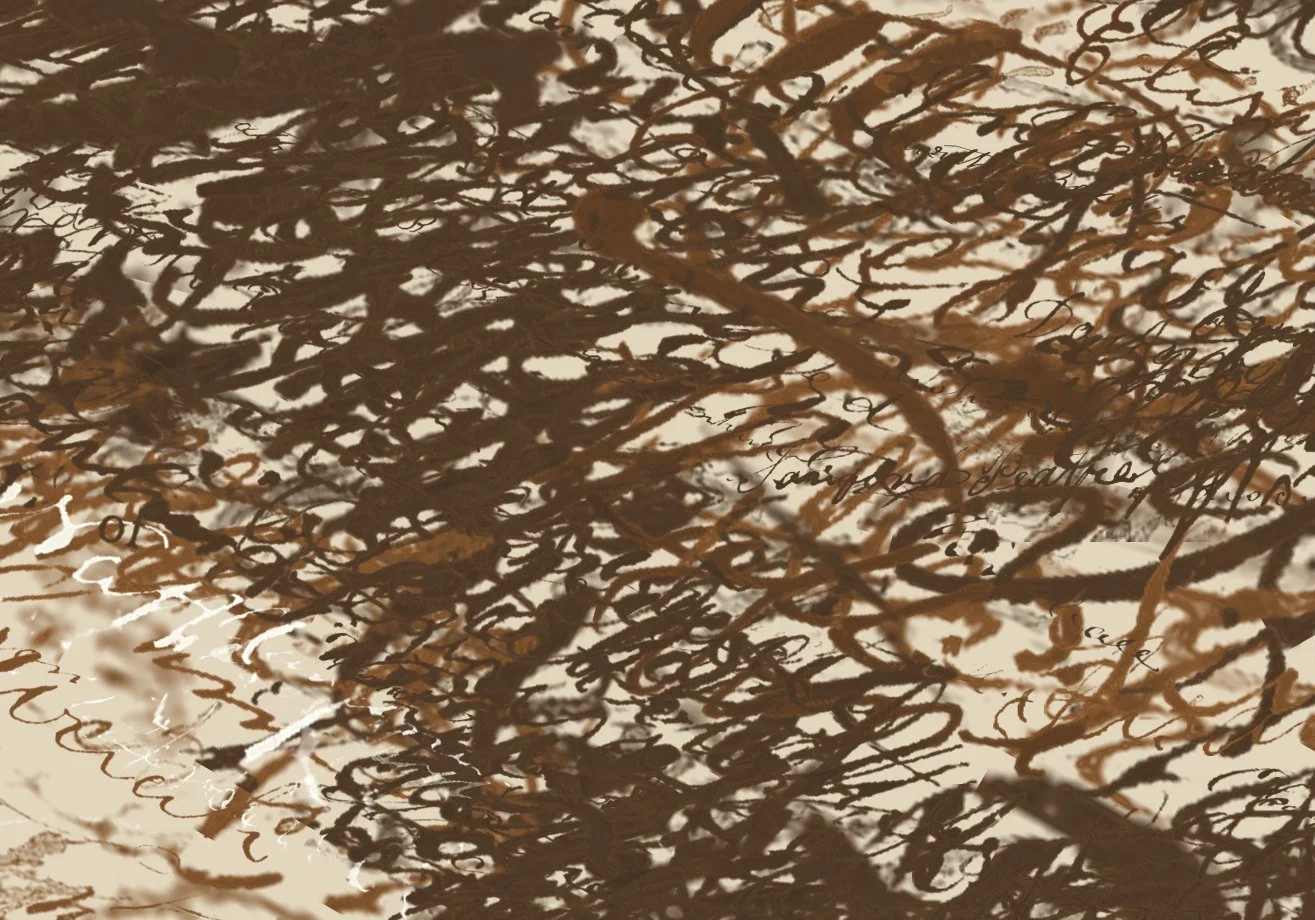
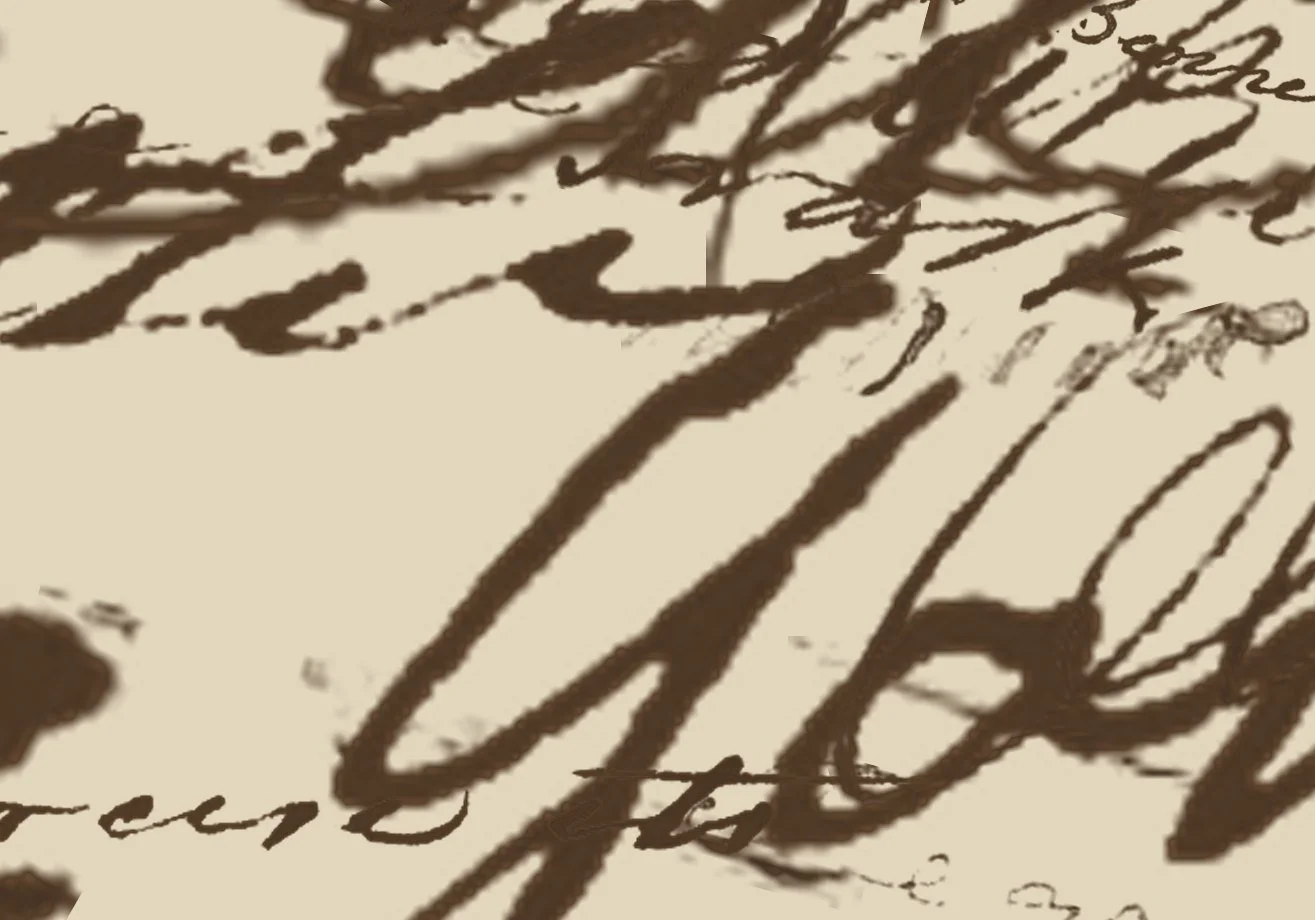
Signatures: Massachusetts anti-slavery petitions, 1839–1849, Massachusetts Archives, digitised by Harvard (Harvard Dataverse, antislaverypetitionsma; public domain). Portrait: daguerreotype, about 1855, The Metropolitan Museum of Art, 2001.756 (public domain). Music in the film: «Freedom» by Charis Tsevis.
Ideas · his conversation books
Ludwig van Beethoven 1770–1827
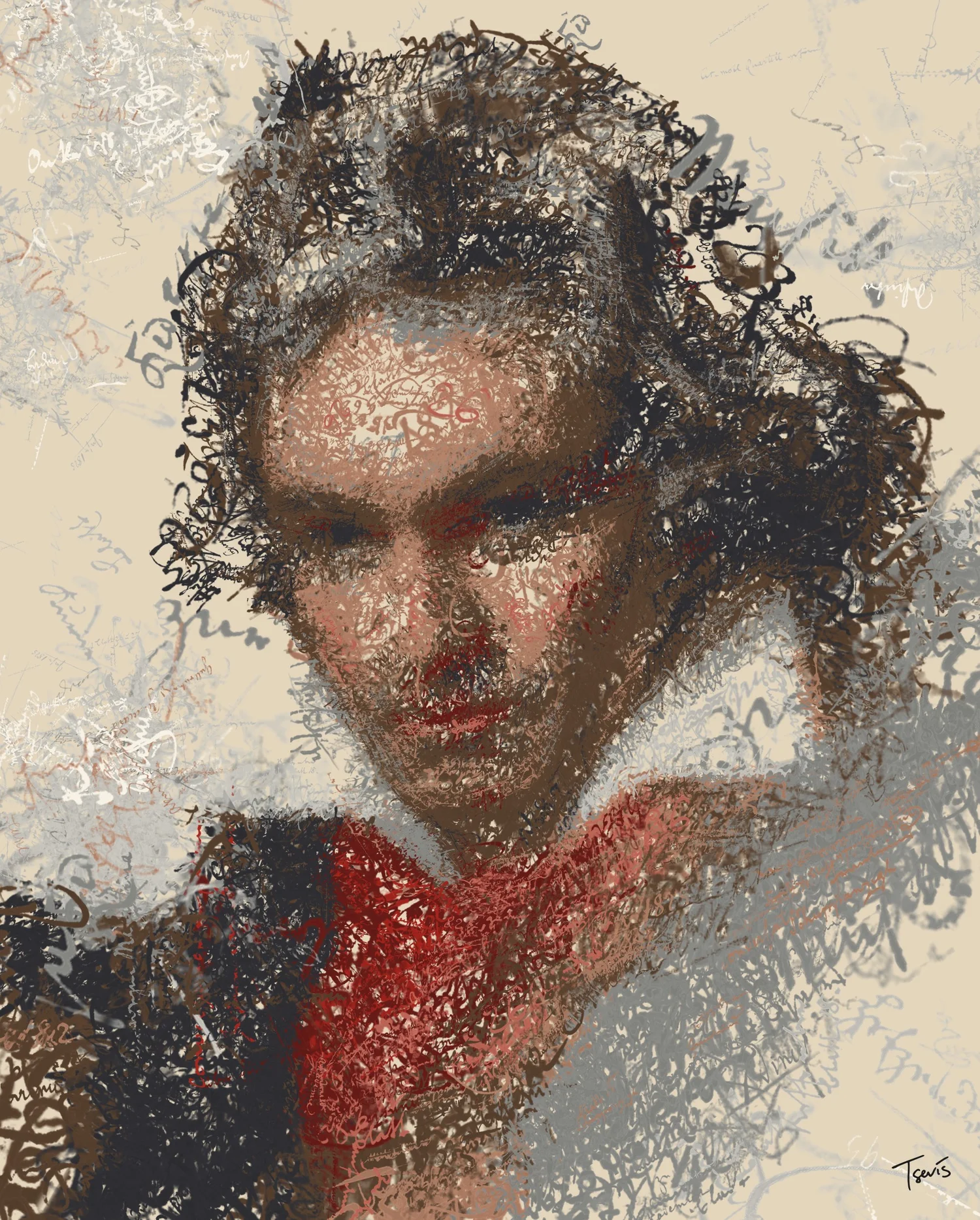
From 1818 Beethoven could no longer follow speech, so the people around him wrote their side of every conversation in small notebooks, and he answered aloud. Friends, his nephew, publishers and strangers filled them with news, music, politics and gossip until his death.
This portrait, after Joseph Karl Stieler’s painting of 1820, is made of 764 words in pencil and ink, taken from the first page of each of the 136 notebooks digitised in Berlin.
From twenty centimetres:
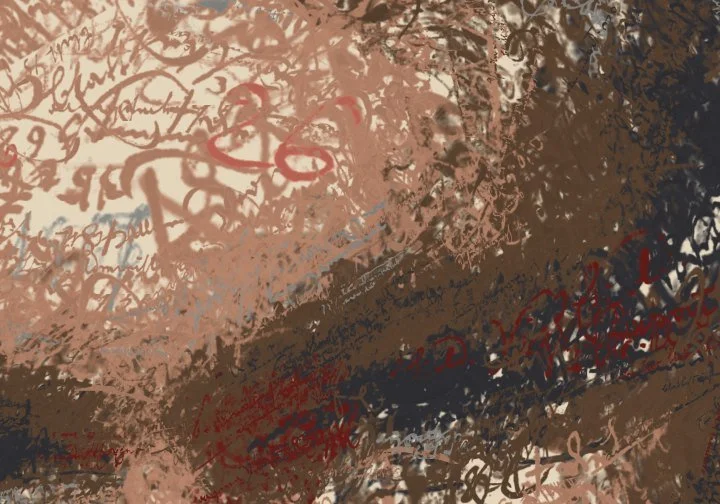
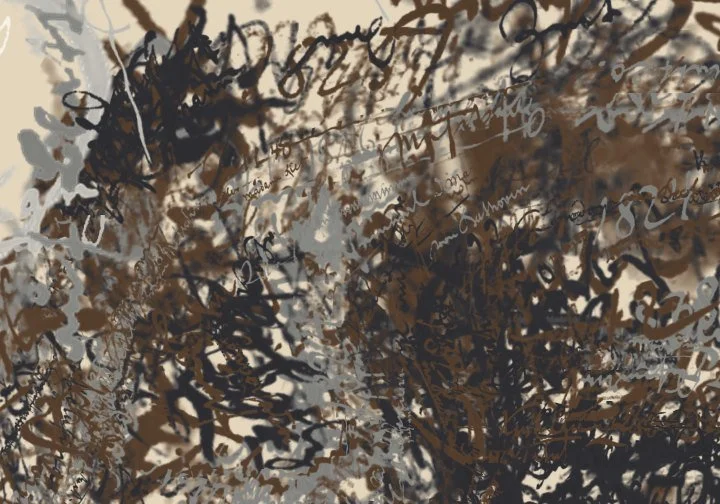
Words: Ludwig van Beethoven, Konversationshefte, Staatsbibliothek zu Berlin, Mus.ms.autogr. Beethoven, L. v. 51 (Public Domain Mark 1.0). Portrait: Joseph Karl Stieler, Beethoven mit dem Manuskript der Missa solemnis, 1820 (public domain). Music in the film: Piano Sonata No. 31, Op. 110, I. Moderato cantabile molto espressivo, recorded by Musopen (public domain).
Courage · the 1893 suffrage petition
Kate Sheppard 1847–1934
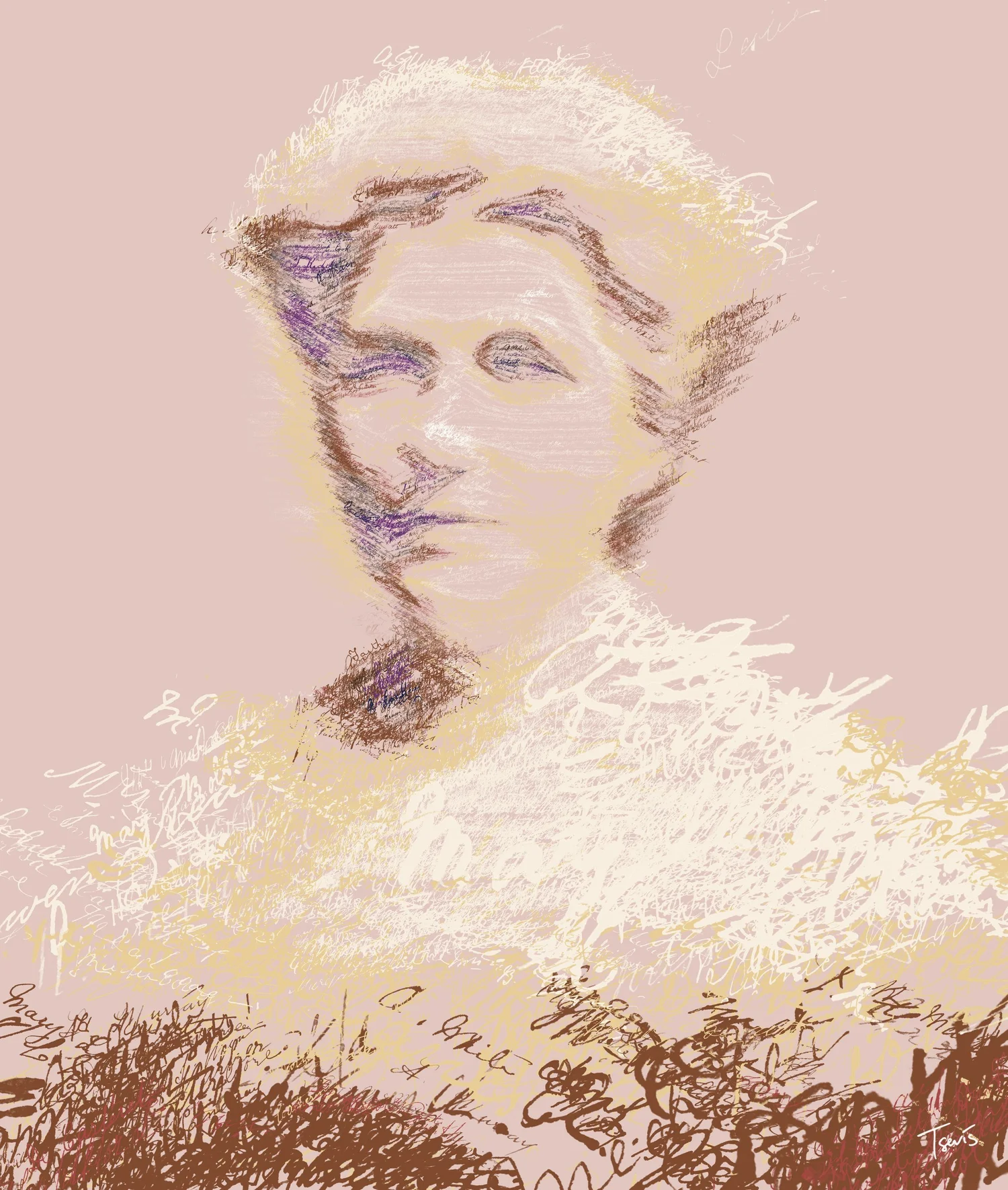
Kate Sheppard led the campaign that made New Zealand, in 1893, the first self-governing country where women won the vote in national elections. Its last petition was a roll of sheets glued end to end and unrolled across the floor of Parliament.
Her portrait is made of 10,716 signatures cut from 427 sheets of that petition, each in its own ink: iron-gall brown, violet, blue-black.
From twenty centimetres:
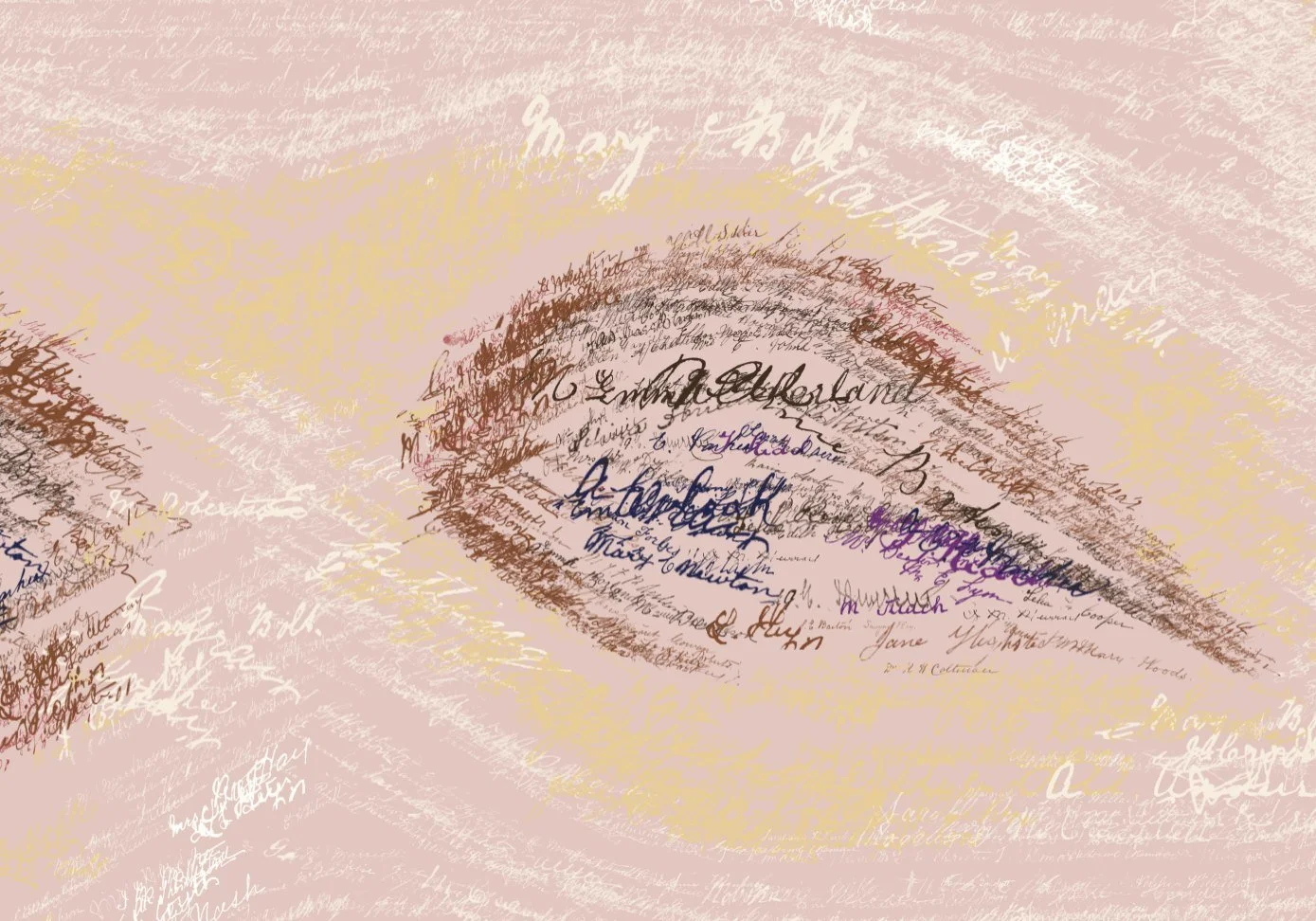
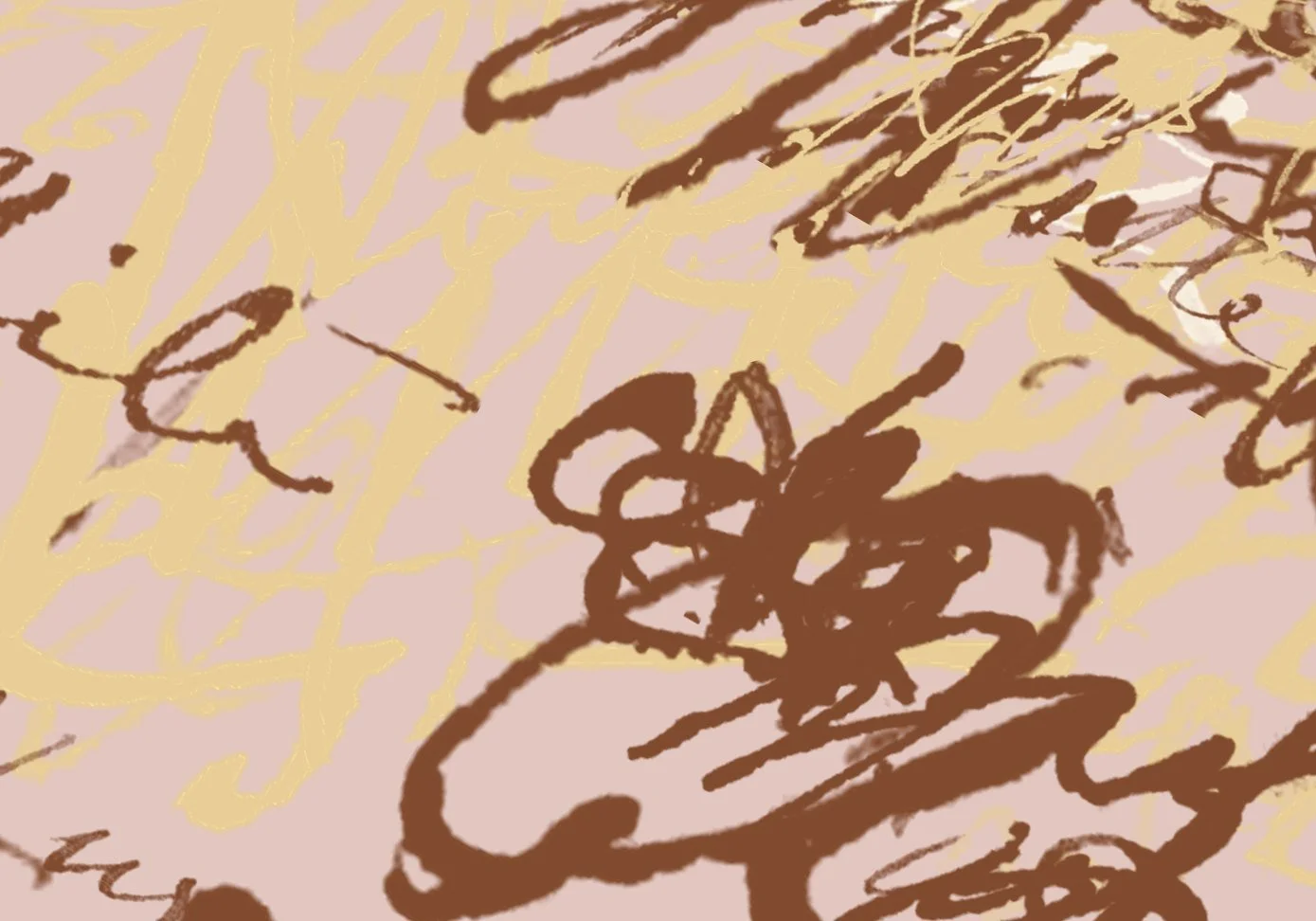
Signatures: Women’s Suffrage Petition 1893, Archives New Zealand, LE1 1893/7a (CC BY 2.0). Portrait: “Mrs. K. W. Sheppard”, photograph published 1905 (public domain). Music in the film: «Heave Her Home» by Charis Tsevis.
The soul · his autograph scores
Johann Sebastian Bach 1685–1750
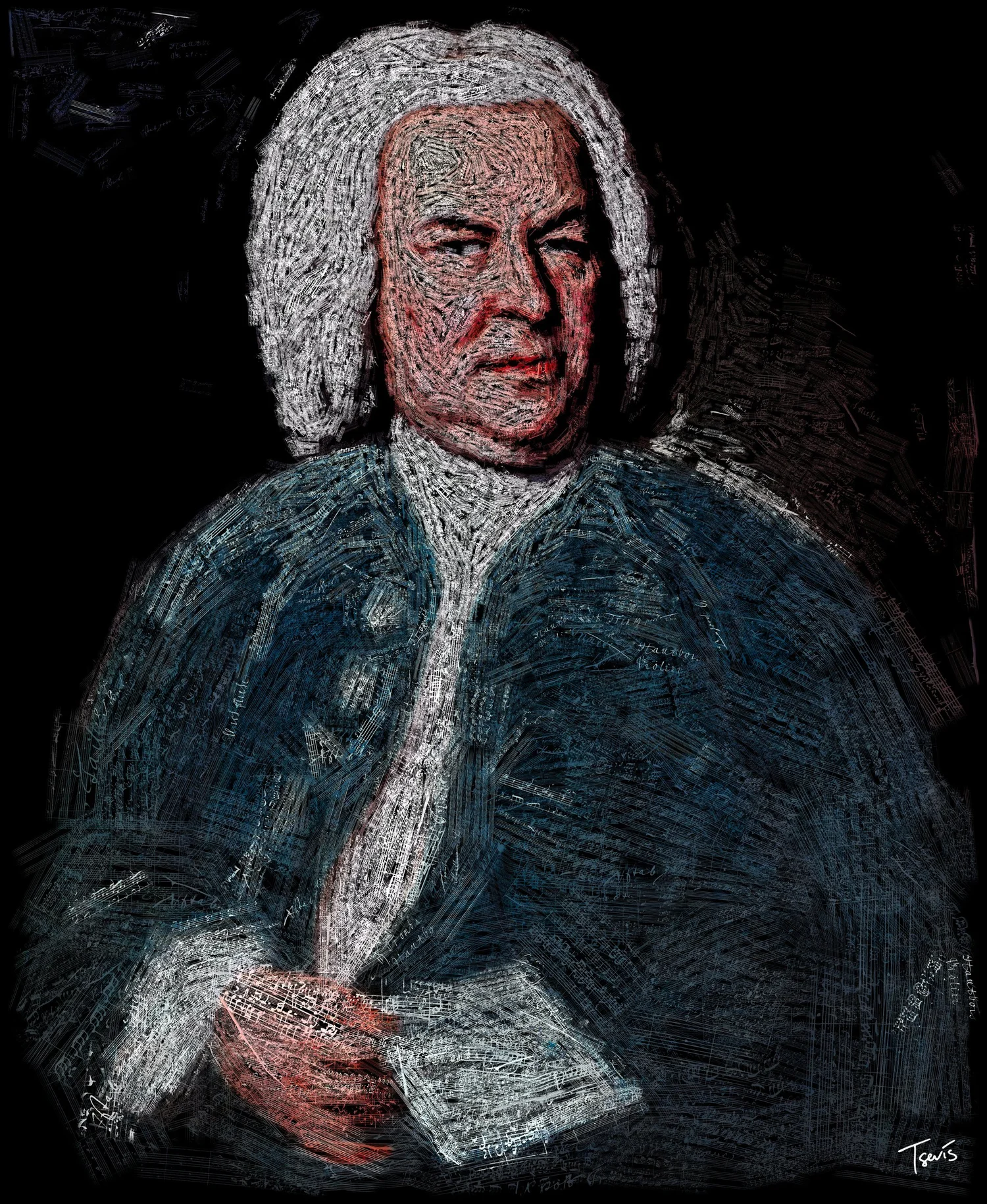
Bach after Elias Gottlob Haussmann’s portrait of 1748, holding a page of music. The face is made of 4,383 fragments of his own manuscripts in six inks: staves, note heads, clefs and beams, each toned to the colour of the painting beneath it.
Up close you read the composer’s hand, never enlarged beyond the resolution of the scan.
From twenty centimetres:
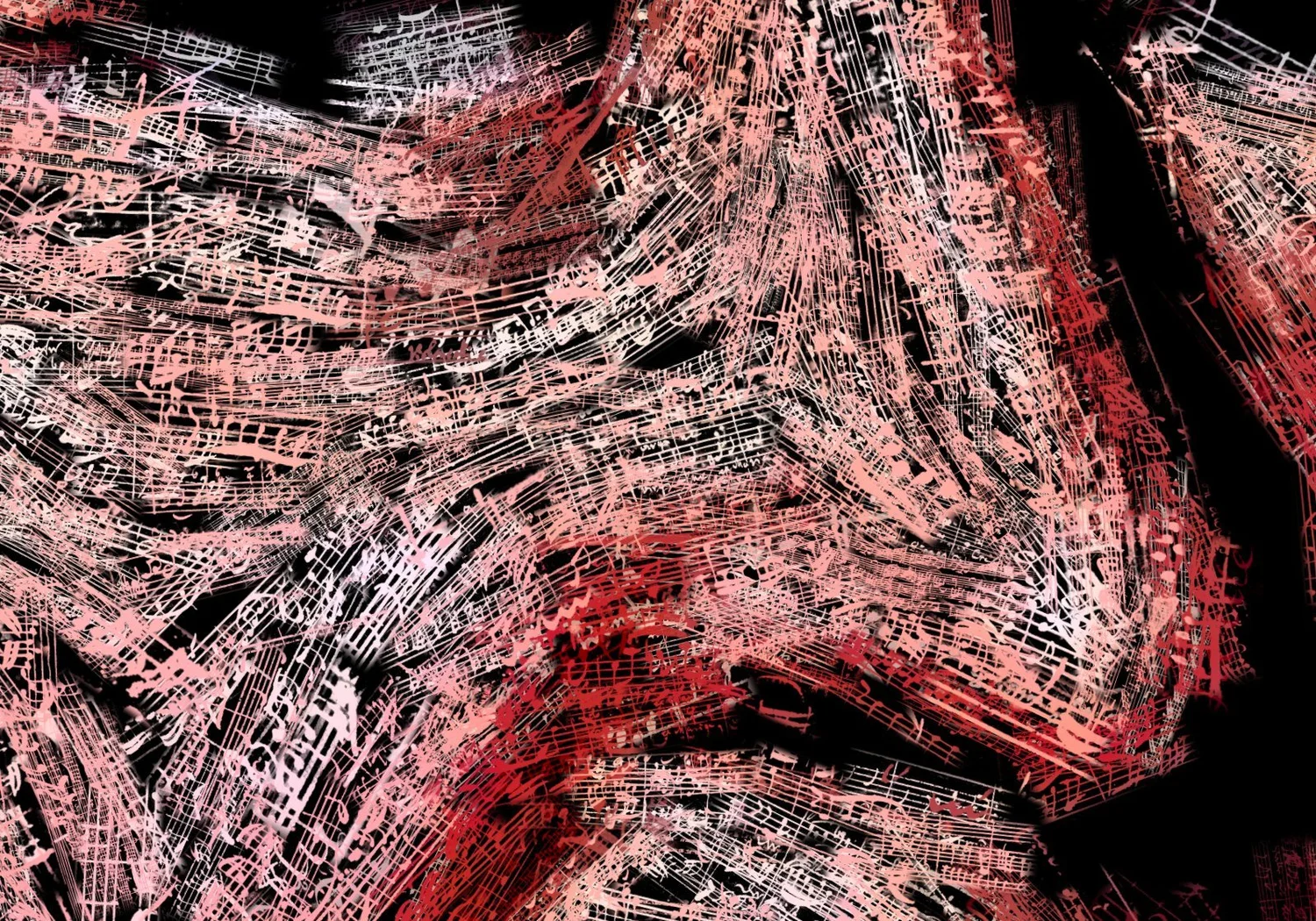
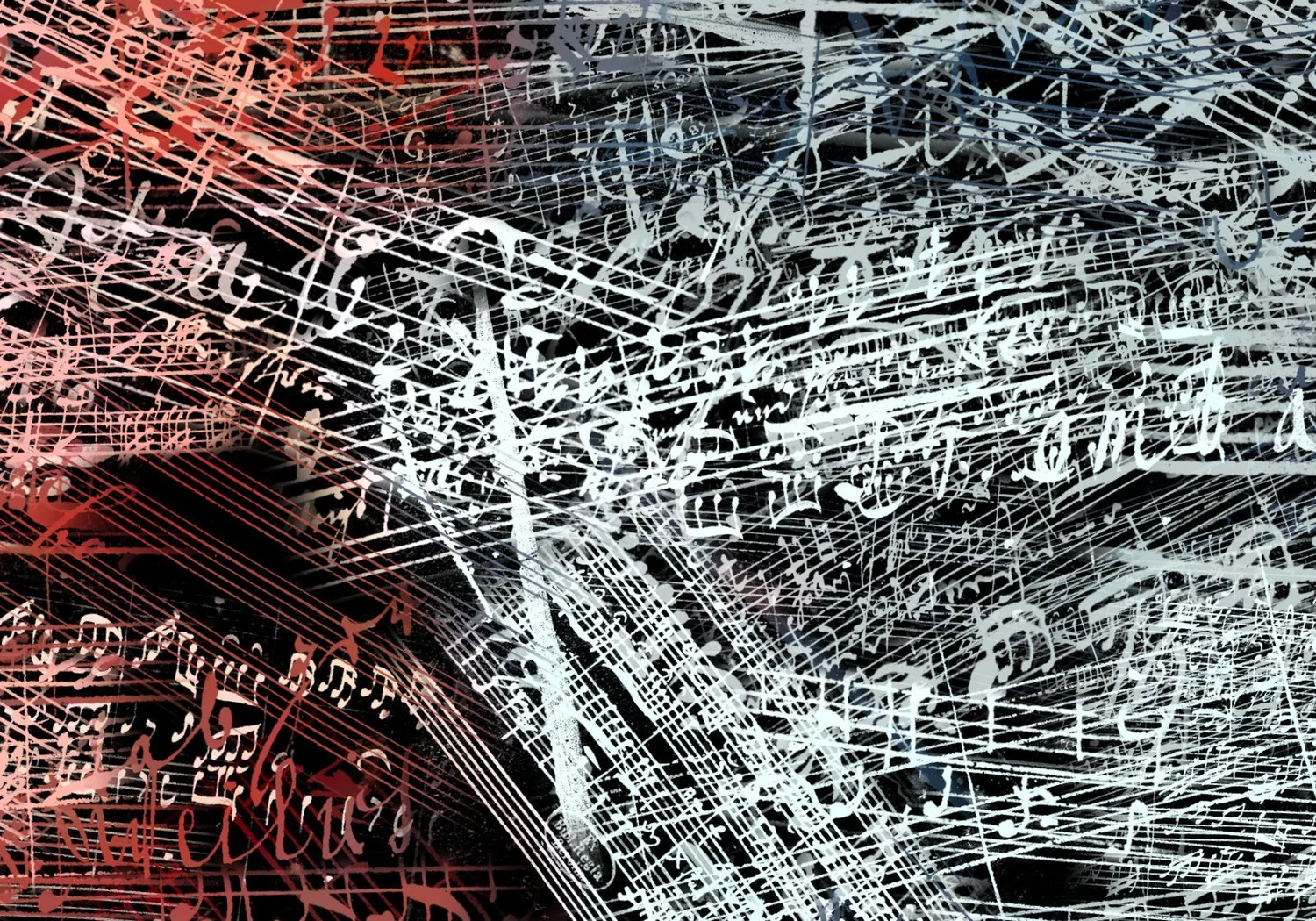
Manuscripts: autograph scores of J. S. Bach on Wikimedia Commons (71 files, public domain). Portrait: Elias Gottlob Haussmann, 1748, via Google Arts & Culture (public domain). Music in the film: Aria of the Goldberg Variations, played by Kimiko Ishizaka (Open Goldberg Variations, CC0).
Ideals · the newspaper she founded
Kallirroi Parren 1861–1940
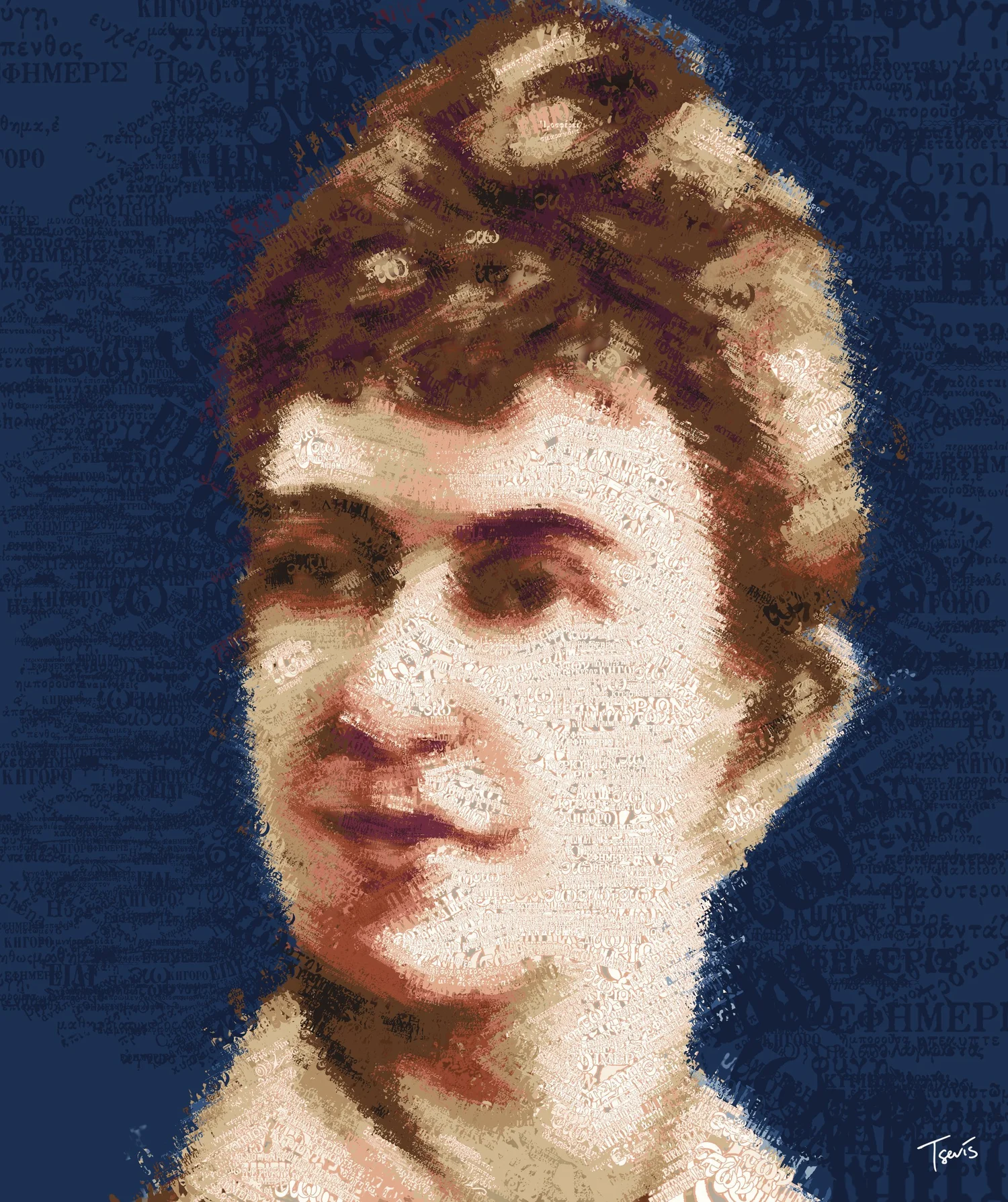
Kallirroi Parren founded Εφημερίς των Κυριών in 1887, a weekly written by women for women, and edited it for three decades. It argued for girls’ education and for women’s work and vote.
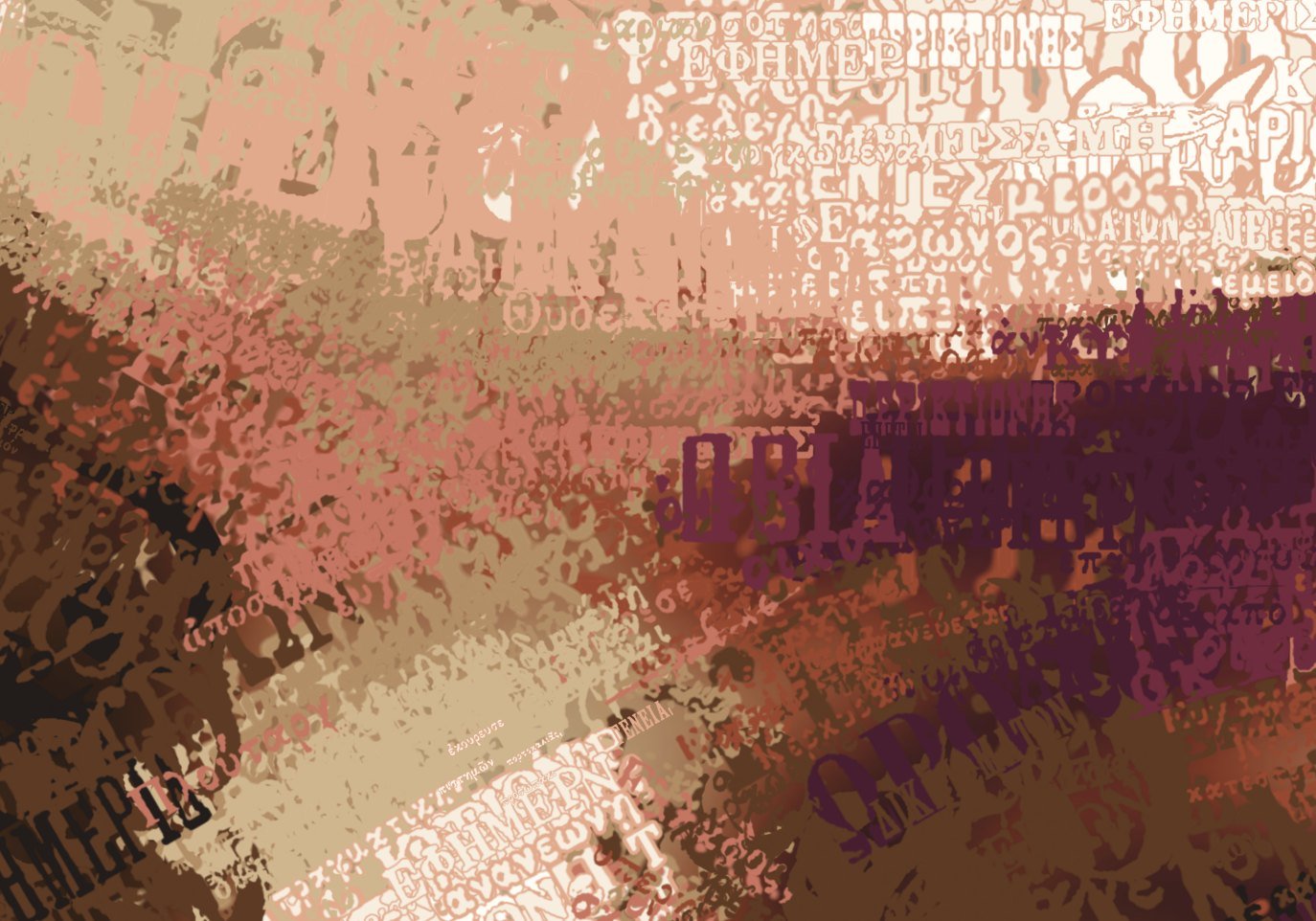
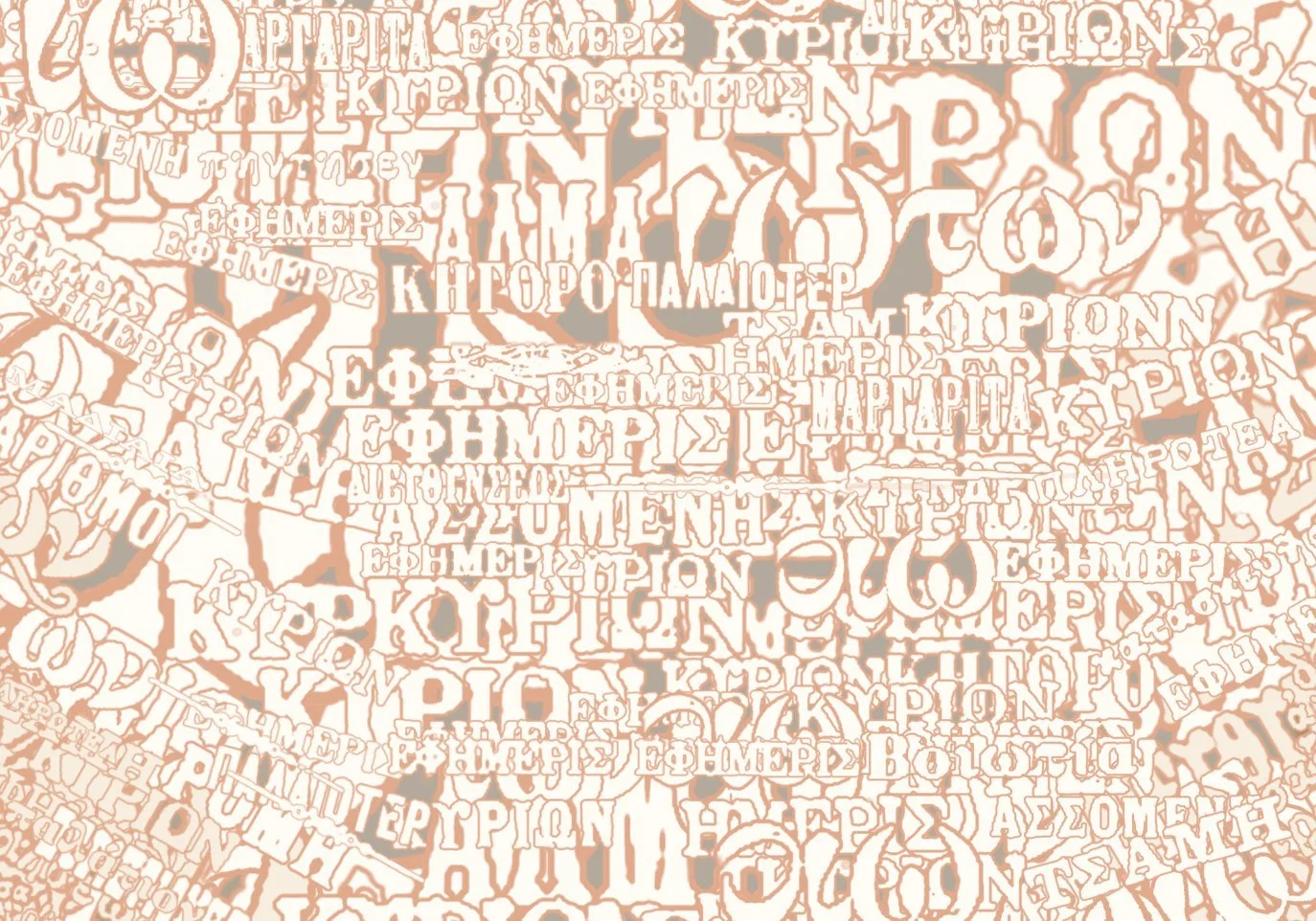
Her face, after an engraving of 1889, is made of 3,562 printed words from ten issues of the paper, 1895 to 1907. The masthead words recur all over it.
From twenty centimetres:
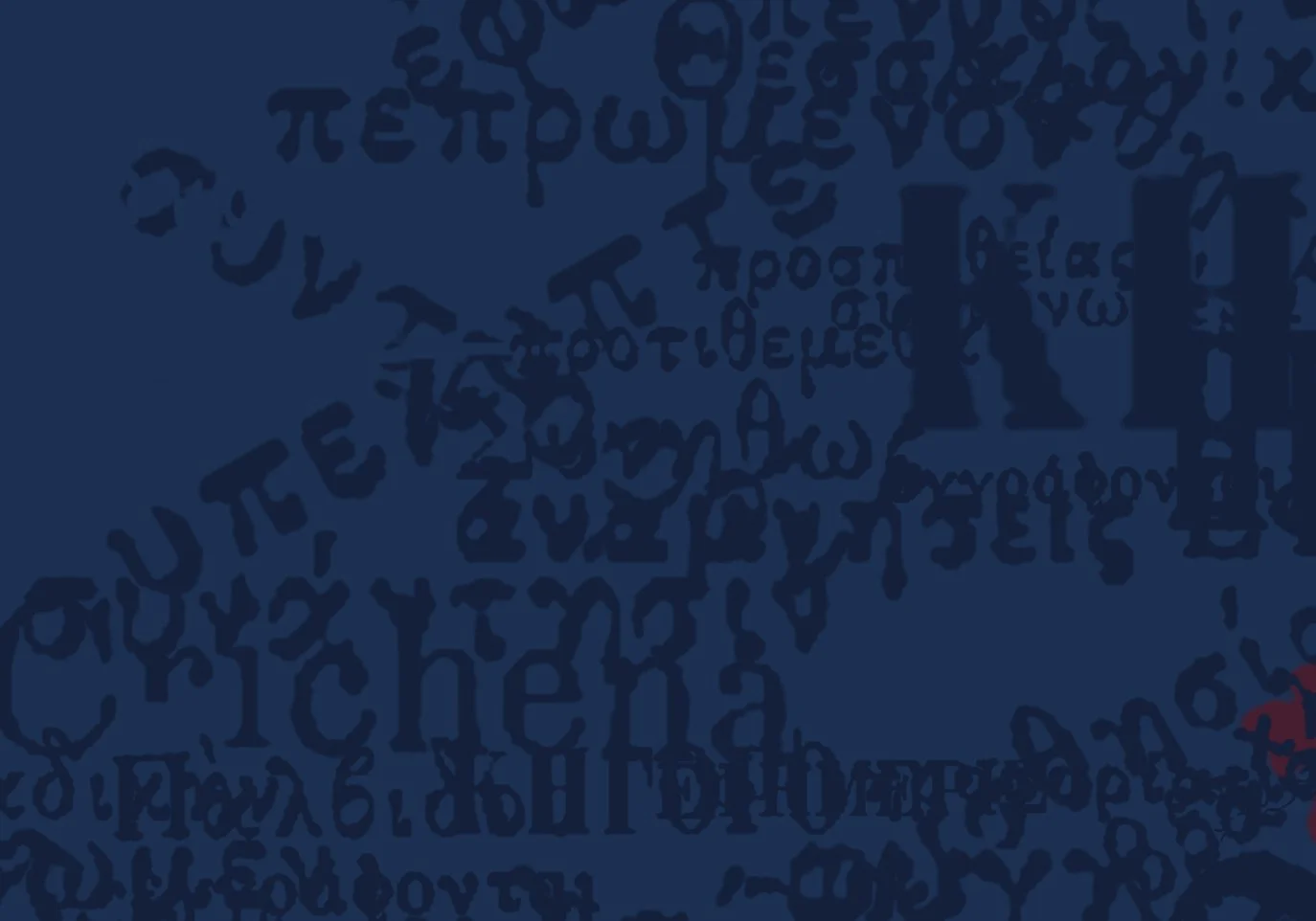
Words: Εφημερίς των Κυριών, 1895–1907, digitised by Lekythos, University of Cyprus (public domain). Portrait: engraving in Ημερολόγιον Σκόκου, 1889 (public domain). Song in the film: «Προς τη Μελλούμενη Γη», music by Charis Tsevis, words by Kostis Palamas.
Care · her letters
Florence Nightingale 1820–1910
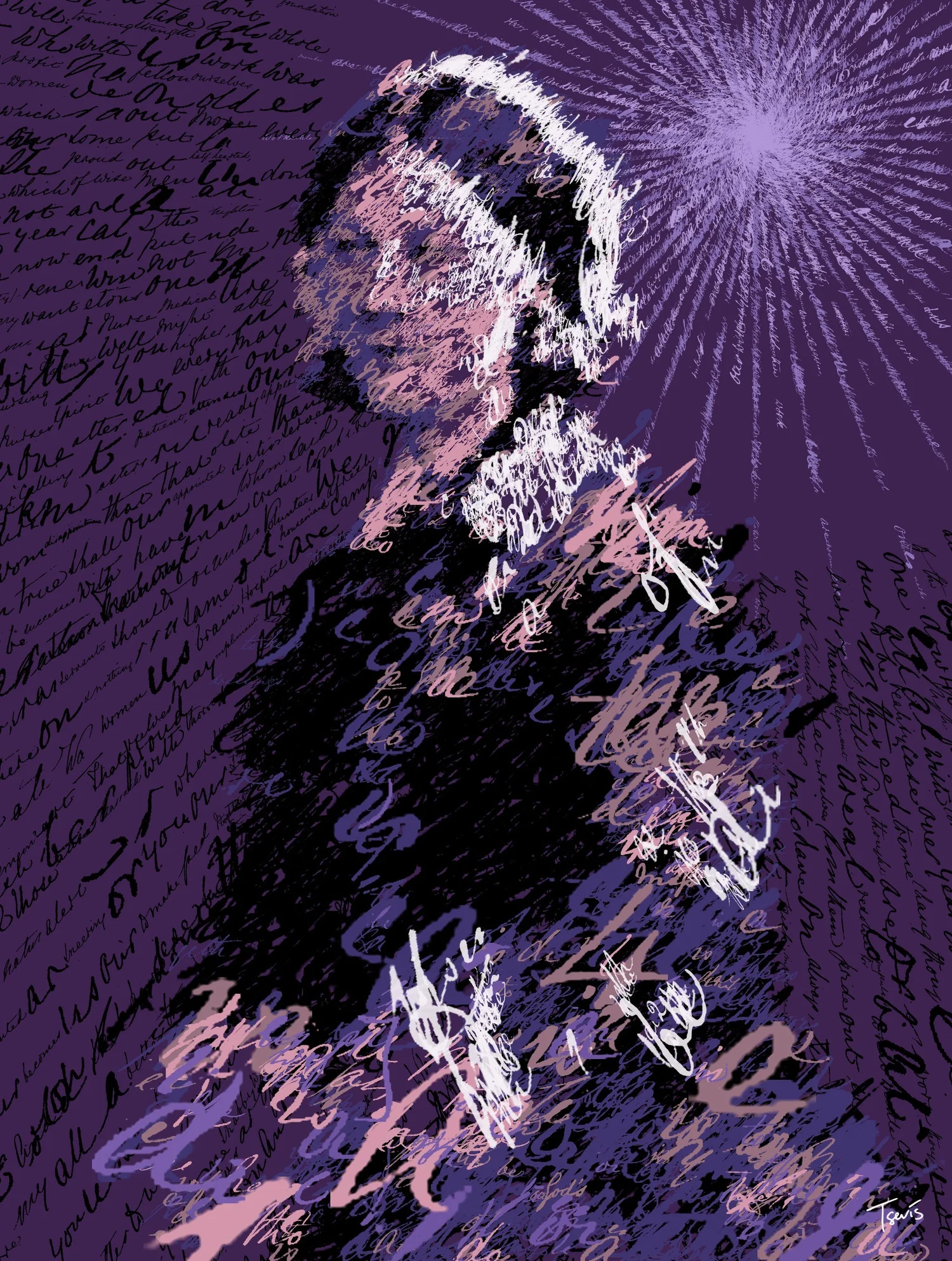
The series could not end without the nurse who became the symbol of her profession. Of all the people who work for others, nurses are the ones Charis Tsevis admires most.
Florence Nightingale nursed the wounded of the Crimean War, walking the wards at night with a lamp, and went on to found modern nursing: the training school at St Thomas’ Hospital in London, and the statistics that showed how many soldiers died of disease rather than of their wounds.
Her portrait, after a photograph of about 1860, is made of words cut from seventeen pages of her own letters: a letter of 1883 to the probationer nurses at St Thomas’, two pages to Lt. Col. Lefroy of 1855 and a letter of 5 July 1856. Light words radiate from the lamp; black ones fall away from it like rays.
The film is a play with the light: the lamp lights, its rays reach out, and the light falls on her band by band.
From twenty centimetres:
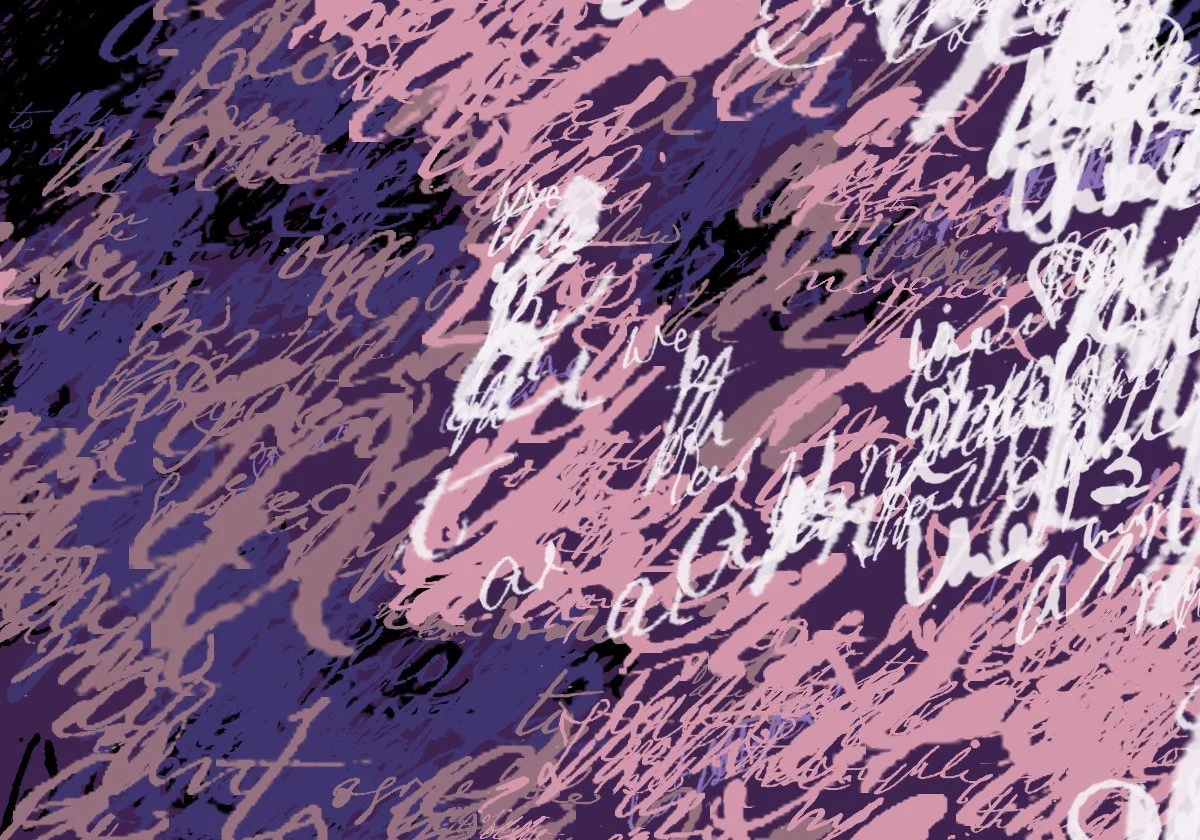
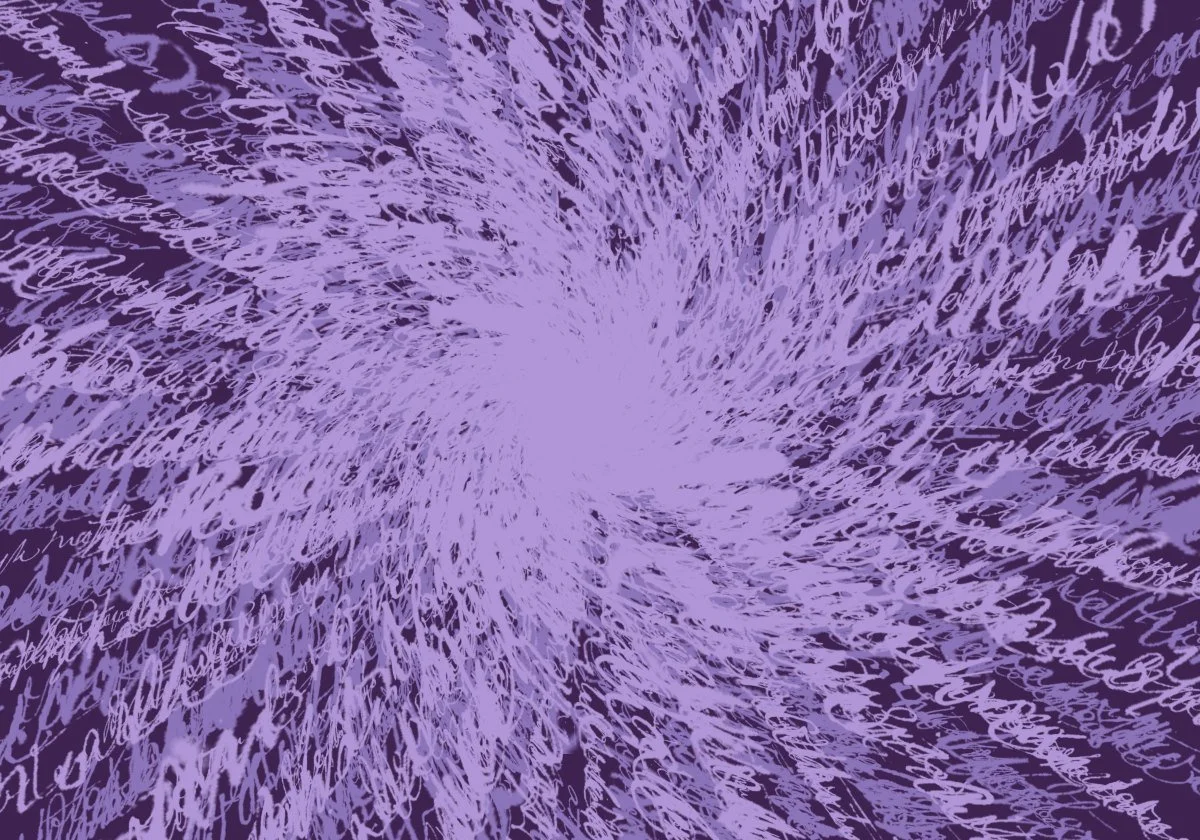
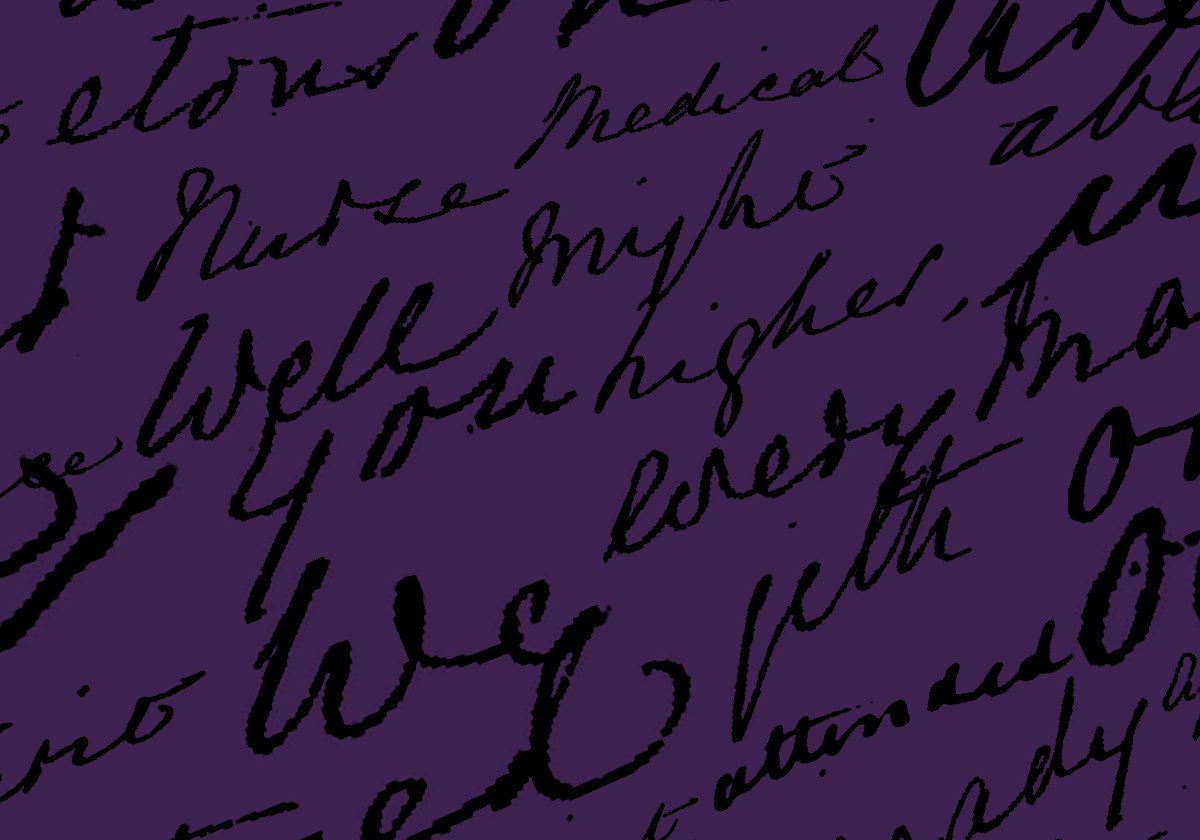
Words: letters of Florence Nightingale, Wellcome Collection (Public Domain Mark 1.0). Portrait: photograph of Florence Nightingale, about 1860, Wikimedia Commons (public domain).
A long tradition
Writing has been turned into image for as long as there has been writing. Around 300 BC Simias of Rhodes shaped his poems as an egg, a pair of wings and an axe. In the ninth century Hrabanus Maurus wrote figures into the grid of his verses in praise of the Cross. Hebrew scribes drew micrography, lines of tiny script that form borders, beasts and, by the nineteenth century, whole portraits. Islamic calligraphers turned sacred phrases into lions, birds and ships, and Chinese calligraphy has long held that the writing shows the writer. In 1918 Apollinaire’s Calligrammes let the lines of a poem fall as rain.
In 1967 Ken Knowlton and Leon Harmon at Bell Labs built a computer picture out of printed symbols, the beginning of the tradition this studio works in. These portraits belong to that line, with one difference: none of the writing was made for the picture. Every word and every name was there first, on a real page, written for its own reason.
How they are made
- Sources
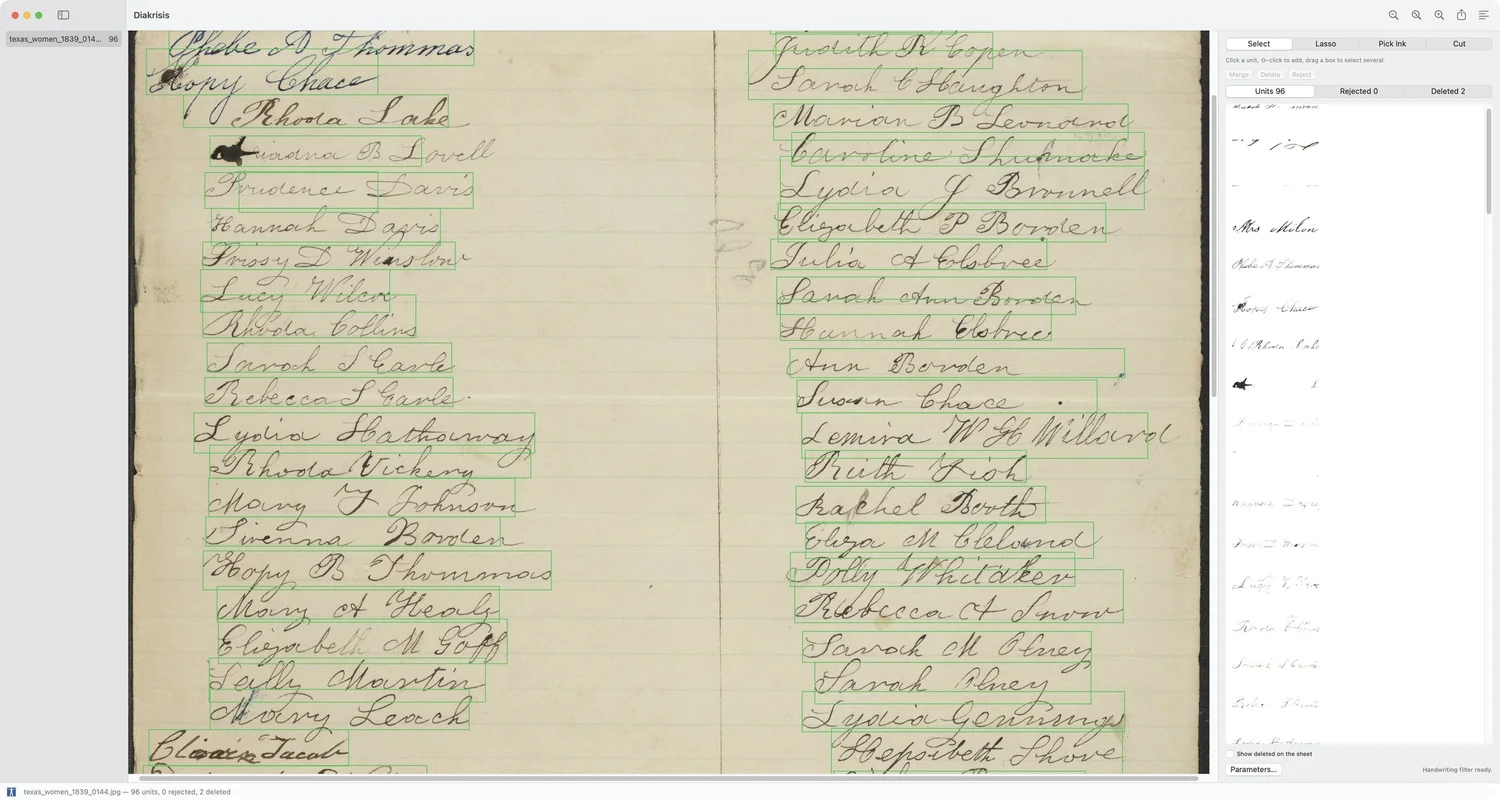
Each portrait starts from a digitised archive: scans held by libraries, archives and museums, chosen page by page for dark, legible ink. - Cutting Diakrisis
The studio’s own tools separate ink from paper. They estimate the paper beneath the writing, drop rulings and stains, and split every sheet into its units of ink: a word, a signature, a phrase of music. Each leaves as a transparent image that holds nothing but its ink. - Placing Mozaix
Mozaix, the studio’s mosaic engine, puts every piece where its tone and shape match the portrait beneath, laying several inks one over another, the way a printer lays plates. - Finishing Photoshop
The result opens as a layered Photoshop file, up to 12,302 × 15,000 pixels for Bach, large enough to print big and still read every word. - Films After Effects
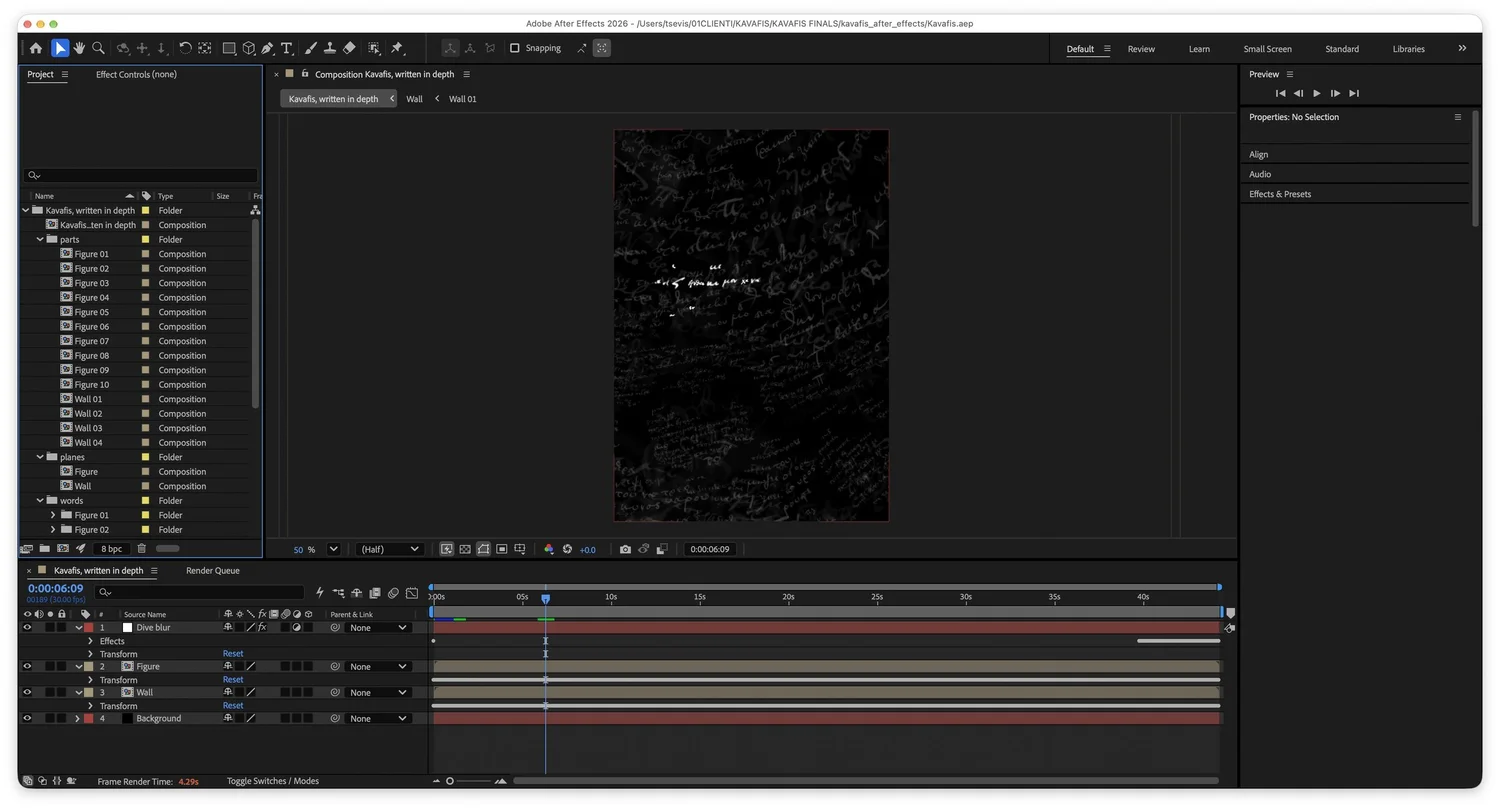
Because the place of every piece is known, the portrait can be rebuilt in motion. The placements go into After Effects and the studio’s render scripts, where a camera follows the pieces arriving until the face is whole.
What the cutting keeps: real pieces, one row per portrait.







We are open to ideas for the faces to come: get in touch.
Artworks © Charis Tsevis, licensed under CC BY-NC-ND 4.0, except the portrait of Cavafy (CC BY-SA 4.0, as its manuscripts require). The source documents keep their own terms, named under each portrait.