Nikos Galis and Inspirational Mosaic Art
Celebrating Greek Basketball Excellence: Mosaics Art and Artwork Collection
The Quiet Strength of a Legend: Meeting Nikos Galis
In an Athens VIP room, amid the celebration of a jersey retirement, a mosaic portrait becomes a bridge between art, sport, and the enduring grace of true greatness
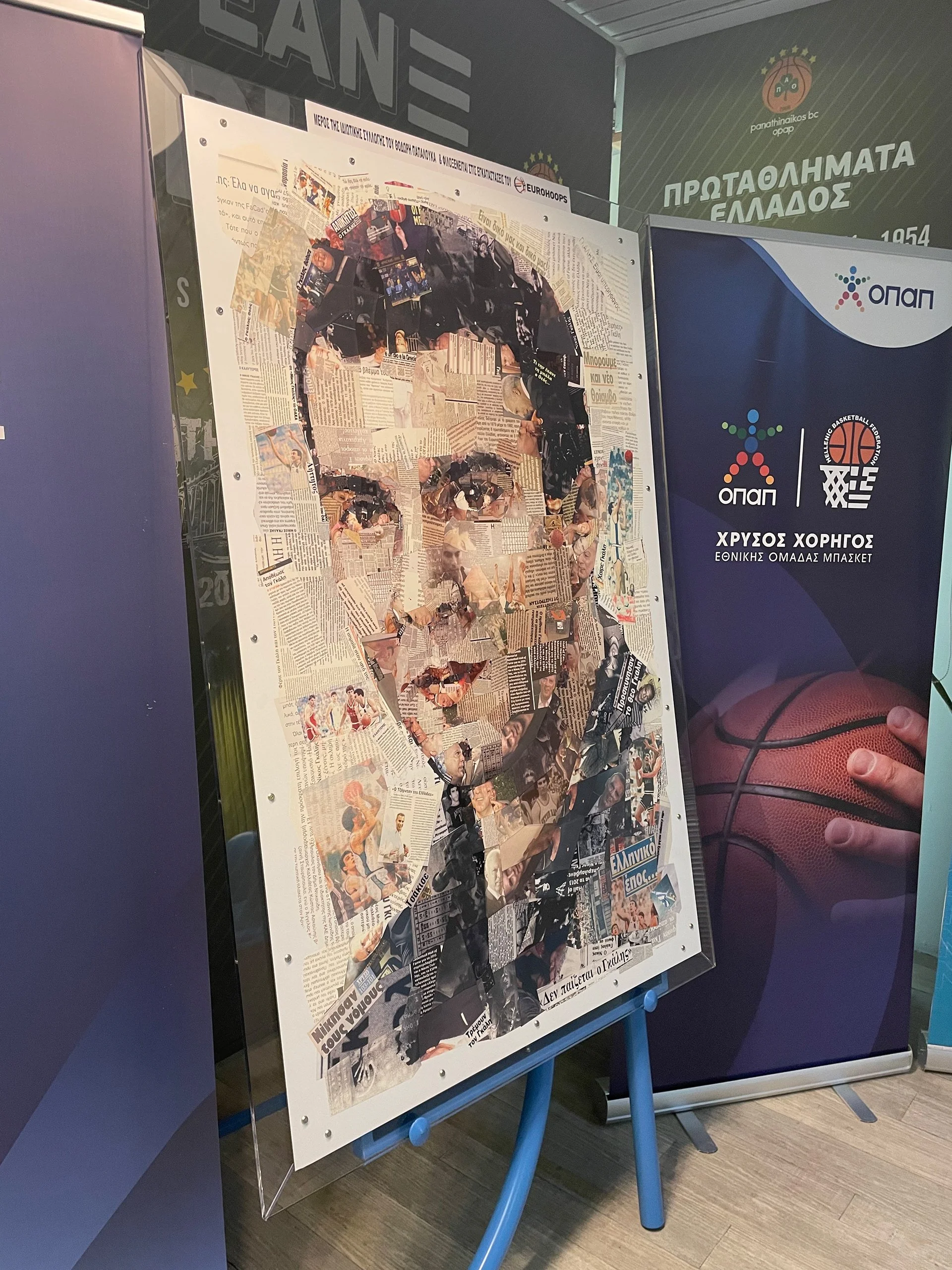
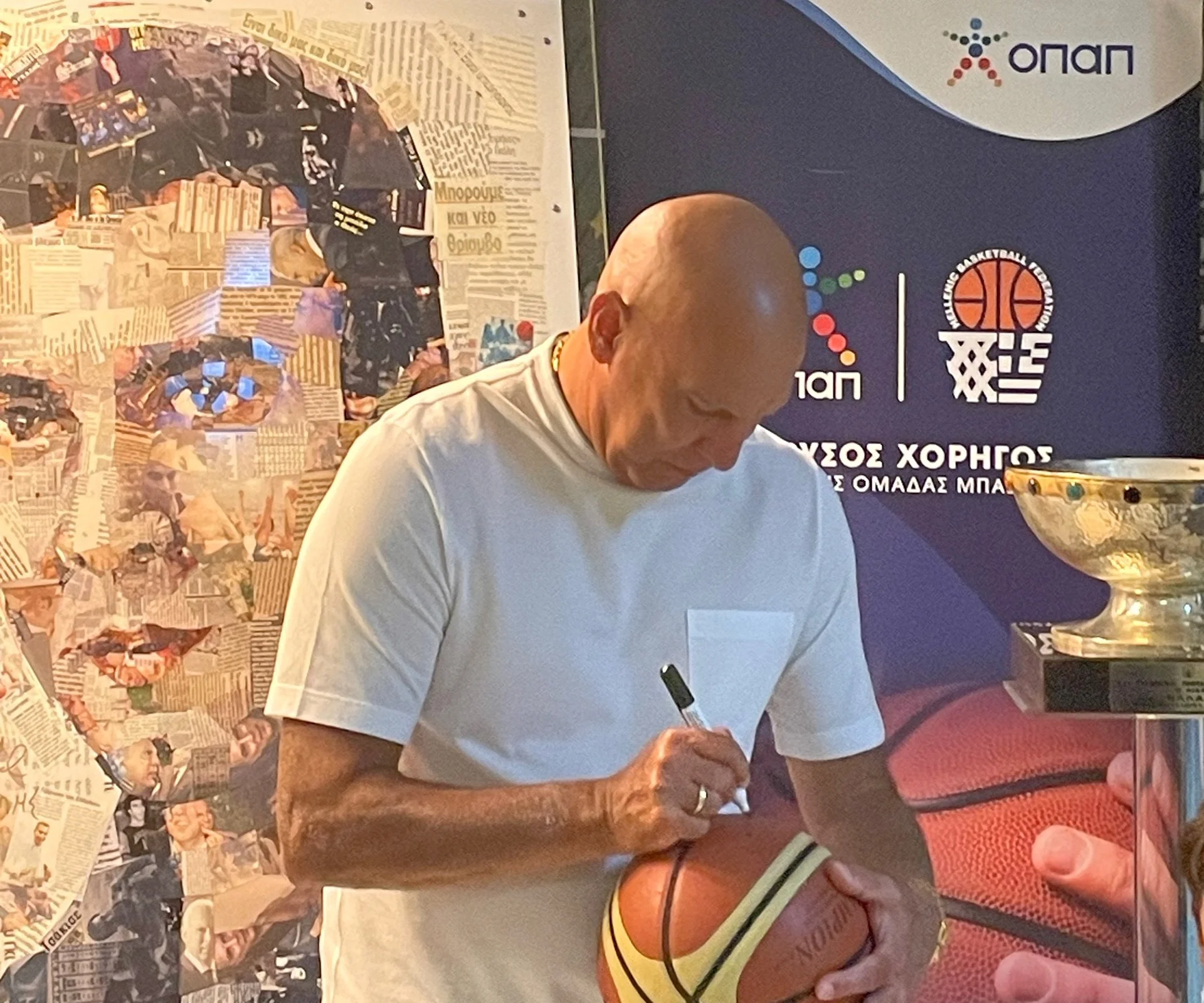
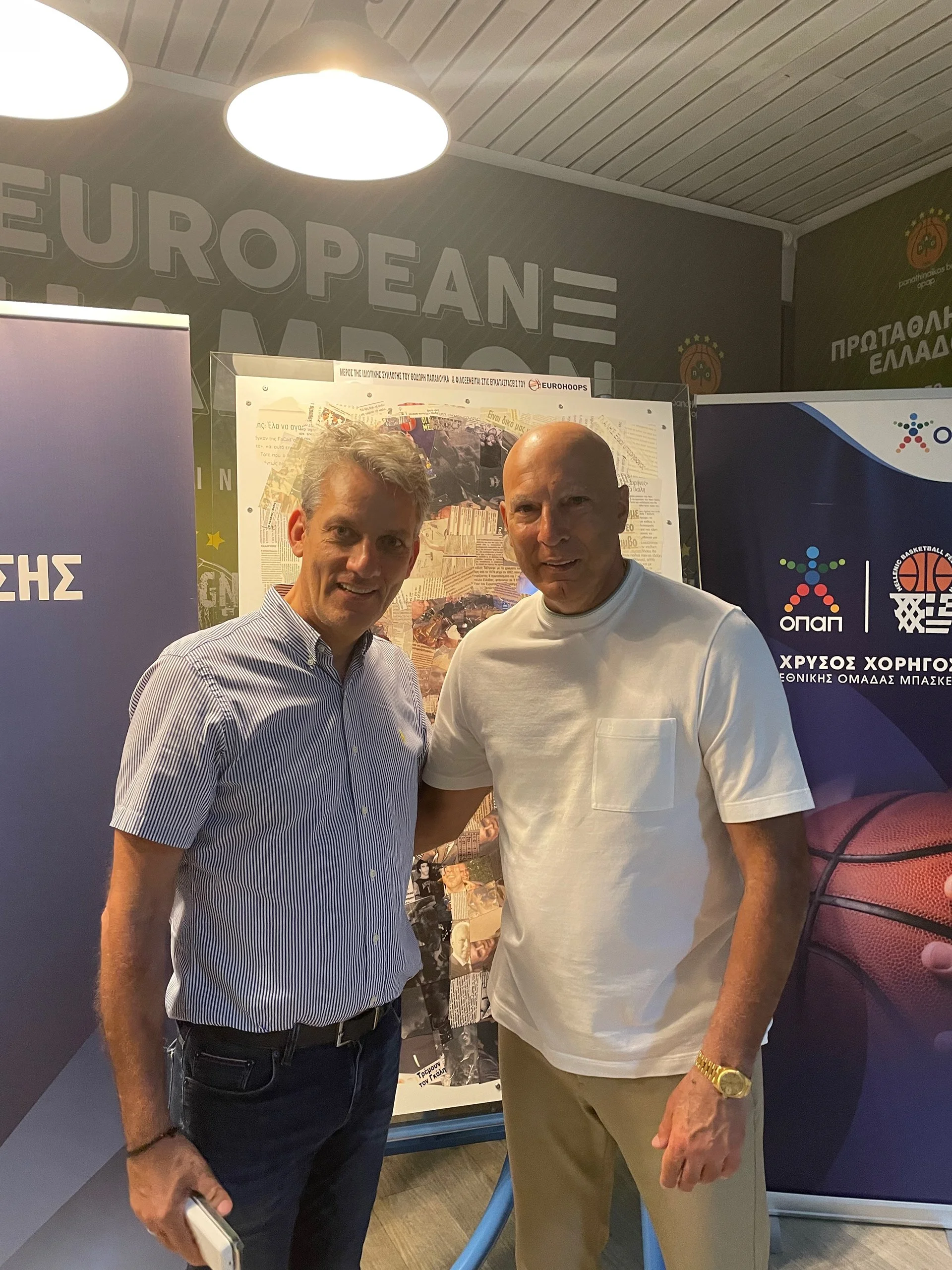
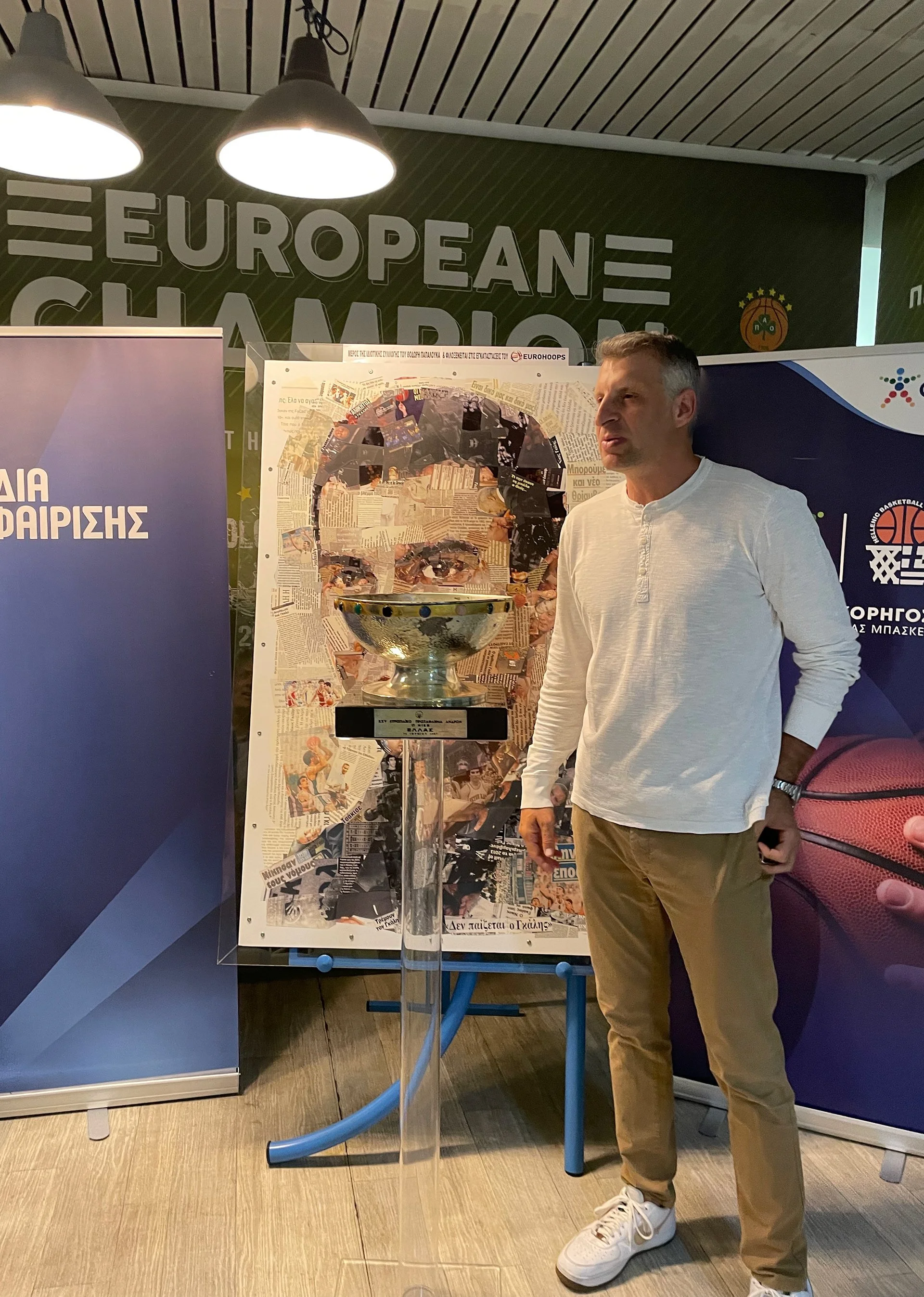
There are moments in life when you realize you're standing in the presence of something larger than statistics, larger than trophies, larger even than the myths we build around our heroes. For me, that moment came on August 4th in Athens, watching Nikos Galis, the man who transformed Greek basketball from a passionate hobby to a national obsession, sign his name across a mosaic portrait I had created, his hand as steady as it was during those impossible game-winning shots that made him a legend.
But perhaps "legend" is the wrong word. Legends live in stories, in the hazy distance of memory and media narratives. The man I met that day was something both more and less extraordinary: a quiet, gracious human being who seemed genuinely surprised that anyone would go to the trouble of creating art in his honor.

When Art Meets Charity
The Hellenic Wheelchair Basketball Federation commissioned the work as part of a charitable initiative to raise funds for the Greek national team's equipment. OPAP, the longtime sponsor of Greek basketball, had decided to support something beyond the usual promotional materials; they wanted to create something lasting, something that honored the sport's history while serving a meaningful purpose.
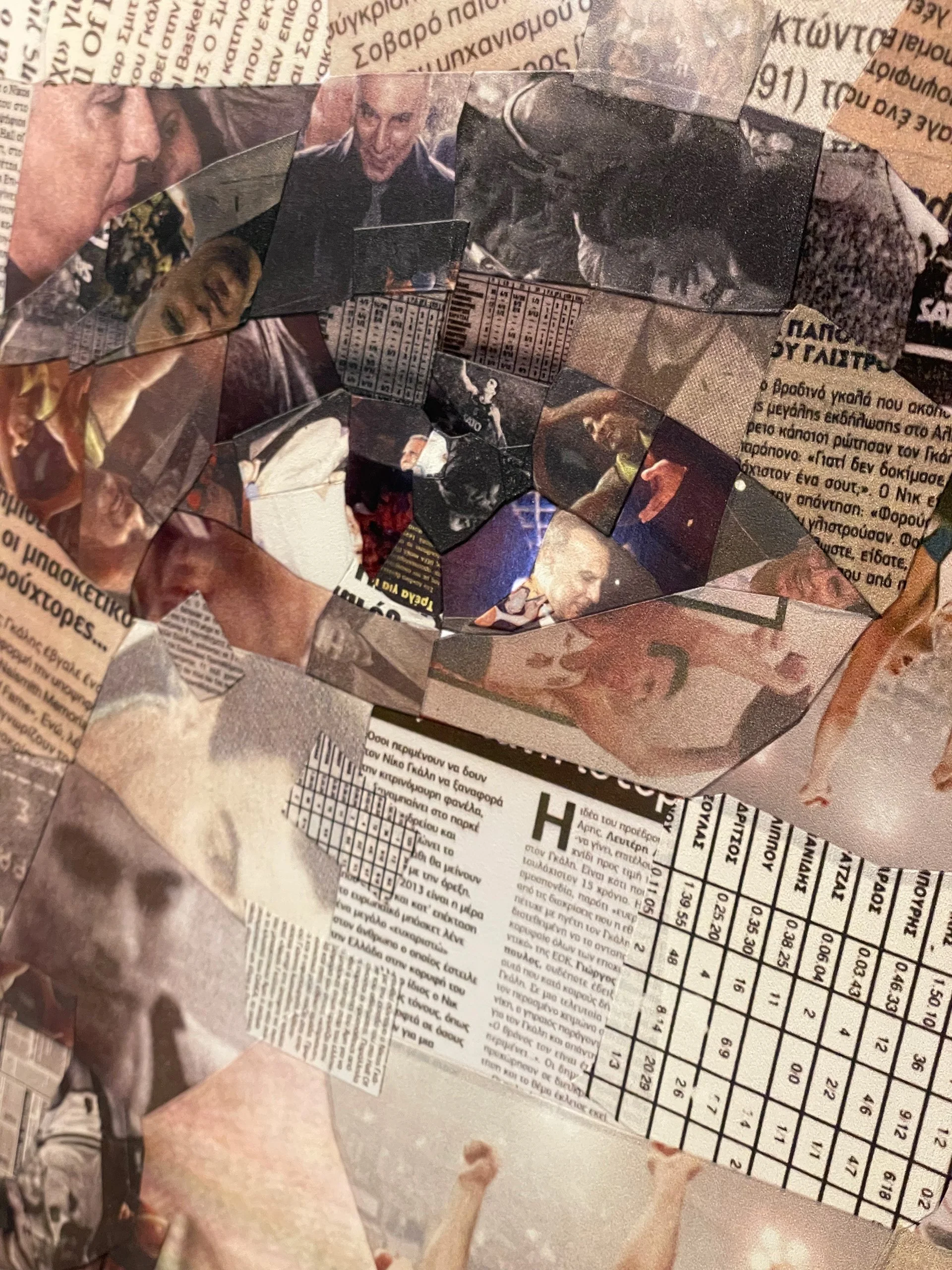
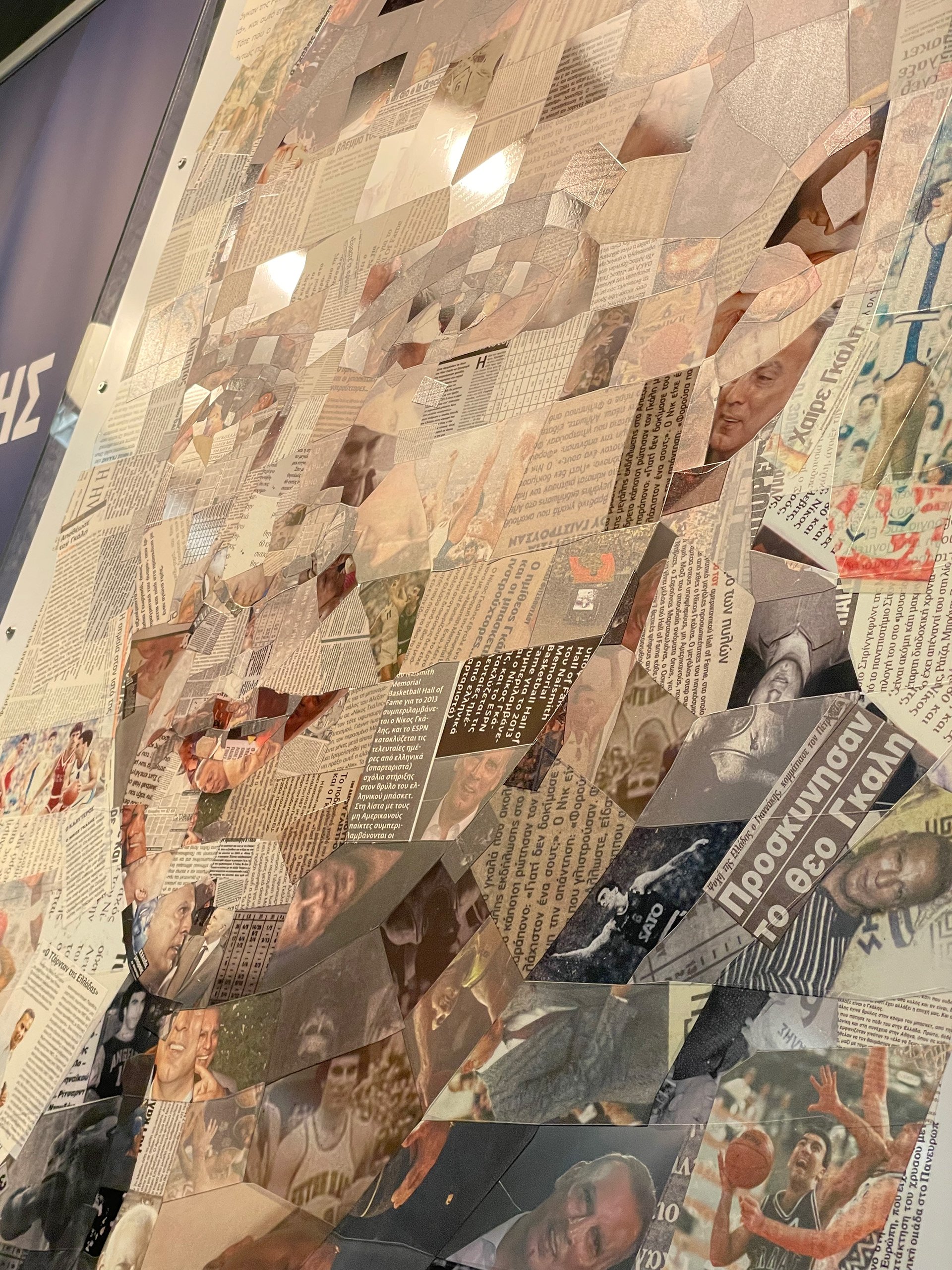
As I began researching Galis's career, constructing the digital mosaic from hundreds of images that traced his journey from American college basketball to Greek national icon, I thought I understood what I was creating: a tribute to athletic excellence, a sophisticated marketing piece that would serve its charitable purpose while celebrating sporting achievement.
I was wrong. What I was creating, though I didn't know it then, was a conversation starter between past and present, between the mythology of sporting greatness and the quiet humanity beneath it.
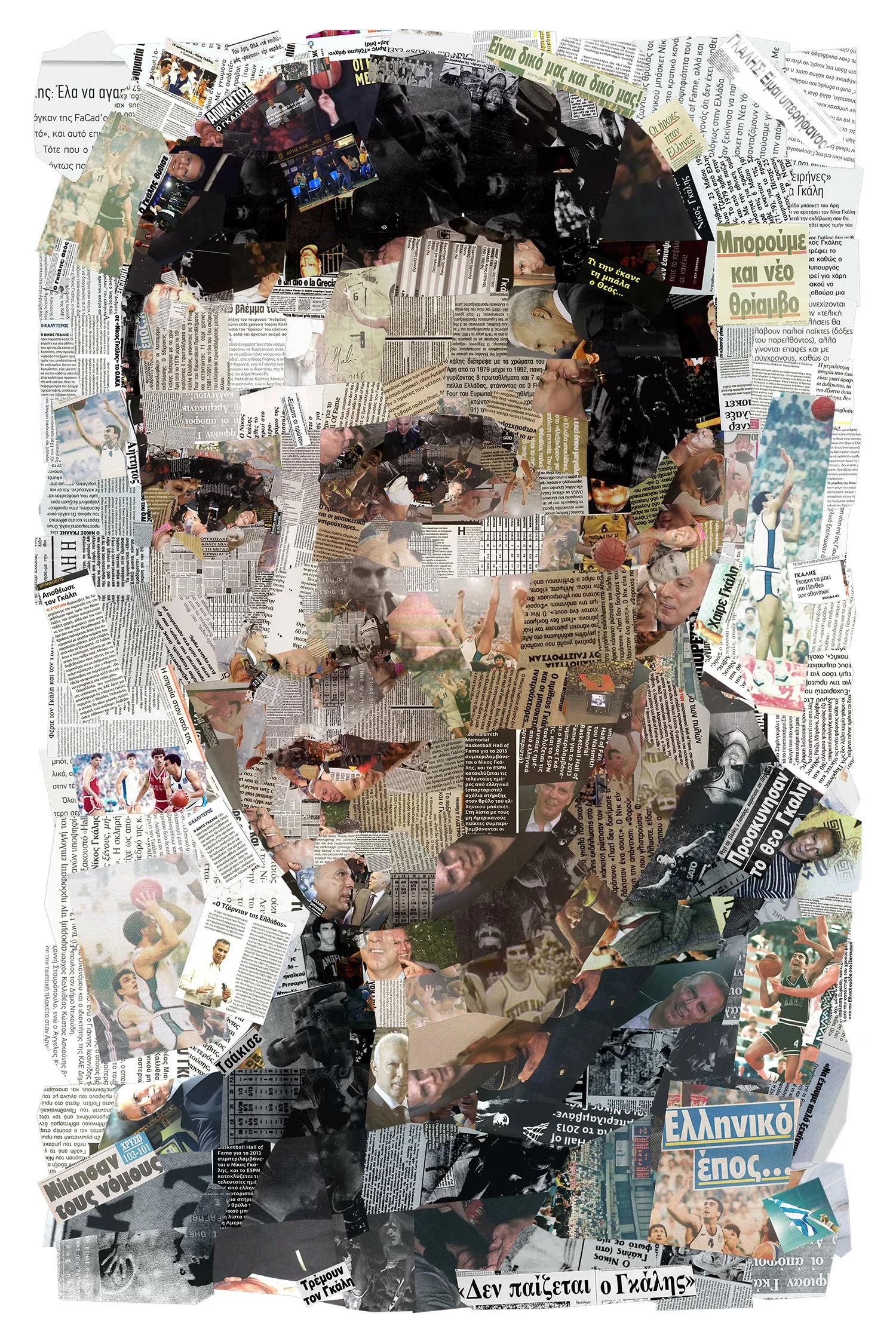
Nikos Galis portrait
The Weight of Number 4
The Hellenic Basketball Federation's decision to retire Galis's number 4 permanently, making him the first Greek player to receive such an honor, was more than ceremonial recognition. It acknowledged a transformation that went beyond basketball courts into the realm of cultural identity.
When Galis arrived from the United States in the early 1980s, Greek basketball was talented but provincial. By the time he retired, it was a European powerhouse, culminating in that transcendent summer of 1987 when Greece won the EuroBasket championship on home soil. Numbers tell part of that story: points scored, games won, records broken. But numbers can't capture the psychological shift that occurred in Greek sports consciousness during those years.
The challenge of creating the mosaic wasn't technical; it was archaeological. How do you compress a career's worth of meaning into visual narrative? Which moments deserve the sharp focus of smaller tessellations? Which broader themes merit the flowing passages of larger elements?
I found myself studying not just Galis's most famous games, but the in-between moments: his focused expression during free throws in crucial games, the way he carried himself during team introductions, the respectful distance he maintained from the theatrical self-promotion that characterizes modern sports celebrity.
The Ceremony
The jersey retirement ceremony was conducted with the formal reverence that such moments deserve. Federation officials spoke about Galis's contribution to Greek basketball. Former teammates shared memories of crucial games and championship celebrations. The media documented each moment with the efficient professionalism of those who understand they're recording history.
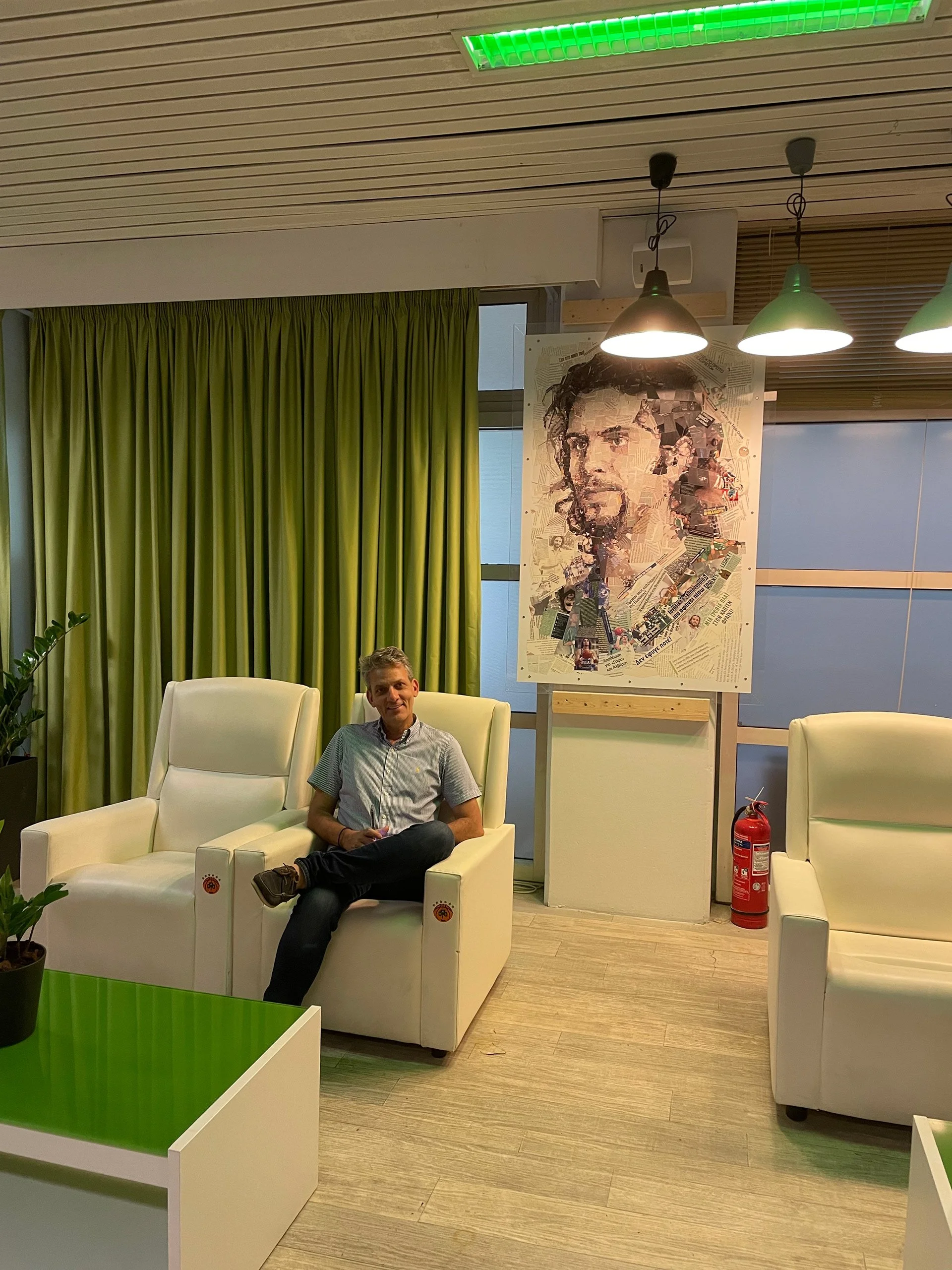
But for me, the most striking moment came afterward, in the VIP room where the mosaic was displayed. Galis approached the piece quietly, studying it with the same concentrated attention I remembered from videos of him analyzing game situations. He traced certain passages with his finger, not touching the surface, but following the visual flow a few inches away, as if reading a map of his own career written in a language he was still learning to understand.
"It's amazing what you can see when you step back," he said, looking at how individual game moments and career highlights organized themselves into a unified portrait. "All these separate things become something else entirely."
Then he signed it, adding his name to the artwork in the same careful, unhurried way he approached everything else that afternoon.
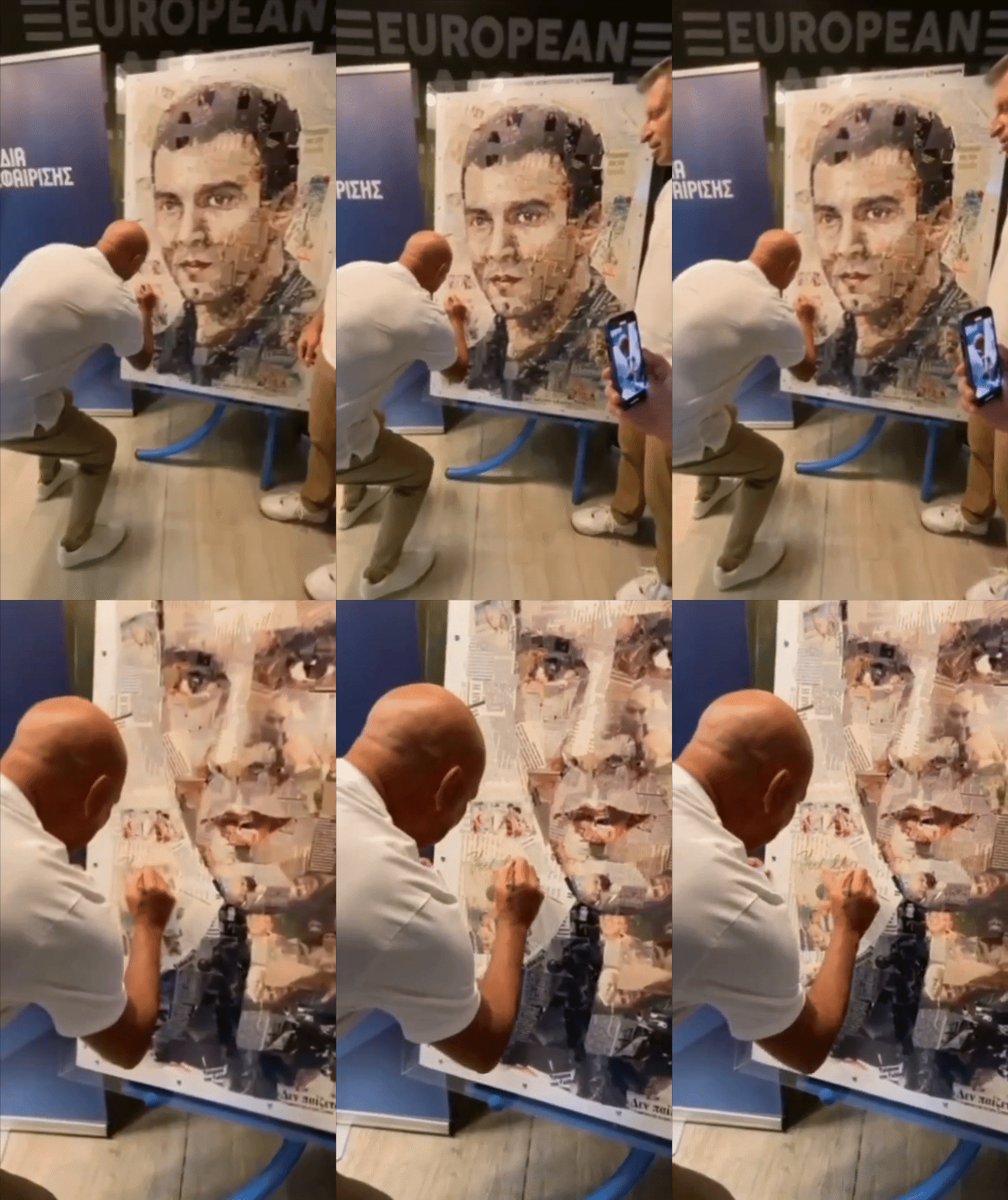
Beyond the Official Story
What struck me most about meeting Galis and his family wasn't their pride in his achievements, though that was evident, but their genuine surprise at the continued attention. Here was a man who had retired from basketball decades earlier, returned to a quieter life, yet remained, without apparent effort or intention, a figure of profound respect in Greek culture.
His wife shared stories about their children growing up largely unaware of their father's sporting significance, learning about it gradually through schoolmates and media references rather than family boasting. His approach to his own legacy seemed almost embarrassed by its magnitude, as if the scale of appreciation exceeded what he felt he deserved for simply playing basketball well.
This humility wasn't false modesty or media training; it was character. In an era when athletic achievement often becomes a platform for broader celebrity, Galis seemed content to make his contribution and step away, letting his accomplishments speak for themselves.
What the Mosaic Revealed
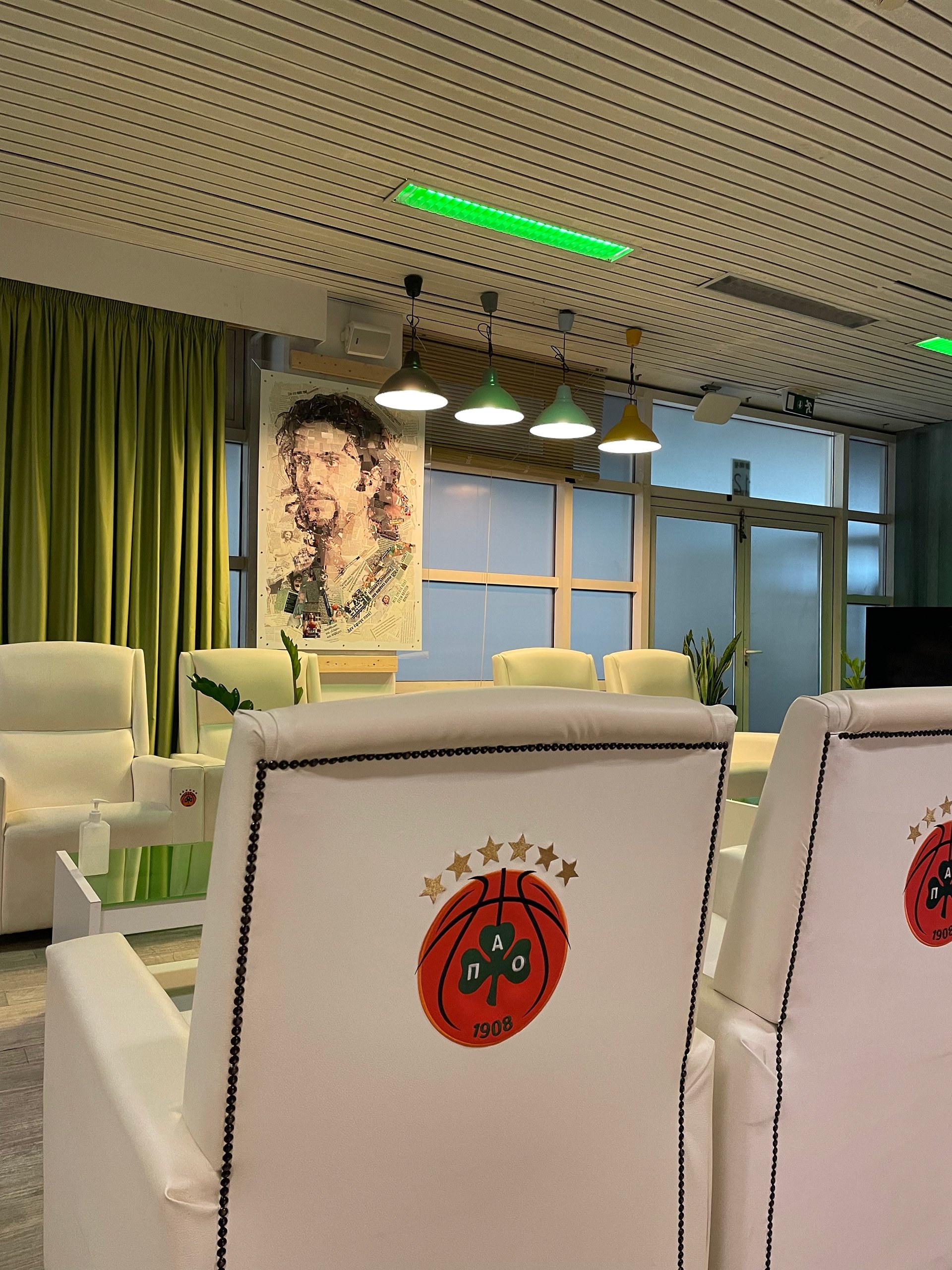
The completed artwork now hangs in multiple locations: the original in the Panathinaikos VIP area, prints in private collections, including that of Theodoros Papaloukas, another Greek basketball legend. But during the ceremony, I realized its most important function wasn't decorative or commemorative in any conventional sense.
The mosaic had become a meditation on how individual moments accumulate into lasting significance. Each small element a crucial shot, a defensive play, a moment of team leadership was meaningless in isolation. But arranged with intention, they revealed patterns of excellence, consistency, and character that transcended any single game or season.
Watching Galis examine the piece, I understood something about both art and athletics that I hadn't fully grasped before. The real achievement wasn't the spectacular moments that make highlight reels; it was the sustained commitment to excellence over time, the daily decisions to improve rather than coast, the willingness to carry responsibility for team success without seeking individual credit.
The Larger Purpose
The project's charitable nature added weight to every element. This wasn't commissioned by corporate sponsors seeking brand association with sporting excellence; it was organized by people who understood that sports, at its best, creates communities of care that extend beyond competition.
The funds raised through the artwork and related campaign supported equipment for Greek national teams, creating a direct connection between honoring past excellence and enabling future achievement. Galis seemed particularly pleased by this aspect, noting that his own career was shaped by coaches and teammates who invested in his development when he was young and unproven.
OPAP's decision to support the project reflected something admirable about corporate-sport relationships: the recognition that some stories deserve telling for their own sake, that some achievements merit celebration not because they advance particular business objectives, but because they represent values worth preserving.
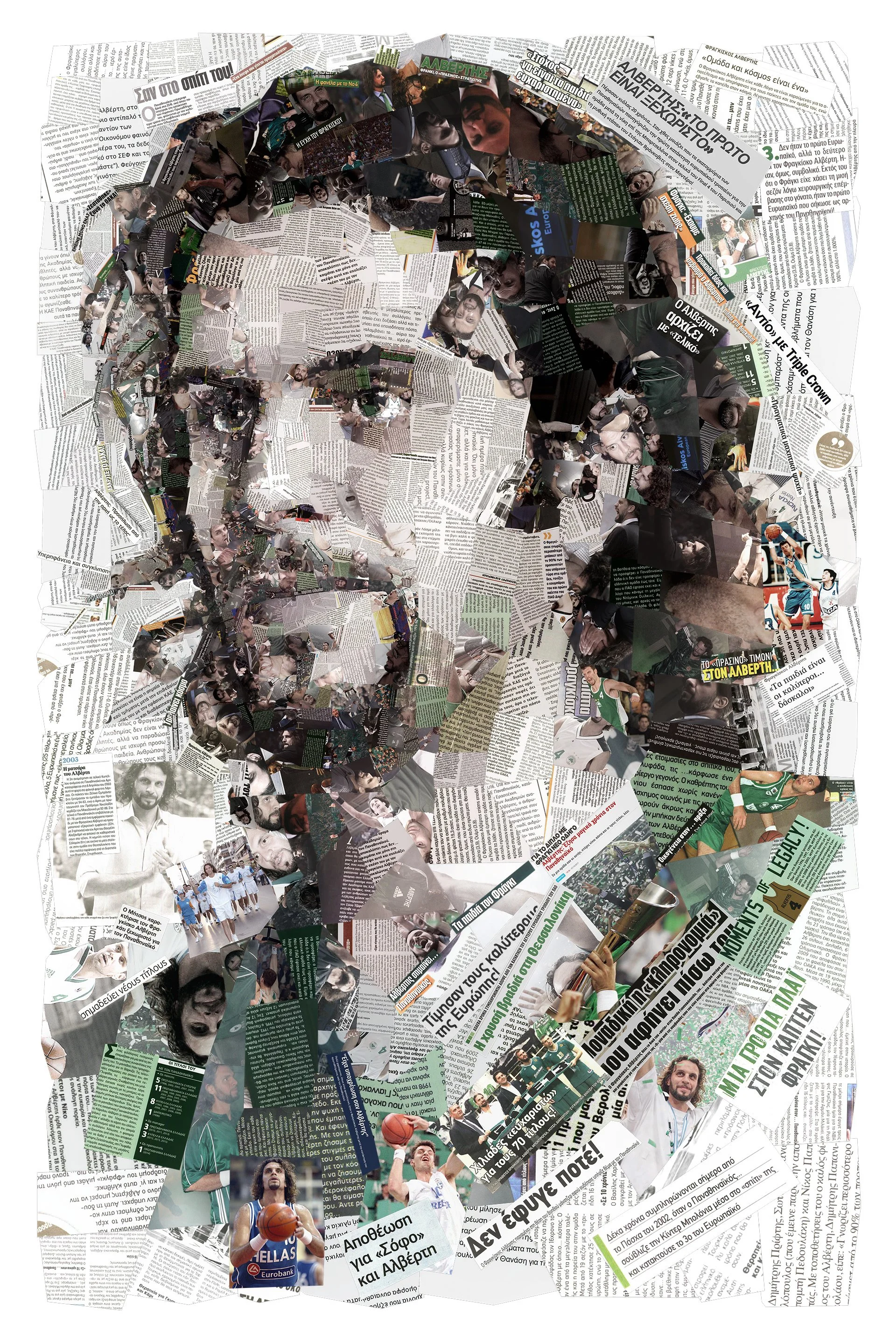
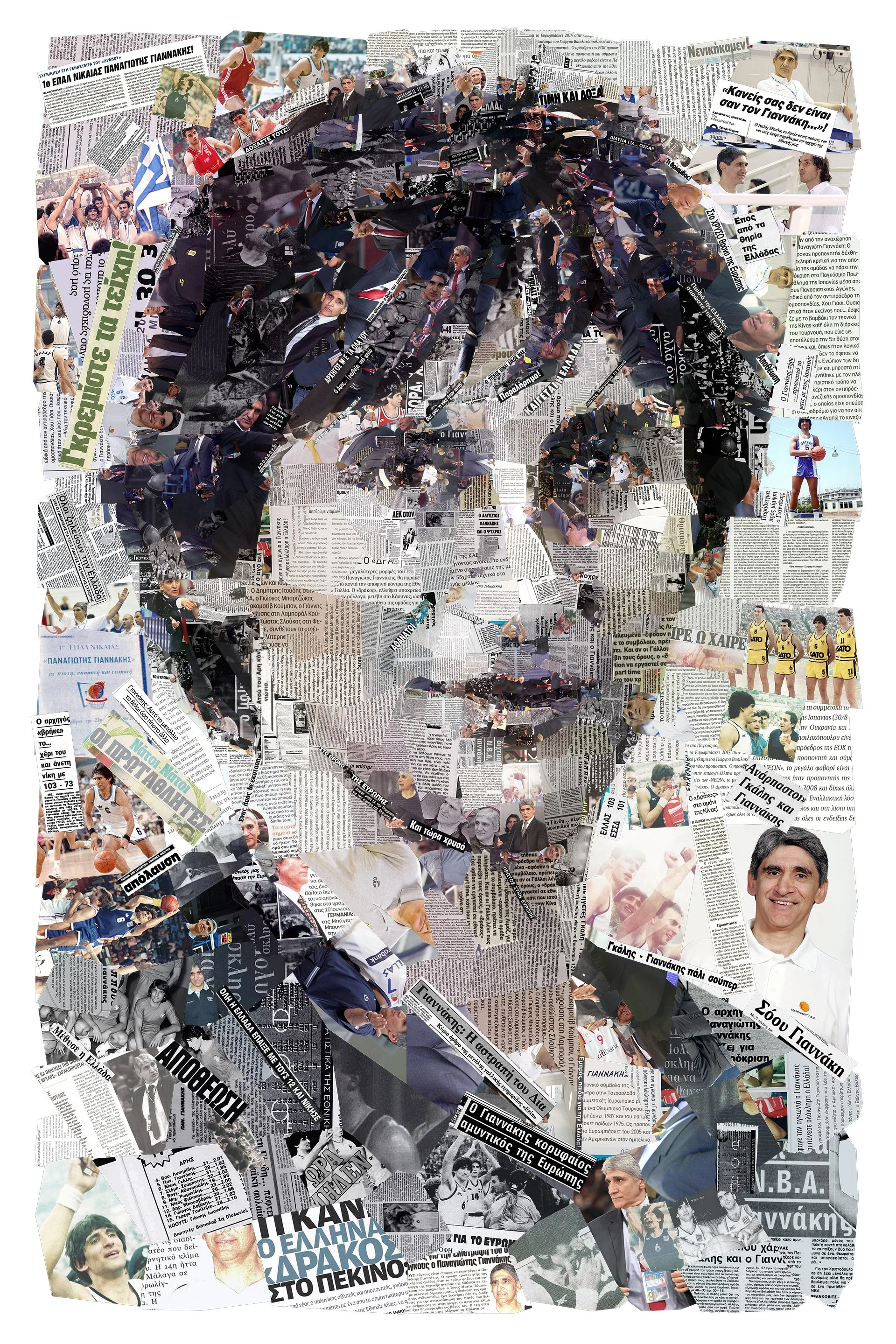
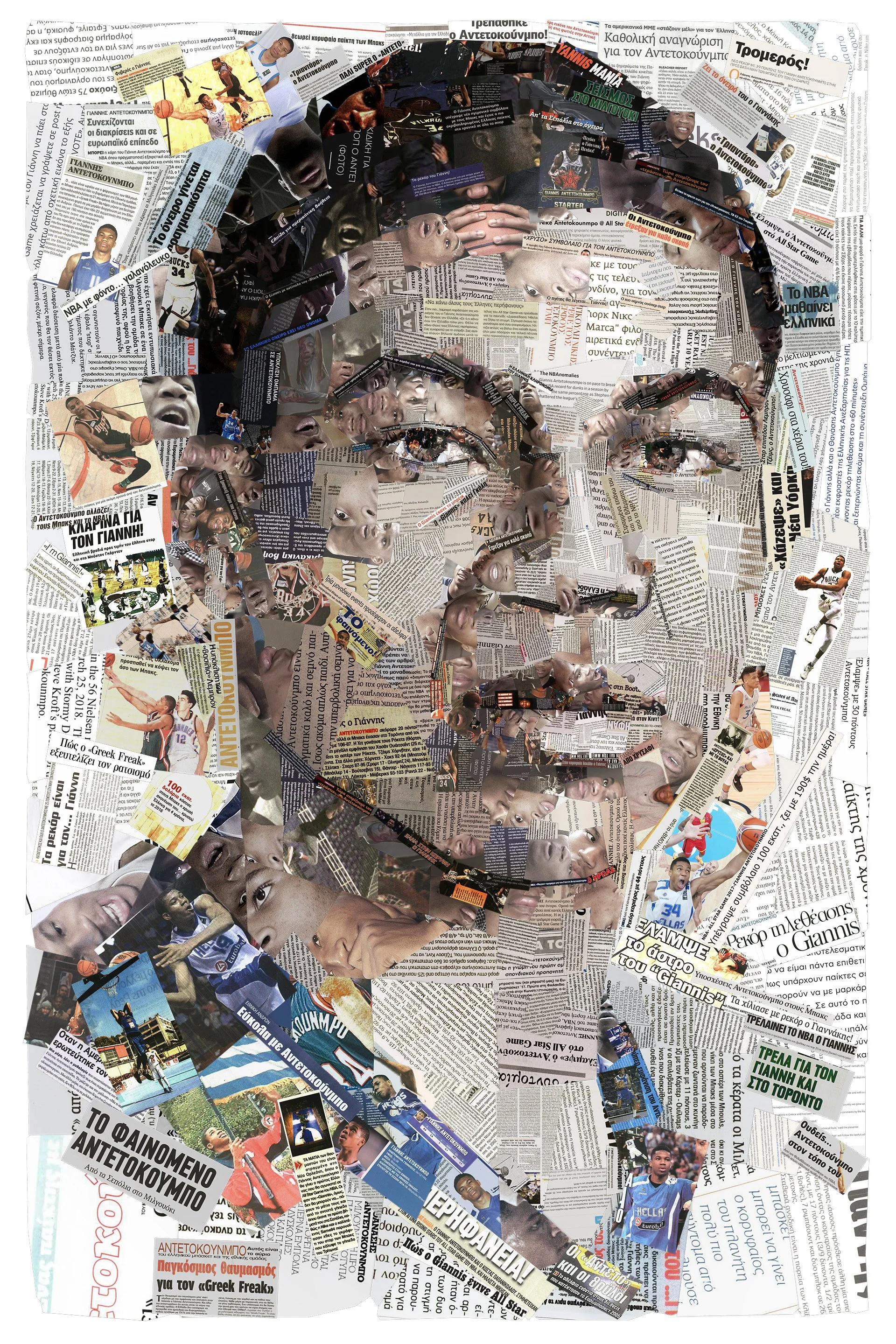
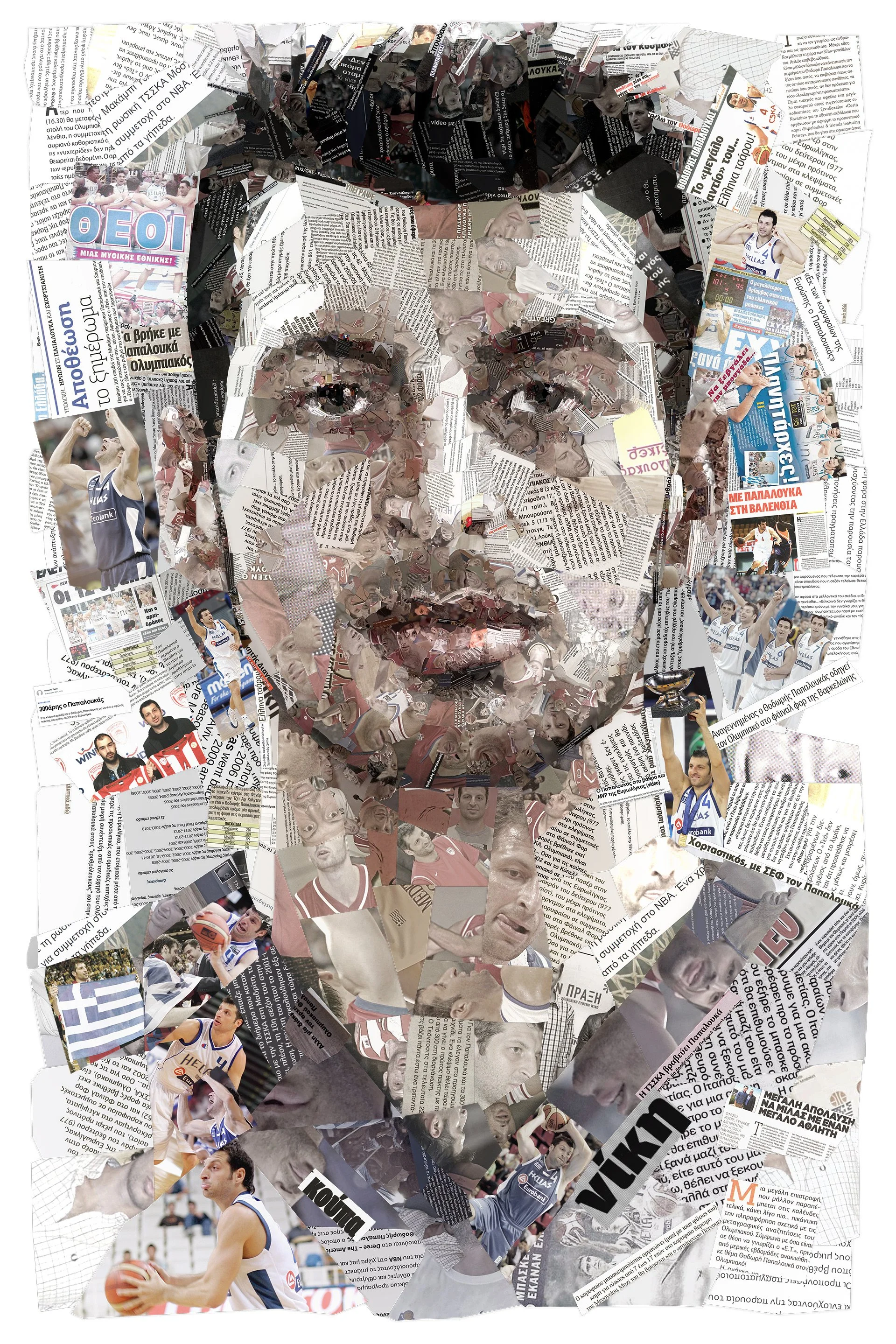
What began with the Galis commission has grown into something I never anticipated: a comprehensive visual chronicle of Greek basketball greatness. The "Legends of Greek Basketball" series now celebrates five extraordinary careers. Panagiotis Giannakis, Giannis Antetokounmpo, Frangiskos Alvertis, Theodoros Papaloukas, and Dimitris Diamantidis, each portrait revealing different aspects of what makes Greek basketball distinctive.
The collection continues to expand as new stories demand telling.
The Technology of Memory
One aspect of the project that excited Galis was integrating augmented reality features that let viewers access video highlights through their smartphones. Holding a device up to the physical artwork revealed additional layers: game footage, interviews, and historical context that expanded the static image into a multimedia experience.
"It's like time traveling," he noted, watching visitors discover different elements embedded within the mosaic. "Someone can see the whole career and then focus on specific games they remember."
This fusion of traditional portraiture with digital interactivity seemed to appeal to his engineering mindset, the same analytical approach that had made him devastating as a game strategist during his playing career. The artwork wasn't just commemorative; it was educational, allowing younger viewers to understand the historical context of achievements they might have only heard about.
The Collector's Perspective
When Theodoros Papaloukas requested one of the mosaics for his personal collection, joining four other commissioned pieces, it validated the artwork's cultural significance in ways that critical reviews or media coverage never could. Here was another basketball legend choosing to live with visual reminders of sporting excellence.
Papaloukas spoke about how the artwork changed his understanding of Galis's career, revealing connections and patterns that even he, as a contemporary player, hadn't fully appreciated. "You see the complete shape of it," he explained. "Not just the famous moments, but how they fit together, what they built toward."
This response highlighted something important about sports memory. We often remember athletic careers in fragments: the biggest games, the crucial shots, the championship celebrations. But sustained excellence requires connecting those peaks through valleys of preparation, practice, and less spectacular but equally essential performances.
The Continuing Conversation
Months after the ceremony, the mosaic continues generating conversations about Greek basketball history, about the relationship between American and European basketball cultures, about what it means to represent a country through athletic achievement. It has appeared in sports journalism discussions not as a marketing story, but as a cultural artifact, evidence of how sports meaning extends beyond competition into realms of identity and collective memory.
More importantly for the charitable goals, it has helped raise awareness and funds for Greek basketball development programs. Young players now train with equipment purchased partly through sales of prints and related merchandise, creating a direct connection between honoring past achievement and enabling future possibility.
The Personal Legacy
What I learned from the project, and particularly from meeting Galis and his family, had less to do with basketball than with character. In an era of manufactured sports personalities and calculated public relations, here was someone who had achieved genuine greatness through sustained excellence rather than promotional savvy.
His approach to his own legacy, proud but not boastful, aware of his significance but not inflated by it, provided a model for how athletic achievement can enhance rather than corrupt character. The attention he paid to the project's charitable aspects, his interest in how the artwork might educate younger fans about basketball history, and his genuine surprise at continued public appreciation all suggested someone who understood sport as service to something larger than personal achievement.
The Continuing Journey
The Nikos Galis mosaic, part of my "Legends of Greek basketball" project, taught me that the most meaningful art emerges not from commercial commissions or personal promotion, but from genuine appreciation for qualities worth preserving and celebrating. When sports achievement meets artistic interpretation in service of charitable purpose, something valuable occurs that transcends any single element.
More than that, meeting Galis reminded me that behind every legendary career is a human being who made daily choices about how to approach their talents and opportunities. His quiet grace, his family's evident pride without ostentation, his continued commitment to basketball development in Greece, all of it suggested that athletic greatness, properly understood, is character revealed through competition rather than character transformed by success.
The artwork will hang in VIP rooms and private collections for years to come, continuing to spark conversations about Greek basketball history and sporting excellence. But for me, it will always evoke that moment when legend became person, when mythology revealed its human foundation, when I understood that the most lasting achievements are those that enable others to achieve something meaningful themselves.
In the end, perhaps that's what all truly significant art attempts to do: reveal the humanity within the heroic, the character within the celebrity, the sustained commitment within the spectacular achievement. The Nikos Galis mosaic succeeded not because it captured a basketball player's career, but because it honored a good man's contribution to something larger than himself.
And in our current era of athletic spectacle and manufactured drama, that kind of quiet greatness feels like both gift and instruction, a reminder of what sports can be when guided by character rather than merely talent.
Charis Tsevis