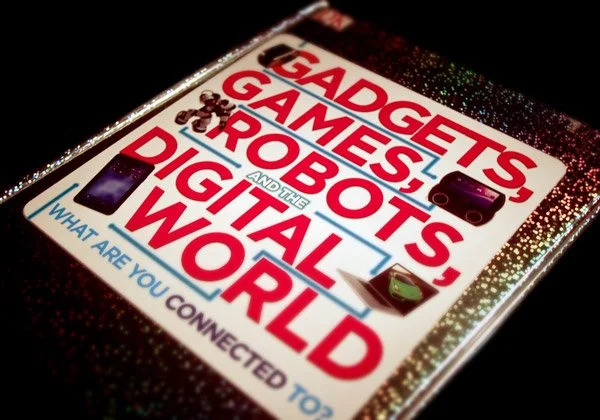
Gadgets, Games, Robots, and the Digital World
7 mosaic portraits of 6 great personalities for the book "Gadgets, Games, Robots and the Digital World" by Dorling Kindersley, Penguin Books.
Gadgets, Games, Robots and the Digital World: 6 illustrations for a book by Dorling Kindersley Limited, a Penguin Company
It's no secret that I'm a devoted fan of computer history and cyberculture. I have had this passion for more than 20 years now. Been studying, collecting old machines, retro gadgets, especially old Apples but also Sinclairs, Amstrads, Bulls, Commodores... I consider this passion for computer archaeology one of the more romantic activities I have ever had.
When Smiljka Surla from DK Publishing contacted me about this project, I was more than happy to be involved.
"Gadgets, Games, Robots and the Digital World" is a very well-written and detailed educational book. It can serve as a great introduction to the world of smart machines. Written by Clive Gifford, a journalist participating in more than 120 titles in the field of computing, robotics, and everything tech. Dr. Mike Goldsmith, another veteran of popular science literature, has contributed to the book.
The book uses illustrations and information graphics by I Love Dust (a studio I really admire), James Carey, Infomen, and me.
I have been asked to create 6 mosaic portraits of 6 IT giants: Grace Hopper, Cynthia Breazeal, Bill Gates, Mark Zuckerberg

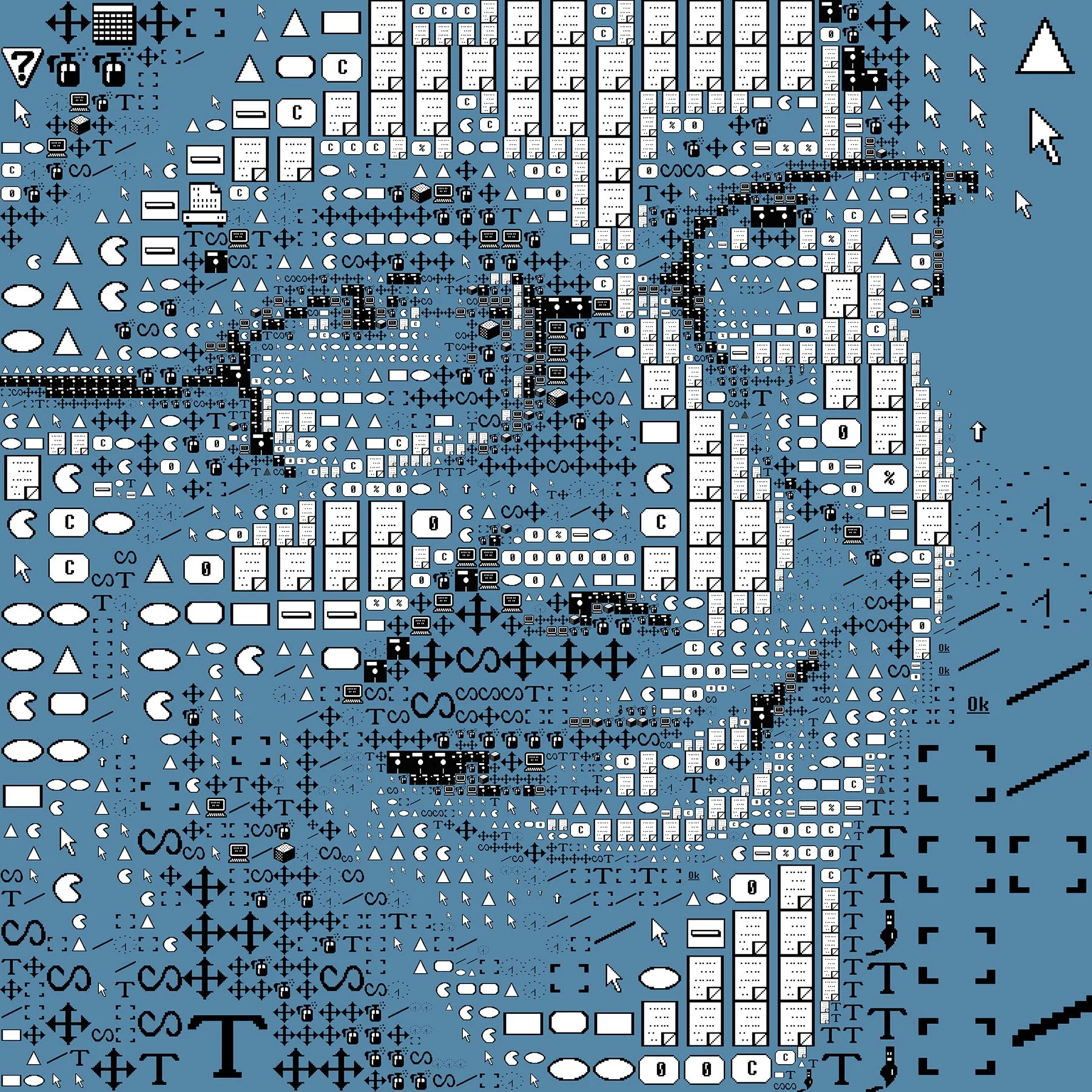
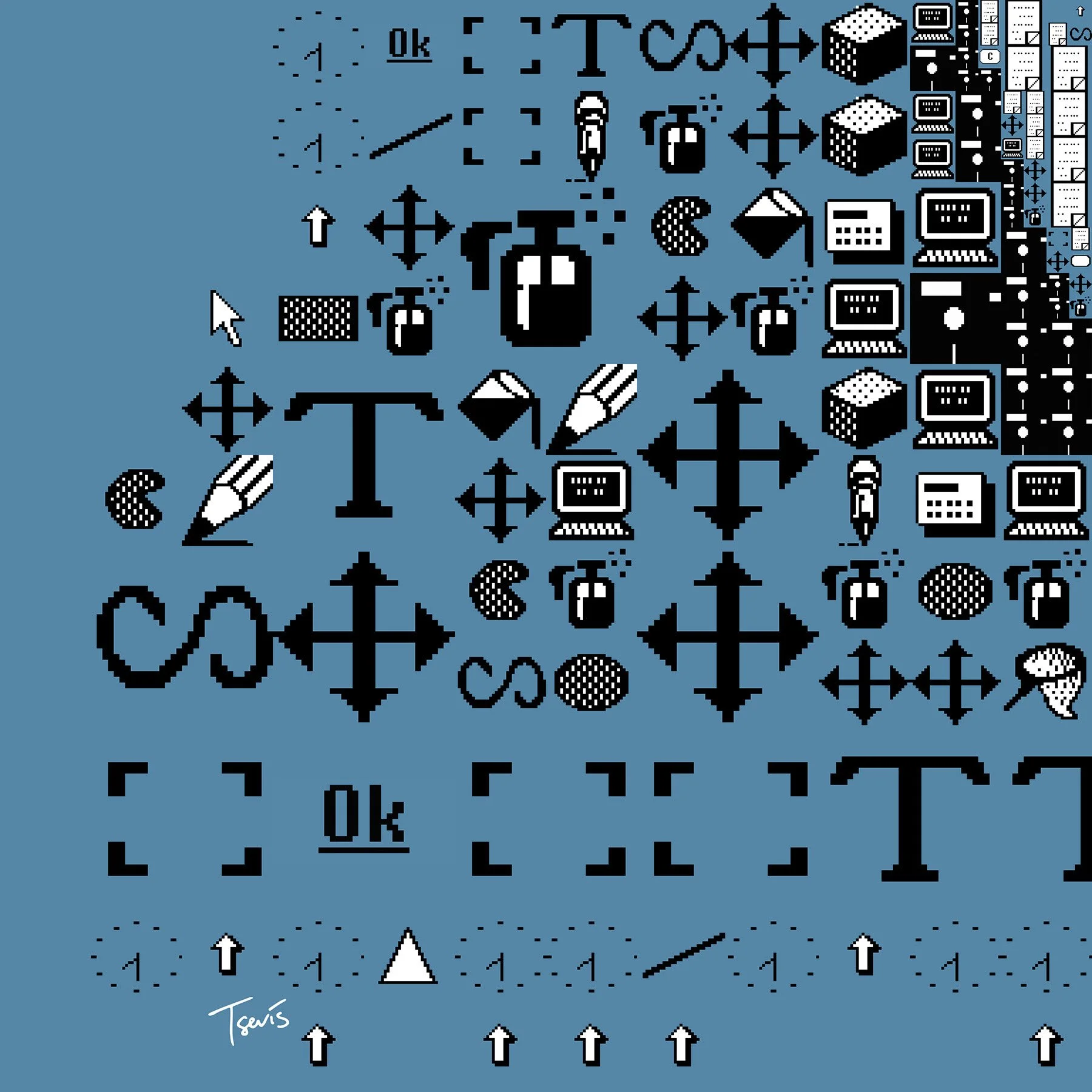
Tomohiro Nishikado: The ...space invader.
When Taito saw the prototype (of Space Invaders), they said,
"You can't shoot people! And you must create the image of war".
So I changed the characters into monsters.
At the time, I was trying to figure out what the focus would be,
and had heard of a sci-fi movie being produced in America called Star Wars.
I thought a space fad might be on the way, so I decided to focus on aliens.
And that's how the monsters became the invaders that are known today.
— Tomohiro Nishikado
Tomohiro Nishikado is the legendary Japanese video game developer who rocked the world of personal entertainment with Space Invaders back in 1978. My generation remembers the addiction we got in our childhood with these evil alien monsters...I created a mosaic portrait for Mr. Space Invader using a large collection of space invader graphics, all original, even though I have included some from later versions of the game. I wanted to limit the color palette to 7 original colors to match the game's real atmosphere as closely as possible.
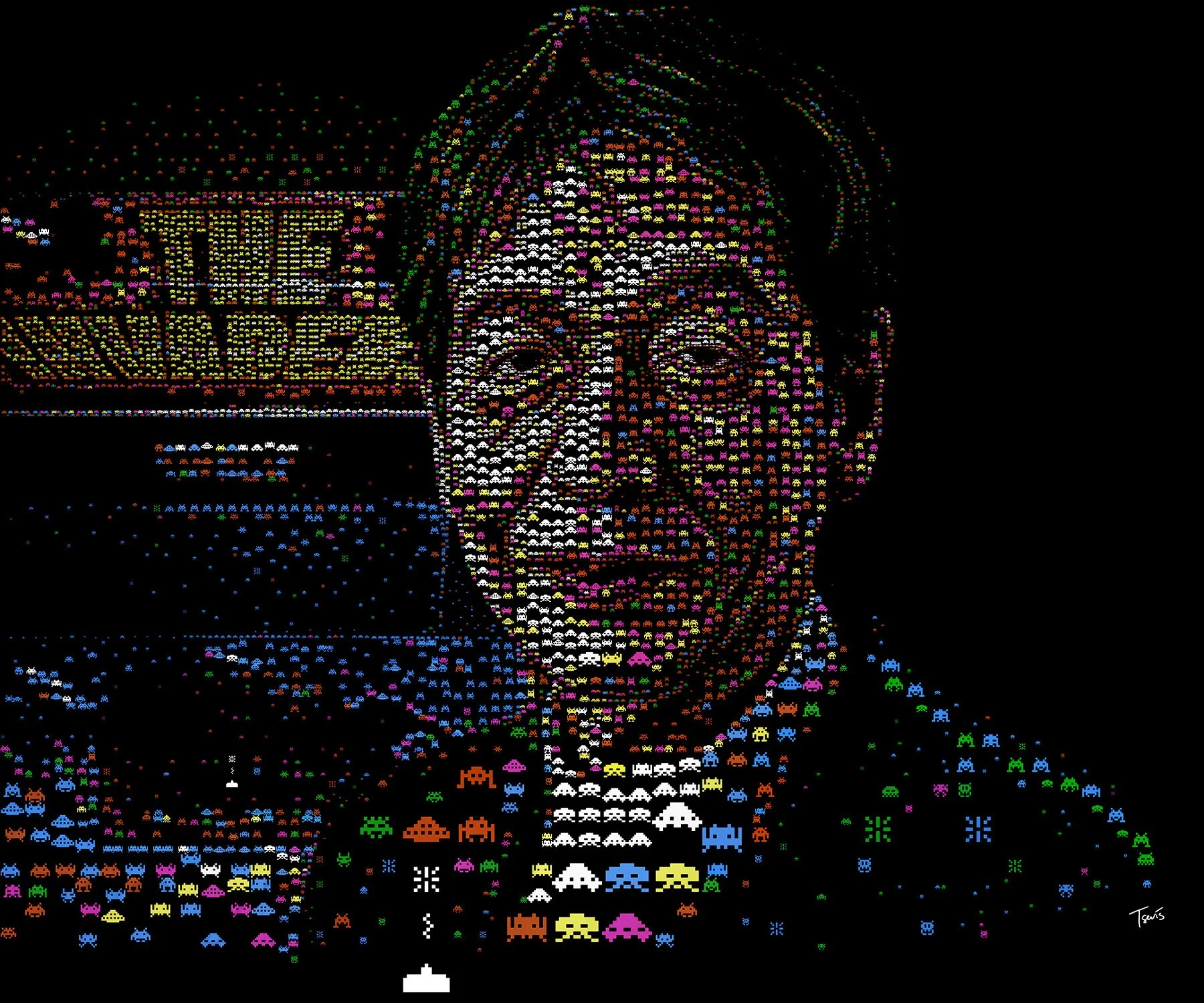
Based on 2 photos by Peter Brooker, REX Features.
Video Games graphics by Tomohiro Nishikado, various developers, and artists.
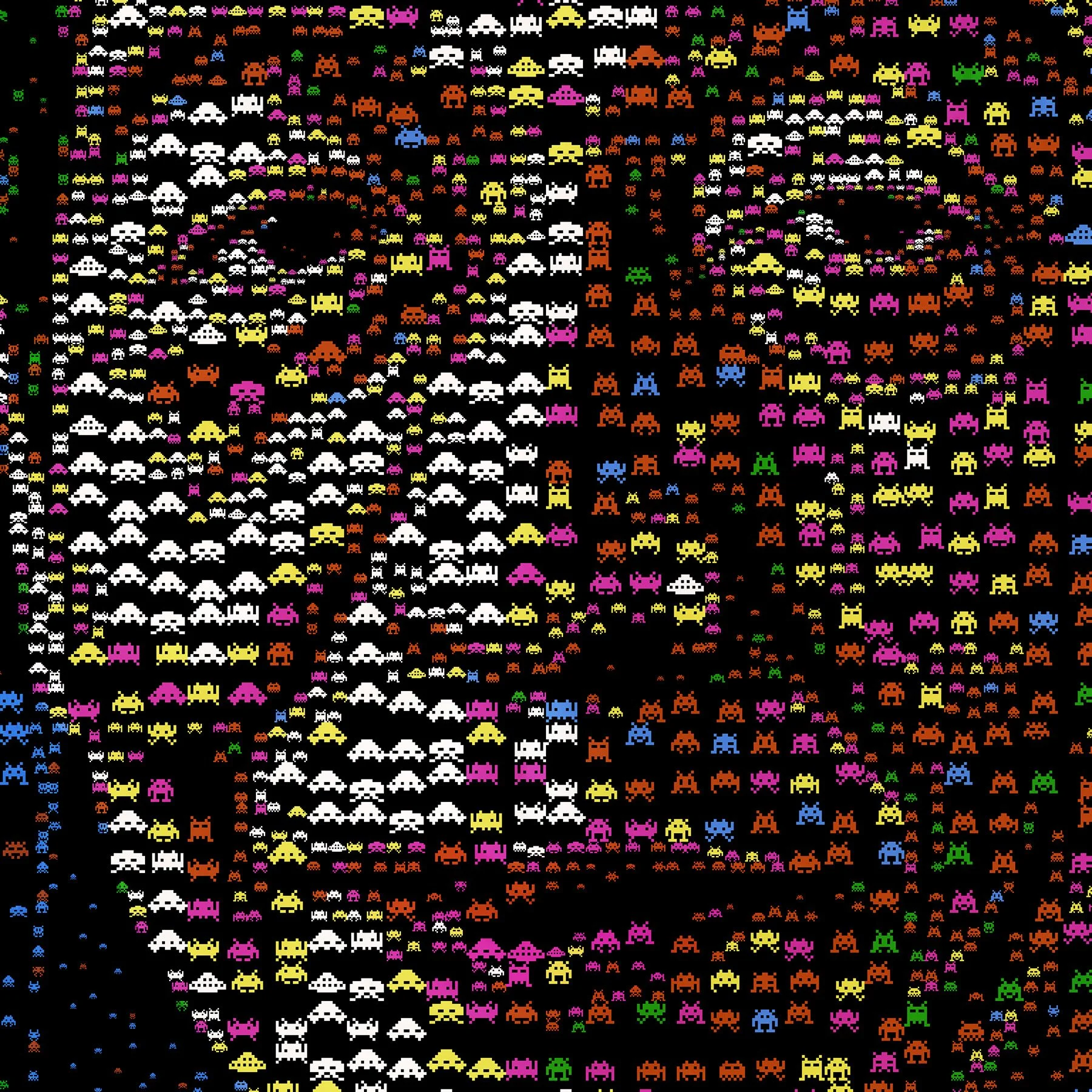
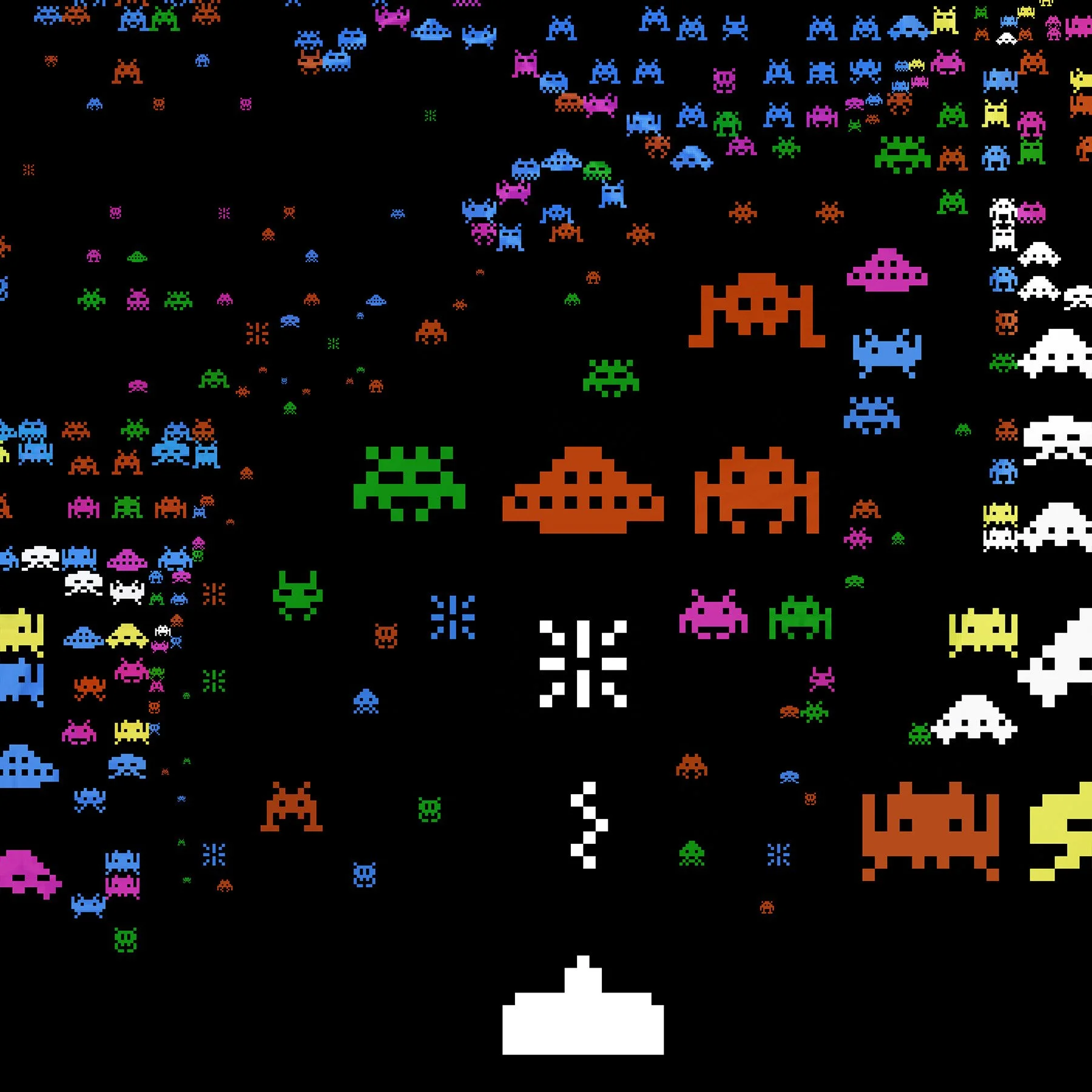
Some details of the mosaic portrait including the original cannon:


Bill Gates: The Windows 1.0 portrait
I have never been, and I still am not, a Bill Gates fan. I respect his charity work, and I admire him as a businessman. I believe he invented a brilliant business model for the first software company. Still, I believe he kept the tech world behind because of mediocre aesthetics and a "me too" (or is it copycat) culture.
Still, Bill Gates is a very interesting subject if you decide to study his face and expression. He is keeping a hidden smile that makes me sure that he is an extremely smart person. Probably not my type, but for sure a good object of study.
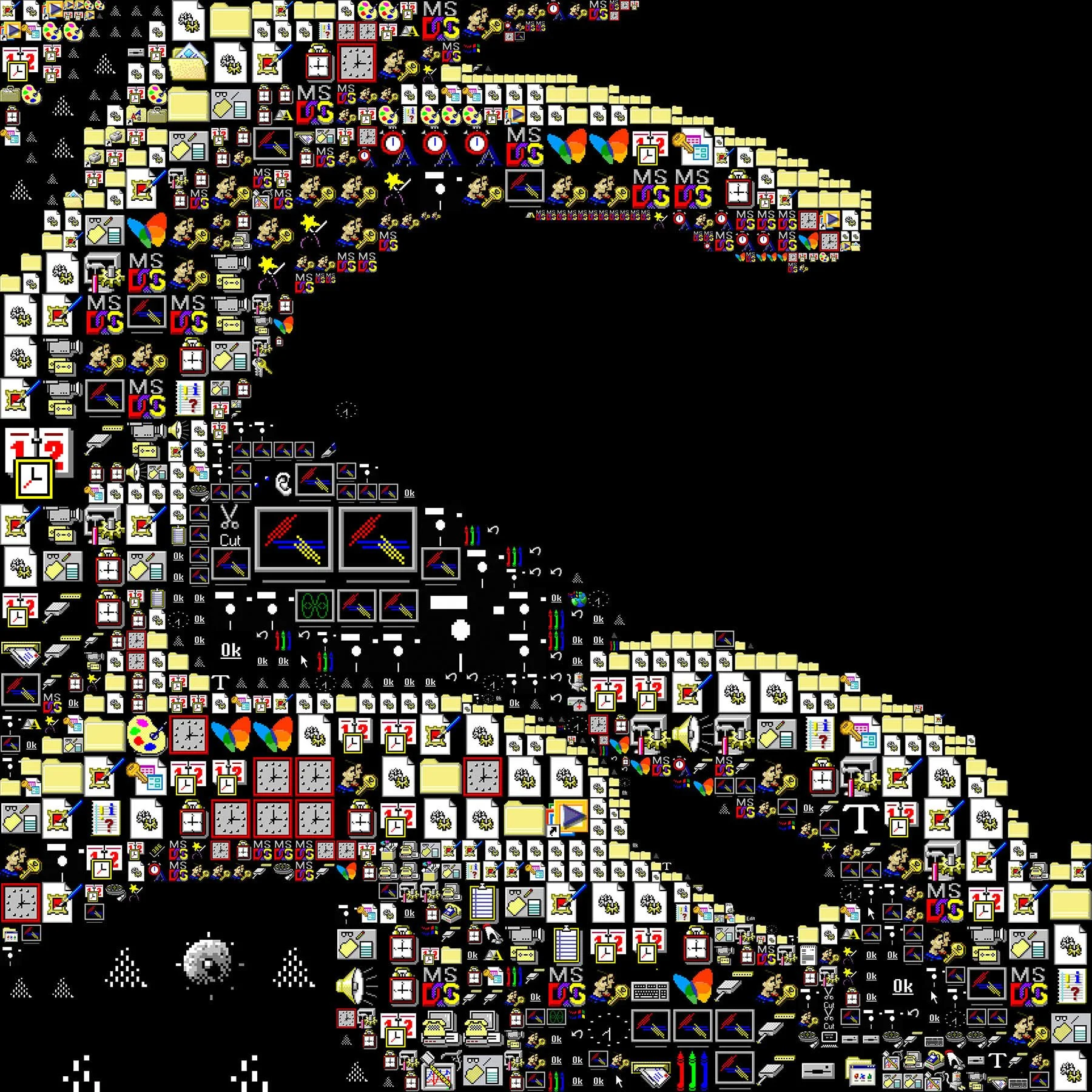
This is the first mosaic portrait I created. I have used just the set of icons of the very first (1.0) and unpopular version of Microsoft Windows. This set is so badly designed that it becomes interesting.
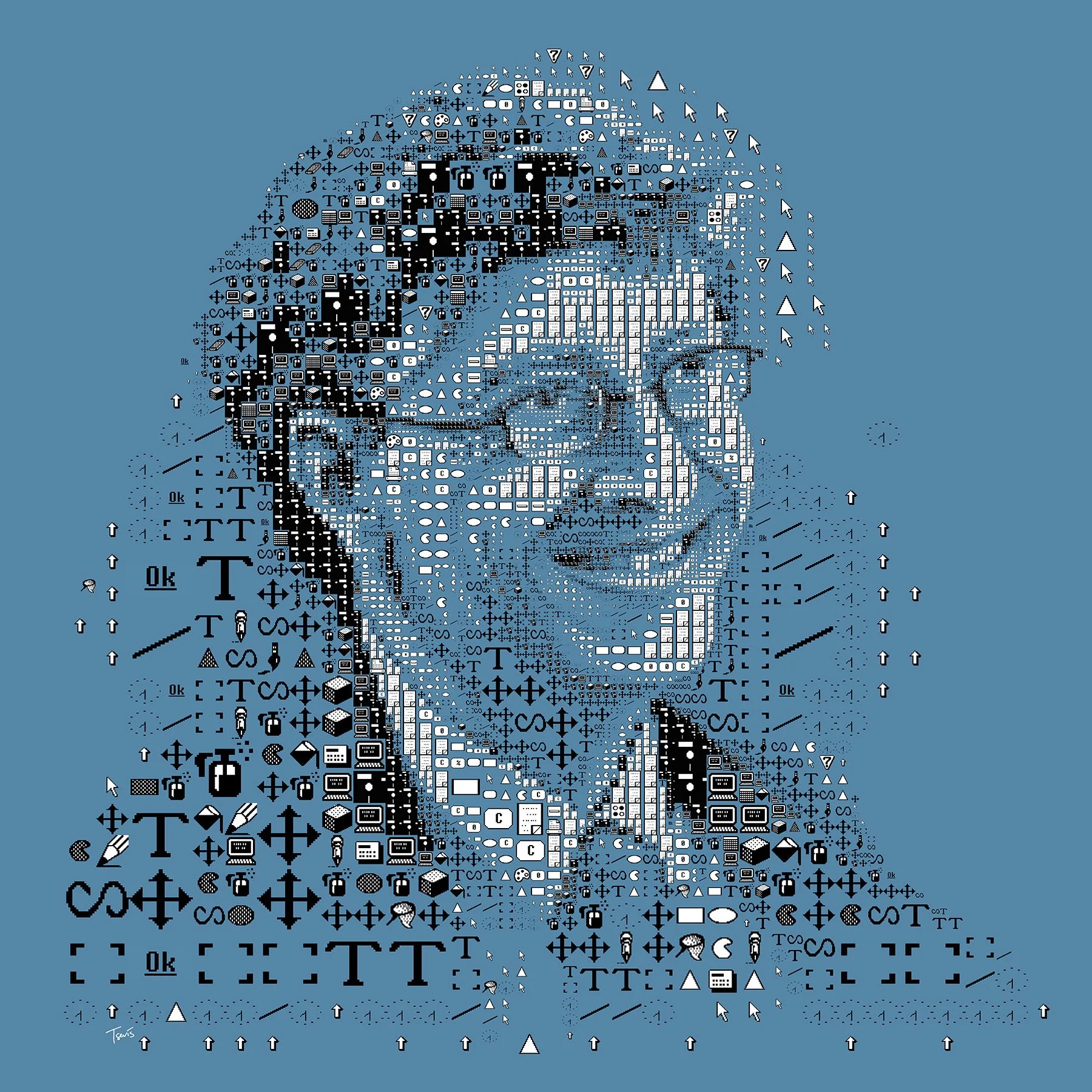
Based on a photo provided by DK books.
Icons from Microsoft Windows 1.0.
Some details of the mosaic portrait:


Bill Gates: The Windows portrait
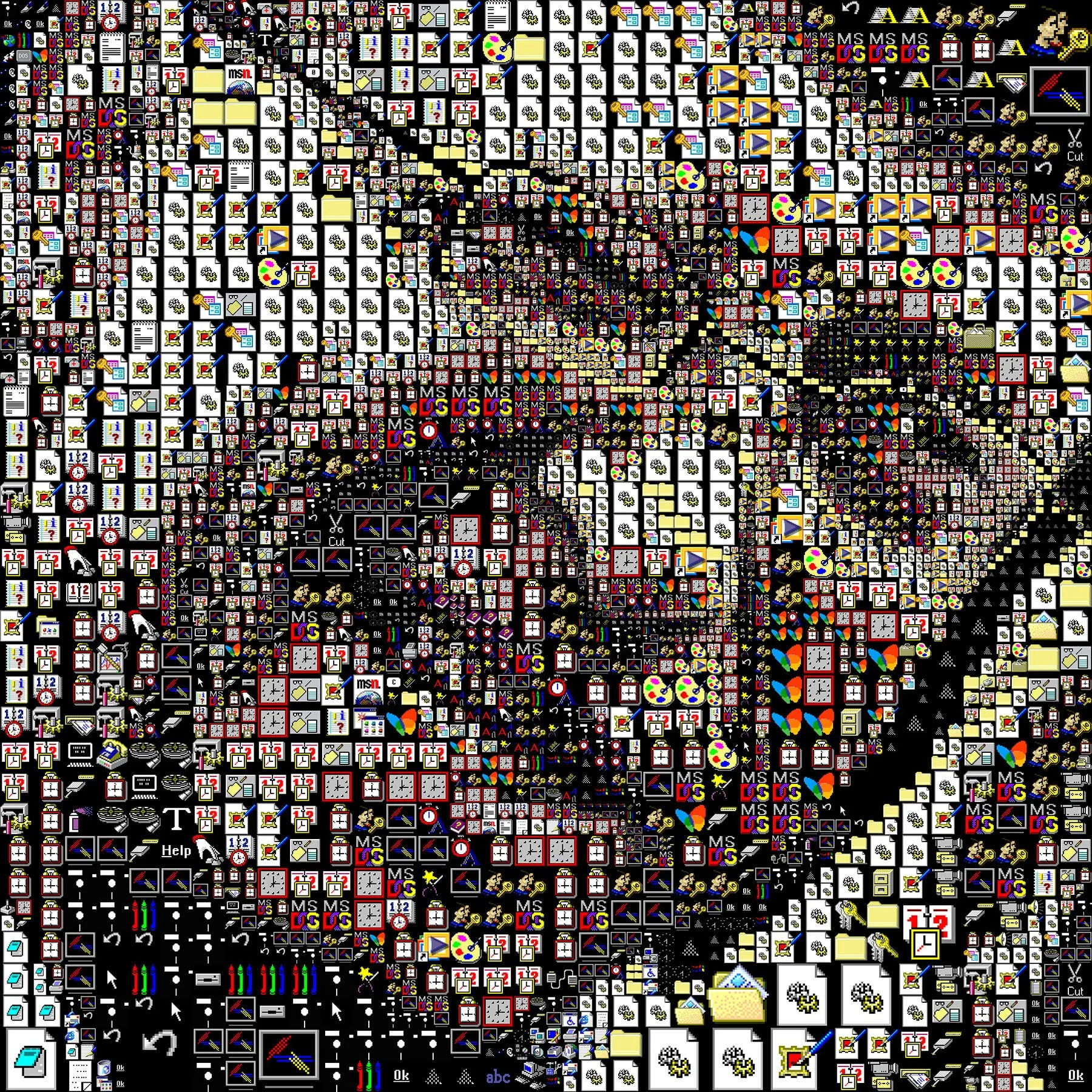
Hiring Susan Kare, the designer of the first Mac OS, was a huge step for Microsoft Windows. I have used the 2.0, 3.0, 95, and NT icons for this version. I really think Gates's expression is timeless.
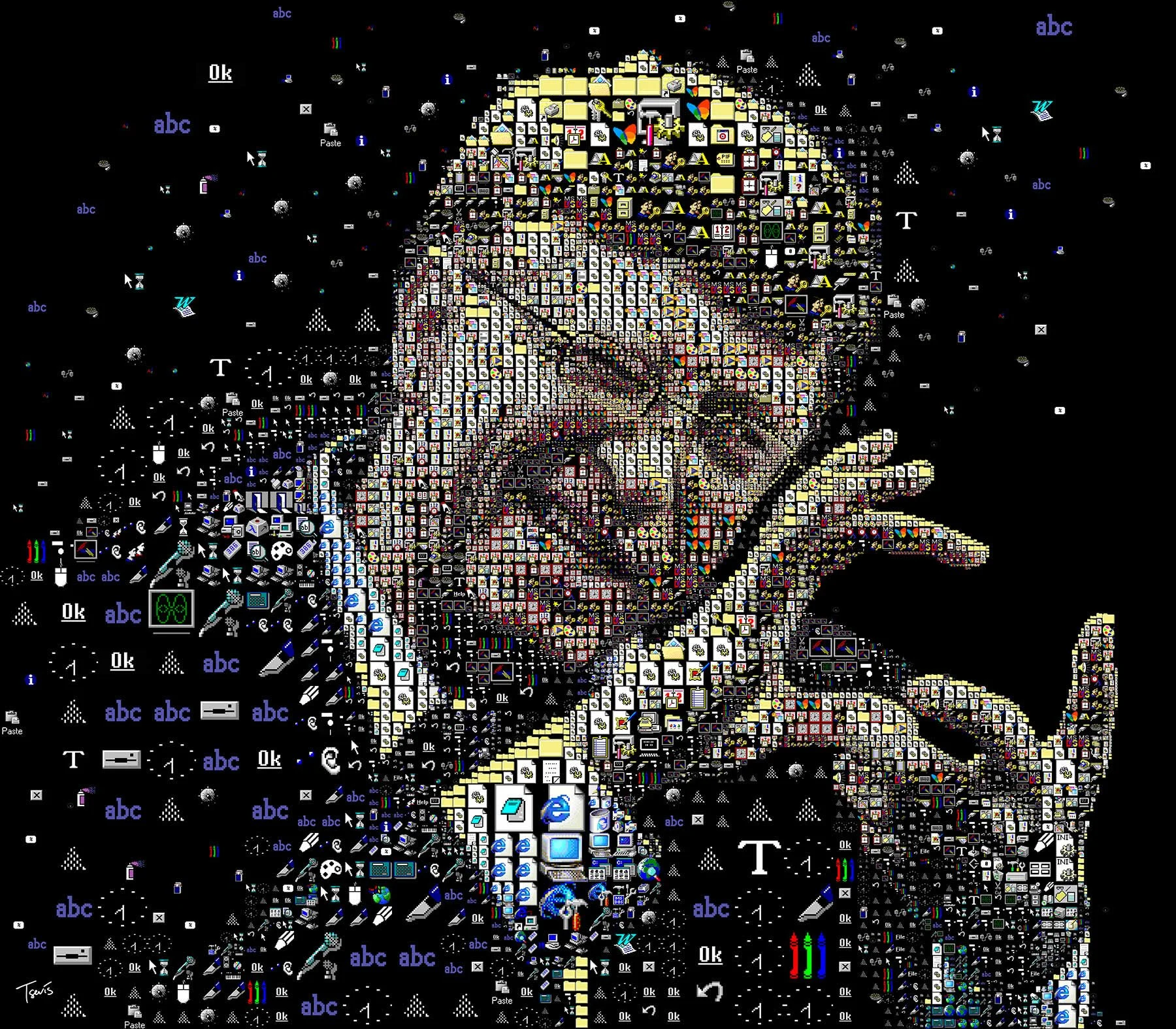
Photo by Dino Vournas/Reuters/Corbis
Icons by Susan Kare and other Microsoft designers.
Some details of the mosaic portrait:


Grace Hopper: The gifted mathematician and pioneer.
We're flooding people with information.
We need to feed it through a processor.
A human must turn information into intelligence or knowledge.
We've tended to forget that no computer will ever ask a new question.
— Grace Hopper
Grace Hopper has been a legend. First woman programmer of the Harvard Mark I, a pioneering computer based at Harvard University. But what Hopper is famous for is the first compiler. She developed the first tools that made programming easier.
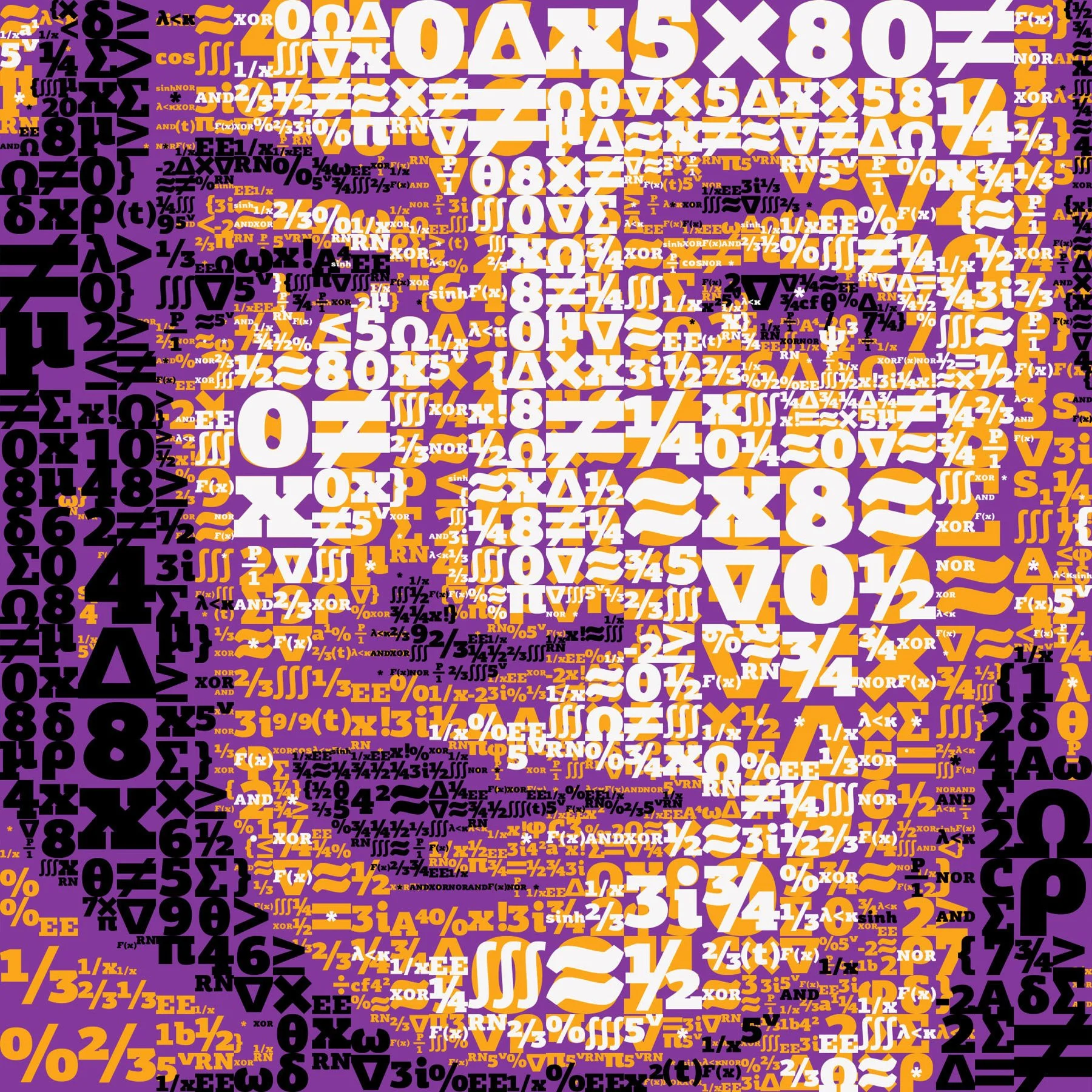
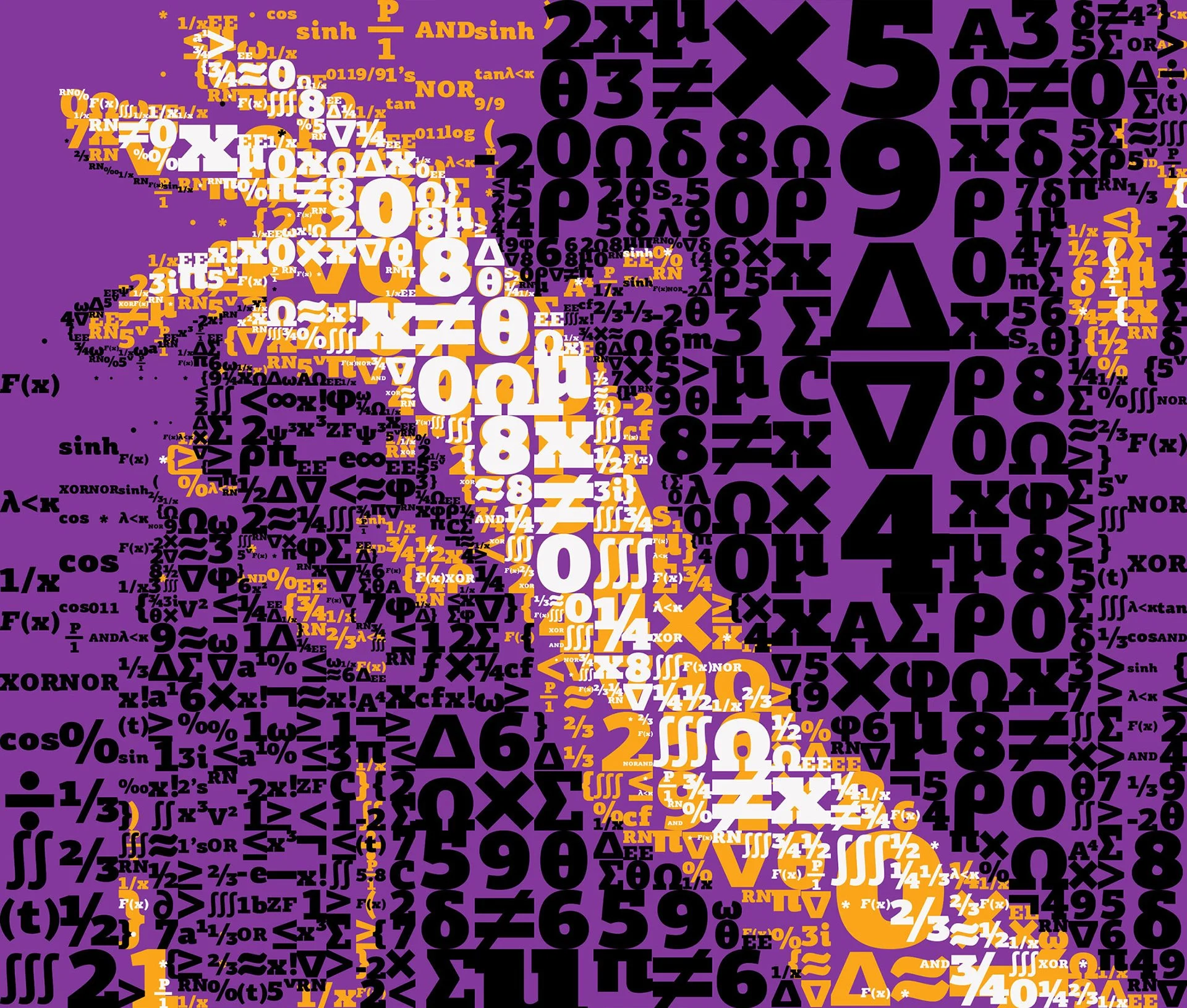
I know I had to deal with code, but mostly with pure mathematics for the Grace Hopper mosaic. I have moved beyond the Courier or any other fixed-width typeface because I wanted to create something heavier and more powerful. Grace wasn't just any programmer. She deserved the multi-award-winning PF Centro Pro designed by my dear friend Panos Vassiliou of Parachute Fonts.
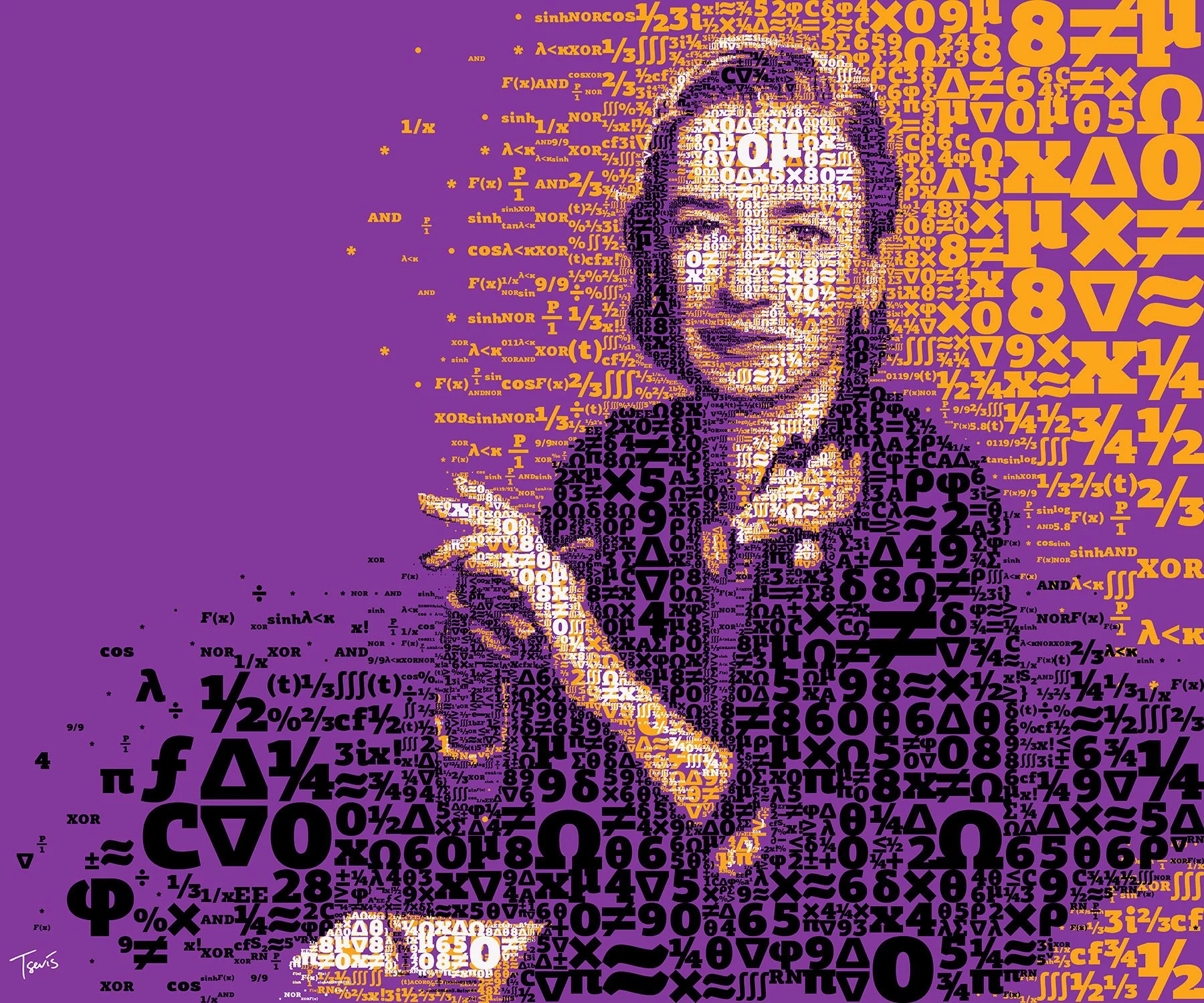
Photo by AP/Press Association Images
Typeface by Panos Vassiliou, Parachute Fonts
Some details of the mosaic portrait:

Cynthia Breazeal: The Robot Whisperer
Robots have gone into the deepest oceans. They've been to Mars.
They're just starting to come into your home.
You could think of your living room as their Final Frontier.
— Cynthia Breazeal
Cynthia Breazeal is a pioneer in Social Robotics and human-robot interaction. She is leading the Personal Robots Group at the MIT Media Lab.
The idea of hardware components came naturally to me as I stared at Cynthia's work. I wanted to assemble simple elements and give them life like her. The magenta background was another easy choice. For a children's book promoting role models, I thought it would be a good idea to connect this portrait to Cynthia's feminine side and her robot, Kismet. Cynthia created Kismet during her studies in the early 90s.
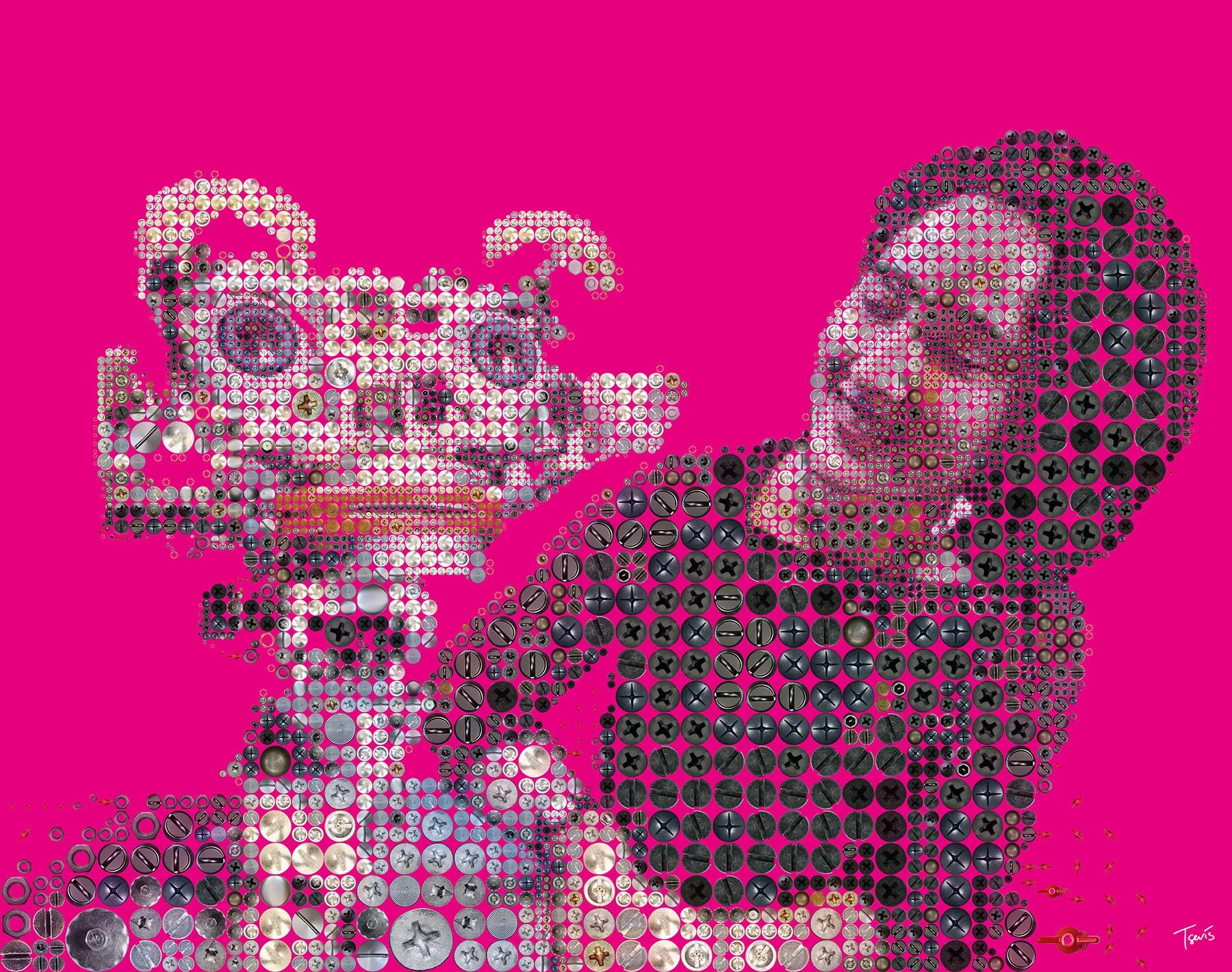
Photo by Sam Ogden, Science Photo Library
Hardware photos by various photographers.
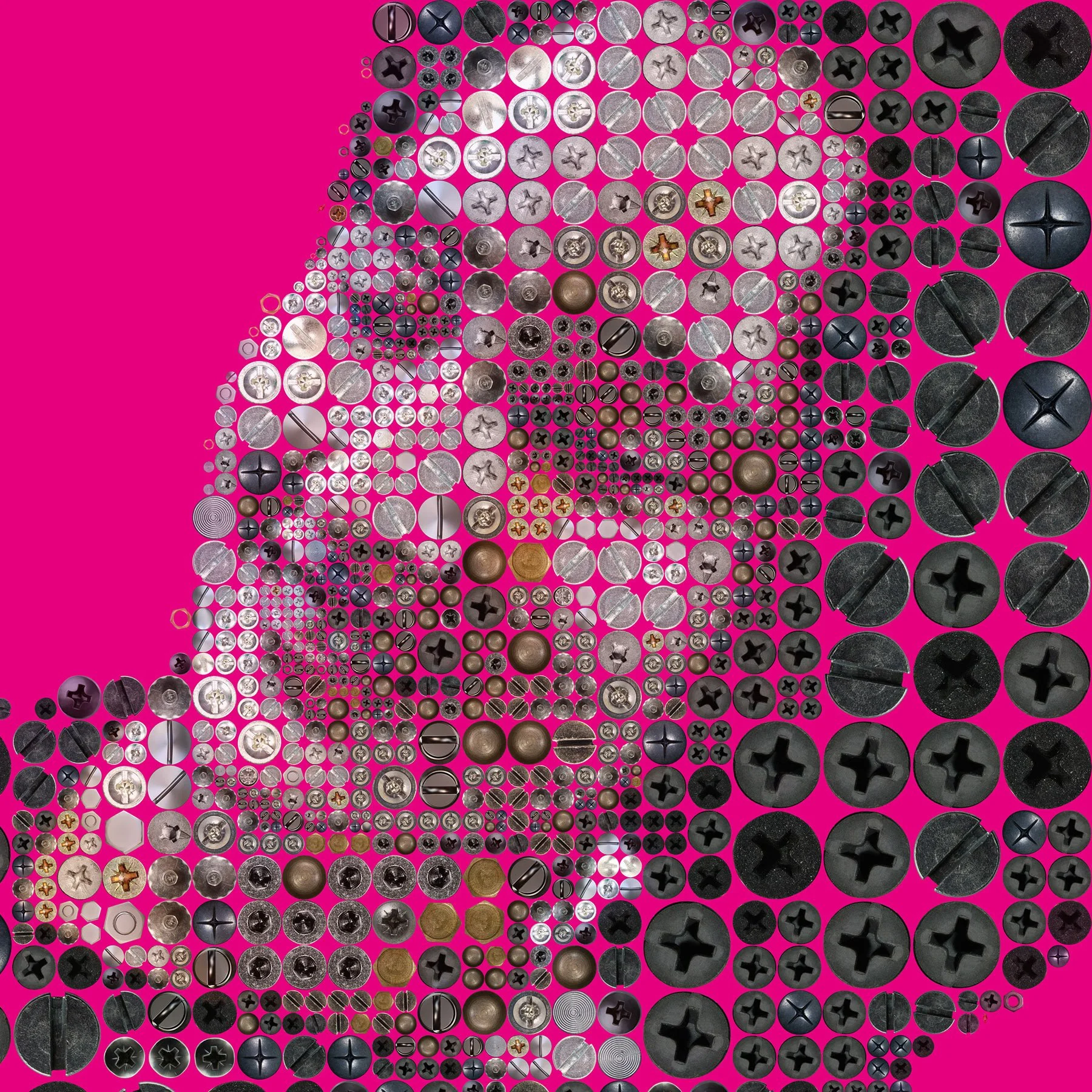
Some details of the portrait:


Mark Zuckerberg: The international portrait
Once every 100 years, the media changes.
The last 100 years have been defined by the mass media.
In the next 100 years, information won't be just pushed out to people:
It will be shared among the millions of connections people have.
— Mark Zuckerberg
Mark Zuckerberg is the hottest person in IT and media of our times. The movie The Social Network helped the masses become more familiar with his character, even if art does not always reflect the truth.
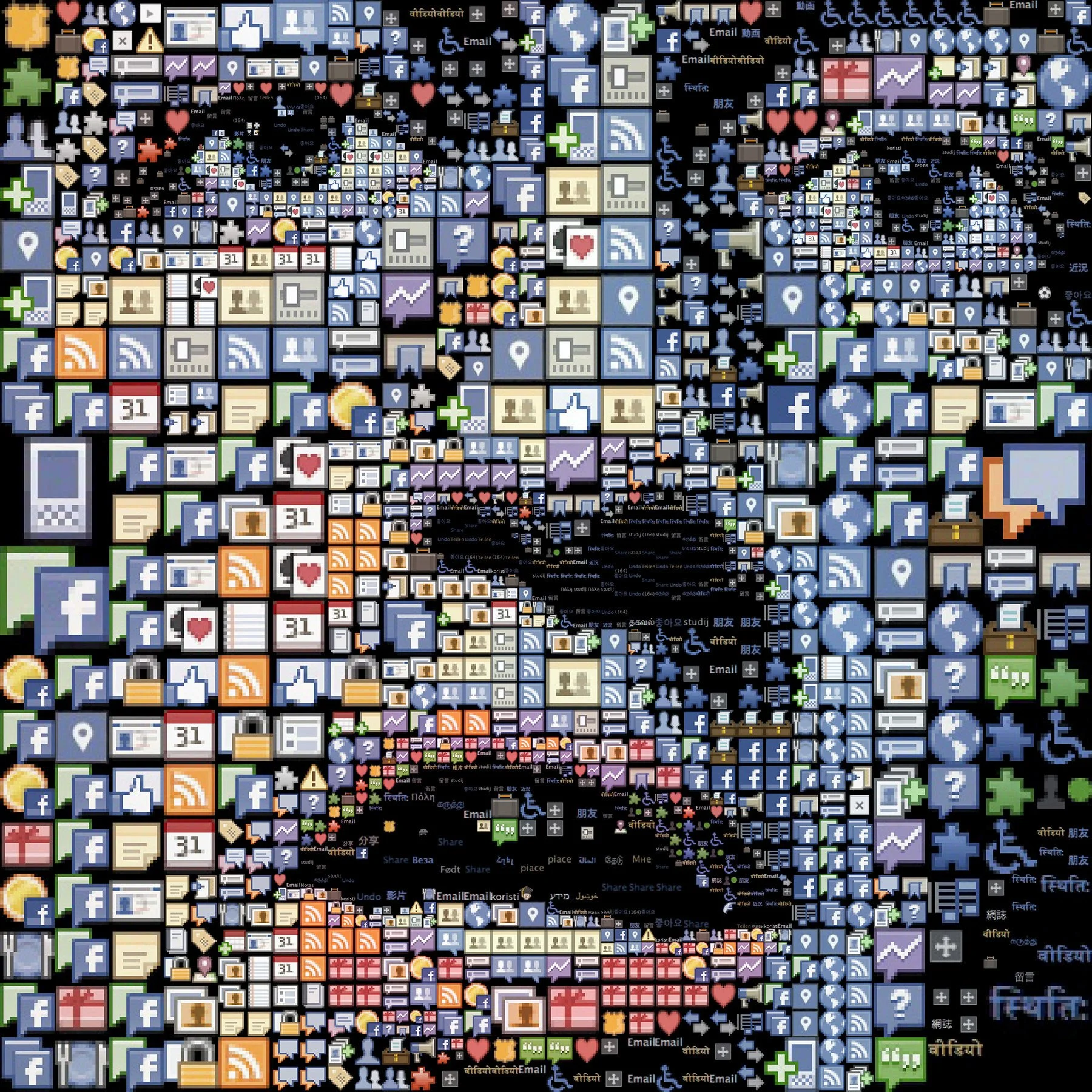
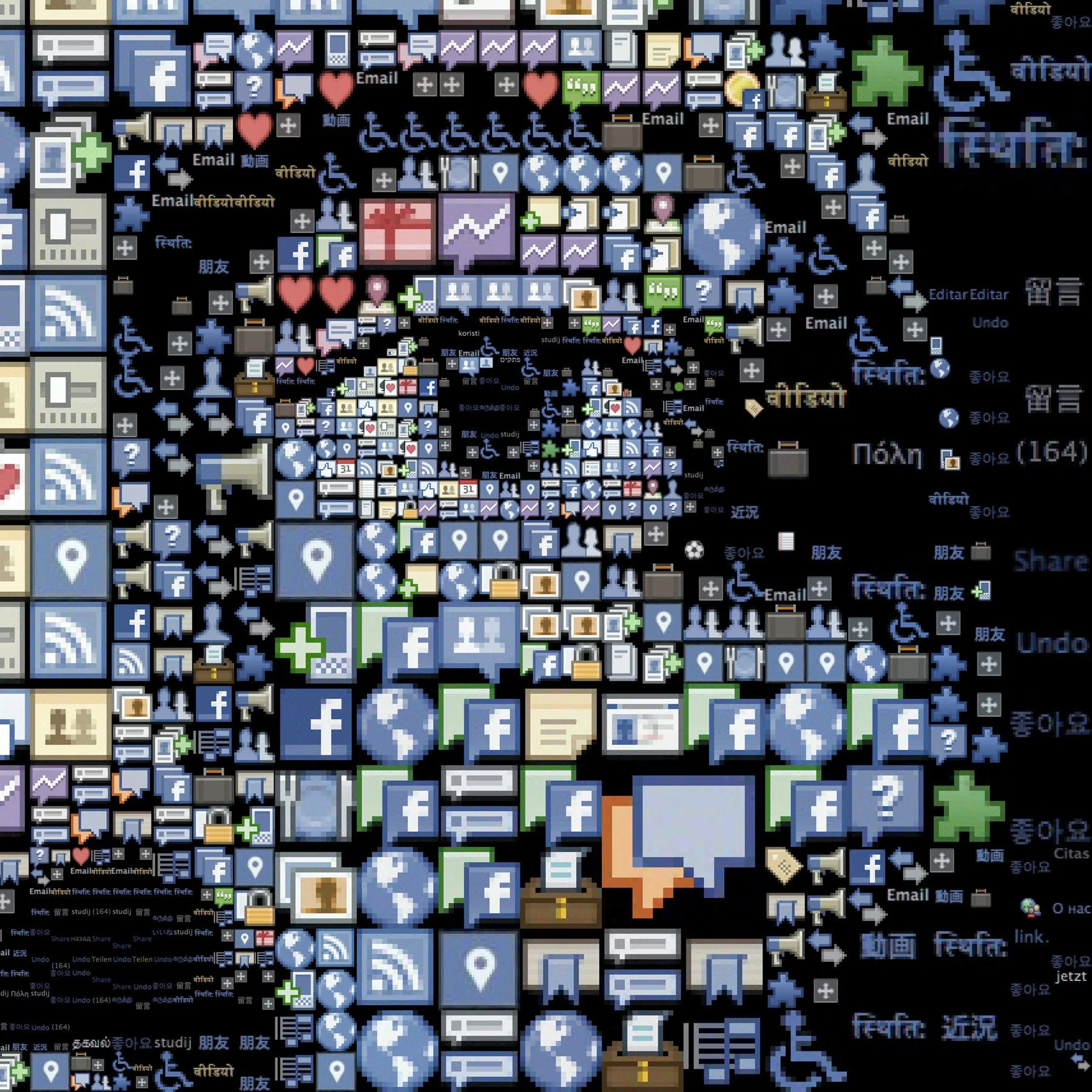
My art tried to represent the global language of Mark's Facebook. Icons and words are used as stars or planets in a clear night sky, forming something like a social galaxy.
The original file for this illustration is huge (which is why I always like to navigate through it with ZoomIt).
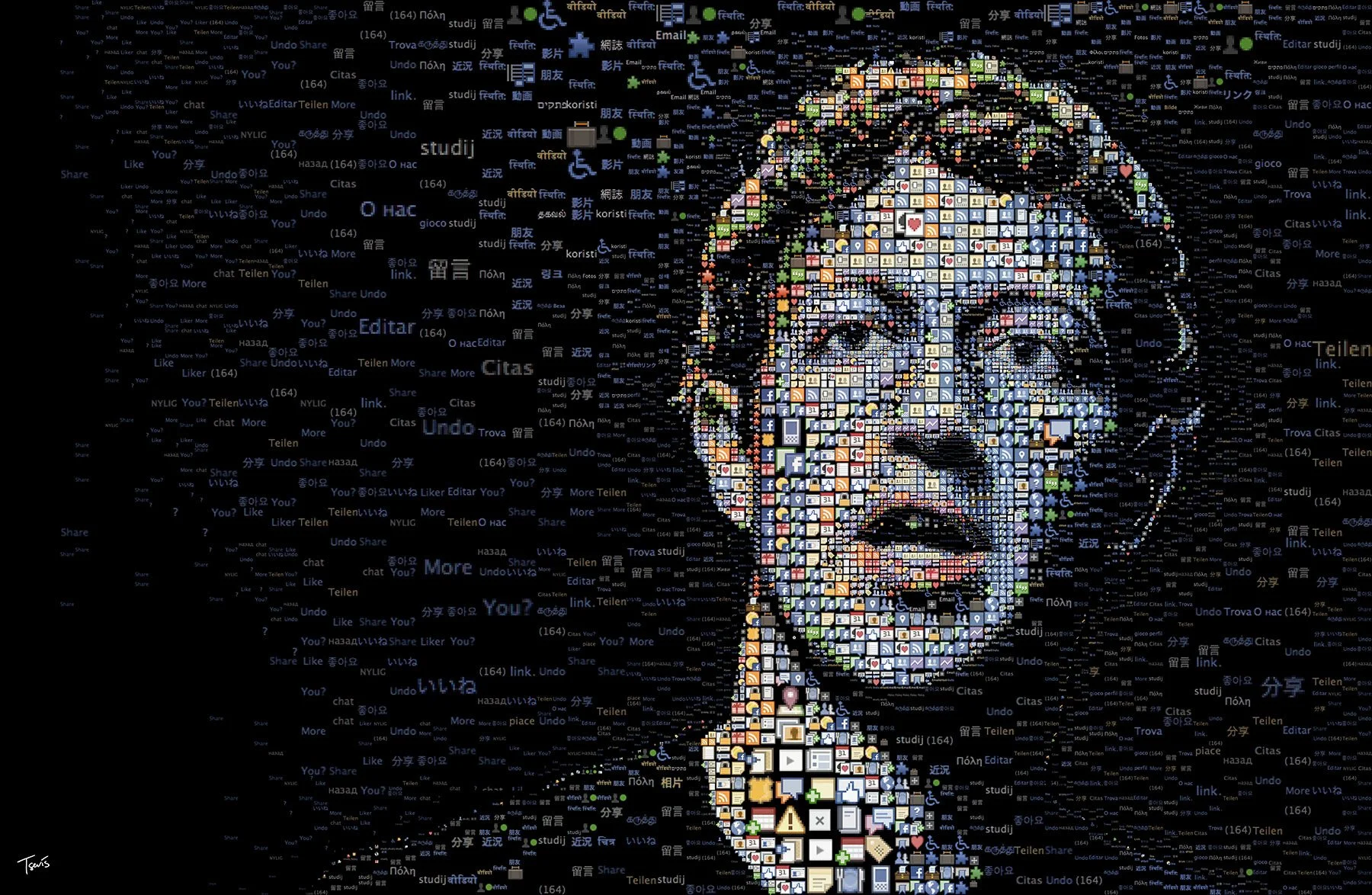
Photo by Francois G. Durand.
Icons and interface elements by Facebook.
Some details of the mosaic:


Sir Clive Sinclair: The PC pioneer
The idea that an inventor can come up with a brilliant idea and somebody else will make it happen is nonsense. If the idea is good enough, it's going to appear pretty crazy to almost everybody. Either you do it yourself, or it ain't going to happen.
— Clive Sinclair
The first personal computer ever made it to our family house was a ZX80 that my father bought. I still have this beauty in my collection. Clive Sinclair was a pioneer in electronics long before computers. His calculators were so powerful and yet so affordable.
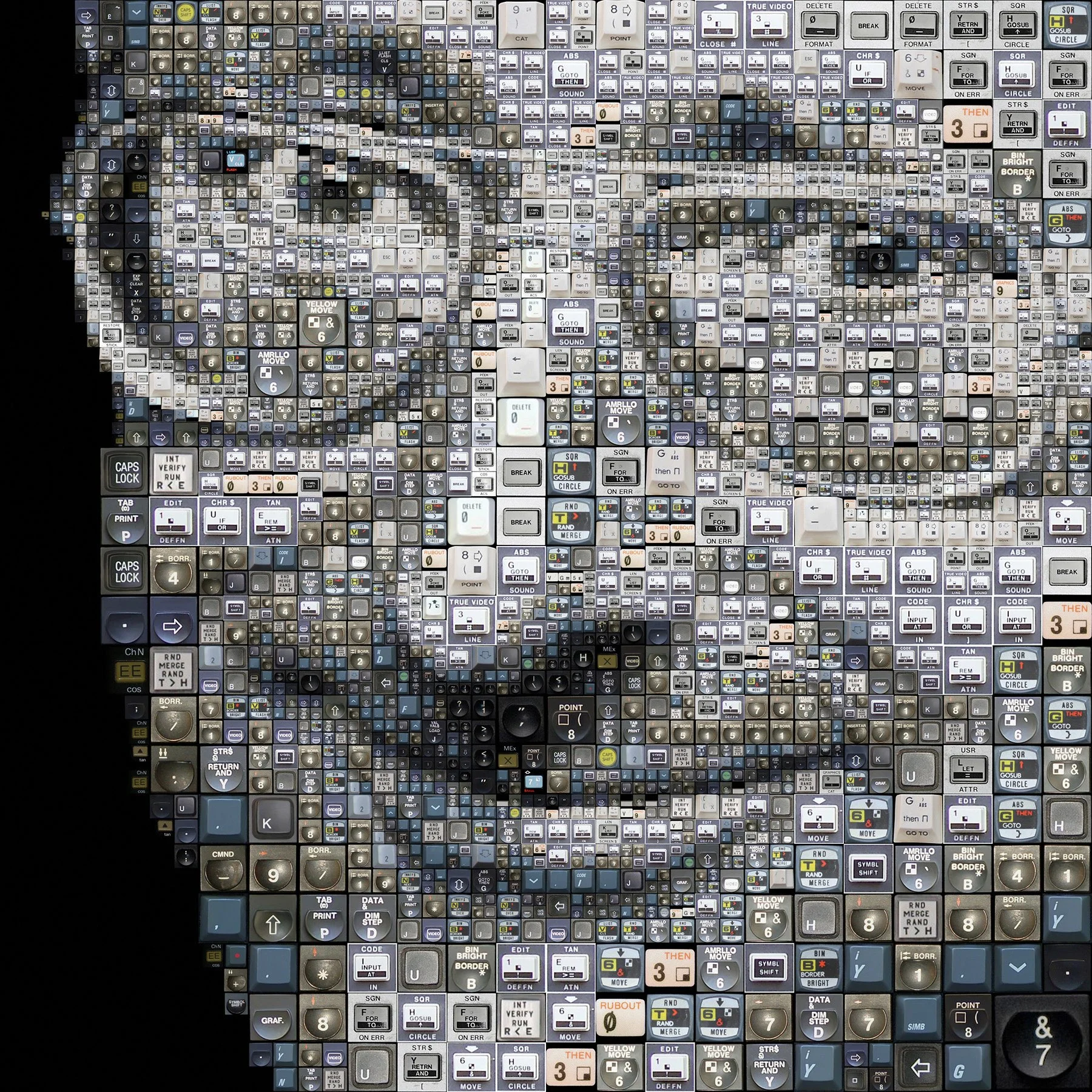
From a very young age, I was particularly fascinated by Sinclair computer keyboards. They were probably the most beautiful industrial design outside the Apple universe. So all these nice keys would be my brush strokes for this portrait.
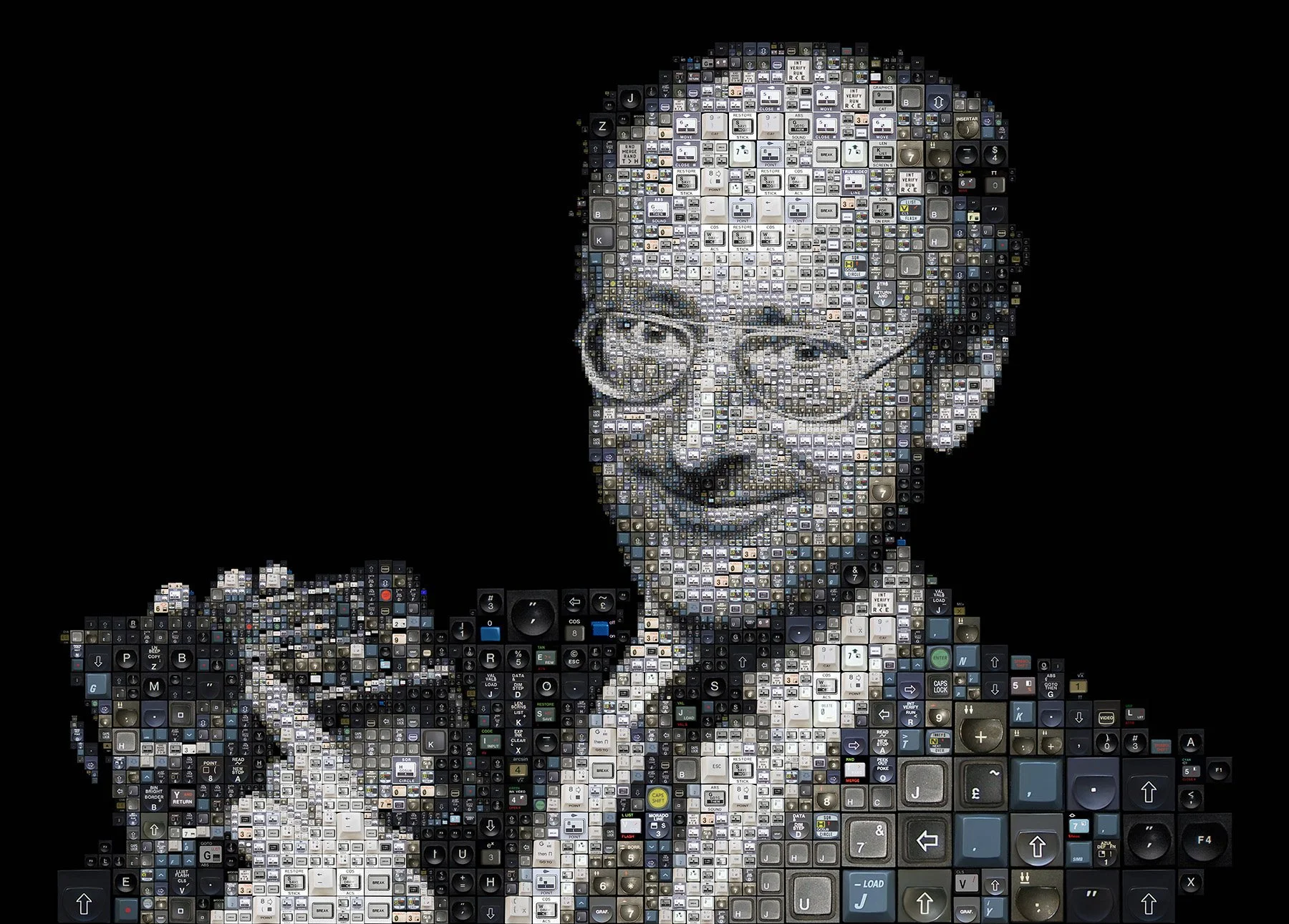
Photo by Central Press / Getty Images
Industrial design by various designers and Sinclair Research Ltd
Some details from the mosaic:

The book