
Cross-Cultural Fluency in Art
Why the difference between authentic cultural engagement and expensive cultural tourism determines whether your art investment builds lasting value or creates lasting problems
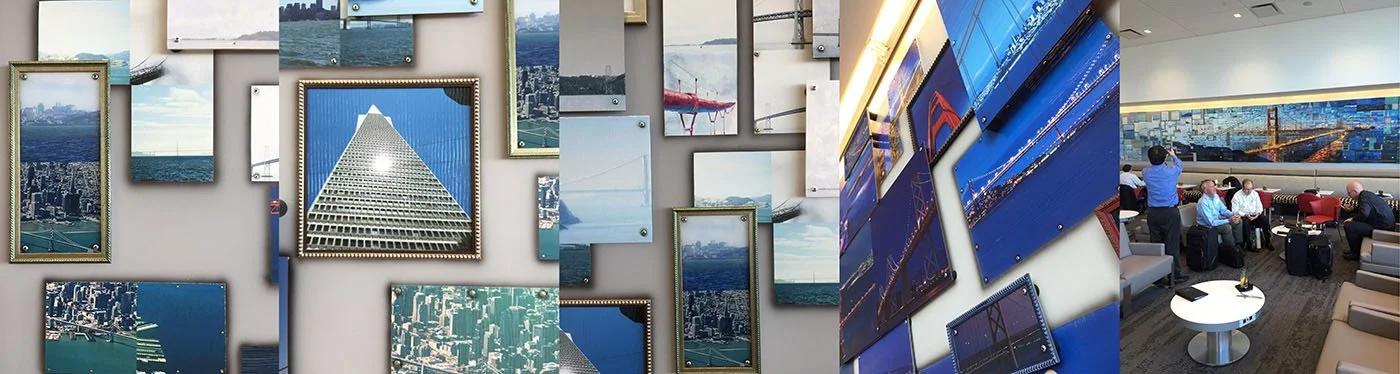
Detail of the mosaic wall in the Delta Sky Club at San Francisco International Airport: thousands of small photographs build one image, so the work reads differently from across the room and from a few inches away. Moments Gate.
Introduction: When Art Becomes a Bridge
Cultural fluency in art is the professional ability to work from a community's own meaning systems, not just its visual surface. Institutions can recognize it in three places: how early the community joins the process, whether the artist has long-standing relationships rather than a research folder, and whether the work keeps earning respect years after the opening.
This article draws on twenty-five years of cross-cultural commissions for airports, corporate headquarters and the Olympics. It explains how cultural fluency works, how to commission it, and how to measure it.
In the best cross-cultural artworks there is a moment when the visual language stops being foreign and starts being familiar. A Japanese businessman pauses before Crystal Worl's Native Alaskan installation at Seattle-Tacoma Airport, recognizing something universal in the specific cultural expression. A Brazilian family gathers around El Anatsui's bottle cap tapestries at a gallery opening, seeing their own cultural stories reflected in West African artistic innovation.
This isn't about political correctness or demographic representation—it's about the profound human capacity to create meaning across cultural boundaries through visual intelligence.
The best cross-cultural art doesn't try to speak to everyone by speaking to no one. Instead, it becomes so deeply rooted in specific cultural knowledge that it transcends those boundaries, creating new possibilities for understanding between communities that might otherwise remain strangers to each other.
This is why some institutional art investments become cultural landmarks that strengthen over generations, while others become expensive decorations that require ongoing damage control. Why some artists develop international reputations for cultural bridge-building, while others get trapped in cycles of appropriation controversies. Why some organizations are recognized globally for cultural intelligence, while others struggle to escape reputations for cultural tone-deafness.
The difference isn't about good intentions or aesthetic quality—it's about understanding cultural fluency as a specialized professional competency that creates lasting value for institutions brave enough to invest in authentic relationships rather than surface-level representation.
This is about the institutions, artists, and communities that are getting it right.
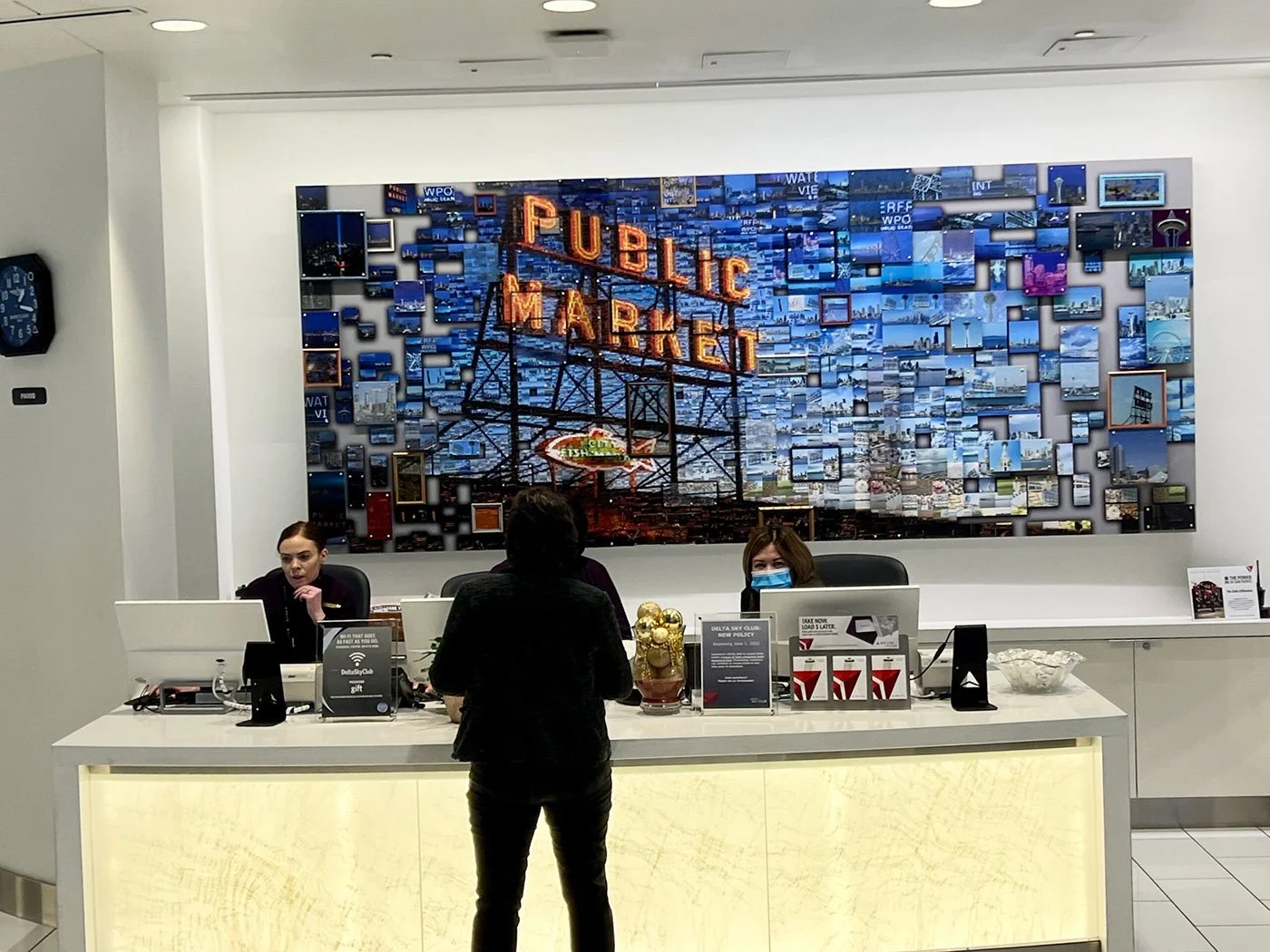
The reception wall of the Delta Sky Club at Seattle-Tacoma International Airport, built around the Public Market sign. The mosaic starts from a symbol the city already knows, so travelers from elsewhere meet Seattle through it.
I. Understanding Cultural Fluency in the Institutional Context
Beyond Aesthetic Diversity: What Cross-Cultural Competency Actually Means for Art Commissioners
When I started working on the Delta SkyLounges in San Francisco and Seattle, I thought I understood the challenge: create sophisticated art for an internationally diverse business audience. American hospitality for global travelers. Simple enough.
But after spending time in both airports, observing how different passengers interacted with existing art, I realized the problem was far more nuanced. A Japanese businessman would pause before certain geometric compositions but walk past others that looked similar to my untrained eye. Brazilian families would gather around specific color combinations while seeming indifferent to others. European travelers gravitated toward certain spatial relationships while avoiding others entirely.
Same space. Same aesthetic quality. Completely different emotional responses.
This is what cultural fluency actually means: understanding that visual perception isn't universal. That beauty, meaning, and significance are culturally constructed in ways that go far deeper than personal preference or aesthetic training.
Recent research by Mikuni et al., comparing how Japanese and German speakers judged the beauty of Western paintings, found measurable differences between the two groups, above all in how much weight complexity carried. This isn't about political correctness or demographic representation—it's about perception. The cultures we grow up in train us to look at the same image in different ways.
The Three Levels of Cultural Engagement
Most institutional art commissioning operates at what I call Level One: Aesthetic Borrowing. This is where you select visual elements from various cultures to create "globally inspired" or "culturally diverse" artworks. The focus remains on how these elements look rather than what they mean. It's the approach that creates those generic "international" hotel lobbies that could be anywhere in the world—and consequently feel like nowhere in particular.
Like the modernist dream of universal visual language, this approach assumes that good design transcends cultural boundaries through pure aesthetic intelligence. The 1974 American Institute of Graphic Arts project to create "universal" symbols revealed how cultural DNA appears in everything—even a telephone icon mystified smartphone generations, and "man" and "woman" restroom figures sparked ongoing cultural debates about representation.

Three of the 1974 AIGA symbol signs, made with the U.S. Department of Transportation by Roger Cook and Don Shanosky: telephone and restrooms. Public domain, via Wikimedia Commons (telephone, restrooms).
Level Two: Cultural Consultation represents progress. More sophisticated institutions recognize the need for cultural input and create consultation processes with community representatives. But this often happens late in the development process, after major aesthetic and conceptual decisions have been made. Communities are asked to approve or modify existing concepts rather than participate in their creation.
Level Three: Cultural Fluency treats cultural engagement as fundamental to the artistic process rather than an additional layer of consideration. This involves understanding that "cross-cultural adaptation significantly impacts the development of individuals in different cultural environments" and that artists must engage in genuine "cultural reconstruction" rather than superficial borrowing.
Here's a practical example from my own work: When creating the USA House murals for Rio 2016, Level Three meant understanding Brazil's deep mosaic traditions and how to honor those traditions while representing American athletes.
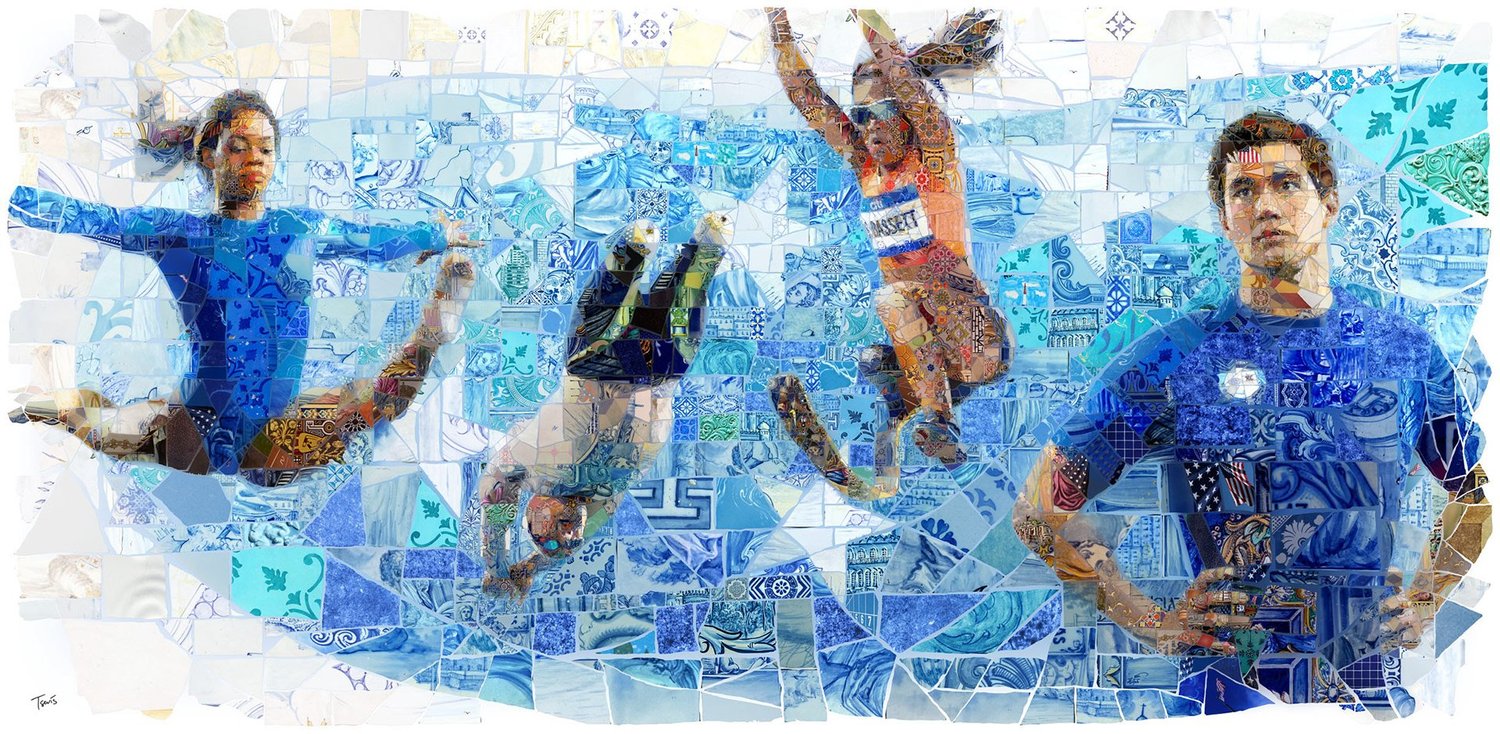
Mosaic mural for the USA House at the Rio 2016 Olympics. The murals for the USA House in Rio 2016.
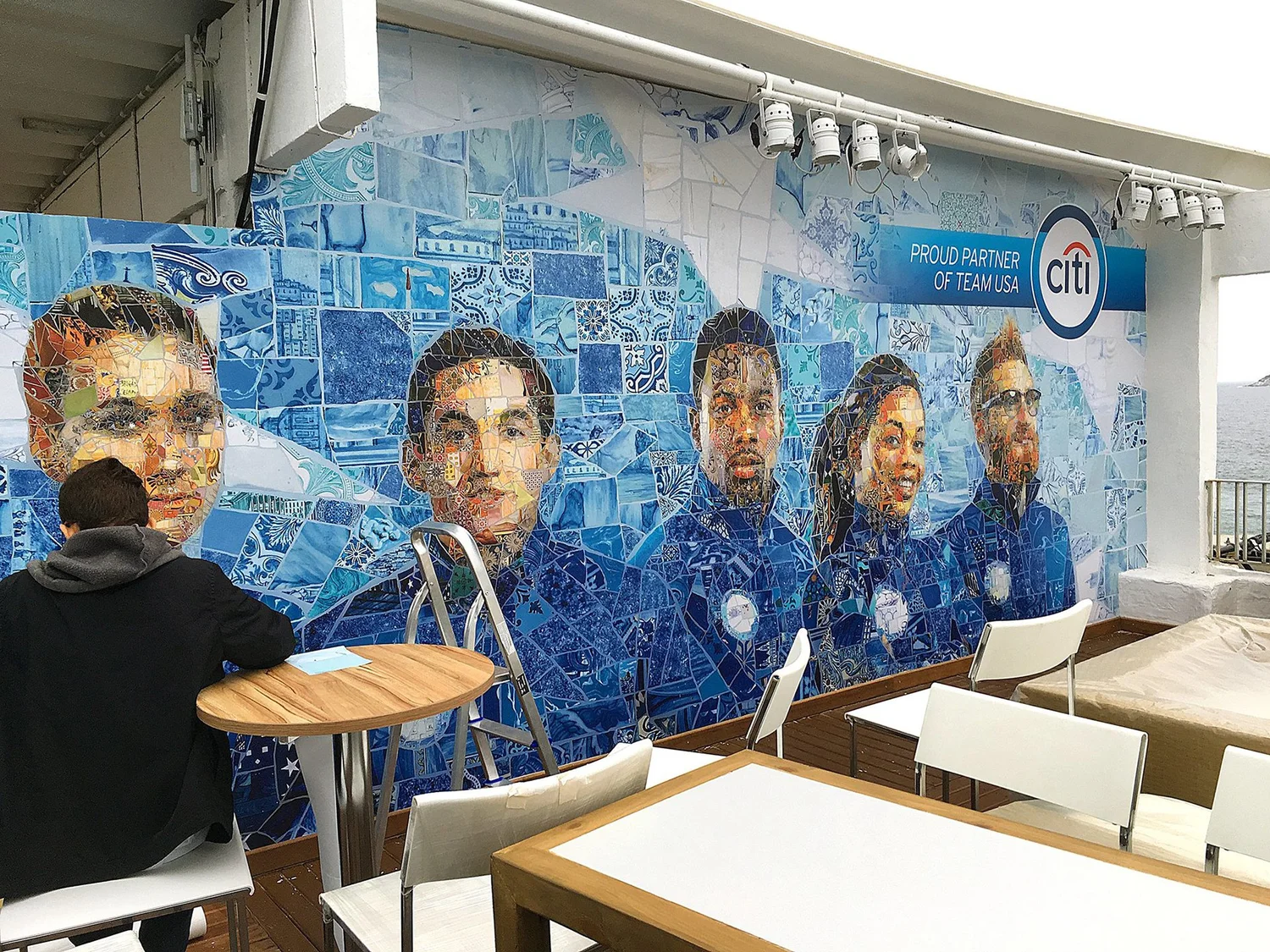
The mural in place in the USA House, Rio de Janeiro.
The breakthrough came from studying Rio's mosaic heritage: Escadaria Selarón's tile-by-tile tribute to the Brazilian people, Copacabana's Portuguese wave patterns reimagined by Roberto Burle Marx, and the centuries-old Azulejo tradition of storytelling through ceramic tiles. Instead of imposing American visual language on Brazilian space, I used Brazilian mosaic techniques to tell American stories.
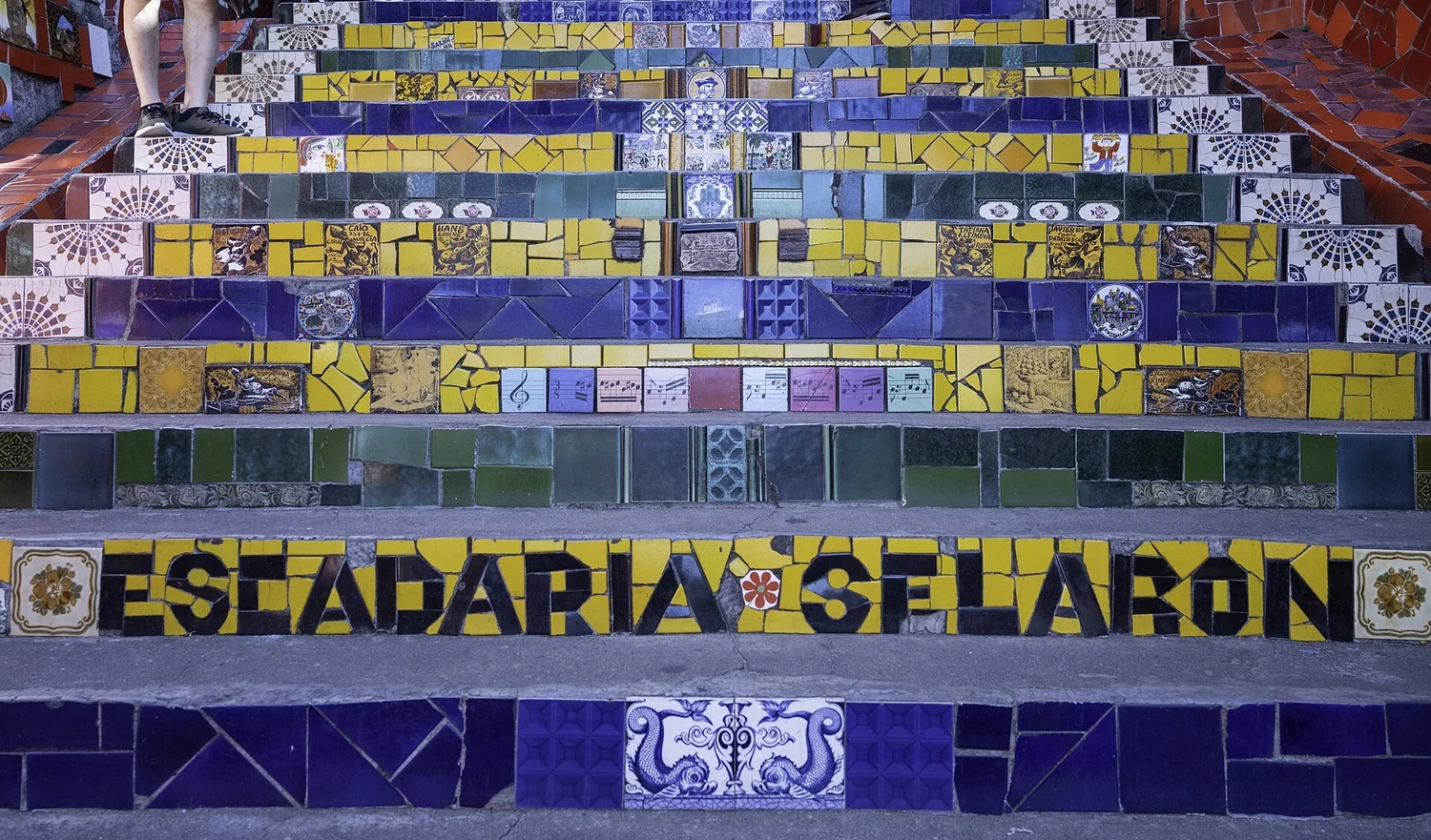
Escadaria Selarón, Rio de Janeiro, the staircase tiled by the artist Jorge Selarón. Photo: Wilfredor, CC0, via Wikimedia Commons.
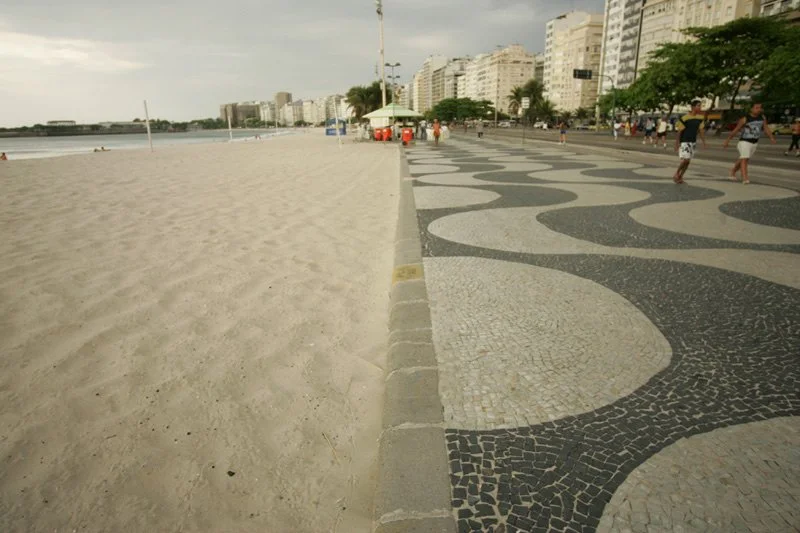
The wave pavement of the Copacabana promenade, redesigned by Roberto Burle Marx. Photo: Andréa Farias, CC BY-SA 2.0, via Wikimedia Commons.
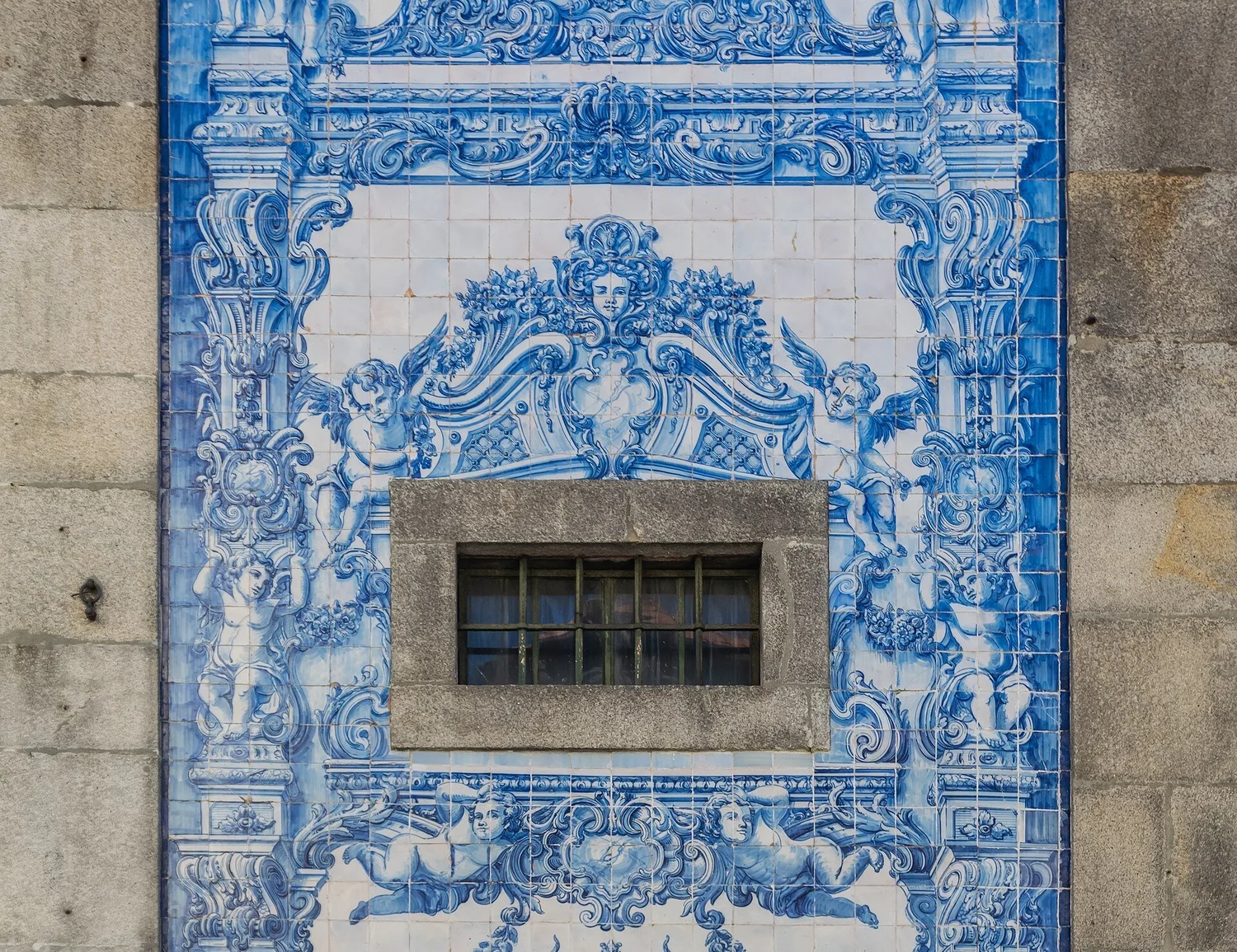
Azulejo facade of the Capela das Almas, Porto. Photo: Krzysztof Golik, CC BY-SA 4.0, via Wikimedia Commons.
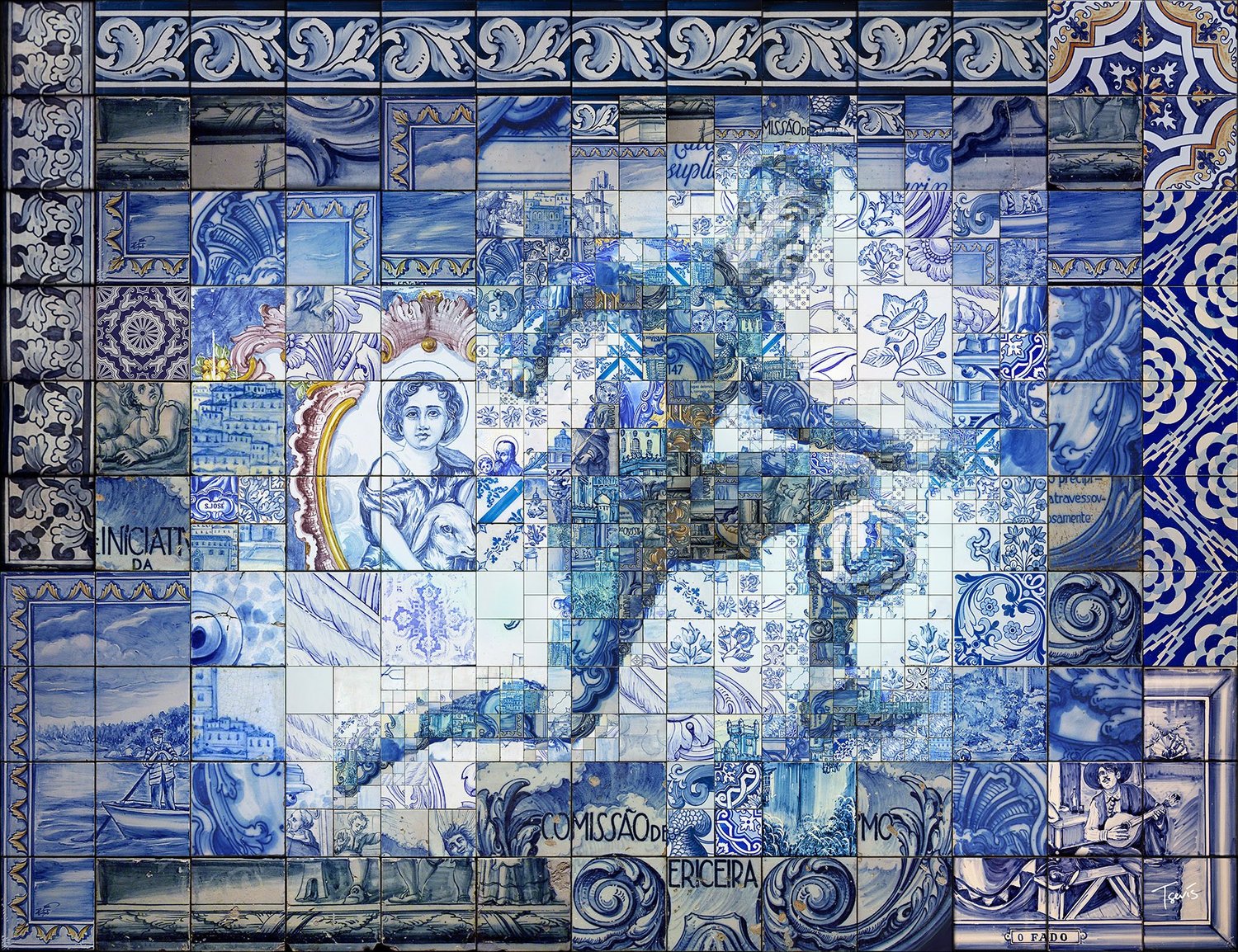
A mosaic illustration in the Portuguese azulejo tradition. Cristiano Ronaldo: O orgulho de Portugal.
The result was digital mosaics built from thousands of individual visual fragments—photographic shards, digital textures, patterns that referenced both American sports iconography and Brazilian textures like stone patterns, sand grains, and favela graffiti. The artwork succeeded not because it looked Olympic, but because it felt Brazilian and meant something American.
This same approach guided my work on Bulgari's Mediterranea collection, where I explored the cultural osmosis that created the brand itself. Since Sotirios Voulgaris (Sotirio Bulgari) emigrated from my own familial region of Thesprotia, Greece, to establish what would become a paragon of Italian luxury, the commission became an examination of how Greek cultural elements were absorbed and transformed through Italian design sophistication. Rather than simply representing Mediterranean diversity, I studied how Venetian murrine techniques, Byzantine geometries, Hellenic meanders, Roman architectural vocabularies, Tunisian chromatic systems, Levantine iconographies, Maltese megalithic geometries, Andalusian ornamental disciplines, and Provençal chromatic values actually interact and influence each other across the Mediterranean cultural landscape.
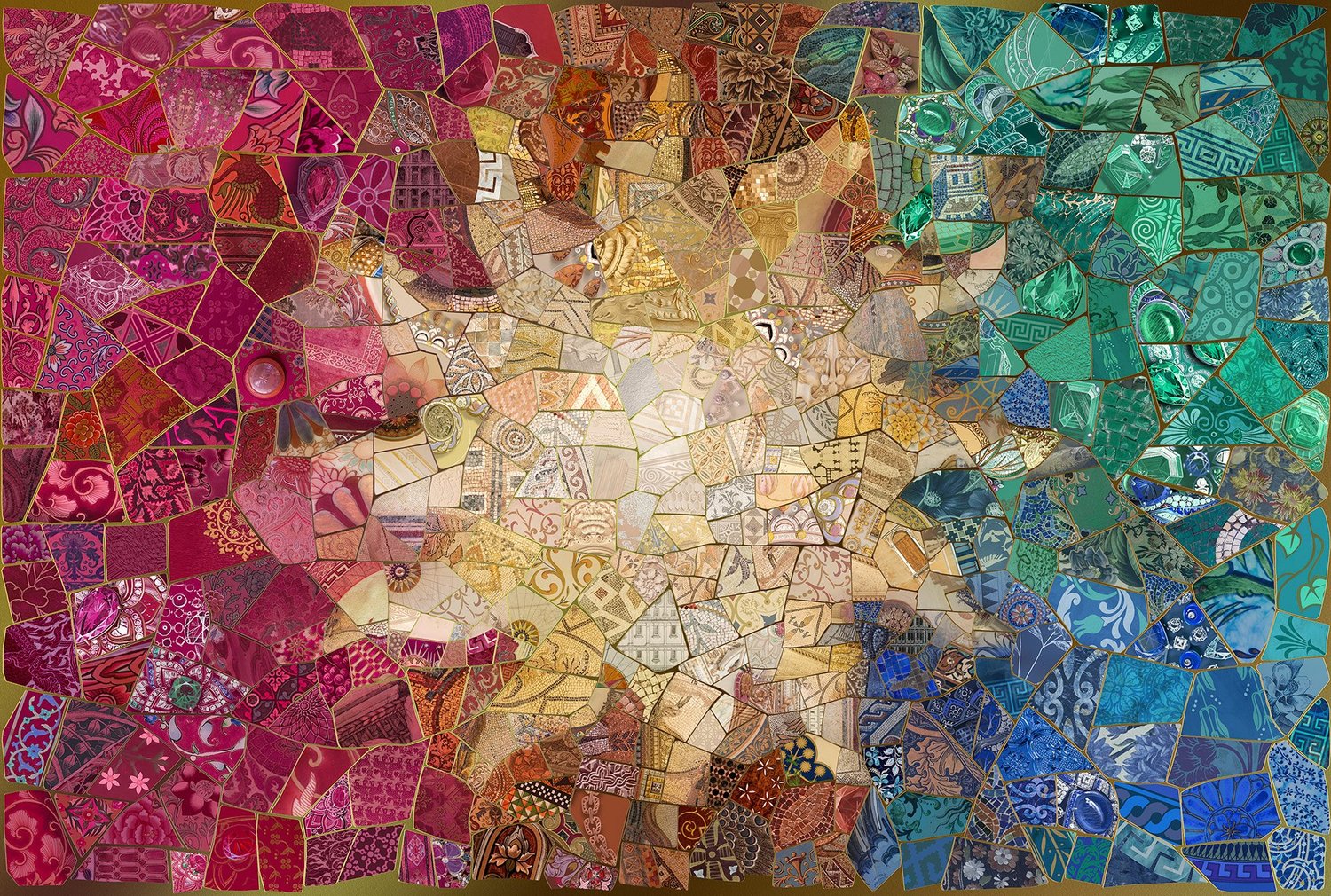
Digital mosaic for Bulgari Mediterranea. Bulgari Mediterranea Mosaic.
The Intelligence vs. Information Distinction
Traditional market research can tell you who lives in your region and what their general preferences might be, but it cannot provide the cultural intelligence necessary for authentic engagement. The difference between cultural information and cultural intelligence is like the difference between knowing that someone speaks Portuguese and actually being able to have a meaningful conversation in Portuguese.
Cultural intelligence requires understanding not just what communities prefer, but how they create meaning from visual experiences. Some cultural traditions emphasize individual artistic expression and innovation, while others prioritize collective cultural continuity and respect for traditional forms. Some communities value art that challenges social conventions, while others prefer art that reinforces cultural identity and community cohesion.
When Seattle-Tacoma International Airport commissioned Crystal Worl's installation, they didn't just hire a talented Native American artist to satisfy diversity requirements. They engaged with Worl's deep connection to her Tlingit heritage and her sophisticated understanding of how traditional Northwest Coast formline art can speak to contemporary global audiences while maintaining cultural authenticity. The result is artwork that serves as genuine cultural bridge-building rather than cultural decoration.
The Historical Context Imperative
Every cultural element carries historical weight that affects how it's interpreted in contemporary contexts. When I work with traditional Greek motifs, I have to understand not just their aesthetic properties, but their political implications in different international contexts. Ancient Greek visual elements mean different things to audiences in modern Greece, Turkey, North Macedonia, and Italy because of complex historical relationships between these regions.
James O. Young's research demonstrates that ethical cultural engagement requires understanding power dynamics and historical relationships between cultures. This is particularly important for institutional commissioners because they often have significant cultural and economic power that affects how their cultural choices are interpreted.
The key insight is that cultural elements don't exist in aesthetic isolation—they carry the energy of the communities that created them and the historical relationships that shaped them. Successful cross-cultural art honors this energy rather than exploiting it.
II. The Psychology and Neuroscience of Cultural Perception
Why the Same Artwork Is Read Differently by Different Communities
Understanding cultural perception requires recognizing that the human brain doesn't process visual information neutrally. Every image we encounter gets filtered through cultural frameworks developed over lifetimes of social learning, historical awareness, and community identity formation. This filtering happens automatically and unconsciously, which means that people from different cultural backgrounds can look at the same artwork and experience completely different emotional and intellectual responses.
This became dramatically clear to me during the Delta SkyLounge project. I created what I thought were neutral, sophisticated geometric compositions that would appeal to international business travelers. But during the installation process, I noticed that passengers from different cultural backgrounds were having visibly different responses to the same visual elements.
Some geometric patterns that felt calming and organized to European passengers seemed to create subtle anxiety in passengers from cultures where similar patterns carried religious or political significance. Color combinations that generated positive energy responses from Latin American travelers felt cold or sterile to travelers from other regions.
Same artwork. Same technical quality. Completely different reactions.
The Cultural Lens System
Every person approaches art with inherited interpretive frameworks that include multiple layers of cultural programming:
The Cultural Lens System: four layers every viewer looks through
Diagram of the four layers of interpretation described above, from the innermost (faith) to the outermost (economics).
Religious and Spiritual Context: Different faith traditions create fundamentally different relationships between visual representation and sacred meaning. What appears decorative in one religious context might be deeply sacred in another. Geometric patterns can be purely aesthetic in some traditions while carrying profound spiritual significance in others. During the Rio project, I had to understand how different religious communities within Brazil interpreted various symbolic elements differently.
Historical Experience: Communities that have experienced colonialism, displacement, or cultural suppression often develop heightened sensitivity to how their cultural symbols are used by outside institutions. When working on projects in regions with complex colonial histories, I've learned that seemingly neutral aesthetic choices can trigger unexpected emotional responses based on historical associations that outsiders might not recognize.
Political Awareness: Contemporary political relationships between communities influence how cultural representation is interpreted. During my work on various international projects, I've discovered that art that seems politically neutral to institutional commissioners might carry complex political meanings for community members who understand ongoing struggles for cultural recognition, land rights, or political representation.
Economic Circumstances: El Anatsui's work demonstrates how economic relationships—such as the history of colonial trade represented through discarded bottle caps—can be transformed into meaningful artistic commentary. Communities understand when cultural representation acknowledges economic realities versus when it romanticizes or ignores them.
The Authenticity Detection System
What fascinates me most about working across cultures is how quickly and accurately communities can distinguish between authentic cultural engagement and superficial cultural tourism. This evaluation happens almost immediately and involves multiple sophisticated assessments:
The Authenticity Detection System: four tests communities apply almost at once
Four yes answers read as engagement. Any no reads as cultural tourism, and communities usually notice before the opening.
The four evaluations in the text, set out as a checklist.
Artist-Community Relationship Evaluation: Communities can quickly determine whether an artist has genuine ongoing relationships with their cultural community or is extracting cultural material for external artistic purposes. Shirin Neshat's work succeeds internationally because her exploration of Iranian culture emerges from lived experience and ongoing cultural engagement rather than external fascination.
Cultural Context Understanding Assessment: Communities evaluate whether artwork demonstrates understanding of the historical, political, and social contexts that give cultural symbols their meaning, or whether it treats culture as purely aesthetic material divorced from lived reality.
Community Benefit Analysis: Communities assess whether cultural representation serves their interests by creating positive visibility, economic opportunities, or cultural preservation, or whether it primarily serves institutional interests by providing exotic visual appeal.
Collaborative Process Evaluation: Communities can easily determine whether they were genuinely involved in artistic development or merely consulted for approval of predetermined concepts.
The Meaning-Making Matrix
The Cambridge Handbook of the Psychology of Aesthetics and the Arts reveals that aesthetic experiences emerge from complex interactions between individual psychology and cultural context. This means that institutional art commissioners must understand not just what different communities prefer, but how they create meaning from visual experiences.
For instance, in my work with American corporate clients commissioning art for international offices, I've learned that the same visual approach to representing "innovation" or "excellence" can be interpreted completely differently across cultural contexts. American business culture often values bold individual expression and competitive achievement, which translates into specific aesthetic preferences for dynamic compositions and assertive color choices.
But in cultures that prioritize collective harmony and long-term relationship building, those same aesthetic choices might be interpreted as aggressive or culturally insensitive. The challenge becomes finding visual languages that can communicate institutional values authentically across these different meaning-making systems.
The most successful cross-cultural installations I've worked on achieve this by identifying universal human experiences—creativity, connection, aspiration, community—and expressing them through culturally specific visual languages that honor local meaning-making traditions while enabling cross-cultural appreciation.
This approach manifests differently across various cultural contexts. In my Bulgari Mediterranea work, the challenge was understanding how Mediterranean cultures influence each other rather than treating them as separate aesthetic categories. The Qatar 2022 project required grasping why Arabesque represents such advanced mathematical and geometric achievement before attempting to use those patterns respectfully. The African Bricks series needed 15 years of study to understand how the brick is not just a building material but a symbol of the ingenuity and resourcefulness of the people who have used it to create a safe and secure home for their families.
Each project demanded different cultural intelligence competencies, but all required the same fundamental respect for the communities and traditions being engaged. The goal was never to represent these cultures for external consumption, but to contribute something meaningful to ongoing cultural conversations while learning from sophisticated artistic traditions that deserve serious study and authentic engagement.
The Meaning-Making Matrix
| Value to express | Culture of individual achievement | Culture of collective harmony |
|---|---|---|
| Innovation, excellence | Bold dynamic compositions and assertive colour read as confidence. | The same choices can read as aggressive or insensitive. |
| Project | What had to be understood before drawing anything |
|---|---|
| Bulgari Mediterranea | How Mediterranean cultures influence each other, instead of treating them as separate aesthetic categories. |
| Qatar 2022 | Why Arabesque counts as an advanced mathematical and geometric achievement. |
| The African Bricks | The brick as a symbol of ingenuity and of a safe home; fifteen years of study. |
Top: the same value read two ways. Bottom: the three projects discussed above.
III. The Professional Competencies of Cultural Translation
Artists as Cultural Diplomats: The Skills That Transform Borrowing Into Bridge-Building
The difference between cultural appropriation and cultural fluency often comes down to the artist's relationship to translation rather than extraction. This distinction became clear to me during a project that initially went wrong before I learned how to do it right.
Early in my career, I was commissioned to create artwork for a multinational corporation's headquarters that would "celebrate their global presence." My initial approach was to research visual elements from each region where the company operated and combine them into sophisticated compositions. Technically competent, aesthetically pleasing, globally representative.
The problem was that I was operating as a cultural tourist rather than a cultural translator. I was collecting visual souvenirs from different cultures and arranging them attractively, but I wasn't understanding or honoring the meaning systems that created those visual elements.
From borrowing to bridge-building
- Collects visual souvenirs from each region
- Arranges them attractively
- Represents many cultures at once
- Cannot say what the symbols mean
- Starts from shared experiences: collaboration, innovation, excellence, service, growth
- Learns how each culture expresses them visually
- Honors the meaning systems behind the forms
- Builds the relationship before the work
The shift described in the headquarters project above.
The breakthrough came when I stopped trying to represent multiple cultures and started trying to understand how different cultures approach the fundamental human experiences that businesses actually care about: collaboration, innovation, excellence, service, growth. Once I understood how different cultural traditions express these concepts visually, I could create art that spoke authentically across cultural boundaries while honoring specific cultural intelligence.
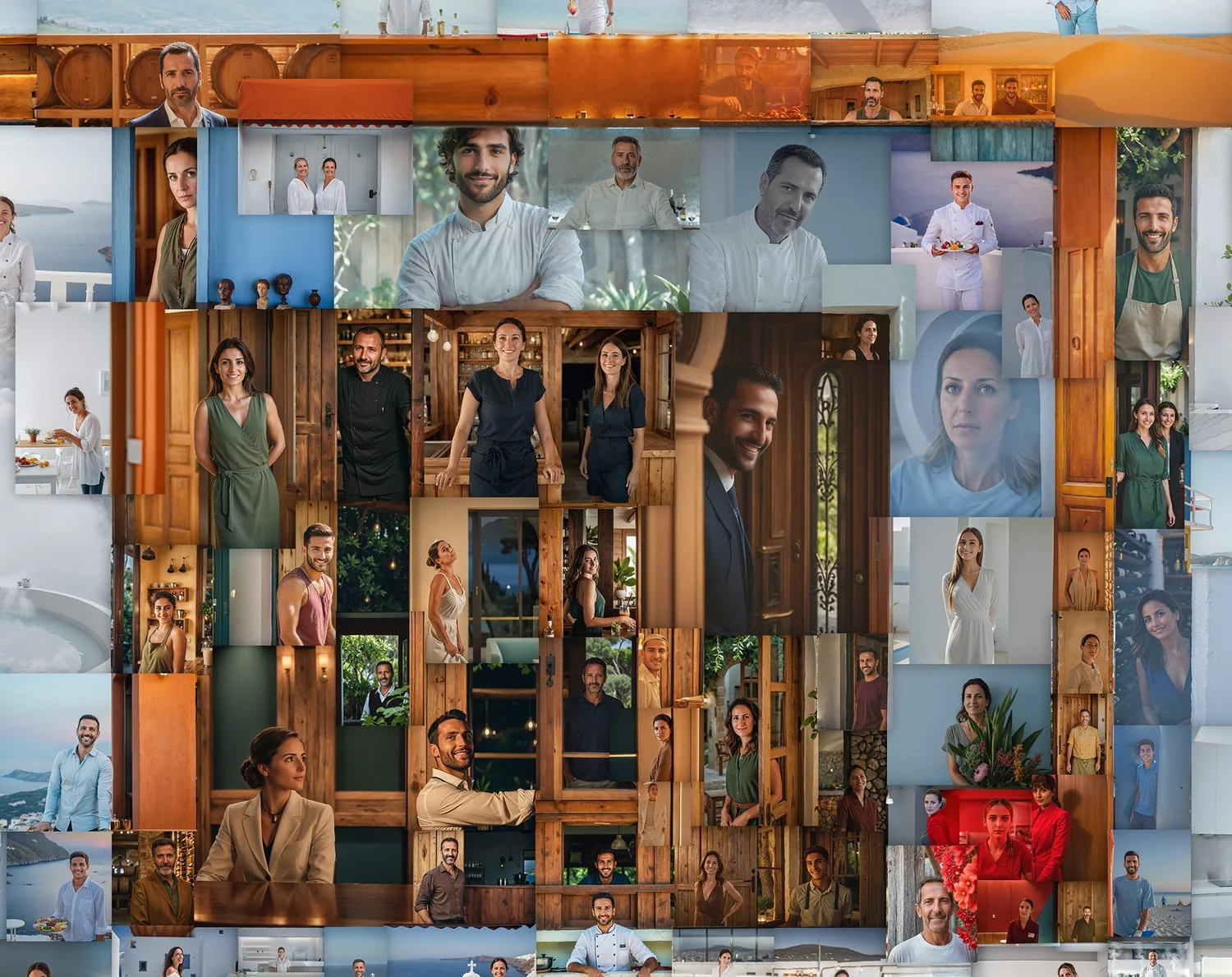
The same campaign: the portraits form the facade of a business, so the people become the building. Eurobank: Your Business is Your People.
The Relationship Architecture
Authentic cross-cultural artists invest years in building genuine relationships with cultural communities before incorporating cultural elements into their work. El Anatsui's career exemplifies this approach—his understanding of Adinkra symbols and traditional West African textile arts emerged from sustained engagement with Ghana's National Cultural Centre and ongoing relationships with traditional artists and cultural practitioners.
This relationship-building has three parts that commissioners should plan for:
Cultural Learning Investment: Artists engage in formal and informal cultural education, studying not just visual traditions but also historical contexts, spiritual significance, and contemporary cultural issues. This learning happens through direct engagement with cultural practitioners rather than just academic research. When I work on projects involving Greek cultural elements, I don't just study ancient Greek art history—I engage with contemporary Greek artists, cultural institutions, and community leaders to understand how traditional elements connect to current cultural conversations.
This depth of study became essential for my Qatar 2022 project, where I spent years studying Arabic patterns and Arabesque design. For someone who has been dealing with patterns all my life, I can say the Arabesque is probably the most advanced and most challenging pattern exercise one artist can do. Advanced mathematics and geometry are needed and a lot of dedication and discipline. The project wasn't just about creating football portraits—it was about understanding why Arabic cultural treasures, especially the Arabesque and Islamic patterns, represent such sophisticated achievements in visual culture.
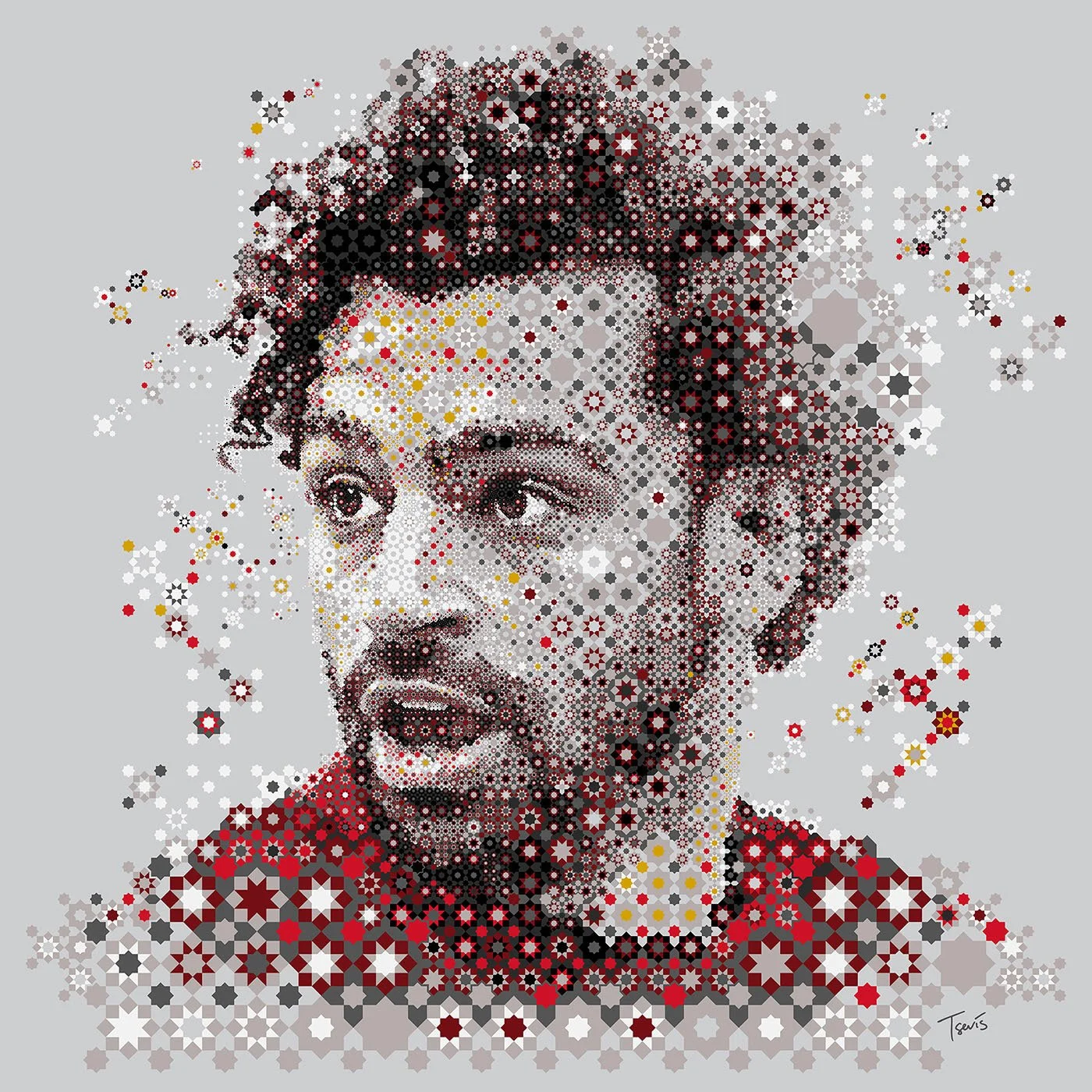
Mohamed Salah, from Qatar 2022: A Study in Football and Arabesque.
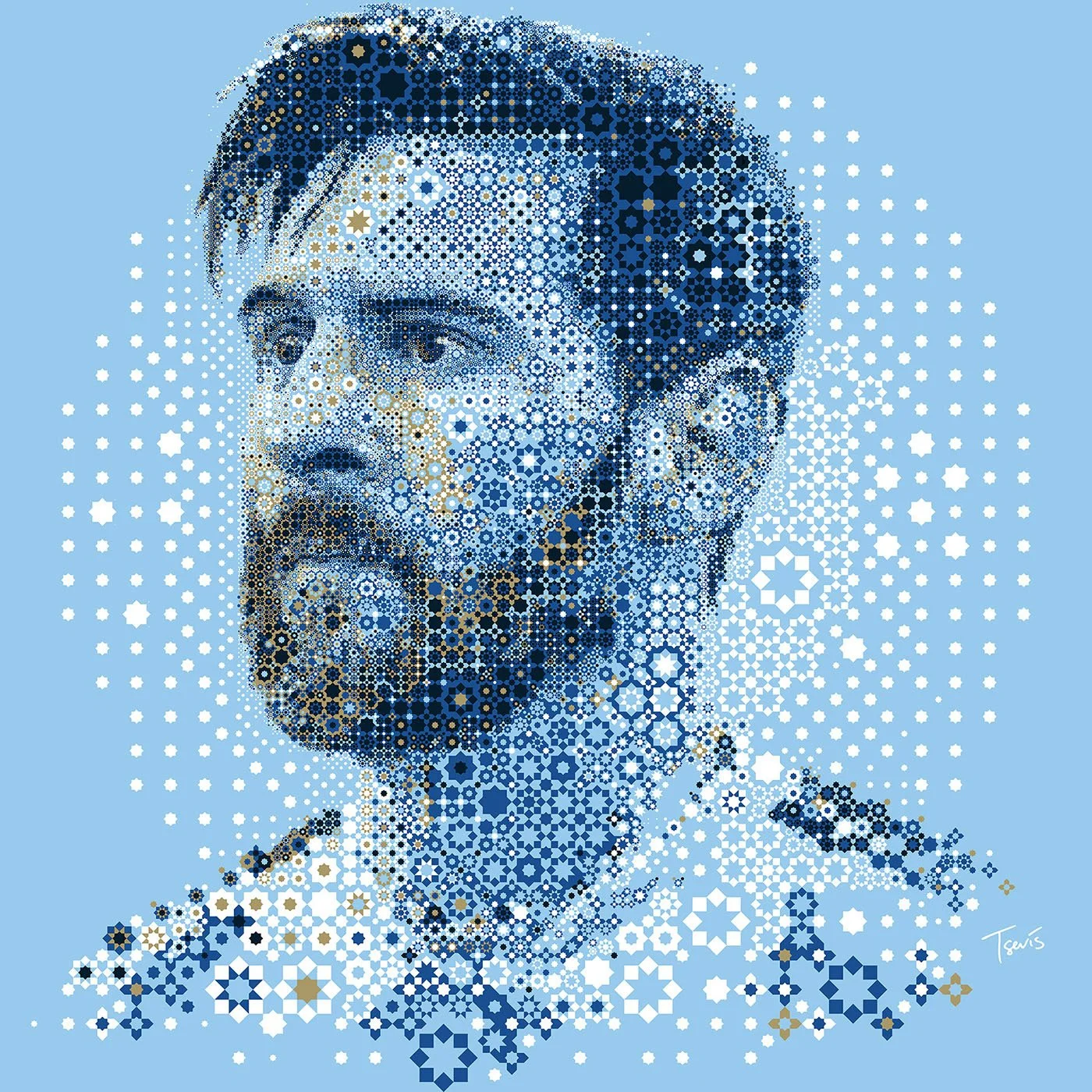
Lionel Messi, from the same series.
Similarly, my African Bricks series emerged from 15 years of sustained study. Each artwork in this series is an ode to the matchbox houses found in townships like Soweto, which symbolize the resilience and creativity of the African people. For me, the brick is not just a building material but a symbol of the ingenuity and resourcefulness of the people who have used it to create a safe and secure home for their families. This understanding can only develop through long-term cultural engagement, not superficial research.
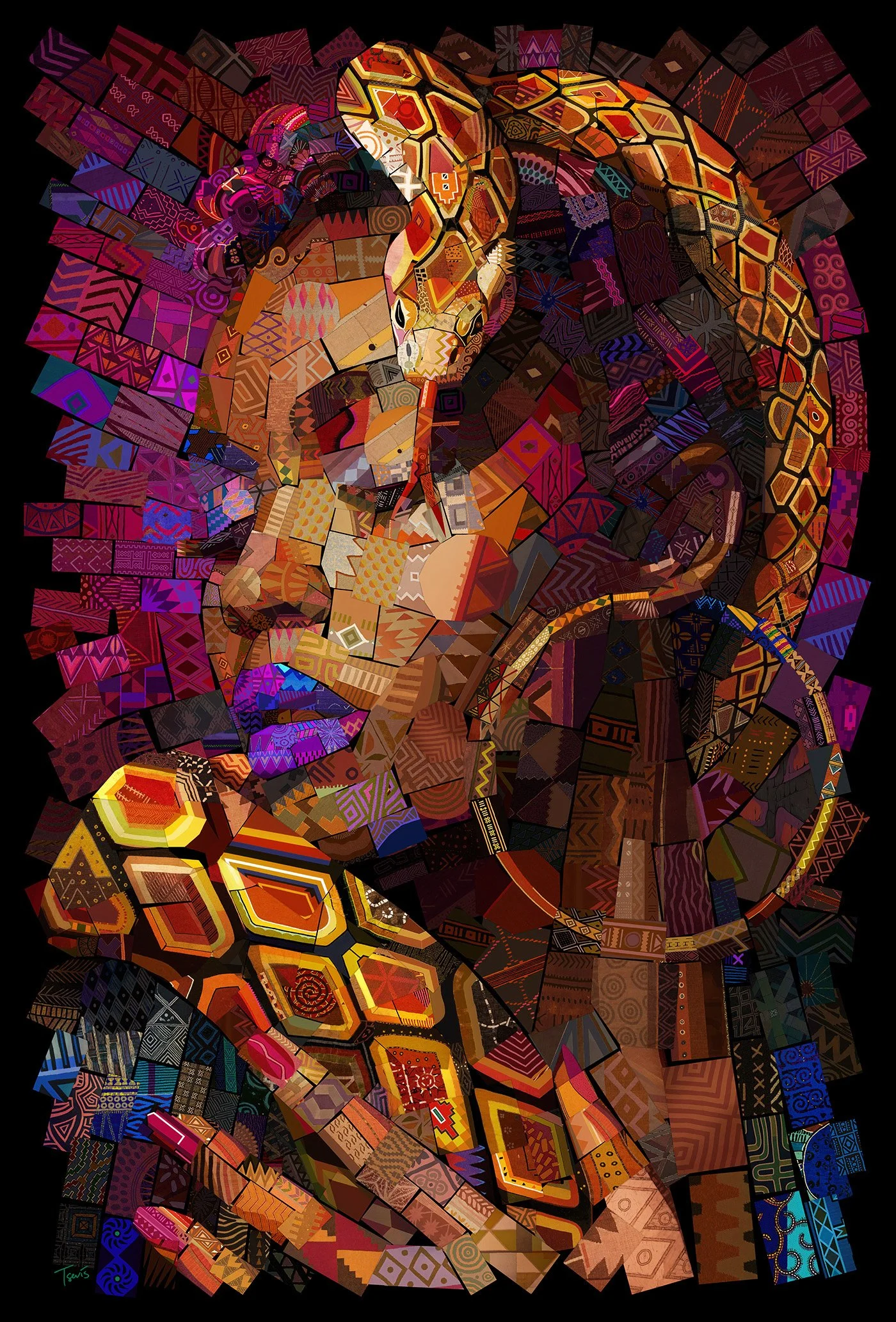
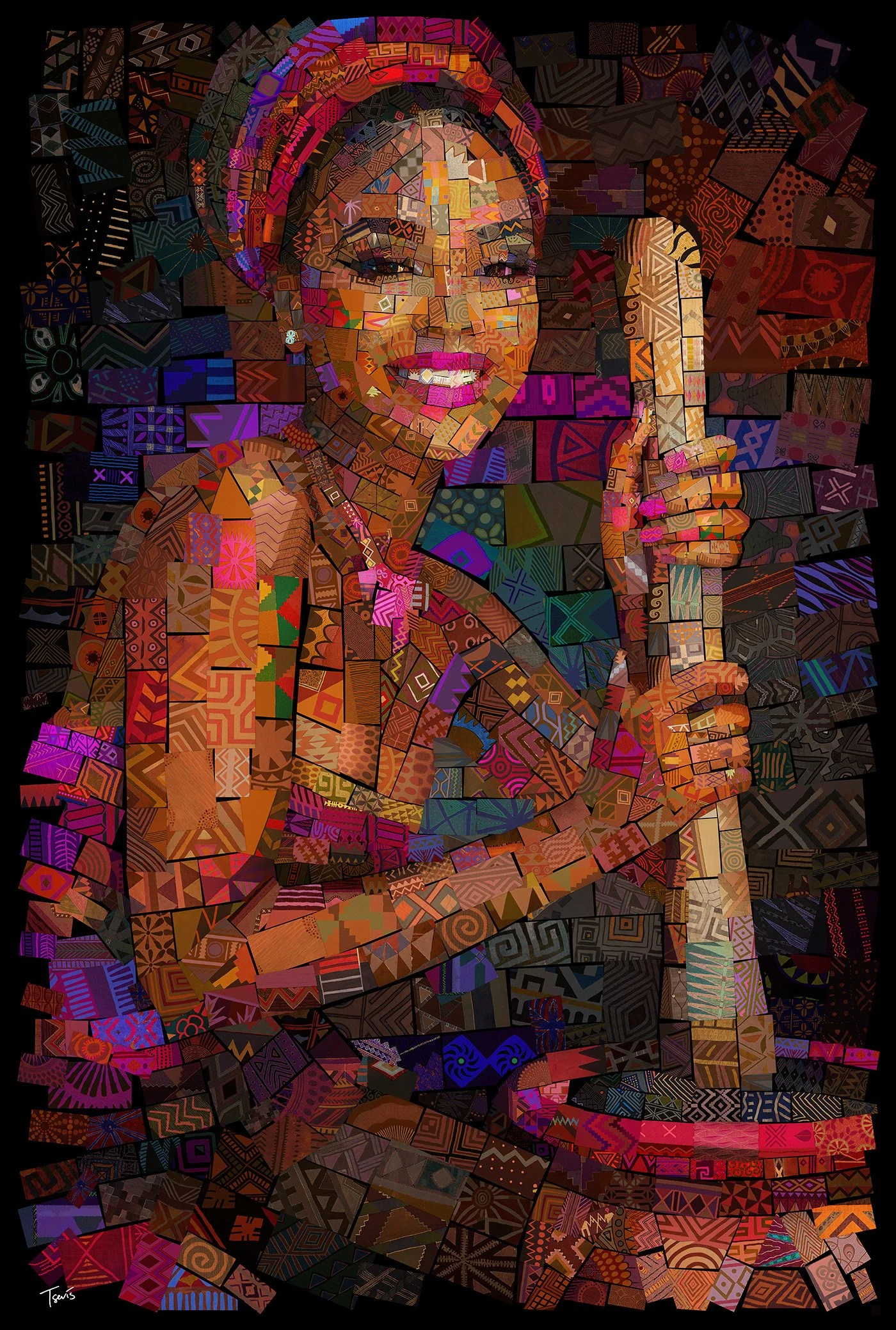
From the same series, after fifteen years of studying African visual culture.
Community Integration Commitment: Successful cross-cultural artists become genuine community members rather than external observers. They participate in cultural events, support community initiatives, and demonstrate ongoing commitment to community wellbeing beyond their artistic projects. This requires time investment that goes far beyond specific project timelines.
Collaborative Development Methodology: Rather than appropriating cultural elements for individual artistic expression, culturally fluent artists develop collaborative relationships where cultural communities participate in artistic development and benefit from artistic success. Crystal Worl's Seattle airport installation grew out of a residency partnership between the Port of Seattle, Pilchuck Glass School and the Museum of Glass, in which she worked with specialist glassmakers to translate Tlingit formline into glass.
The Translation Methodology
Shirin Neshat's work demonstrates how sophisticated cultural translation operates. Her exploration of Iranian culture through photography and film doesn't simplify or exoticize Iranian women's experiences—instead, it creates space for complex conversations about identity, tradition, and modernity.
Professional cultural translation rests on four competencies:
Cultural Context Comprehension: Understanding not just what cultural symbols look like, but what they mean within their original contexts, how they've evolved over time, and what contemporary significance they hold for cultural communities. When I incorporate traditional Mediterranean motifs into contemporary installations, I need to understand their historical development, their spiritual or social significance, and how they're being interpreted by contemporary Mediterranean artists and communities.
Historical Responsibility: Understanding power dynamics and historical relationships between cultures that affect how cultural representation is interpreted. Artists must understand how colonialism, displacement, cultural suppression, and ongoing political relationships affect how cultural representation is interpreted by different communities.
Contemporary Relevance: Successful cross-cultural artists engage with living cultures rather than treating cultural traditions as historical artifacts. They understand how traditional cultural elements connect to contemporary community experiences and concerns, and they contribute to ongoing cultural conversations rather than just mining cultures for aesthetic material.
This principle guided my Singularis project, where my wife Vira and I explore the cultural divide between digital and analog art forms. In an era where singularity is often associated with artificial intelligence and automated creation, we are excited to experiment with the perishable yet tangible. By transforming digital mosaics into hand-cut, painted, and sculpted physical artworks, we're not just changing mediums—we're bridging two different cultural approaches to creating and experiencing art. The analog medium is less democratic and accessible but will endure beyond a digital file, creating cultural dialogue between permanence and imperfection, infinite reproducibility and unique craftsmanship.
Aesthetic Innovation: Cultural fluency doesn't mean simply reproducing traditional forms—it means understanding traditional principles well enough to contribute something new while honoring source traditions. El Anatsui's metal tapestries demonstrate this approach by translating traditional textile principles into contemporary materials and contexts that address current environmental and economic issues.
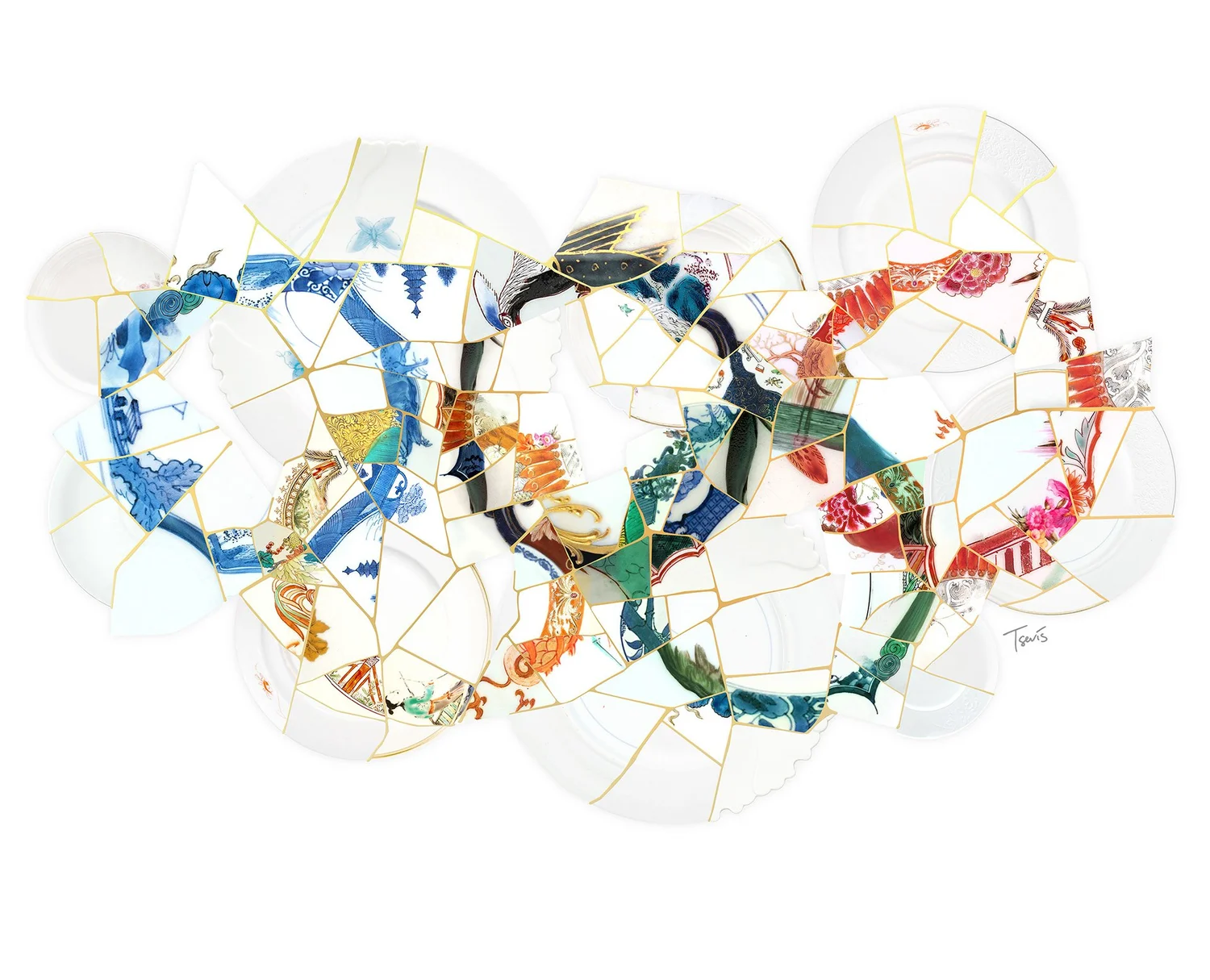
Kintsugi 2020, a series inspired by the Japanese art of kintsugi and the Tokyo 2020 Olympics.
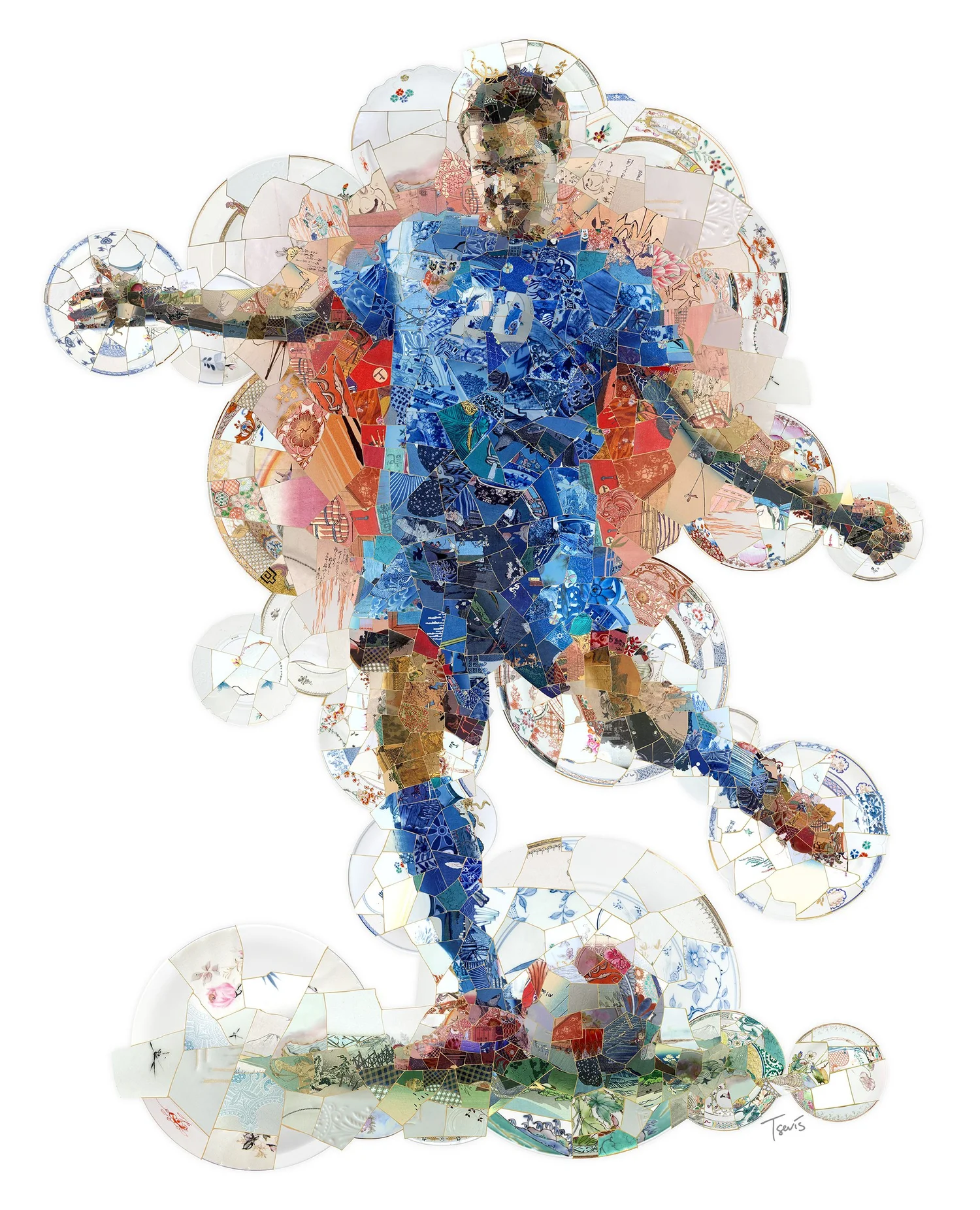
From the same series.
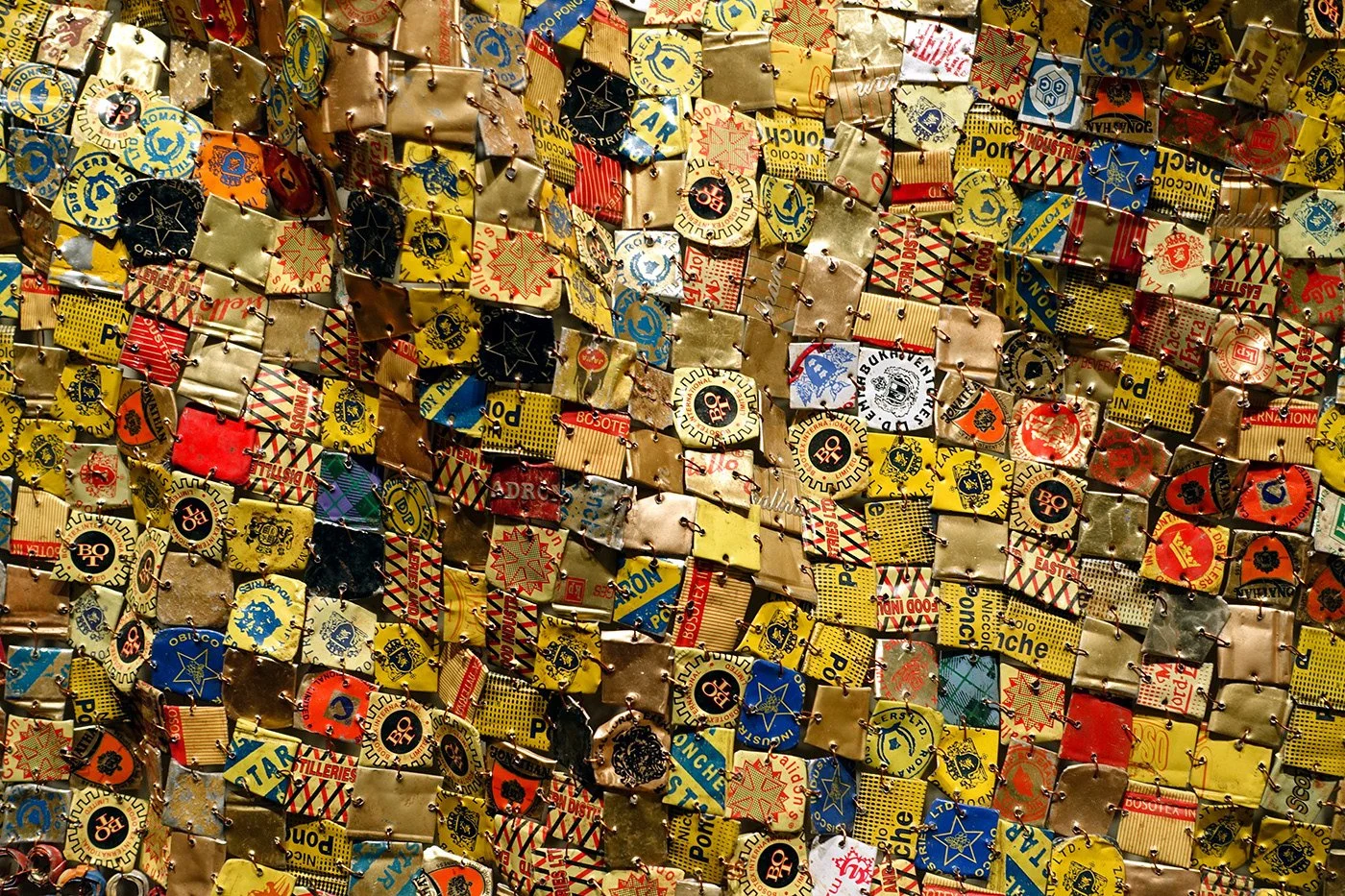
El Anatsui’s innovative use of repurposed materials transforms everyday objects into a dazzling tapestry of color and texture.
The Professional Standards Evolution
The most sophisticated institutional art programs now evaluate artists based on cultural competency alongside technical skill. When selecting artists for cross-cultural projects, commissioners should assess:
Cultural Relationship Portfolio: Evidence of sustained engagement with cultural communities rather than superficial cultural sampling across multiple traditions. Artists should be able to provide references from cultural leaders and demonstrate ongoing community involvement.
Community Validation: Support from cultural leaders and community organizations rather than just art world figures. The most important references for cross-cultural projects often come from outside the traditional art establishment.
Historical Understanding: Demonstrated knowledge of political and social contexts that affect cultural interpretation. Artists should be able to discuss the historical and contemporary factors that shape how their cultural references are understood by different communities.
Collaborative Capacity: Experience working with cultural communities as partners rather than just consulting them for approval. This includes understanding community decision-making processes and cultural protocols for artistic collaboration.
Ongoing Commitment: Evidence of long-term cultural relationship maintenance rather than project-specific cultural engagement. The best cross-cultural artists maintain community relationships that extend far beyond individual artistic projects.
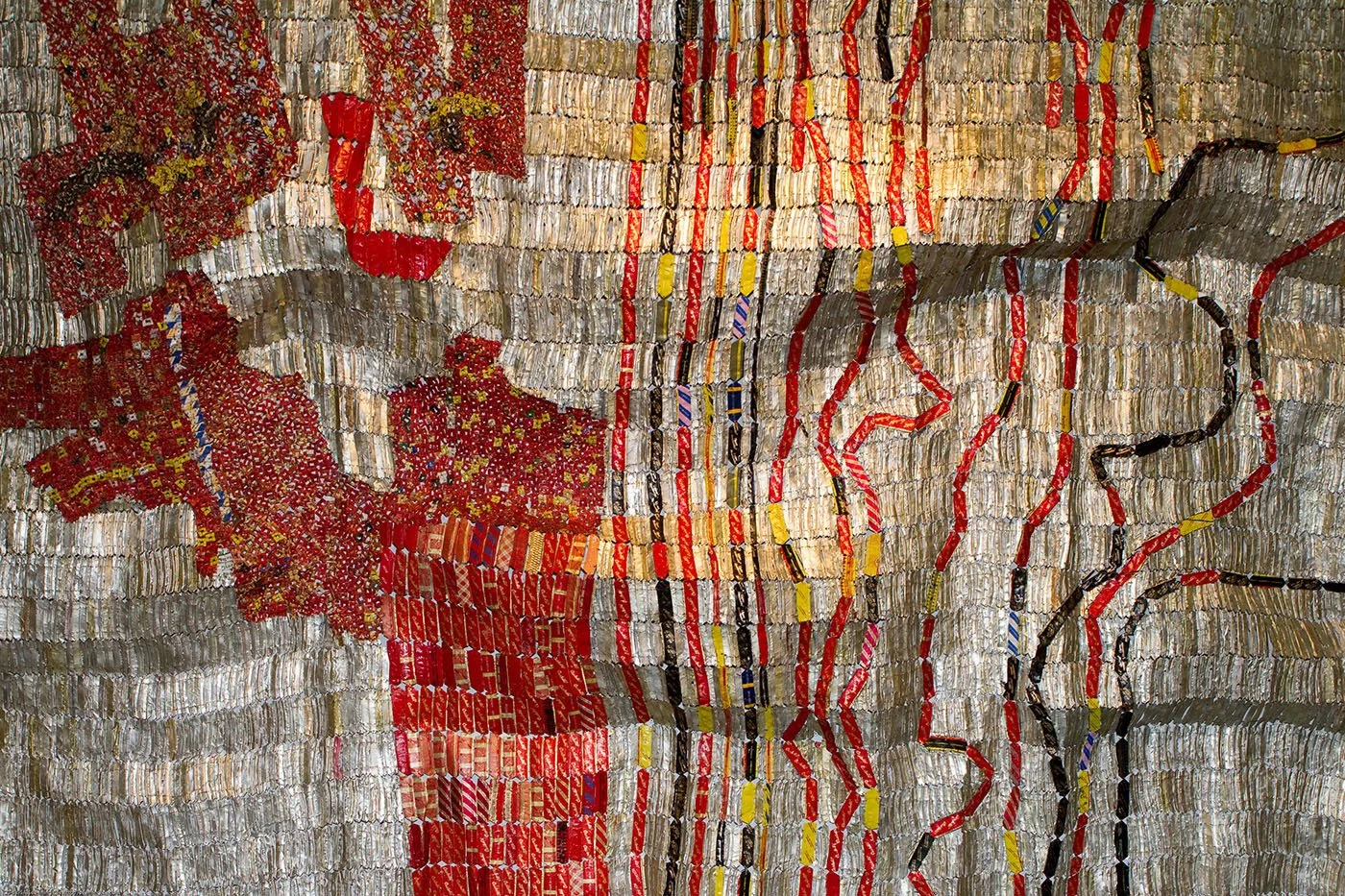
An exquisite detail from El Anatsui’s mosaic artwork, showcasing his mastery of color and texture through a blend of geometric patterns and fluid forms. Photograph by my good online friend See Ming Lee.
IV. Global Contemporary Practice: Learning From Success
Artists and Institutions That Successfully Navigate Cross-Cultural Complexity
The most instructive examples of successful cross-cultural art commissioning come from artists and institutions that have developed sophisticated approaches to cultural bridge-building over sustained periods. These practitioners demonstrate that authentic cross-cultural engagement enhances rather than limits global appeal, and that cultural intelligence creates competitive advantages that appreciate over time.
El Anatsui: Material Transformation as Cultural Philosophy
El Anatsui's transformation of discarded bottle caps into shimmering tapestries demonstrates how sophisticated cross-cultural translation operates at the highest level. His work succeeds internationally not because it exoticizes African culture for global consumption, but because it addresses universal themes through specific cultural intelligence while contributing to ongoing cultural conversations.
The Development Process: Anatsui's approach emerged from years of engagement with traditional Ghanaian cultural institutions. His encounter with Adinkra symbols at Ghana's National Cultural Centre opened new artistic possibilities, but his use of these symbols reflects deep understanding of their meaning and significance within traditional contexts. This demonstrates the importance of sustained cultural learning rather than superficial cultural research.
The Innovation Method: Rather than simply reproducing traditional forms, Anatsui translates traditional principles into contemporary materials and contexts. His metal tapestries reference Kente cloth traditions while addressing contemporary issues of consumption, waste, and environmental responsibility. This shows how cultural fluency enables artistic innovation that honors tradition while contributing something new to global cultural conversations.
The Institutional Value: Anatsui's work has exhibited worldwide and received international recognition including the Venice Biennale Golden Lion for Lifetime Achievement. For institutional commissioners, this demonstrates how cultural authenticity enhances rather than limits global appeal and creates lasting cultural value.
Professional Lessons: When commissioning cross-cultural art, institutions should seek artists who demonstrate similar depth of cultural engagement and ability to translate traditional principles into contemporary contexts that address universal concerns while maintaining cultural specificity.
Airport Art as Cultural Excellence
Leading airports worldwide demonstrate how culturally intelligent art installations transform institutional spaces into cultural experiences that enhance competitive positioning while serving diverse global audiences.
Seattle-Tacoma International Airport Excellence: Crystal Worl's installation, wooch isx̱án ("love for each other"), shows how a partnership between an airport, an Indigenous artist and glass specialists can create meaningful experiences for millions of annual passengers. Worl's Tlingit heritage and her formline design, translated into hand-blown glass bears on a hand-painted wall in the new C Concourse, honor cultural traditions while creating a new artistic expression for international audiences.
The commission came out of a first-of-its-kind residency partnership between the Port of Seattle, Pilchuck Glass School and the Museum of Glass: Pilchuck hosted the idea stage and the Museum of Glass helped produce the final piece. Worl worked with an assistant and with specialist glassmakers, and the Port notes that translating formline into glass is a challenge for glassmakers who are not Native artists.
Kansas City International Airport Cultural Intelligence: The airport's public art program celebrates local jazz culture through installations that demonstrate sophisticated understanding of musical history and cultural significance. Rather than stereotypical representations, the artworks honor the complexity and innovation of Kansas City's musical contributions.
The success lies in understanding that Kansas City jazz represents specific cultural innovation rather than generic musical entertainment. The installations connect local cultural history to contemporary artistic expression while serving international travelers who may know little about Kansas City's musical heritage.
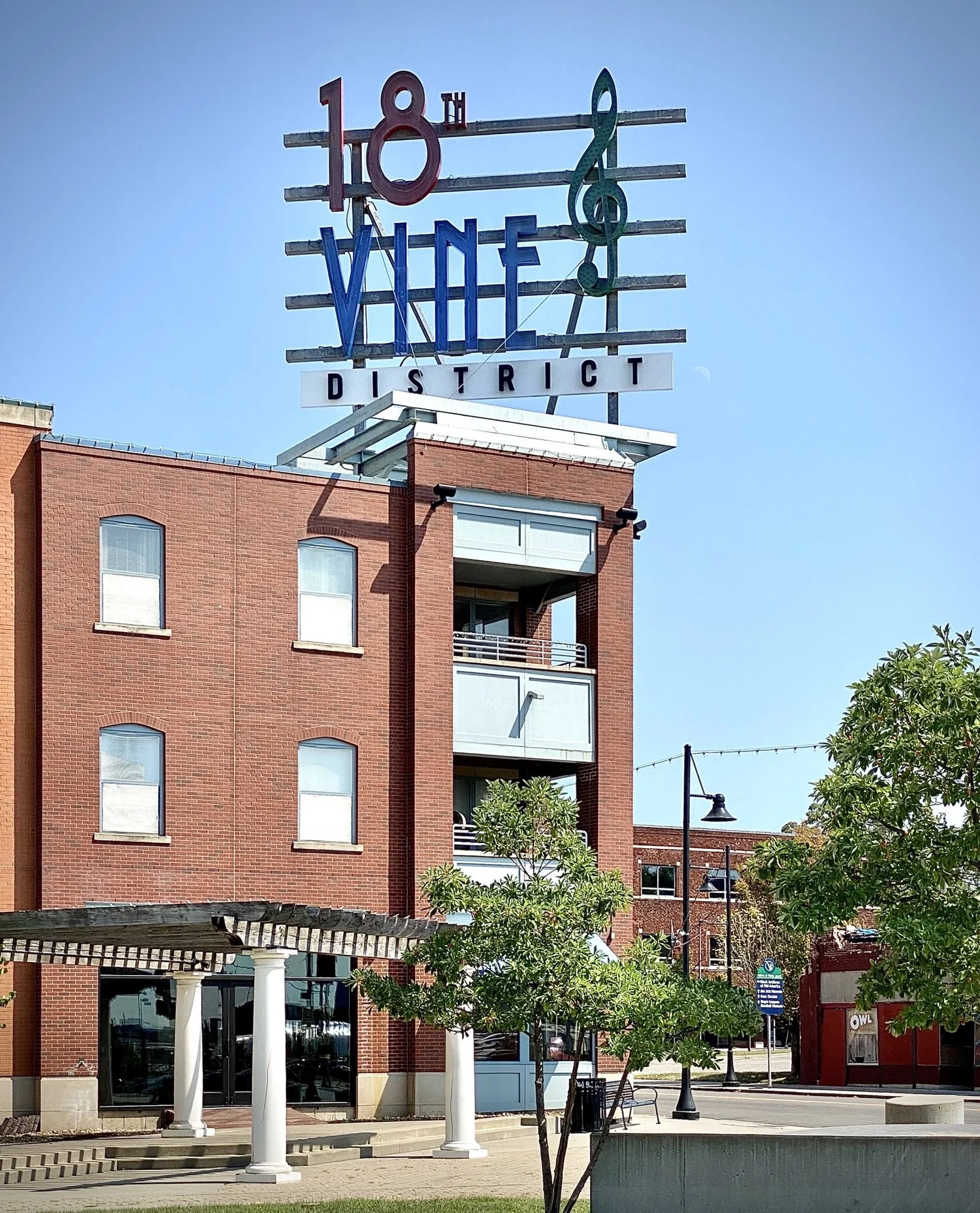
The 18th and Vine Jazz District in Kansas City, home of the jazz history the airport program draws on. Photo: Smuckola, CC BY-SA 4.0, via Wikimedia Commons. The airport’s own artworks are shown in its public art program.
San Francisco International Airport Comprehensive Approach: SFO's art program includes over 165 pieces that reflect Bay Area cultural diversity while maintaining high artistic standards. The program demonstrates how sustained institutional commitment to cultural sophistication creates competitive advantages.
The key insight is that SFO treats art as essential infrastructure rather than optional decoration. Their commitment to ongoing art investment ensures consistent quality, and their comprehensive approach creates cohesive cultural experiences rather than random aesthetic encounters.
Corporate Cross-Cultural Success Models
Some of the most sophisticated cross-cultural art commissioning happens in corporate environments where global business relationships depend on cultural intelligence.
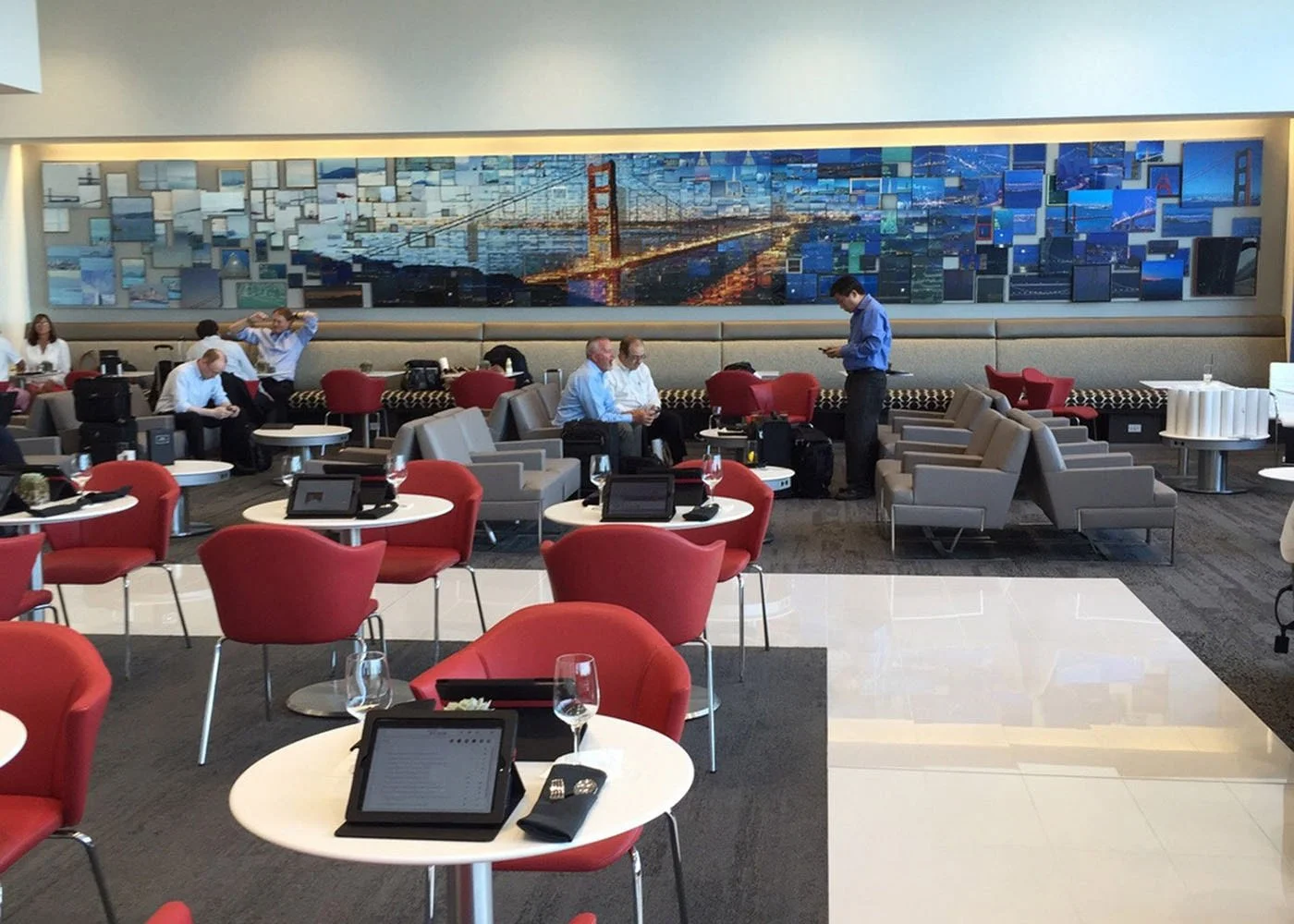
Delta Airlines SkyLounge Strategy: In my work on the San Francisco and Seattle SkyLounges, we developed visual narratives that celebrated American innovation in connecting global communities rather than promoting American cultural dominance. The compositions referenced American abstract expressionism while incorporating geometric principles found across multiple cultural traditions, creating sophisticated environments that felt distinctly American while remaining globally accessible.
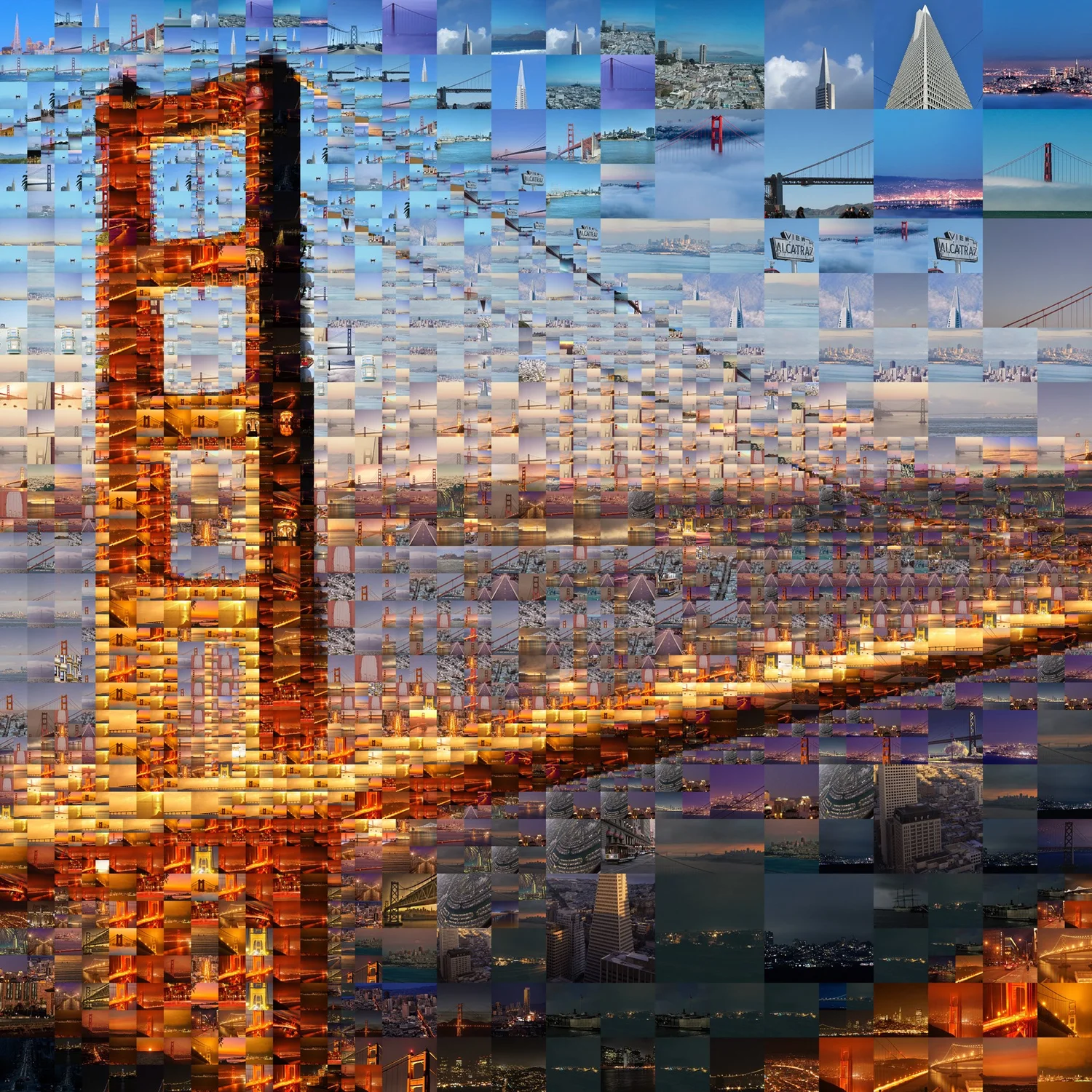
Moments Gate, a mosaic mural of the Golden Gate Bridge for the Delta Sky Club at San Francisco International Airport. Moments Gate.
The business impact was measurable: customer satisfaction scores improved, and international business travelers specifically mentioned the cultural sophistication of the visual environment in satisfaction surveys. The installations became destination experiences rather than utilitarian waiting areas.
Best Practice Principles: The most successful corporate cross-cultural art demonstrates several consistent approaches:
- Universal Themes Through Cultural Specificity: Rather than trying to appeal to everyone by appealing to no one, successful projects identify universal business values (innovation, collaboration, excellence) and express them through culturally specific visual languages.
- Local Expertise with Global Vision: The best projects combine deep understanding of local cultural contexts with sophisticated awareness of how those contexts connect to global business relationships.
- Ongoing Relationship Investment: Successful corporate cross-cultural art emerges from sustained institutional commitment to cultural intelligence rather than project-specific cultural consultation.
Olympic Cultural Legacy Models
Olympic organizing committees face unique cross-cultural challenges because they must represent host communities to global audiences while honoring the international Olympic movement's values and traditions.
Rio 2016 USA House Approach: Our solution focused on finding authentic synthesis points where American and Brazilian cultural traditions could create enhanced meaning together. Rather than imposing American cultural symbols on Brazilian space, we identified shared values (innovation, diversity, artistic expression) and found visual languages that honored both cultural contexts.
The methodology involved extensive cultural research, community consultation, and collaborative development that respected both American Olympic traditions and Brazilian cultural intelligence. The result was artwork that Brazilian audiences recognized as sophisticated cultural engagement rather than American cultural marketing.
Professional Standards for Olympic Commissioning: The most successful Olympic cultural projects demonstrate:
- Cultural Reciprocity: Both host and international cultures should be honored and enhanced rather than one dominating the other.
- Community Integration: Local cultural communities should benefit from Olympic cultural programming rather than just being represented by it.
- Historical Awareness: Olympic cultural projects should acknowledge complex historical relationships rather than promoting simplified cultural narratives.
- Legacy Planning: Olympic cultural investments should create lasting value for host communities rather than temporary decorative experiences.
Royal Commission as Cultural Diplomacy
The most sophisticated cross-cultural commissioning often happens at the highest levels of cultural engagement. When invited to create artwork for Bahrain's Mara'ee Animal Production Show under the patronage of His Majesty King Hamad Bin Isa Al Khalifa, the challenge became creating portraits that honored both royal tradition and contemporary artistic innovation.
The focal point was the King's portrait, echoing the analog allure of Singularis Art through a blend of traditional craftsmanship and cutting-edge technology. The creation involved multiple layers: synthetic stone base from UV printing, Giclée 12-color printing, hand-cut and hand-painted tiles, metallic art paper details, and 24-karat gold leaf finishing.
The accompanying animal collection—an Arabic horse, a Bahraini falcon, and an Antelope, each brought to life through the intricate integration of Arabic patterns—demonstrated how cultural intelligence can honor local traditions while creating contemporary artistic expressions. Rather than appropriating Arabic visual elements, the project emerged from the same deep study of Arabesque patterns that informed my Qatar 2022 work, ensuring authentic cultural engagement rather than superficial decoration.
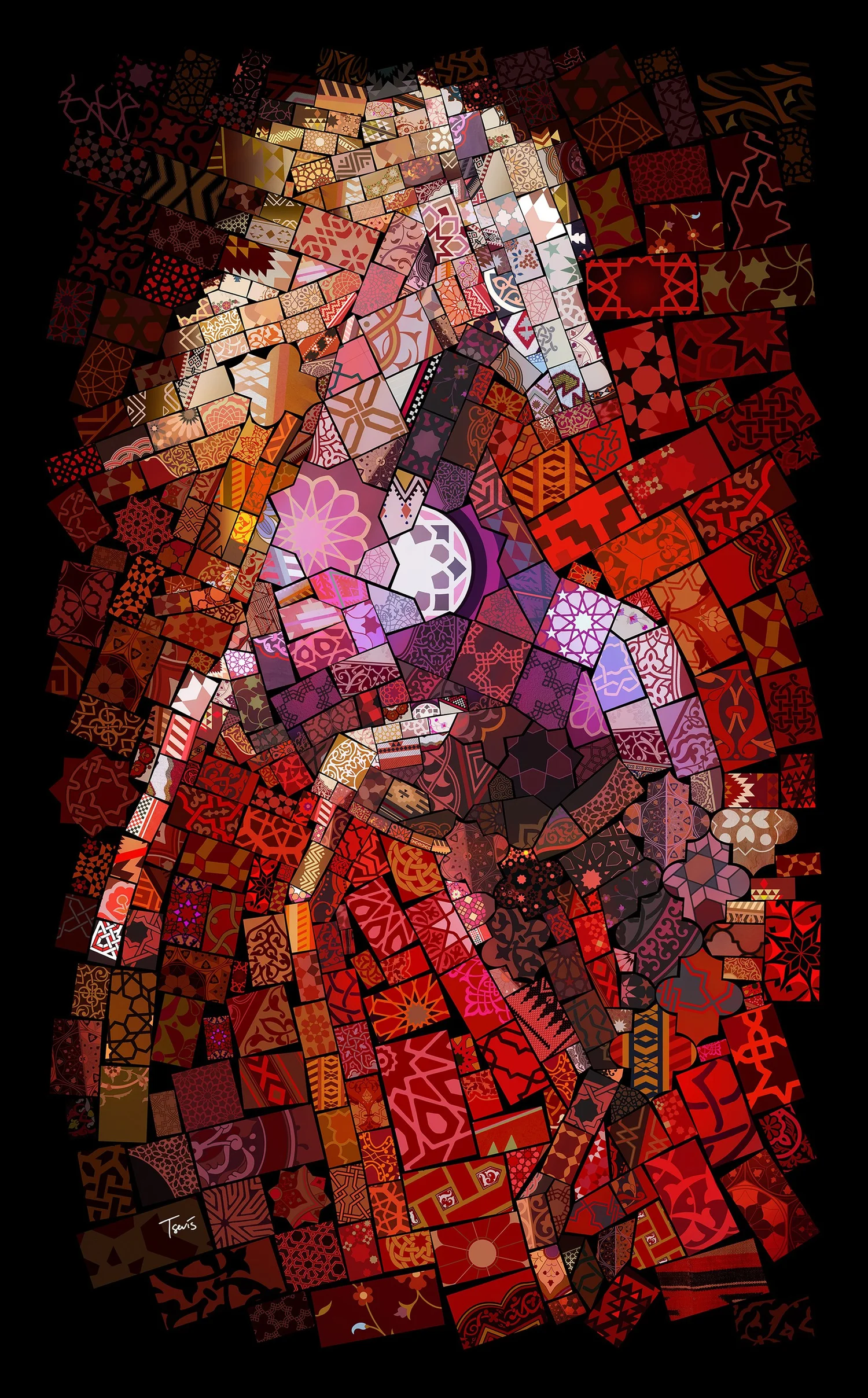
An Arabic horse and a Bahraini falcon from the Mara'ee exhibition: Royal Digital Mosaics: The Bahrain Marvels.
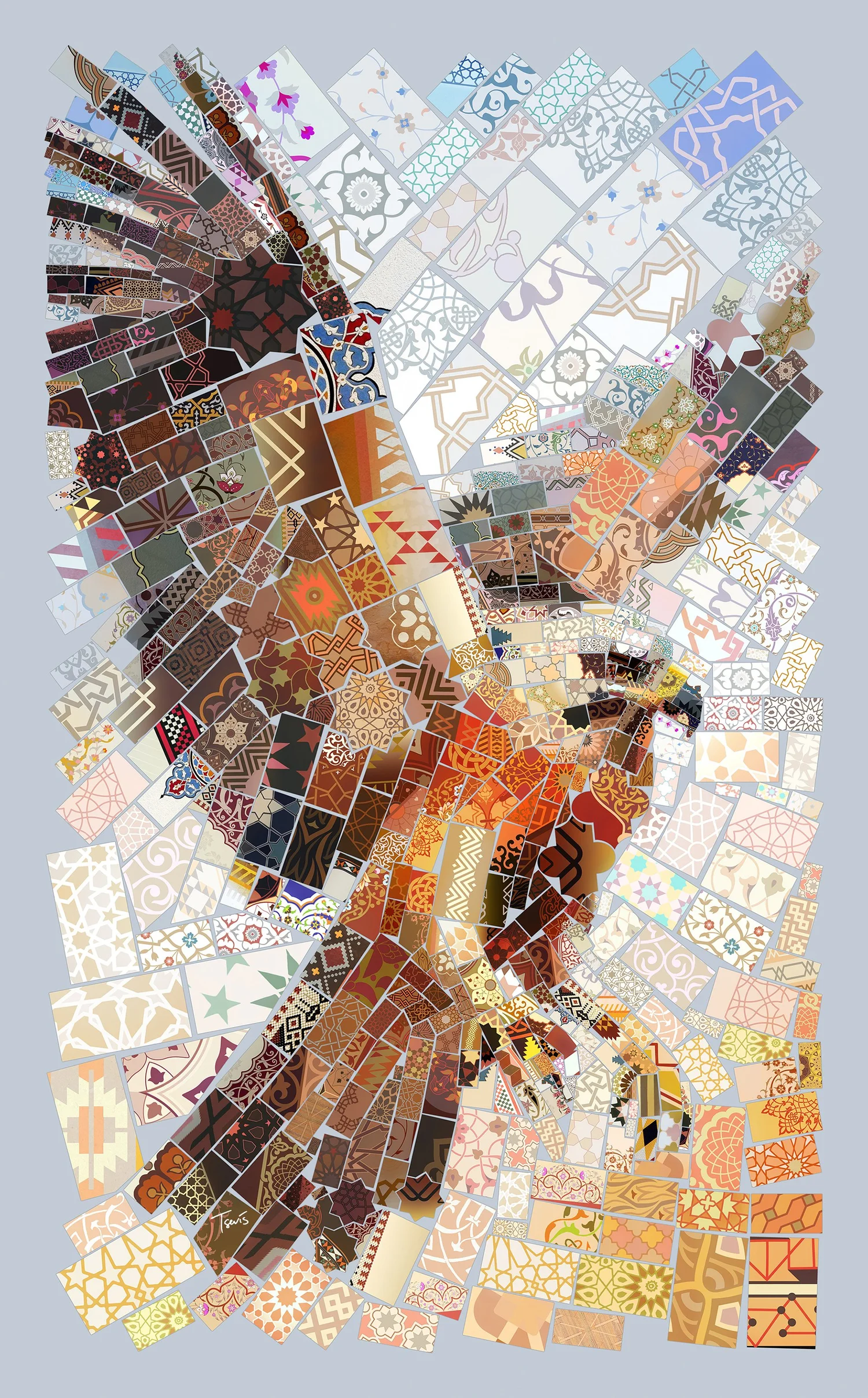
Bahraini falcon, digital mosaic.
V. The Institutional Implementation Framework
Professional Standards for Commissioning Cross-Cultural Art That Creates Value Rather Than Problems
Developing systematic approaches for cross-cultural art commissioning requires understanding that cultural intelligence is a specialized professional competency rather than an extension of general art acquisition. The most successful institutional programs treat cross-cultural commissioning as cultural diplomacy that requires specific methodologies, adequate timelines, and ongoing relationship maintenance.
The four phases of a cross-cultural commission
Overview of the framework in this section.
Phase One: Cultural Context Development
Comprehensive Community Analysis: Before commissioning any cross-cultural artwork, institutions must develop sophisticated understanding of local cultural landscapes. This goes far beyond demographic research to include understanding community histories, cultural institutions, ongoing cultural issues, and relationships between different cultural groups.
Research on cross-cultural adaptation reveals that genuine cultural engagement requires sustained time investment for communities to develop trust and for institutions to understand local cultural contexts. This reflects the complexity of cultural relationship-building and cannot be compressed without compromising authenticity.

Detail of a mosaic of more than 300 Greek workforce portraits for the Eurobank group insurance campaign with Ogilvy Greece. Eurobank: Your Business is Your People.
Essential Questions for Cultural Intelligence Development:
- Which cultural communities have historical presence in this region, and what are their relationships to public art and institutional representation?
- What cultural issues are currently important to local communities, and how might public art engage with these issues constructively rather than exploitatively?
- What previous experiences have local cultural communities had with institutional art commissioning, and what lessons can be learned from both successes and failures?
- Which local cultural practitioners, institutions, and leaders should be involved in consultation processes from the beginning rather than being consulted only for approval?
- How can institutional commissioning processes contribute to community cultural development rather than just serving institutional needs?
Community Relationship Infrastructure Development: Successful cross-cultural commissioning requires building ongoing relationships with cultural leaders, artists, educators, and community organizations. These relationships should be developed before specific projects begin and maintained throughout commissioning processes and beyond.
This relationship-building involves understanding and respecting community decision-making processes, cultural protocols for collaboration, and community priorities that extend beyond specific art projects. The most successful institutional programs become genuine community partners rather than external commissioners who occasionally engage cultural consultants.
Phase Two: Artist Selection and Cultural Competency Evaluation
Expanded Evaluation Criteria: Traditional artist selection focuses on technical skill, aesthetic vision, and project management capability. Cross-cultural commissioning requires additional evaluation criteria that assess cultural intelligence and community relationship capacity.
Primary Cultural Competency Indicators:
- Community Relationship Portfolio: Evidence of sustained engagement with cultural communities including references from cultural leaders, participation in community cultural events, and ongoing cultural collaboration that extends beyond artistic projects.
- Cultural Context Understanding: Demonstrated knowledge of historical and political contexts that affect cultural interpretation, ability to discuss cultural issues with sophistication and sensitivity, understanding of contemporary cultural conversations within relevant communities.
- Collaborative Methodology Experience: Experience working with cultural communities as partners in artistic development rather than just consulting them for approval, understanding of community decision-making processes and cultural protocols.
- Cultural Innovation Capacity: Ability to honor traditional cultural elements while contributing something new to ongoing cultural conversations, demonstrated capacity for cultural translation rather than cultural appropriation.
Professional Reference Evaluation: The most important references for cross-cultural projects often come from outside the traditional art establishment. Cultural leaders, community educators, and cultural practitioners can provide insights into artist cultural competency that art world references cannot offer.
Warning Signs in Artist Evaluation: Institutional commissioners should be concerned about artists who speak about multiple cultures as "inspiration" without evidence of sustained relationship-building, portfolios that sample widely from different cultural traditions without demonstrated deep engagement, focus on "universal appeal" rather than cultural specificity and community connection, or inability to discuss political and historical contexts of cultural references.
Phase Three: Collaborative Development Process Management
Authentic Collaboration Protocol: Successful installations like Crystal Worl's Seattle-Tacoma Airport commission, which grew out of a residency partnership between the airport and two glass institutions, emerge from genuine collaboration between artists, institutions, and specialists throughout the development process rather than consultation that happens after major decisions have been made.
Cultural Validation Integration: Rather than treating cultural validation as final approval, successful projects integrate ongoing cultural consultation throughout development. This includes regular community review sessions, cultural accuracy verification through both community consultation and academic research, and cultural leader involvement in decision-making processes where appropriate.
Quality Assurance Standards: Cross-cultural art represents significant cultural investment and deserves materials and installation standards that honor this investment. Museum-quality materials ensure that culturally significant artworks maintain their integrity over time, demonstrating institutional respect for cultural partnerships and community contributions.
Phase Four: Long-term Relationship Maintenance
Phase Four: a loop, not an endpoint
↻ Each round feeds the next partnership
The four activities named above, drawn as a cycle.
Ongoing Community Partnership: The most successful cross-cultural installations become catalysts for ongoing cultural programming and community engagement rather than endpoints of cultural relationship. Institutions should plan ongoing community partnership activities that maintain cultural relationships and continue contributing to community cultural development.
Cultural Programming Integration: Successful cross-cultural installations often generate opportunities for additional cultural programming including community cultural events, educational programming, artist residencies, and cultural exchange initiatives that extend the value of initial art investments.
Community Benefit Assessment: Institutions should regularly evaluate whether their cross-cultural art investments are generating genuine community benefits including positive cultural representation, economic opportunities for community artists and cultural practitioners, enhanced community cultural programming, and strengthened community cultural identity and pride.
Continuous Cultural Education: Institutional staff should receive ongoing cultural education that enhances their ability to maintain cultural relationships and develop additional cross-cultural programming. This investment in institutional cultural competency ensures that initial cross-cultural art investments generate ongoing value rather than becoming isolated cultural gestures.
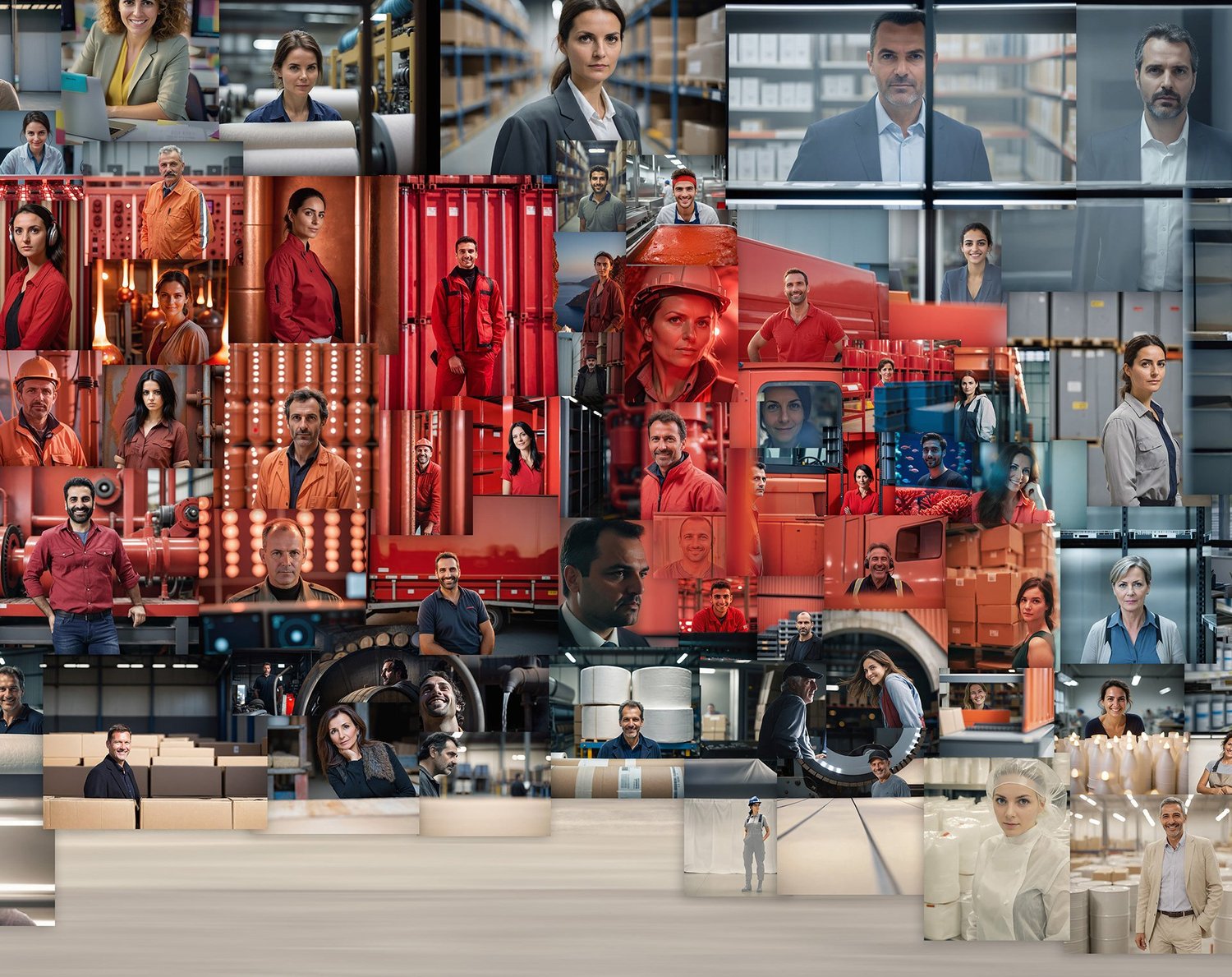
From the same mosaic: the people behind the work, shown at work.
VI. Measuring Success: Cultural Impact Alongside Artistic Achievement
Evaluation Frameworks That Assess Authentic Engagement Rather Than Just Aesthetic Appreciation
Traditional art evaluation focuses on aesthetic quality, technical execution, and audience appreciation. Cross-cultural art commissioning requires additional evaluation frameworks that assess cultural authenticity, community impact, and long-term relationship development. These expanded evaluation criteria help institutions understand whether their cultural investments are generating genuine value or creating ongoing problems that require management.
Two layers of evaluation
- Aesthetic quality
- Technical execution
- Audience appreciation
- Cultural authenticity
- Community impact
- Long-term relationship development
Where to look first: community responses are more reliable than art-world recognition.
The expanded evaluation described in this section.
Community Relationship Health Indicators
Positive Cultural Engagement Signals: The most reliable indicators of successful cross-cultural art commissioning come from community responses rather than art world recognition. Cultural community leaders publicly support and advocate for installations when they represent authentic cultural engagement. Community members actively use and take pride in spaces where culturally significant artworks are located.
In my experience with successful projects, local cultural organizations often request to host events or programming related to installations, indicating that the artwork has become a genuine community cultural asset. Community media coverage emphasizes cultural pride and authentic representation rather than focusing on institutional marketing or cultural problems.
Particularly telling is when second and third-generation community members express appreciation for cultural recognition that feels authentic to their lived experience rather than stereotypical or outdated. This indicates that installations are contributing to ongoing cultural conversations rather than just representing historical cultural traditions.
Concerning Community Response Patterns: Warning signs of cultural problems often appear before they become public controversies. Community leaders may avoid public comment or provide only diplomatic minimal support when installations feel culturally problematic but not worth public confrontation.
Community members may avoid or express subtle discomfort with installation spaces, indicating that the artwork is creating negative associations rather than positive cultural experiences. Cultural organizations may request modifications or express private concerns about representation that suggest ongoing cultural problems.
When community media coverage focuses on missed opportunities or subtle cultural problems rather than celebrating successful cultural representation, this often indicates that installations are serving institutional needs without genuinely benefiting cultural communities.
Cultural Authenticity Assessment Framework
Cultural Authenticity Assessment: what to look for
| Aspect | Authentic integration | Superficial appropriation |
|---|---|---|
| Meaning | Elements keep their original meaning | Used for exotic visual appeal |
| History and politics | Acknowledged and addressed | Ignored or romanticized |
| Traditional forms | Evolved and translated | Reproduced or commercialized |
| Living culture | Reflects current community concerns | Safe stereotypes, no real engagement |
| Community view | Contributes to the conversation | Extractive: only the institution gains |
Summary of the two lists below.
Authentic Cultural Integration Indicators: Successful cross-cultural art demonstrates specific characteristics that distinguish it from superficial cultural representation. Cultural elements are used in ways that honor their original meaning and significance rather than treating them as purely decorative components.
Historical and political contexts are acknowledged and addressed appropriately rather than being ignored or romanticized. Traditional forms are evolved and translated rather than merely reproduced or commercialized without understanding their contemporary relevance.
Contemporary cultural issues and community concerns are reflected in artistic approaches, indicating that artists and institutions understand living cultural traditions rather than treating cultures as historical artifacts. Cultural communities recognize installations as contributing to ongoing cultural conversations rather than exploiting cultural material for external artistic purposes.
Superficial Cultural Appropriation Warning Signs: Problematic cultural representation often demonstrates predictable characteristics that institutions should recognize and avoid. Cultural elements may be used primarily for exotic visual appeal without understanding or acknowledging their significance within original cultural contexts.
Historical and political contexts may be ignored or romanticized in ways that serve institutional marketing needs while avoiding complex cultural realities. Traditional forms may be reproduced without understanding their contemporary relevance or connection to living cultural communities.
Contemporary community concerns and cultural issues may be avoided in favor of safe cultural stereotypes that don't challenge institutional comfort zones or require genuine cultural engagement. Cultural communities may view installations as extractive rather than contributory, indicating that institutional needs are being served without providing genuine community benefits.
Long-term Cultural Value Development
Two trajectories after the opening
■ Appreciating: pride grows
■ Declining: needs damage control
Concept sketch of the two patterns described in this section. Illustration only, not measured data.
Appreciating Cultural Assets: The most successful cross-cultural installations become sources of community pride that strengthen over time rather than requiring ongoing damage control or community relationship repair. These installations generate ongoing positive media coverage and visitor interest that enhances institutional reputation while genuinely serving community cultural development.
Cultural communities often use successful installations as educational resources for younger generations, indicating that the artwork is contributing to cultural transmission and community cultural identity development. Installations may attract additional cultural programming and community events that extend their cultural value beyond their initial artistic impact.
Particularly valuable is when installations become internationally recognized as examples of successful cross-cultural collaboration, creating ongoing institutional benefits while demonstrating authentic cultural engagement that other institutions can learn from.
Declining Cultural Value Indicators: Failed cross-cultural installations often follow predictable deterioration patterns that institutions should recognize and address quickly. Initial community enthusiasm may diminish as communities identify cultural problems with installations that weren't apparent during development processes.
Installations may require ongoing damage control and community relationship repair rather than generating positive ongoing community engagement. Cultural communities may increasingly distance themselves from installations, indicating that initial cultural problems are creating lasting relationship damage.
When installations become cautionary examples rather than positive models for other institutions, this indicates fundamental cultural problems that are affecting institutional reputation and community relationships in ways that extend far beyond specific art projects.
Business and Institutional Impact Evaluation
Measurable Benefits from Cultural Intelligence: Successful cross-cultural art generates quantifiable institutional benefits that justify cultural intelligence investment. Enhanced institutional reputation in target communities and global markets creates competitive advantages that appreciate over time.
Increased positive media coverage emphasizing cultural sophistication rather than institutional marketing generates more valuable publicity than traditional advertising while building long-term institutional credibility. Strengthened relationships with cultural communities enable business development opportunities, partnership possibilities, and collaborative initiatives that extend institutional capabilities.
Improved staff satisfaction and retention among diverse employee populations indicates that institutional cultural intelligence is creating positive workplace environments that attract and retain top talent. Enhanced competitive positioning in markets where cultural sophistication matters creates ongoing business advantages that justify cultural intelligence investment.
Relationship Damage from Cultural Problems: Failed cross-cultural art creates consequences that extend far beyond art projects. Strained relationships with cultural communities can affect business opportunities, partnership development, and institutional reputation in ways that require years of relationship repair.
Negative media coverage emphasizing cultural insensitivity creates lasting institutional reputation damage that affects stakeholder relationships, business development, and competitive positioning. Reduced trust from diverse stakeholders affects partnership potential and collaborative opportunities in ways that limit institutional growth and development.
Staff dissatisfaction and turnover related to institutional cultural competency concerns creates recruitment and retention challenges while limiting institutional ability to attract diverse talent. Competitive disadvantage in markets where cultural sophistication is valued creates ongoing limitations that affect institutional performance and development potential.
Conclusion: Investing in Cultural Intelligence as Competitive Strategy
The conversation around cross-cultural art has fundamentally shifted over the past decade. What once seemed like an optional consideration for institutions wanting to appear globally sophisticated has become essential infrastructure for organizations operating in connected global markets. This evolution reflects broader changes in community empowerment, global connectivity, and the growing recognition that cultural representation carries significant business implications alongside social responsibilities.

Digital mosaic portrait for Paris 2024 Olympic Hopefuls, built from French decorative traditions: Rococo, Art Nouveau and Art Deco.
The Strategic Imperative
During my twenty-five years working on cross-cultural projects, I've witnessed this transformation firsthand. Early projects focused primarily on avoiding cultural offense while creating aesthetically pleasing installations. Contemporary projects require understanding cultural representation as strategic investment that creates competitive advantages while serving genuine community development.
This shift reflects several irreversible changes in the global business environment:
Community Empowerment: Cultural communities now have powerful platforms for evaluating and responding to institutional cultural representation. Organizations can no longer rely on geographic or linguistic barriers to protect poor cultural choices from immediate community feedback and potential global criticism.
Global Connectivity: Cultural missteps become international news within hours, while authentic cultural intelligence generates positive global recognition that enhances institutional reputation across multiple markets. The speed and reach of contemporary communication amplifies both cultural successes and failures.
Cultural Capital Recognition: Leading institutions worldwide demonstrate that sustained commitment to cultural sophistication creates measurable competitive advantages. Organizations with reputations for cultural intelligence gain access to partnerships, talent, and opportunities that remain closed to those with questionable cultural track records.
The Professional Evolution
The art world increasingly recognizes artists like Shirin Neshat not just for technical excellence but for their ability to facilitate cross-cultural dialogue and understanding. This recognition reflects evolving professional standards that value cultural intelligence alongside artistic skill.
Institutional art commissioners must develop corresponding professional competencies:
Cultural Context Analysis: Understanding local and global cultural landscapes, historical relationships, and contemporary cultural issues that affect artistic interpretation and community reception.
Community Relationship Management: Building and maintaining authentic partnerships with cultural communities that extend beyond specific commissioning projects and contribute to ongoing community cultural development.
Cultural Risk Assessment: Evaluating potential cultural sensitivities and developing strategies to ensure authentic rather than appropriative cultural engagement that serves community interests alongside institutional needs.
Collaborative Process Facilitation: Managing complex artistic development processes that include multiple cultural perspectives and community input throughout development rather than just final approval.
Long-term Value Development: Creating institutional cultural programming that supports ongoing cultural relationship maintenance and community development while generating lasting value.
The Investment Philosophy
The most successful institutional art programs treat cultural engagement as long-term relationship investment rather than project-specific decoration. As leading airports worldwide demonstrate, sustained commitment to cultural sophistication creates competitive advantages that appreciate over time.
This investment philosophy requires fundamental shifts in institutional thinking:
The investment philosophy in four pillars
The four shifts named in this section.
Timeline Respect: Genuine cultural engagement requires sustained time investment for trust development and cultural understanding. Institutions must plan accordingly rather than expecting accelerated cultural relationship development that compromises authenticity and community benefit.
Resource Realism: Authentic cultural intelligence requires more upfront investment than superficial cultural inclusion, but generates far greater long-term value while avoiding expensive cultural damage control.
Relationship Maintenance: Cultural partnerships require ongoing investment in community relationships, cultural programming, and collaborative opportunities that extend beyond individual commissioning projects and contribute to institutional cultural competency development.
Quality Standards: Culturally significant artworks deserve museum-quality materials and installation standards that honor the cultural investment they represent and ensure lasting value that demonstrates institutional respect for cultural partnerships.
The Future of Institutional Cultural Value
As El Anatsui observes, "When something has been used, there is a certain charge, a certain energy, that has to do with the people who have touched it and used it". Cultural elements carry the energy of communities who created them and the historical experiences that shaped them. Institutions that honor this energy create lasting value that appreciates across generations. Those that exploit it create lasting problems that require ongoing management.
The global economy increasingly rewards authentic cultural intelligence while punishing cultural insensitivity. Organizations with reputations for cultural competency gain access to opportunities, partnerships, and talent that remain closed to those with questionable cultural track records.
The fundamental choice for institutional decision-makers: Invest in authentic cultural relationships that appreciate over generations and create competitive advantages that strengthen over time, or continue purchasing decoration that satisfies temporary aesthetic preferences while missing deeper opportunities for cultural contribution and business development.
The communities are evaluating. The global market is watching. The competitive advantages are real.
The question is whether your institution will have the cultural intelligence to earn them.
Ready to transform your institutional art program from cultural decoration into cultural bridge-building that creates lasting competitive value?
Sources
Academic Sources
- Cross-Cultural Reconstruction in Art - Zhang, Fengyi, Jinyu Xie and Ling Luo. Deep Cross-Cultural Reconstruction Process in the Context of Cultural Potential: A Qualitative Study, Frontiers in Psychology, 2022
- Cultural Appropriation Theory - Young, James O. Cultural Appropriation and the Arts. Blackwell Publishing, 2008 (review in Notre Dame Philosophical Reviews)
- Cross-Cultural Issues Framework - Leuthold, Steven. Cross-Cultural Issues in Art: Frames for Understanding. Routledge, 2011
- Cultural Perception Research - Mikuni, Jan, et al. "Cross-cultural comparison of beauty judgments in visual art using machine learning analysis of art attribute predictors among Japanese and German speakers," Scientific Reports, 2024
- Aesthetic Psychology - Tinio, Pablo P.L. and Jeffrey K. Smith, eds. The Cambridge Handbook of the Psychology of Aesthetics and the Arts. Cambridge University Press, 2014
Contemporary Practice Studies
- AI and Visual Culture - Manovich, Lev and Emanuele Arielli. Artificial Aesthetics: Generative AI, Art and Visual Media, 2024
- Cross-Cultural Communication - Merkin, Rebecca, Vas Taras and Piers Steel. "State of the art themes in cross-cultural communication research: A systematic and meta-analytic review," International Journal of Intercultural Relations, 38, 2014
- Tokenism Analysis - Graham, Lesley and Susan Lindsay. "From tokenism to transformation: acknowledging the missing voices of marginalised students in higher education," Open Scholarship of Teaching and Learning, 2025
Public Art Case Studies
- Airport Art Programs - Port of Seattle public art collection (Seattle-Tacoma International Airport), SFO Museum public art (San Francisco International Airport; the program is provided by the San Francisco Arts Commission), public art at Kansas City International Airport (see also Willie Cole's Ornithology)
- Cultural Installation Analysis - Andrews, Elias "Double-A". "From Runways to Galleries: The Transformative Power of Airport Art," LinkedIn article, 3 October 2023
- Institutional Art Investment - Port of Seattle Public Art Program documentation; on Crystal Worl's commission see Weaving Cultural and Travel Ties into Airport Art Installation and her website
Artist Documentation
- El Anatsui - Exhibition catalogs, museum documentation, and scholarly analysis of cross-cultural material transformation; see El Anatsui and ArtReview on the 2015 Golden Lion
- Shirin Neshat - Museum profiles, critical analysis, and cultural bridge-building documentation; see Britannica
- Contemporary Cross-Cultural Practice - Documentation from the National Museum of Women in the Arts and international exhibitions
Project Documentation
- Rio 2016 USA House - Tsevis, Charis. "The Murals for USA House in Rio 2016." www.tsevis.com/portfolio/the-murals-for-usa-house-in-rio-2016
- Other Tsevis Studio projects mentioned - Moments Gate for the Delta Sky Club at SFO, Bulgari Mediterranea, Qatar 2022, The African Bricks 4, Royal Digital Mosaics: The Bahrain Marvels, Kintsugi 2020, Cristiano Ronaldo: O orgulho de Portugal and Singularis
Background Reading
- Rio's mosaic heritage - Escadaria Selarón, Roberto Burle Marx, Azulejo
- Symbol signs - AIGA symbol signs and DOT pictograms
- Bulgari - Sotirios Voulgaris, the founder, born in Epirus
- Arabesque and Adinkra - Arabesque (Islamic art), Adinkra symbols, Kente cloth
Image Credits
- Escadaria Selarón: Wilfredor, CC0, via Wikimedia Commons
- Copacabana promenade: Andréa Farias, CC BY-SA 2.0, via Wikimedia Commons
- Capela das Almas, Porto: Krzysztof Golik, CC BY-SA 4.0, via Wikimedia Commons
- AIGA symbol signs: public domain, via Wikimedia Commons
- Delta Sky Club photographs, the El Anatsui detail by See Ming Lee and all other mosaics: Tsevis Studio unless credited
Complete bibliography with detailed citations available upon request for academic or professional reference.



.jpg)

