A brand is already many things that became one: people, customers, places, years. A photograph can show the result. A mosaic can show the structure. Each piece carries something of its own, and the whole gives each piece a place. This article explains when that idea suits a brand and what it asks of the brand.
Why use a mosaic for a brand?
A brand rarely has one face. It has employees on several continents, customers who never meet, a product line, a founding story, a hundred small decisions that add up to a reputation. A campaign has to say “we” in one image, and most images do that by choosing one person, one product or one symbol and leaving the rest out.
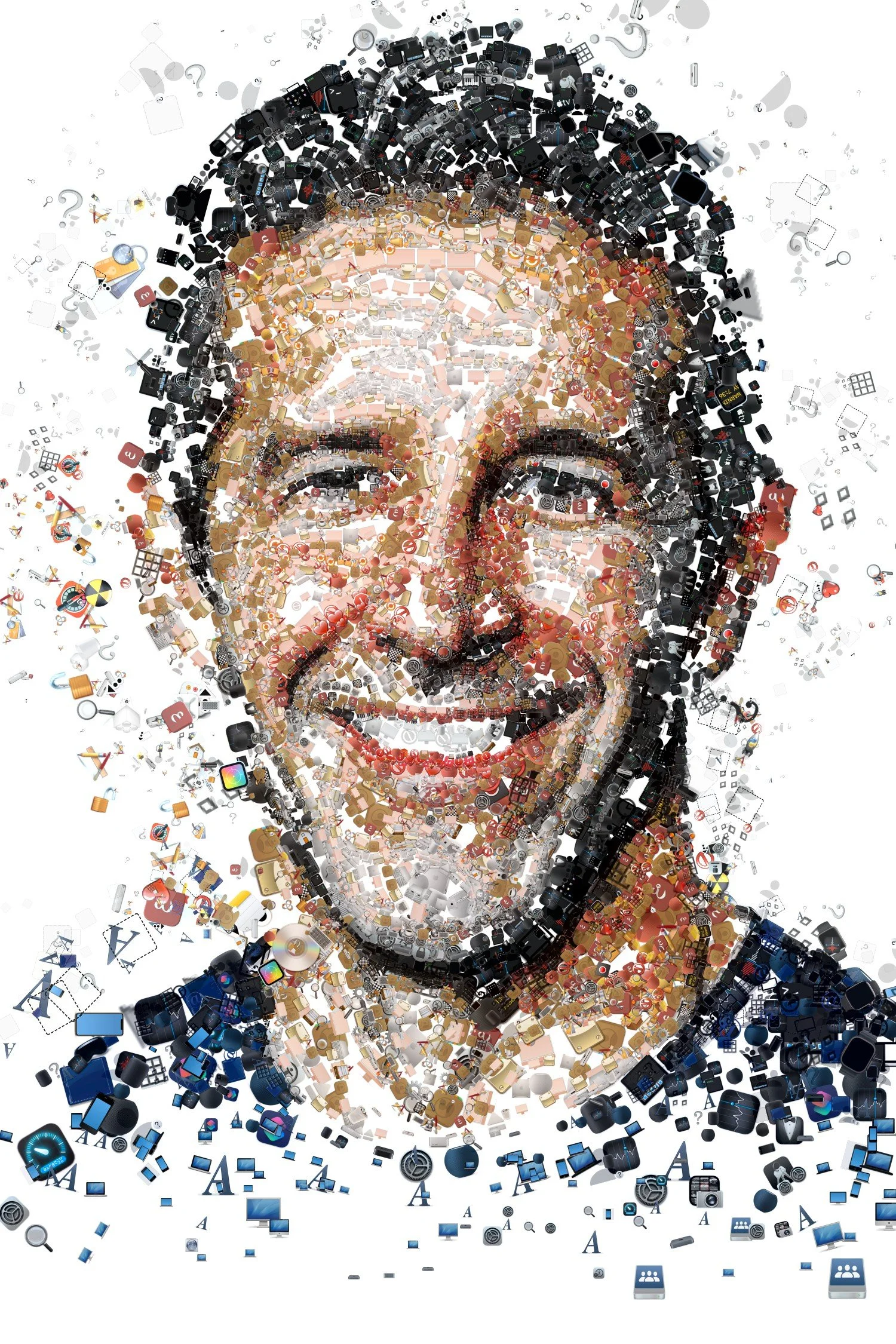
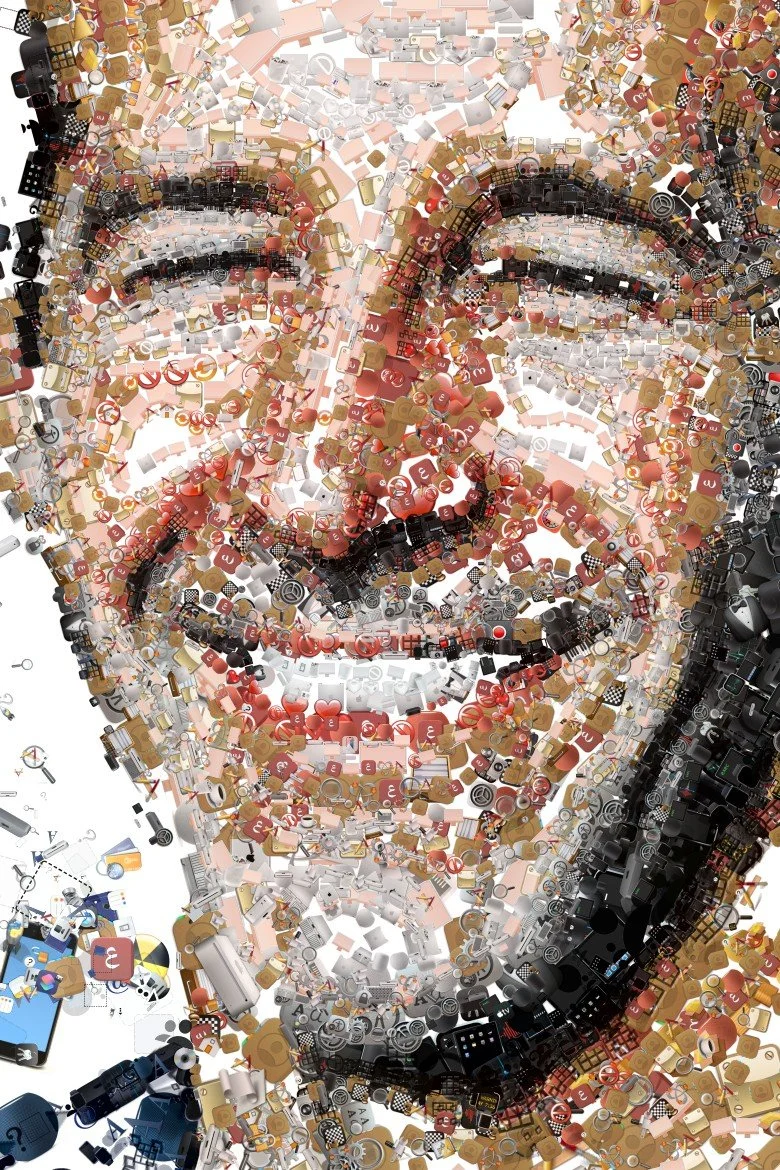
A mosaic does the opposite. The main image is chosen for what the brand stands for. The pieces are chosen for what the brand is made of. Seen from a distance the viewer reads one figure; seen from close, the same viewer finds the people, places or moments that make it. That double reading is what a brand has to communicate, and it is hard to get from a single photograph.
What can a mosaic show that a photograph cannot?
Most brand imagery shows an outcome: a face, a product, a building. The things that produced the outcome stay outside the frame. A mosaic puts them inside it.
For this to work, the pieces must be real in some sense: employees who work for the company, drawings the campaign collected, photographs of the work an organisation actually does. A mosaic whose pieces were picked only because they have the right colours looks like a pattern, and a viewer who steps closer finds nothing. A mosaic whose pieces are the brand’s own material gives the viewer something to find.1
How does a mosaic carry meaning?
The meaning of a mosaic travels in two directions. Up: each piece brings its own content, and together they give the image something it could not have as a photograph. Down: once a piece is part of the whole, it is no longer only itself. A photograph of one employee is a photograph of one person; inside a portrait built from thousands of colleagues it becomes part of the company.1 We describe the idea more fully, with its philosophical history, in The Four Layers of a Mosaic. For a brand, the useful part is simple: the audience can see itself, or the people it cares about, inside the image.
Which works show the idea?
These are commissions and self-initiated works from our own portfolio. In each, the pieces are the argument.
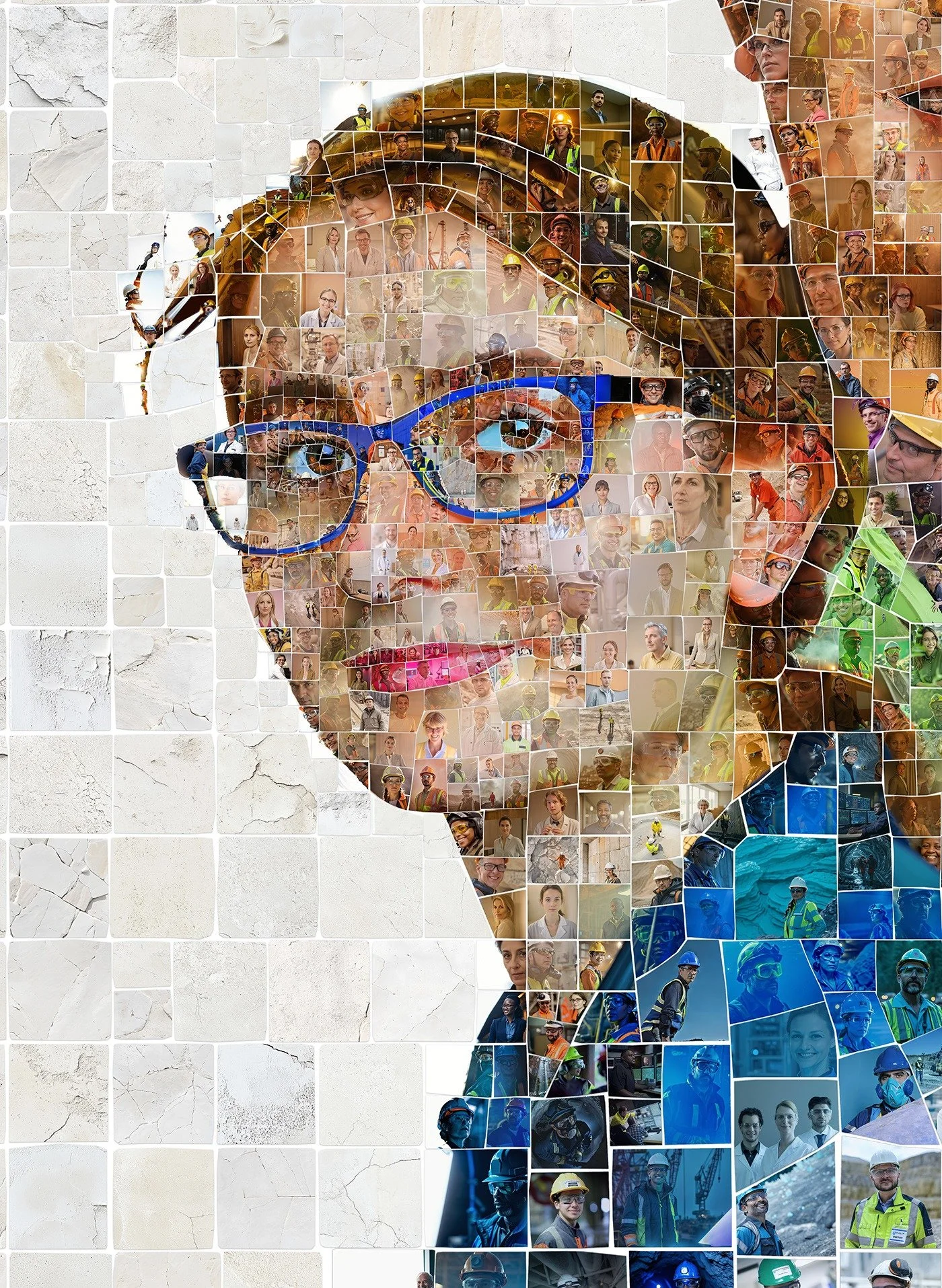
- Lhoist, employees. Portraits built from photographs of the company’s employees around the world, made with Studio Tokyo. Each person finds a place in the company’s face, and the company is shown to be its people.2
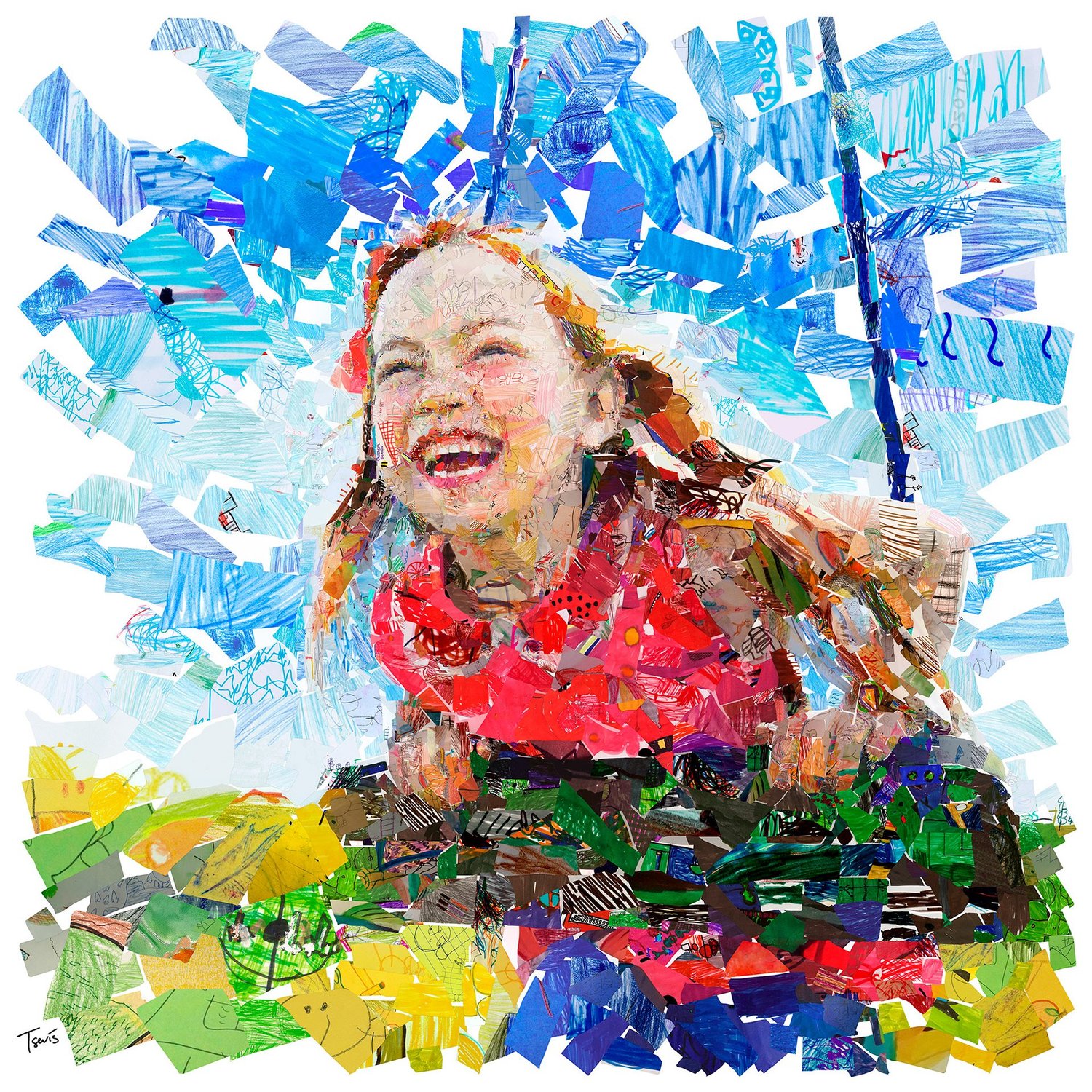
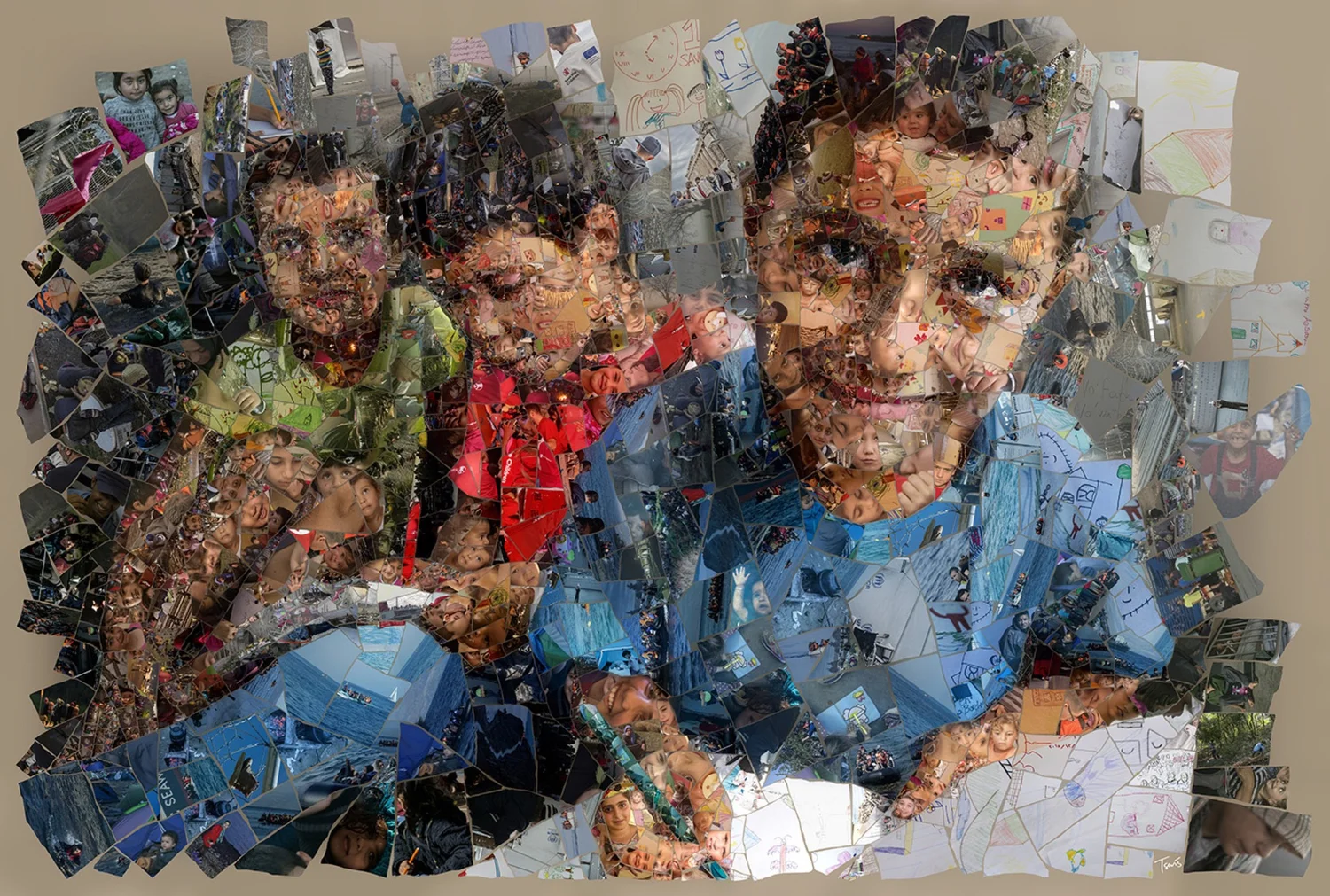
- Hansaplast, a drawing for every donation. For Hansaplast’s “Absolute Smile” campaign, children made thousands of drawings at events organised with The Child’s Smile, a Greek charity for children, and Hansaplast gave one euro for each drawing. We made a mosaic of the drawings, commissioned by the brand’s advertising agency, 4 Wise Monkeys. Every drawing is a gift and a piece of the image at once.3
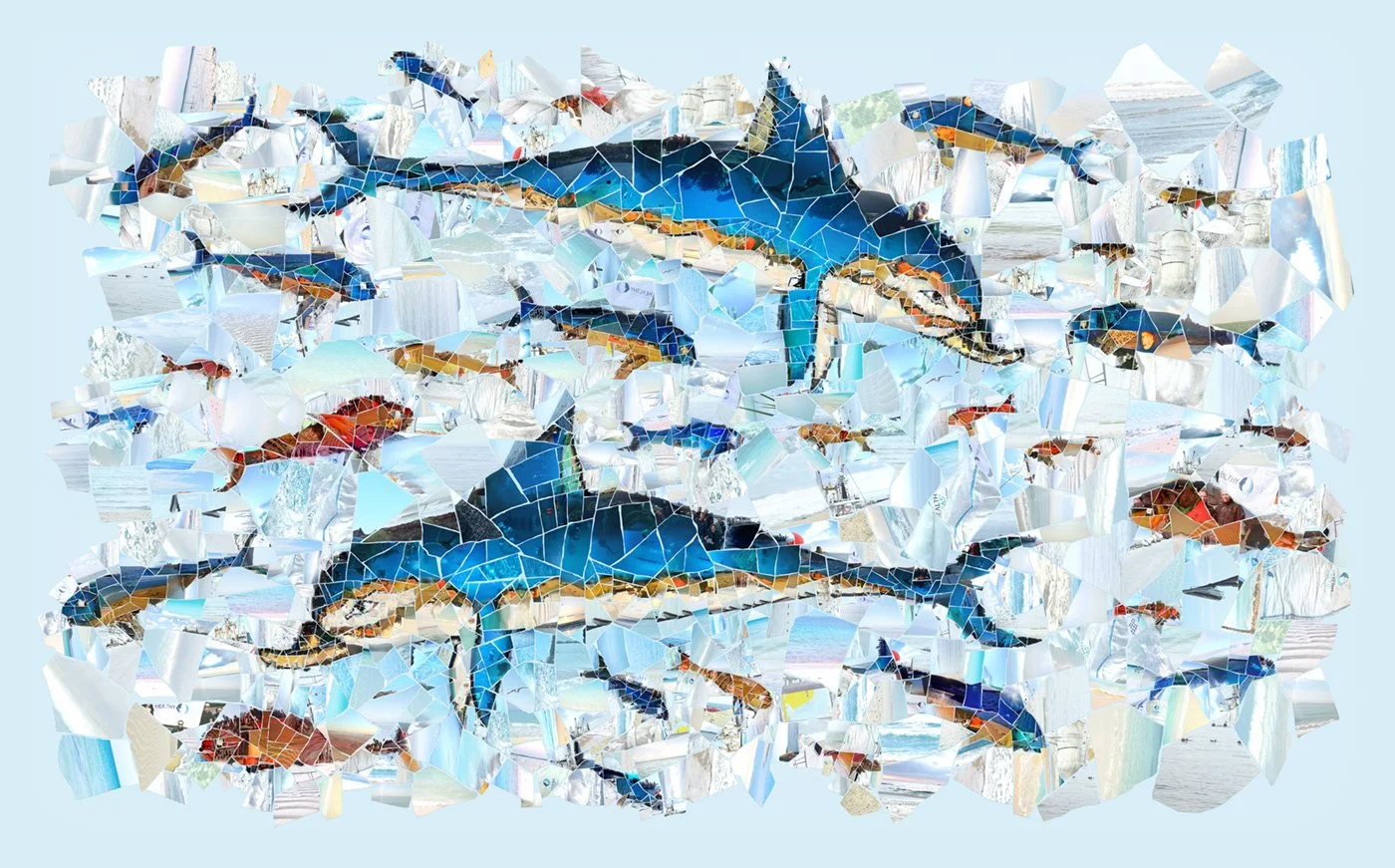
- Healthy Seas, the work itself. The Minoan dolphin fresco of Knossos, rebuilt from more than 1,500 photographs of the organisation’s own activities over five years, for its “Save Your Breath” campaign. A picture of an abundant sea is made of the work of keeping the sea alive.4
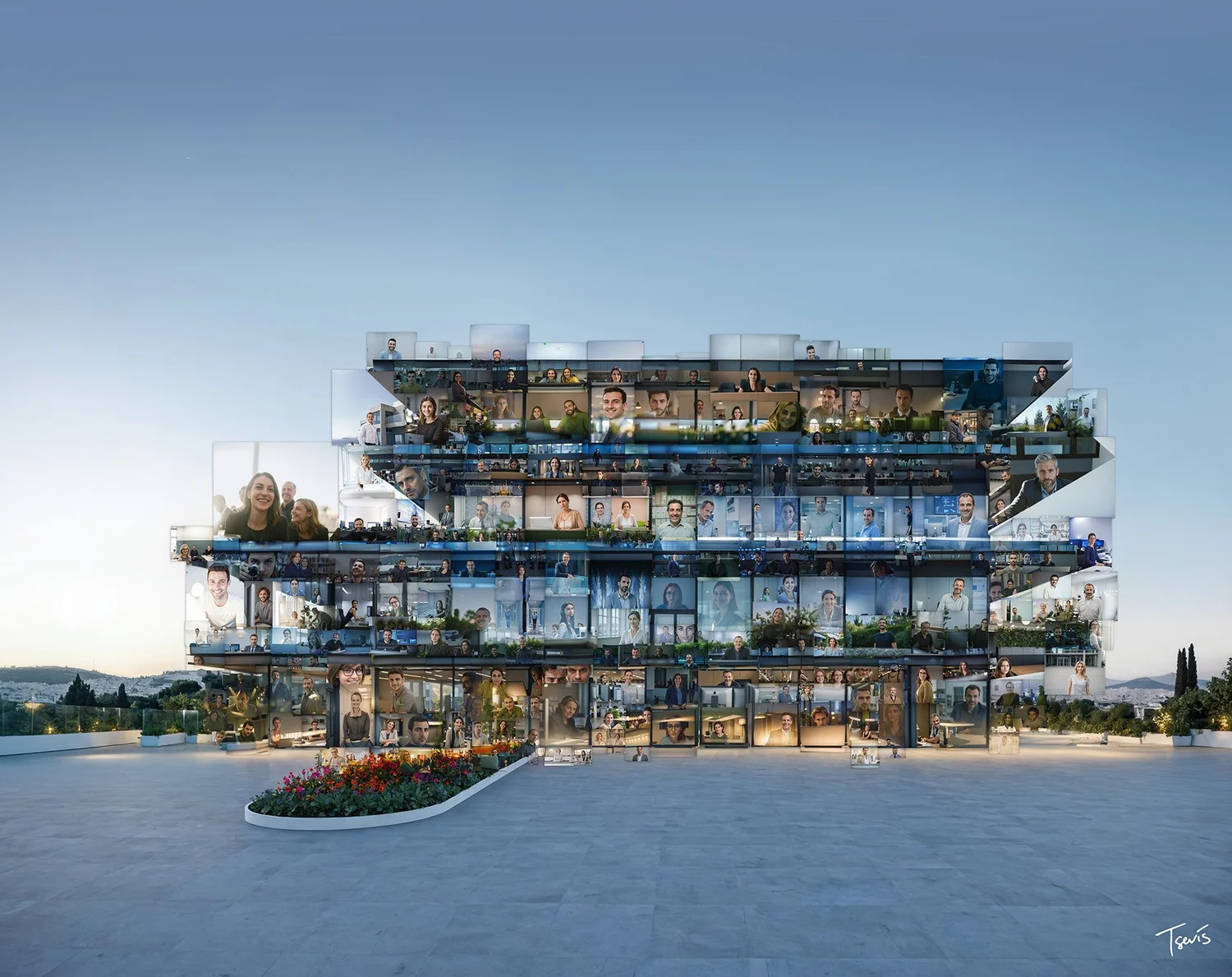
- Eurobank, the people a business runs on. For a campaign selling group insurance to small business owners in Greece, buildings are built from hundreds of portraits that stand for the people who work in them, under the line “Your Business is Your People”. The portraits were made for the campaign; they are not photographs of real employees.5
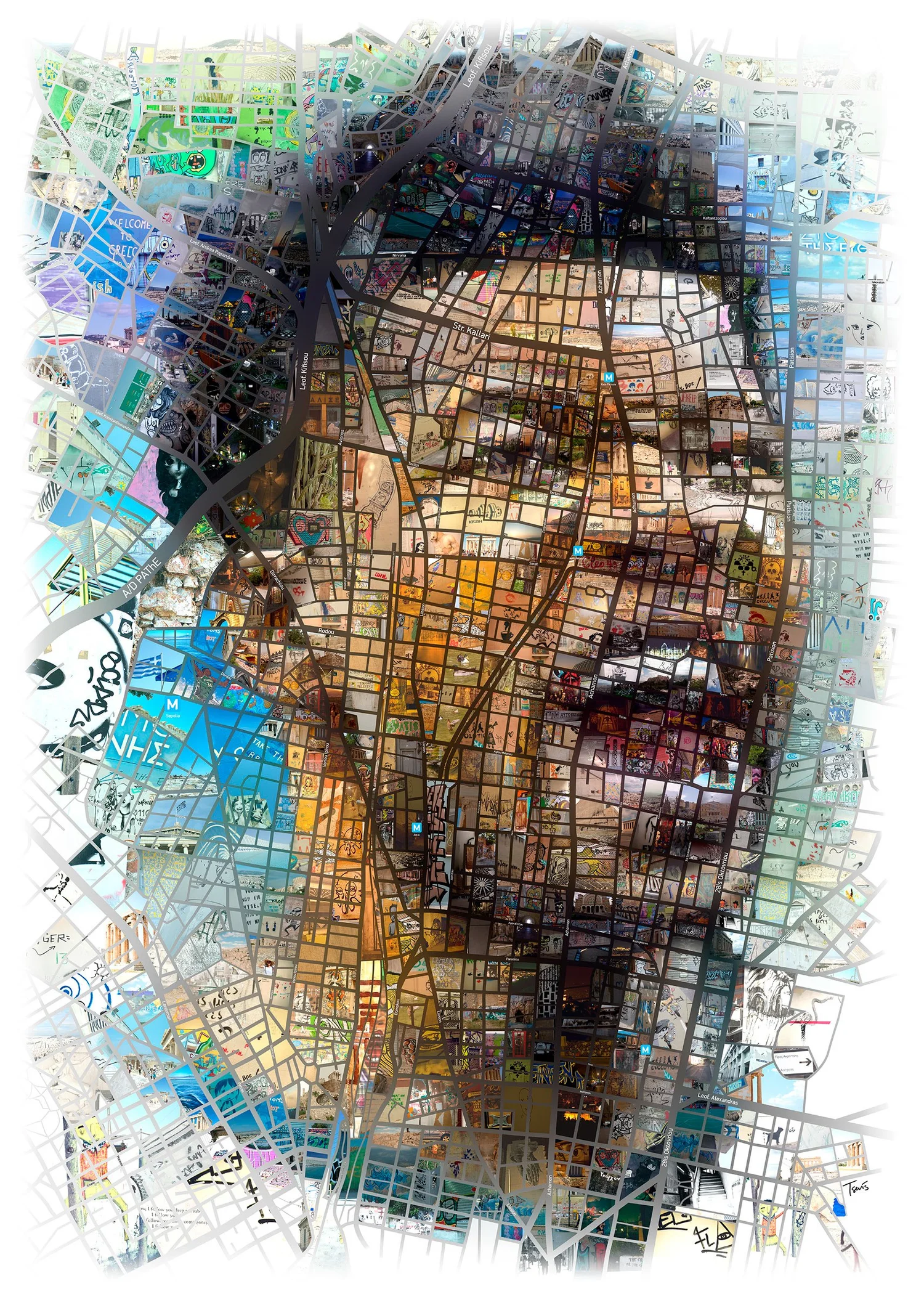
- Giannis Antetokounmpo, a place. A self-initiated portrait built on the street map of Sepolia, the Athens neighbourhood where Giannis grew up, 27 years after Charis did, with photographs of its walls and street art as tiles. Nike EMEA later used it in the area dedicated to Giannis at its store on Syntagma Square.6
If your brand is made of many people, places or moments, send us a brief.
Why does a mosaic read twice?
Nothing in a mosaic depends on a trick. Vision research describes the two readings separately, and a mosaic asks for both.
At a distance the eye takes the large shape first. One study of hybrid images, single pictures that combine fine and coarse detail, shows that the same image gives “two interpretations, which change as a function of viewing distance.”7 A mosaic uses the same principle in a different way. A hybrid image swaps one picture for another as the distance changes; a mosaic keeps one image and adds a second reading, so that stepping back gives the main image and stepping closer gives the pieces.
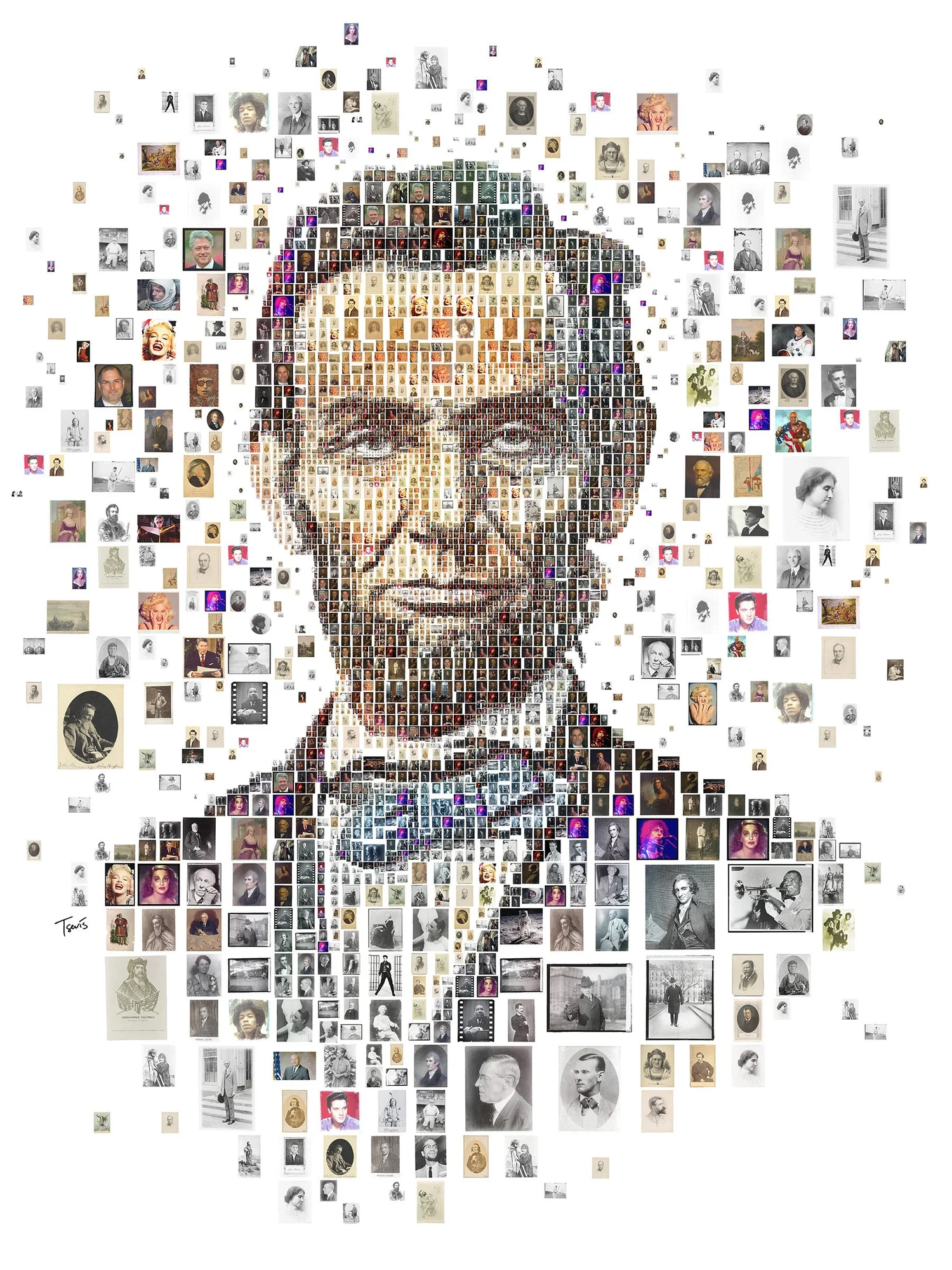
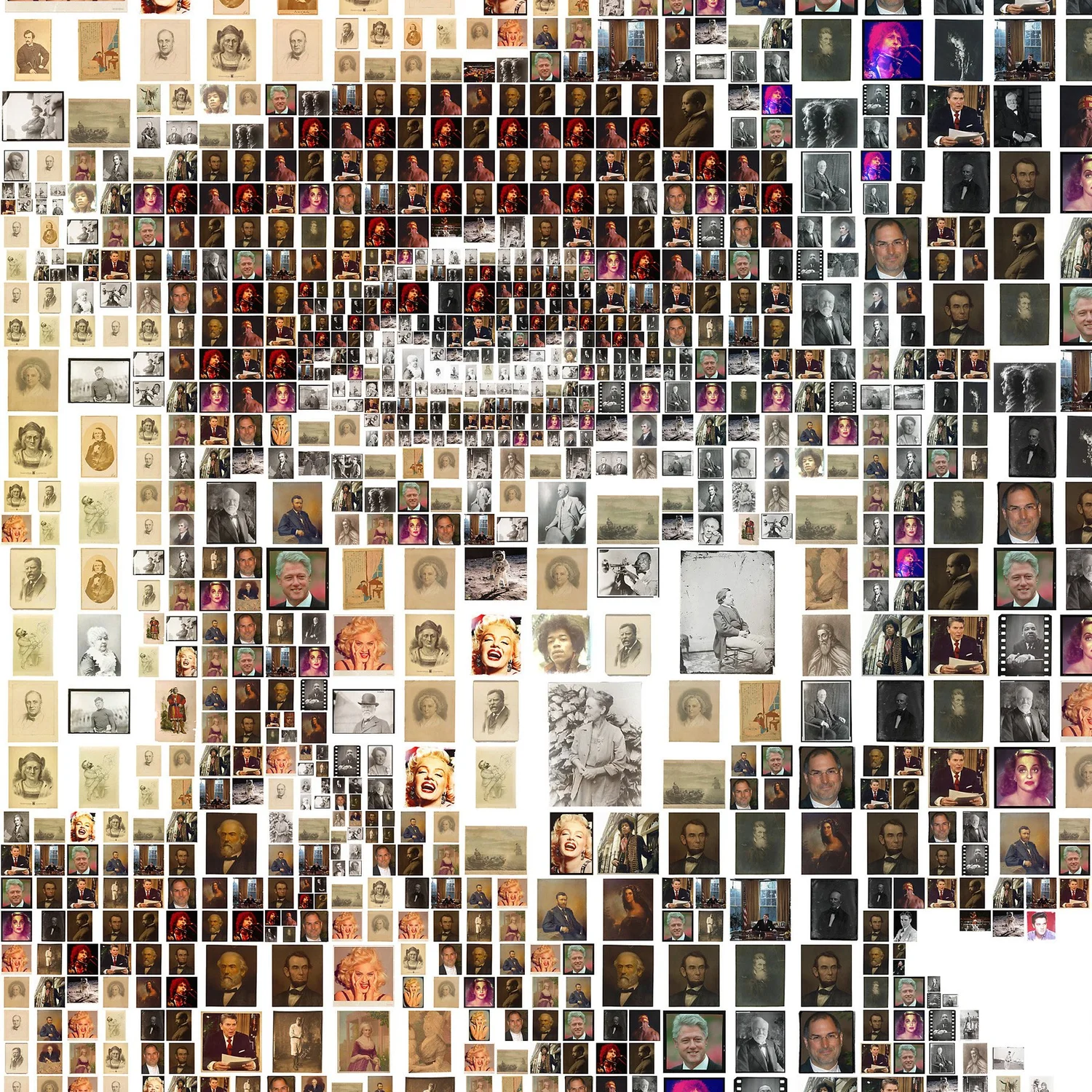
At the same time, the eye does not read a crowd of similar pieces one by one. Reviews of ensemble perception describe a visual system that extracts summary statistical information from groups of similar objects, often in a brief glance,8 and that represents sets of objects as a group rather than only as individual items.9 A wall of faces is seen first as a field with a tone and a structure, and then, on approach, as people.
Early work on computer-sampled portraits adds a practical note. Harmon and Julesz noted that coarsely sampled and quantised portraits are hard to recognise and that blurring them helps; their experiments traced the difficulty to masking by noise close to the picture’s own spatial frequencies.10 In a mosaic the pieces can be left sharp, because the main image is carried by the way their tones are arranged, but the finding is consistent with what a viewer does: a picture built from blocks resolves into a face when seen from far enough, or through enough blur. Wagemans and colleagues review Gestalt holism, the idea that wholes have properties their parts do not, and list global precedence among its operational definitions.11
These studies did not test mosaics or brands. The link is our reading of them: a mosaic is a form that gives the viewer a whole to recognise first and parts to discover afterwards, and a brief can plan for both.
Who makes a brand?
The same idea runs through marketing research, from the other side. Merz, He and Vargo trace how brand thinking moved from the brand as something a firm makes and sends outwards to brand value co-created by the firm and all of its stakeholders.12 Prahalad and Ramaswamy make the related point about customers: informed, networked, empowered and active consumers are, they write, increasingly co-creating value with the firm.13 Hatch and Schultz describe brand co-creation in terms of engagement between the company and its stakeholders.14
Employees are one of those groups, and they are an audience before they are a channel. Mitchell’s article in the Harvard Business Review treats employees as an audience of branding in their own right and warns about what follows when they do not understand or care about the brand.15 Burmann and Zeplin approach internal brand management through the behaviour of employees.16
None of this says that a mosaic is the right answer to a brief. It says why the question is a natural one: if a brand is already made of its people, customers and partners, an image that shows them as parts of one figure says something true about it.
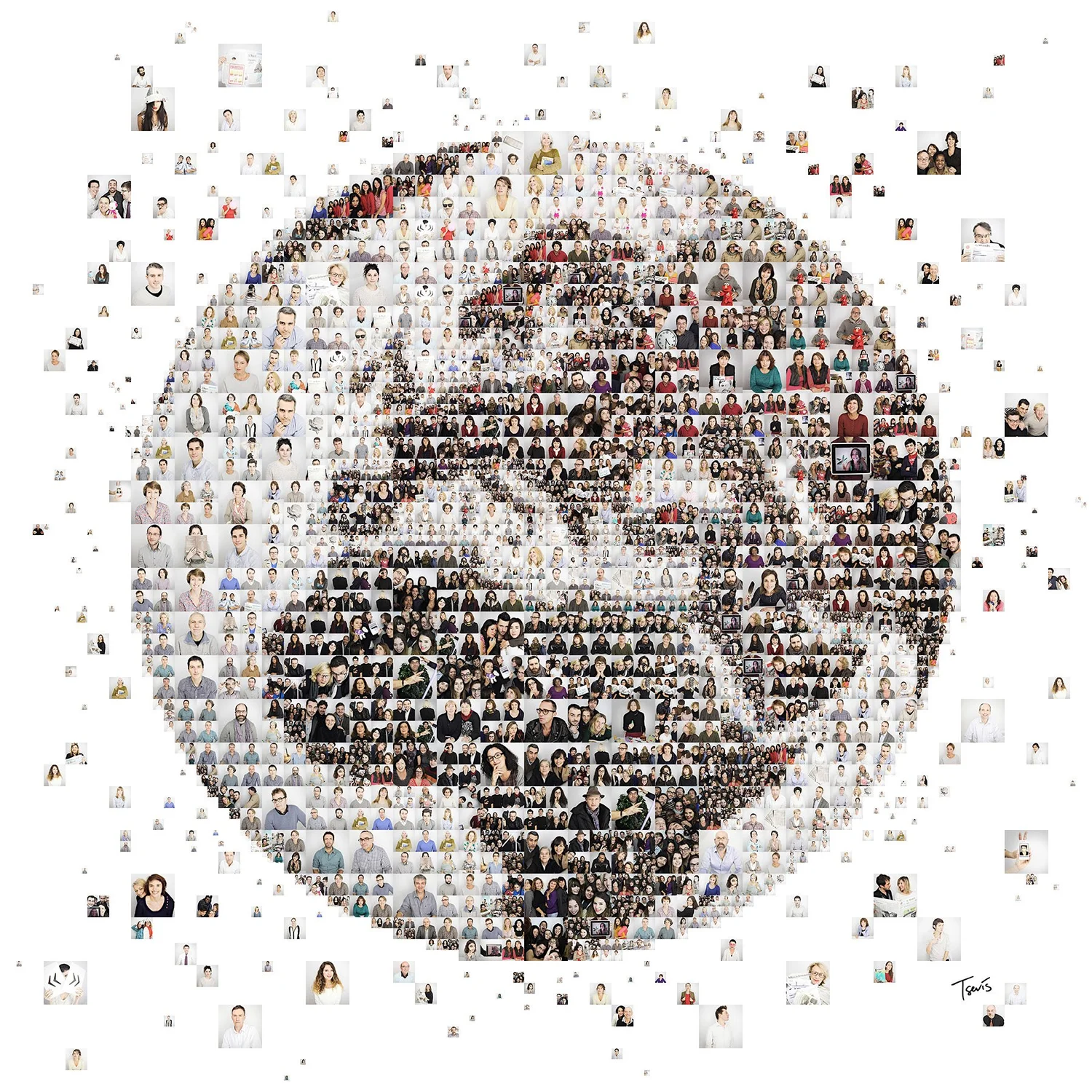
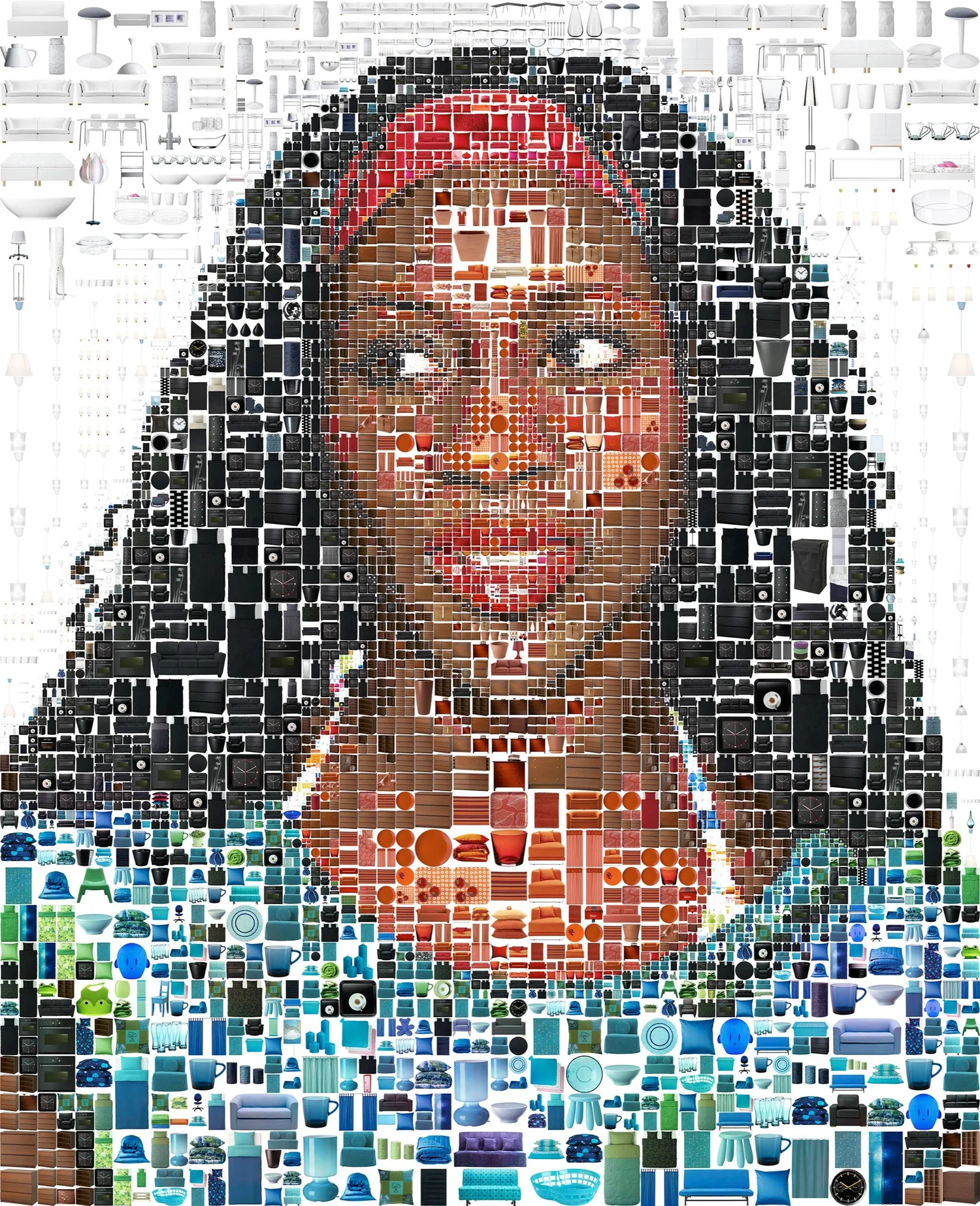
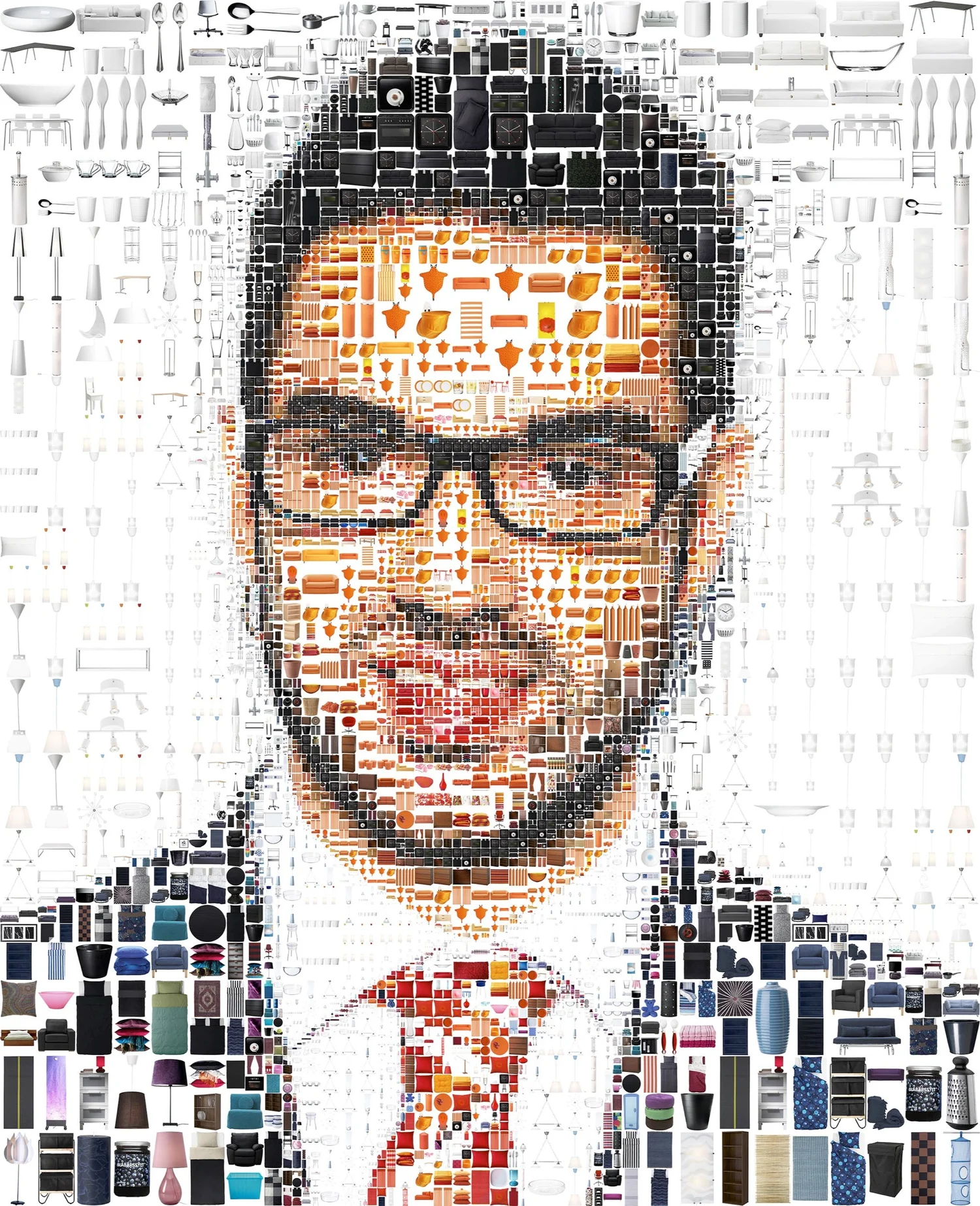
Newspapers and retailers have used the same structure for their own people and products.
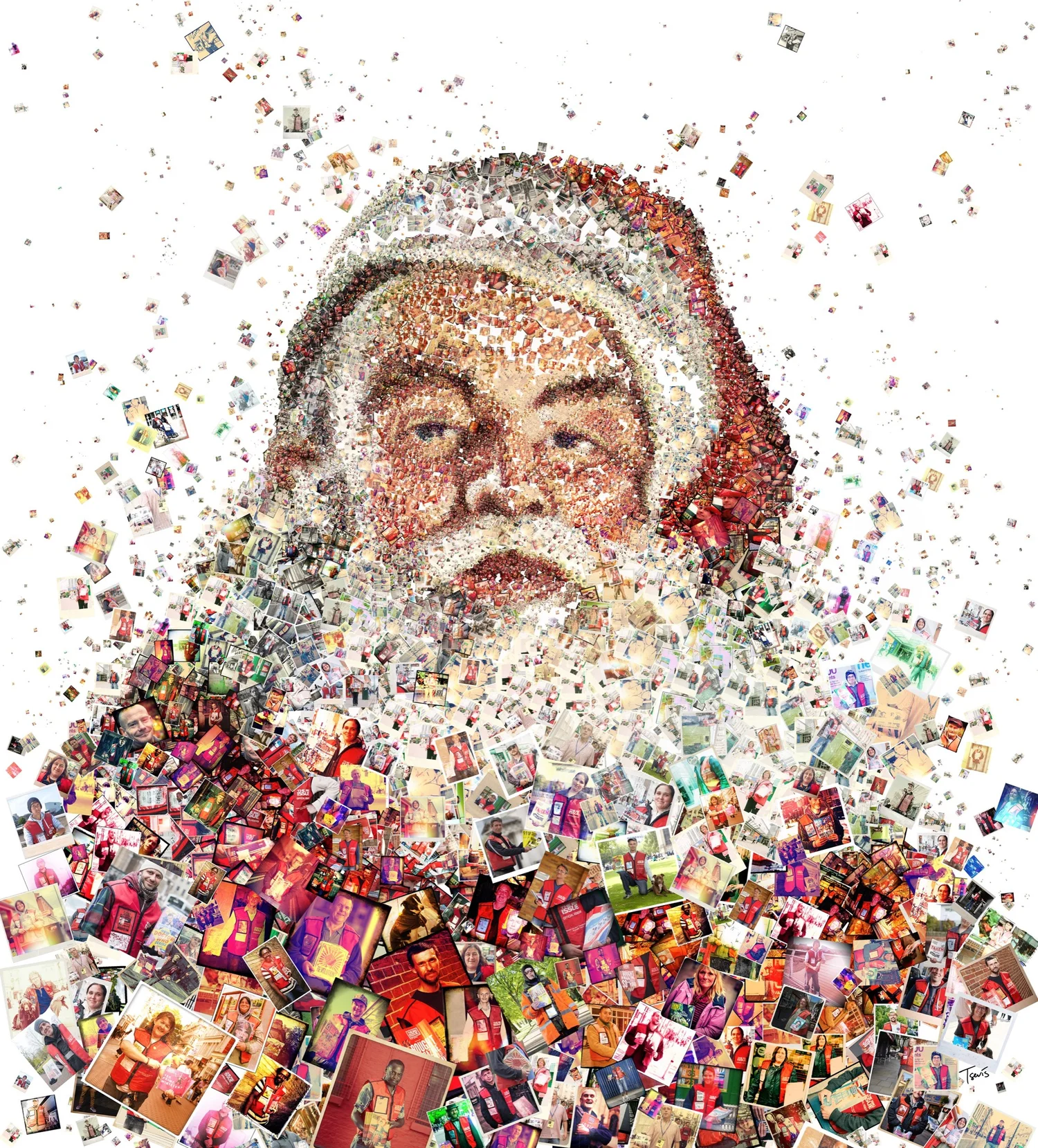
Cause and charity briefs work the same way, with the people a cause serves, or the people who sustain it, as the pieces.
Where does the form come from?
The idea of a picture made of small pictures is older than any brand campaign. In 1967 Leon Harmon and Kenneth Knowlton at Bell Laboratories used a computer to build large pictures from small patterns chosen by brightness, and the work was shown at the Museum of Modern Art in 1968. A. Michael Noll, who worked at Bell Labs at the time, describes the idea simply: “each little pixel was itself a little image.”17 We follow the documents behind that work in Studies in Perception I: A Document-Based Chronology, 1966–1969,18 and the later development of the algorithms in How Mosaic Algorithms Developed, 1966–2026.19 A fuller list of sources is in our Annotated Bibliography of Artistic Image Mosaics, 1967–2026.20 In 1996 Robert Silvers submitted the MIT thesis “Photomosaics: Putting Pictures in Their Place”.21
The collective form has its own history in advertising and in the stadium. In 2014 Coca-Cola’s “Happiness Flag” for the football World Cup assembled one image from selfies. The case study submitted to the Mobile Marketing Association counts photos of more than 220,000 fans.22 Stanford’s card-section stunts needed 3,465 students and about 400 hours of preparation for each home game, according to the university’s alumni magazine, and anyone who could lift a coloured card could take part.23 Both are examples of the same structure: many people, each holding one piece, together making an image that none of them could make alone.
Why do organisations commission art?
Brands are not the only organisations that commission pictures to say who they are. Kottasz and colleagues surveyed 181 firms in nine countries and found that corporate art collections are used to project a firm’s identity and to symbolise its core values, especially to its employees.24 LeClair and Doornbosch surveyed 450 corporations (130 responded) on their reasons for buying fine art and report motives that include employee morale and retention and the company’s public image, though money-related motives tended to dominate.25
These studies are about art collections in general, not about mosaics. We cite them for one reason: an organisation that wants a picture to hold its identity and to be seen by its own people is not asking for something unusual. A mosaic is one way to answer that request, with the added feature that the people it is meant for can be inside it.
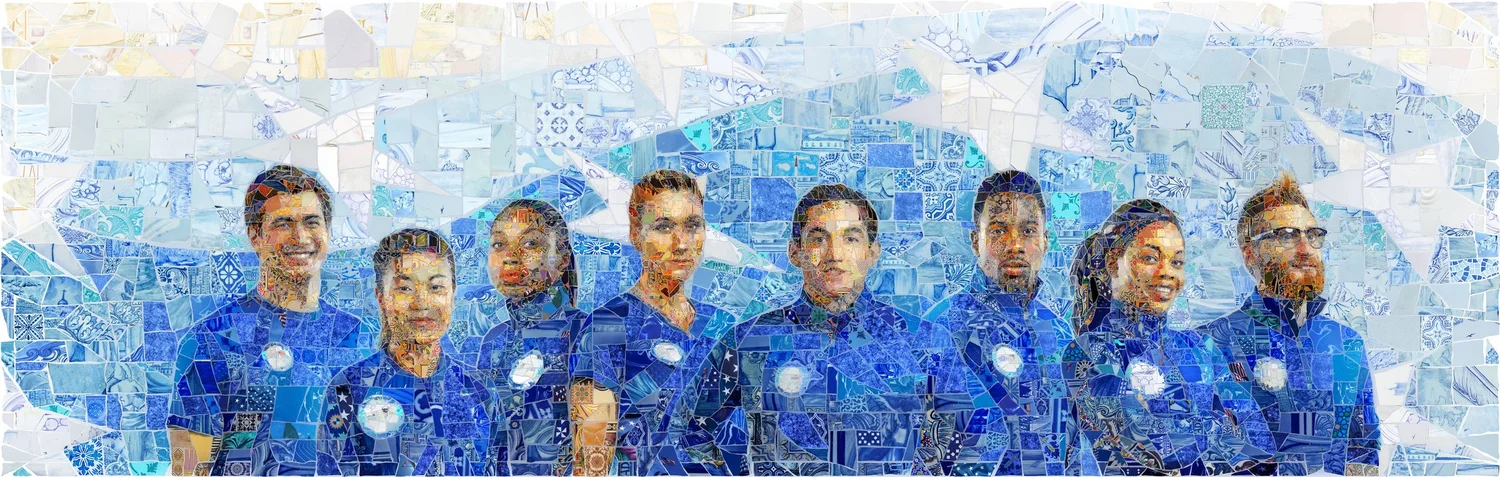
Murals and portraits made for organisations follow the same structure, from a wall at the Olympic Games to a founder’s portrait.


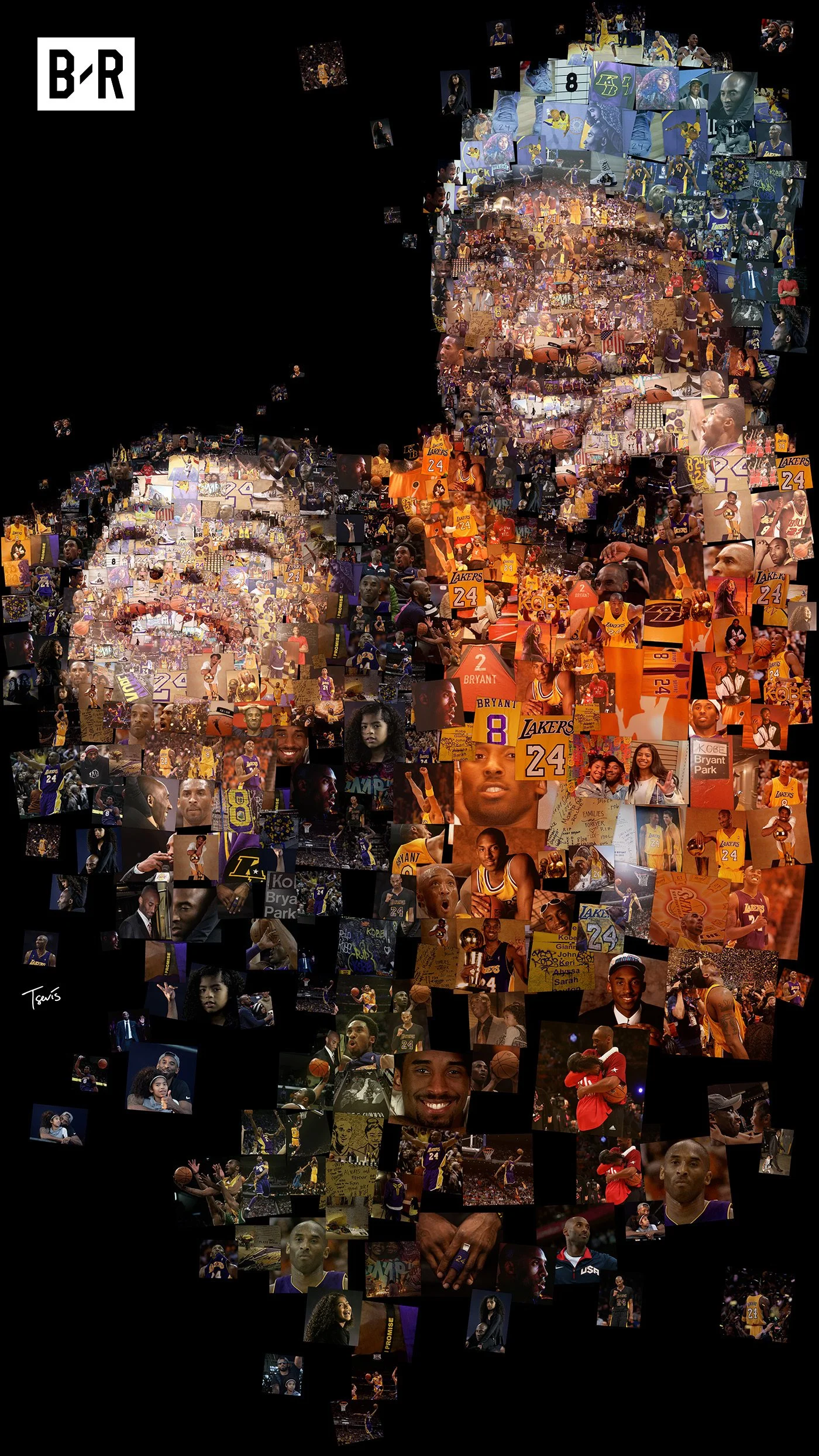
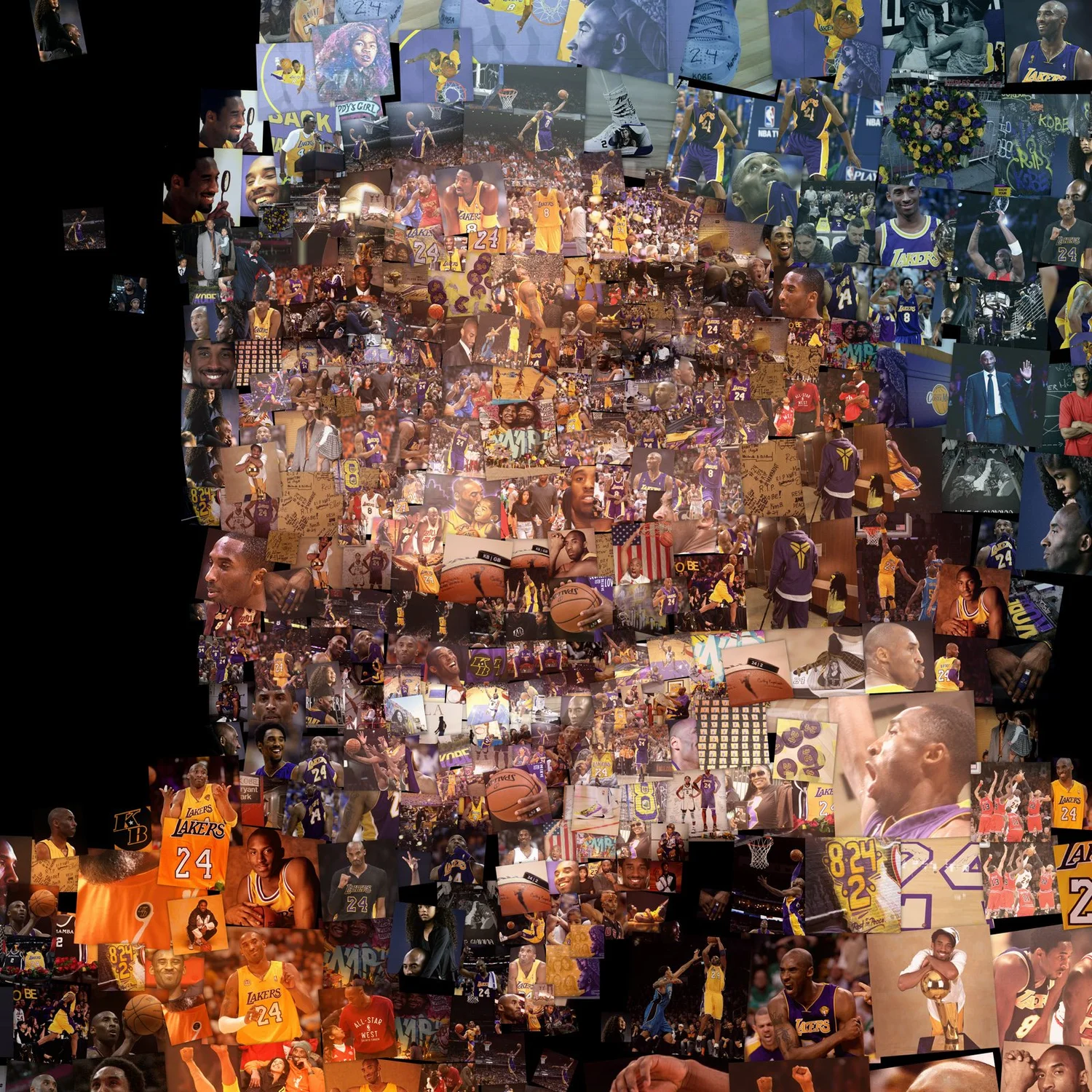
The same structure serves commemoration, where the pieces are the memories.
What does a brand bring to the work?
A mosaic needs two things from the brand before it needs anything from us.
- A reason for the pieces. A list of what the brand is made of: a team, a customer community, a product range, a set of places, a history. A good brief starts from what the brand has to say; the pieces follow from that.
- A source for the pieces. Photographs, drawings or other material, with the right to use them. Anyone whose picture becomes a tile has to have agreed to it, and that is a question for the brand’s legal team to settle before pieces are collected, not after. Where real people cannot be used, portraits made for the purpose can stand for them instead, as in the Eurobank work.
What the brand does not need to bring is the technical side. The grid, the matching of pieces to places and the production are our work; the brief is about meaning. For how we work with companies, see For Companies.
How do we test a mosaic?
The brief has to plan for both readings. From a distance, the viewer should recognise the main image at once. From close, the viewer should find something worth stopping for, and what they find should make sense of the whole. When we test a work we look at it at the distances where it will actually be seen, a feed, a poster, a wall, and change whatever does not carry the message at each distance.1
Questions
When does a mosaic fit a brand?
When the brand is made of many people, places or moments, and the campaign wants to say that in one image. Anniversaries, workforce and community campaigns, causes that depend on many donors, and launches that connect a brand to a place are the cases in the works above.
What does the brand have to provide?
A reason for the pieces and a source for them: photographs, drawings or other material, with the permission of everyone shown. If real people cannot be shown, portraits made for the purpose can stand for them.
Does it work at small sizes?
The main image does, and a mosaic is built so that it holds from far away. The second reading, the pieces, needs enough size or enough zoom to be seen. For small formats we design the main image to carry the message alone and let the pieces reward the viewer who looks closer.
How does a commission work?
A short conversation about the occasion, the place, the people and the deadline. Then an idea and a sketch, one direction shown before anything is made. Then a fixed proposal with scope, timeline and rights of use on one page, and finally the work and every file, delivered to the brand or its agency.
How long does it take?
As long as you have: from a few hours for the press to several months for a federation or a festival. The timeline is set in the proposal.
Can we use the work in our communications?
Yes, under a licence that states every use, set in the proposal.
How is it priced?
Our pricing is based on use. A regional campaign and a global brand platform are different things, and we charge accordingly. The quality is the same. The conversation about scope happens early, honestly and without drama.
References
- Charis Tsevis, “The Four Layers of a Mosaic.” Tsevis Studio, 2026. tsevis.com
- Tsevis Studio, “Lhoist Algorithmic Mosaic Campaign, Studio Tokyo.” Tsevis Studio. tsevis.com
- Charis Tsevis, “Hansaplast: The absolute smile.” Tsevis Studio. tsevis.com
- Charis Tsevis, “Healthy Dolphins - Healthy Seas.” Tsevis Studio. tsevis.com
- Charis Tsevis, “Eurobank: Your Business is Your People.” Tsevis Studio. tsevis.com
- Charis Tsevis, “Giannis Antetokounmpo - Nike: Made in Athens.” Tsevis Studio. tsevis.com
- Aude Oliva, Antonio Torralba and Philippe G. Schyns, “Hybrid Images.” ACM Transactions on Graphics 25, no. 3 (2006): 527–532. doi:10.1145/1141911.1141919
- David Whitney and Allison Yamanashi Leib, “Ensemble Perception.” Annual Review of Psychology 69 (2018): 105–129. doi:10.1146/annurev-psych-010416-044232
- George A. Alvarez, “Representing Multiple Objects as an Ensemble Enhances Visual Cognition.” Trends in Cognitive Sciences 15, no. 3 (2011): 122–131. doi:10.1016/j.tics.2011.01.003
- Leon D. Harmon and Bela Julesz, “Masking in Visual Recognition: Effects of Two-Dimensional Filtered Noise.” Science 180, no. 4091 (1973): 1194–1197. doi:10.1126/science.180.4091.1194
- Johan Wagemans, Jacob Feldman, Sergei Gepshtein et al., “A Century of Gestalt Psychology in Visual Perception: II. Conceptual and Theoretical Foundations.” Psychological Bulletin 138, no. 6 (2012): 1218–1252. doi:10.1037/a0029334
- Michael A. Merz, Yi He and Stephen L. Vargo, “The Evolving Brand Logic: A Service-Dominant Logic Perspective.” Journal of the Academy of Marketing Science 37, no. 3 (2009): 328–344. doi:10.1007/s11747-009-0143-3
- C. K. Prahalad and Venkat Ramaswamy, “Co-creation Experiences: The Next Practice in Value Creation.” Journal of Interactive Marketing 18, no. 3 (2004): 5–14. doi:10.1002/dir.20015
- Mary Jo Hatch and Majken Schultz, “Toward a Theory of Brand Co-creation with Implications for Brand Governance.” Journal of Brand Management 17, no. 8 (2010): 590–604. doi:10.1057/bm.2010.14
- Colin Mitchell, “Selling the Brand Inside.” Harvard Business Review, January 2002. store.hbr.org
- Christoph Burmann and Sabrina Zeplin, “Building Brand Commitment: A Behavioural Approach to Internal Brand Management.” Journal of Brand Management 12, no. 4 (2005): 279–300. doi:10.1057/palgrave.bm.2540223
- A. Michael Noll, “Harmon-Knowlton’s ‘The Nude’ Overshadows All.” ETHW First-Hand, 28 August 2022. ethw.org
- Charis Tsevis, “Studies in Perception I: A Document-Based Chronology, 1966–1969.” Tsevis Studio, 2026. tsevis.com
- Charis Tsevis, “How Mosaic Algorithms Developed, 1966–2026.” Tsevis Studio. tsevis.com
- Charis Tsevis, “Annotated Bibliography of Artistic Image Mosaics, 1967–2026.” Tsevis Studio, 2026. tsevis.com
- Robert Silvers, “Photomosaics: Putting Pictures in Their Place.” MS thesis, Massachusetts Institute of Technology, 1996. hdl.handle.net
- Coca-Cola and CI&T (lead agency), “Coca-Cola Happiness Flag.” Case study, MMA Smarties 2014, finalist, Use of Mobile Social Media. Mobile Marketing Association. mmaglobal.com
- Sam Scott, “When Card Stunts Ruled.” Stanford magazine, September 2022. stanfordmag.org
- Rita Kottasz, Roger Bennett, Sharmila Savani and Rehnuma Ali-Choudhury, “The Role of Corporate Art in the Management of Corporate Identity.” Corporate Communications: An International Journal 13, no. 3 (2008): 235–254. doi:10.1108/13563280810893634
- Mark S. LeClair and Kathy Doornbosch, “Corporate Acquisitions of Fine Art: Measuring the Underlying Motivations.” Managerial Finance 21, no. 6 (1995): 1–15. doi:10.1108/eb018520
About the author
Charis Tsevis is a Greek visual designer and computational artist educated in Athens and Milan. A designer since the late 1980s, Charis has worked with mosaics for more than three decades and builds the studio’s own tools for them. Charis and Vira Konstanta run Tsevis Studio together. About the studio. To start a conversation about a commission, send us a brief.
Version and how to cite
Version 1.0, 16 November 2026. Corrections are listed here with their dates.
Tsevis, Charis. “Why a Mosaic for a Brand: The Idea of Many Things Becoming One.” Tsevis Studio, 16 November 2026. https://www.tsevis.com/blog/why-a-mosaic-for-a-brand